
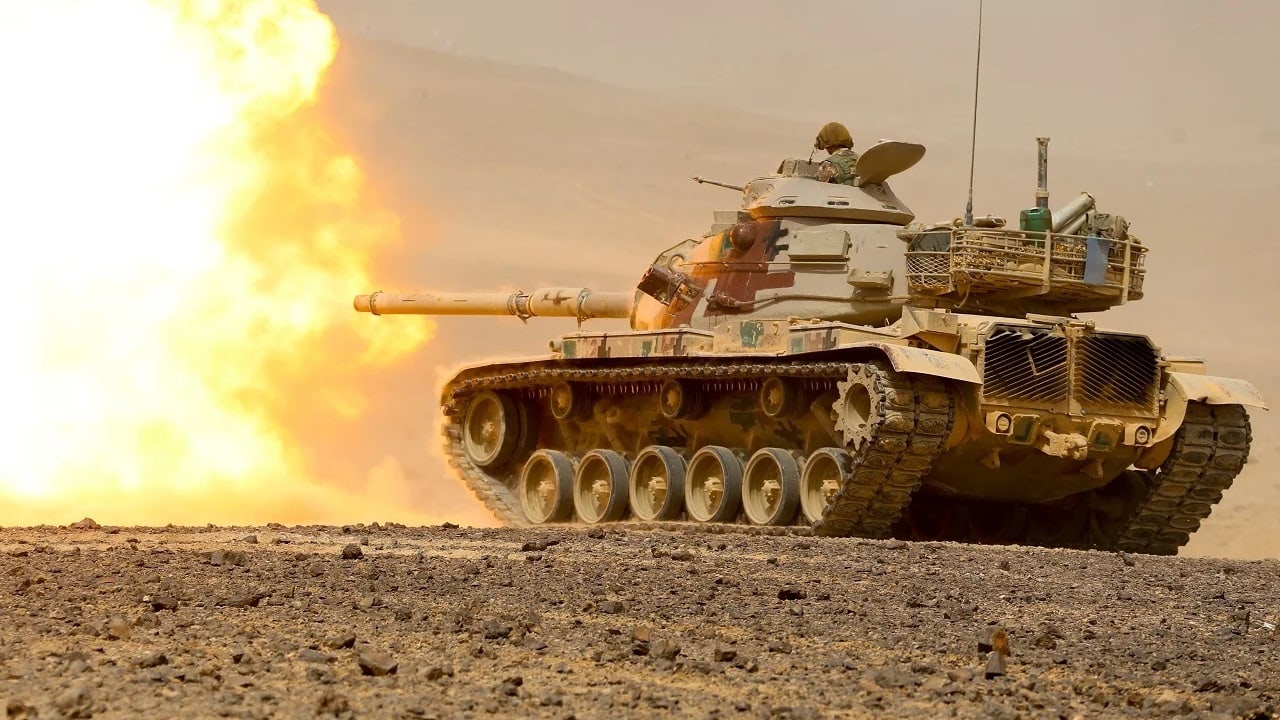
Iran Bought 460 American M60 Tanks. It Is Still Upgrading the Survivors: Iran’s army entered 1972 with 460 American-built M60 tanks, according to a contemporary U.S. State Department assessment. More than five decades later, open inventories still place roughly 150 M60A1s in Iranian hands. That figure represents an estimated fleet size, not a verified count of combat-ready vehicles.
The M60A1 was a formidable tank when the Shah acquired it. A four-person crew operated a 105mm M68 gun with 63 rounds.
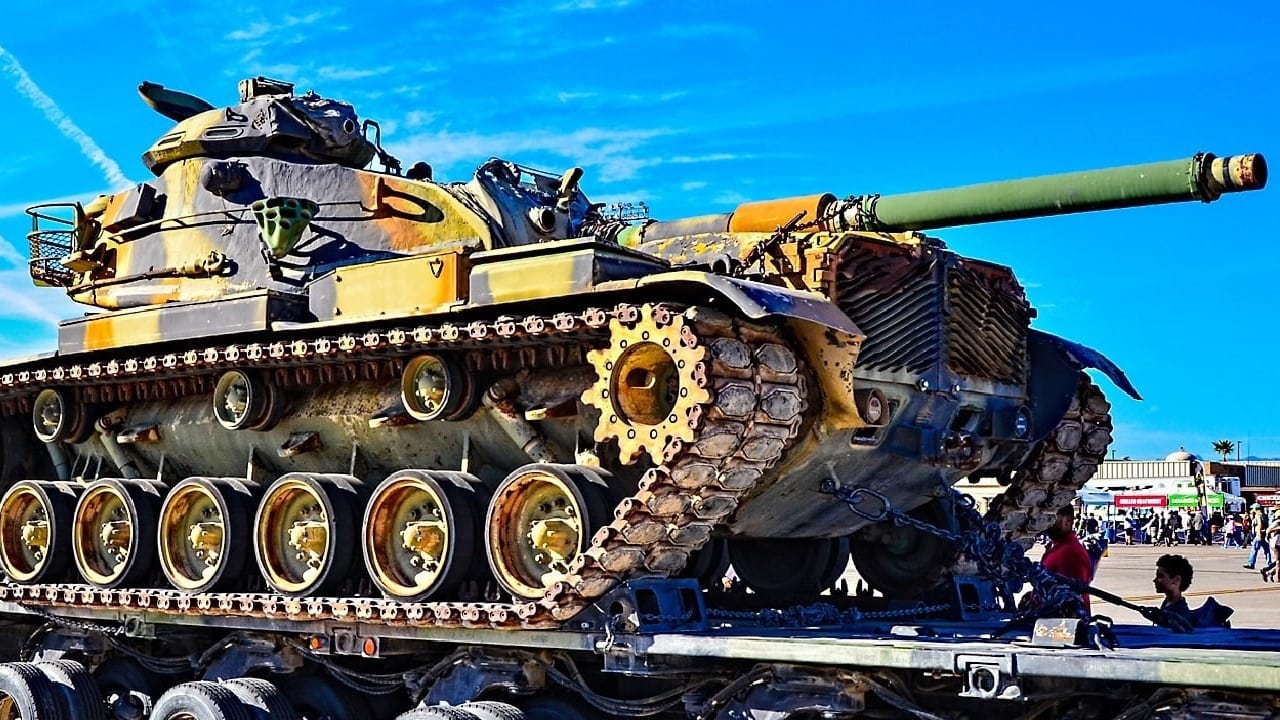
M60 Tank. Image Credit: Creative Commons.
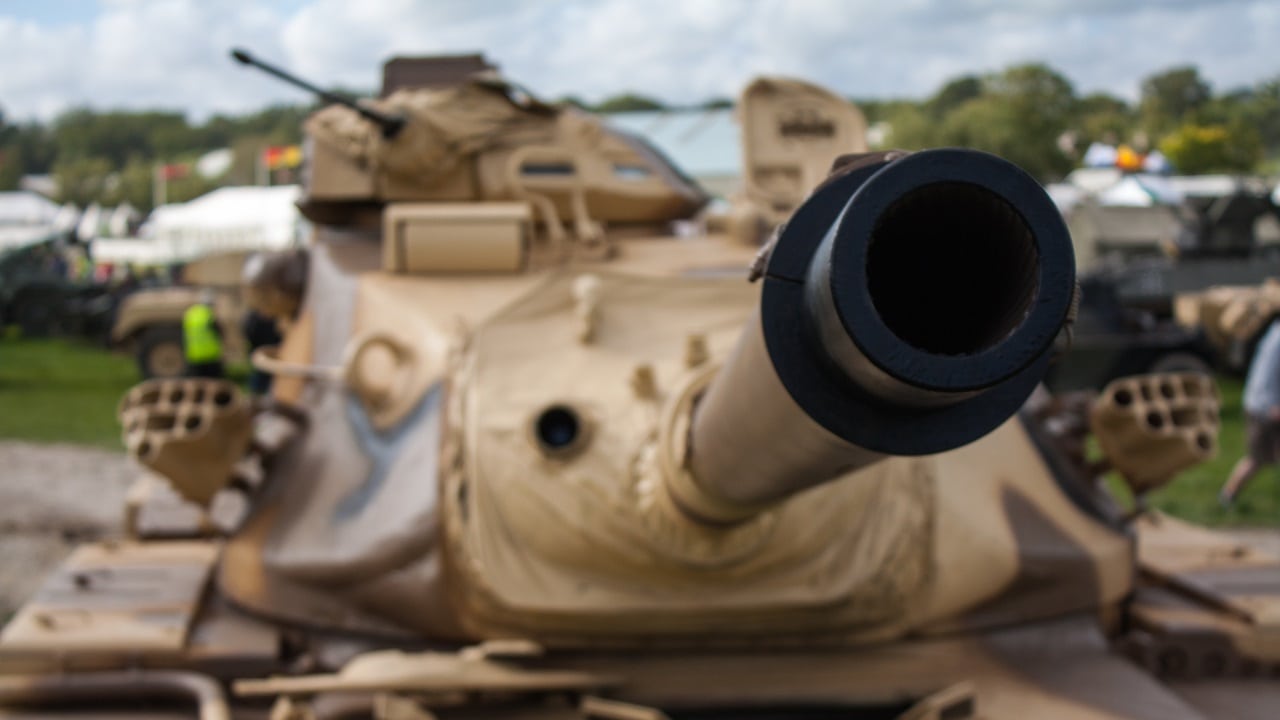
M60 Tank. Image Credit: Creative Commons.
The vehicle weighed about 47.6 metric tons, used a 750-horsepower Continental diesel engine, reached roughly 30 mph on roads, and had a cruising range of near 300 miles.
The 1979 revolution severed normal American support. Saddam Hussein invaded the next year, forcing a purged regular army to fight with equipment inherited from the monarchy.
Iranian M60S survived through cannibalization, locally made parts, battlefield recovery, and repeated modernization.
Rebuilding the M60 is not unusual by global standards. Israel, Turkey, Taiwan, Jordan, Egypt, plus other operators have extended the platform through new sights, armor, electronics, engines, or weapons.
The remarkable part is that a state regarded by Washington as an enemy still maintains tanks sold to one of America’s closest Cold War partners.
The Shah Bought the M60 to Build a Gulf Power
Mohammad Reza Shah viewed Iraq’s Soviet-equipped army as the immediate land threat. Britain’s withdrawal from the Persian Gulf created a strategic opening. A 1972 State Department intelligence memorandum said Tehran wanted to protect Gulf oil routes, deter Iraq, and then establish Iran as the region’s leading military power.
The M60s arrived during the late 1960s as part of that buildup. They joined hundreds of older M47s, later serving beside British Chieftains. Iran paid for sophisticated American weapons through the Foreign Military Sales program; the tanks were purchased, not gifted.
A separate, reliable price for the 460 M60S does not appear in the public record.
The M60A1 offered a redesigned turret, stronger protection, more ammunition, and greater crew space than the original M60.
Its 105mm gun gave Iranian units serious firepower against Soviet-built T-54 or T-55 tanks. The Continental diesel, torsion-bar suspension, 300-mile cruising range also supported long movements across Iran’s large territory.
The M60 Went to War With a Damaged Iranian Army
The revolution removed or imprisoned many experienced officers. American contractors departed. Spare-parts deliveries stopped. Those disruptions shaped the first months after Iraq attacked on September 22, 1980.
One of the clearest early combat records involves Task Force 37 near Fakkeh. It reached the front with five M60A1s, one of which was unserviceable, plus six M47Ms. The unit claimed 18 Iraqi tanks were destroyed on its first day. By the next morning, only two M60A1s plus one M47M remained operational, yet the force claimed another 15 Iraqi tanks while recovering vehicles damaged earlier.
That episode showed what trained crews could achieve with the American tank. Larger Iranian armored operations exposed deeper weaknesses. Mud, flooded ground, weak reconnaissance, poor infantry coordination, and disrupted logistics repeatedly left armor isolated. Detailed campaign records also mix M60S with Chieftains, M47S, or captured Soviet vehicles, making model-specific loss totals difficult to verify.
The January 1981 fighting around Hoveyzeh became a major defeat for Iran’s armored force. Published totals often combine several tank types, so claims assigning every reported loss to the M60 are unreliable.
The larger failure involved an advanced armored force whose training, leadership, and maintenance system had been badly damaged by revolution.
As the eight-year war continued, tanks became harder to replace. Surviving M60s supported defensive lines, local counterattacks, and later offensives, often serving as mobile direct-fire weapons rather than leading rapid breakthroughs.
Sanctions Turned M60 Maintenance Into an Iranian Industry
Iran kept the fleet alive by stripping unusable tanks, machining substitute parts, rebuilding engines, and adapting available components. That work did not restore every hull to its original condition.
It preserved a shrinking pool of serviceable vehicles while giving Iranian workshops deep experience with Western armored systems.
Tehran later presented an upgrade called Samsam. Public descriptions credited it with an EFCS-3 fire-control system, explosive reactive armor, laser-warning receivers, and infrared jammers.
The number converted was never disclosed, leaving some displayed vehicles as possible prototypes or limited-production examples. The program became part of Iran’s long effort to preserve the American-built fleet.
This path mirrors the broader M60 story. The final American M60A3 gained a laser rangefinder, ballistic computer, thermal sight, proving that sensors could transform an old hull. Foreign users followed the same logic; one reason the M60A3 modernization model still influences upgrade packages.
Soleiman-402 Adds Armor, Sights and Electronic Protection
Iran unveiled the Soleiman-402, also rendered Soleiman 1402, on September 1, 2024. Iranian reporting identified a fire-detection system, automatic suppression equipment, digital dashboard, laser warning, and electronic jamming.
Images showed extensive add-on armor, reactive protection, updated communications, a remote weapon station, thermal optics, and a meteorological sensor. Iran’s army said every remaining M60 would receive the new standard. That ambition follows the international pattern of keeping M60 fleets relevant through modular upgrades.
Public evidence does not confirm several claims repeated about Soleiman-402. Tehran has not demonstrated a new 120mm main gun, replacement engine, or hard-kill active-protection system. The visible tank appears to retain the 105mm M68 family gun. Added armor also places more weight on a power pack designed for the original M60A1.
The package still offers practical gains. Thermal sights improve detection in low light or through dust. A laser-warning receiver alerts the crew when a rangefinder or designator points at the vehicle. A remote weapon station lets the commander engage infantry or low-flying drones without having to stand outside the turret. None of those additions provides complete protection from modern top-attack missiles, loitering munitions, or precision artillery.
Roughly 150 M60s May Remain, but Readiness Is Unknown
A 2016 U.S. Army threat report listed 150 M60A1s, and the report around the Soleiman-402 unveiling used the same approximate figure. The total likely covers vehicles in different conditions: operational tanks, Samsam conversions, new Soleimans, stored hulls, and parts donors.
No credible public account has identified a major M60 combat role during the 2025 or 2026 air campaigns against Iran. No verified loss list exists. Their likely assignments remain territorial defense, training, reserve armored strength, and fire support for the regular army.
A 1960s tank still has value when the alternative is no tank, especially against infantry, light vehicles, or fortified positions. Its limits are equally clear. The M60A1’s steel armor predates tandem-warhead missiles, attack drones, and overhead-strike munitions now common on modern battlefields.
As of August 11, 2026, Tehran had not published how many Soleiman-402 conversions were complete or how many of its estimated 150 M60S could be deployed.
About the Author: Harry J. Kazianis
Harry J. Kazianis (@Grecianformula) was the former Senior Director of National Security Affairs at the Center for the National Interest (CFTNI), a foreign policy think tank founded by Richard Nixon based in Washington, DC. Harry has over a decade of experience in think tanks and national security publishing. His ideas have been published in the NY Times, The Washington Post, The Wall Street Journal, CNN, and many other outlets worldwide. He has held positions at CSIS, the Heritage Foundation, the University of Nottingham, and several other institutions related to national security research and studies. He is the former Executive Editor of the National Interest and the Diplomat. He holds a Master’s degree focusing on international affairs from Harvard University.