
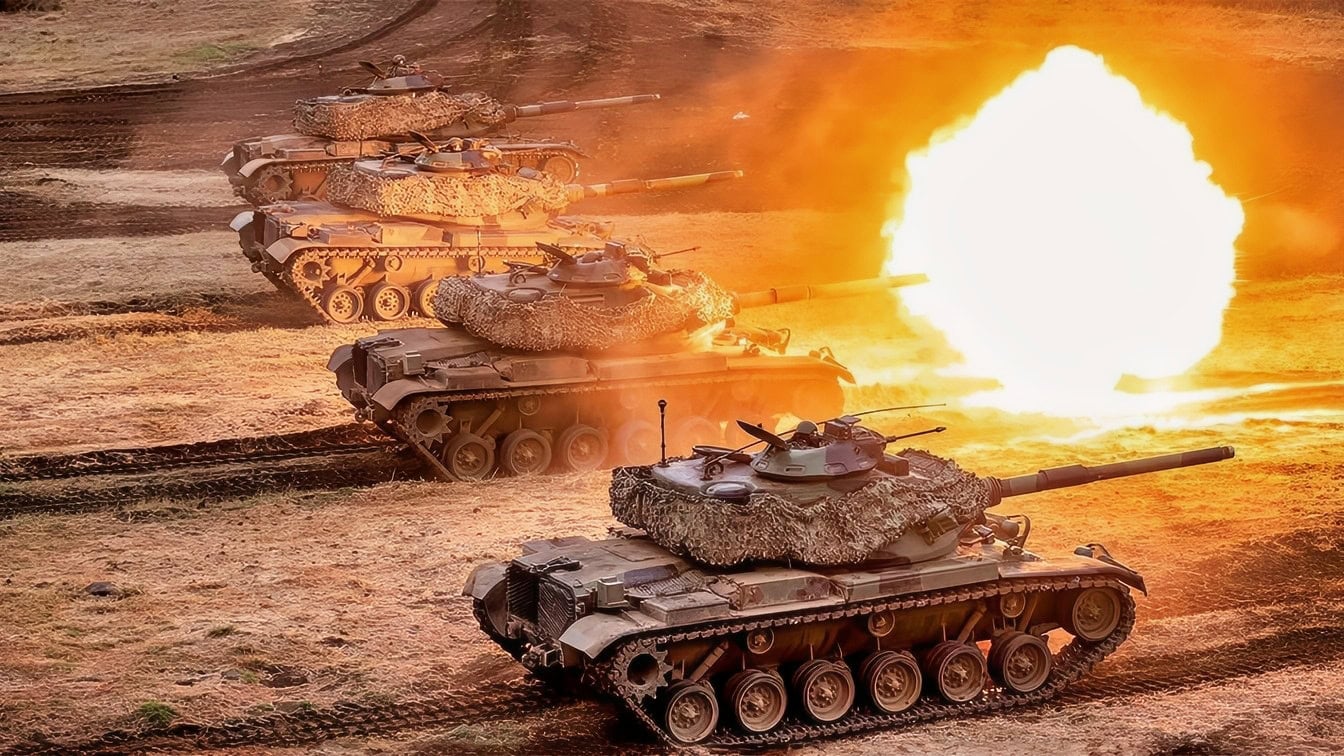
The current war with Iran has so far yet to expand into a ground war, thankfully.
While the U.S. Army dwarfs the IRGC in terms of technological sophistication, Iran still maintains a standing Army with relatively robust capabilities (in all honesty, the Iranian Army would be one of the U.S.’ lesser problems if it decided to stage a ground invasion into Iran).
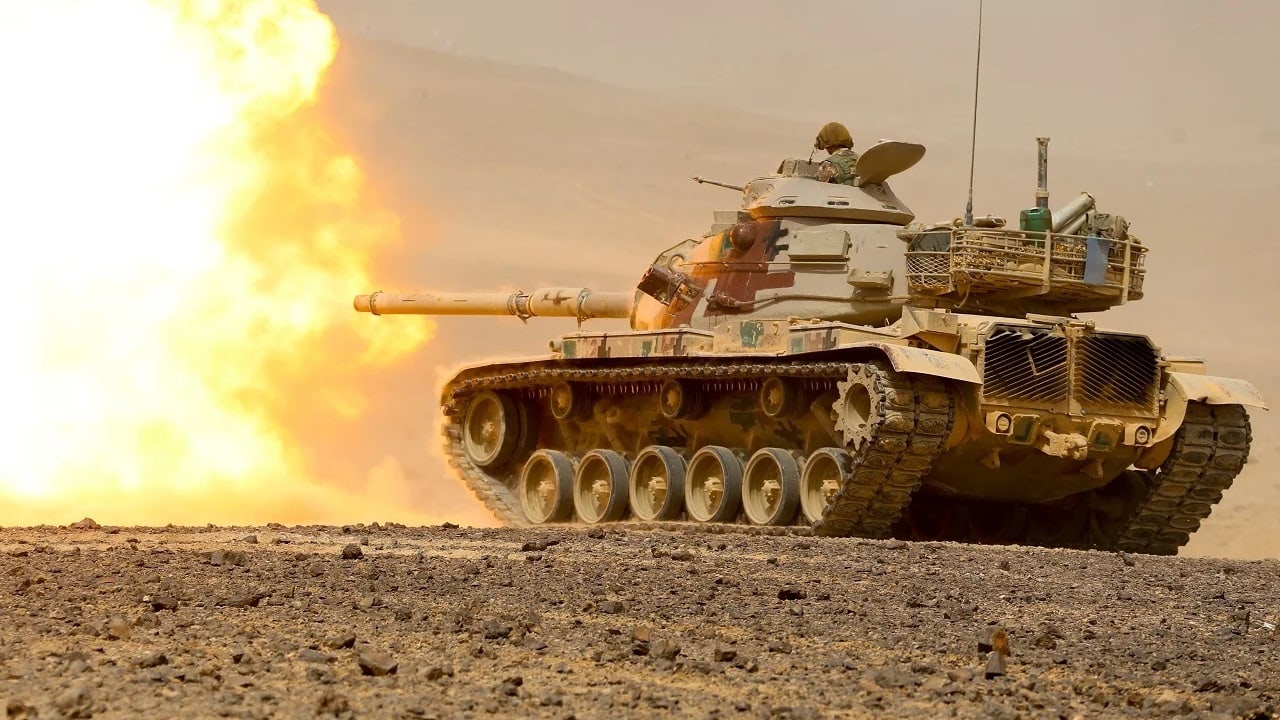
M60 Tank. Image Credit: Creative Commons.
The Iranian Army (IRIA) and the IRGC maintain a modest tank fleet comprising Cold War-era models and the occasional domestic project.
Most notably, the American-made M60 remains a staple of Iran’s ground forces.
The M60 has been a core of Iran’s ground forces since the 1970s.
Despite numerous sanctions on Iran, it has somehow managed to maintain and modernize its fleet, though the quality of its modernizations remains unknown.
How Iran Got its M60S
Prior to the Islamic Revolution, the Kingdom of Iran maintained close ties with the United States and the United Kingdom and was a valued customer of both.
Following the end of the Arab-Israeli war, the last Shah, Mohammad Reza Pahlavi, sought to transform Iran into a major military power in the Middle East, with ambitions to rival some of the militaries within NATO.
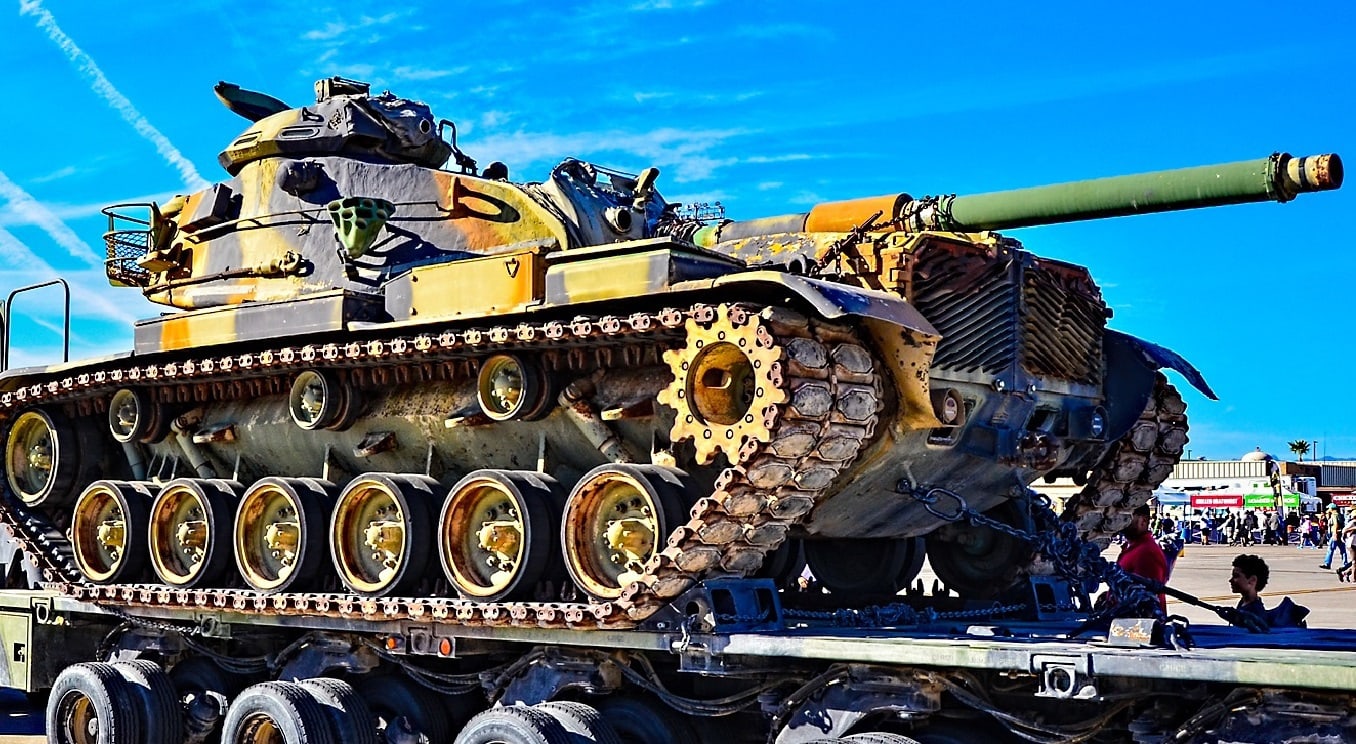
Image Credit: Creative Commons.
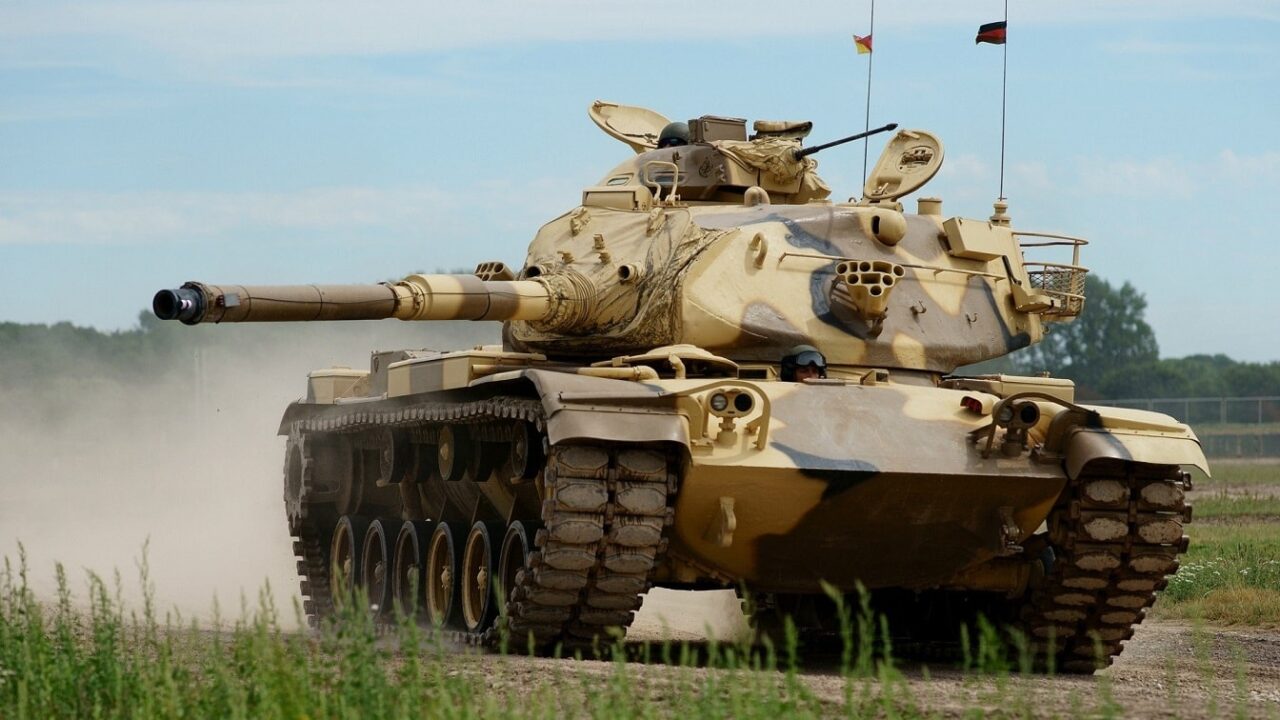
US M60 tank. Image Credit: Creative Commons.
To that end, Iran purchased an immense amount of military equipment from the U.S. and the U.K., namely M60 and Chieftain tanks (it was also during this period that Iran acquired its F-14 Tomcats).
The Shah planned to modernize his ground forces and increase the Army’s tank strength to 1,200.
These plans were interrupted by the untimely arrival of the Islamic Revolution, which overthrew the Shah and established an Islamic regime that remains in power today.
Washington and London promptly halted their deliveries to the new Islamic Republic and shifted their policy towards Iran to prevent the new regime from acquiring any more military equipment or materials.
At the time of the Revolution, Iran had already received around 460 M60s from the U.S. and almost 900 Chieftens from the UK.
While it never received the tanks it had requested, the new regime emerged with a prominent tank force.
It is not entirely clear how Iran manages to maintain its fleet without spare parts from the U.S. (there are questions as to whether most of Iran’s M60s are even in an operational state).
The M60: The Enduring Platform That Refuses to Retire
Following the collapse of relations between the U.S. and the new Islamic Republic, Iran could no longer rely on a steady flow of spare parts from America to maintain its M60 fleet.
The Iranians would have to get creative in order to modernize their tanks. The first domestic variant was the Zulfiqar.
This tank appeared to be an unholy combination of an M60, a Chieftain, and a T-62. The initial Zulfiqar variants were built on an M60 hull and featured a redesigned turret sporting a 2A46 smoothbore gun from a T-72.
Future versions of the Zulfiqar would diverge from the M60; however, the Zulfiqar 2 and 3 would feature an elongated hull, requiring extra road wheels and a redesigned turret once again.
Hardly any reliable information about this strange tank is known to the public.
In 2013, Iran unveiled its next M60 variant: the Samsam.
This tank retains the look and overall design of a regular M60, with a few minor changes. The tank can be fitted with explosive reactive armor (most likely Kontakt-5), although little else seems to have been changed about the tank’s armor layout.
The Samsam is equipped with Slovenian-made EFCS-3 fire-control systems, laser-warning systems, and an IR jammer.
The tank is equipped with night vision on the commander’s sight along with a ball stabilizer for the main gun, allowing it to fire more accurately while on the move.
As with the Zulfiqar, hardly anything is known about this tank, as it rarely makes any public appearances.
The Soleiman-402: the Most Recent M60 Variant
The rarest and perhaps most infamous Iranian M60 variant is the Soleiman-402. First unveiled in 2024, the Soleiman made headway mostly for its unusual-looking design.
The turret appears to have received additional armor packages, perhaps with some NERA elements, along with extra ERA add-ons.
The turret has also been fitted with extra cameras and sensors. According to some sources, the tank is equipped with night-vision sights for the gunner and commander (it is not known whether it has thermal sights) along with various other sensors to improve situational awareness.
The tank is also fitted with IR dazzlers, similar to the Shtora-1 soft-kill APS on the T-90A.
The Soleiman is also equipped with a remote-controlled weapons suite (RCWS) located on top of the turret.
Assessing the Solieman-402 is a lot like assessing North Korea’s newest MBTs.
On paper, it looks like a tank that is equipped with modern sights and communication systems, but in practice, it is nearly impossible to judge its true quality.
Many features, like the barrel cover and the sleek-looking sideskirts, appear haphazardly thrown on, as if the designers knew they were included on other tanks and simply added them to give it a modern appearance.
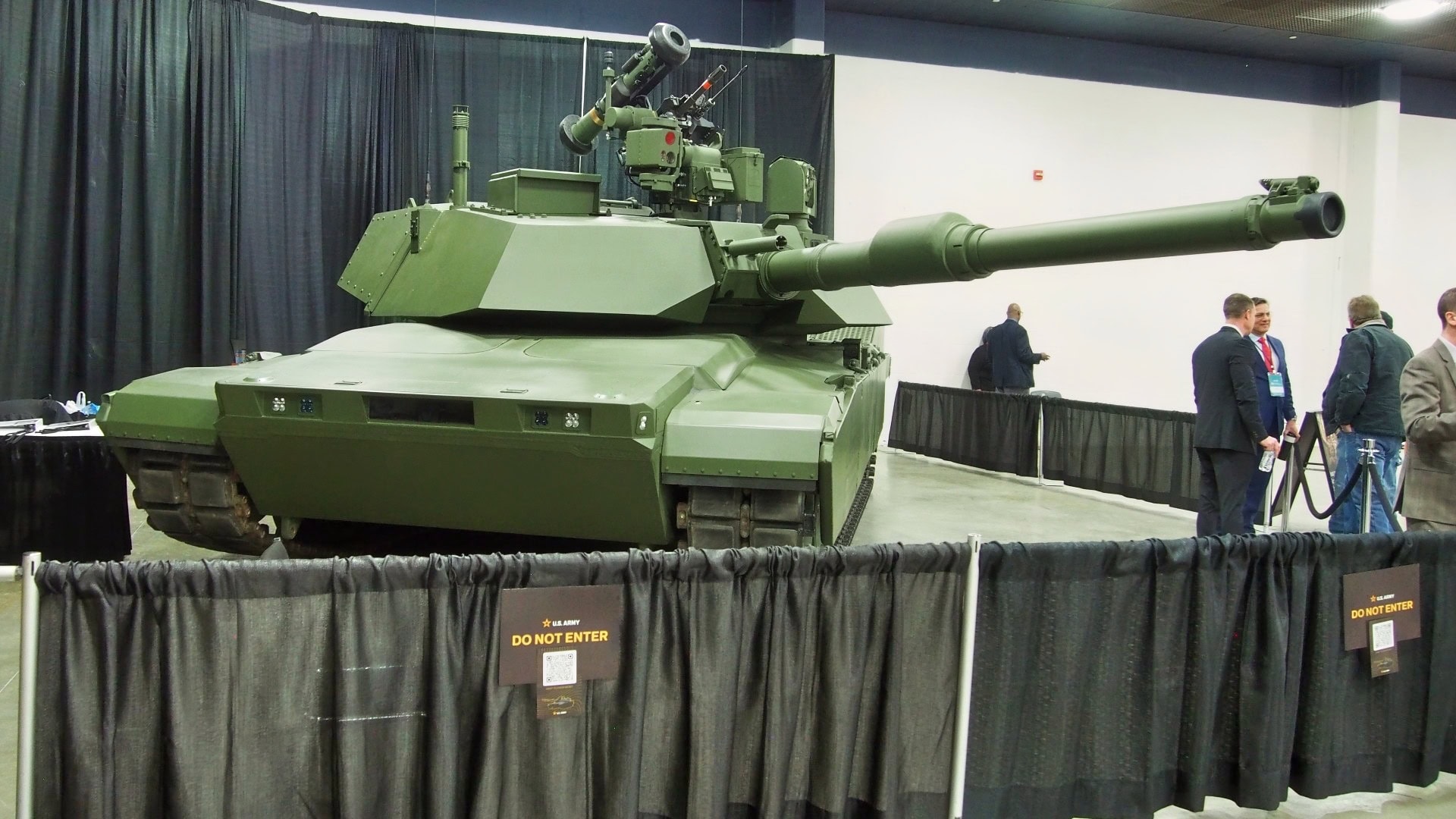
M1E3 Abrams Tank. Taken by 19FortyFive.com
To be clear, a tank doesn’t need too many bells and whistles in order to be effective. All a tank really needs is good thermal sights and fire-control systems.
If the Solieman has those systems, well then it has a use on the battlefield, but don’t expect it to win a duel with any other modern tanks.
MORE – Iran Still Has a Fleet of F-4 Phantom Fighters Made in the USA
About the Author: Isaac Seitz
Isaac Seitz, a Defense Columnist, graduated from Patrick Henry College’s Strategic Intelligence and National Security program. He has also studied Russian at Middlebury Language Schools and has worked as an intelligence Analyst in the private sector.