
Economic pressure is doing what Washington built it to do.
Five months of sanctions, a naval blockade, and a shadow-banking crackdown have cut off Tehran’s ability to sell its own oil and left it with fewer ways to move money each week.
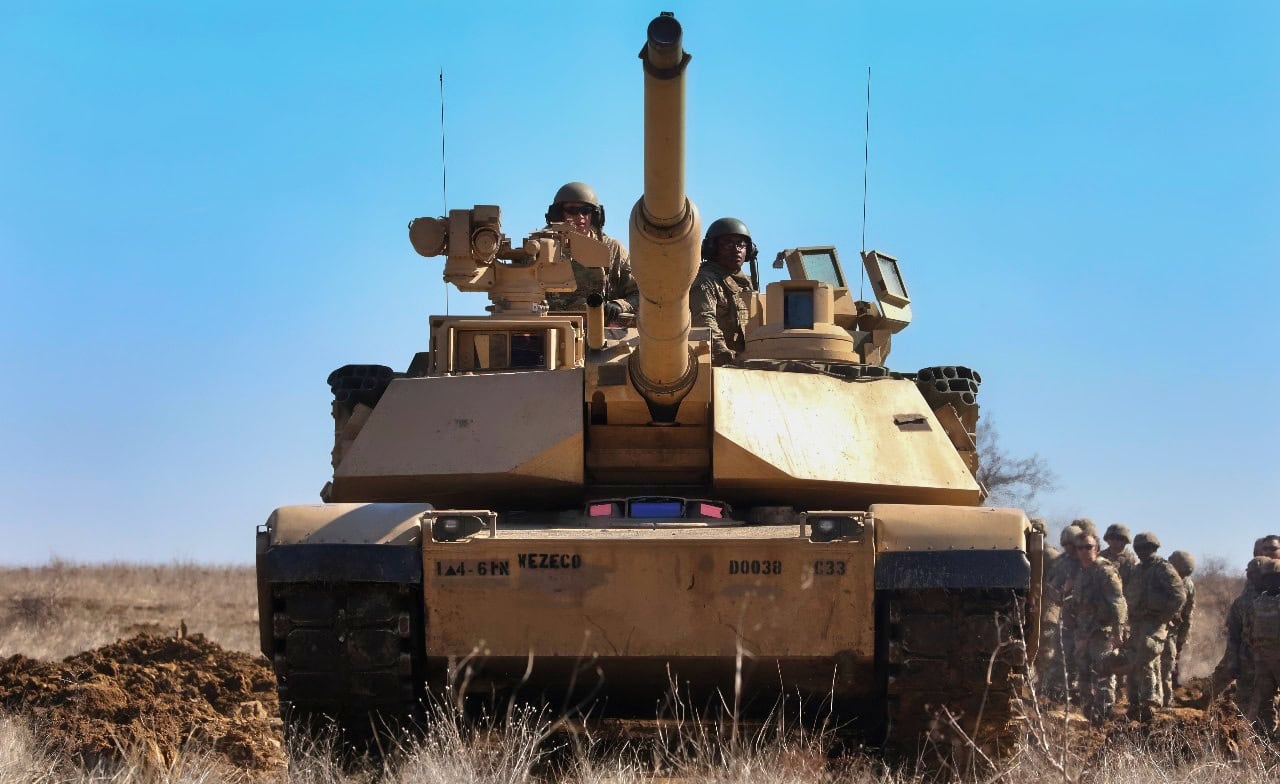
A U.S. Army M1 Abrams, assigned to 4th Battalion, 6th Infantry Regiment, 3rd Armored Brigade Combat Team, 1st Armored Division, fully emerges from the tank firing point to engage the simulated enemy at Novo Selo Training Area, Bulgaria, March 5, 2025. 1st Armored Division, a rotational force supporting V Corps, conducts training with engineers and tank operators in the European Theatre to maintain readiness and instill fundamental Soldier skills that are vital in maintaining lethality. (U.S. Army photo by Spc. Kyle Kimble)
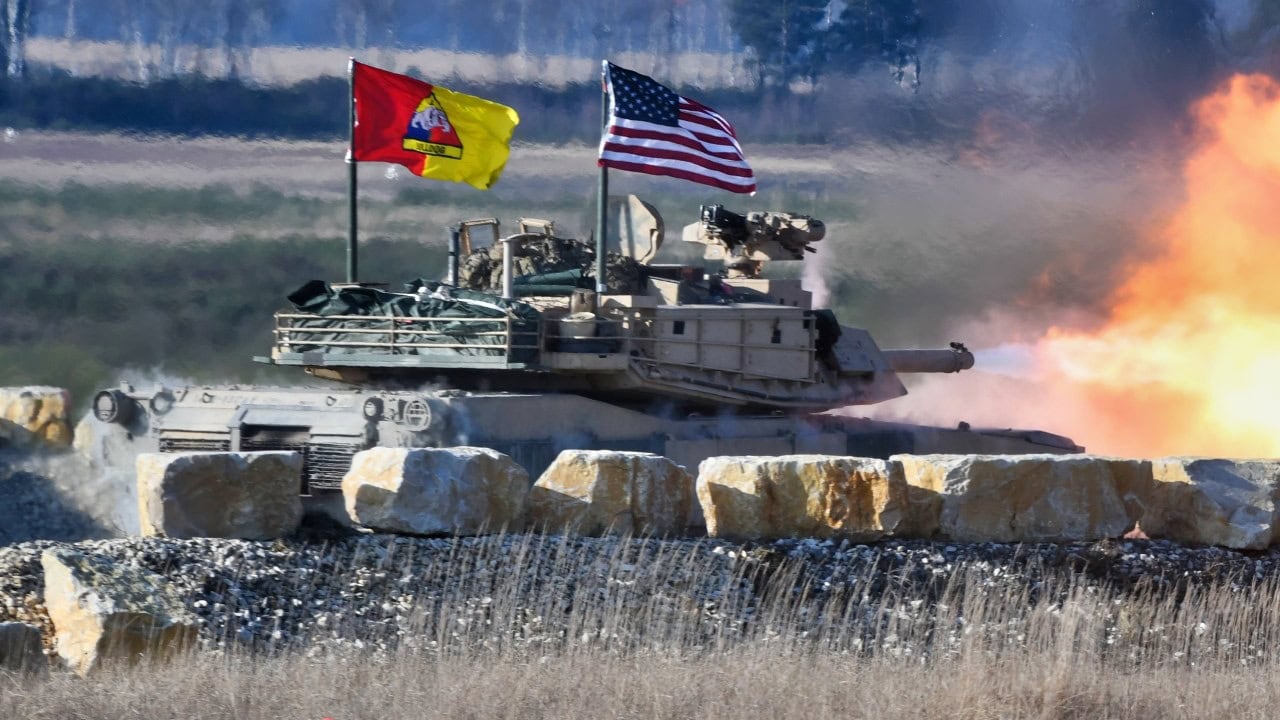
A U.S. M1 Abrams engages a target during the final event on Feb. 17, 2025 as part of the U.S. Army Europe and Africa International Tank Challenge at 7th Army Training Command’s Grafenwoehr Training Area, Germany. The USAREUR- AF International Tank Challenge builds tactical skills and enhances esprit de corps across the 11 teams from five participating allied and partner for peace nations. (U.S. Army photo by Sgt. Collin Mackall)
And Tehran still has not signed.
Washington keeps treating that as a story about resolve — Iranian intransigence, insufficient pressure, a regime that simply has not been squeezed hard enough yet.
Five months in, it looks like the wrong story.
The pain is real and mounting. What Washington hasn’t supplied is any reason for Tehran to believe that saying yes would actually end it.
Iran breaks, if it breaks at all, when its government decides that continued resistance costs more than accepting Washington’s terms — the standard logic of compellence, not just intuition.
That does not require regime change.
It means Tehran accepting enforceable limits on the nuclear program, reliable passage through Hormuz, and a curb on the regional attacks Washington wants stopped.
That comparison is the whole contest. Washington has spent this war making the first half of it true. This week, on three fronts, it started working just as hard against the second half.
The Price of Resistance Keeps Climbing
On the numbers Washington controls directly, the pressure campaign is doing what it was built to do. Treasury hit Iran on Friday with its eighth action of the year against what it calls Tehran’s shadow-banking apparatus, a network that moves oil revenue and hard currency around US sanctions.
Treasury Secretary Scott Bessent said the system is buckling under a campaign the department is calling Economic Fury.
The naval blockade is still enforced when tested — Central Command disabled a Panama-flagged vessel this week for running it.
Brent crude hit a wartime peak of $126 a barrel in April and remains well above the prewar level, and Iran’s options for moving money keep narrowing.
If the resistance side of the ledger were the whole story, Washington’s position would look stronger with every week that passes. It only tells half the story.
The Price of Surrender is Climbing Faster
Set that aside and ask what it would take for Tehran to conclude that signing is safer than holding out. Three things have to be true before that calculation flips.
This week supplied fresh evidence on all three, and none of it points in the direction Washington needs.
Start with whether a deal actually holds once signed.
Iran tested this already: the interim agreement reached in June promised an immediate, permanent end to military operations on every front. Trump called it over on July 7.
Iran’s foreign ministry called it suspended a week later.
A senior Iranian source told Reuters that Washington, in Tehran’s account, broke the agreement within 48 hours and abandoned it days after.
Whoever broke it first, Tehran now has reason to doubt that an American signature reliably ends the pressure.
Then there is whether the settlement has a ceiling. Instead of one, it grew a new floor of demands. Iran laid out its conditions for reopening the strait on August 8: an end to the naval blockade, sanctions relief, unfrozen assets, compensation for war damage, and a US troop withdrawal.
Trump’s answer two days later closed none of that distance.
It was a reparations bill of his own, reaching back fifty years, covering the USS Cole and Iranian protesters killed by their own government, and by Tuesday extended to the wars in Lebanon, Syria, Yemen, and Gaza.
Oil jumped as much as five percent on the news — an open-ended demand is itself information: paying up will not make the bill stop arriving.
It is the Hormuz pattern again, applied now to a number meant to end a war rather than describe a waterway.
The third question is one nobody in Washington seems to be pricing in: whether the people being asked to sign believe they will survive doing so.
Iran’s supreme leader is Mojtaba Khamenei, who inherited the post in March after his father was killed in the strike that opened this war.
He was reportedly badly hurt in that same strike and has not appeared in public since.
Iran’s own president, Masoud Pezeshkian, has given conflicting accounts of even reaching him, describing contact as “increasing day by day” in late July and, less than three weeks later, calling it “very difficult.”
A leader in that position has a real reason to wonder whether signing away its remaining leverage ends the confrontation or simply makes the next round easier for Washington.
It is the standard failure mode of coercion: when a target loses confidence that compliance is survivable, resistance stops looking costly and starts looking like the only option that doesn’t end in execution.
Two Lines Moving in the Wrong Direction
Put the two tracks side by side, and the picture sharpens.
The cost of resistance is rising along a bounded, familiar path: more sanctions, tighter enforcement, a blockade Iran cannot break by force.
The cost of concession is rising along a path with no known bound, adding something new each week: a broken precedent, an uncapped demand, a leadership with every reason to doubt it outlives its own signature.
Washington can calibrate the first line.
The second is moving upward by choice, not accident — Tehran opened with its own reparations demand, and Washington answered in kind — at precisely the moment it needs to be moving down.
There is a third clock the two lines don’t capture: how long Washington’s own domestic politics will let it hold the resistance line where it is.
Gasoline averaged just over four dollars a gallon in July, down from its spring peak but still roughly a dollar above the prewar level, a fact Iranian negotiators need no briefing to appreciate in an election year.
If Tehran believes midterm politics are compressing Washington’s patience faster than sanctions are compressing its own, holding out stops looking like defiance and starts looking like arithmetic.
What the Next News Cycle Will Miss
The error here is not that Washington fails to see the effect of its own escalation. It is that it keeps choosing the move that plays well at home over the one that would move Tehran.
Reading Iranian defiance as proof that more pressure is needed misses the missing ingredient: a credible account of what happens after Iran stops fighting. Each demand feels like leverage in the moment it is made.
Added together, they announce that leverage is the only currency Washington intends to accept — a strange way to invite anyone to sign anything.
Iran can be made to hurt; this war has settled that argument.
More economic pressure by itself is unlikely to break Iranian resistance, because whether Iran can be made to fold turns less on how much additional pain Washington can inflict than on whether Washington can name a number, stop moving it, and outlast its own political clock in the meantime.
Until it does, Washington will keep making Iran hurt without making it fold.
MORE – The US Army’s M10 Booker Light Tank Is Brand New and Already in a Museum
About the Author: Dr. Andrew Latham
Andrew Latham is a professor of international relations and political theory at Macalester College in Saint Paul, MN. You can follow him on X: @aakatham.