
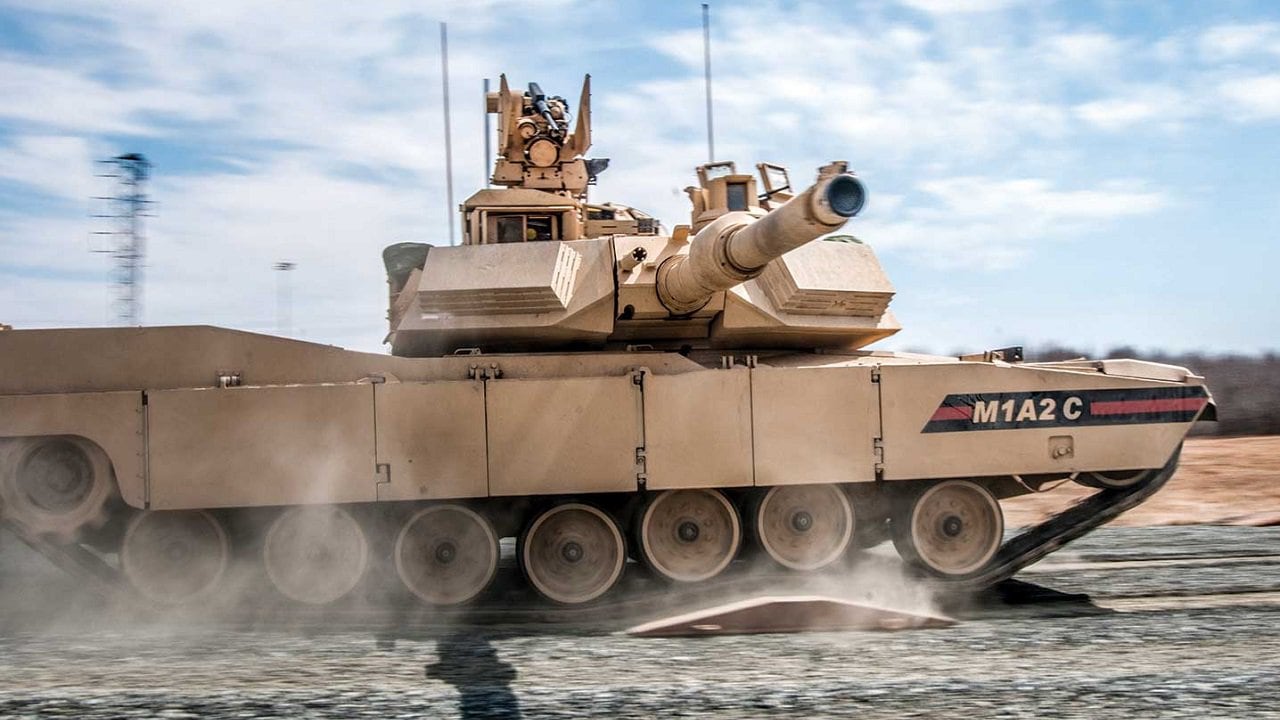
This is the story of how the US Army spent $400 million on seven tanks that never saw battle, never went into service, but might have saved the US military a giant headache in the years ahead. This is the story of the much-discussed M1A2 Abrams SEPv4.
Breaking Down the Costs of the M1A2 SEPv4 Tanks
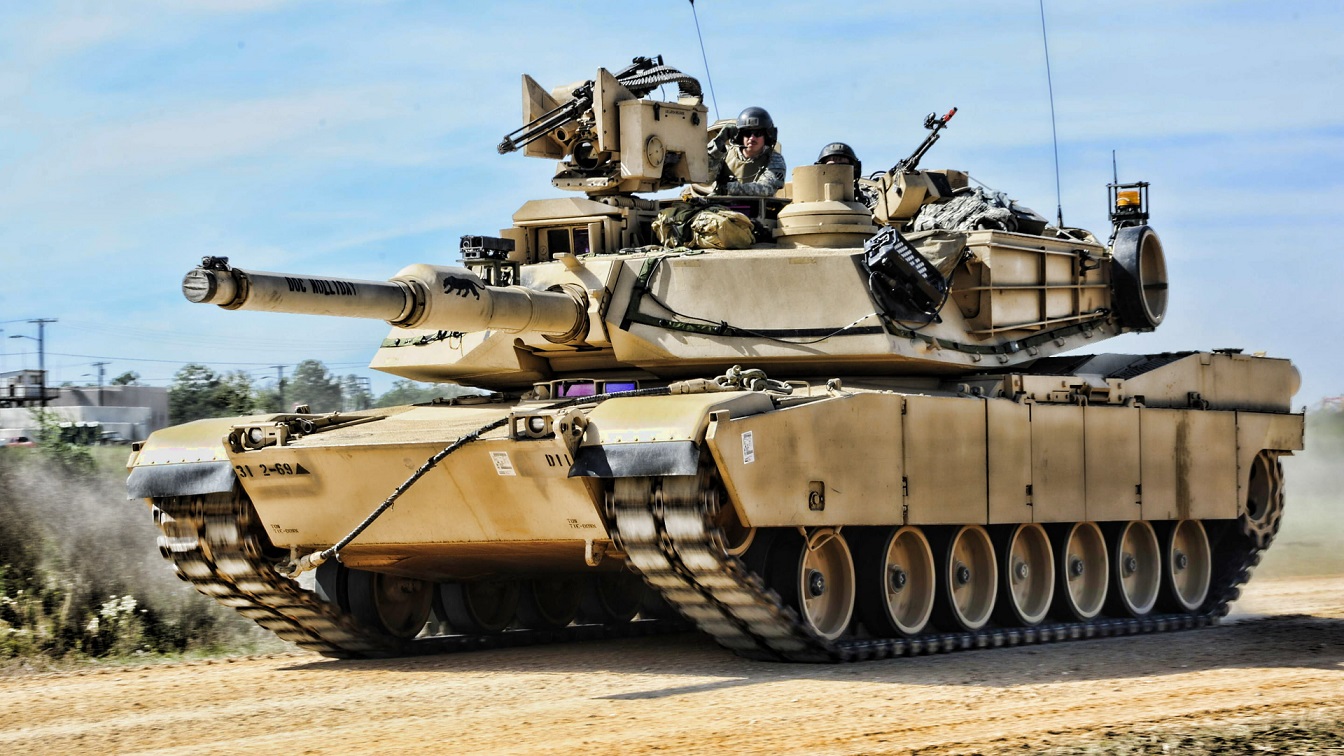
M1 Abrams Tank. Image Credit: U.S. Army.
The US Army spent at least $400.83 million on M1A2 SEPv4-specific development and testing from fiscal 2018 through fiscal 2024. It received seven prototype tanks and years of engineering and test work. It fielded zero operational SEPv4s.
The program ended in September 2023 after the Army decided another package of sensors and protection would add too much weight and logistical burden to an Abrams already approaching its limits.
Let’s break down those numbers: The first number was $311 million. In September 2017, General Dynamics Land Systems announced the initial contract to deliver seven SEPv4 prototypes. Divide the award by seven, and the result is $44.43 million per vehicle. That was not a production price. The contract paid for design, integration, and prototype construction. SEPv3 pricing covered modifications to existing government-owned hulls.
The comparison with SEPv3 is worse than the frequently repeated “three times” claim. The same announcement covered $270 million for 45 SEPv3 tanks, or $6 million each. The Army’s fiscal 2020 procurement book later put the SEPv3 gross weapon-system unit cost at $10.623 million. Depending on the comparison, the prototype award was about 4.2 to 7.4 times an SEPv3 upgrade. The categories differ, but the development premium was substantial.
The annual execution figures produce the higher total. Explicit SEPv4 development spending was $61.289 million in fiscal 2018, $135.600 million in 2019, $88.131 million in 2020, $52.646 million in 2021, $33.097 million in 2022, $4 million in 2023, and zero in 2024. That adds to $374.763 million. Dedicated testing added $4.749 million in 2020, $2.402 million in 2021, $3.410 million in 2022, $9.028 million in 2023, and $6.478 million in 2024, or $26.067 million.
Add the two subtotals, and the answer is $400.830 million. The original annual requests were higher: $419.917 million for development and $39.989 million for testing, or $459.906 million. Later Army budget books replaced estimates with execution. The lower figure excludes generic program-office support and broader Abrams work that cannot be assigned cleanly to SEPv4. The $311 million contract is included in the R&D total and must not be added again.
A later cost-analysis exhibit lists $409.056 million in cumulative contractor development and $83.393 million in a government-testing account. Those are lifetime cost-category totals with a different accounting scope. The development entry includes work before fiscal 2018, while the testing entry is broader than the dedicated annual SEPv4 test lines. Neither should be stacked on top of the annual-line total.
For the seven years in question, $400.83 million is the conservative, auditable figure.
The M1A2 SEPv4 Was Built Around Better Sights and Ammunition
SEPv4 began as Engineering Change Proposal 1B, the lethality follow-on to SEPv3.
It was intended to add third-generation forward-looking infrared sights for the commander and gunner, improved lasers, color cameras, and better image processing. Other planned changes included a laser-warning receiver, thermal-management improvements, an ammunition data link, and the 120mm Advanced Multi-Purpose round, a programmable projectile designed to replace several older ammunition types.
One thing is clear: The US Army was buying a development path, not seven ordinary tanks. Budget schedules covered component qualification, a critical design review, manufacturer testing, developmental testing, live-fire work, and operational evaluation. The timetable slipped badly. The fiscal 2021 book anticipated first-unit-equipped status in late fiscal 2024. By the fiscal 2024 submission, fielding had moved to late fiscal 2029.
Cancellation arrived before the test-and-fielding sequence produced an operational variant. Dividing the executed $400.83 million by seven prototypes yields $57.26 million per vehicle. That is not a production price, but it measures the program’s output: seven development tanks and a body of engineering work, with no deployable SEPv4 fleet.
The Abrams Had Reached Its Space, Weight and Cooling Ceiling
The warning signs predated SEPv4. Army budget books said the M1A2 SEPv2 was already at or beyond its space, weight, and power-cooling limits. SEPv3 restored electrical power and internal margin for new equipment. Armor, active protection, sensors, and communications then consumed much of it. The Abrams’ climb toward an 80-ton operational configuration complicated transport, bridges, recovery, and fuel supply.
No authoritative public document gives one final combat weight for a completed SEPv4. The problem was the direction of travel. SEPv3 with add-on protection approached 80 short tons, and every new system needed mounting space, power, cooling, and maintenance. Army documents described recovery requirements for “all 80-ton Abrams variants” and warned that units otherwise needed two M88A2 recovery vehicles for jobs one improved vehicle was meant to handle.
On September 6, 2023, the Army announced it would close out SEPv4. Program Executive Officer Maj. Gen. Glenn Dean said every further capability increase added weight, and the Abrams needed a smaller logistical footprint. Ukraine reinforced the demand for protection against missiles, drones, and top-attack weapons built into the vehicle rather than bolted on. That was the structural problem behind the SEPv4 weight trajectory.
M1E3 Keeps SEPv4 Technology but Starts With a 60-Ton Target
The Army said M1E3 would carry forward the “best features” of SEPv4 and use a modular open-systems architecture, making electronics and software replaceable without another permanent stack of modifications. It has not published a complete one-for-one transfer list. Claims that every planned SEPv4 sight, sensor or protection system survived therefore go beyond the public record.
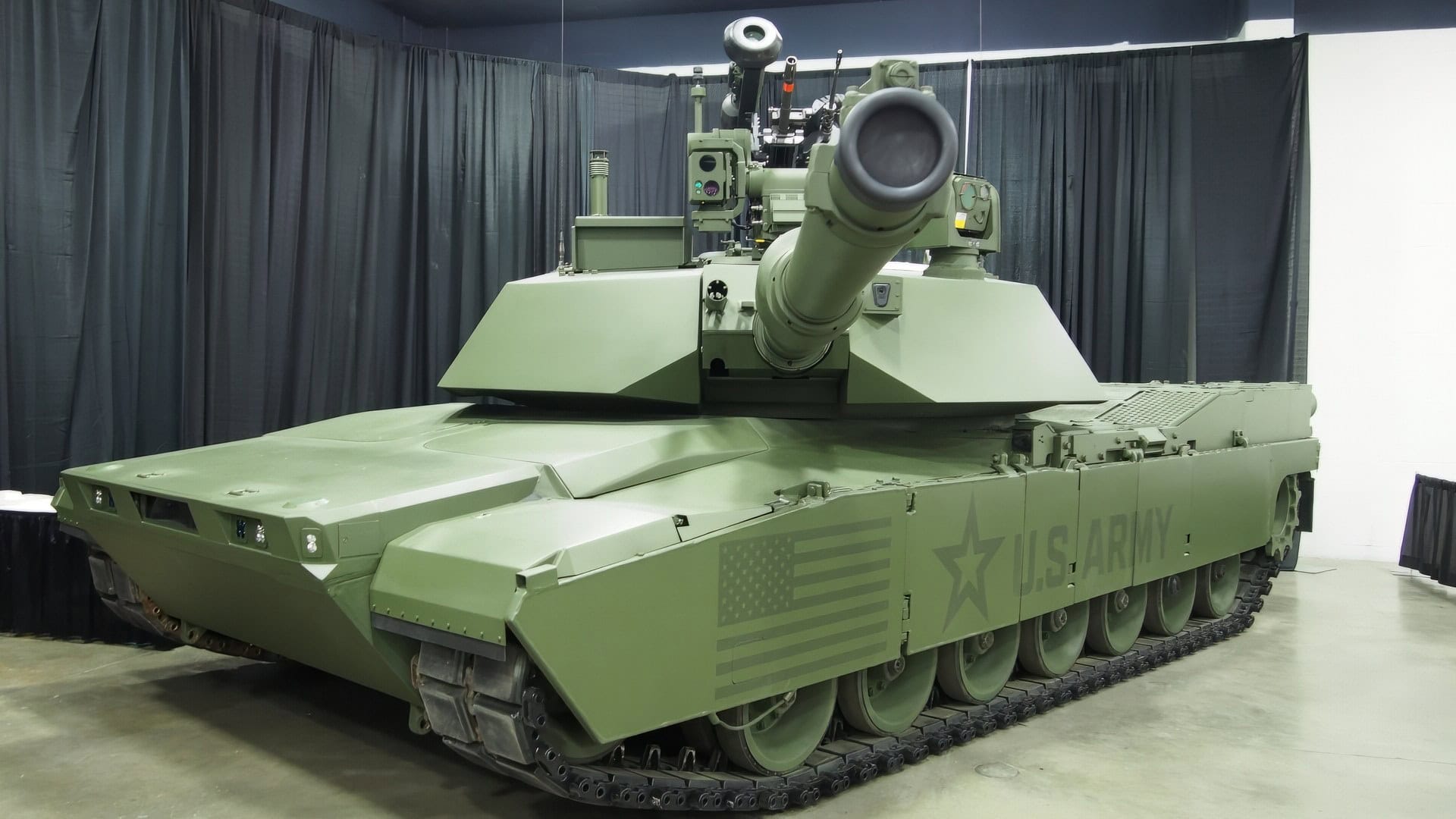
Photo taken on 1/17/2026 of the M1E3 Tank at the Detroit Auto Show. Image by 19FortyFive, All Rights Reserved.
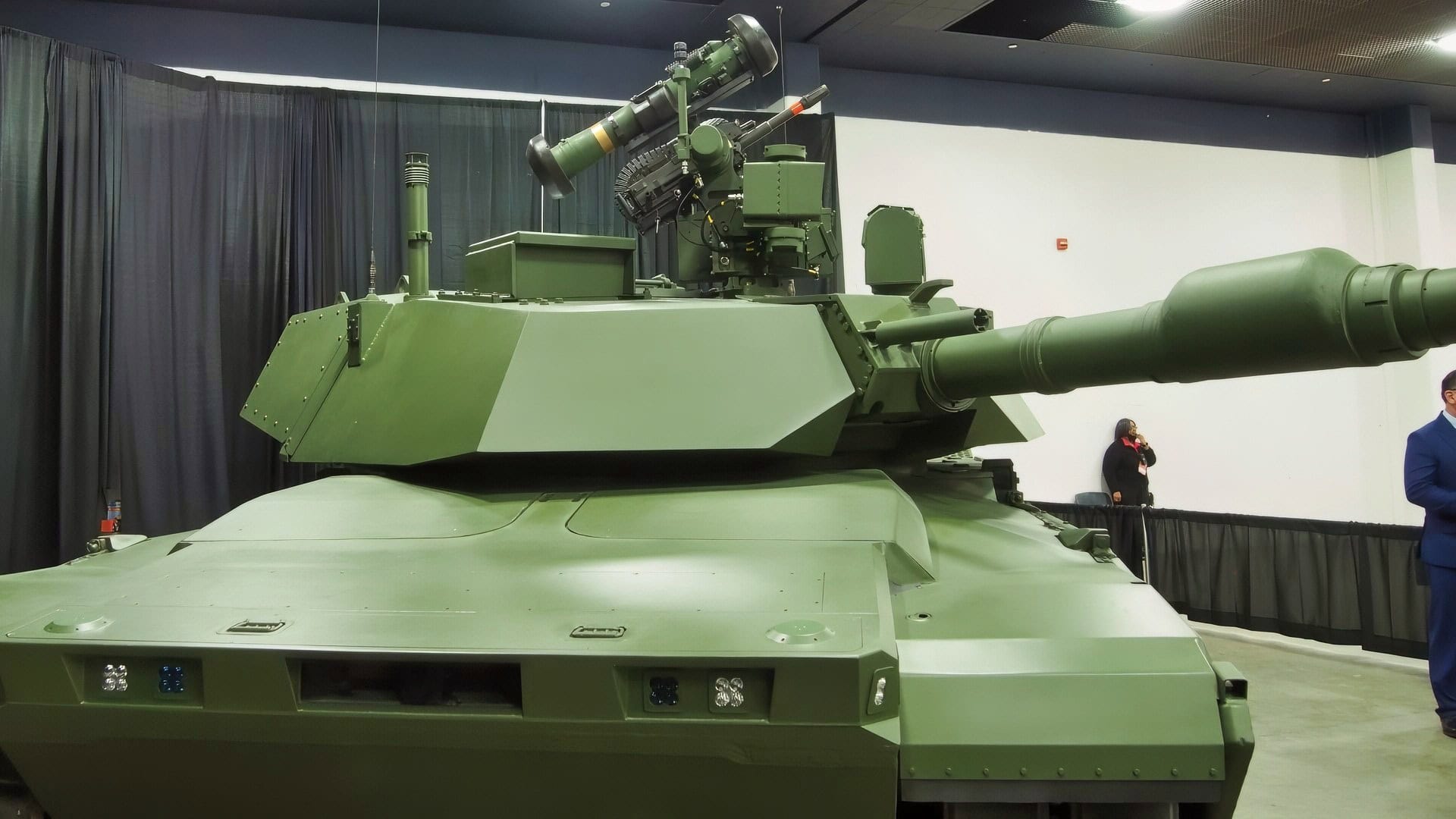
M1E3 Tank from the Detroit Auto Show. Photo Taken By 19FortyFive Staff on 1/17/2026.
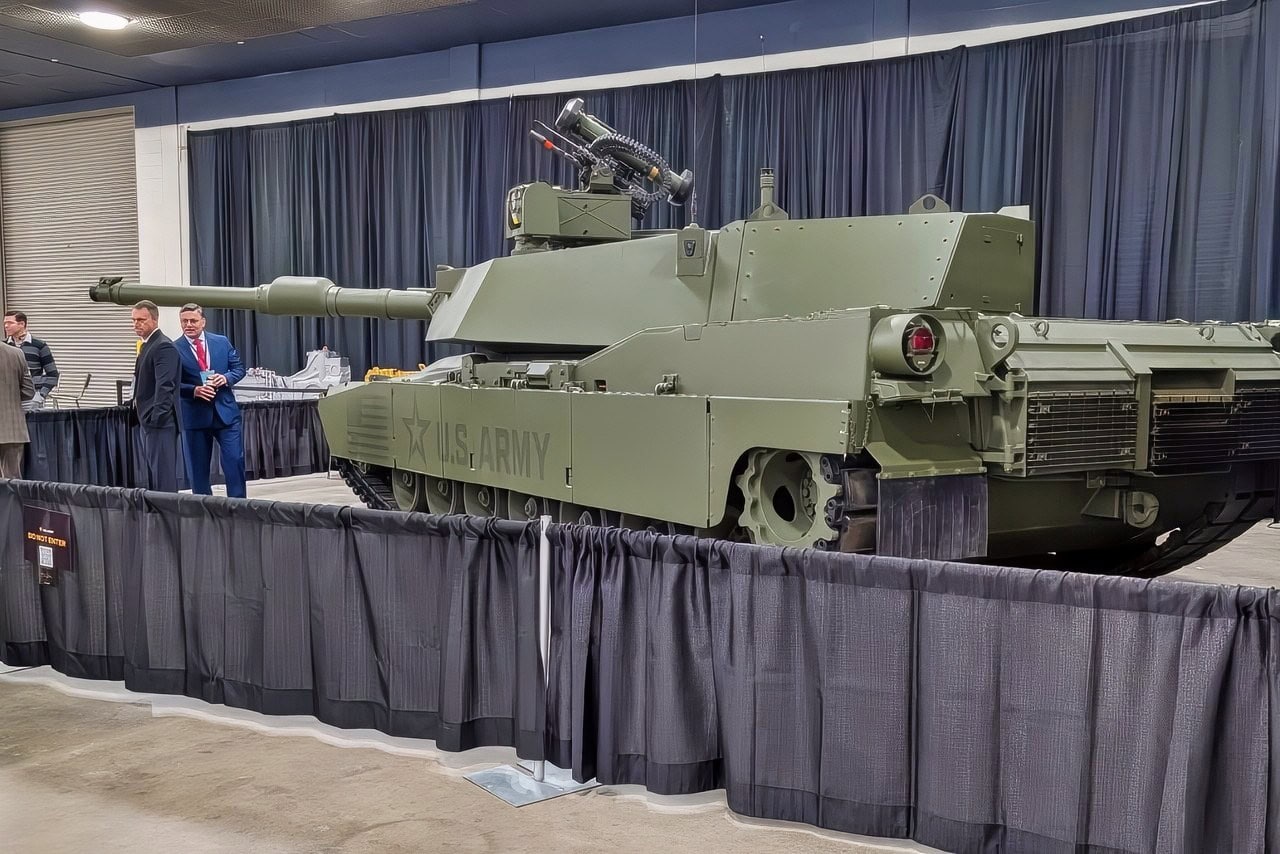
M1E3 Tank at the Detroit Auto Show. Image Credit: 19FortyFive.
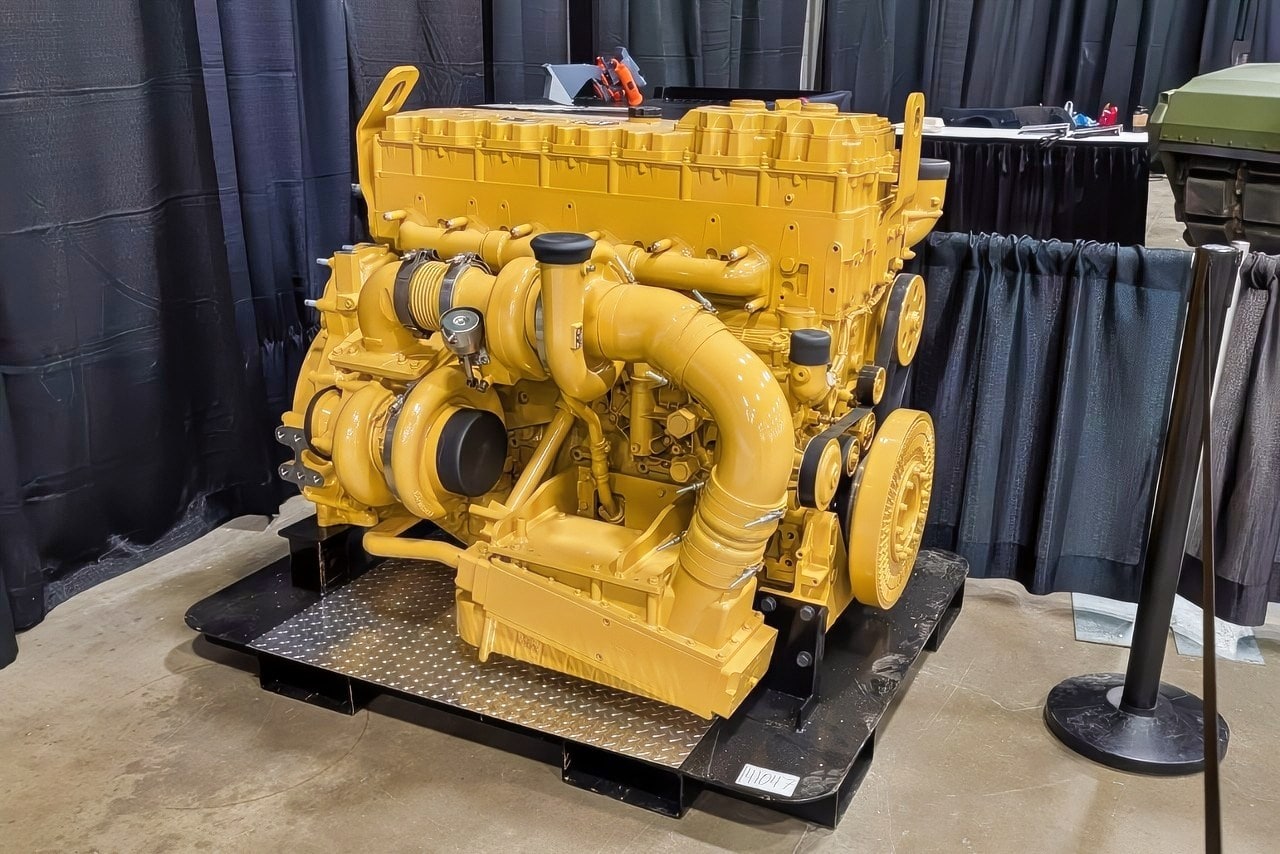
M1E3 Tank at the Detroit Auto Show. Image Credit: 19FortyFive.
An Army industry presentation in May 2026 set a 60-ton target and described a hybrid diesel-electric powertrain, a three-person crew, an unmanned turret with an autoloader and protection designed into the vehicle. Those changes explain the interest around the first M1E3 early prototype displayed in Detroit, the effort to build drone protection into the tank and the decision to move the crew out of the turret.
The Army’s fiscal 2027 request is $474.442 million for the entire Abrams Tank Improvement Program, not simply a check for finished M1E3 tanks. The budget divides it into $457.077 million for Abrams Modernization, $11.365 million for program-office support, and $6 million for other lethality and survivability enhancements. The money supports technology maturation, integration, and demonstrations.
In January 2026, the Army unveiled its first M1E3 early prototype at the Detroit Auto Show. We attended the show, and the photos above of the M1E3 Abrams are from the show we attended. The seven SEPv4 prototypes remain development vehicles. Not one was issued to an operational Army unit.
About the Author: Harry J. Kazianis
Harry J. Kazianis (@Grecianformula) was the former Senior Director of National Security Affairs at the Center for the National Interest (CFTNI), a foreign policy think tank founded by Richard Nixon based in Washington, DC. Harry has over a decade of experience in think tanks and national security publishing. His ideas have been published in the NY Times, The Washington Post, The Wall Street Journal, CNN, and many other outlets worldwide. He has held positions at CSIS, the Heritage Foundation, the University of Nottingham, and several other institutions related to national security research and studies. He is the former Executive Editor of the National Interest and the Diplomat. He holds a Master’s degree focusing on international affairs from Harvard University.

