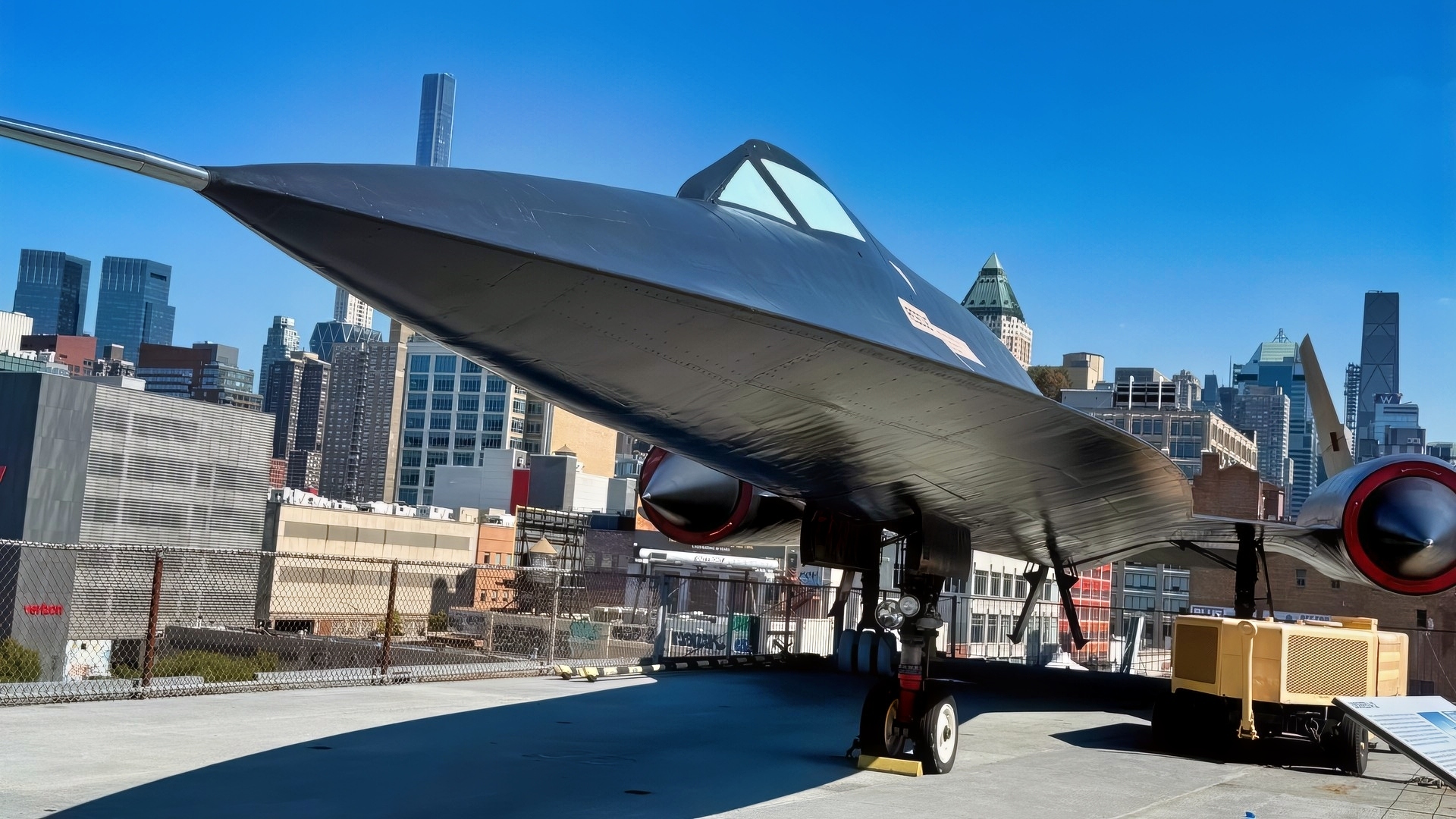
Legendary Lockheed designer Kelly Johnson wanted to convert the CIA’s secret Lockheed A-12 reconnaissance aircraft into a Mach 3 interceptor prototype. The idea was that the plane would be the ultimate high-speed, extraordinary interceptor aircraft developed by the United States.
The plane would have been a high-speed missile-truck version of the SR-71 Blackbird.
It could have flown three times the speed of sound, operate above 80,000 feet, and blast Soviet nuclear bombers before they could reach North America.
This is the story of how the A-12 could have become the YF-12.
The Specs: How the A-12 Would Have Become the YF-12
Three prototypes of this bird were constructed. Still, the aircraft never entered operational service.
Two crewmembers would pilot this aircraft.
Some sources say it had a demonstrated maximum speed of Mach 3.35 and even reached an altitude of 90,000 feet.
Two Pratt & Whitney J58 turbojets powered the bird.
A powerful Hughes AN/ASG-18 radar gave this plane some great observation capabilities and the ability to detect threats at greater ranges.
The radar was designed to track targets at long distances — even aircraft flying below the interceptor.
For the 1960s, that was an incredible capability.
The plane’s primary armament was three AIM-47 Falcon missiles. The AIM-47 was meant ot destroy large aircraft at long range.
What’s more, it could be carried internally, allowing the YF-12 to maintain its aerodynamic performance during high-speed flight.
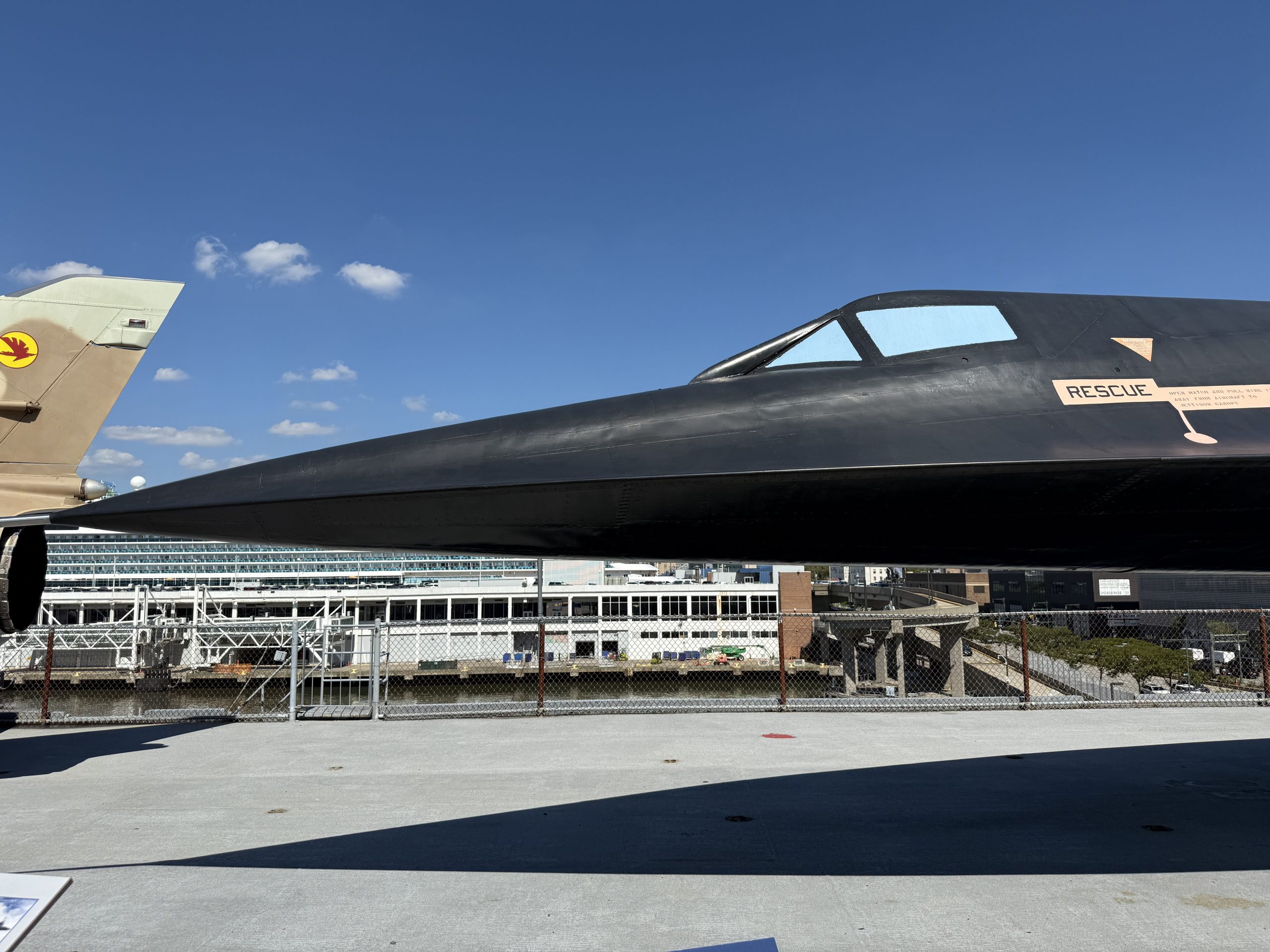
A-12 That Came From SR-71 Family USS Intrepid Photo Shoot 19FortyFive
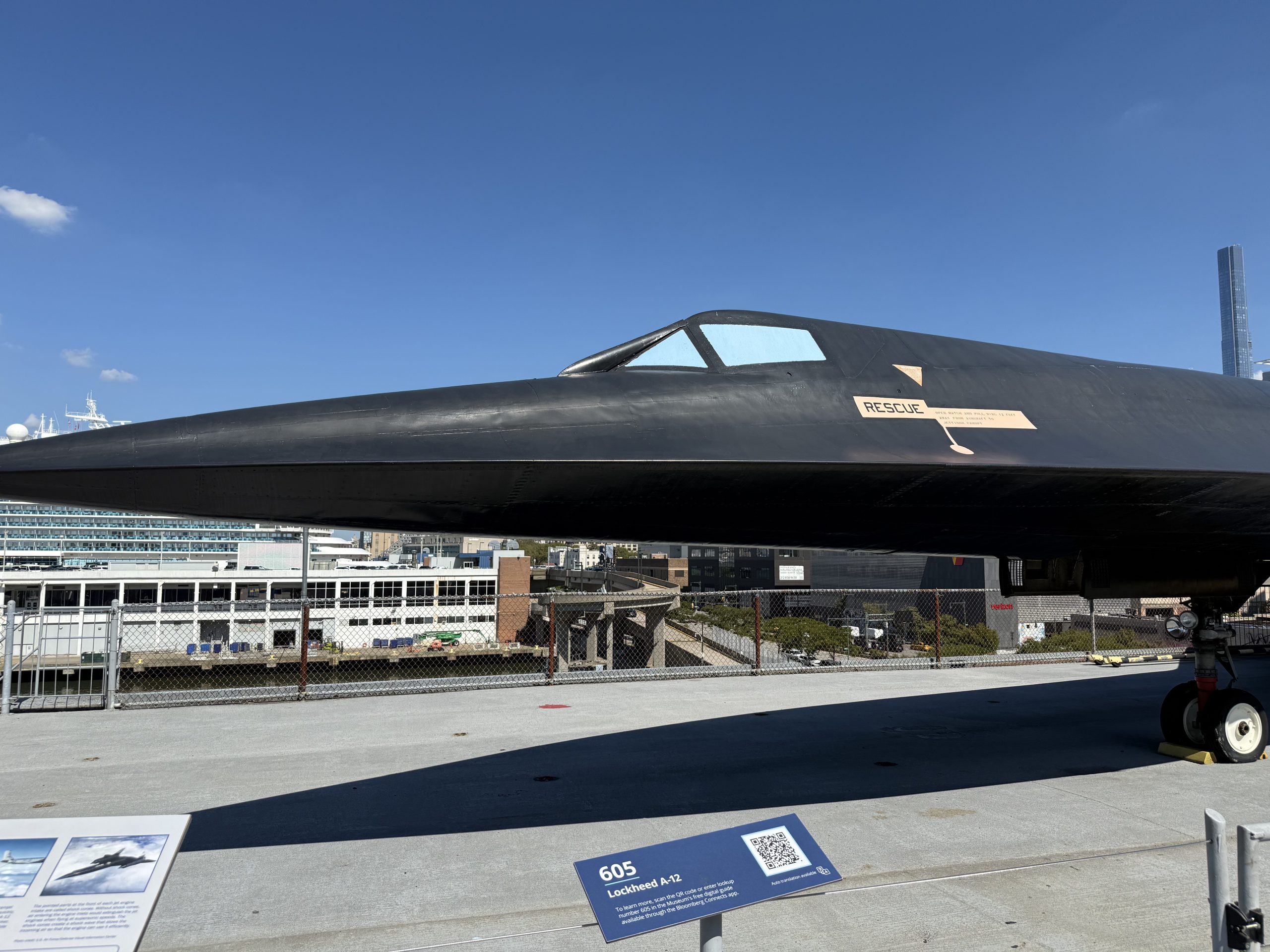
A-12 That Came From SR-71 Family USS Intrepid Photo Shoot 19FortyFive
The AIM-47 was truly ahead of its time.
Although the YF-12 never made it beyond the prototype phase, that missile informed the AIM-54 Phoenix, and the AWG-9 radar later appeared on the US Navy’s F-14 Tomcat.
Performance
In seven test firings, the YF-12 prototype achieved six successful intercepts. And that one failure was attributed to a missile gyroscope malfunction.
In fact, the most serious test occurred September 21, 1966, when the missile descended from the YF-12 and blasted away three feet of the left horizontal stabilizer of a QB-47 targeted plane.
What made that test extraordinary was that the YF-12 could attack multiple aircraft operating tens of thousands of feet below it while traveling at extraordinary speed.
YF-12 was constructed mostly from titanium to withstand the enormous temperatures generated by sustained flight at Mach 3.
The YF-12 would have a pilot and a fire-control officer who operated the weapons system and the radar.
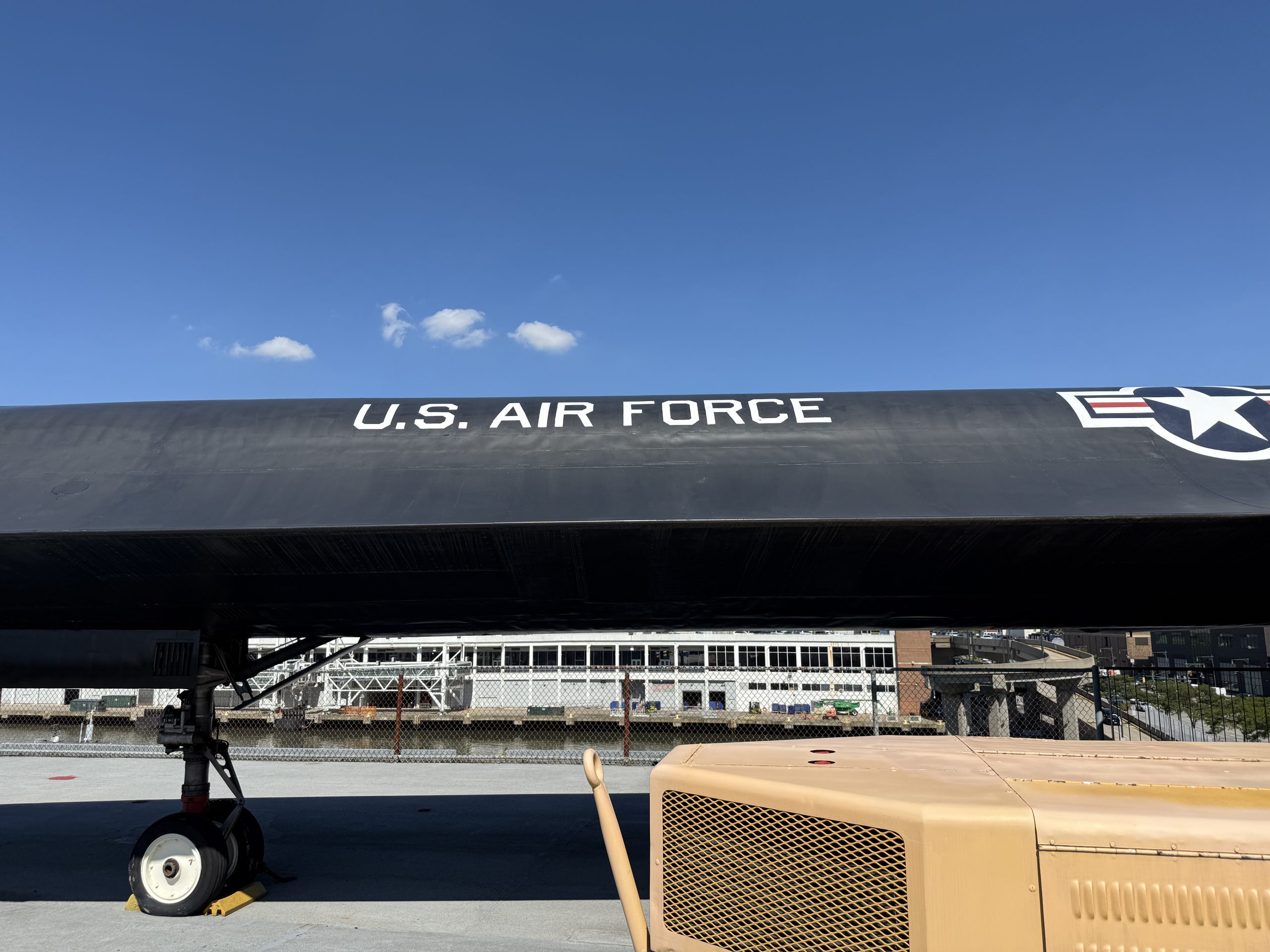
A-12 That Came From SR-71 Family USS Intrepid Photo Shoot 19FortyFive
The YF-12 also had a redesigned nose housing its radar, along with additional ventral stabilizers to compensate for aerodynamic changes.
In fact, the YF-12 used a weapons system originally developed for another canceled interceptor, the North American YF-108 Rapier.
The Supersonic Interceptor…That Never Was
The Air Force almost moved forward with producing the YF-12 under the designation F-12B.
The Air Force wanted a fleet of 93 interceptors.
By the late 1960s, American strategic priorities were changing.
The USSR was expanding its intercontinental ballistic missile arsenal.
Meanwhile, the Vietnam War was consuming considerable defense resources.
Because of these changes, the Pentagon was questioning the financial justification for deploying a specialized, extremely expensive interceptor to defend North American airspace against Soviet bombers. The program was ultimately killed in early 1968.
NASA Wanted It
But that was not the end of the YF-12’s story.
The Air Force may have gone another direction with the program, but NASA employed the plane as a testbed.
NASA used the YF-12 to investigate how it could maintain high-speed flight and what that might do to aerodynamic heating and structural stresses.
They tested the plane for supersonic inlet performance.
NASA tested new engine control systems on the YF-12. NASA also used it to conduct high-temperature instrumentation checks.
Ultimately, the plane achieved 297 flights and around 450 flight hours.
In 1971, the YF-12 was tragically destroyed in an in-flight fire.
NASA then introduced an SR-71A, designated YF-12C, to continue the research program.
That work greatly enhanced the understanding of high-speed propulsion and helped improve the SR-71 Blackbird’s inlet control technology.
Without this platform, key lessons might either have taken longer to learn for future supersonic platforms or might not have been learned at all.
About the Author: Brandon J. Weichert
Brandon J. Weichert is the Senior National Security Editor at 19FortyFive.com. He also manages The Weichert Brief on Substack. Weichert also hosts “National Security Talk” on Rumble. He is the author of four bestselling national security books, most recently A Disaster of Our Own Making: How the West Lost Ukraine (Encounter Books). Follow him on Twitter/X @WeTheBrandon.