
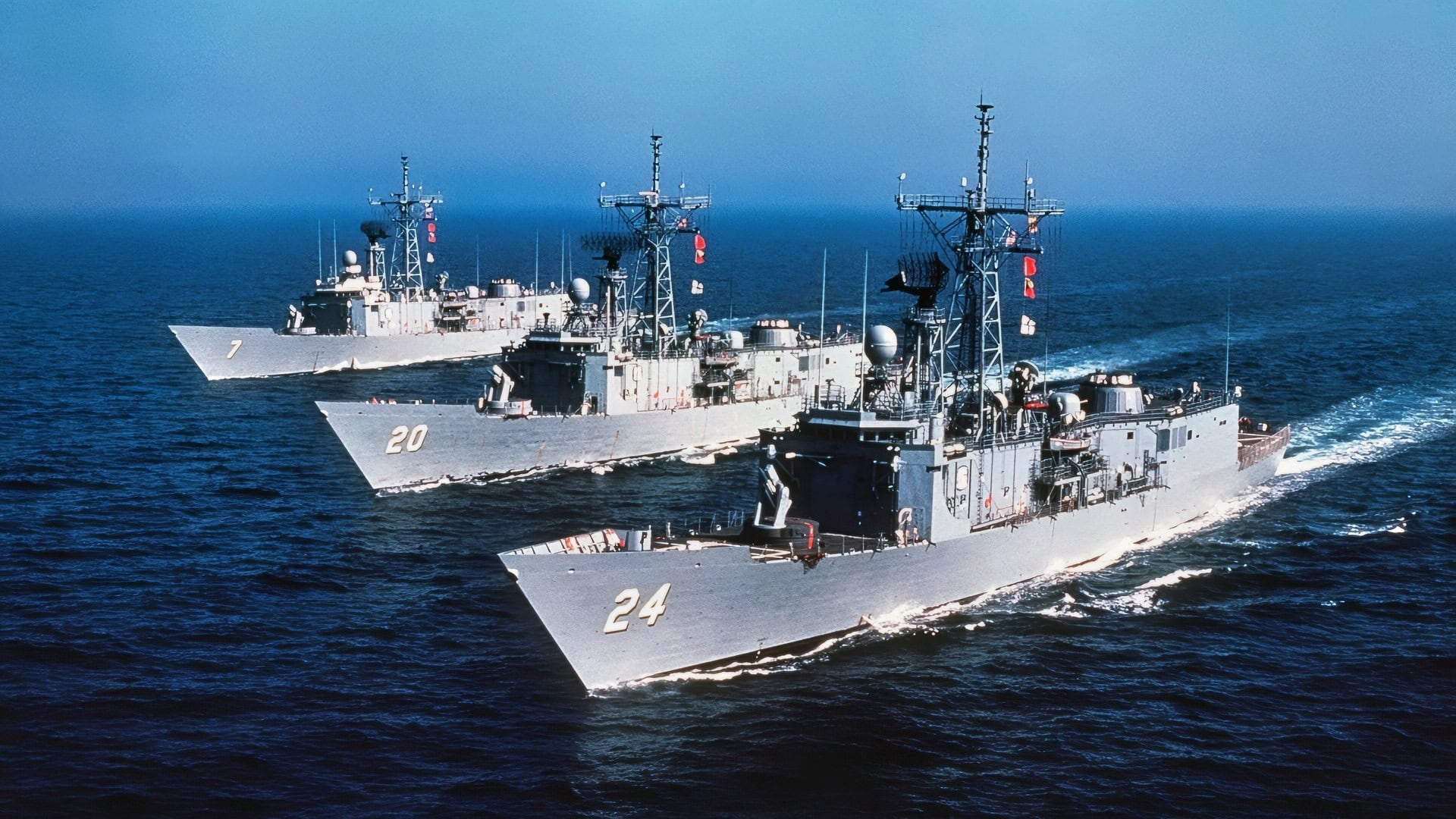
The United States Navy did something pretty remarkable years back. Washington gave away its force of frigates. A hull-by-hull accounting produces 20 former U.S. Navy hulls: 19 entered operational service abroad, while ex-USS Duncan went to Turkey as a spare-parts source. Turkey received eight working ships, Egypt four, Poland two, Bahrain two, Taiwan two, and Pakistan one. Add Duncan, and the total reaches 20, equal to 39.2 percent of the 51 Perrys commissioned by the U.S. Navy.
That’s a big deal for many reasons. USS Simpson left service on September 29, 2015, and the operational fleet has held zero guided-missile frigates since.
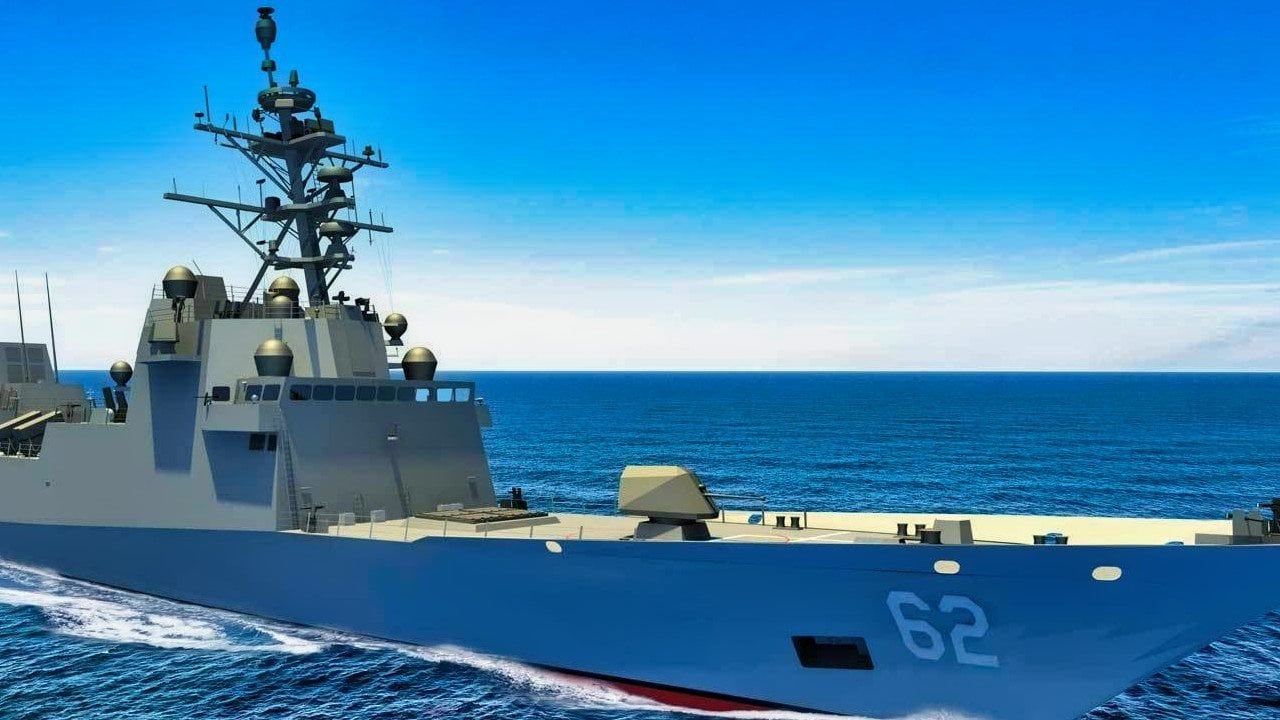
Constellation-Class Frigate. Image Credit: Creative Commons.
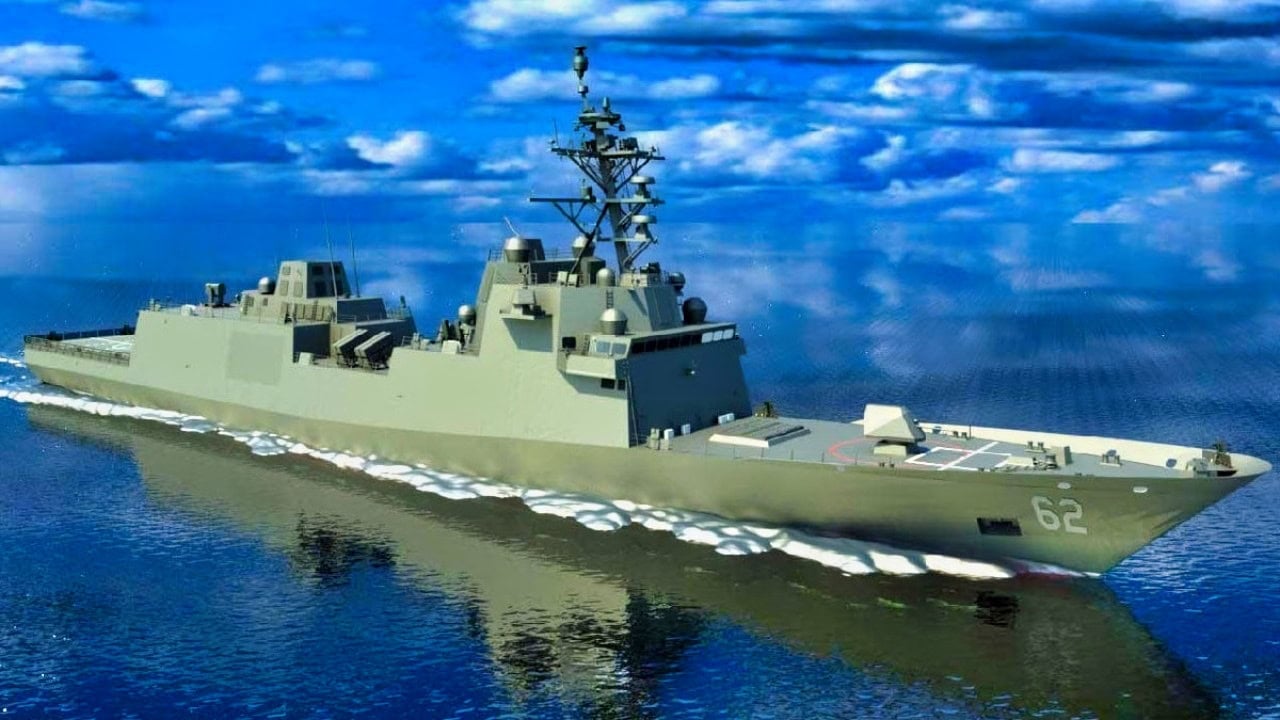
Constellation-Class Frigate. Image Credit: Creative Commons.
The Navy later planned up to 20 Constellation-class replacements at a combined cost of over $22 billion. In November 2025, it reduced the program to two ships and terminated work on four of the six under contract. By March 2026, material orders for the remaining pair were paused while the ships underwent strategic review.
The Perry class had been built for the less glamorous work a large fleet performs every day. The roughly 4,100-ton ships escorted merchant vessels and amphibious groups, hunted submarines, supported maritime interdiction, and carried up to two helicopters. Their original battery included a 76mm gun, torpedoes, and a single-arm Mk 13 launcher feeding a 40-round magazine of Standard surface-to-air missiles and Harpoon anti-ship missiles. Their toughness was tested when USS Stark survived two Exocet hits and USS Samuel B. Roberts survived an Iranian mine.
Retiring the Perrys was not irrational by itself. The design had limited room for new equipment, old electronics, and rising maintenance demands. The Navy removed the Mk 13 launcher from its remaining ships by 2004 after retiring the SM-1 missile, leaving late-service Perrys without their original air-defense and anti-ship battery. An official historic evaluation of USS Klakring reflected the class’s declining military utility. A modern rebuild would have required new radars, combat systems, launchers, wiring, cooling and power.
The error was retiring the escort fleet before its replacement worked. As one US Navy flag officer who retired recently told me: “We clearly went too far in giving these away.”
The Perry Transfers Gave Allies Cheap Hulls, Not Free Navies
We should do a little qualifying here. The Excess Defense Articles program allows grants or sales valued at 5 to 50 percent of the original acquisition cost according to age and condition. The receiving government pays for packing, handling, transportation, and refurbishment. The ship arrives “as is, where is.” A nominal hull price therefore says little about the cost of returning an old frigate to sea, training its crew, and supporting it for another decade.
Bahrain illustrates the difference. The former USS Robert G. Bradley was authorized as a grant transfer, but the State Department approved an estimated $150 million refurbishment and support package covering spares, training, publications, and logistics.
Turkey received eight operational Perrys plus Duncan for parts, then invested in the GENESIS combat-management modernization. Selected Turkish ships gained an eight-cell Mk 41 launcher and capacity for as many as 36 Evolved Sea Sparrow Missiles. The class supported the 2006 Beirut evacuation, the 2011 Libya operation, and NATO missions.
Washington received something useful in return. The transfers strengthened allied fleets, increased interoperability, and removed storage and disposal liabilities. The Coast Guard also harvested Perry weapons components for its cutters, producing more than $24 million in reported savings.
What the US Navy surrendered was optionality. When leaders studied reactivating retired Perrys in 2017, the estimated work already ran into the billions.
The hulls abroad still had value, but recovering an American fleet from mothballs no longer looked cheap.
US Navy Problems: The Littoral Combat Ship Did Not Replace the Perry Frigates
The Navy’s 2015 explanation was explicit: the Littoral Combat Ship and a later frigate version of the LCS would absorb Perry missions.
The replacement was supposed to handle surface warfare, mine countermeasures, and anti-submarine operations in coastal waters while freeing cruisers and destroyers for harder assignments.

USS Billings Littoral Combat Ship 2025 Fleet Week. Image by Stephen Silver for 19FortyFive.com
A 2022 Government Accountability Office review found the Navy had spent more than $28 billion in constant fiscal 2019 dollars to develop and build 32 LCS by fiscal 2019. Construction costs had more than doubled from early expectations, while promised capability remained unfulfilled.
The LCS has performed deployments and useful peacetime work, but it never became a balanced blue-water escort. Mission-package delays, propulsion trouble, self-defense limits, and early retirements left destroyers covering work a cheaper frigate should absorb. The result is the central contradiction behind the LCS program’s cost and capability problem: the Navy retired a proven escort type, spent tens of billions on its intended successor, and still lacked a frigate.
Constellation Fell From 20 Frigates to Two Hulls Under Review
Constellation was designed to repair the LCS mistake. The Navy selected a proven Franco-Italian FREMM parent design and planned a more survivable multi-mission escort with modern sensors, anti-submarine equipment, and a 32-cell vertical-launch battery.
Yet the service changed the parent design so extensively that construction began before basic and functional design work was finished. GAO found the lead ship’s delivery had slipped by about 36 months and later reported the Navy had exercised more than $3.4 billion in contract options for six ships before completing the design.
The November 2025 decision terminated four vessels and left USS Constellation and USS Congress under review. In June 2026, GAO said officials were assessing “what capability, if any,” would result from those two ships.
This was not a clean replacement program trimmed for economy. It was another example in a larger pattern of failed surface-ship acquisition. The current eleven-year frigate gap now extends beyond the program created to close it.
FF(X) Restarts the Frigate Clock
The Navy’s third attempt is FF(X), based on the Coast Guard’s Legend-class National Security Cutter.
The service announced the design in December 2025 as a smaller surface combatant focused on surface warfare, modular payloads, and unmanned systems. In April 2026, the Navy awarded HII’s Ingalls Shipbuilding a $282.9 million lead-yard contract. The fiscal 2027 plan showed one ship in 2027, another in 2029, and two in 2031.
The new FF(X) philosophy favors a stable American hull and faster production over Constellation’s heavier combat system. That choice addresses design risk, but it starts another schedule rather than filling the present fleet. The Navy wants the first hull in the water in 2028. Its earliest projected delivery is June 2030.
About the Author: Harry J. Kazianis
Harry J. Kazianis (@Grecianformula) was the former Senior Director of National Security Affairs at the Center for the National Interest (CFTNI), a foreign policy think tank founded by Richard Nixon based in Washington, DC. Harry has over a decade of experience in think tanks and national security publishing. His ideas have been published in the NY Times, The Washington Post, The Wall Street Journal, CNN, and many other outlets worldwide. He has held positions at CSIS, the Heritage Foundation, the University of Nottingham, and several other institutions related to national security research and studies. He is the former Executive Editor of the National Interest and the Diplomat. He holds a Master’s degree focusing on international affairs from Harvard University.

