
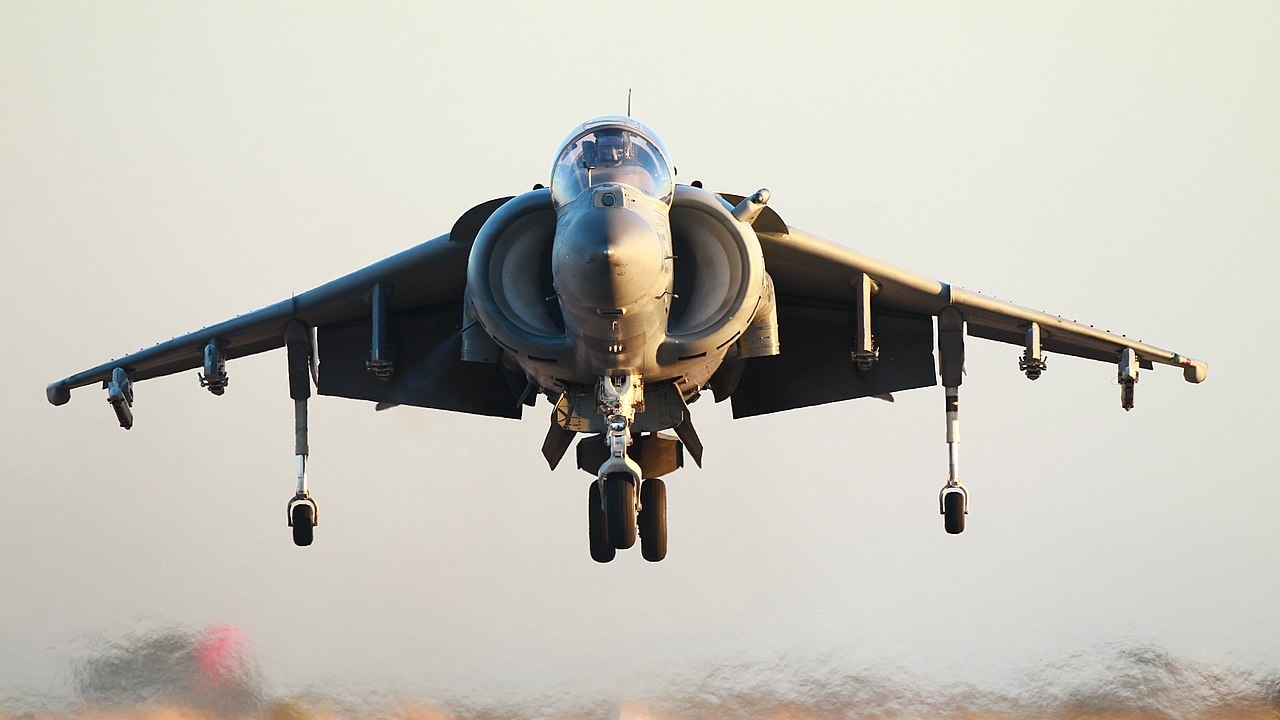
The UK Sold the US 72 AV-8 Harriers for Spare Parts – In November 2011, the UK sold 72 retired Harrier jump jets to the US Marine Corps for £110 million (about $180 million), which was a bargain price of $2.5 million per aircraft.
The US Marine Corps used the airframes and Rolls-Royce engines as a massive source of spare parts to keep its own AV-8B Harrier fleet flying.
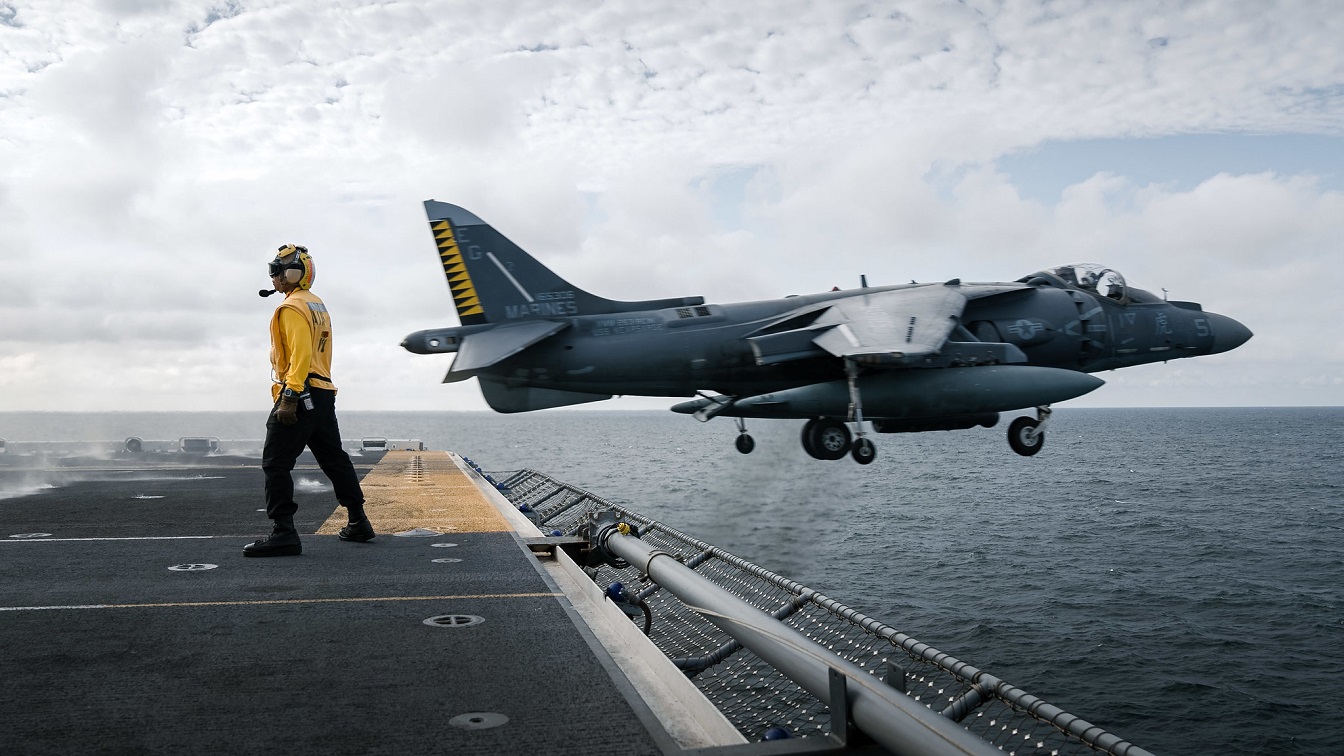
BALTIC SEA (Aug. 24, 2022) A U.S. Marine Corps AV-8B Harrier attached to the 22nd Marine Expeditionary Unit (MEU) flies past U.S. Navy Aviation Boatswain’s Mate (Handler) 1st Class Tu N. Chau during flight operations aboard the Wasp-class amphibious assault ship USS Kearsarge (LHD 3), Aug. 24, 2022. The Kearsarge Amphibious Ready Group and embarked 22nd MEU, under the command and control of Task Force 61/2, is on a scheduled deployment in the U.S. Naval Forces Europe area of operations, employed by U.S. 6th Fleet to defend U.S., allied and partner interests.
The UK retired its entire Harrier fleet in 2010 as part of the Strategic Defense and Security Review to cut costs and fund newer jets such as the Typhoon and F-35.
Despite criticism, UK officials defended the low price as a pragmatic move that saved millions in storage costs and brought in extra revenue, rather than completely scrapping the grounded jets.
The UK Defense Budget “Black Hole” Forced Their Hand
In 2010, the UK government was still reeling from the 2007-2008 economic crisis and faced some very hard decisions regarding cost-saving in the Defense Ministry’s budget.
The government had to fund not one but two new Queen Elizabeth-class aircraft carriers — that were already under construction. They had to cut back several prized programs, which included the retention of a small number of Tornado attack aircraft and the removal of the iconic and very popular Harrier jump jet.
The MoD would be replacing these aircraft with more Typhoons and the adoption of the US-made F-35 Lightning II. The decision was not a popular one in many circles. The Harrier had been in British service since 1969 and was the cornerstone of their victory over Argentina during the Falkland Islands conflict.
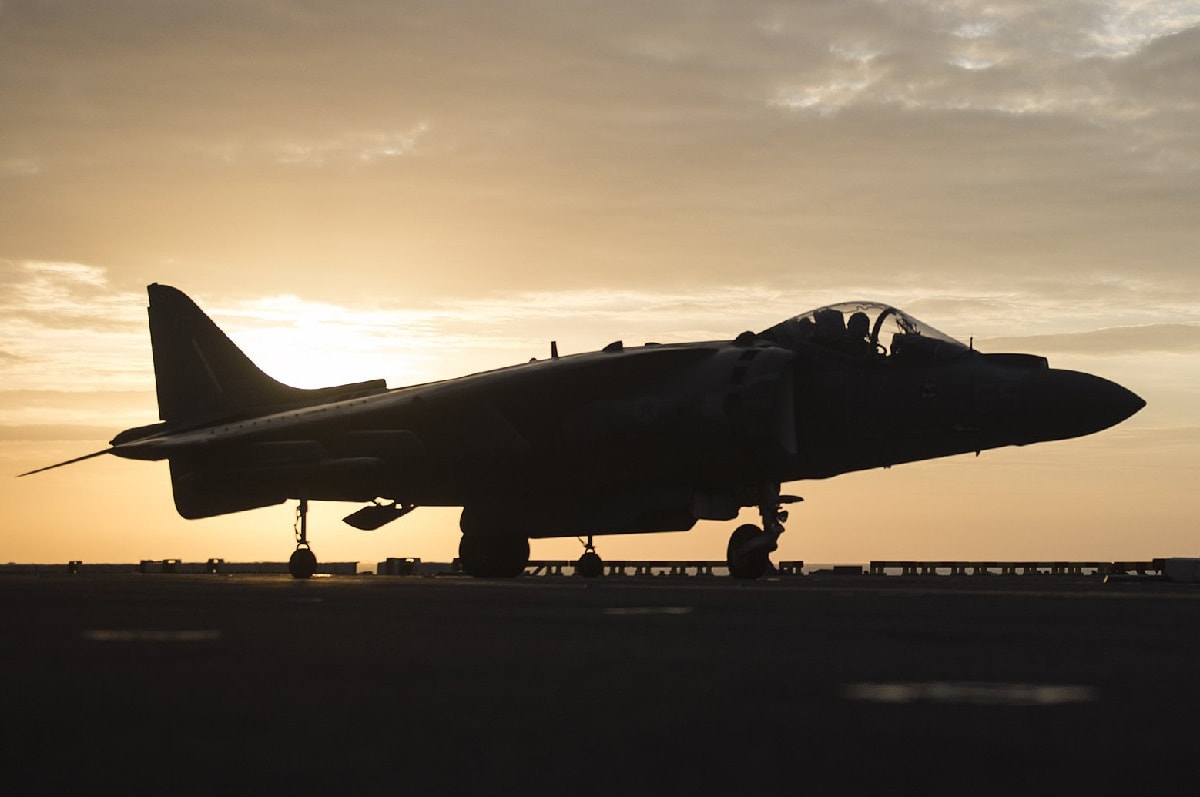
AV-8 Harrier. Image: Creative Commons.
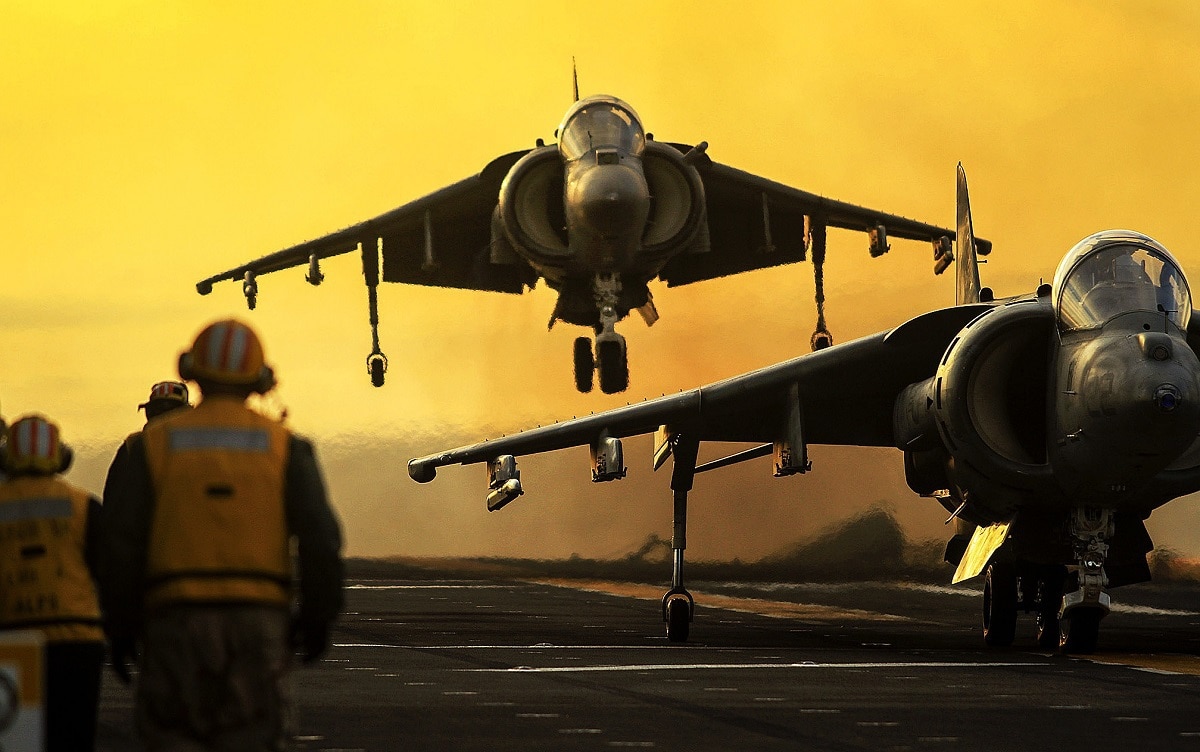
An AV-8B Harrier from Marine Attack Squadron (VMA) 214 performs a vertical take off from the flight deck of the amphibious assault ship USS Boxer (LHD 4). Boxer is underway conducting training off the coast of Southern California.
So, the UK sold the 72 Harriers to the US Marine Corps for $180 million, which was less than the cost of just two F-35Bs as spare parts for their Harrier force. The aircraft were located at Davis-Monthan AFB in Arizona.
While Not A Popular Decision, It Was Part Of A Billion Pound Savings
The decision to cut the entire Harrier fleet was a huge blow for BAE Systems, which lost 3,000 jobs in the process.
“We have agreed to the sale of the final 72 Harrier aircraft frames and associated parts, which will be used as a major source of spares for the U.S. Marine Corps Harrier AV-8B fleet of aircraft,” defense equipment minister Peter Luff said to the British Parliament.
“The value of the sale is around $180 million (equal to) some 110 million pounds, and represents a good deal both for UK taxpayers and the US government,” he added.
The huge defense cuts had to be balanced to save the government money when budgets got really tight.
“Added to the savings made from retiring the Harrier fleet from service, this sale takes the total estimated receipts and savings to the Ministry of Defence to around one billion pounds,” Luff said.
He said this savings would allow Britain to invest in more modern and capable aircraft, including Lockheed Martin’s F-35 Joint Strike Fighter.
The AV-8 Harrier, The Original “Jump Jet”
The Harrier was developed in the 1960s by Hawker Siddeley for the British Royal Air Force. First-generation Harriers had limited range and payload, but could operate from short fields or take off and land vertically.
This versatility led the US Marine Corps to acquire Harriers in 1971 under the designation AV-8A. The Harrier II was developed by McDonnell Douglas and featured a larger composite wing, a raised cockpit with advanced targeting radar, aerodynamic improvements, and a powerful Rolls-Royce Pegasus vectored-thrust engine that powered the aircraft to Mach 0.9 (673 mph).
With four exhaust nozzles that can rotate from horizontal to vertical, the Harrier can “jump” off the ground in a short take-off run or can even take off and land vertically.
The Harrier carried more ordnance than a WWII B-17 bomber. It was armed with a General Dynamics GAU-12 Equalizer 25 mm, 5-barreled rotary cannon mounted under-fuselage in the left pod, with 300 rounds of ammunition in the right pod
The aircraft had 6× under-wing pylons and 1× under-fuselage hardpoint, supporting up to 9,200 lb (4,200 kg) of payload and carrying a variety of rockets, bombs, missiles, or extra fuel tanks.
Combat History Of the AV-8 Harrier
The AV-8 Harrier II earned an outstanding reputation in combat, defined primarily by close air support, interdiction, and battlefield flexibility across multiple global conflicts.
However, during the Falklands War, the Harrier had a 23-0 record in shooting down Argentinian aircraft. But soon afterward, its role changed to strictly close air support.
During the first Gulf War in 1991 (Desert Storm), U.S. Marines operated 86 AV-8B Harriers, flying 3,380 combat sorties. They logged over 4,100 flight hours and delivered more than 6 million pounds of ordnance in direct support of ground troops, maintaining an impressive 90 percent readiness rate.
General Norman Schwarzkopf famously praised the Harrier II as one of the seven most critical weapons of the 1991 Gulf War. He highlighted its expeditionary capabilities and its unique ability to operate from austere, forward locations, providing rapid and devastating close air support to ground troops.
During the Bosnian War, AV-8B Harriers and British Sea Harriers supported NATO’s Operation Deny Flight and Operation Deliberate Force. Their combat record featured successful reconnaissance, Close Air Support (CAS), and precision strikes on Serbian ground targets, with no aircraft lost in air-to-air combat.
Marine Corps’ Harrier IIs played a vital role in Operation Enduring Freedom (OEF) in Afghanistan, flying thousands of combat flight hours and executing close air support (CAS), armed reconnaissance, and force protection missions against Taliban and al-Qaeda forces.
The Harriers operated from forward and remote locations, which allowed them to reach ground troops in need of CAS much faster than other conventional aircraft.
Harrier IIs also took part in the 2011 intervention in Libya; the U.S.-led fight against the Islamic State in Iraq and Syria; the 2023 Red Sea crisis involving the Iranian-backed Houthis in Yemen; and in the Caribbean Sea, prior to the capture of Venezuelan President Nicolás Maduro in January.
The Marine Corps Recently Ended A 55-Year Era By Retiring The AV-8
The June retirement of the last Harriers at MCAS Cherry Point ended a long history between the aircraft and the Marine Corps, which dated back to 1971.
The Italian Navy is also planning to retire the AV-8 Harrier IIs from its service in 2028, as it transitions to the F-35B. The Spanish Navy will then be the only country to operate the Harrier.
About the Author: Steve Balestrieri
Steve Balestrieri is a National Security Columnist. He served as a US Army Special Forces NCO and Warrant Officer. In addition to writing on defense, he covers the NFL for PatsFans.com and is a member of the Pro Football Writers of America (PFWA). His work was regularly featured in many military publications.