
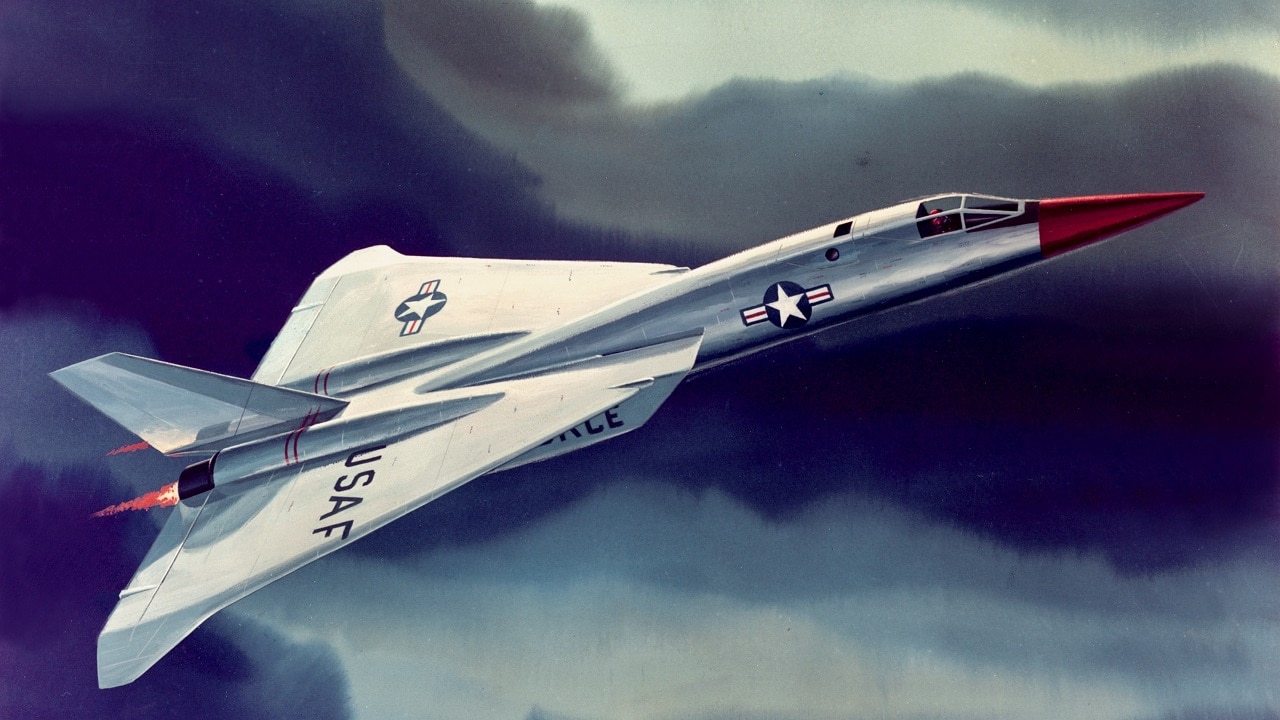
XF-108 Rapier by the Numbers: 480 Planned, Mach 3 and Zero Aircraft Built – The U.S. Air Force once planned to buy 480 North American F-108A interceptors. The program also called for two prototypes and 31 preproduction aircraft. The airplane is now usually called the XF-108 Rapier, although official records used F-108A because no flyable experimental prototype reached completion.
The planned force would have cost more than $4 billion in late-1950s dollars. President Dwight D. Eisenhower cited that estimate when explaining why the government had stopped work. The figure covered the intended interceptor force rather than the money already spent on the mockup, radar, missile, and preliminary engineering.
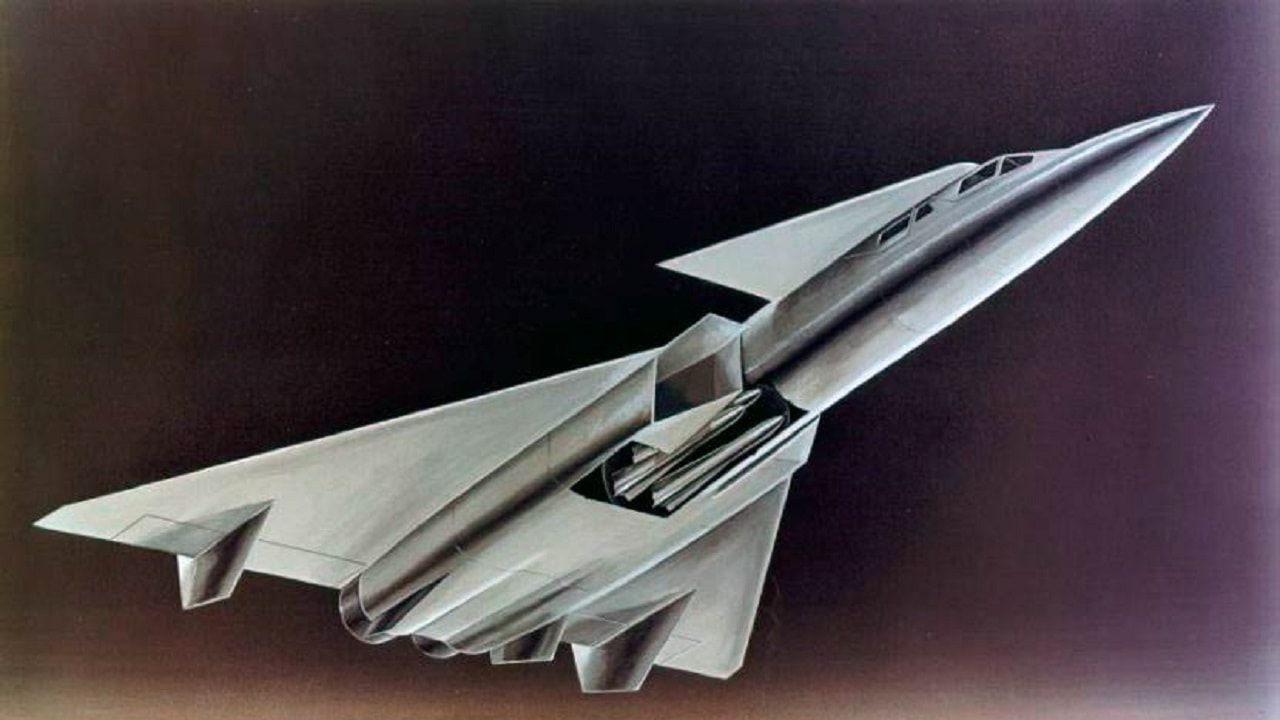
XF-108. Image Credit: Creative Commons.
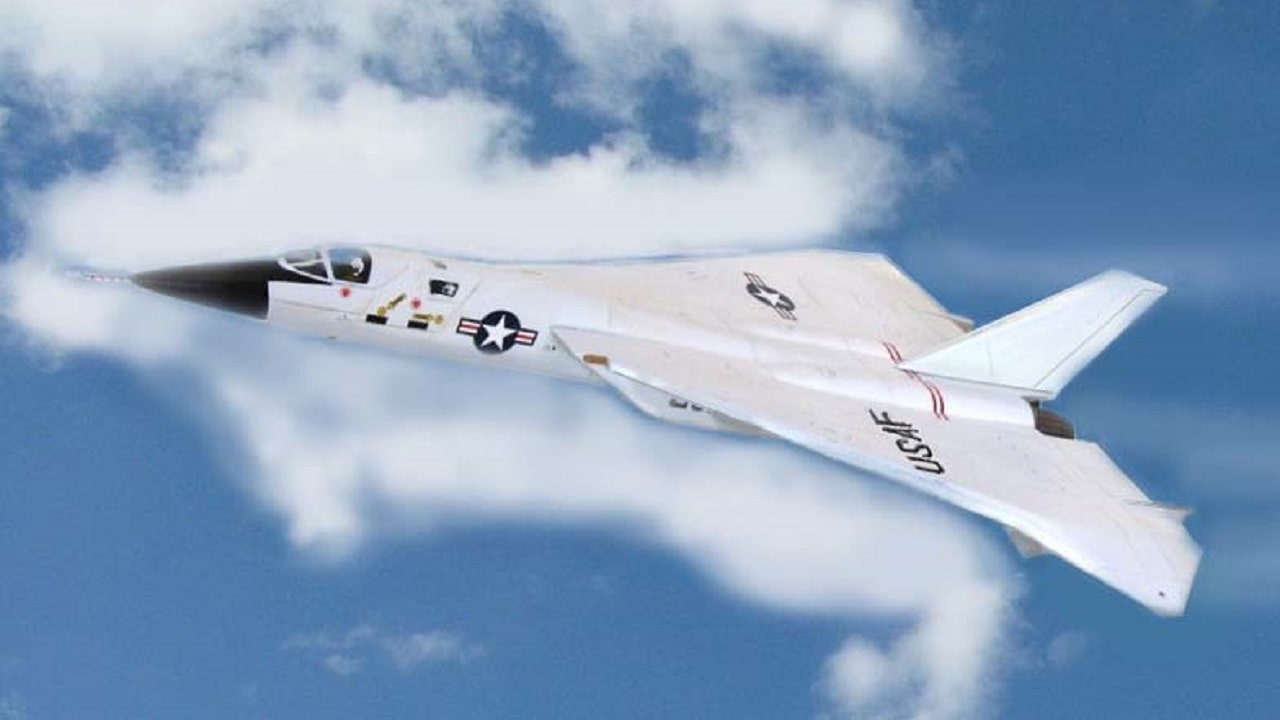
XF-108. Image Credit: Creative Commons.
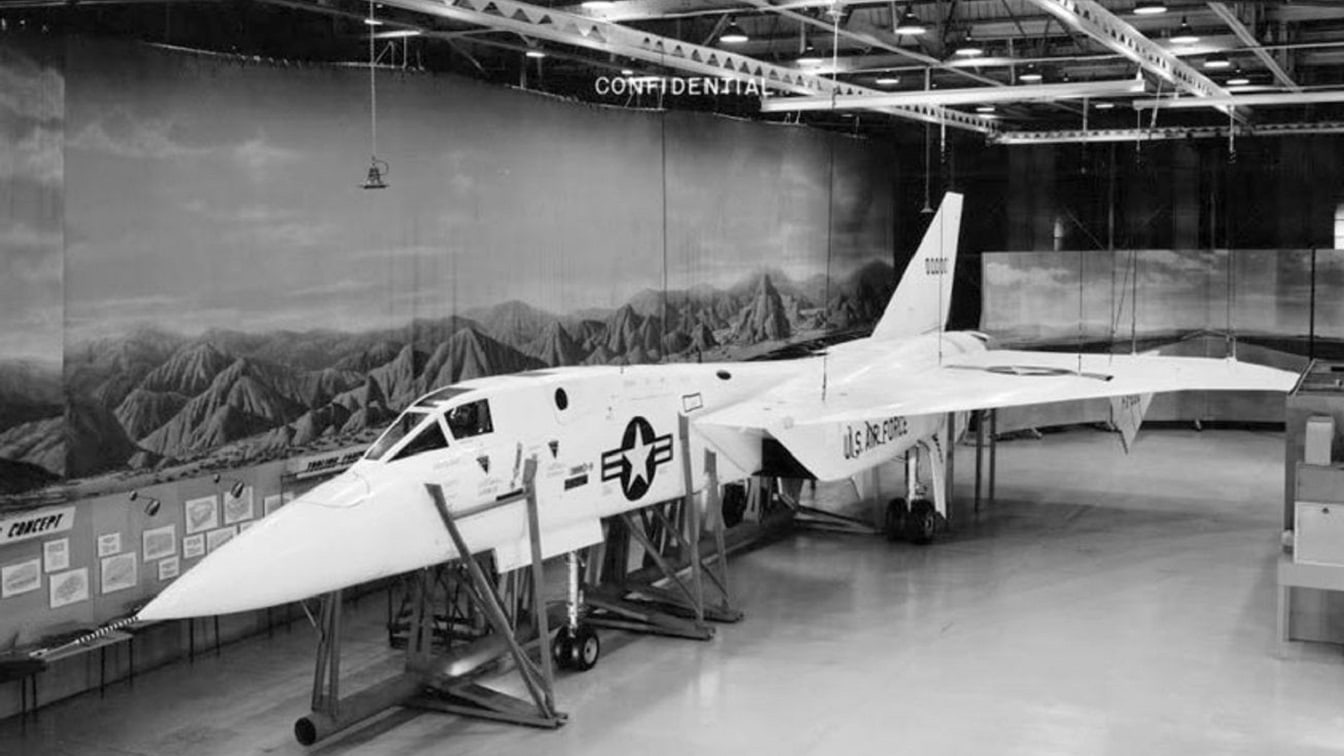
XF-108. Image Credit: Creative Commons.
Air Force requirements called for Mach 3 performance, a combat radius of nearly 1,000 nautical miles on internal fuel, and an operational ceiling above 77,000 feet. The aircraft was expected to climb briefly beyond 100,000 feet during a zoom maneuver. A two-person crew would operate the interceptor, radar, and weapons.
The final design centered on two General Electric YJ93 engines, a Hughes AN/ASG-18 radar, and three GAR-9 long-range air-to-air missiles carried internally. North American completed a full-scale mockup, which the Air Force inspected in January 1959. The first flight was scheduled for March 1961. The program was canceled in September 1959.
The Soviet Bomber Threat Required an Arctic Interceptor
The requirement began with the Soviet Union’s growing ability to send nuclear-armed bombers across the Arctic. In 1949, the Air Force requested proposals for an advanced interceptor capable of meeting the expected threat from intercontinental bombers.
By late 1955, Air Defense Command had issued General Operational Requirement 114 for a long-range interceptor known as LRI-X.
Existing American interceptors were designed primarily to defend cities, bases, and industrial areas against enemy aircraft approaching North America. The F-108 was meant to move the interception line farther north.
Its range and speed would let crews patrol over Canada or the Arctic, race toward radar contacts, and destroy bombers before they reached missile-launch positions.
The mission demanded more than a fast fighter. The aircraft had to carry enough fuel to cover enormous distances, operate in severe weather, and detect targets well beyond visual range. It needed a radar powerful enough to find bombers against electronic interference, plus a missile able to attack before the Soviet formation reached North American airspace.
That requirement explains why the proposed XF-108 became closer to a flying air-defense station than a conventional dogfighter.
Maneuverability mattered less than radar range, endurance, altitude, and the ability to launch multiple missiles during a single high-speed pass.
North American Shared Technology With the XB-70
North America won the revived competition in June 1957. The company was already developing the XB-70 Valkyrie, a Mach 3 bomber intended to penetrate Soviet airspace above 70,000 feet.
Sharing major systems helped reduce risk across two unprecedented aircraft.
The F-108 and XB-70 were both planned around the General Electric YJ93 turbojet. The engine was designed for approximately 2,000 mph at about 70,000 feet and burned specially developed JP-6 fuel. Both aircraft also used an escape capsule designed to protect crews during ejection at extreme speeds and altitudes.
North American studied using the Rapier as an escort for the Valkyrie. The concept had an obvious appeal: a Mach 3 bomber needed an escort that could keep up. It also had a basic problem.
The F-108’s planned radius was impressive for an interceptor but still insufficient to accompany the XB-70 through a full intercontinental mission. The escort assignment faded while continental air defense remained the primary role.
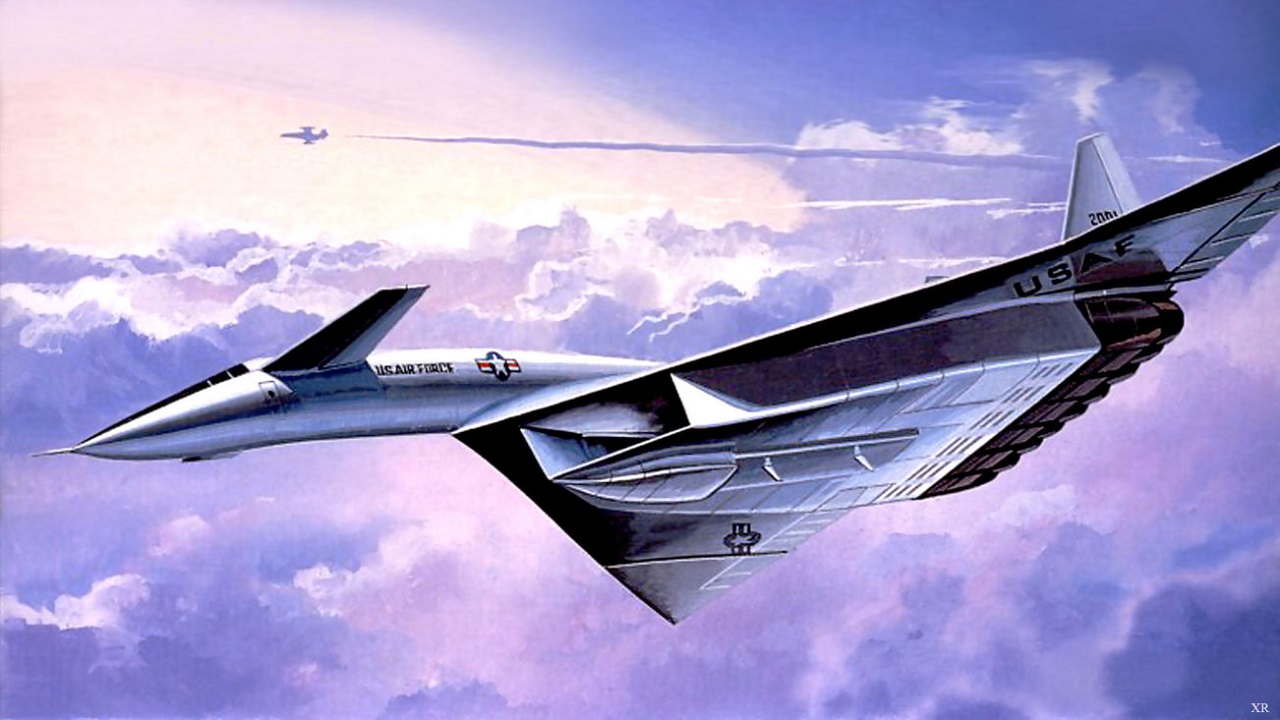
XB-70. Image Credit: Creative Commons.
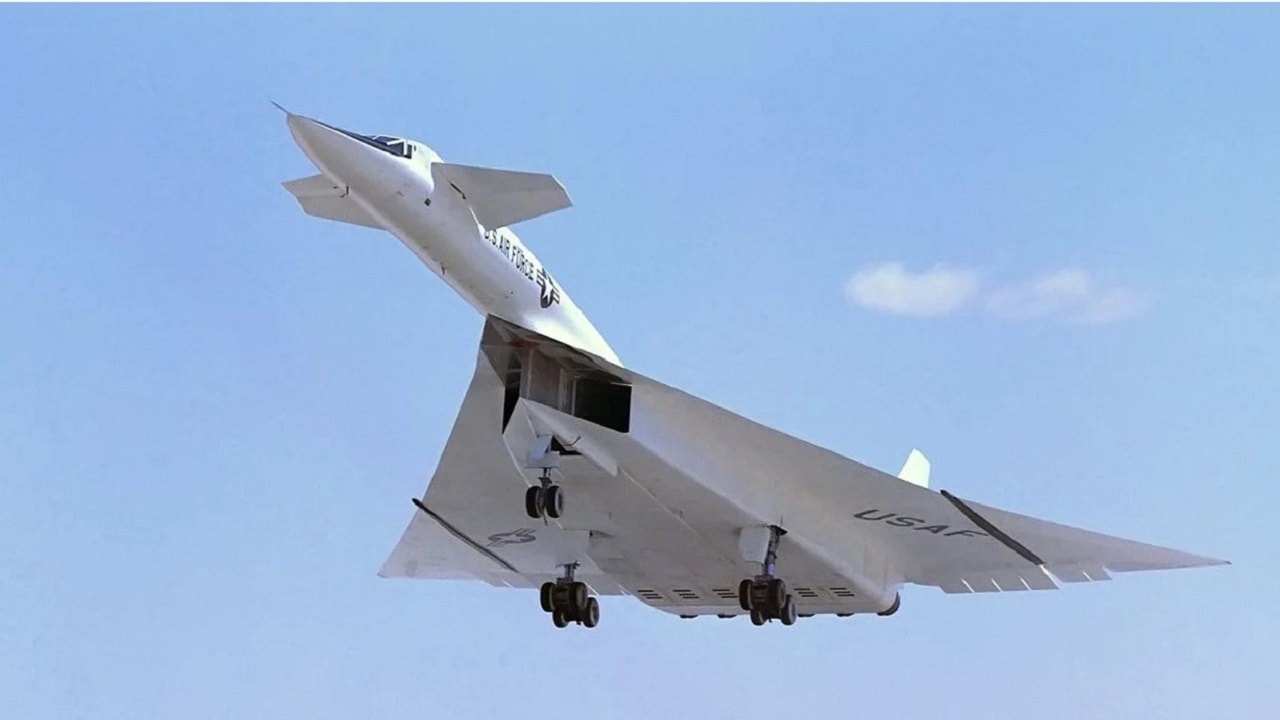
XB-70. Image Credit: Creative Commons.
The Rapier was enormous for a fighter. Late design studies placed it at more than 80 feet long, about 57 feet across, and above 100,000 pounds at maximum takeoff weight. The size provided room for thousands of gallons of fuel, a large radar, an internal missile bay, and the equipment needed for sustained high-altitude operations.
Three GAR-9 Missiles Formed the Rapier’s Main Battery
The weapon system was as ambitious as the aircraft. Hughes developed the AN/ASG-18 radar to detect bomber-sized targets at long distance and guide the GAR-9 missile through a beyond-visual-range engagement.
The radar was among the most powerful fighter systems attempted during the period.
The GAR-9, later redesignated AIM-47, was designed for speeds near Mach 6 and ranges exceeding 100 miles under favorable conditions.
Three missiles sat on an internal rotary launcher, protecting the Rapier’s aerodynamics while allowing the crew to engage several aircraft in a single interception.
Carrying only three missiles seems limited compared to later fighters. Each GAR-9 was a large weapon designed to destroy a strategic bomber before it released nuclear weapons or cruise missiles. The F-108 was not expected to remain in a turning battle. It would use radar, speed, and altitude to make a fast attack, then reposition or return to base.
The proposed missile bay, radar, and fuel capacity drove the airframe’s size. North American was building around the interception system rather than adapting an existing fighter.
That decision produced extraordinary projected performance, but it also removed the cost advantages of using a smaller aircraft already in production.
Cost Growth and ICBMs Destroyed the Business Case
The F-108 did not fail in flight testing. It never reached flight testing. The Air Force canceled it because the strategic assumptions behind the program changed faster than North American could build the aircraft.
Soviet intercontinental ballistic missiles were becoming an increasingly urgent nuclear threat. A Rapier could intercept a bomber over the Arctic. It could not stop a ballistic missile crossing the same region at several miles per second. Money placed into 480 large interceptors was unavailable for missile warning, space surveillance, hardened command systems, or offensive nuclear forces.
The program also competed with the XB-70, Minuteman ICBM, Polaris submarine, and several tactical aircraft projects.
The Air Force evaluated alternatives, including an interceptor derived from the B-58 Hustler, but no replacement offered the full Rapier mission at an acceptable price.
The planned first flight remained almost two years away when the cancellation arrived. Eisenhower’s budget message emphasized both cost and timing: the government would spend more than $4 billion on a force that might not be needed after the bomber threat had changed again. The same pressures later weakened the XB-70 bomber program, which survived only as a two-aircraft research effort.
The Radar and Missile Survived the Airframe
Canceling the Rapier did not erase every part of the program. The Air Force continued work on the ASG-18 radar and GAR-9 missile because long-range interception remained valuable. A modified B-58 known as “Snoopy 1” carried the equipment during testing.
The weapon system then moved into Lockheed’s YF-12A, an interceptor developed from the CIA’s A-12 reconnaissance aircraft. The YF-12 first flew in August 1963 and later exceeded Mach 3.2. Test firings demonstrated that an aircraft moving at extreme speed could locate a target, launch an AIM-47, and guide the missile to an interception.
That made the YF-12 the closest flying successor to the Rapier. It used a different airframe, but it pursued the same broad idea: a very fast interceptor carrying a large radar and long-range missiles to defend North America from Soviet bombers.
The YF-12 did not enter production either. Its A-12 lineage continued through the SR-71 Blackbird, while the interceptor concept remains visible in accounts of the proposed Mach 3 Blackbird fighter. The aircraft family proved the speed and altitude were attainable, even as budgets and strategy worked against a large interceptor fleet.
The AIM-54 Phoenix Carried Part of the Rapier’s Legacy
The GAR-9/AIM-47 also influenced the AIM-54 Phoenix developed for the Navy’s F-14 Tomcat. The later missile used different hardware and served a naval mission, but the connection ran through Hughes radar, long-range guidance, and the requirement to destroy Soviet bombers before they could attack an American carrier group.
The Phoenix became the operational expression of an interception concept the F-108 had been built to demonstrate. The F-14 carried six of the large missiles, while its AWG-9 radar could track 24 targets and support simultaneous attacks on six.
The Mach 5 AIM-54 gave the Navy the long-range weapon the Air Force had pursued through the Rapier and YF-12 programs.
The XF-108 also left a broader procurement lesson. Its engineers were asked to combine an unproven Mach 3 airframe, new engines, a powerful radar, an advanced missile, and an enormous production plan. Each part addressed a real military requirement. Together, they created a system whose price rose while the threat it was designed to defeat lost strategic priority.
The Air Force later commissioned a detailed study tracing the development of advanced fighters from the XF-108 to the Advanced Tactical Fighter. The Rapier’s history became part of the institutional path toward the F-22, though the two aircraft answered different missions with different technologies.
No XF-108 Airframe Survived Because None Was Built
The National Museum of the U.S. Air Force now preserves a YJ93 engine and the sole surviving YF-12A. They represent the propulsion and interception concepts that continued after the Rapier disappeared.
No XF-108 airframe stands beside them. North American completed the full-scale mockup, but the September 1959 cancellation arrived before workers assembled a flyable prototype.
About the Author: Harry J. Kazianis
Harry J. Kazianis (@Grecianformula) was the former Senior Director of National Security Affairs at the Center for the National Interest (CFTNI), a foreign policy think tank founded by Richard Nixon based in Washington, DC. Harry has over a decade of experience in think tanks and national security publishing. His ideas have been published in the NY Times, The Washington Post, The Wall Street Journal, CNN, and many other outlets worldwide. He has held positions at CSIS, the Heritage Foundation, the University of Nottingham, and several other institutions related to national security research and studies. He is the former Executive Editor of the National Interest and the Diplomat. He holds a Master’s degree focusing on international affairs from Harvard University.