
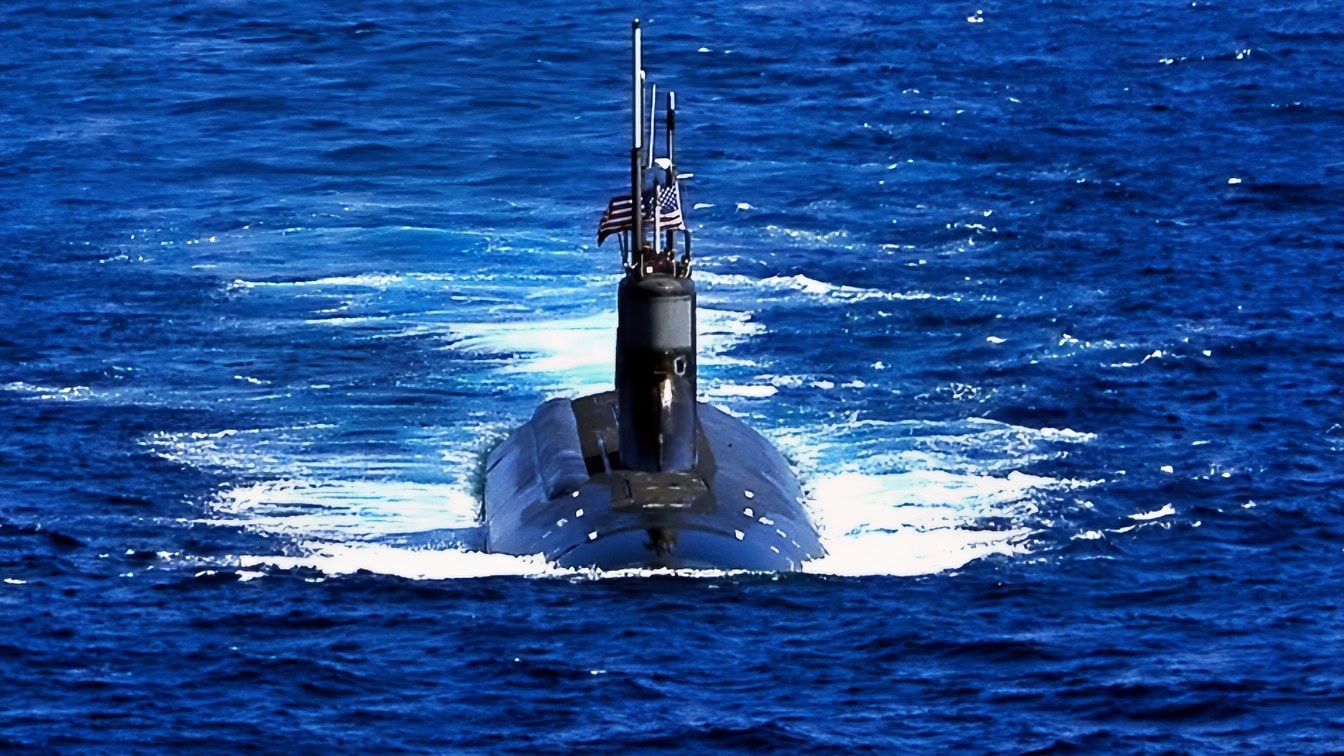
The US Navy Cut Seawolf From 29 Boats to Three. The Attack-Submarine Gap Never Closed: The Seawolf-class attack submarine was designed to replace the Los Angeles-class in countering the quietest Soviet boats of the late Cold War. In July 1990, the Government Accountability Office told Congress the Navy planned to buy 29 Seawolfs by 2000 at about $44 billion. The United States built three.
On January 29, 1992, the Bush administration canceled the rest of the class in the fiscal 1993 budget, leaving only the lead ship. Congress later saved the USS Connecticut and added the USS Jimmy Carter as an industrial-base and special-mission hull. USS Seawolf was commissioned on July 19, 1997. Jimmy Carter was commissioned on February 19, 2005. The first Virginia-class boat, USS Virginia, was commissioned on October 23, 2004. The last Los Angeles-class submarine, USS Cheyenne, was commissioned on September 13, 1996.
The Navy’s attack-submarine goal is 66 boats. At the start of fiscal 2026, the force was 49: 20 Los Angeles, three Seawolf, and 26 Virginia. The May 2026 30-year shipbuilding plan takes that number to 47 in fiscal 2027 and a trough of 45 in fiscal 2030 and 2031 — and those tables do not subtract boats sold under AUKUS. Virginia-class production has run at about 1.1 to 1.2 deliveries a year since 2022 and has never reached two. In May 2026, the chief of naval operations put the two-year rate at around 2032.
The Seawolf cut is usually told as a cost story, and cost was the decisive factor. The lasting damage was sequential. The Navy stopped building the boat meant to replace the Los Angeles class, spent the next decade designing a cheaper substitute, and then failed to produce that substitute as fast as the 688s left the fleet.
Seawolf Was Built to Succeed the Los Angeles Class
The Los Angeles class was the production attack submarine of the late Cold War. The Navy procured 62 boats between fiscal years 1970 and 1990. They were fast and numerous, and by the 1980s, no longer quiet enough against the newest Soviet designs. Seawolf was the answer: a larger, quieter hunter with more weapons, built to fight in the open ocean and under ice.
Electric Boat built all three. USS Seawolf and USS Connecticut displace about 9,138 tons submerged and measure 353 feet. Jimmy Carter was stretched to 453 feet and about 12,158 tons with a 100-foot multi-mission section. The class has eight torpedo tubes and stows up to 50 weapons. It has no vertical-launch battery. The Navy’s fact file lists speed only as 25-plus knots.’
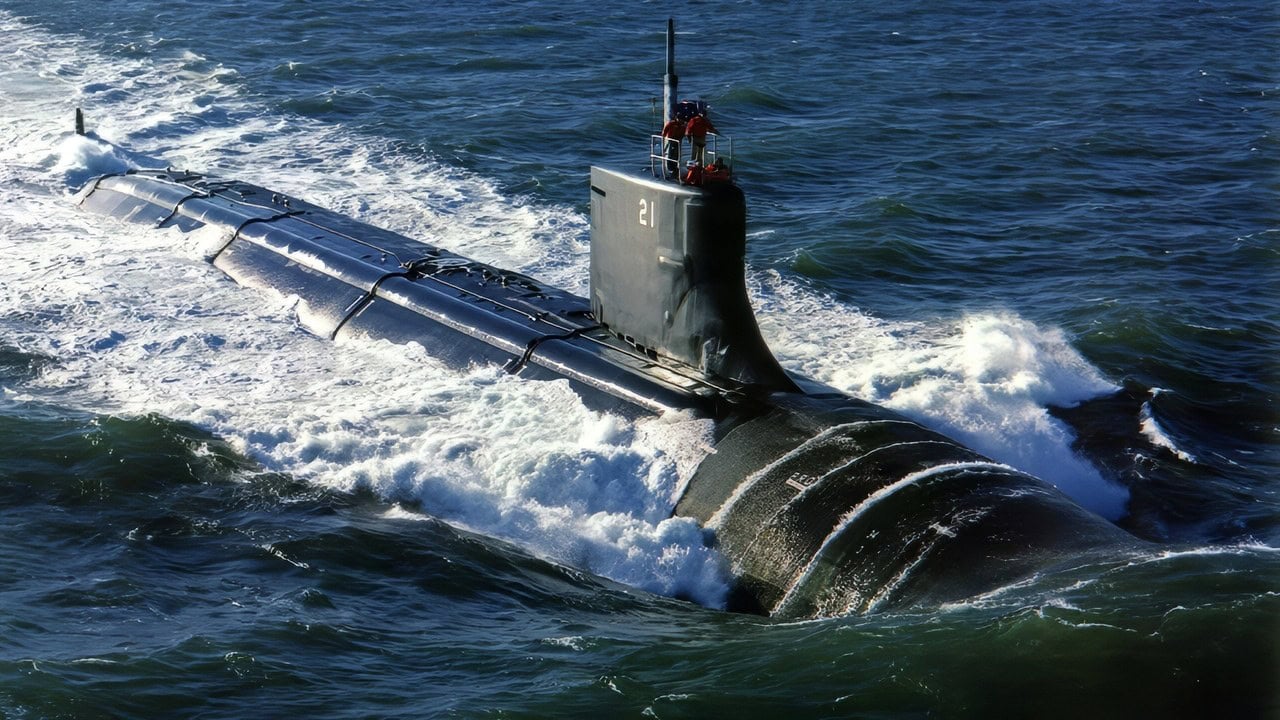
The nation’s newest and most advanced attack submarine Seawolf (SSN 21) puts to sea in the Narragansett Bay operating area for her first at-sea trial operations on July 3, 1996. Sea trials include various tests of the Seawolf propulsion systems and the first underway submergence of the submarine. The Seawolf represents the Navy’s most advanced quieting technology, weaponry, tactical capability and communications. Seawolf is scheduled to be delivered to the Navy and commissioned this fall. U.S. Navy photo courtesy of General Dynamics.
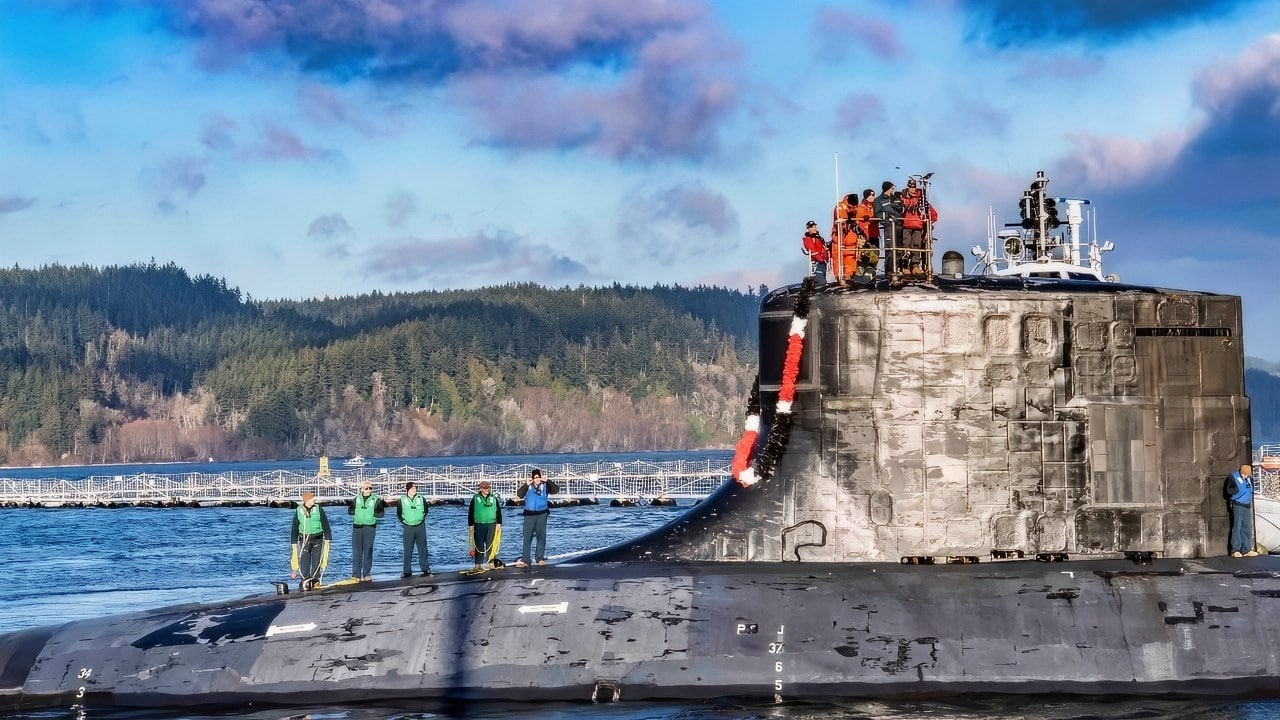
The Seawolf-class fast-attack submarine USS Seawolf (SSN 21) returns home to Naval Base Kitsap-Bangor, Washington, Dec. 14, 2022, following a seven-month deployment. Seawolf is the first of the Navy’s three Seawolf-class submarines, designed to be faster and quieter than its Los Angeles-class counterpart. (U.S. Navy photo by Mass Communication Specialist 2nd Class Gwendelyn L. Ohrazda)
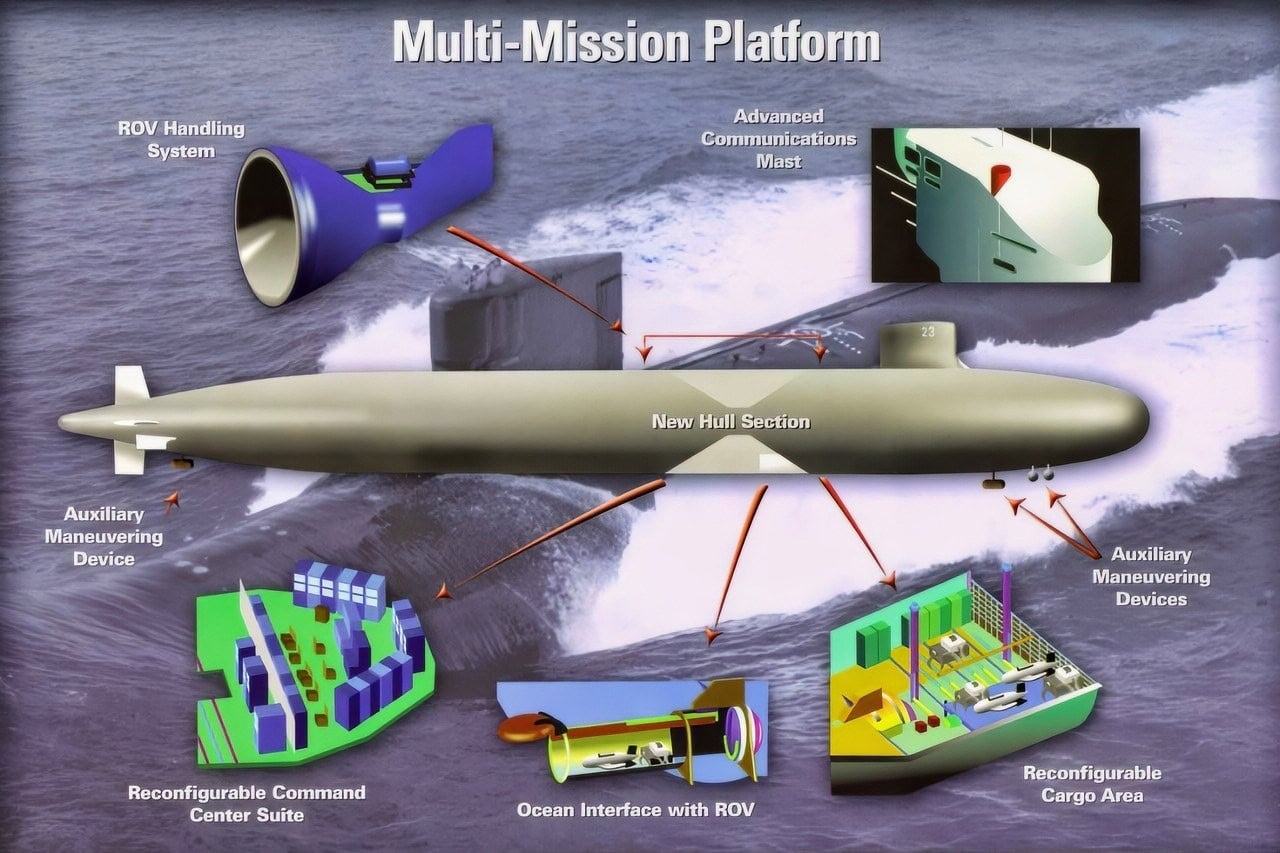
USS Jimmy Carter Seawolf-Class. Image Credit: Creative Commons.
That design assumed a serial run. A 29-boat class would have replaced Los Angeles hulls on a steady drumbeat and kept Groton and the nuclear-supplier base at high-end attack-submarine volume. Three boats could not do either job. They remain the most capable U.S. attack submarines in several respects. They were never a force structure.
Cost Ended the Class at Three Hulls
The first cuts came before the Soviet flag came down for good. An August 1990 major-warship review slowed the planned production rate. The January 1991 defense plan cut it again. A late-1991 Selected Acquisition Report then showed a 12-boat program at $33.6 billion in then-year dollars, including the combat system—about $2.8 billion per hull early in the buy. That was an accounting quantity, not a named decision to stop at 12. On January 29, 1992, the administration canceled everything beyond the lead ship. Norman Polmar wrote in the U.S. Naval Institute’s Proceedings that spring that the decision meant no new attack-submarine authorizations from fiscal 1991 through fiscal 1997, then a “lower-cost” boat after that. The 1993 Bottom-Up Review locked in that cheaper design, the New Attack Submarine, later Virginia, and kept a third Seawolf only as an industrial bridge.
Cost was the constraint, not a slogan. A 1995 GAO review put then-year funded costs at about $1.9 billion for Seawolf and $1.8 billion for Connecticut. Jimmy Carter needed another $1.5 billion in fiscal 1996 on top of money already appropriated, in part because of the hull plug. Later completed-boat figures near $3 billion in then-year dollars are the ones that stuck in public argument.
Those numbers are not the same as the 1990 program average, which assumed 29 hulls and a hot line. Canceling the remaining boats did not erase the design investment. It guaranteed that investment would never be spread across a class.
The industrial case in the 1990s was that a cheaper follow-on would keep the yards alive at a price Congress would fund. The same 1995 GAO report was already skeptical that the New Attack Submarine would come in significantly cheaper than Seawolf. Virginia eventually did come in below a continued Seawolf run. It did not come in cheap, and it did not come in fast. Today the Navy prices a Virginia at about $5.0 billion when bought two a year.
Virginia Was the Substitute, Not a Same-Day Replacement
Virginia was conceived as a post-Cold War compromise: a Seawolf-level quieting in a smaller, more producible hull, with greater emphasis on littoral operations, surveillance, and land attack. Early boats carry 12 vertical-launch Tomahawk cells.
Later boats use Virginia Payload Tubes, and Block V adds the Virginia Payload Module. Four standard 21-inch torpedo tubes remain. The Navy traded some of Seawolf’s speed, payload, and Arctic margin for a boat it thought it could buy in numbers.
The calendar is the problem the cost argument skipped. Seawolf construction beyond the lead ship stopped in January 1992. Phase I of the new boat’s design was approved in August 1994. The first Virginia was procured in fiscal 1998 and contracted on September 30, 1998.
USS Virginia was commissioned on October 23, 2004 — twelve years and nine months after the cancellation, and eight years after the last Los Angeles boat. CRS has noted every year since 1995 that a thin 1990s procurement buy created an “SSN valley.” That valley is this gap by another name.
A replacement strategy is a production strategy. Seawolf was canceled before it became one. Virginia had to be designed, teamed across Electric Boat and Newport News, and then learned in the yards.
Those are real years. Los Angeles-class hulls kept aging through every one of them. The next design after Virginia, SSN(X), is now described as a way to put Seawolf speed and payload back onto a Virginia-quiet hull. That is an admission, decades later, that the 1990s trade was never free.
The Los Angeles-Class Is Leaving Faster Than Virginia Arrives
Sixty-two Los Angeles-class boats entered service between 1976 and 1996. CRS counts 20 still in commission at the start of fiscal 2026. The Navy’s November 2025 fact file still listed “approximately 24,” an older, internally inconsistent figure. The newer count matches the shipbuilding plan: 49 attack submarines at the start of this fiscal year, 47 in fiscal 2027, and 45 at the bottom.
The 66-boat requirement has been the Navy’s official SSN objective since the December 2016 force-structure assessment and was restated in the June 2023 381-ship goal. Combatant commanders want more than the current inventory. The 2026 plan does not reach 66 attack submarines until fiscal 2054. It also states, in no uncertain terms, that its tables do not reflect AUKUS. The first Virginia-class ship earmarked for Australia is supposed to transfer around fiscal 2032. The published trough of 45 is the best case.
Hull count overstates what can sail. CRS, using Navy data, reported that the share of attack submarines in maintenance or idle rose from 21 percent in fiscal 2012 to 33 percent in fiscal 2023. The Navy’s own goal is 20 percent in maintenance and none idle. A three-boat Seawolf class cannot cover that hole. USS Connecticut struck an uncharted seamount in the South China Sea on October 2, 2021, and has spent the years since in dry dock at Puget Sound. In July 2025 a Navy spokesperson said the boat was expected back in late 2026. The May 2026 plan still schedules her inactivation for 2031. One accident removed a third of the Seawolf force for roughly five years, then left a repaired boat with a handful of years on the clock.
The Yards Still Cannot Deliver Two Attack Boats a Year
Virginia was supposed to be the industrial solution. From fiscal 2011 through 2024, the Navy generally procured two boats a year. The yards have never delivered at that rate on a sustained basis. CRS, citing Navy testimony, puts the post-2022 rate at about 1.1 to 1.2 boats a year. A backlog of authorized hulls is now sitting in the pipeline. In April 2025, the Navy told Congress that construction had approached 1.9 a year for a stretch before workforce, first-time quality, supplier, and first-of-class Virginia Payload Module problems pulled it back to 1.13 by the end of 2024.

The USS Constitution sails past the Virginia-class nuclear-powered fast-attack submarine USS Massachusetts (SSN 798) during Massachusetts’ commissioning in Boston, on March 28th, 2026. Massachusetts is the newest fast-attack submarine and the fifth U.S. Navy vessel to bear the name. (U.S. Navy photo by Mass Communication Specialist 2nd Class Lucas J. Hastings)

The Virginia-class attack submarine Pre-commissioning Unit (PCU) John Warner (SSN 785) is moved to Newport News Shipbuilding’s floating dry dock in preparation for the Sept. 6 christening. A team of shipbuilders spent about eight hours to move the submarine from the facility where it was assembled to the dock. (U.S. Navy photo courtesy of Huntington Ingalls Industries by John Whalen/Released)
The delay numbers depend on the starting date. The Navy’s April 2024 shipbuilding review put Block IV about 36 months late and Block V about 24 months late. The Congressional Budget Office, testifying in April 2026, said Virginia construction now averages four years behind the original contract delivery dates. Both can be true. GAO found Block V running at about 60 percent of its annual goal. The same two nuclear yards, Electric Boat and Newport News, are also building the Columbia-class ballistic-missile submarine, which the Navy calls its top acquisition priority. The required load is “1+2”: one Columbia and two Virginias a year. One Columbia is roughly two and a half Virginias’ worth of yard work. The actual load is one late Columbia and a Virginia rate stuck near one.
AUKUS adds another claim on the same line. Replacing three to five Virginias sold to Australia is why the Navy now talks about 2.33 boats a year, not two. CNO Adm. Daryl Caudle told USNI News in May 2026 that Electric Boat and Newport News would hit two a year by 2032. The public target two years earlier was 2028. The date keeps sliding. The Los Angeles retirements do not. The 2026 plan shows four attack-submarine retirements in fiscal 2030 alone. That’s why the Navy is shifting publicly to using used Virginia-class boats for Canberra.
Congress has poured submarine industrial-base money into the problem since fiscal 2018. Electric Boat’s workforce is larger than it was a decade ago. A July 2026 contract package worth $76.6 billion covered nine more Virginias and five Columbias. Hiring and money are not the same as a two-boat rhythm. Nuclear welders, pipefitters, and suppliers still set the pace, and the yards are still learning that those skills take years to rebuild after they are allowed to thin out.
The Seawolf-Class and A Sad Reality
That is the through-line from 1992 to 2026. Seawolf was too expensive to buy in the numbers required to replace the Los Angeles class. Virginia was designed to be cheap enough to buy in those numbers. The United States then failed to maintain the production system that makes “cheap enough” a reality. Two Virginias a year remains a goal, not a rate. The 66-boat force remains a goal. The plan on the books bottoms out at 45. And there seems no easy way to fix it.
About the Author: Harry J. Kazianis
Harry J. Kazianis (@Grecianformula) was the former Senior Director of National Security Affairs at the Center for the National Interest (CFTNI), a foreign policy think tank founded by Richard Nixon based in Washington, DC. Harry has over a decade of experience in think tanks and national security publishing. His ideas have been published in the NY Times, The Washington Post, The Wall Street Journal, CNN, and many other outlets worldwide. He has held positions at CSIS, the Heritage Foundation, the University of Nottingham, and several other institutions related to national security research and studies. He is the former Executive Editor of the National Interest and the Diplomat. He holds a Master’s degree focusing on international affairs from Harvard University.