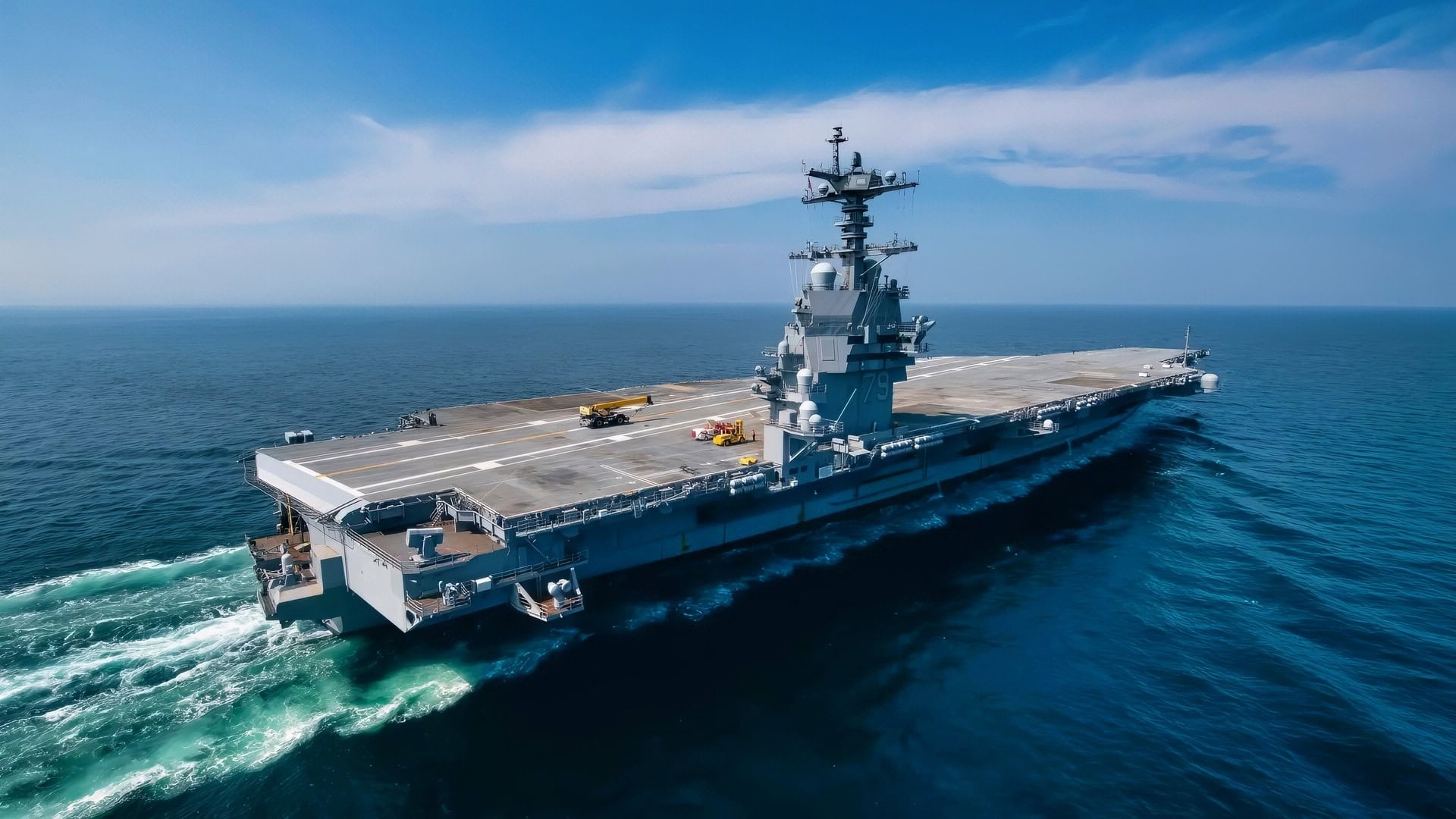
President Donald Trump’s order demanding that the United States Navy formulate a plan in the next 60 days for his office to approve pulling the Electromagnetic Aircraft Launch System (EMALS) out of the USS Doris Miller, the newest Ford-class aircraft carrier under construction, is causing headaches in the Pentagon.
The Navy specifically designed the new Ford-class carriers to be electric rather than steam-based. More importantly, removing the EMALS from the Doris Miller but not from the other Ford-class carriers will create future complications.
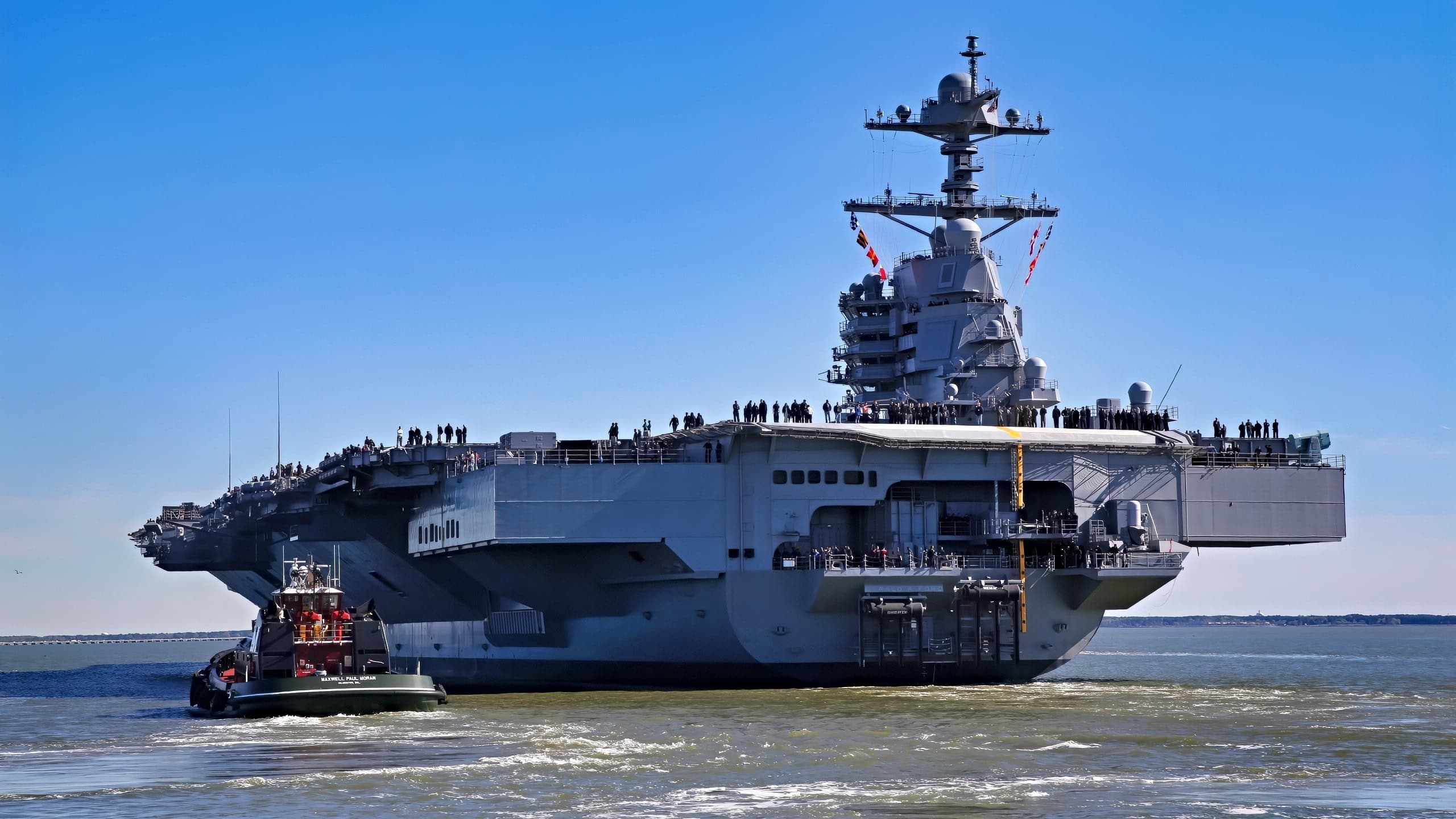
(April 8, 2017) – Pre-Commissioning Unit Gerald R. Ford (CVN 78) departs Huntington Ingalls Industries Newport News Shipbuilding for builder’s sea trials off the coast. The first- of-class ship—the first new U.S. aircraft carrier design in 40 years—will spend several days conducting builder’s sea trials, a comprehensive test of many of the ship’s key systems and technologies. (U.S. Navy photo by Mass Communication Specialist 2nd Class Ryan Litzenberger)
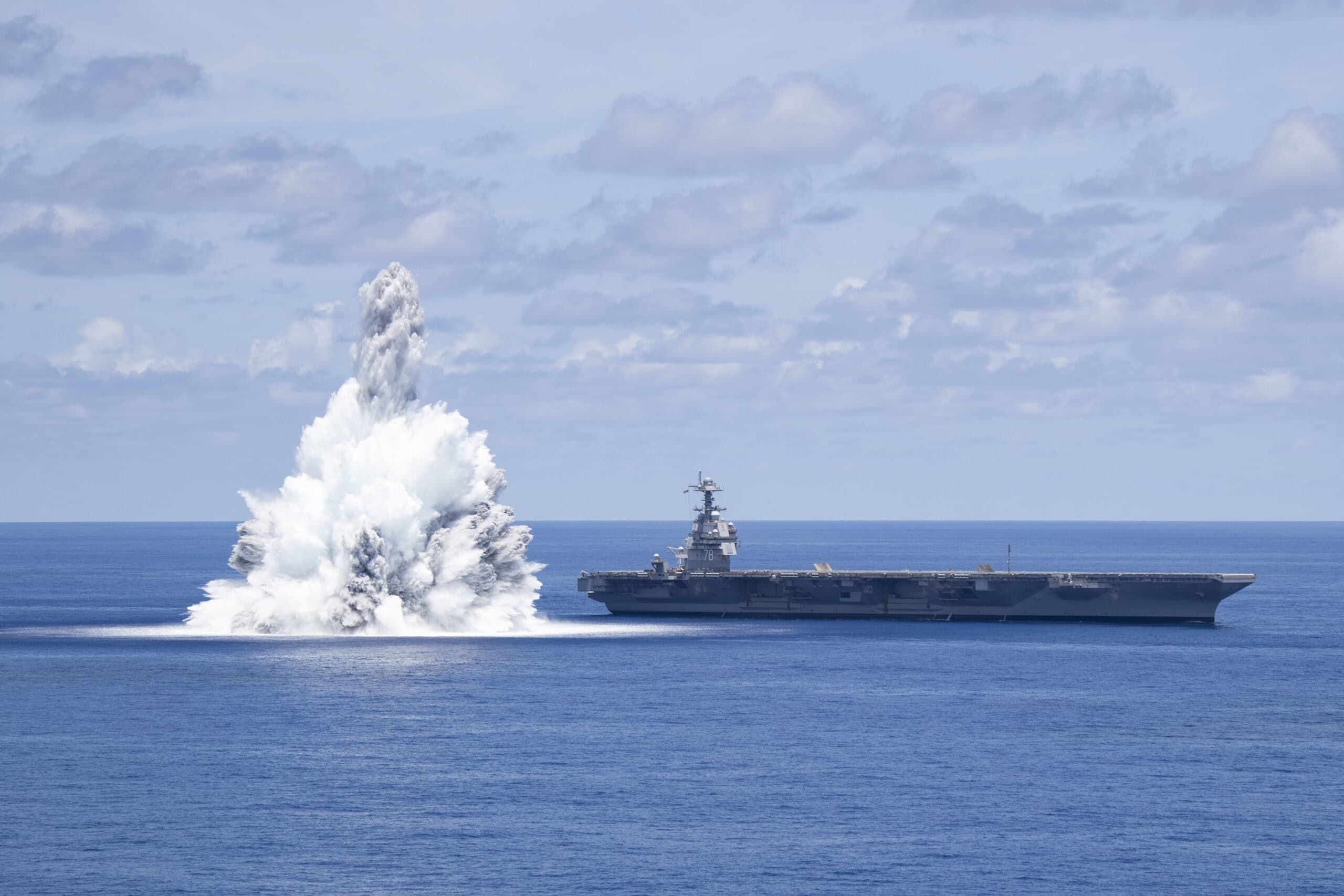
USS Gerald R. Ford (CVN 78) successfully completed the second of three scheduled explosive events for Full Ship Shock Trials (FSST), July 16, 2021. The shock trials are designed to demonstrate the ship’s ability to withstand the effects of nearby underwater explosion and retain required capability. Ford is underway in the Atlantic Ocean for required inspections and preparation for the third FSST explosive event, scheduled for later this month. (U.S. Navy Photo by Mass Communications Specialist Seaman Jackson Adkins)
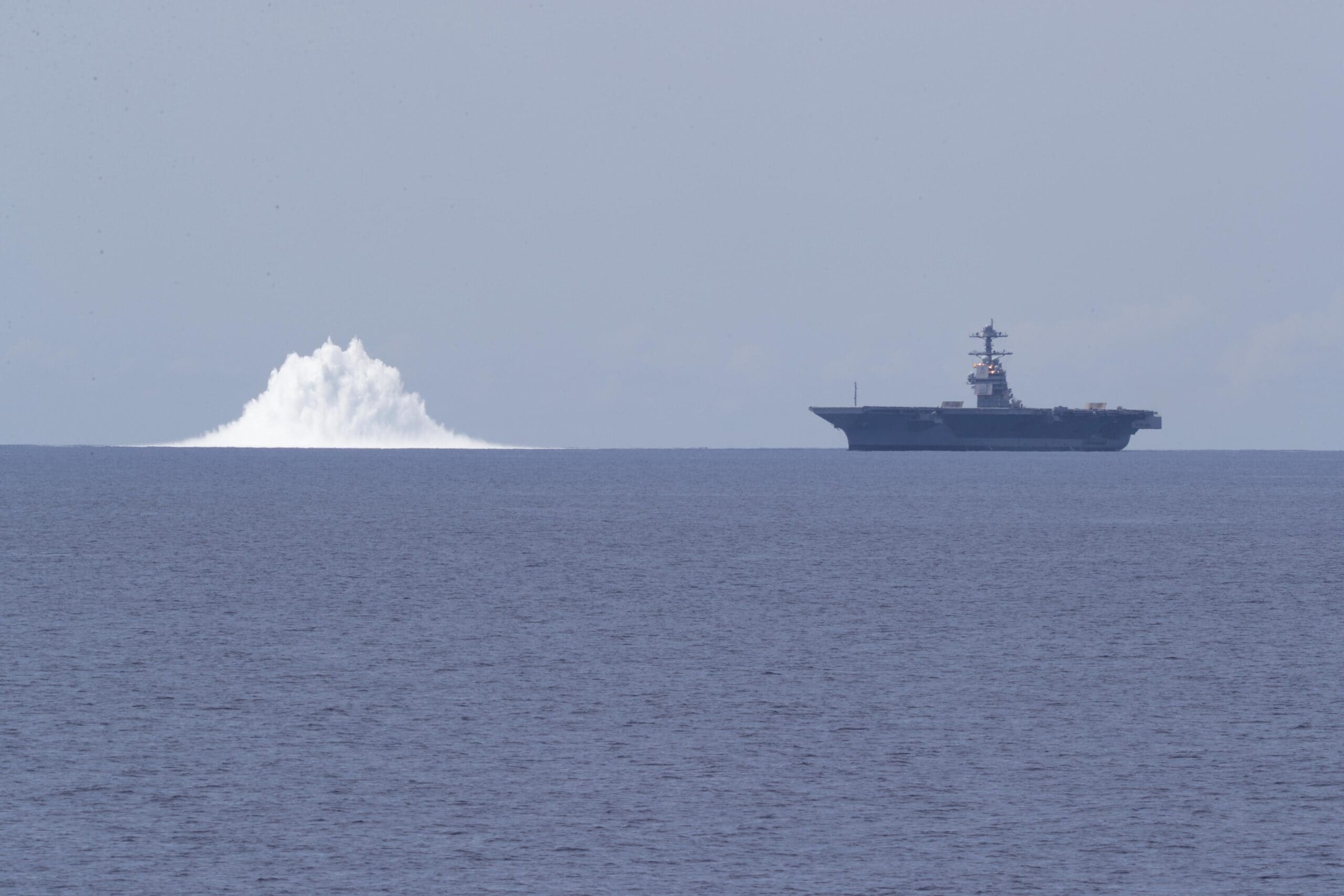
The aircraft carrier USS Gerald R. Ford (CVN 78) completes the first scheduled explosive event of Full Ship Shock Trials while underway in the Atlantic Ocean, June 18, 2021. The U.S. Navy conducts shock trials of new ship designs using live explosives to confirm that our warships can continue to meet demanding mission requirements under harsh conditions they might encounter in battle. (U.S. Navy photo by Mass Communication Specialist 3rd Class Zachary Melvin)
Why Is This Necessary?
As the USS Gerald R. Ford undergoes an intensive round of maintenance following its record-making deployment around the world, the USS John F. Kennedy, the next ship in the Ford-class, is moving ahead with its next stage of development.
Like the Gerald R. Ford, though, the new carrier possesses an EMALS. The third ship in the class, the USS Enterprise, is also slated to keep its EMALS.
By keeping three of the four planned Ford-class carriers as originally designed but requiring the replacement of the EMALS on the Doris Miller, a carrier that is almost 50 percent complete, the forty-seventh president risks creating a sub-class of the Ford class.
Because the Ford-class was designed to have electrified rather than steam-powered systems, creating a carrier in the class that is fundamentally distinct from the others will lead to costly maintenance complications down the line.
That’s because Trump’s demands are undermining standardization.
Engineers will need to custom-redesign the Doris Miller because steam-based catapults have fundamentally different requirements than do electromagnetic-based systems.
Steam catapults require high-pressure pipes capable of withstanding the steam passing through them, and the Doris Miller will need to maintain heavy hydraulic fluid tanks on board.
The Navy’s procurement process is also a major complicating factor for Trump’s demands.
To supposedly save money at the outset of the program, the Doris Miller’s EMALS and Advanced Arresting Gear (AAG) were procured together under shared contracts.
General Atomics has already nearly completed the construction of the EMALS and AAG onboard the Doris Miller.
In fact, the engineering team building the Doris Miller would need to stop what they were doing and reassemble a deactivated steam industrial base.
There’s no guarantee that the engineers could accomplish that in a timely fashion.
Lack of Standardization
Consider this: the United States has not manufactured steam catapults or hydraulic weapon elevators in over 20 years.
No active production line for steam-based systems exists for the engineers building the Doris Miller to draw on.
These decisions will massively delay the carrier Doris Miller, which has already been delayed by two years. And the Navy will need every carrier it can get by the 2030s.
Training will also create problems.
Standardization makes it easier for the Navy to quickly train sailors to serve aboard and maintain the new carriers.
With one ship of the class differing from the others, the Navy will need a separate, more specialized training regimen for the sailors assigned to the steam-powered USS Doris Miller.
Just as with spare parts and shipyard maintenance crews, the sailors who man the Doris Miller will not be interchangeable with their fellow sailors on the other three Ford-class carriers.
The Navy would be spiking the price on the final Doris Miller because the maritime branch would need separate training, logistics pipelines, and spare-parts inventories for the same class of ship.
The Ford-class has already been delayed and gone over budget because of the electromagnetic systems that the Navy wanted.
The Navy is also struggling to plug serious gaps the declining carrier force is creating at sea. Now Trump wants to reverse course on a decision that was made long ago.
Such a decision will add time, raise costs, and cause greater strategic damage to a Navy already scrambling to meet its current demands, let alone any future ones.
About the Author: Brandon J. Weichert
Brandon J. Weichert is the Senior National Security Editor at 19FortyFive.com. He also manages The Weichert Brief on Substack. Weichert also hosts “National Security Talk” on Rumble. He is the author of four bestselling national security books, the most recent of which is A Disaster of Our Own Making: How the West Lost Ukraine (Encounter Books). Follow him via Twitter/X @WeTheBrandon.