
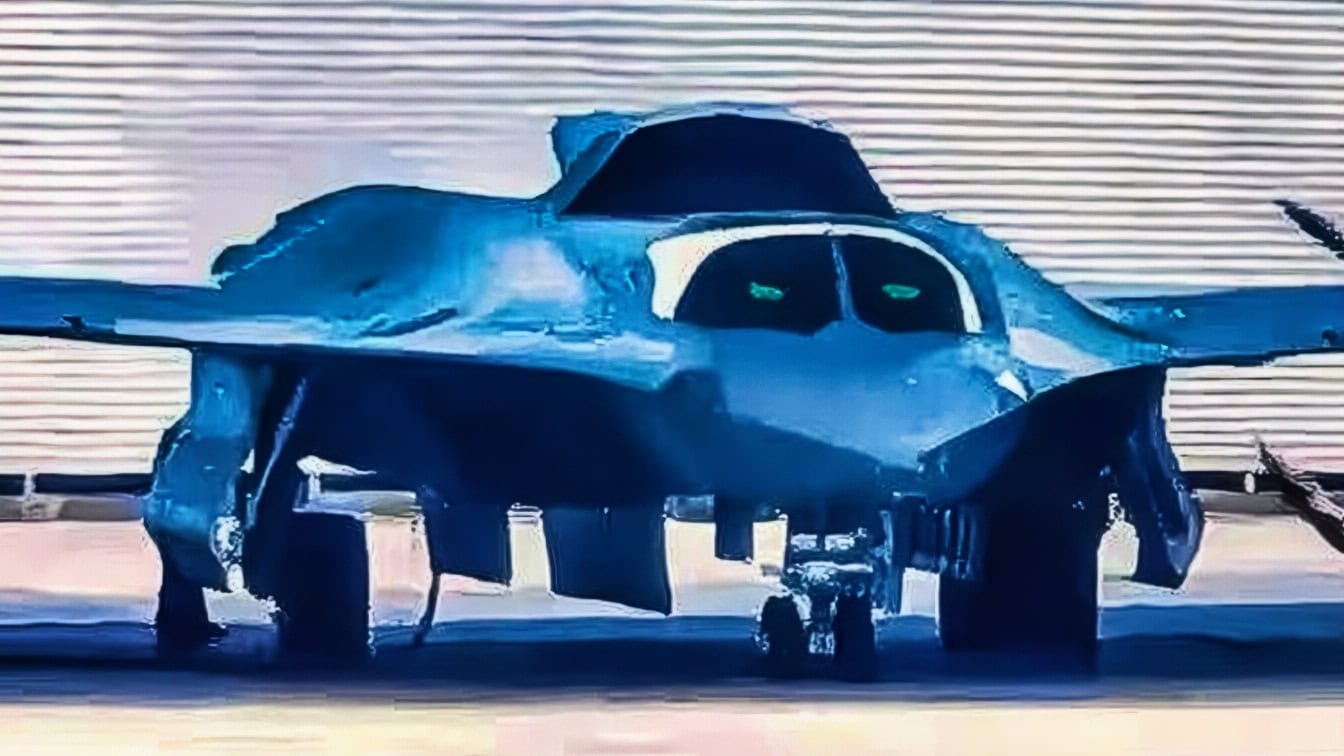
The U.S. and China are locked in a race to field the first sixth-generation fighters, and China appears to be winning so far. In December 2024, the Chengdu J-36 made its first flight, shocking observers worldwide with its tailless diamond-wing design.
As the aircraft flew more, analysts saw it from new angles and revealed several interesting details. The J-36 uses three engines, with its third air intake mounted on the aircraft’s roof.
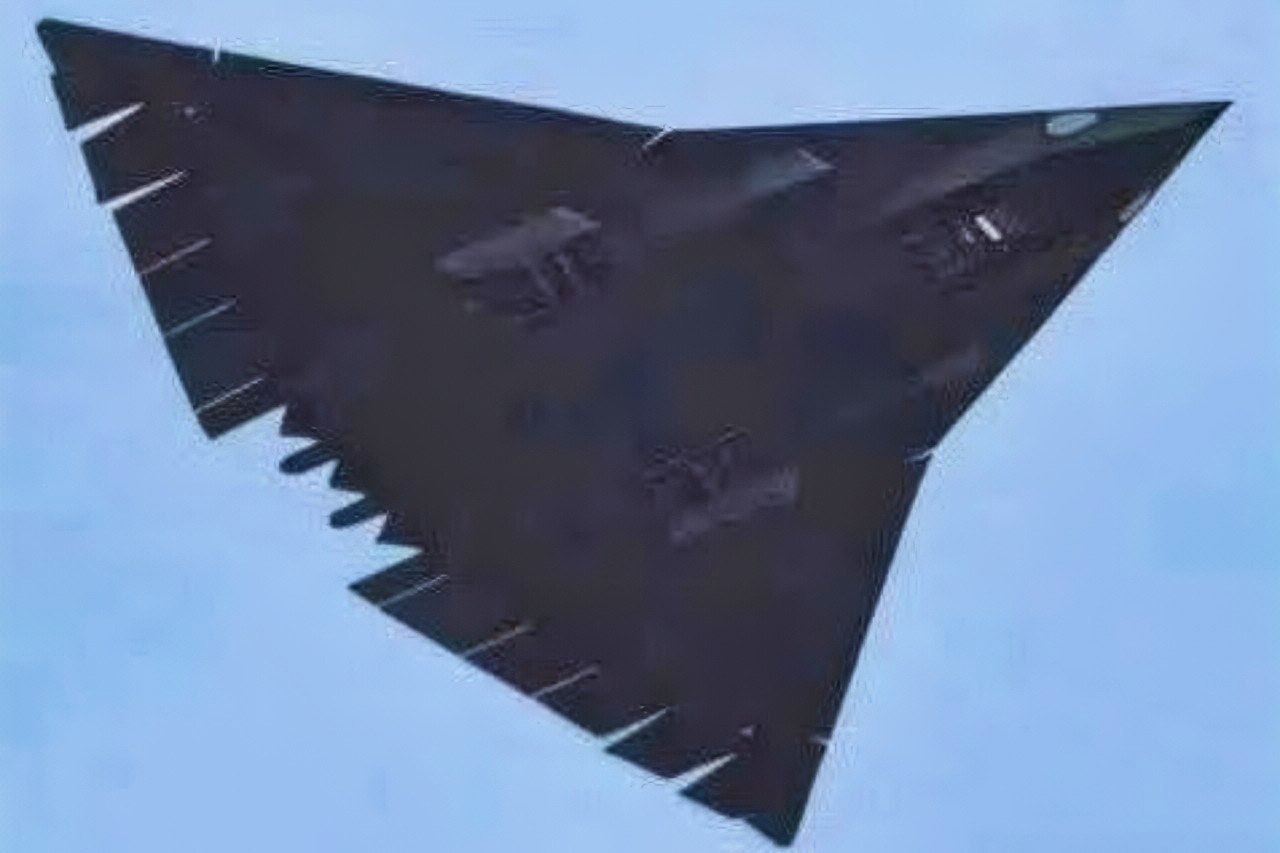
J-36 X Screenshot
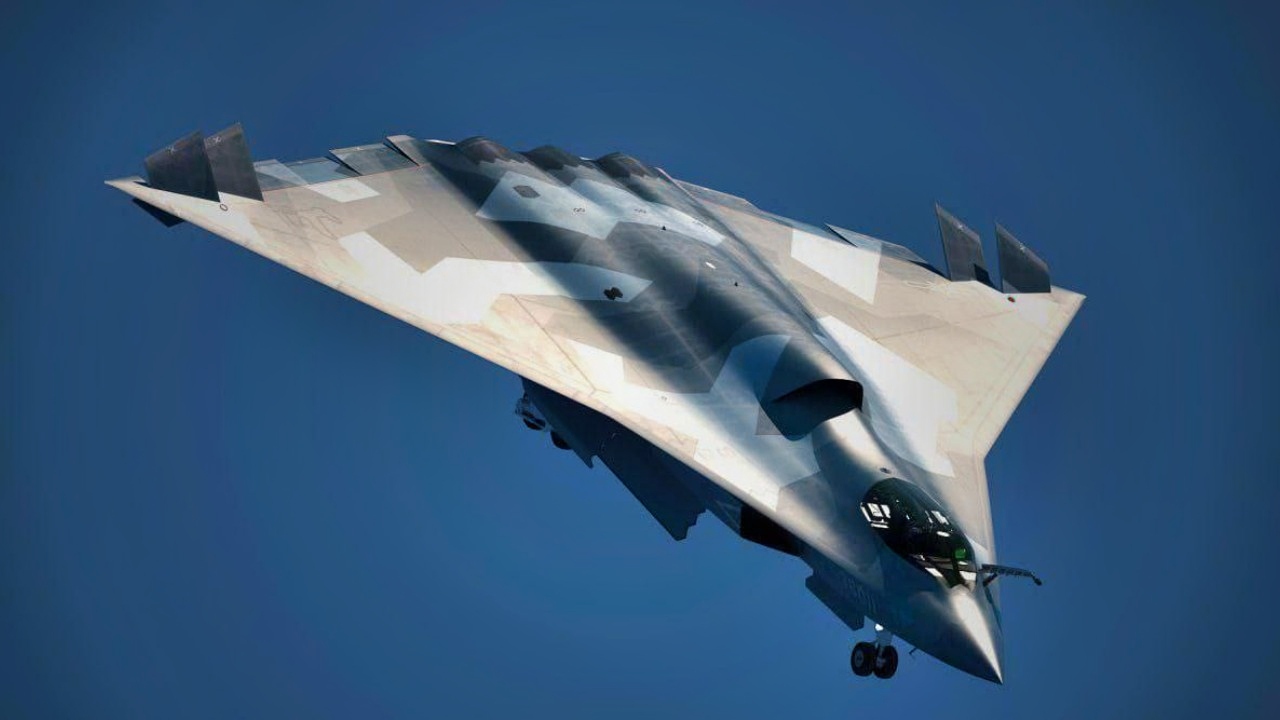
J-36 Fighter Artist Rendition. X Screenshot.
It also features a side-by-side cockpit, and its massive size suggests the J-36 is designed as a medium-range tactical aircraft.
Since 2024, multiple prototypes of the aircraft have been spotted in the air, each one with slightly different design choices.
The First J-36 Prototypes
Since 2024, at least five J-36 prototypes have been spotted in flight so far.
The first and original aircraft featured engine exhausts that were heavily recessed from the trailing edge at the top of the aircraft.
The original also used two caret inlets on the lower portion of the aircraft with a dorsal divertless supersonic intake (DSI) for the third intake.
Other notable features included a tandem two-wheeled main landing gear system, which made sense for how large the aircraft appears to be.
This overall configuration seemed to reinforce perceptions many in the West had about the J-36: that the aircraft was designed primarily for stealth and medium- to long-range strike operations.
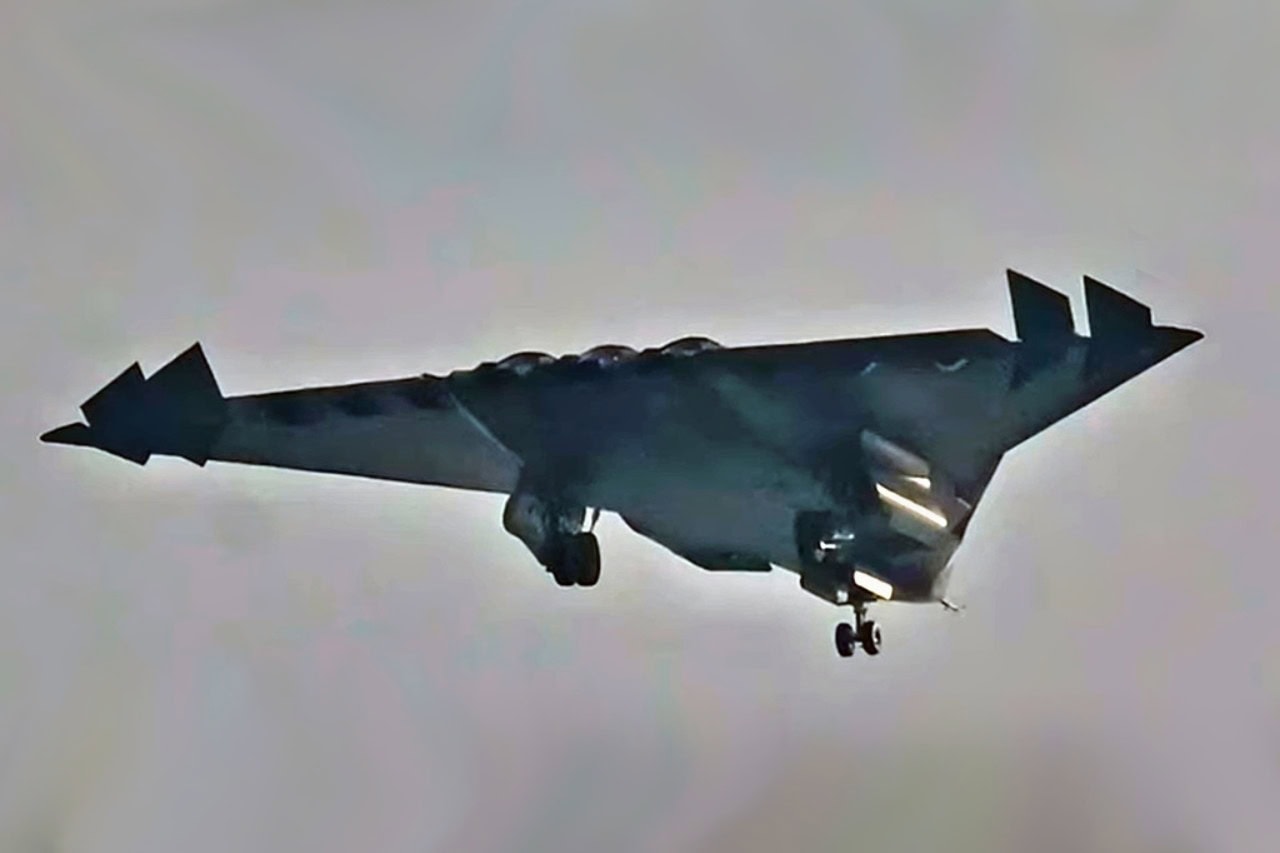
J-36 Fighter from China. Image Credit: Creative Commons.
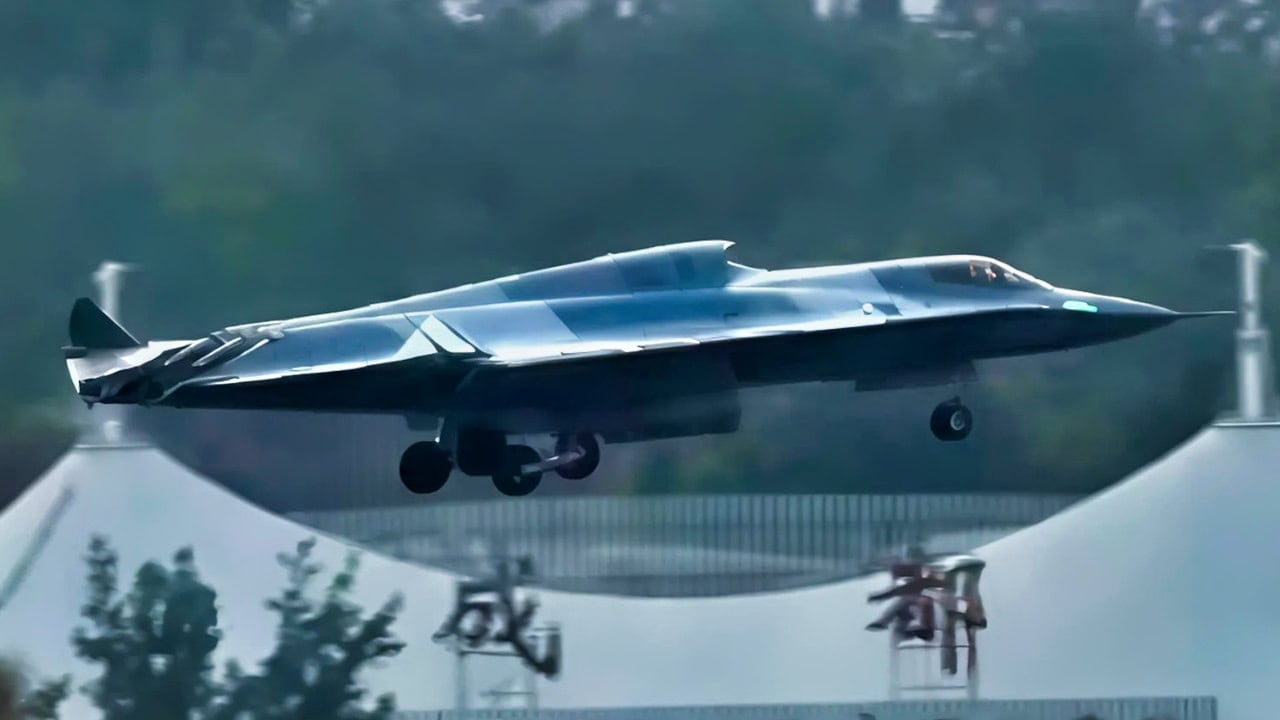
J-36 Fighter from X/Screenshot.
As a result, when the second prototype diverged from the original in some major ways, analysts were shocked.
For one, the recessed exhausts were replaced with what appeared to be 2D thrust-vectoring nozzles. Its lower air intakes were replaced with DSI inlets to complement the dorsal intake, and the tandem landing gear was changed to a twin side-by-side truck configuration, possibly to allow more internal space for fuel and the weapons bay.
Many of these changes were surprising, as they seemed to suggest that the J-36 would be expected to perform high-G maneuvers, which makes little sense for an aircraft of its size.
The main point of confusion for the West is whether the aircraft is a regional bomber.
Later Prototypes and Design Refinements
In December 2025, one year after the original made its maiden flight, the third prototype was spotted in the skies, tailed by a J-10C.
This prototype seems to double down on the thrust-vectoring capabilities noted on the second prototype, with air intakes less recessed than on the first and second, possibly to maximize in-flight performance. Unfortunately, because the footage is low quality and we have so few angles, we can’t see many other details.
Its landing gear is also retracted, so it’s unknown whether it retains the new layout from the second prototype or returns to the original configuration.
The only other thing analysts could discern was that this prototype was missing a flight data probe on its nose, a feature that was prominent on the first two.
Another prototype was seemingly spotted in January 2026, this one bearing a close resemblance to the second and third prototypes.
Again, though, because of the limited available footage and its low quality, it is extremely difficult to spot any notable differences between the third and fourth prototypes.
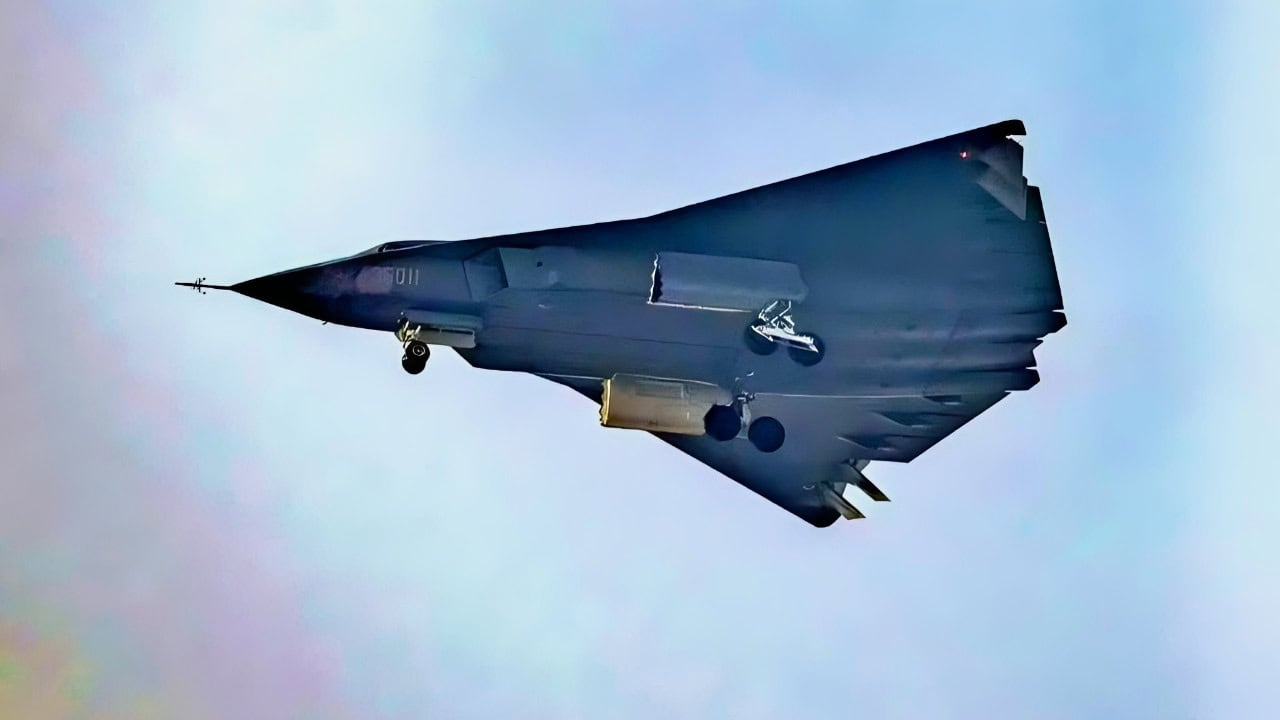
J-36 Fighter from China. Image Credit: X Screenshot.
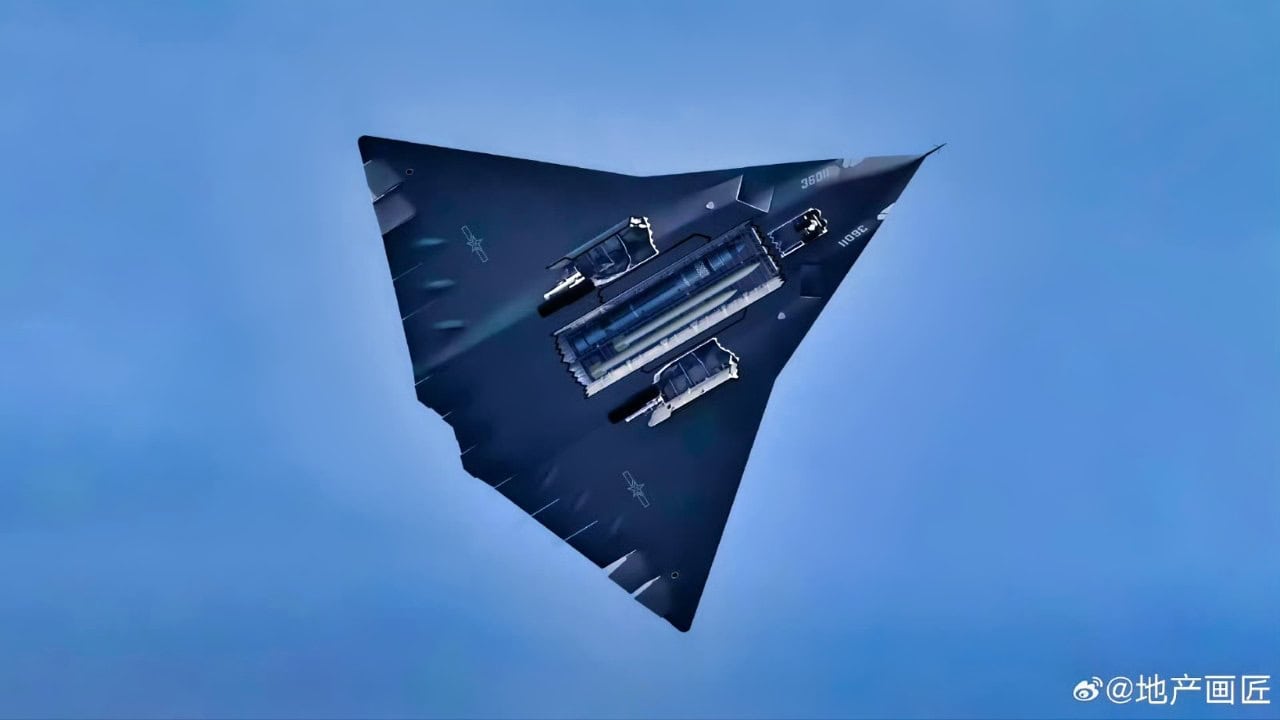
J-36 or JH-XX from China. Screenshot for Chinese Social Media.
In fact, the third and fourth prototypes may be the same airframe. That, or the third prototype was designed to test different avionics and onboard sensors. This aircraft also lacked a flight probe on its nose, which suggests the J-36 may be close to finishing development.
The fifth and most recent prototype was spotted in July.
This newest prototype seems to ditch the thrust-vectoring in favor of the flatter, more heavily recessed engine exhausts of the original.
It also features refinements to its radome and airframe, leading some to speculate that this may in fact be the first low-rate initial production variant.
Again, however, because of the lack of available footage, there is little to comment on this newest iteration of the J-36.
Expediting China’s First Sixth-Generation Aircraft
As many have pointed out, it is unwise to compare this aircraft to the F-47, which is still in development in the United States.
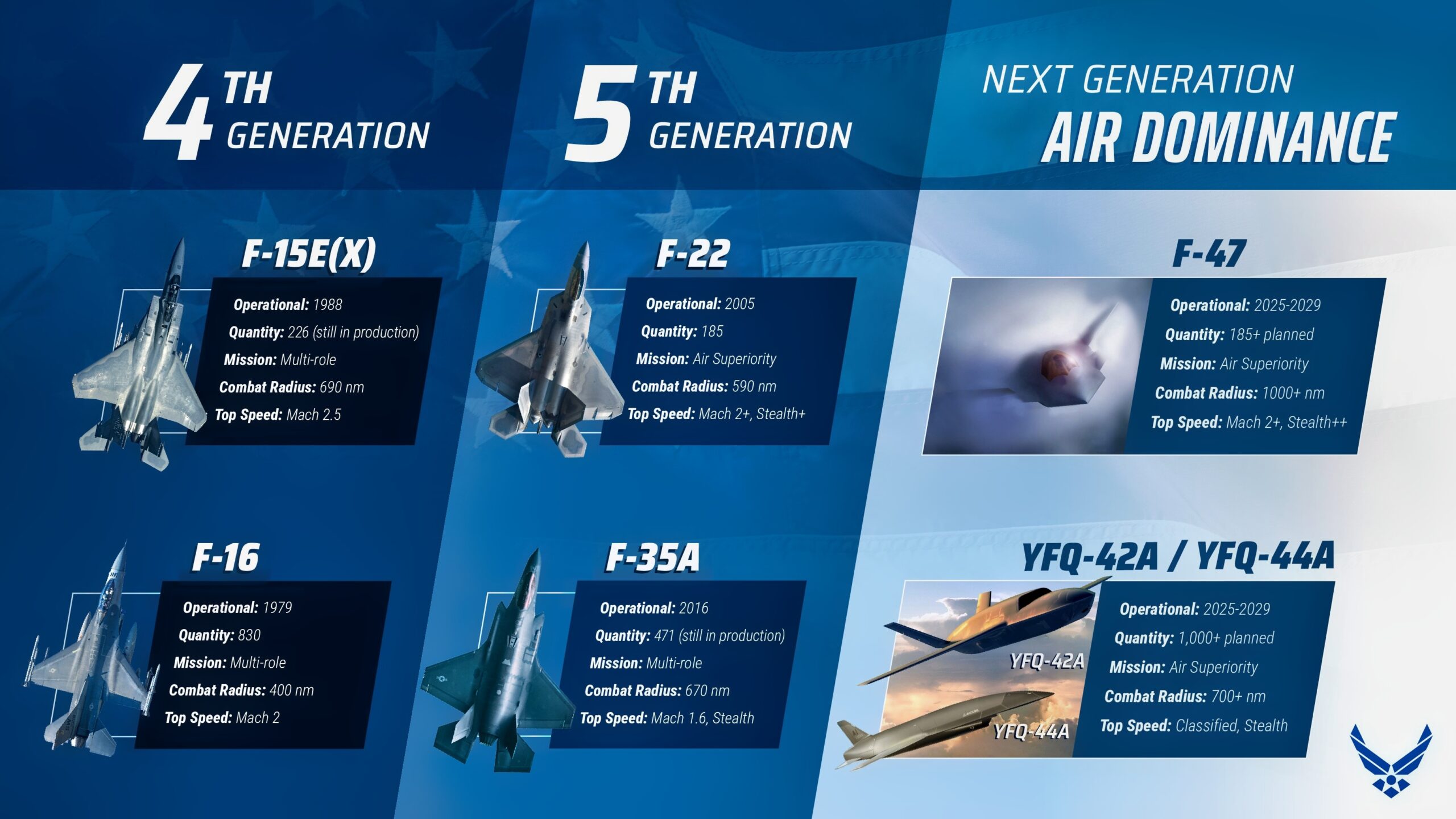
F-47 Infographic. Image Credit: U.S. Air Force
Both aircraft appear to assume different roles and fulfill entirely different functions within their respective air forces.
Marketed as a replacement for the F-22, the F-47 is allegedly designed as a pure air superiority aircraft, though it likely has multi-role capabilities.
Meanwhile, the J-36 appears to be more of a strike aircraft or a regional bomber, with greater emphasis placed on air-to-ground capabilities. However, this is heavily speculative.
What is known, however, is that the J-36 program is progressing at an impressive rate.
With presumably five prototypes taking flight less than two years after its first flight, China appears determined, desperate even, to put the J-36 into service as soon as possible.
As some experts have noted, the aircraft’s development timeline seems to have been massively expedited compared to previous aviation programs in China.
The J-20, for example, entered service only six years after its first flight ( remarkable for its first fifth-generation aircraft) and, based on some reports, the J-36’s timeline is likely to be even shorter.
China has been very careful with the information it releases about its newest aircraft (even the designation “J-36” is not official).
The aircraft’s exact characteristics are unknown, even to many Chinese news outlets. The J-36’s true quality remains unknown and is only subject to speculation.
About the Author: Isaac Seitz
Isaac Seitz, a Defense Columnist, graduated from Patrick Henry College’s Strategic Intelligence and National Security program. He has also studied Russian at Middlebury Language Schools and has worked as an intelligence Analyst in the private sector.