
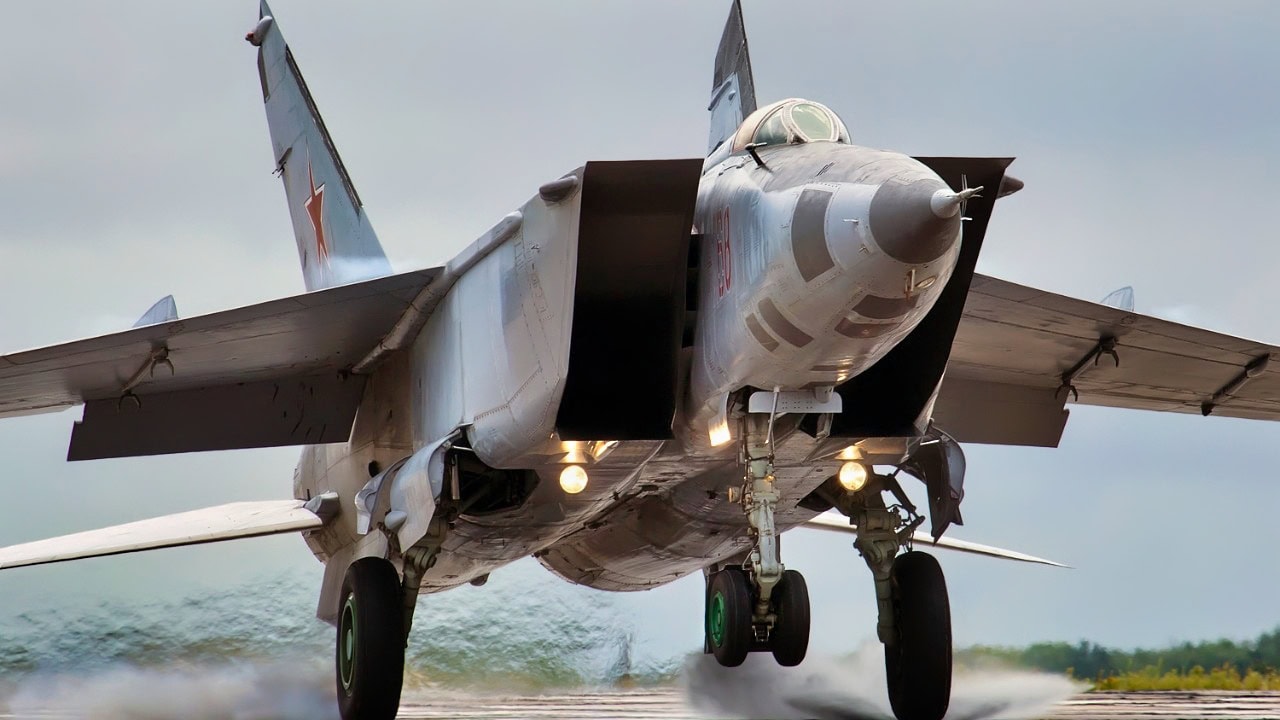
He Did Not Steal the MiG-25. He Changed His Flight Plan and Left the Soviet Union: At 1:57 p.m. on September 6, 1976, a Soviet interceptor dropped onto the civilian runway at Hakodate, on the Japanese island of Hokkaido, overran the pavement, and sat there with almost no fuel left. The pilot fired two warning shots from a pistol and asked the police to throw a canvas over the jet. He told them he wanted refuge in the United States and that he had not had enough gas to go farther.
He was 29. His name was Viktor Ivanovich Belenko. He was a lieutenant in the Soviet Air Defense Forces — the PVO, a separate service from the frontal aviation units that would have fought NATO over Germany — and he had taken off that morning from a field near Vladivostok on what was supposed to be a training sortie without missiles on the rails.
Washington said the next day that it would grant him asylum. The Soviets called it a forced landing and then an abduction. Belenko sat through meetings with their officials at Hakodate and made clear that he was not going back. Three days after he landed, he was on his way to the United States. The jet remained in Japan, which left Tokyo with a diplomatic problem. Moscow wanted the airplane flown home as inviolable state property.
Tokyo did not want a crisis and did not want to look like an American warehouse. A Japanese official told the Soviets the landing gear was damaged and the jet could not be flown. That was not true. The cover story let Japan hire a “contractor” to dismantle the airplane. The contractor was the U.S. Air Force.
Why Defect? The Real Story Beyond the MiG-25
Belenko said later that the jet was not why he left.
In a 1996 interview, he put it in plain English. Soviet propaganda had told him America was a spoiled country falling apart. He had questions. The United States had put a man on the moon and brought him home. It built the best fighters. The socialist promises, he said, served a thin layer of the Party, and the rest of the people were “basically slaves.”
He decided he could not change the system. “I was a fighter pilot, but that had nothing to do with my decision to escape. If I had not been a fighter pilot, I would still have found a way to escape from that concentration camp.” He planned it about a month out. He needed good weather over Japan and full tanks. On September 6, both were there. “By the way, I did not steal the airplane. I had clearances. I just changed my flight plans slightly in the air.”

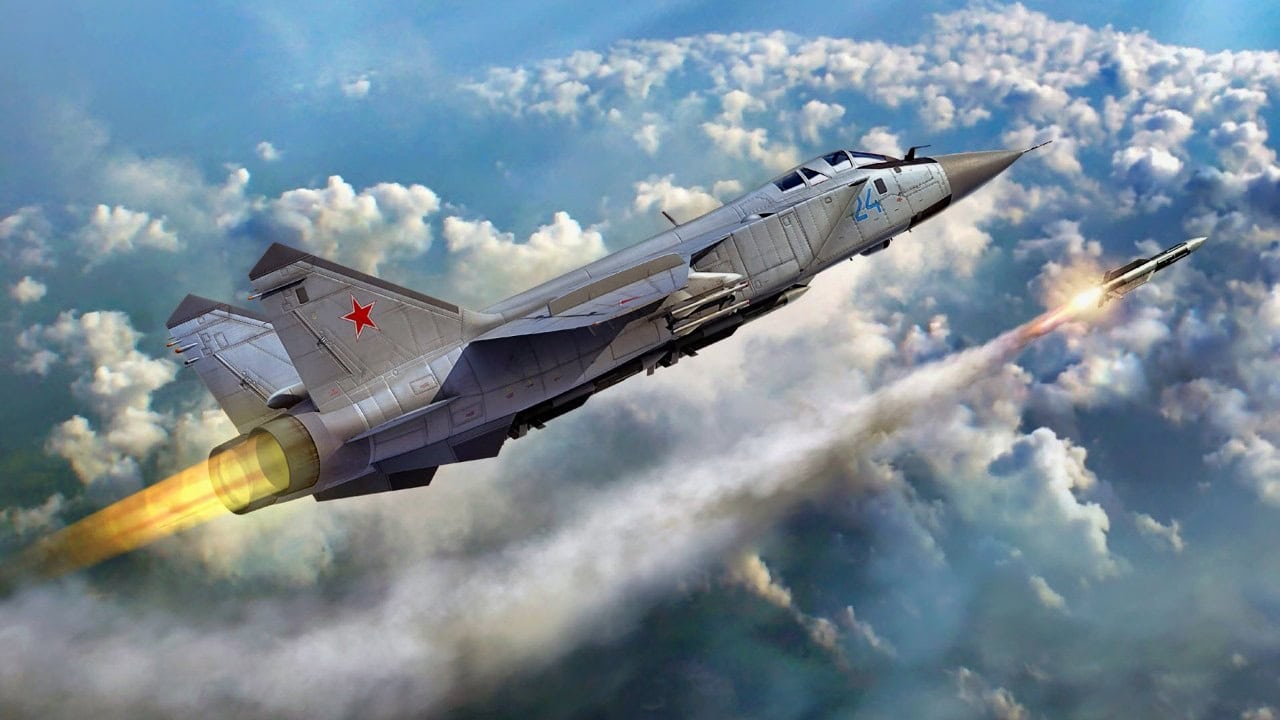
MiG-25 Russian Fighter-Bomber. Image Credit: Creative Commons.
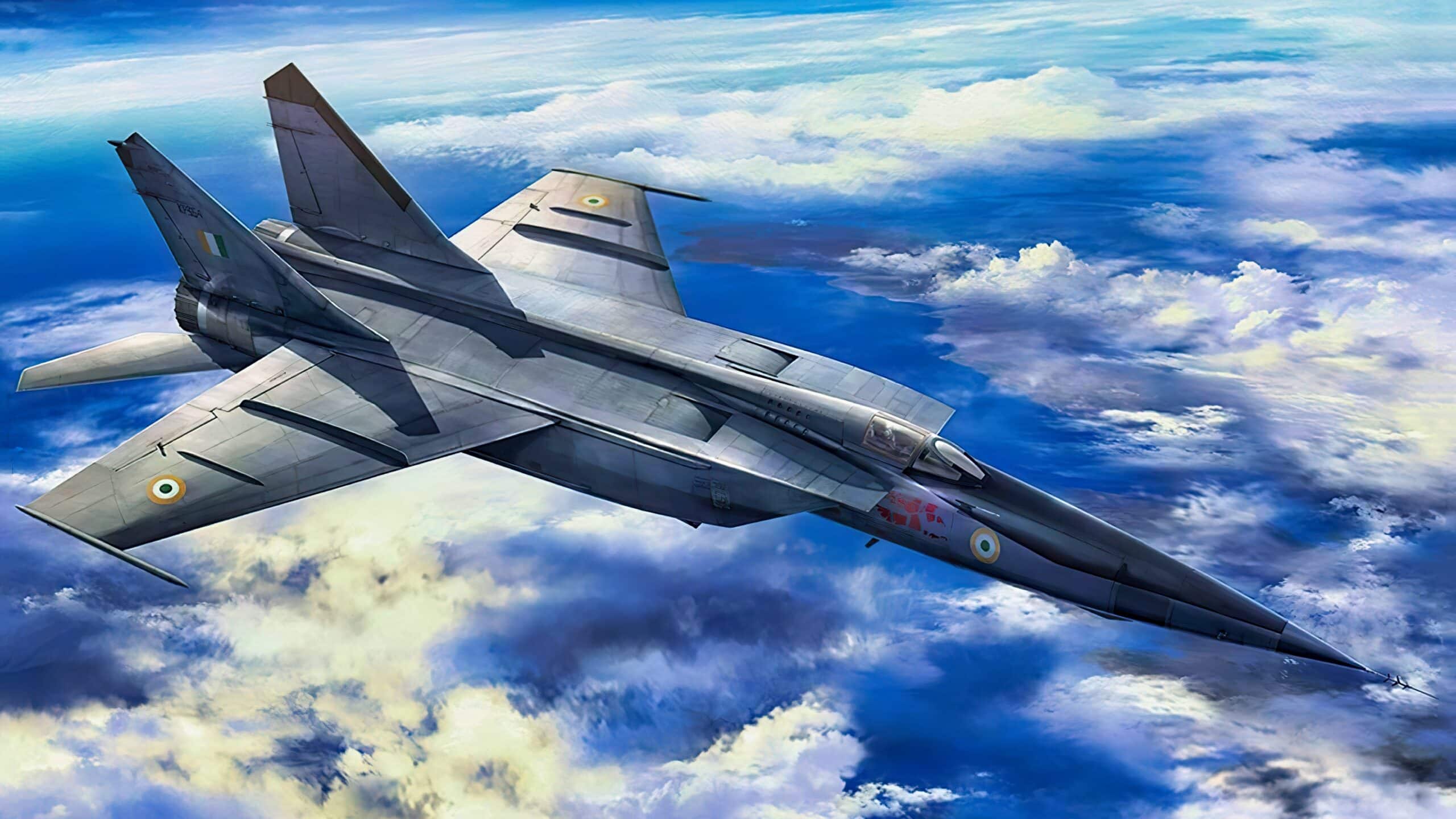
MiG-25. Image Credit: Creative Commons.
The life behind that sentence was ugly enough. Debriefers later heard about Far East PVO units wrecked by desertion, suicide, and men drinking the alcohol out of the airplanes. Food and barracks were bad. Political officers mocked anyone who complained. A book drawn from Belenko’s own manuscript described a marriage already coming apart.
He downplayed the marriage as the reason he left. He said the reason was that he could not live in the political system. This site has already told the flight itself more than once.
The part that still does not get enough air is the one he insisted on: the Foxbat was the tool he used to leave, not the reason he wanted out.
What Washington Thought It Was Hunting
NATO called the airplane Foxbat. The West had been afraid of it since four prototypes thundered over Domodedovo in July 1967 — huge inlets, twin tails, a shape that looked like a maneuvering fighter if you only had photographs. Israeli and American radars later tracked reconnaissance Foxbats over the Sinai at speeds that reached about Mach 3.2. Those dashes wrecked engines. They still fed a story that Moscow had a titanium Mach 3 air-superiority jet that outclassed anything in the inventory.
Navy crews were already shooting Phoenix missiles at high, fast targets meant to stand in for Foxbats. The Air Force’s F-X program, which became the F-15, had been sized against that picture of the threat. This site has walked through how many billions were spent to beat a superfighter who wasn’t there. The important date is not September 1976.
It is January 1976, when combat-coded Eagles were already arriving at Langley. The Air Force had already bought and fielded the airplane it thought it needed to beat Foxbat before anyone had taken a Foxbat apart.
The MiG-25 Intel Boom?
George H.W. Bush, then director of Central Intelligence, called the defection an “intelligence bonanza.” A month later, the public line had cooled. Specialists pulling the jet apart in Japan were surprised to find steel alloy on the fuselage and wings.
The airspeed indicator was redlined at Mach 2.8. A Time piece that October quoted an American engineer who said some of the patches looked like a country tinker working on a pot.
A former intelligence officer later said the airplane was substantially less spectacular than the estimates. National Security Journal has already used that teardown to talk about Western design philosophy. The hangar work answered a narrower question: what kind of airplane this actually was, and what kind it was not.
Steel, Tubes, and a High-Altitude Interceptor
The MiG-25P was not a titanium airplane. Hands-on work in September 1976 found steel in the heavy skins and load fittings, aluminum in the control surfaces, and titanium only where the heat demanded it — inlet ramps, some engine hardware, the outboard leading edges. Later engineering tallies put the mix at roughly four-fifths nickel-steel. Steel is why the jet was so heavy and why it could survive at Mach 2.8.
It is also why it would never turn with an F-15. The engines were a pair of enormous Tumansky turbojets, thirsty and loud, built to climb and sprint, not to loiter or fight in a circle. Above the red line, they ate themselves. The Sinai Mach 3.2 tracks were a warning about what happened when a reconnaissance Foxbat was pushed past the limit, not a combat rating for the interceptor Belenko flew.
The radar, Smerch-A — NATO called it Fox Fire — was a brute. Peak power was huge. The processor was analog. Intermediate-frequency stages ran on miniature vacuum tubes, the kind technicians nicknamed peanuts, with semiconductors on the power side. That was not only backwardness. Tubes shrug off electromagnetic pulses in a way early chips did not, which mattered if the airplane was meant to keep working after a nuclear burst. What the set could not do well was look down into ground clutter and pick a fighter off the weeds. There was no gun. The missiles it was built to carry, the big R-40s, were bomber-killers. Belenko’s jet had none of them aboard. The cockpit sat between those wide inlets with almost no view aft and no rear-view mirror. You do not design a cockpit like that if you expect a turning fight.
None of this made the Foxbat useless. It could still go very high and very fast and throw a large missile at a bomber or an SR-71-class target. This site has covered the Blackbird problem and the later technical picture in detail. What ended at Hyakuri, after a C-5 hauled the partly stripped jet down from Hokkaido, was a different claim: that Moscow had built an Eagle-beater out of exotic metal and flown it in 1967. The museum card on the type is blunt. Until Belenko, the true capabilities were unknown.
What the Air Force Actually Learned: Enter the F-15
The F-15 first flew on July 27, 1972. McDonnell Douglas had won the F-X contract in December 1969. The first operational Eagles reached the 1st Tactical Fighter Wing in January 1976. Belenko landed eight months later. The Air Force did not redesign the Eagle because a lieutenant showed up in Japan.
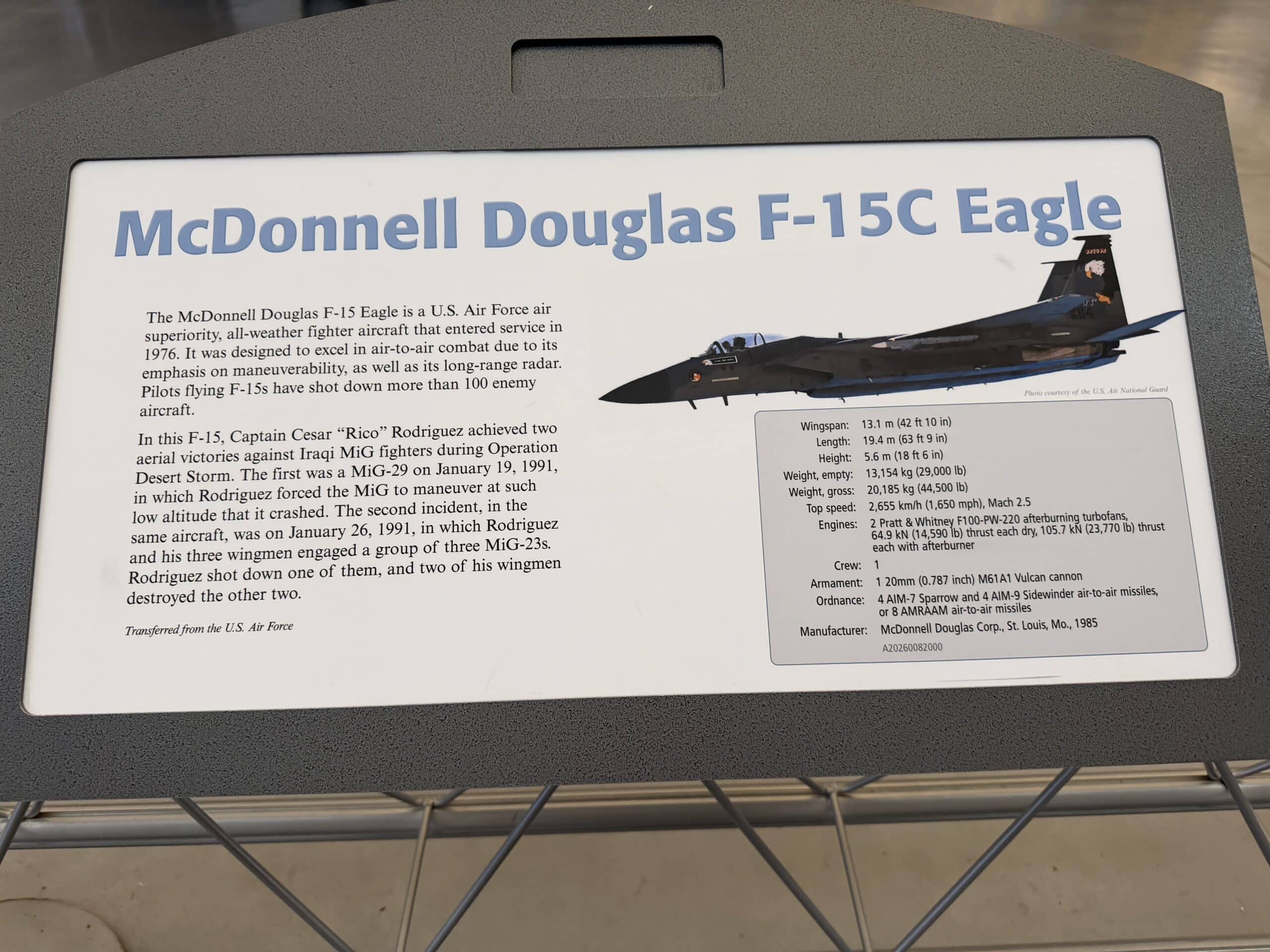
F-15C Smithsonian 19FortyFive Photo
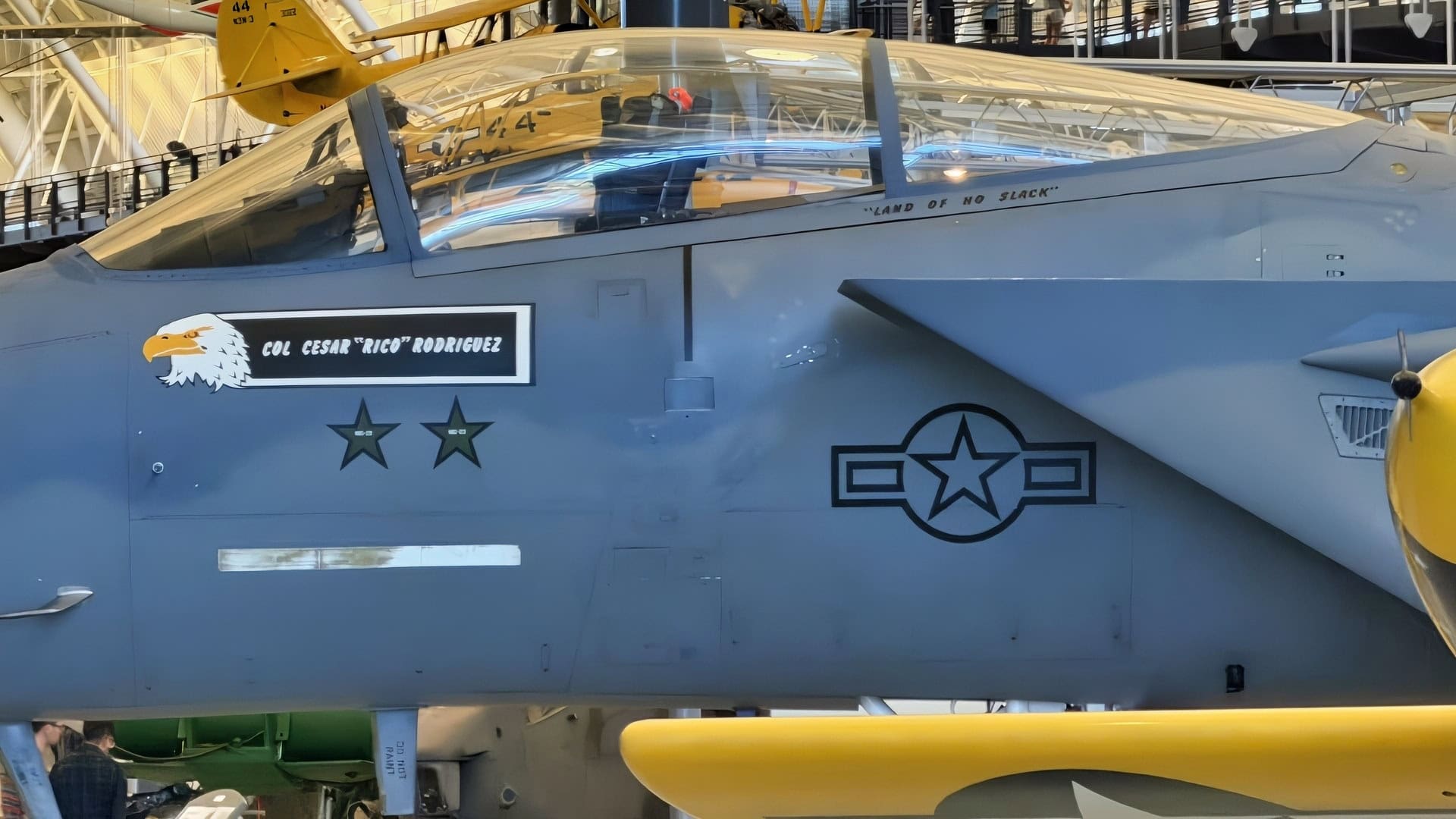
F-15C Smithsonian 19FortyFive Photo

F-15C at the Smithsonian. 19FortyFive Image.
It learned that the threat it had used to sell the Eagle was the wrong kind of airplane — a high-altitude interceptor built to kill bombers, not a turning fighter — and that the Eagle it had already built was still the right kind of answer. Energy-maneuverability, a look-down radar, a canopy you can see out of, and nine-g turning were how you kill a sprinter if the sprinter is forced to fight. They were also how you kill the fighters the Soviets actually intended to mix it up with.
The F-16 was already on its own track, a lightweight complement born of Vietnam and of officers who wanted a small, cheap turn fighter beside the Eagle. Belenko did not create that mix. He made it easier to defend. After Hakodate, nobody had a strong case for a Mach 3 American dogfighter, which would have been a dead end against an aircraft never meant to dogfight.
The Navy’s Phoenix tests against Mach 3 targets suddenly looked conservative. The Sparrow and the APG-63 pairing looked better, not worse, once Fox Fire’s weak look-down was on the table. Years later, in the Gulf, F-15s would kill Iraqi MiG-25s with radar missiles. That later combat showed the interceptor could still be shot down by a true air-superiority fighter. It did not change the 1976 finding, which was simpler: the United States had spent a decade preparing for the wrong kind of MiG-25, and it did not need to spend the next decade doing it again.
What Russia Learned: Enter the MiG-31
Moscow learned something too. Within a short stretch, it pushed the MiG-25PD, which had a better radar and a short-range missile, and kept moving toward the MiG-31. The airplane Belenko left behind went home in thirty crates from Hitachi after Japan billed for the runway and the carpentry. The Soviets billed back at a much larger number for missing pieces. Whether anyone paid is unclear from the public record. Gromyko told Ford and Kissinger that the Americans and Japanese had taken the plane apart as if they owned it. That was accurate. Japan had used the damaged-gear story to give American technicians a month with the airframe, the radar, and the engines before the crates were loaded.
MiG-31 from Russian Air Force. Image Credit: Creative Commons.
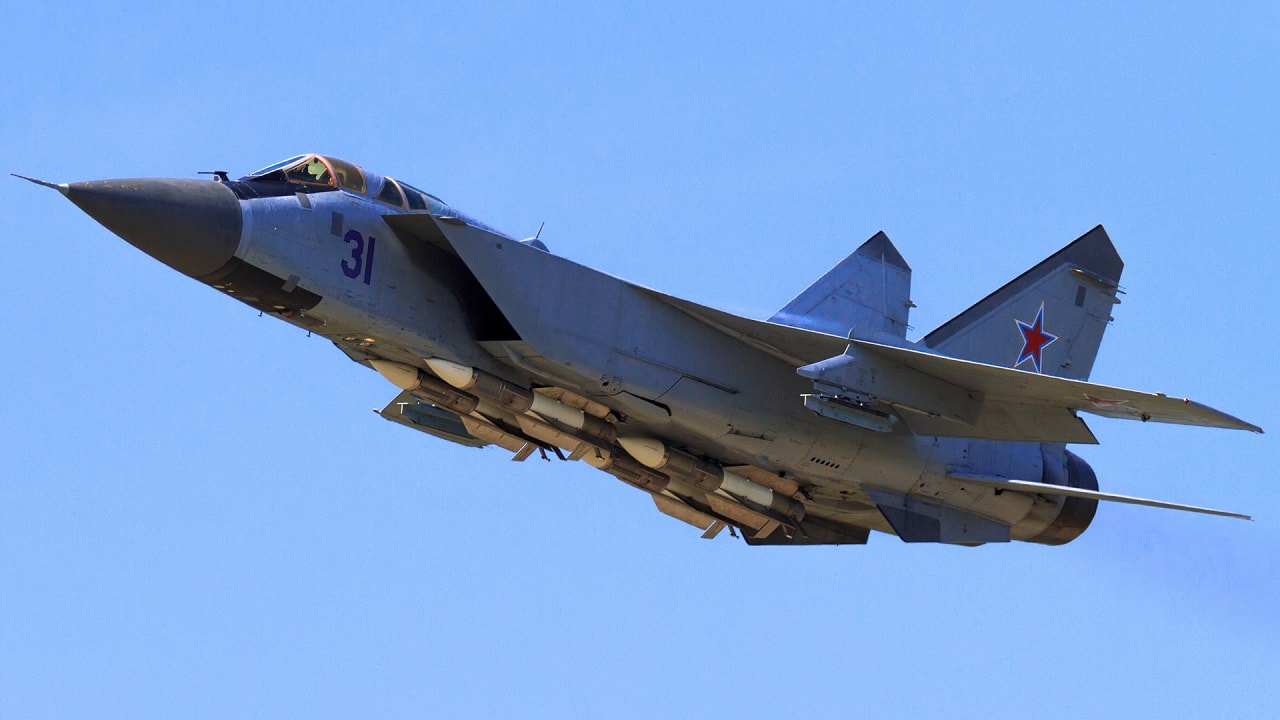
MiG-31. Image Credit: Creative Commons.
Aftermath
Belenko spent months with debriefers. He kept the knee-pad notebook he had flown with; it ended up in a display case with his military ID. In 1980, Congress passed a private bill, sponsored by Barry Goldwater, and Jimmy Carter signed it.
Belenko became a citizen under the name Schmidt and lived quietly enough that when he died on September 24, 2023, at 76, after a short illness in southern Illinois, the country did not notice for weeks. His son Paul had to tell the papers.
Twenty years earlier, Belenko had already said why he left, and it was not because he wanted to hand Washington a secret fighter. He wanted out of a system he had decided he could not change.
About the Author: Harry J. Kazianis
Harry J. Kazianis (@Grecianformula) was the former Senior Director of National Security Affairs at the Center for the National Interest (CFTNI), a foreign policy think tank founded by Richard Nixon based in Washington, DC. Harry has over a decade of experience in think tanks and national security publishing. His ideas have been published in the NY Times, The Washington Post, The Wall Street Journal, CNN, and many other outlets worldwide. He has held positions at CSIS, the Heritage Foundation, the University of Nottingham, and several other institutions related to national security research and studies. He is the former Executive Editor of the National Interest and the Diplomat. He holds a Master’s degree focusing on international affairs from Harvard University.

