

Summary and Key Points: Christian D. Orr, a senior defense editor and former Air Force officer, recounts the definitive intelligence coup of the Cold War: the defection of Viktor Belenko.
-Flying a MiG-25 Foxbat from Vladivostok to Hakodate, Japan, Belenko handed the West the keys to the world’s fastest interceptor.

MiG-25 Foxbat. Image: Creative Commons.
-This 19FortyFive report analyzes how CIA and Air Force technicians deconstructed the Foxbat, discovering its reliance on vacuum tubes, limited maneuverability, and engine-shredding Mach 3.2 speeds, ultimately transforming a feared “Superfighter” into a strategically understood “AWACS killer.”
The Great Foxbat Reveal: How Viktor Belenko’s 1976 Defection Shattered the MiG-25 Myth
The Soviet-designed MiG-25 (NATO reporting name “Foxbat”) has been mostly retired by its dozen or so users.
The Algerian Air Force and the Syrian Air Force were the last two holdouts, but Algeria officially retired theirs in July 2022 (though they brought one back out in November 2024 for a parade), and Syria saw its entire aircraft inventory destroyed by the Israeli Air Force after the collapse of the Assad regime in early December 2024.
Even in retirement, the MiG-25 remains the fastest fighter-interceptor ever built at Mach 3.2 (Mach 2.83 in practical reality).
That is still slower than the also-retired SR-71 Blackbird (Mach 3.5) and X-15 (Mach 6.7). When the Foxbat first arrived in 1970, it was shrouded in mystique—it scared the hell out of U.S. and allied aerial warfare planners. But six years later, the bold defection of a Soviet MiG-25 pilot named Viktor Belenko dispelled the myths.
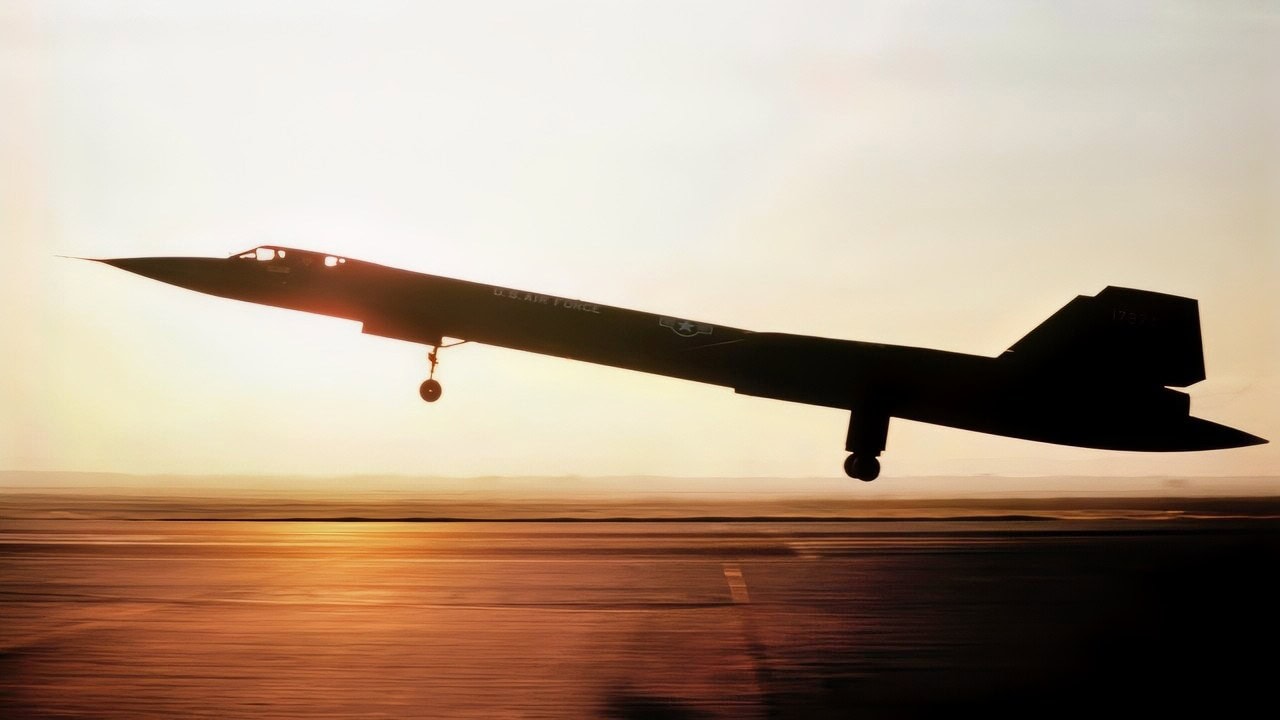
A left side view of an SR-71 aircraft from the 9th Strategic Reconnaissance Wing landing. The aircraft is silhouetted against the sunset.
Belenko Bio in Brief
Viktor Ivanovich Belenko was born on February 15, 1947 in the city of Nalchik.
At some point in his early 20s, he earned a commission as a lieutenant in the Soviet Air Force. Lieutenant Belenko became a MiG fighter pilot, which made him as close to royalty as one could get in the ostensibly ultra-egalitarian Soviet society.
However, Viktor soon grew disillusioned with the rampant corruption, hypocrisy, and woeful inefficiency plaguing not just the air force but the Soviet Union as a whole. Soon enough, he started planning his defection. He would bring a huge prize along for his ride to exile.
MiG-25 Foxbat Flees to Freedom (Belenko Bursts the ‘Bat’s Bubble)
On September 9, 1976, Belenko made his bold move.
While on a routine training mission out of Vladivostok, Viktor suddenly changed course and flew his Foxbat to Hakodate Airport in Hokkaido, Japan. Viktor was doubly-lucky; not only did he manage to avoid getting shot down by the Japan Air Self-Defense Force, he managed to touch down just before his plane would have run out of fuel. The MiG-25 was a gas-guzzler, and Belenko’s ‘Bat was practically running on fumes at time of touchdown.

MiG-25 Russian Fighter-Bomber. Image Credit: Creative Commons.

MiG-25. Image Credit: Creative Commons.
This turned out to be a huge intelligence bonanza for the West, to say the least. Then-CIA Director and future U.S. President George Herbert Walker Bush was especially thrilled. Intelligence community staffers went though every nook & cranny and every nut & bolt of the bird, and in the process, they discovered that the previously feared Foxbat wasn’t all that it was cracked up to be.
For all of its strengths, the MiG-25 also had some major weaknesses:
-It could fly at extreme speeds, but in doing so it would risk damage to the airframe and engines.
-Its large size equated to a sizable radar cross-section that made it easy to track on radar.
-It used antiquated technologies, including vacuum tubes rather than transistors.
-As already noted, it had limited range due to fuel inefficiency.
-Its speed notwithstanding, it lacked maneuverability; this is not entirely surprising, as it wasn’t designed for tight-turning dogfights against Western fighters such as the F-4 Phantom II, but rather to go after supersonic bombers such as the XB-70 Valkyrie (which ended up never making it past the prototype phase).

The futuristic XB-70A was originally conceived in the 1950s as a high-altitude, nuclear strike bomber that could fly at Mach 3 (three times the speed of sound) — any potential enemy would have been unable to defend against such a bomber.
When this writer attended Air Battle Manager School as a U.S. Air Force Second Lieutenant back in 2002, we were taught that the MiG-25 was later repurposed as an AWACS killer.
Once Western intelligence was satisfied with the treasure trove of information they had unearthed, Belenko’s MiG-25 was reassembled and sent back to the Soviets.
As for Belenko himself, he was eventually granted political asylum and later became a naturalized U.S. citizen, living a quiet life as an aerospace engineer and aviation consultant and mostly eschewing interview requests.
Where Are They Now?
An estimated 1,186 MiG-25 airframes were built. At last count, 15 Foxbats have been preserved for posterity at museums and military bases in seven different countries.
The only stateside specimen is serial no. 020657, a MiG-25RB at the National Museum of the United States Air Force at Wright-Patterson Air Force Base (in the vicinity of Dayton), Ohio.
Viktor Belenko passed away at the age of 76 on September 24, 2023, in a nursing home in the small town of Red Bud, Illinois after an unspecified illness.
He was survived by his sons Tom and Paul from his second marriage, four grandchildren, and a son, Dmitry, from his first marriage, in the Soviet Union. For whatever reason, no memorial service was planned.
To learn about Viktor’s fantastic story, read the book MiG Pilot: The Final Escape of Lieutenant Belenko by John Barron.
About the Author: Christian D. Orr, Defense Expert
Christian D. Orr is a Senior Defense Editor. He is a former Air Force Security Forces officer, Federal law enforcement officer, and private military contractor (with assignments worked in Iraq, the United Arab Emirates, Kosovo, Japan, Germany, and the Pentagon). Chris holds a B.A. in International Relations from the University of Southern California (USC) and an M.A. in Intelligence Studies (concentration in Terrorism Studies) from American Military University (AMU). He is also the author of the newly published book “Five Decades of a Fabulous Firearm: Celebrating the 50th Anniversary of the Beretta 92 Pistol Series.”