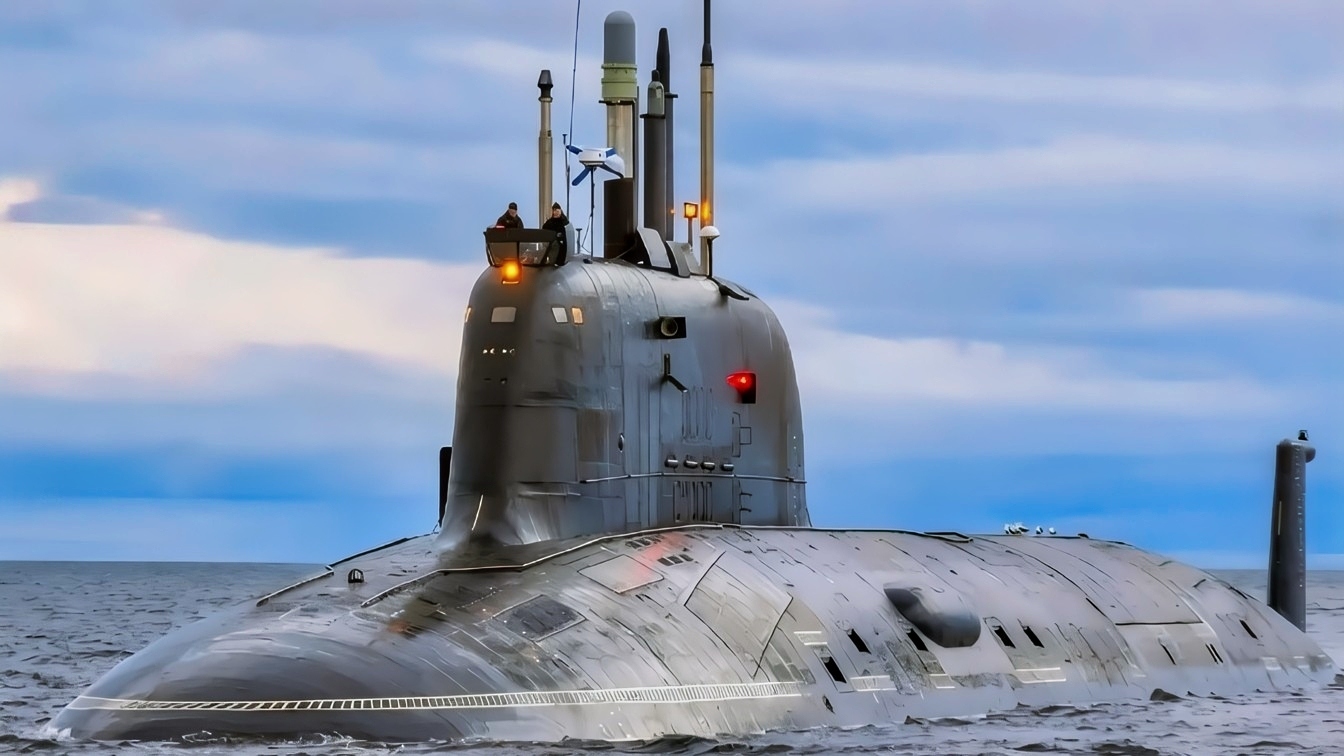
As A Former Aviation Anti-Submarine Warfare Operator, I Think The Russian Yansen-class May Be The Best Sub Russia Has Ever Built: As a former Aviation Anti-Submarine Warfare Operator in the US Navy, I’ve tried to “keep my hand in”, so to speak, about submarines and hunting them from the air. Of course, much of this information is classified, which limits what I can share, but like a trained Chef who cooked for years before leaving the kitchen, I still know a good dish when I see one.
The Yasen-Class Submarine Is Real Naval History
This is why I am very impressed with the Russian Yansen-class submarines, also known as the Project 885 and 885M, NATO designation Severodvinsk-class. In the mid-1970s, the Soviets began a program to replace aging attack submarines like the Oscar II and Charlie-type cruise missile submarines with vessels built around the latest technology, either developed in-house or stolen from the West. I’m not kidding about the theft, either. During the Cold War, the number one priority of Soviet Intelligence agencies like the KGB and GRU was not our nuclear weapons or the latest fighter plane or radar. It was information about US submarines and how we hunted theirs.
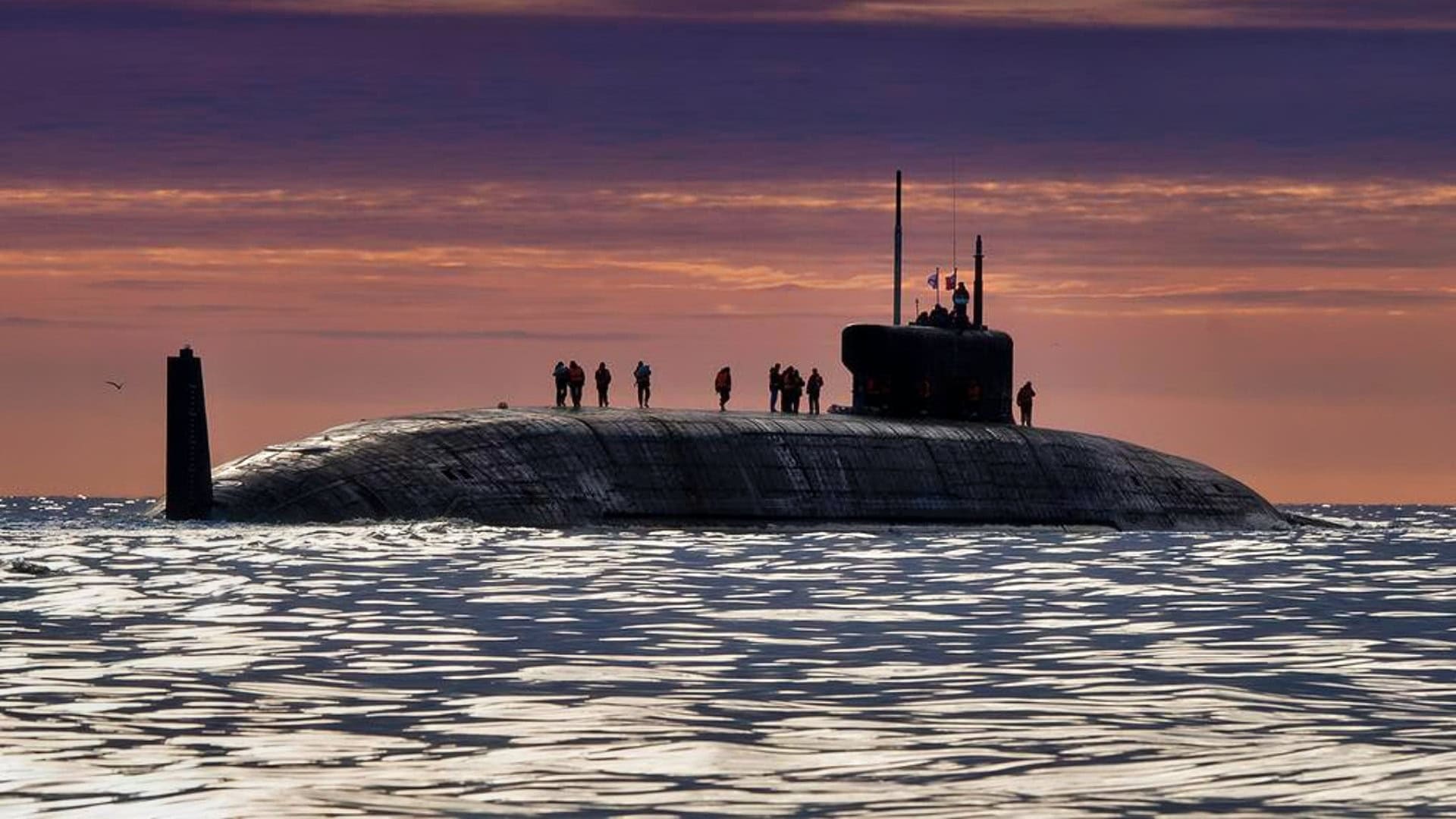
The Russian Navy is experiencing a resurgence, with new ships and submarines entering service despite ongoing challenges.
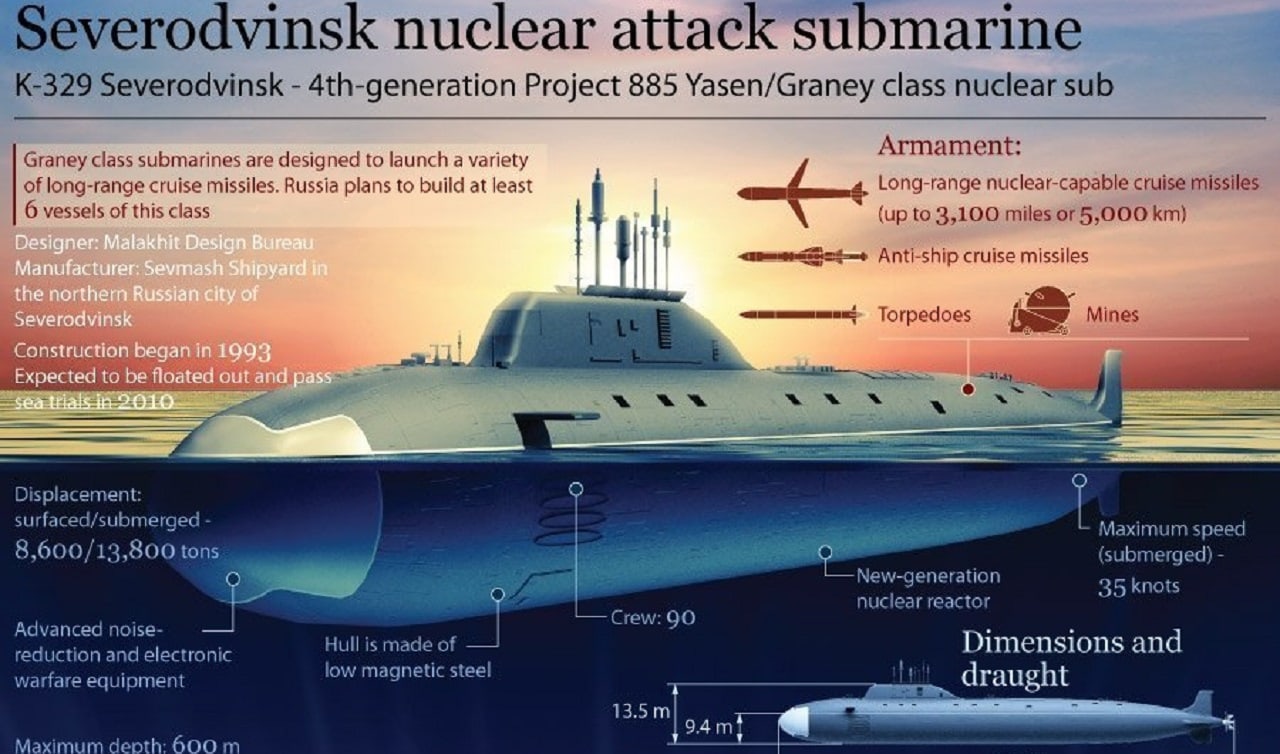
Yasen submarine diagram from Russian state media.
Their new submarine would build on lessons learned from building the Akula and Alpha-class attack boats, and Russian designers took a page from US submarines like the Los Angeles and Seawolf classes to make this new submarine a multi-mission platform able to attack targets above and below the sea and on land. The Yansen-class boats would be their first true multi-purpose submarine.
So, they worked on it from the mid-1970s until they finally began the first hull in 1993, after the Soviet Union collapsed. It tells you something about what the Russians thought they had on their drawing boards with the Yansen that they refused to quit on it even as the entire communist state was coming down around their ears.
Financial chaos in Russia after the Soviet Union collapsed made them stop work on the lead boat in 1996. The new Russian government made this submarine a funding priority, and the first Project 885 boat, the Severodvinsk, was finally completed in 2010. That 16-year gap from keel laying to completion meant many of the submarine’s systems were already obsolete. Rather than abandon the design and start fresh, the Russians set to work updating her electronics, sensors, and noise reduction gear.
Basic specifications:
Length: 130 meters
Beam: 13 meters
Propulsion: OK-650V water-cooled, water-moderated reactor.
Speed: Max 25 knots
Diving depth: 2000 feet.
Operational depth: 1700 feet
Submerged endurance: 100 days
Crew: 64-85, depending on variant
Armament: ten 533 mm torpedo tubes with 40 torpedoes in magazine. 8 vertical launch tubes for a combination of Tsirkon hypersonic missiles, Oniks anti-ship missiles, or Kalibr anti-ship/land attack missiles.
Magazine size 32-40. (These Vertical tubes are large enough for the Zircon cruise missile as well.)
Ingla-M surface-to-air missiles.
Russia Had A Lot Of Faith In The Yansen-class
When Severodvinsk was put to sea, they still didn’t think her equipment was good enough, but rather than start from scratch, they called a new modernized variant the Project 855M boats as follow-ons to the Severodvinsk.
This further indicates that Russia believed it had a very good submarine. Russia has finished 7 Yasen-class submarines, with 3 under construction and orders for 2 more.
By 2018, the Severodvinsk proved why the Russians stuck with the design. She went to sea in 2016 and conducted drills and patrols for nearly two years. Then, in 2018, the sub left its base on the Kola Peninsula above the Arctic Circle, slipped through the gap between Greenland, Iceland, and the UK, and operated off the US East Coast undetected
Proving it was no fluke, Severodvinsk was spotted on the surface in the Baltic with an Akula in 2021. The next time they detected her, she was in the Mediterranean Sea off Sicily, suggesting she slipped through the narrow Straits of Gibraltar undetected.
Those are both impressive feats given the capabilities of US submarines and anti-submarine warfare aircraft.
The Yansen-class Appears To Have Sharp Ears And Treads Softly
This suggests that two core systems on the Severodvinsk work very well. The first is her wrap-around passive sonar system, able to listen to sounds in the water from the front and sides. A towed sonar array can be reeled out a mile or two behind the sub to listen for what may be behind her, like a US submarine.
The second suite of systems that seems to do its job well is its quiet propulsion system, sound-absorbing coatings, and internal quieting equipment. Together, these systems keep as little sound in the water as possible.
A good submarine isn’t really about going fast and deep and having lots of torpedoes in tubes. A good submarine can move silently while listening at range for other noises in the water. Being quiet means you don’t get spotted first; good hydrophones and computer processing let you detect the other sub first.
We May Know More About The Yasen-class Than We Admit
All that said, while I respect and am impressed with the Yansen-class as the best Russian sub, that doesn’t mean it equals US equivalents like the Seawolf-class and the new Virginia-class. The US plays a very sophisticated game with its submarines. Just because reports say the Severodvinsk lurked off the East Coast and Sicily undetected doesn’t mean it really did. When a new class of Russian submarine enters the water, the US submarine force treats tracking it like a quest for the Holy Grail.
Our own subs’ skippers would all vie for a chance to bring back a solid track and acoustic recordings of a Yansen-class submarine for detailed analysis. In the game of secrets that is undersea warfare, it’s best not to tell a potential enemy you can track their submarines once you know you can.
You don’t want them to change behaviors you can predict or upgrade technology that you have figured out how to exploit. Silence is golden beneath the waves, but it’s also golden above them.
About the Author: Sean Spoonts
Sean Spoonts is the former Editor-In-Chief of SOFREP.com. He is a military analyst, writer, and commentator whose work has appeared in Newsweek, CNS News, Ukrinform, and various military/veteran media networks and professional publications, including the Military Intelligence Professional Bulletin. He is a U.S. Navy veteran, having served as an Aviation Anti-Submarine Warfare Operator and Search and Rescue Helicopter Aircrewman.