
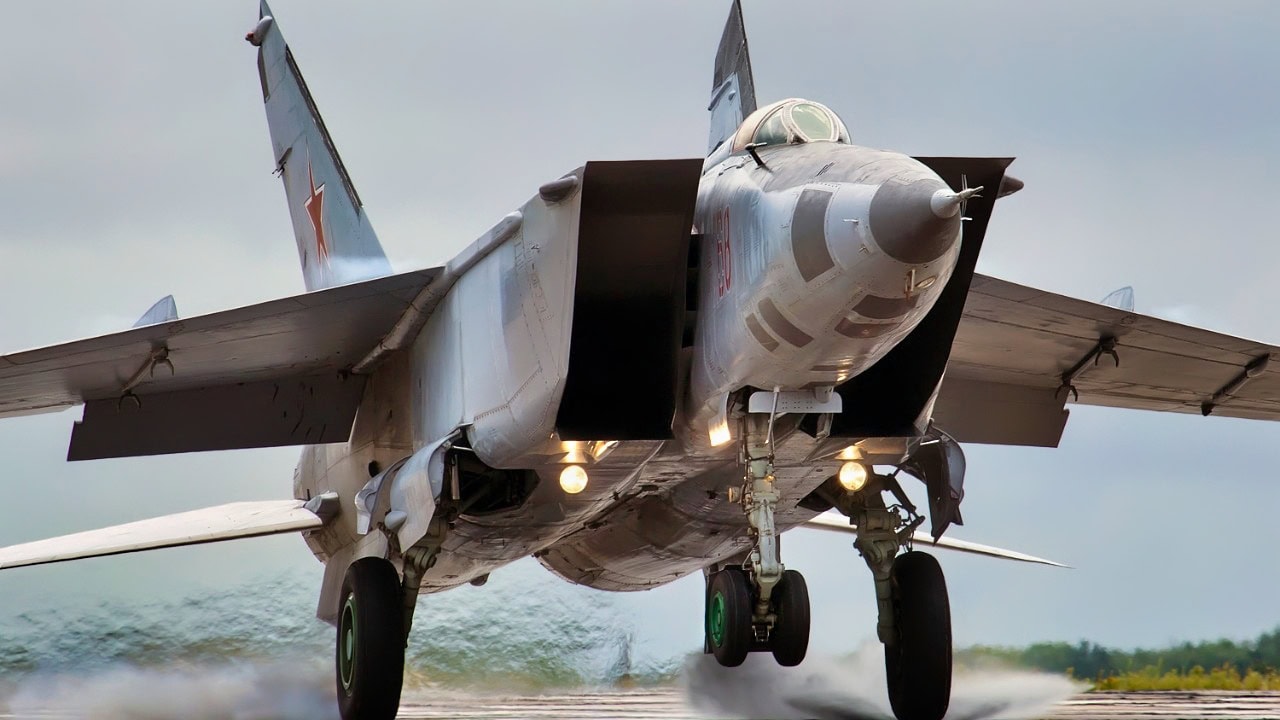
Summary and Key Points: For a decade, American intelligence built its air-superiority strategy around a Soviet aircraft it had never seen up close and fundamentally misjudged. The CIA and the Pentagon believed the Soviet Union had fielded a titanium superfighter that could outfly anything America had — and spent billions racing to beat it. Then, on a September afternoon in 1976, a disillusioned Soviet lieutenant landed the aircraft at a civilian airport in Japan and handed the West the truth. What engineers found inside embarrassed a decade of American threat estimates and cost the Soviet Union something far greater.
Fifty Years On, Viktor Belenko’s MiG-25 Defection Remains One of the Cold War’s Great Intelligence Own-Goals
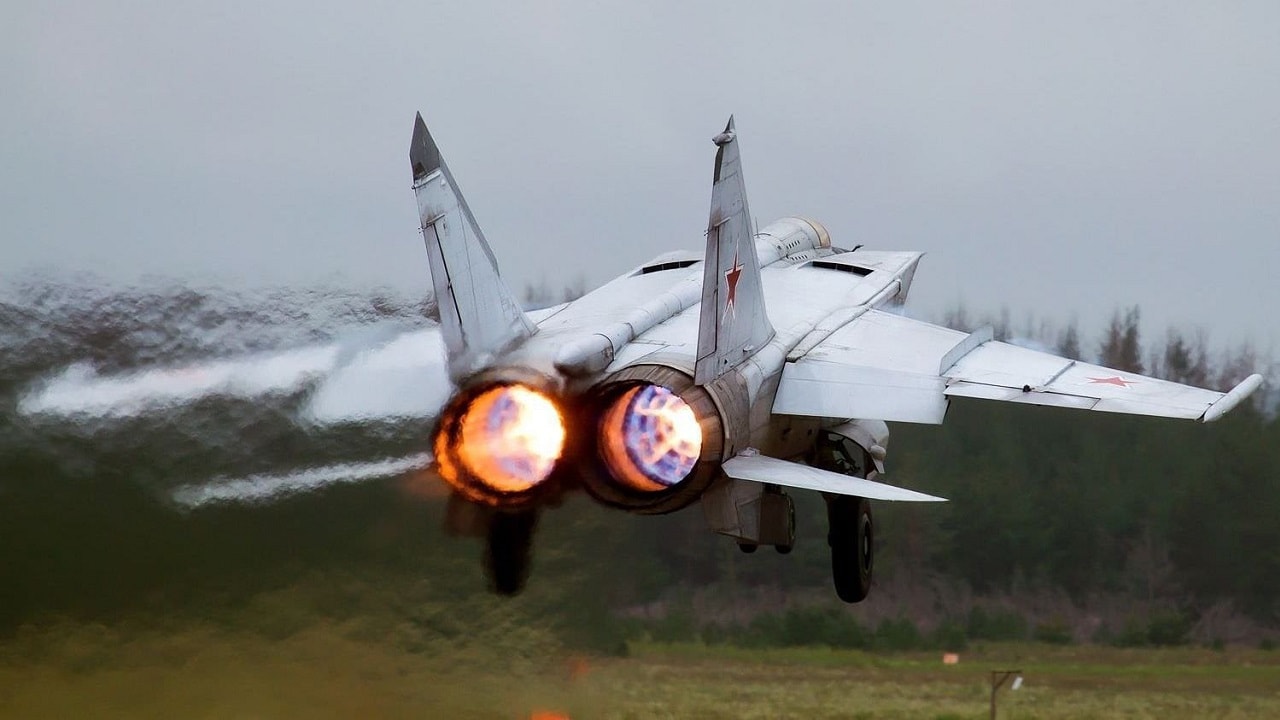
MiG-25. Image Credit: Creative Commons.
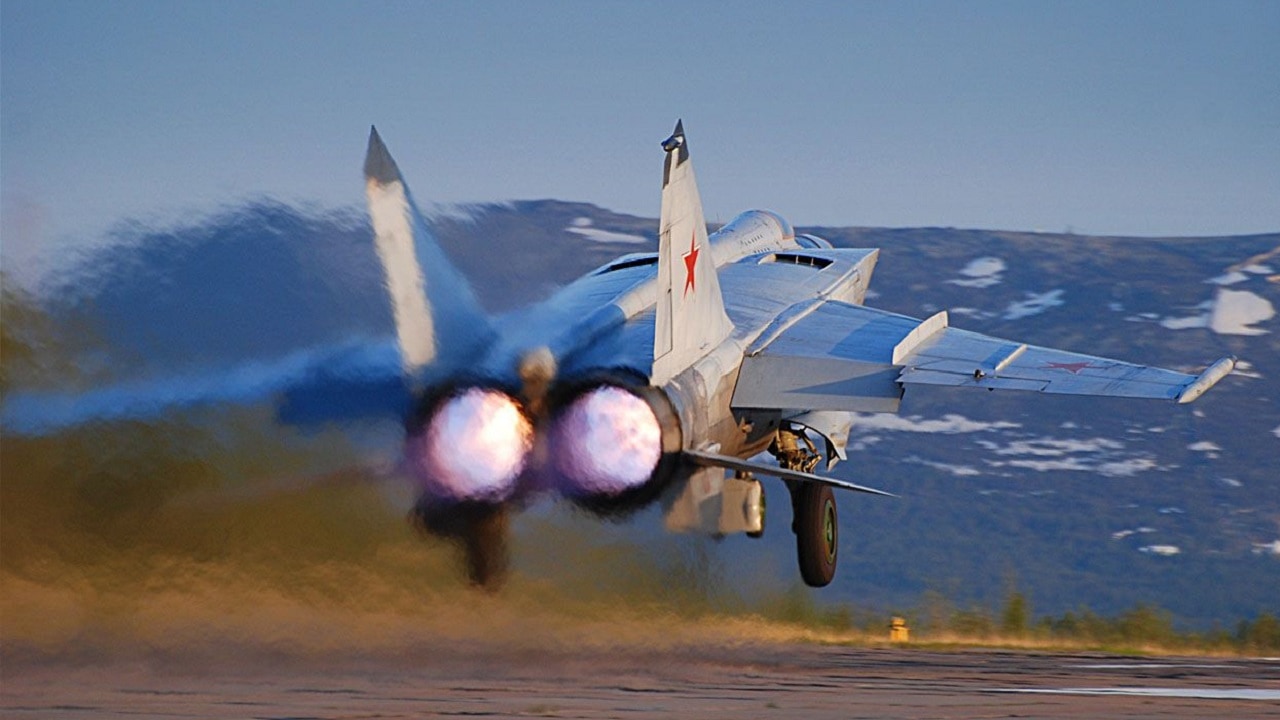
MiG-25. Image Credit: Creative Commons.
On September 6, 1976, a disillusioned Soviet lieutenant named Viktor Belenko landed his MiG-25 at a civilian airport in Japan and handed the West its first look at the aircraft it feared most. What engineers found inside humbled American intelligence, which had spent a decade dreading a superfighter that did not exist. It cost the Soviet Union far more: its secrets, its myth, and a crash program to fix everything the defection exposed, and that fix is still flying over Ukraine today.
Fifty years ago this September, the most feared combat aircraft in the world was flown into the hands of the enemies it was built to fight, and the two superpowers spent the next decade absorbing the consequences. The MiG-25 Foxbat had haunted Western war planners since the late 1960s, and when a young Soviet pilot delivered one intact to Japan, the event settled a decade of argument in an afternoon. It also stands, half a century later, as one of the costliest self-inflicted intelligence losses of the Cold War, a single defection that embarrassed the CIA’s threat estimates and, at the same time, gutted the Soviet military’s most guarded secret.
What the West Feared: A Titanium Superfighter That Never Existed
The panic began with photographs. When American spy satellites captured the MiG-25 in the late 1960s, analysts saw enormous wings, huge engine intakes, and a jet that had set speed and altitude records, and they drew the worst possible conclusion: the Soviets had built a fast, high-flying, highly maneuverable air-superiority fighter that could outclass anything in the American inventory. That assessment shaped a generation of design. The US Air Force accelerated the F-X program that produced the McDonnell Douglas F-15 Eagle, an aircraft deliberately designed to surpass the MiG-25’s presumed speed and agility.
The response was already built before the truth was known. The F-15 entered service in early 1976, months before Belenko’s defection let anyone in the West actually see what they had been racing against. The Americans had committed billions and reshaped their air-superiority doctrine around an aircraft whose capabilities existed mostly in the imaginations of intelligence analysts. The fear was real, the spending was real, and the threat, in the form the Pentagon imagined it, was not.
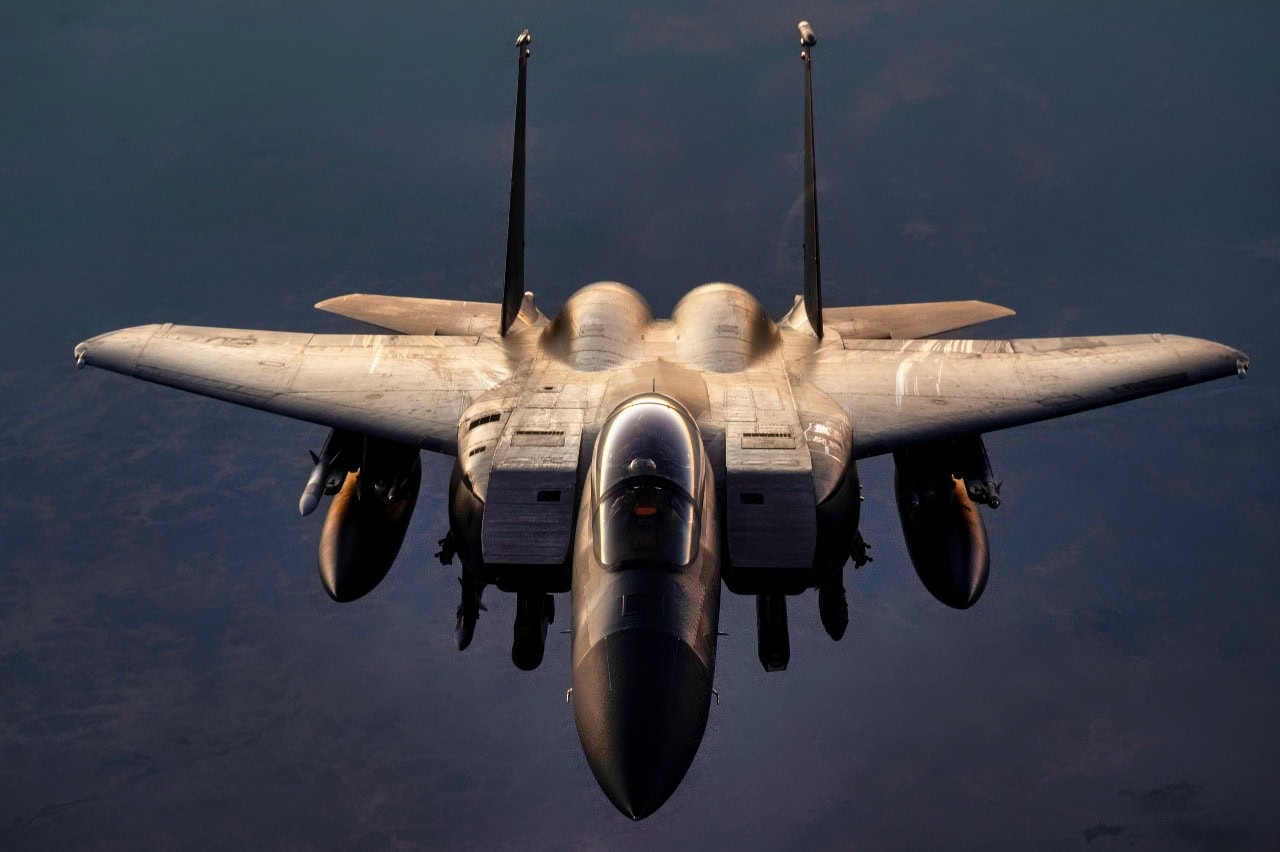
A U.S. Air Force F-15E Strike Eagle flies over the U.S. Central Command area of responsibility, Jan. 7, 2025. The F-15E’s superior maneuverability and acceleration are achieved through its high engine thrust-to-weight ratio and low-wing loading. (U.S. Air Force photo by Staff Sgt. William Rio Rosado)
The Defection: An Afternoon That Ended a Decade of Guessing
The man who ended the guessing was a 29-year-old lieutenant with the 513th Fighter Regiment, stationed at a bleak base in the Soviet Far East, where morale and living conditions were poor. On September 6, 1976, Belenko broke from a training sortie, dropped to a few hundred feet over the Sea of Japan to slip beneath radar, and made for Hokkaido. He carried the aircraft’s classified pilot manual, which he was strictly forbidden to take on a flight, because he intended to hand it to the Americans.
The landing nearly killed him. Low on fuel and without the right approach frequencies, he found the civilian airport at Hakodate, narrowly missed a departing airliner, and overran the too-short runway, blowing a tire. Climbing out, he fired warning shots and told bystanders to keep away from the jet, which Soviet doctrine fitted with a self-destruct system, then asked to be put in contact with the US Air Force and requested asylum. The rest of the story, the diplomatic standoff, the Soviet demand for the jet’s return, and the eventual shipment back in crates, is the part every retelling covers. What matters more is what happened while the aircraft sat in American and Japanese hands.
The Teardown: Steel, Vacuum Tubes, and Engines That Ate Themselves
Engineers took the Foxbat apart, and almost every fearful assumption collapsed. The airframe was not exotic titanium but largely nickel-steel alloy, welded by hand, a material the Soviets chose because it could take the heat of high-Mach flight and because their industry could produce it at scale. That choice made the aircraft enormously heavy. Its top speed of Mach 3.2, the figure that had so alarmed the West, turned out to be the speed that destroyed the engines; in service, the jet was redlined near Mach 2.8. It carried a short combat radius and drank fuel so fast that Belenko had barely made his crossing.
It could not turn well, could not track targets against the ground, and was, as an interceptor rather than a dogfighter, close to useless in the maneuvering fight the F-15 had been built to win.
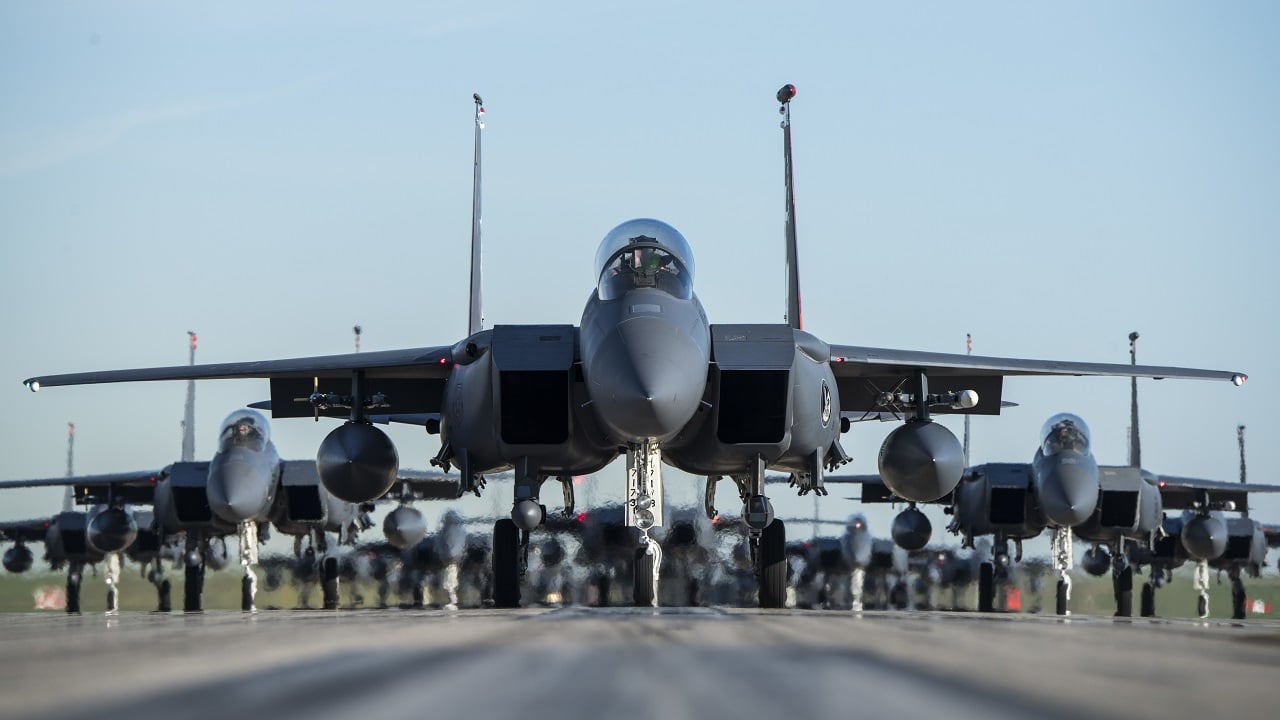
F-15E Strike Eagles taxi into formation June 12, 2019, at Mountain Home Air Force Base, Idaho. This was a rare opportunity to capture the Gunfighter family, including the 391st, 389th and 428th Fighter Squadrons, before a morning flight. (U.S. Air Force photo by Staff Sergeant Jeremy L. Mosier)
The most revealing detail was the electronics. The MiG-25’s radar ran not on modern transistors but on vacuum tubes, technology the West had abandoned years earlier. Yet the tubes were not simply backwardness. They produced enormous raw power, so much that by one account, activating the radar on the ground could kill a rabbit at a thousand meters, and they were rugged and heat-tolerant. Analysts have argued ever since whether the choice was a deliberate effort to harden the set against the electromagnetic pulse of a nuclear blast or simply a reflection of the Soviet Union’s lag in semiconductor production, and the honest answer is that both explanations remain in play. Either way, the lesson for Western intelligence was uncomfortable: they had mistaken a specialized, brute-force bomber hunter for a technological marvel and built their fears accordingly.
What It Cost the Soviets
If the affair embarrassed the Americans, it wounded the Soviets far more deeply, which is half of the story the triumphant retellings tend to skip. The defection did not merely reveal that the Foxbat was less than advertised. It compromised the actual radar, the missiles, and the operating secrets of a frontline interceptor, and it did so at the worst possible moment, because the aircraft’s entire value rested on the West not knowing its limits.
Moscow’s response was immediate and expensive. The compromise forced a crash redesign of the interceptor’s fire-control system, and Soviet industry, driven hard, fielded an improved MiG-25PD with a new look-down radar and infrared search-and-track just two and a half years after the defection, with hundreds of earlier jets pulled in for conversion.
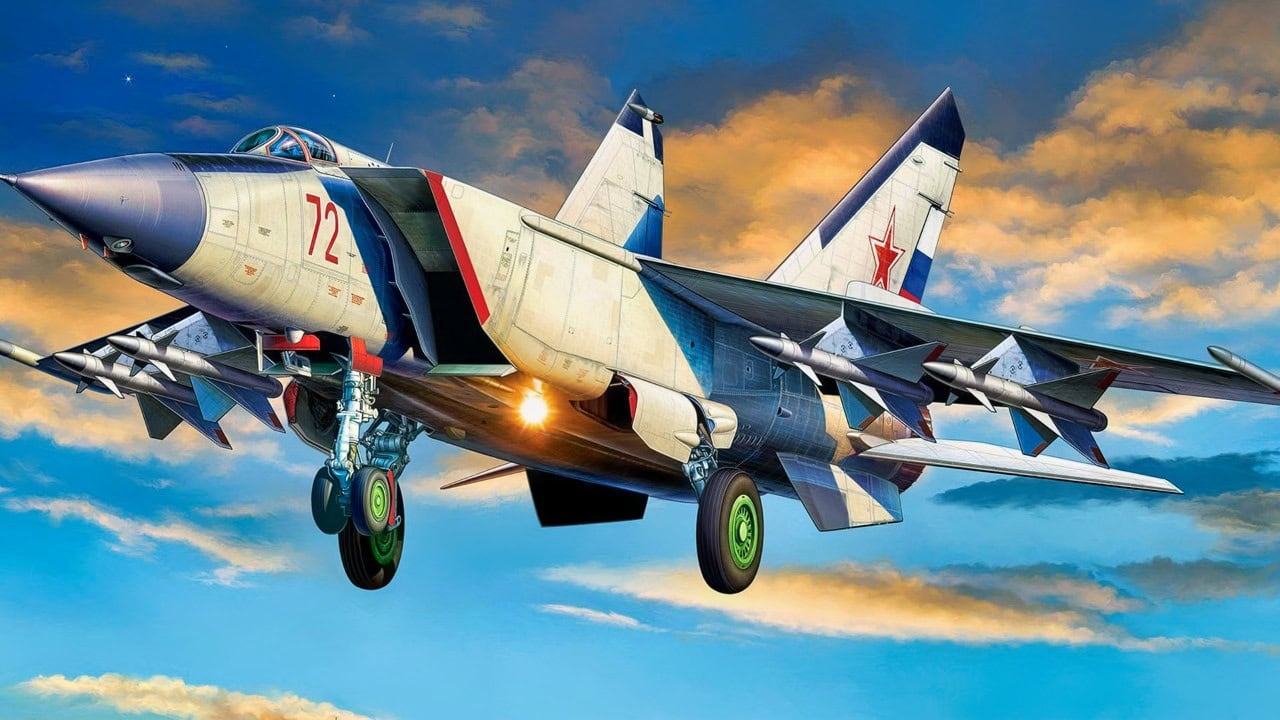
MiG-25 Russian Fighter-Bomber. Image Credit: Creative Commons.
The fearsome myth that had done so much of the Foxbat’s deterrent work evaporated overnight, and with the secret out, the aircraft’s export value collapsed into something the Soviets began selling abroad. Belenko’s five-month debrief handed Western analysts a detailed picture of Soviet air-defense doctrine, tactics, and training. The Americans lost face and a decade of accurate threat assessment. The Soviets lost money, secrets, and the intimidation their most secret jet had traded on.
The “Super Foxbat” Belenko Warned About Is Still Flying
Belenko’s debriefers came away with one more thing, and it is the reason this fifty-year-old story reaches directly into the present.
He told them about a coming two-seat development of the Foxbat, a “Super Foxbat” then in the works, and Western intelligence pieced together that a successor was already flying.
That aircraft was the MiG-31 Foxhound, which first flew in 1975 and entered service in 1981, correcting the very weaknesses the teardown had exposed: it added the world’s first phased-array radar fitted to a fighter, giving it the look-down, shoot-down capability the Foxbat lacked.
The Foxhound is still in Russian service today. It remains the fastest combat aircraft in operational use anywhere, and since 2022, it has become the launch platform for Russia’s Kinzhal strike missile and its longest-range air-to-air weapon, flying strikes and patrols over and around Ukraine.
The jet the Soviets scrambled to build partly because of what Belenko gave away is now, five decades later, one of the most strategically important aircraft in the Russian inventory. The 1976 defection did not just settle a Cold War argument. It nudged along the design of a weapon that is still shaping a war in 2026.
Viktor Belenko’s Quiet American Ending
Belenko himself vanished into an ordinary American life. Granted asylum by President Gerald Ford and later made a US citizen by an act of Congress, he was given the surname Schmidt for his protection, debriefed for five months, and worked for years as a consultant and aerospace engineer.
He settled for a time in the American West, married, raised two sons, and co-wrote a 1980 memoir, MiG Pilot, about his escape. He rarely gave interviews and said he feared Soviet retribution for the rest of his life.
That life ended quietly and almost unnoticed. Viktor Belenko died on September 24, 2023, at the age of 76, after a brief illness, in a nursing home in southern Illinois, with his sons Tom and Paul at his side.
There was no memorial service, and journalists did not learn of his death until late November, two months after the fact.
It was an obscure end for a man whose ninety-minute flight half a century ago handed the West an intelligence windfall, forced the Soviet Union into an expensive scramble, and helped shape an aircraft that outlived the country he defected from and still flies today.
About the Author: Harry J. Kazianis
Harry J. Kazianis (@Grecianformula) was the former Senior Director of National Security Affairs at the Center for the National Interest (CFTNI), a foreign policy think tank founded by Richard Nixon based in Washington, DC. Harry has over a decade of experience in think tanks and national security publishing. His ideas have been published in the NY Times, The Washington Post, The Wall Street Journal, CNN, and many other outlets worldwide. He has held positions at CSIS, the Heritage Foundation, the University of Nottingham, and several other institutions related to national security research and studies. He is the former Executive Editor of the National Interest and the Diplomat. He holds a Master’s degree focusing on international affairs from Harvard University.

