
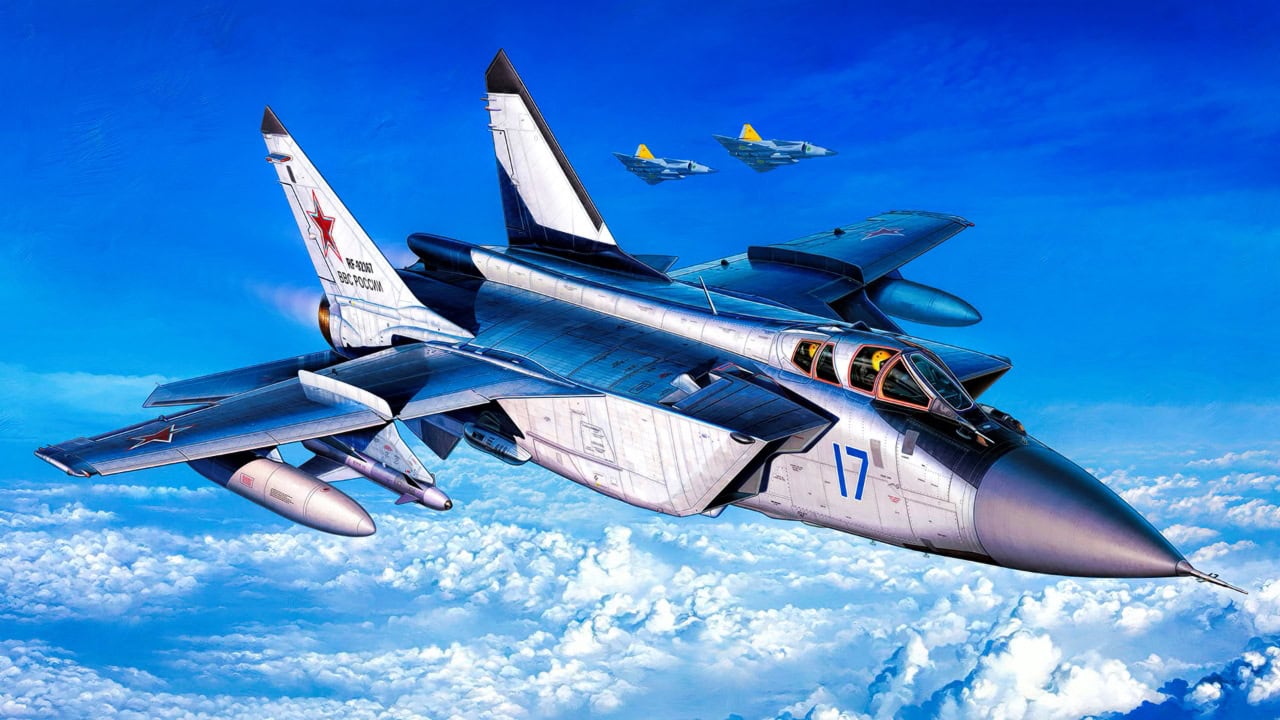
Summary and Key Points – An Aerospace Legend: Russia is fighting its war in Ukraine and probing NATO’s borders with an aircraft it can no longer build. The MiG-31 is the fastest combat jet in operational service anywhere, and since 2022, Moscow has turned it into the launch platform for its Kinzhal hypersonic missile and its longest-range air-to-air weapon. But the production line closed in the early 1990s, the engines are running short, and the replacement exists only on paper — which means every one of these jets Russia loses over Ukraine, or to a Ukrainian drone on the ground, is gone for good.
An Introduction
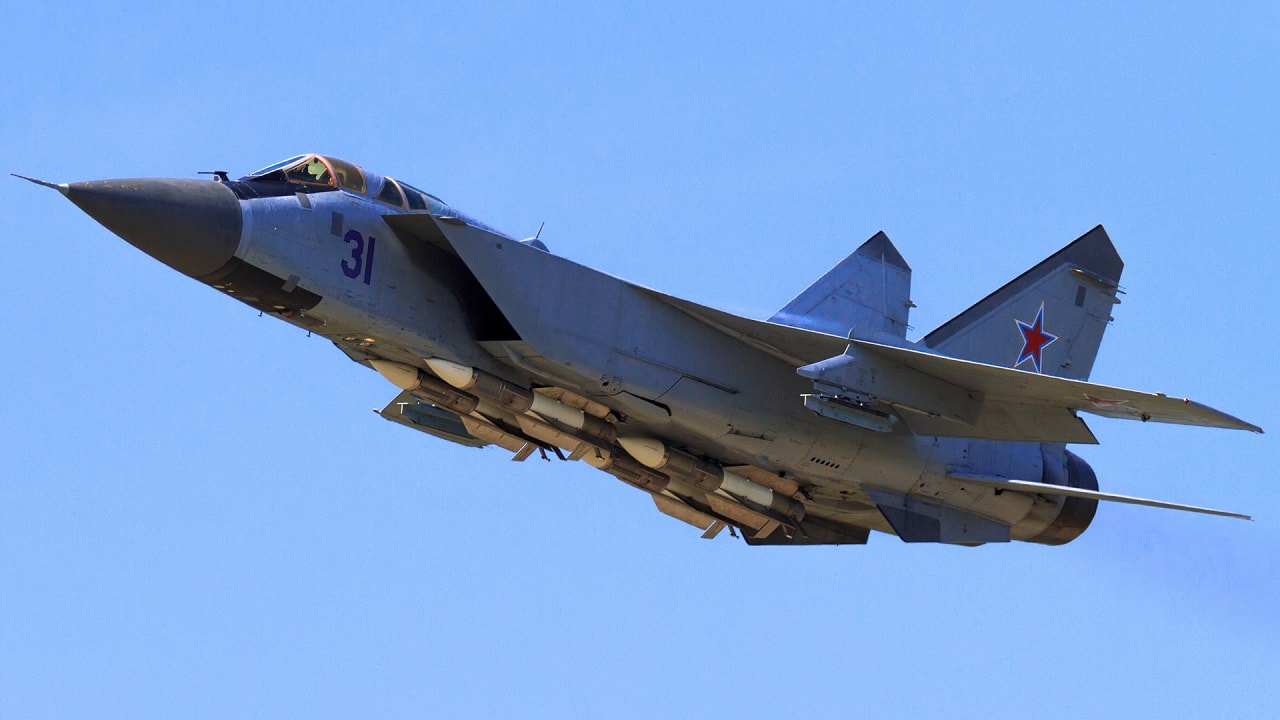
MiG-31. Image Credit: Creative Commons.
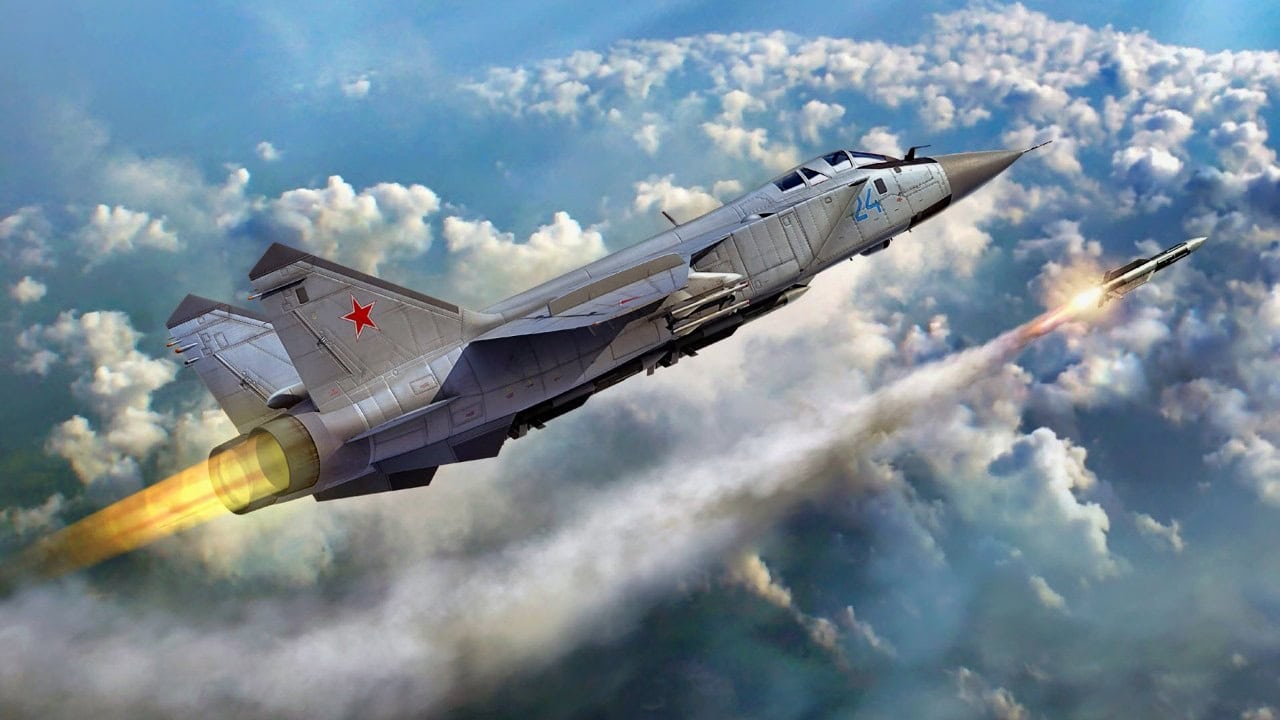
MiG-31 from Russian Air Force. Image Credit: Creative Commons.
The MiG-31 is the fastest combat aircraft in operational service worldwide, and it has become the launch platform for Russia’s Kinzhal strike missile and its longest-range air-to-air weapon. That reputation is earned. It is also a jet that first flew in 1975, which Russia can no longer build new, cannot easily re-engine, and has no replacement for, meaning every airframe lost over Ukraine is gone for good.
Meet the MiG-31 Foxhound
No combat aircraft in service anywhere flies faster than the Russian MiG-31 Foxhound, a big two-seat interceptor that cruises past Mach 2 and dashes to Mach 2.83. It is also one of the oldest combat jets still flying; the design took to the air in 1975, and Russia stopped building it more than three decades ago. The line that produced roughly 500 of them closed in the early 1990s, the engine that powers it is in short supply, and the aircraft meant to replace it exists only on paper. That combination, extreme capability paired with total irreplaceability, has made the Foxhound one of the most important and irreplaceable aircraft in the Russian inventory, because since February 2022, it has been reworked from a Cold War bomber-hunter into the carrier of Russia’s Kinzhal hypersonic strike missile and its longest-range air-to-air weapon.
The Zaslon Radar and the Interceptor Built to Guard the Soviet Arctic
The MiG-31 grew out of the MiG-25 Foxbat, the Mach 3 interceptor built to chase American high-altitude bombers, an aircraft that could sprint but could not turn, fly low, or track targets against ground clutter. The Soviet answer was a heavier, smarter derivative. The Ye-155MP prototype first flew on September 16, 1975, and the production MiG-31 entered service with the Soviet Air Defense Forces in 1981, the first Soviet fourth-generation combat aircraft.
Its defining feature was a radar. The Zaslon fitted to the MiG-31 was the first electronically scanned phased-array radar of any kind to enter service, and the MiG-31 remained the only serial-production fighter to carry such a radar from 1981 until the year 2000. It gave the Soviets their first true look-down, shoot-down interceptor, able to spot and kill low-flying cruise missiles and bombers that older fighters lost against the ground.
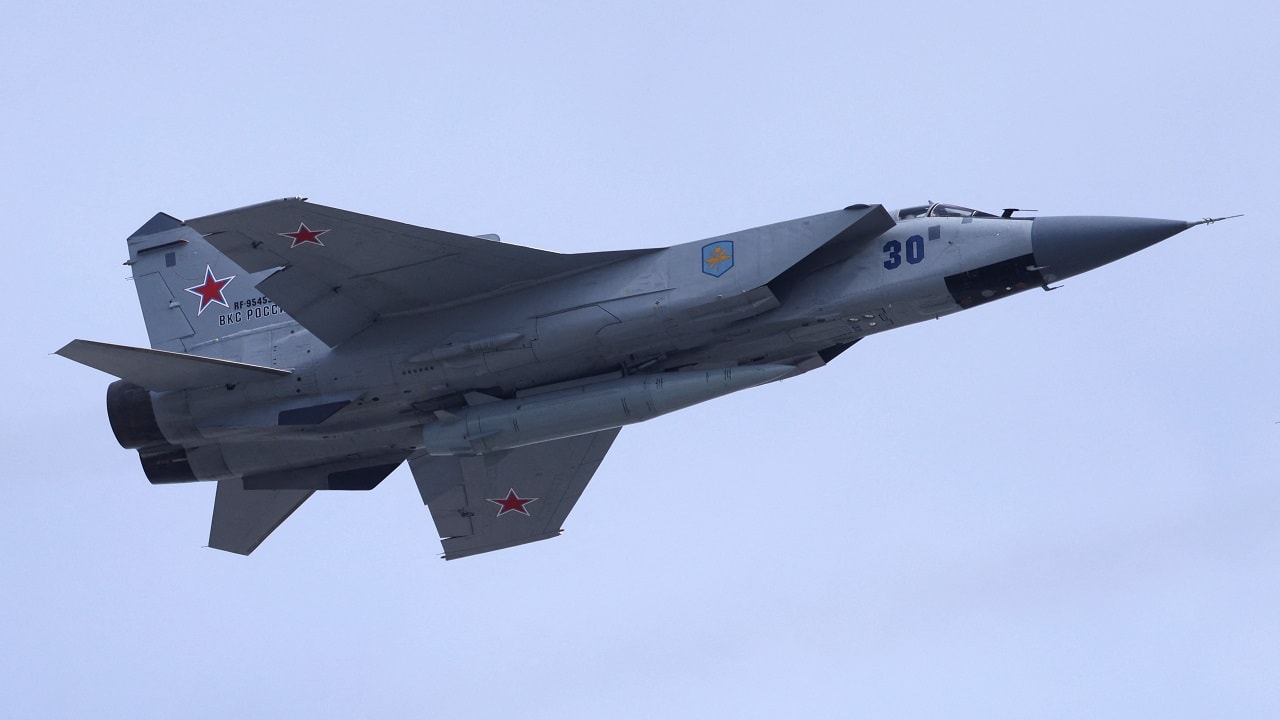
A Russian MiG-31 fighter jet equipped with a Kinzhal hypersonic missile flies over Red Square during a rehearsal for a flypast, part of a military parade marking the anniversary of the victory over Nazi Germany in World War Two, in central Moscow, Russia May 7, 2022. REUTERS/Maxim Shemetov
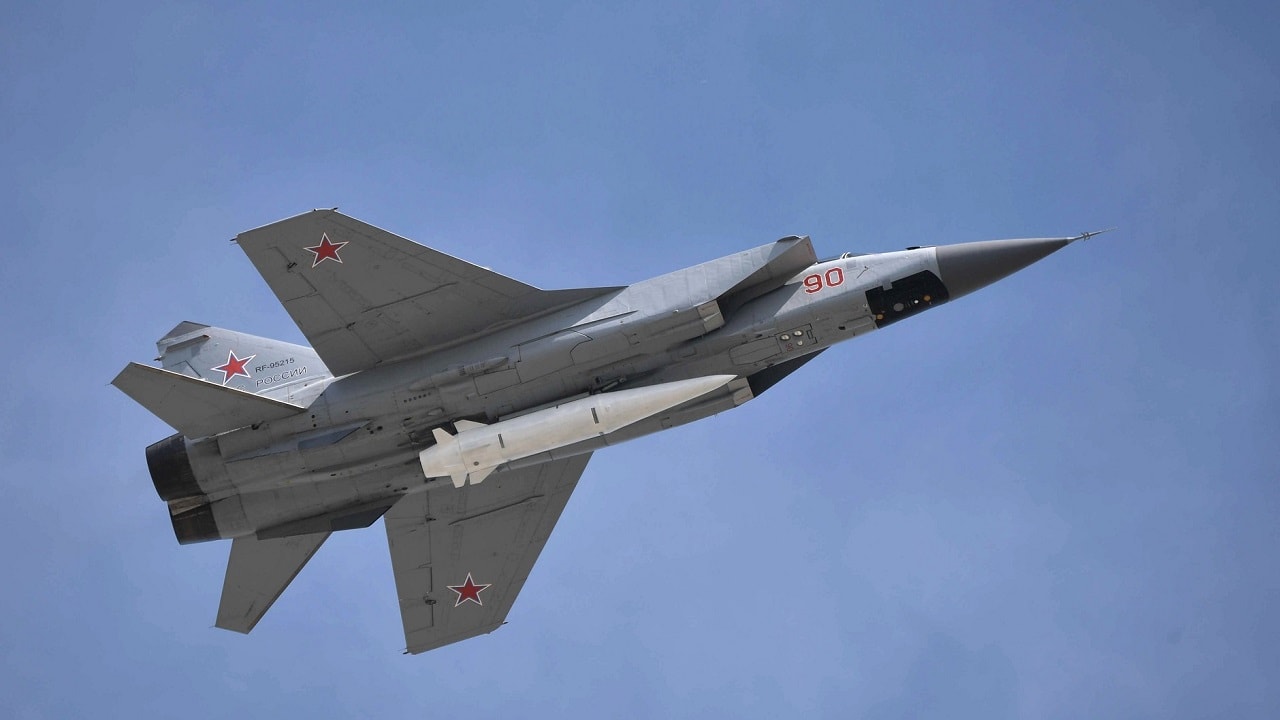
A Kh-47M2 Kinzhal ALBM being carried by a Mikoyan MiG-31K interceptor.
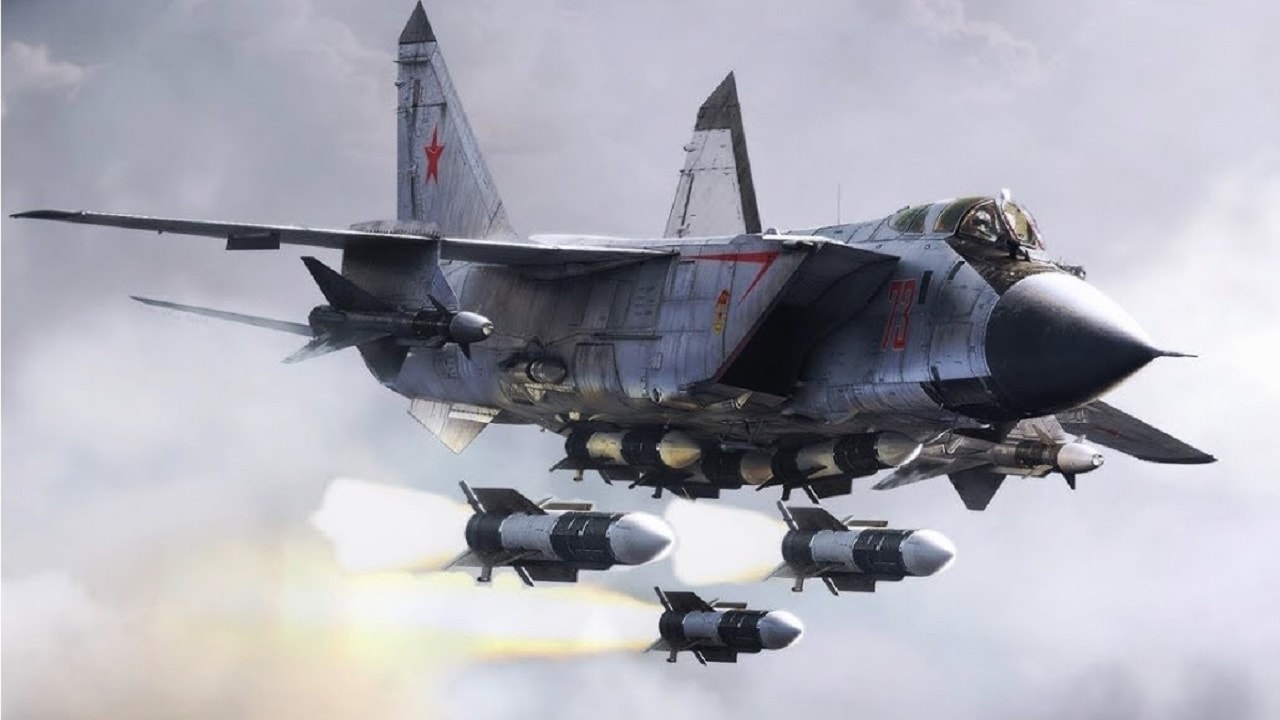
MiG-31. Image Credit: Creative Commons.
It also let four MiG-31s fly as a networked group, sharing radar data across a span of roughly 125 miles so that a single line of four aircraft could screen a corridor of airspace hundreds of miles wide. For a country trying to defend the largest and emptiest airspace on Earth, the Arctic approaches to the Soviet Union, that reach was the whole point, and it is the reason the airframe has never been retired. Around 500 were built before production ended, with the large majority going to the Soviet and then Russian air forces.
Mach 2.83 on Engines Russia Struggles to Rebuild
Speed was the other half of the design. Two Perm D-30F6 turbofans give the MiG-31 a top speed of Mach 2.83 and let it cruise supersonically for long periods, performance that still makes it, by the reckoning of the trade press, the fastest fighter in service in the world today. That claim needs one qualifier: its own MiG-25 ancestor could dash faster in a straight line before risking its engines, so the honest framing is that the MiG-31 is the fastest combat aircraft in regular operational service, not the fastest ever flown.
The engines are also the fleet’s quietest crisis. The D-30F6 has an overhaul interval of only about 300 flight hours, and while Russian officials claimed a decade ago to hold stockpiles good for twenty to thirty years, by 2024 they had begun publicly discussing the need to restart engine production, according to Ukrainian defense-intelligence assessments. An interceptor that burns through engines quickly, with no production line for new ones, is an interceptor on a clock.
From Interceptor to Missile Truck: The MiG-31 Variant Tree
The Foxhound flying today is not the jet of 1981. The main modernized standard, the MiG-31BM, pairs an upgraded Zaslon-M radar with new displays and the ability to fire modern long-range missiles, and Russia contracted to bring dozens of aircraft up to this standard through the 2010s. Alongside it run the refurbished BS and BSM standards, which added structural and avionics updates and, on the BSM, an aerial refueling probe.
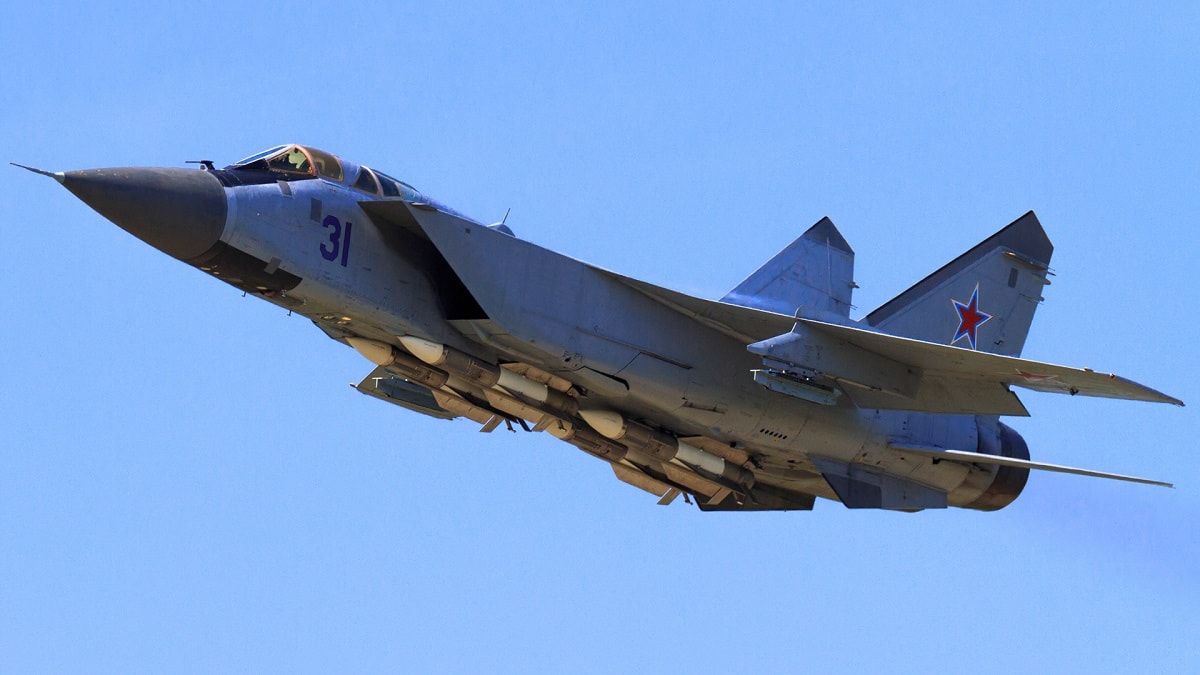
MiG-31. Image: Creative Commons.

MiG-31. Image: Creative Commons.
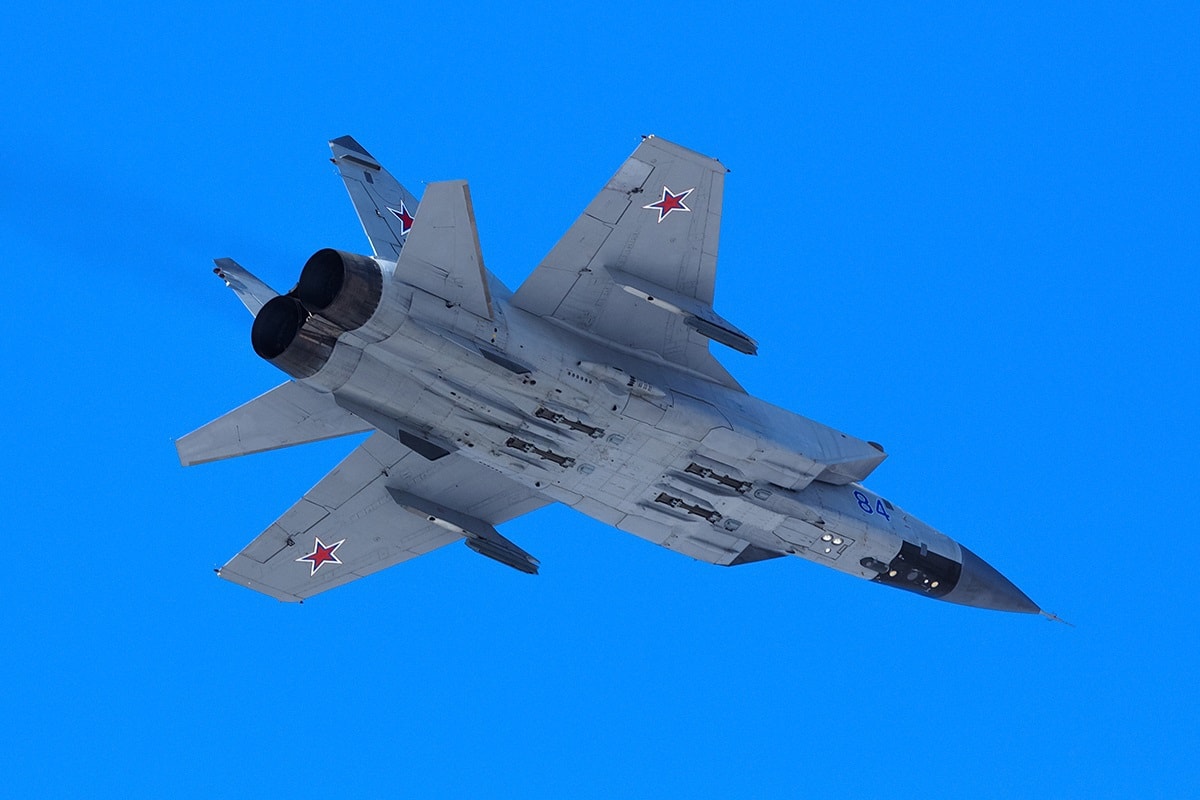
MiG-31. Image: Creative Commons.
Two further variants matter far more than their small numbers suggest. The MiG-31K is a dedicated carrier for the Kinzhal strike missile, stripped of its air-to-air role to haul a single large weapon. The MiG-31I “Ishim” reportedly differs in that it can navigate autonomously to the missile’s launch point rather than relying entirely on manual crew work. And decades earlier, the Soviet Union built a handful of MiG-31D aircraft as anti-satellite launchers, an early ancestor of the kind of orbital-warfare capability now back in fashion. The through-line across every version is the airframe’s raw performance envelope, the speed and altitude that make it useful as a first stage for something else.
The MiG-31K and the Kinzhal: A Cold War Jet as Strategic Strike Platform
The transformation that made the MiG-31 strategically central is the Kh-47M2 Kinzhal. Russia chose the Foxhound to carry it precisely because of the jet’s speed and altitude. To launch, a MiG-31K acts as the missile’s first stage, climbing above 15 kilometers and accelerating toward 3,000 kilometers per hour before release, so the missile begins its flight already high and fast, an aeroballistic weapon that then maneuvers on a depressed, hard-to-intercept trajectory. Russia advertises the Kinzhal as reaching Mach 10 and around 2,000 kilometers of range, including the aircraft’s contribution, figures that are Moscow’s own claims and that Western analysts treat with caution, though no one disputes the weapon is fast and difficult to stop.
The carrier fleet is tiny and specialized. Open-source counts put the number of Kinzhal-capable MiG-31Ks at roughly ten to twelve, with the authoritative IISS Military Balance identifying twelve. Russia has worked to expand the concept, fielding the autonomous-launch MiG-31I standard and, per analysis of aerial-refueling patterns, using Il-78 tankers to let the jets launch from deeper inside Russia and vary their attack geometry. The Kinzhal exists in both conventional and nuclear-capable forms, which is part of why so much strategic weight rides on so few airframes. Every takeoff of a Kinzhal-armed MiG-31 triggers an air-raid alert across Ukraine, making the aircraft a weapon of disruption even on days when it fires nothing.
The R-37M: The MiG-31BM’s Long Arm, and Its Limits
The MiG-31’s other modern weapon is the R-37M, a very long-range air-to-air missile designed originally as the Foxhound’s own armament, built to kill high-value aircraft like tankers and radar planes from hundreds of kilometers away. Fired from a fast, high-flying MiG-31BM with a powerful radar, it has given Russia a way to shoot at Ukrainian aircraft from well beyond the reach of return fire. British analysts at RUSI documented the Russian air force firing as many as six R-37Ms a day at the peak of the autumn 2022 air battles, and think tanks including Hudson have described how Russian fighters on standoff patrols, cued by powerful radars and airborne early-warning aircraft, have pushed the outmatched Ukrainian fleet down low and back from the front.
The honest counterweight belongs right next to that. The R-37M’s real effect has been behavioral more than physical: it forces Ukrainian pilots to fly at treetop height, hug ground clutter, and abort missions the moment a launch is detected, rather than piling up confirmed kills. A US federal research analysis found that Russia’s long-range air-to-air shots, launched at extreme range through cumbersome command procedures, carried a reduced probability of kill per shot, and even the reported record-setting engagements, such as a claimed 190-kilometer kill in 2025, come with Western assessments cautioning that the missile’s real-world hit rate at those distances is hard to verify independently. A nuclear-capable air-to-air variant has also been reported, but the weapon’s day-to-day value is the fear it imposes, not the aircraft it downs.
The Fleet Russia Can’t Rebuild
For all its reputation, the active MiG-31 force is small and hard to pin down. Estimates of the flyable fleet range widely, from the roughly 80 to 120 aircraft cited in recent trade reporting to Ukrainian assessments of about 90 interceptors in the aerospace forces plus another 30 in naval aviation as of early 2024, with the IISS Military Balance the most authoritative reference point and the true number almost certainly moving as airframes are lost, repaired, and pulled from storage. Roughly 130 of the 520-odd aircraft ever built are undergoing ongoing modernization.
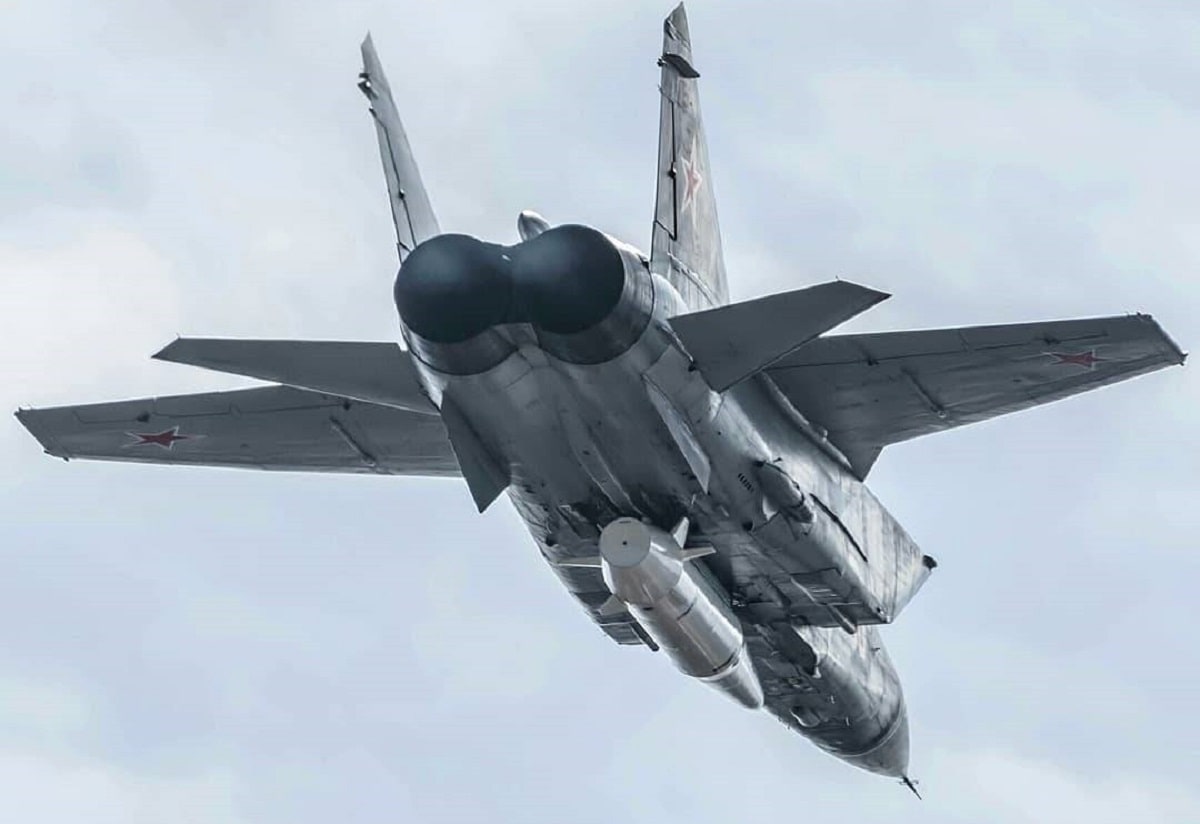
MiG-31. Creative Commons Image.
The deeper problem is that none of these are new. Serial production ended in 1993, and Russia cannot build new MiG-31 airframes, a limitation Ukrainian defense intelligence stresses, as it means the reserve of mothballed Foxhounds is being used less to expand the fleet than to cannibalize spare parts and keep the active jets flying. Every MiG-31 that is destroyed, and every one whose engines finally time out, subtracts permanently from a pool that can only shrink. The aircraft carrying some of Russia’s most strategically important weapons is thus a wasting asset that cannot be replenished.
Estonia, Belbek, and the Toll of a War It Can’t Afford to Lose
The tension between the Foxhound’s importance and its fragility has been on display. On September 19, 2025, three MiG-31s violated Estonian airspace near Vaindloo Island in the Gulf of Finland, lingering for about twelve minutes with their transponders off and no flight plan, until Italian Air Force F-35s flying NATO’s Baltic Air Policing mission intercepted and escorted them out toward Kaliningrad. Estonia called it the fourth violation of its airspace that year and requested NATO Article 4 consultations; Russia denied crossing the border at all. Using the fastest interceptor in its inventory to probe NATO’s reaction times is exactly the kind of high-visibility mission the MiG-31 is suited to, and exactly the kind that risks the airframes Russia cannot replace.
Ukraine, understanding that arithmetic, has gone after the jets on the ground. In June 2025, Ukrainian special forces struck the Savasleyka airfield in Russia’s Nizhny Novgorod region, a base the Kremlin uses to launch Kinzhal-armed MiG-31Ks, reporting damage to at least one MiG-31. In December 2025, Ukraine’s security service said its long-range drones hit a MiG-31 with a full combat load at Belbek airfield in occupied Crimea and struck the base again in the spring of 2026. These are Ukrainian claims that Russia rarely confirms, and the damage assessments are contested. But the strategy behind them is sound precisely because of everything already described: a single destroyed Kinzhal carrier is not a loss Russia can quickly make good.
The MiG-41 That Doesn’t Exist
Russia knows the Foxhound cannot fly forever, and it has a name for the replacement: the PAK DP, informally the MiG-41. It also has almost nothing else. The program remains in early development and, by the trade press’s account, would not enter service until the end of the decade at the earliest, assuming it survives Russia’s wartime budget constraints and industrial strain at all. In the meantime, the defense ministry has extended the existing airframes’ service lives and signed fresh contracts to modernize the MiG-31K and MiG-31BM standards, which is the only real option available: keep rebuilding the jets that exist because there is no way to build new ones.
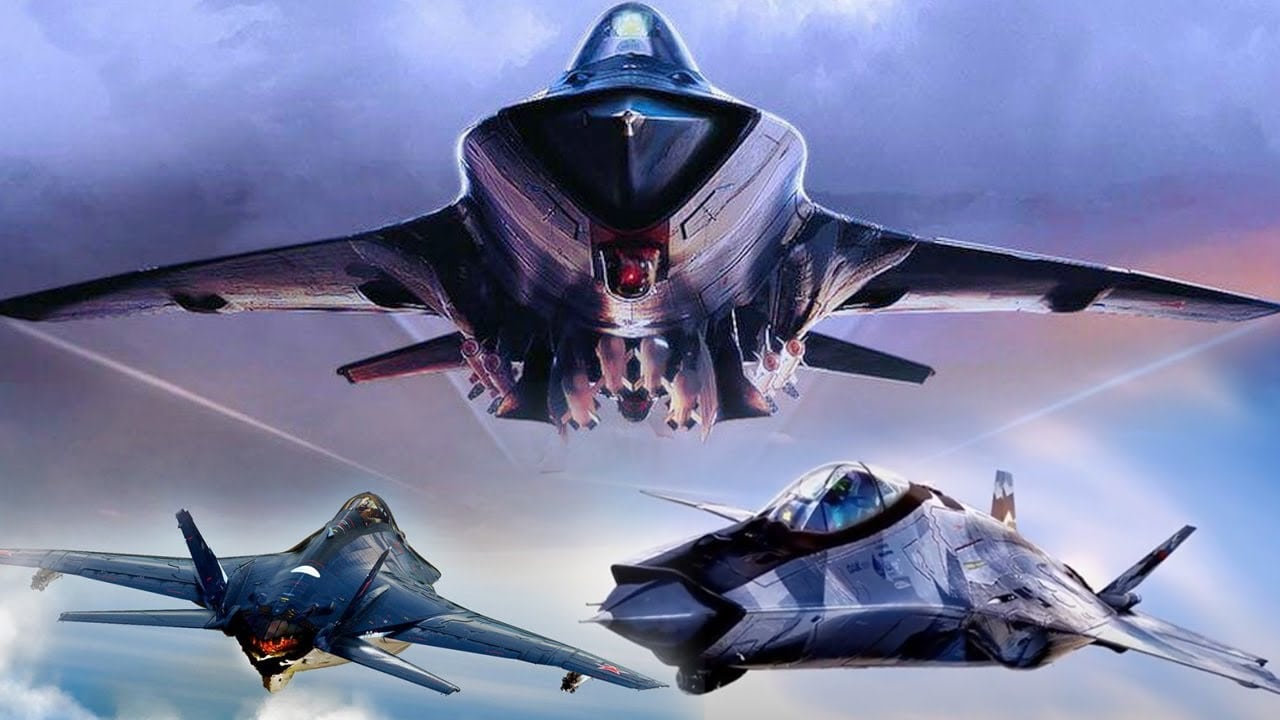
MiG-41. Image Credit: YouTube Screenshot.
So a fifty-year-old design flies on as the fastest combat aircraft in the world, the launch rail for Russia’s hypersonic strike missile, the long arm reaching into Ukrainian skies, and a probe against NATO’s borders. It does all of that on a fleet that only gets smaller, powered by engines Russia is scrambling to keep in production, waiting on a successor that has not been built. There is nothing else in the Russian inventory that can do what it does, and there is no way to make any more of it.
About the Author: Harry J. Kazianis
Harry J. Kazianis (@Grecianformula) was the former Senior Director of National Security Affairs at the Center for the National Interest (CFTNI), a foreign policy think tank founded by Richard Nixon based in Washington, DC. Harry has over a decade of experience in think tanks and national security publishing. His ideas have been published in the NY Times, The Washington Post, The Wall Street Journal, CNN, and many other outlets worldwide. He has held positions at CSIS, the Heritage Foundation, the University of Nottingham, and several other institutions related to national security research and studies. He is the former Executive Editor of the National Interest and the Diplomat. He holds a Master’s degree focusing on international affairs from Harvard University.