
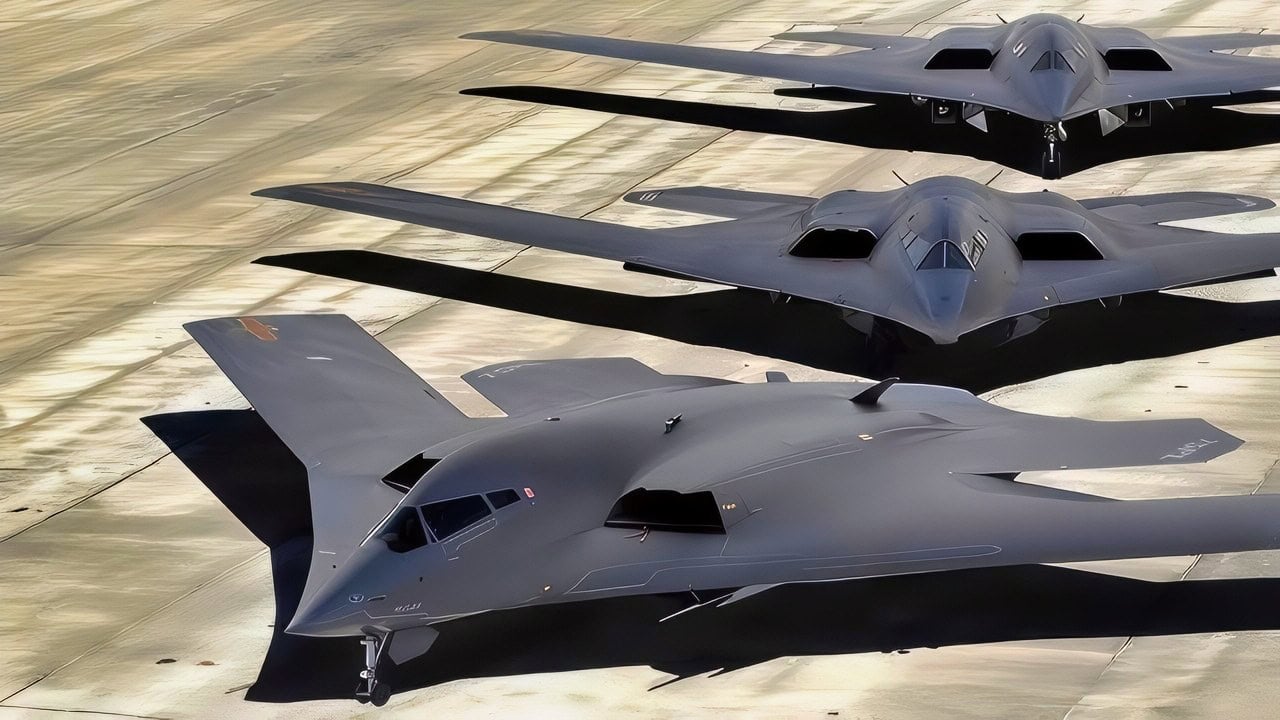
China is actively developing, but has not yet begun mass-producing, the H-20 stealth bomber, while government officials continue to say it is nearing its public debut. It sounds impressive; however, the US Air Force has had the B-2 Spirit for decades, which has already gone to war against Iran, and the B-21 Raider is coming soon.
The H-20 Stealth Bomber Explained
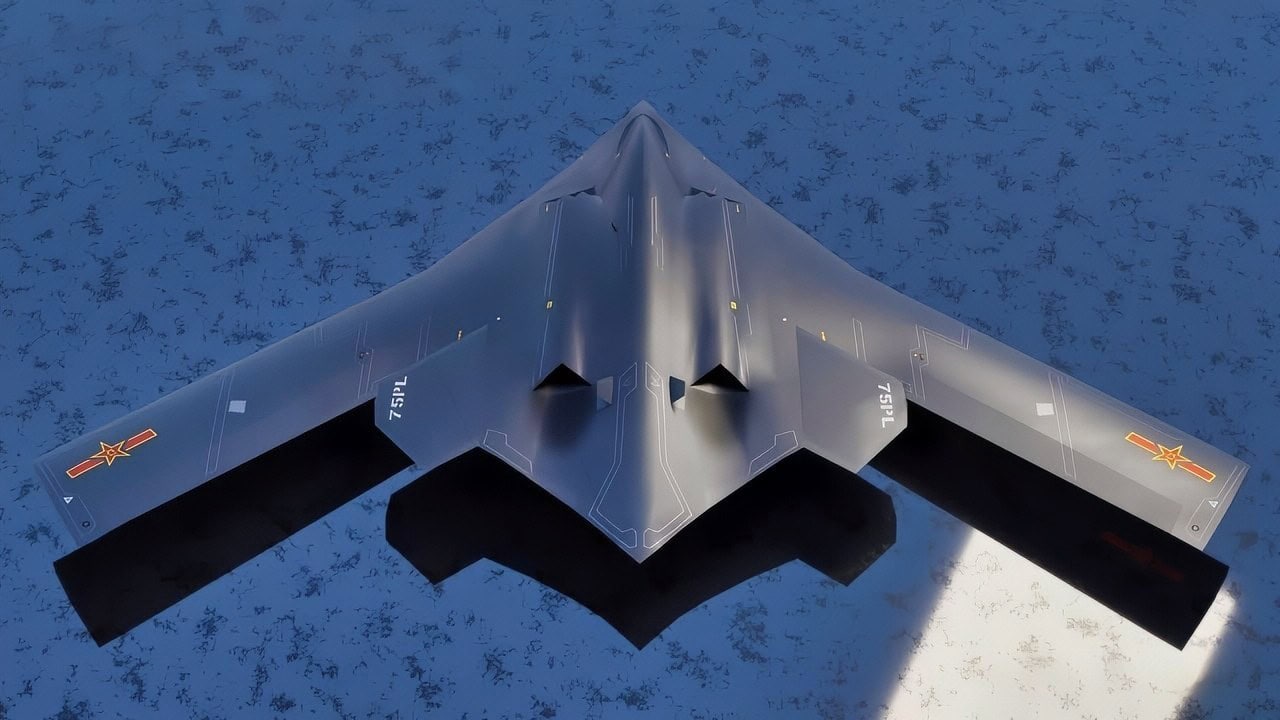
H-20 Bomber YouTube Screenshot Artist Rendering
China’s air force (PLAAF) first announced the program in 2016.
Since then, it’s been one of the most speculated-about weapons programs in the world, with no official rollout.
Chinese state media suggested in 2018 that the H-20 would headline the PLAAF’s 70th-anniversary parade in 2019; however, it didn’t show.
Rumors pointed to a possible flight in 2022.
That didn’t happen either.
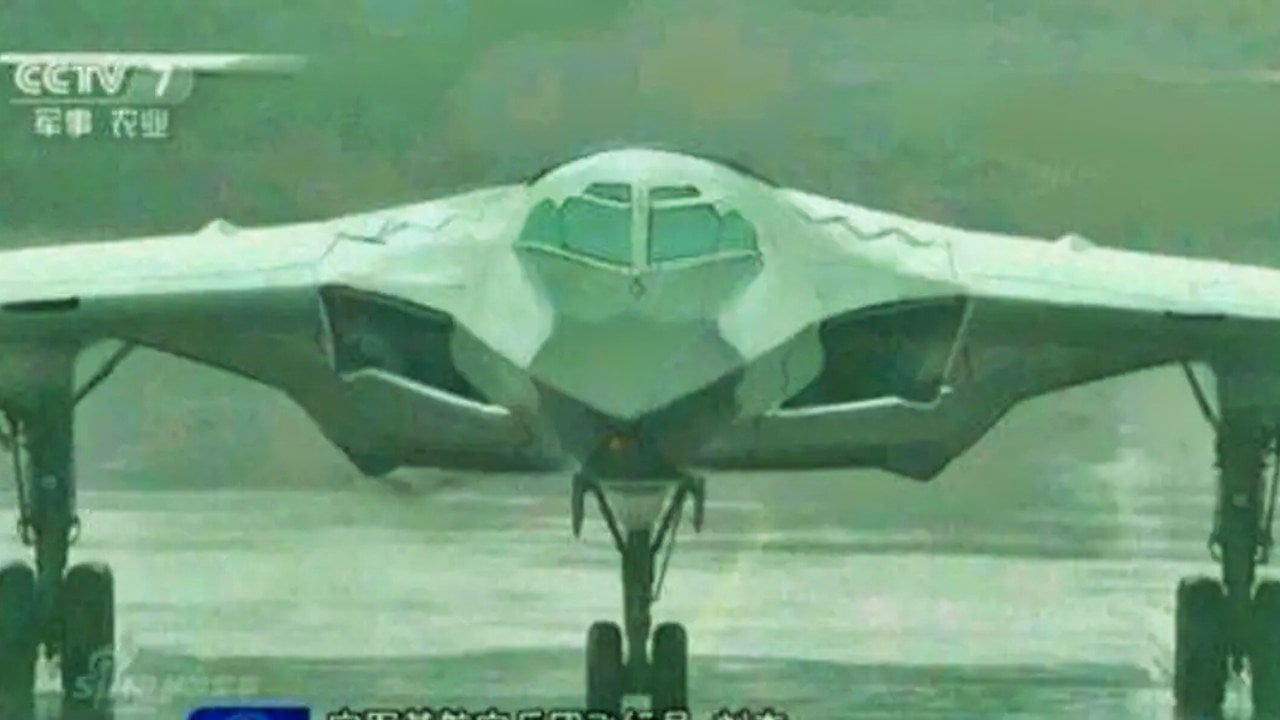
Image Credit of H-20 Bomber: Creative Commons.
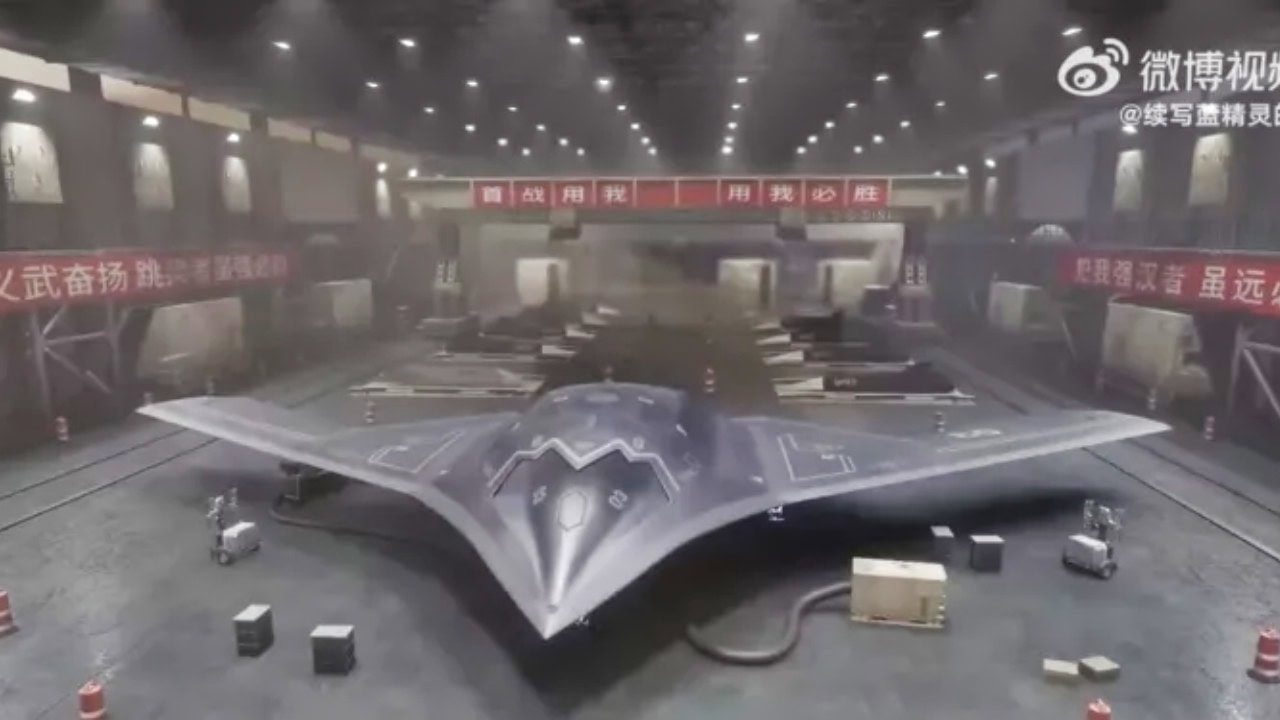
H-20 Bomber. Image Credit: X Screenshot.
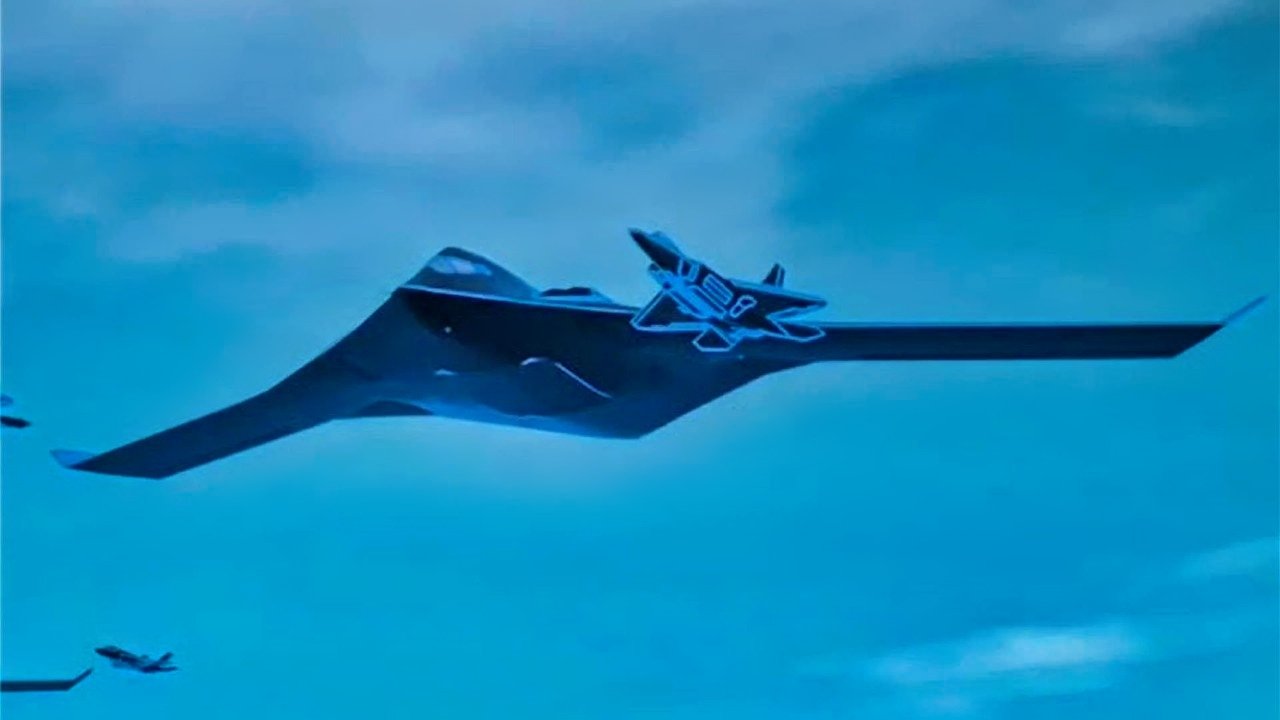
H-20 Bomber Image. Image Credit X Screeenshot.
As of early 2026, the aircraft has not officially entered operational production or service, despite officials periodically insisting it’s “coming soon.”
As of 2026, no confirmed test flights or operational deployments have occurred.
The project has missed multiple high-profile unveiling windows, and the official timeline has now been pushed to the 2030s.
Notably, China’s J-36 fighter program has flown four prototypes in the past year, while the H-20 remains stuck in what analysts describe as a development “freeze.”
The H-20 Bomber, “Is Not Really A Concern”
One US defense official told Breaking Defense that he’s confident that the Chinese bomber will not match up to American-designed bombers.
“The thing with the H-20 is when you actually look at the system design, it’s probably nowhere near as good as U.S. LO [low-observable] platforms, particularly more advanced ones that we have coming down,” the official said.
“They’ve run into a lot of engineering design challenges, in terms of how do you actually make that system capability function in a similar way to, like, a B-2 or a B-21,” he added.
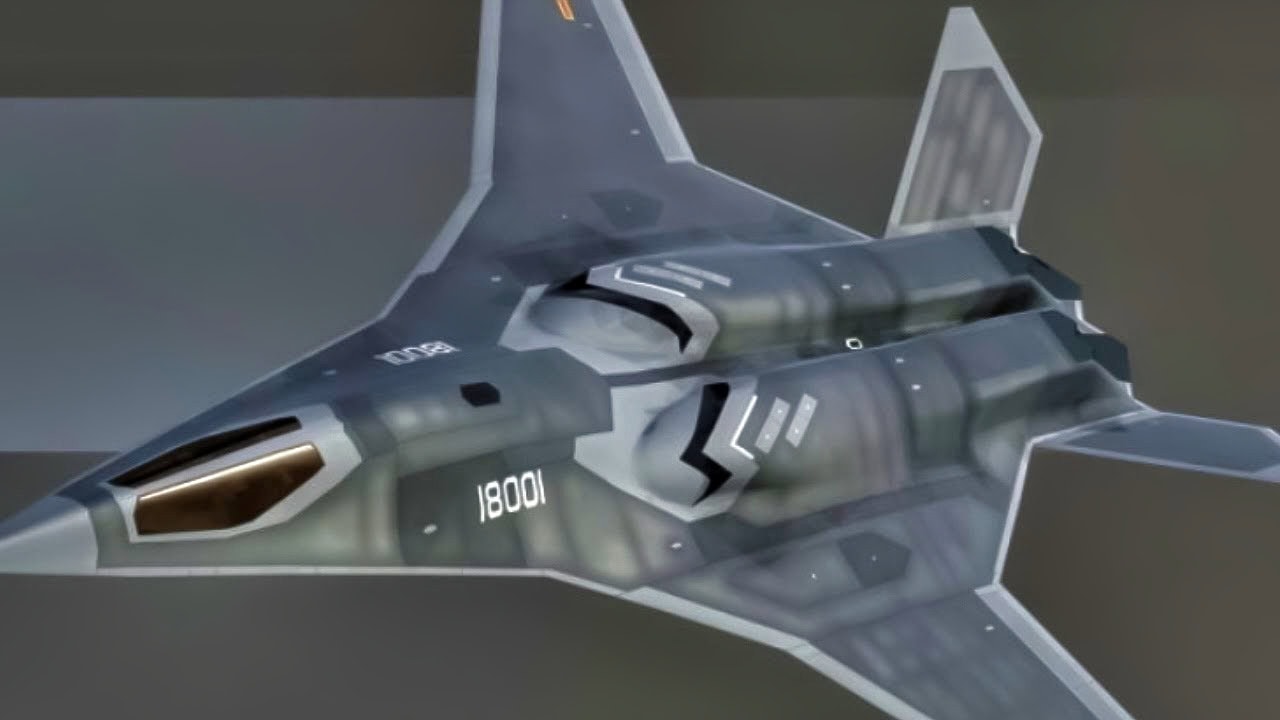
JH-XX. Image Credit: Creative Commons.
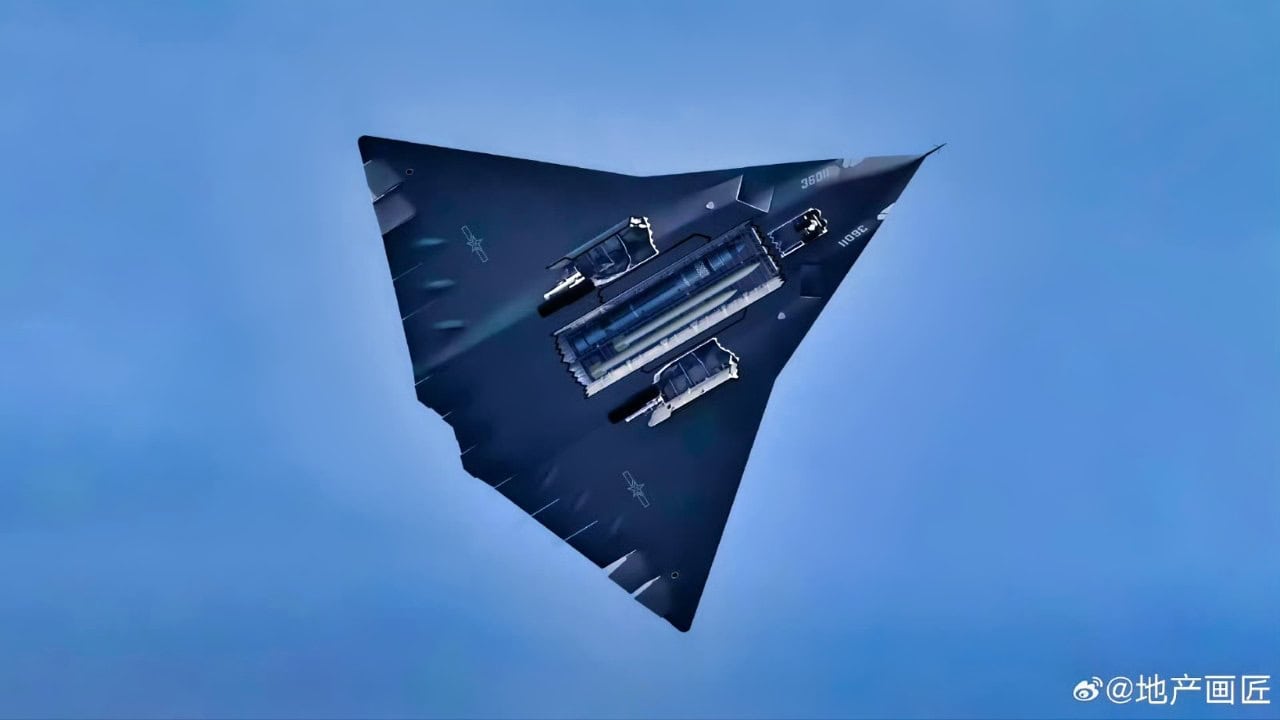
J-36 or JH-XX from China. Screenshot for Chinese Social Media.
Many experts believe the JH-XX, also known as the JH-36, is a medium-range fighter-bomber. The Pentagon mentioned it in the annual report on China’s military power. Since 2019, the annual report has mentioned a “JH-XX” medium bomber under development.
A Game Changer For Beijing…When It Is Ready
The H-20 represents a new strategic capability for China, allowing it to project power and threaten U.S. interests across long distances.
China has been developing the H-20 stealth bomber for a decade. China wants a modern stealth bomber that can survive in a contested environment and has the range to operate in the Second Island Chain and beyond.
As a long-range stealth bomber, it could bypass traditional defenses to strike targets deep within allied territory, such as Guam, or even the U.S. mainland.
This development could compel the U.S. and its allies to allocate more resources to defense, deploy their forces more widely, and reassess their strategic approach to military sanctuaries.
What Is Known About China’s H-20 Stealth Bomber
No official photograph of the H-20 exists, but a photo posted on Chinese social media shows a new large combat aircraft on a test flight, which was speculated to be China’s secret H-20 stealth bomber.
The location and exact date of the imagery were not disclosed.
The aircraft was a “flying wing” design, similar to and bearing a striking resemblance to the B-2 Spirit, followed by a chase plane.
The indistinct image closely resembles a 2022 photo from a wind tunnel test conducted by the Chinese, which featured a bomber similar to the one depicted in Air and Space Forces magazine.
The H-20 focuses on enhancing China’s power projection capabilities and securing its interests in the Asia-Pacific region.
In contrast, the US B-21 Raider is designed for global power projection, ensuring the U.S. can maintain its strategic deterrence and respond to threats anywhere in the world.
Long-range Strike Capability, But No Details
The H-20 is expected to have a range of up to 8,500 kilometers, allowing it to operate far from China’s shores.
However, other US government analysts believe the bomber could have an unrefueled range of over 10,000 km.
The Chinese have released a picture with a plethora of weapons arrayed in front of the aircraft. Still, China has only written about “multi-ton internal storage bays”, without revealing a specific number.
It Is “Just Not There Yet”
U.S. Air Force Global Strike Command (AFGSC) commander General Stephen Davis told TWZ that China is aggressively pursuing the H-20 bomber, but for the present remains a “regional bombing force.”
“I can certainly understand their [the Chinese] desire to have a long-range strike capability like the United States, and I know that they’re pursuing it aggressively,” Davis said.
“What I can tell you is they’re just not there yet,” Davis continued. “I think our adversaries look at our long-range strike capabilities, and … want to mimic them, but they can’t.
China has struggled to develop the stealth technology needed for this kind of flying-wing design.
They had relied on Russian designs in the past, but those never amounted to much.
The Chinese also have had a robust cyber espionage arm that they annually illegally appropriate about $400 to $600 billion in US intellectual property. Perhaps they haven’t lucked out yet with the B-2.
Analysts point to engineering hurdles and thermal management issues as the likely culprits — the technical challenge of achieving truelow observability overt intercontinentalrangese is proving much harder than China anticipated.
Chinese turbofan engines run hotter and less efficiently than Western designs, which can make the aircraft visible to infrared sensors.
In July 2022, Chinese state media reported that the bomber was nearing its maiden flight.
By March 2024, during the second session of the 14th National People’s Congress, Vice Commander of the PLAAF Wang Wei indicated that the H-20 would be revealed: “very soon.”
The Pentagon’s Annual Report: The H-20 In “The Next Decade”
The U.S. military states that it still does not expect China’s long-awaited H-20 bomber to make its “debut”; it is unclear whether this refers to its entrance into operational service or its public emergence, until sometime in the next decade.
Building a stealth bomber takes time and extensive testing.
The Pentagon publishes an unclassified report on China’s military every year.
And the H-20 was mentioned.
“The PRC is developing a new generation of long-range bombers, likely named the H-20. The H-20, which may debut sometime in the next decade, will have a range of more than 10,000 km [nearly 6,214 miles], enabling the PLAAF to cover the Second Island Chain and into the western region of the Pacific,” the report added.
“The H-20 bomber’s range could be extended to cover the globe with aerial refueling. It is expected to employ conventional and nuclear weaponry and feature a stealthy design.”
The H-20 Is Not Ready As The B-21 Is
Once operational and paired with supporting infrastructure like aerial refueling tankers, the H-20 could be a decisive weapon that shapes the outcome of a conflict, forcing adversaries to react to its presence.
Much of the H-20’s exact capability remains secret, fueling anxiety and speculation about its potential to surpass or match current U.S. stealth bombers.
Once…and if the H-20 is operational in the PLAAF’s arsenal, it could significantly enhance China’s ability to project power and conduct anti-access/area-denial (A2/AD) strategies, particularly in regions like the South China Sea and Taiwan Strait.
This could threaten US bases far from the Chinese shore and alter the strategic calculus in any potential military confrontation or deterrence scenario in the Indo-Pacific region. However, there are still improvements to be made in China’s tanker fleet, further testing, and the application of what they have learned.
They are still several years away, and by then, the US should have its own new bomber force, with the B-21 Raider in the inventory. However, there is real evidence that China is studying the B-21 closely while it works through its own problems.
Chinese scientists fed the B-21’s publicly available designs into an AI system and claimed to identify potential weaknesses. Importantly, unless there’s undisclosed cyber espionage, China has access only to publicly released B-21 design information, not classified details like its flight-control systems, which manage a flying wing’s inherent instability.
Beijing appears to be mining whatever B-21 data it can access, open-source or otherwise, to shortcut its own R&D.
About the Author: Steve Balestrieri
Steve Balestrieri is a National Security Columnist. He served as a US Army Special Forces NCO and Warrant Officer. In addition to writing on defense, he covers the NFL for PatsFans.com and is a member of the Pro Football Writers of America (PFWA). His work was regularly featured in many military publications