
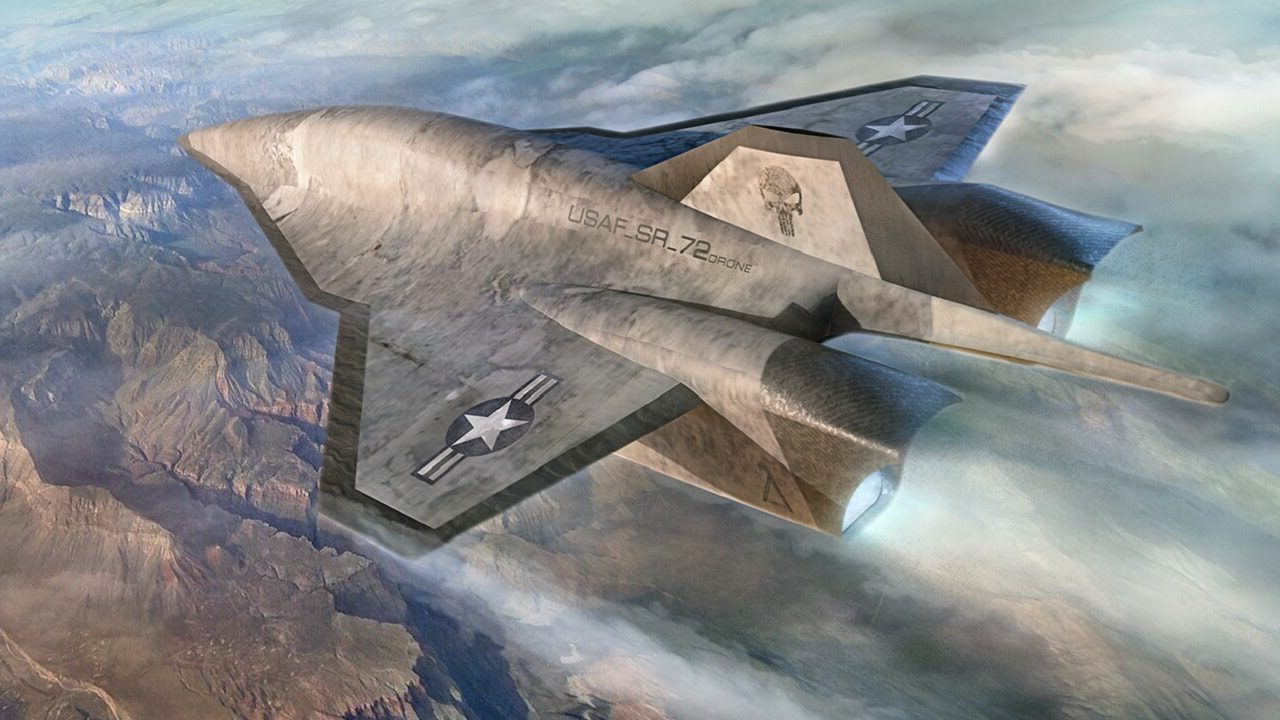
Summary and Key Points: Lockheed revealed the Mach 6 Son of Blackbird in November 2013, with a 2030 target and a demonstrator pitch under $1 billion. Then eyewitnesses reported something flying over Palmdale; an executive described the aircraft in the past tense; and in March 2018, every mention of the SR-72 vanished from Lockheed’s website, weeks after Putin announced Russia’s hypersonic arsenal. Since then: a movie-star turn as Top Gun’s Darkstar, a missed 2025 first-flight suggestion, and a $950 million classified charge sitting in Lockheed’s own filings.
Thirteen years on, one company-chosen word still carries all the weight: acknowledged.
The SR-72 Son of Blackbird: An Introduction
No aircraft in modern history has been talked about so much while so little has been confirmed.
The SR-72, the Mach 6 “Son of Blackbird” that Lockheed Martin’s Skunk Works revealed to the world in November 2013, has since starred in a blockbuster film under the name Darkstar, been the subject of executive statements that sounded like confessions, allegedly been spotted flying over the California desert, and vanished from its own manufacturer’s website.
As of August 2026, thirteen years into its public life, the United States has never confirmed the aircraft exists.
Any honest guide has to sort every claim into one of three piles: what Lockheed has said on the record, what has been reported but never confirmed, and what remains concept art.
This is my attempt at that guide.
November 2013: The Reveal
The story broke the way Skunk Works stories usually do, through Aviation Week. On November 1, 2013, the magazine published an exclusive built on interviews with Lockheed Martin engineers, and the company simultaneously went public with a concept it had been quietly funding since 2006: a hypersonic successor to the SR-71 Blackbird, the legendary spy plane retired in the 1990s whose Mach 3.2 record for a crewed air-breathing jet still stands. The new aircraft would double it.
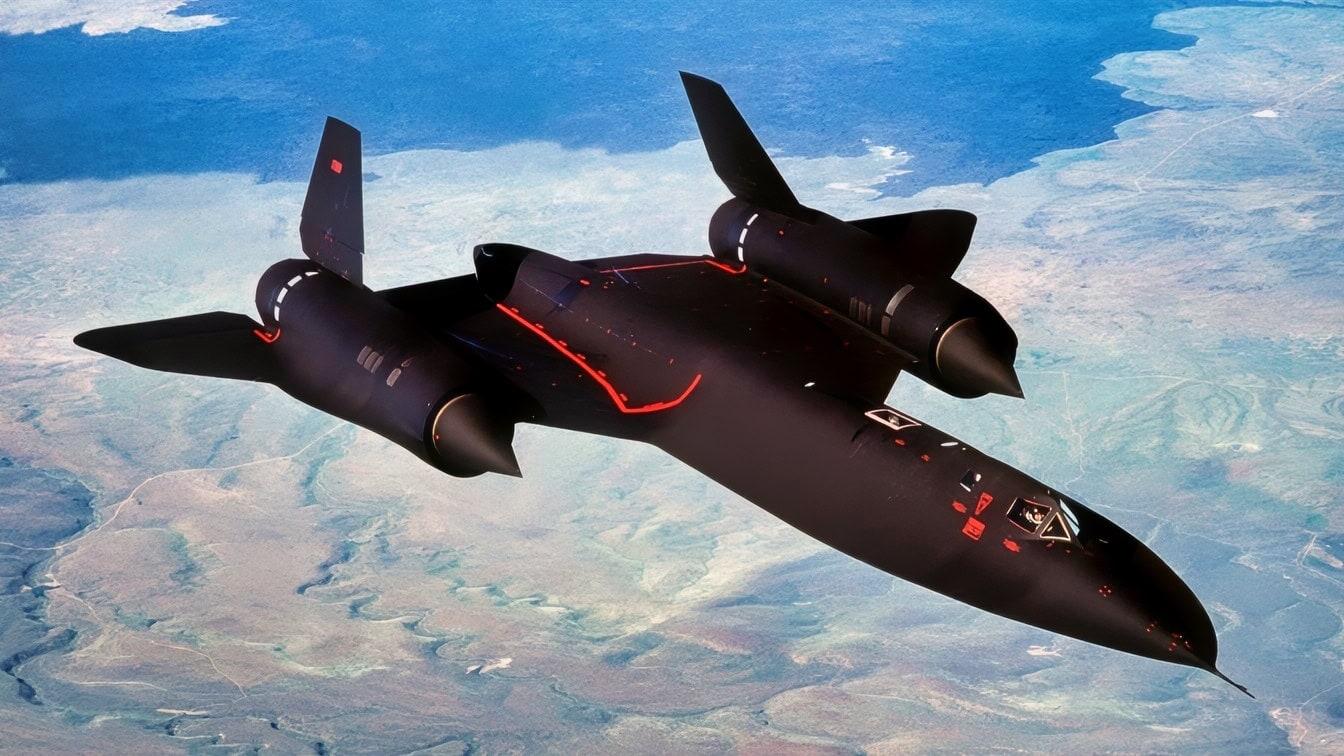
SR-71 Blackbird Creative Commons Photo
The timing was not random. The SR-71’s retirement had left a hole in American reconnaissance that satellites, flying predictable orbits an adversary can schedule around, and drones, slow and shootable, never fully filled.
And by 2013 the underlying technology had finally had its proof-of-concept decade: DARPA’s HTV-2 gliders had flown at Mach 20, and the X-51 Waverider had just completed the longest scramjet-powered flight in history.
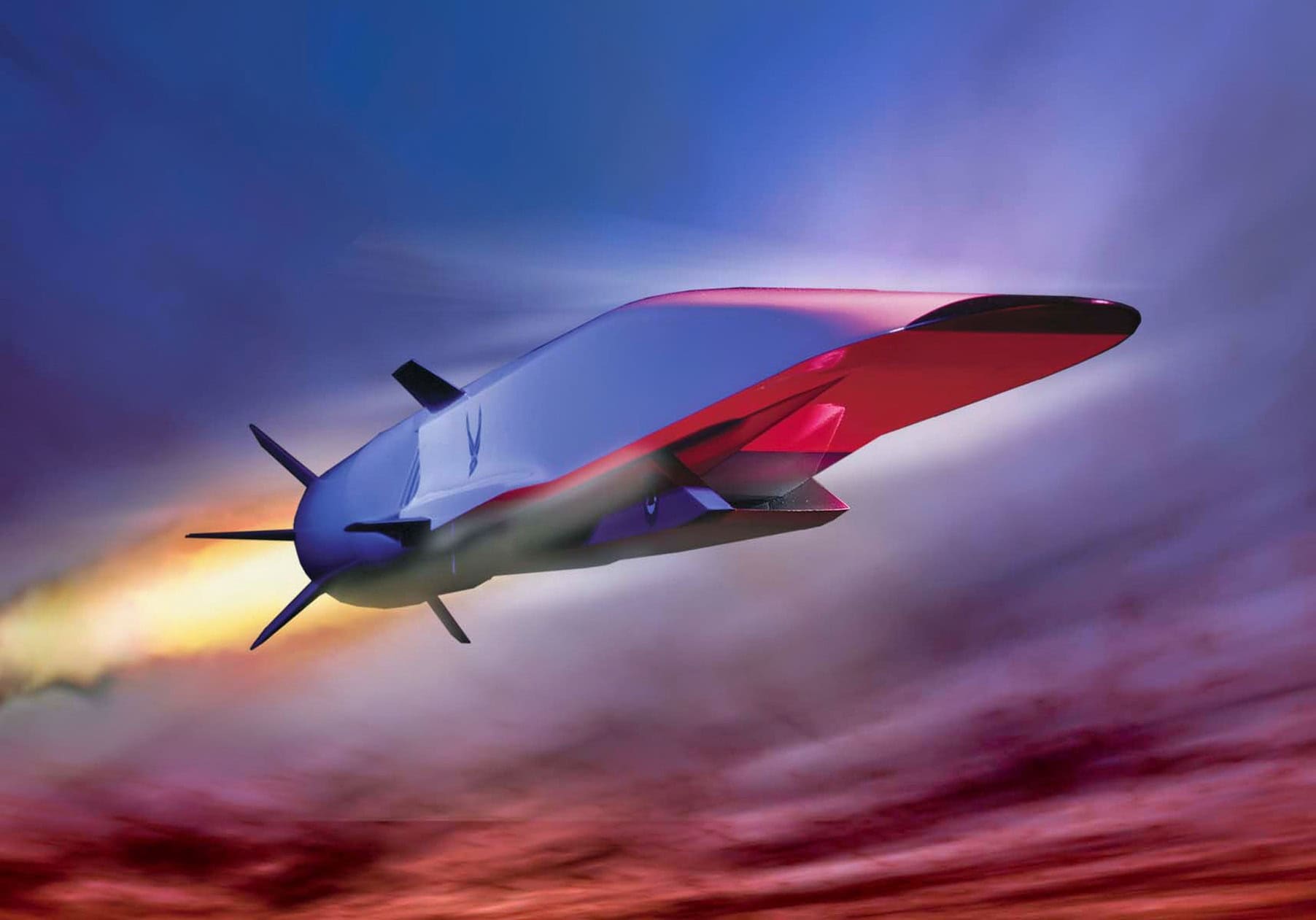
The X-51A Waverider is set to demonstrate hypersonic flight. Powered by a Pratt Whitney Rocketdyne SJY61 scramjet engine, it is designed to ride on its own shockwavem and accelerate to about Mach 6. (U.S. Air Force graphic)
Into that moment stepped Brad Leland, Lockheed’s hypersonics program manager, who had been running the SR-72 effort with a team of roughly 20 engineers for seven years, and who laid out the case in the company’s own release: hypersonic aircraft paired with hypersonic missiles could penetrate denied airspace and reach targets across a continent inside an hour. “Speed is the next aviation advancement to counter emerging threats,” Leland said, casting velocity as the successor to stealth.
The release said an operational SR-72 could arrive by 2030. Leland told reporters his team could build a demonstrator in five to six years for under a billion dollars, with construction penciled in to start as soon as 2018.
The press coined nothing; Lockheed itself offered “Son of Blackbird,” and the name stuck.
What We Know for Sure
Strip away a decade of speculation and the confirmed technical picture is surprisingly stable, because nearly all of it dates to the original disclosures.
The SR-72 concept is an unmanned, or optionally piloted, reconnaissance and strike aircraft designed to cruise at Mach 6, roughly 4,600 miles per hour, at altitudes around 80,000 feet.
The operational vehicle would be twin-engined and over 100 feet long, about the size of the SR-71 itself. Before that would come a Flight Research Vehicle, single-engined and around 60 feet long, the size of an F-22, meant to fly for several minutes at Mach 6 to prove the propulsion, with the full-scale aircraft to follow. Every official rendering across the years has shown the same shape: a flattened, chined lifting body that is all engine and fuel, an SR-71 melted into something even more reluctant to have wings.
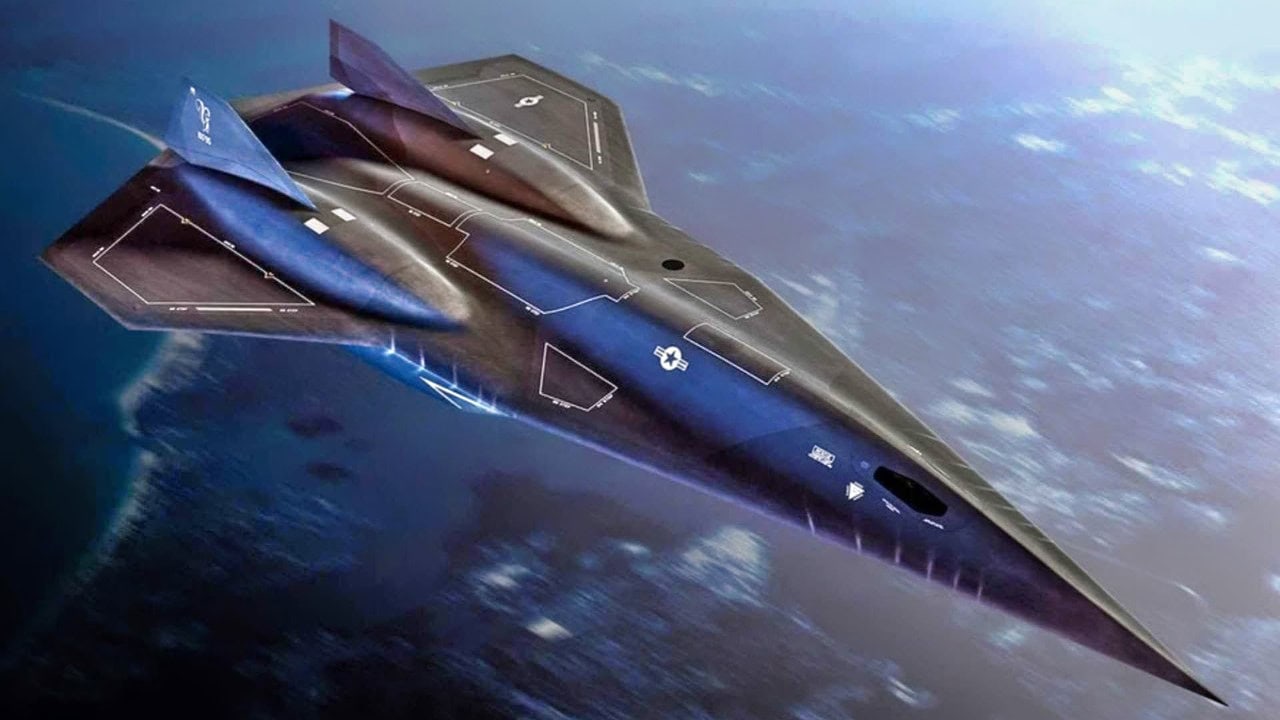
SR-72. Image Credit: Creative Commons.
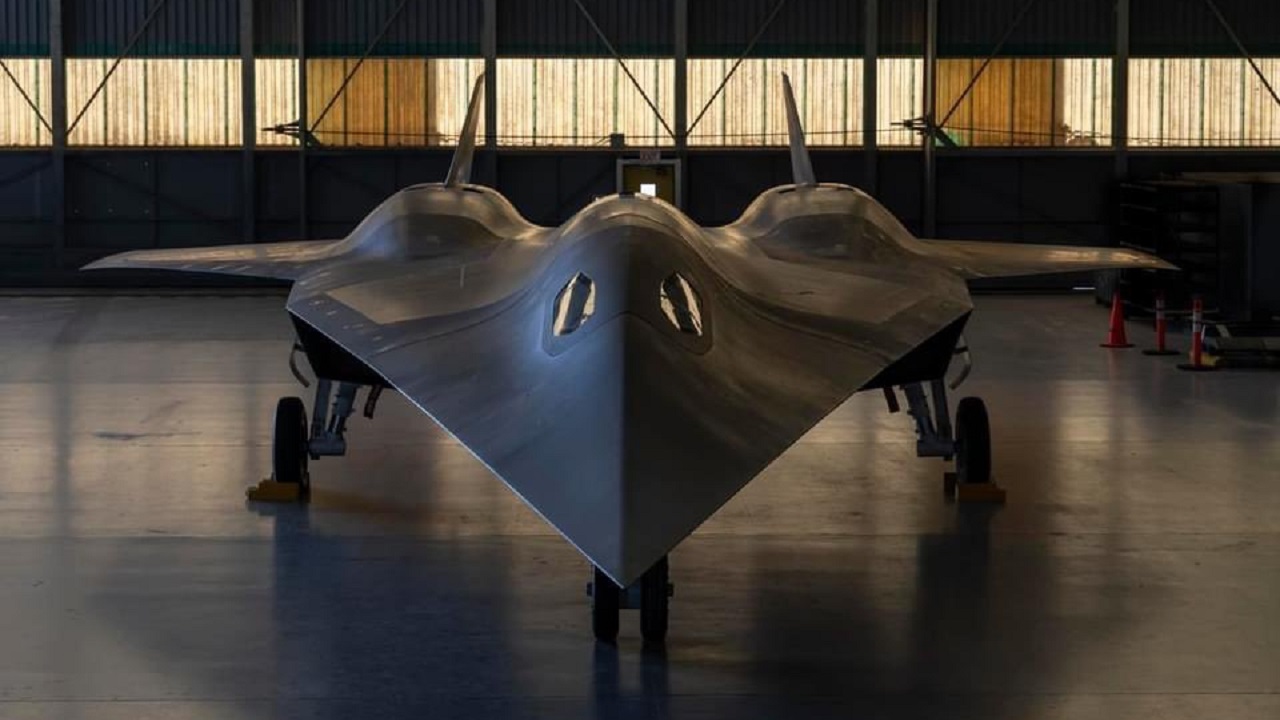
SR-72. Image Credit: Lockheed Martin.
The propulsion is the entire program. Hypersonic flight from a runway founders on a gap engineers call the valley of death: the best turbine engines quit around Mach 2.2, while the scramjets that thrive at hypersonic speed cannot light until roughly Mach 4. Nothing in production bridges the middle. Lockheed’s answer, developed with Aerojet Rocketdyne in a partnership dating back to 2006, is a turbine-based combined cycle: a conventional turbine and a dual-mode ramjet sharing an inlet and nozzle, with the ramjet derived from DARPA’s HTV-3X work and modified to take over at unusually low Mach numbers so that the two envelopes overlap. NASA bought into the physics with a design-study contract in 2014, and by 2017 Aviation Week reported the technologies had matured enough for Lockheed to talk about a flight demonstrator in earnest, following ground testing that had run since 2013.
One more thing is certain: the problems. At Mach 6, the airframe’s leading surfaces run past 2,000 degrees Fahrenheit, hot enough to soften or destroy conventional aerospace metals, demanding materials and thermal protection drawn from the punishing lessons of the HTV-2 flights.
By Lockheed’s own mid-2010s framing, an aircraft at that speed and 80,000 feet needs hundreds of miles of sky to turn, and it outruns the seekers, sensors, and data links of every weapon in inventory, meaning the payloads would have to be invented along with the airplane. Everything else, including whether any of it has ever flown, is unconfirmed.
What Lockheed Has Said, Year by Year
The company’s public statements form their own strange timeline, and it is best read in sequence.
Through the mid-2010s, executives kept the demonstrator pitch alive at the under-a-billion price point, and reporting through mid-2017 described Lockheed as on track to begin an optionally piloted Flight Research Vehicle as early as the following year, flying in the early 2020s, with the twin-engine SR-72 to follow. Yet in June 2017, Rob Weiss, then running Skunk Works, told reporters he could offer no timelines or specifics, the sound of a program pulling its curtains. That September, eyewitness reports surfaced of an unidentified small aircraft flying near Lockheed’s Palmdale plant, reports that fit the Flight Research Vehicle’s description and were never confirmed by anyone.
Then came the strangest six months in the program’s history. In January 2018, at the AIAA SciTech aerospace conference in Florida, Lockheed vice president Jack O’Banion stood before an artist’s rendering of the SR-72 and spoke about it in the past tense, crediting digital design tools: without them, he said, the aircraft could not have been made, and the engine “would have melted down into slag” if attempted five years earlier. Reporting at the time added his even more startling elaboration that the aircraft was agile at hypersonic speeds with reliable engine starts, language that describes flight testing, not a viewgraph. Lockheed declined to clarify any of it, and the refusal only fed the fever.
In February, aeronautics chief Orlando Carvalho said hypersonic demonstrators were in testing and that the Palmdale team was doubling down on its commitment to speed. And then, in March 2018, the SR-72 page quietly disappeared from Lockheed Martin’s website, along with every other mention of the aircraft; the page survives only in internet archives, and no mention has returned in eight years.
The vanishing came within weeks of Vladimir Putin’s March 1 address unveiling Russia’s hypersonic arsenal, the speech generally treated as the starting gun of the modern hypersonic arms race, and whether the timing was coincidence, classification, or cancellation has been argued ever since. The company’s only wink since has been a March 2023 social media post noting the SR-71 remains the fastest acknowledged crewed air-breathing jet, a sentence in which one word did an extraordinary amount of work.
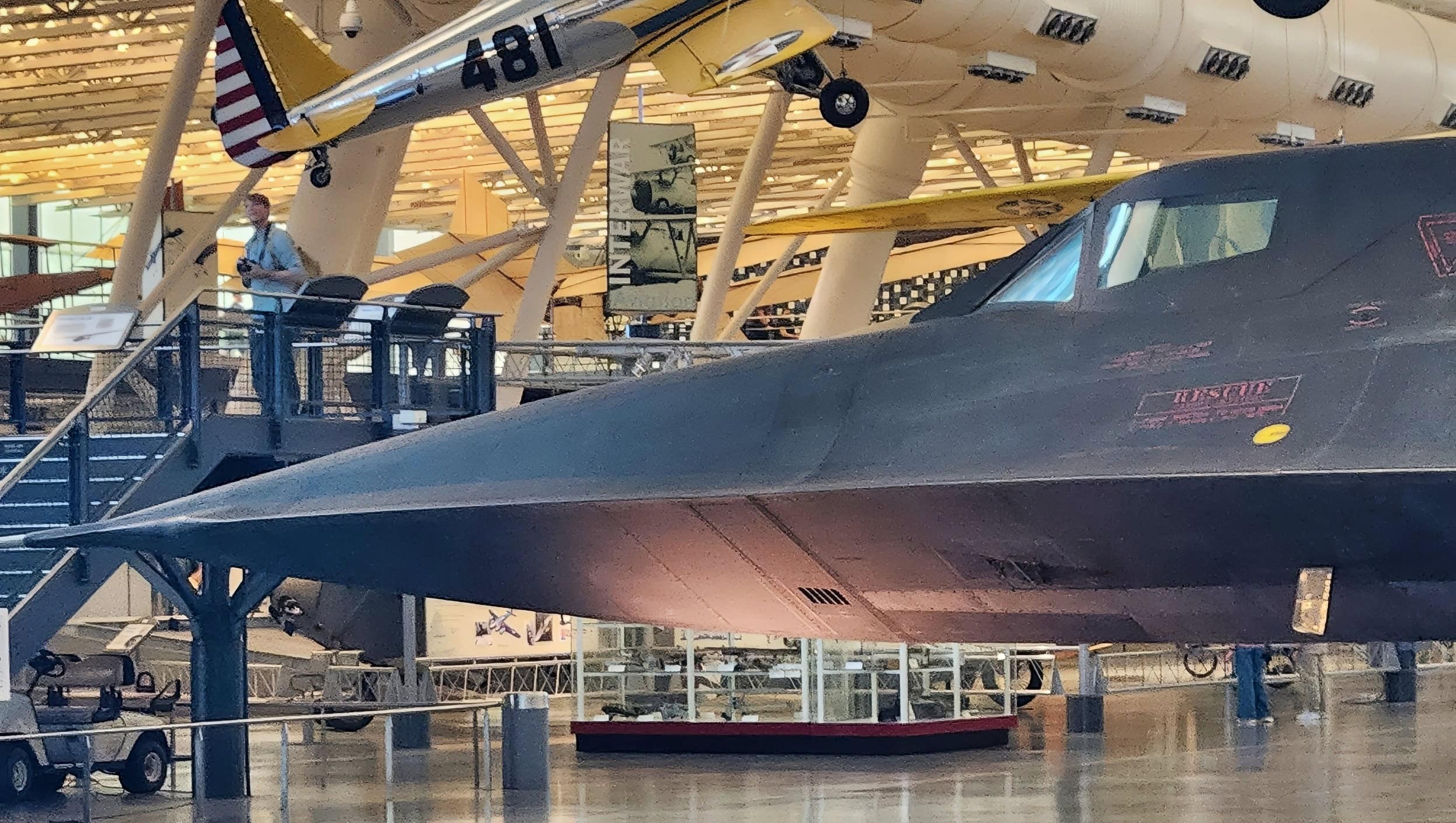
SR-71 Blackbird at Smithsonian. Image Credit: 19FortyFive.com
Darkstar: The Movie Star
Whatever the real program’s fate, the SR-72 became a global icon in 2022 by proxy. For Top Gun: Maverick’s opening sequence, director Joseph Kosinski wanted a plausible hypersonic aircraft and went straight to the source. “The reason we approached Skunk Works is because I wanted to make the most realistic hypersonic aircraft we possibly could,” he said, and Lockheed CEO James Taiclet confirmed the collaboration: actual Skunk Works engineers, the people who design the real classified aircraft, shaped the fictional Darkstar, basing the design, in Kosinski’s telling, on the SR-71 and then going beyond it. A full-scale mockup was built and filmed at Naval Air Weapons Station China Lake, convincing enough to be wheeled out of a hangar on camera like a real airplane, and the design even borrowed from a genuine Skunk Works project, the X-59’s windowless cockpit with its synthetic vision system.
Producer Jerry Bruckheimer supplied the anecdote that followed the film everywhere, claiming Navy officials told him that during production “a Chinese satellite turned and headed on a different route” to photograph the mockup, believing it real.
The claim is unverifiable and carries an obvious scent of movie marketing; the Navy, asked directly, declined to discuss its monitoring of anything, and defense outlets noted that Chinese surveillance of China Lake is routine anyway. But the mockup went on to a public life of its own, displayed to crowds at the 2022 Aerospace Valley air show at Edwards Air Force Base, and the film permanently rebranded the program: to most of the world, the SR-72 is now simply Darkstar, a name Lockheed never officially gave it.
Bomber, Strike Aircraft, or Spy Plane?
The reconnaissance mission is in the aircraft’s name, but the strike mission has been in its DNA from the first day.
Leland’s original 2013 pitch was explicitly about penetrating denied airspace and striking targets, and Lockheed’s release described an aircraft for intelligence, surveillance, reconnaissance, and strike. By 2015, the company was pairing the concept with the Air Force’s developmental hypersonic strike weapons, and the pairing makes physical sense: the hardest part of any scramjet missile is accelerating it to ignition speed, a problem that disappears if the launch aircraft is already at Mach 6, effectively handing every weapon aboard a running start and continental reach.
From there grew a persistent line of speculation, never confirmed, that the SR-72 or a derivative could become something closer to a hypersonic bomber: a penetrating strike aircraft that substitutes raw speed for stealth, arriving before defenses can generate a track, immune to interception by anything currently fielded, a reusable answer to the one-shot expendable missiles like ARRW and HACM that the Air Force pursued in parallel.
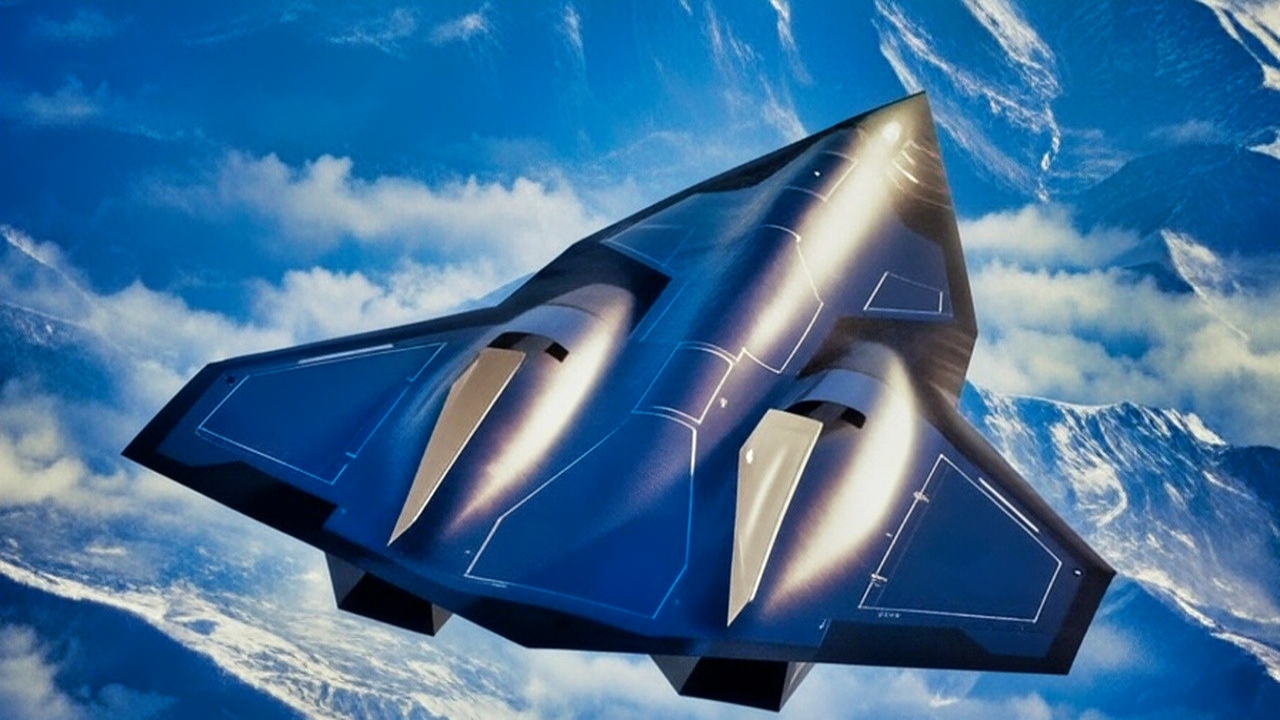
SR-72 Darkstar. Image Credit: Creative Commons.
The sober counterargument has been evident since 2015 in Lockheed’s own physics: an aircraft that needs several hundred miles of airspace to change heading is a poor dive bomber; its bay would carry munitions that mostly do not exist yet; and its thermal signature at Mach 6 is the opposite of hiding. The likelier division of labor, most analysts have concluded, is the one Leland described at the start: a fast, survivable sensor-and-shooter node that penetrates where satellites are predictable, and drones are slow, carrying a modest load of purpose-built weapons for targets that cannot wait, while cheaper expendable missiles do the volume work. Whether even that aircraft was ever ordered by anyone is the question the last eight years have refused to answer.
Where the Program Stands: August 2026 – No One Really Knows
Reports circulating from 2023 onward suggested a demonstrator could fly by 2025, sourced to earlier company suggestions; 2025 came and went with no public sonic boom, a deadline the aircraft missed in public, whatever may have happened in private.
When The Debrief pressed Skunk Works communications for the program’s status in 2024, it received no response at all. Meanwhile, the most interesting SR-72 evidence of the decade appeared where nobody was looking for it: Lockheed Martin’s own financial filings, which through 2025 disclosed massive charges on a classified aeronautics program, including a $950 million write-down in a single quarter, described in filing language as involving highly complex design and systems integration. Analysts connected those dots to a self-funded hypersonic aircraft built on the expectation of future government procurement, a reading the company has never confirmed, and reported expansions of Skunk Works production facilities have fed the same speculation. Set against that is the null hypothesis, argued just as seriously: that the program died or dissolved into missiles and studies in 2018, and the classified losses belong to something else entirely.
History Says It Could Still Happen
The U-2 flew in secret for years. The A-12, the SR-71’s own father, flew in 1962 and was not acknowledged until a president chose to reveal it two years later. The F-117 flew for a decade before the public saw it; the RQ-170 was photographed before it was admitted; the rumored RQ-180 has never been admitted; and the NGAD demonstrators that first flew in 2019 and 2020 have still not been shown.
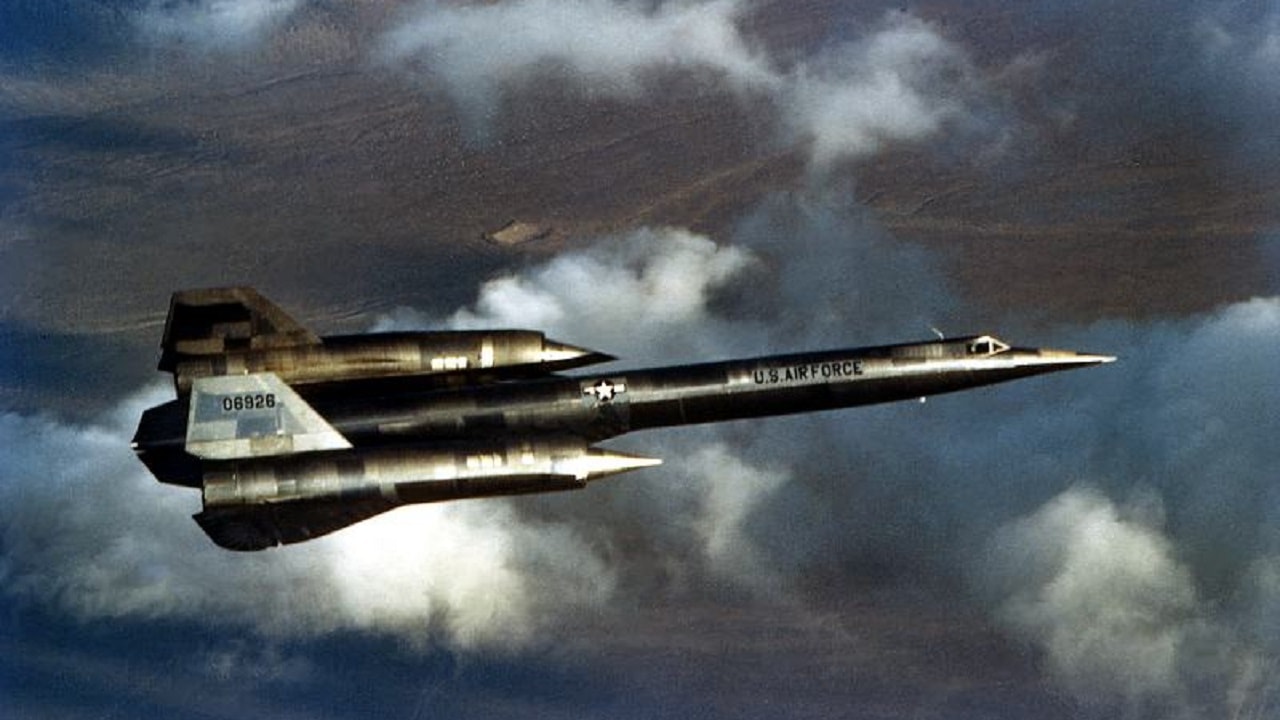
A-12 Oxcart. Image Credit: Creative Commons.
A Mach 6 aircraft built in secret would be following the most established tradition in American aerospace, and the arrangement has its own cold logic: a hypersonic penetrator is precisely the kind of machine whose deterrent value survives, and maybe improves, when an adversary cannot prove it exists. If confirmation ever comes, it will look like it always has: a budget line nobody can explain, a shape on a flightline, or a podium announcement in the style of 1964.
Until then, everything returns to that 2023 post from the company that started it all, thirteen years of statements distilled to a single loaded adjective. The SR-71 Blackbird, Lockheed wrote, is still the fastest acknowledged crewed air-breathing jet aircraft.
In August 2026, that word is still out there, holding the door open. I sure hope she is real and flies soon.
About the Author: Harry J. Kazianis
Harry J. Kazianis (@Grecianformula) was the former Senior Director of National Security Affairs at the Center for the National Interest (CFTNI), a foreign policy think tank founded by Richard Nixon based in Washington, DC. Harry has over a decade of experience in think tanks and national security publishing. His ideas have been published in the NY Times, The Washington Post, The Wall Street Journal, CNN, and many other outlets. He has held positions at CSIS, the Heritage Foundation, the University of Nottingham, and several other institutions related to national security research and studies. He is the former Executive Editor of the National Interest and the Diplomat. He holds a Master’s degree focusing on international affairs from Harvard University.