Iran’s military is a well-known mishmash of military kit from several different countries.
Some of the better-known examples include fighter jets from the United States as well as aircraft from the Soviet Union and later Russia, and a number of air defense systems from China.
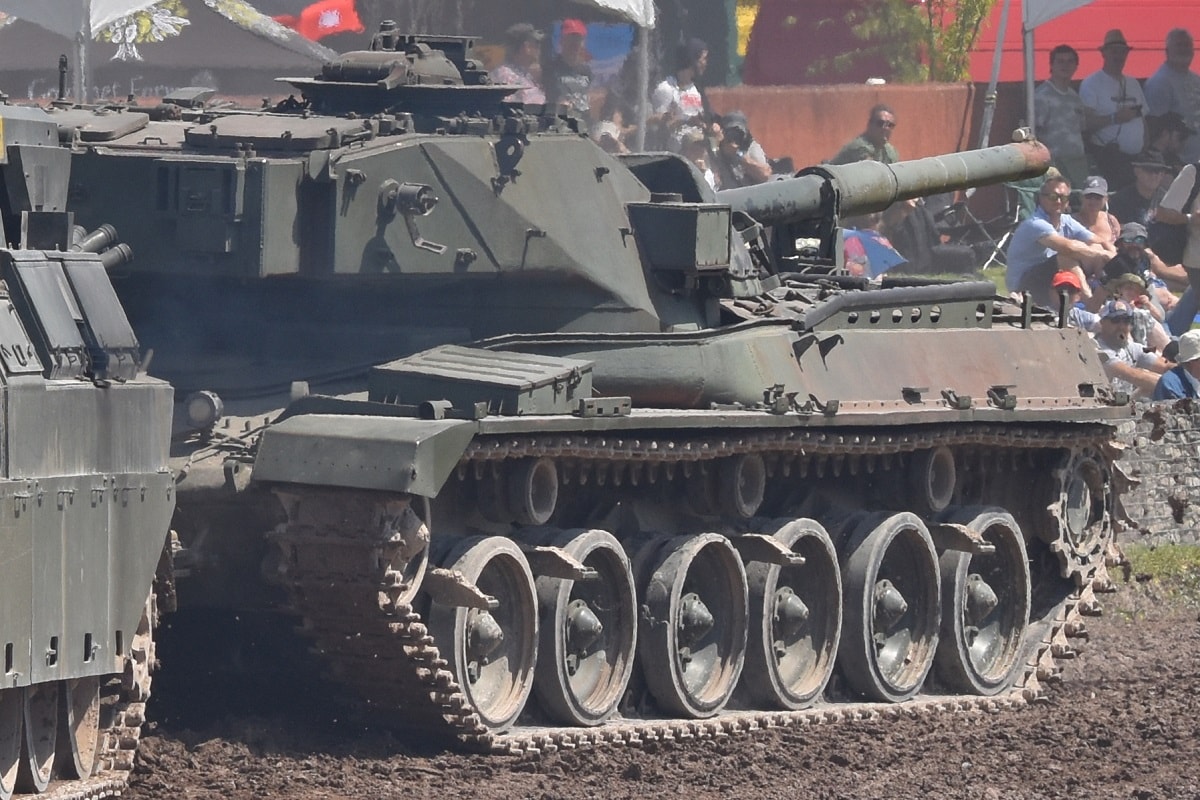
Cold War Era British Main Battle Tank (MBT) Official designation:- FV4201 Manufacturer:- Royal Ordnance Factory, Leeds Production:- 900 for UK, 1375 (approx.) for export Main armament:- Royal Ordnance L11A5 120mm rifled gun The Chieftain was the UKs principle MBT from the mid 1960’s until the early 1990’s, when it was replaced by the Challenger 1. This example, possibly a Mark 11, carries no painted markings but has ‘FV478236’ and ‘A123’ welded on the turret. It was seen during TankFest 2019 being towed around the Kuwait Arena as part of the demonstration by the museums Challenger Armoured Repair & Recovery Vehicle (CARRV) ‘70 KG 65’. The Tank Museum, Bovington Camp, Dorset, UK. 29th June 2019.
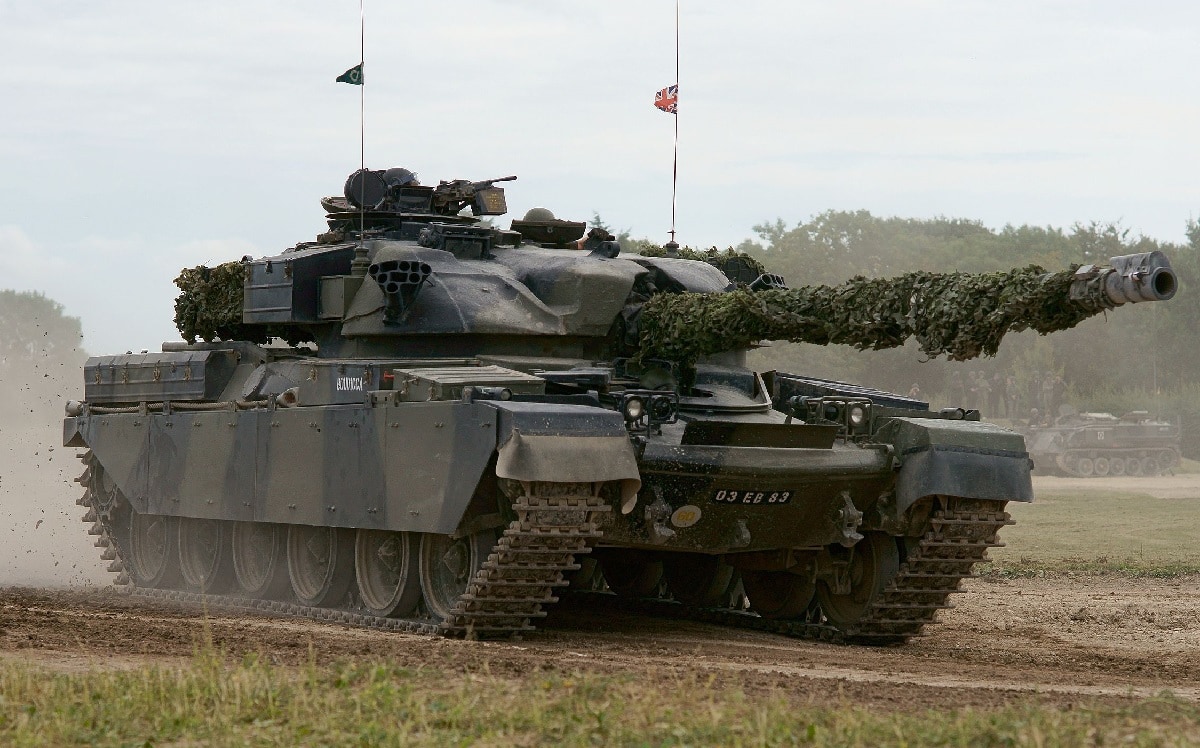
Chieftain tank in action at the Bovington Tank Museum.
Perhaps less well known, however, are the British tanks that the Shah purchased for Iran before the 1979 Iranian Revolution.
At the time, they were lauded as some of the most potent tracked vehicles of the era, heavily armed and armored and the pride of the British.
But their combat performance in the Middle East against one of Iran’s arch-enemies would ultimately tarnish that reputation.
The Shah’s Arms Splurge
Iran of the early to mid-1970s was defined by incredible GDP growth, fueled mostly by the country’s enormous energy resources. That energy would power the economic growth of countries around the world — and finance a vast buildout of Iran’s military capabilities.
One 1974 report by the Central Intelligence Agency illustrated the scope of Iran’s military buildup in the mid-1970s — and the potential for that buildup to upset the region’s status quo balance of power.
“Iran, which already has the largest and best-equipped armed force in the Persian Gulf area,” the report states, “is engaged in a massive military development program. Major new acquisitions of tanks, aircraft, and ships will be made within the next few years. The Shah is determined to acquire the most sophisticated military hardware available, as security against what he sees as regional and international threats to Iran. The arrival of so much equipment is certain to strain the capacity of the Iranian armed forces to absorb it.”
The CIA report explained that the Shah saw himself as the successor to Cyrus and Darius, perhaps the two best-known — but also militarily active and, on balance, successful — Persian rulers in history. But the CIA also explained that the Shah had a tendency toward the “grandiose” and that he was seemingly obsessed with increasing Iran’s place and status in the world.
Several crucial facets of the Shah’s goal were western military kit, financed through Iran’s immense oil wealth — as well as a deep suspicion of his neighbors’ designs on Iran, in particular from Iraq and the Soviet Union.
The military buildup of the 1970s then reflected his fears of foreign encroachment on Iran’s land, its energy, and his kingdom.
The Shah spared no expense to protect his kingdom and safeguard the country from foreign adversaries.
A Military Spending Spree
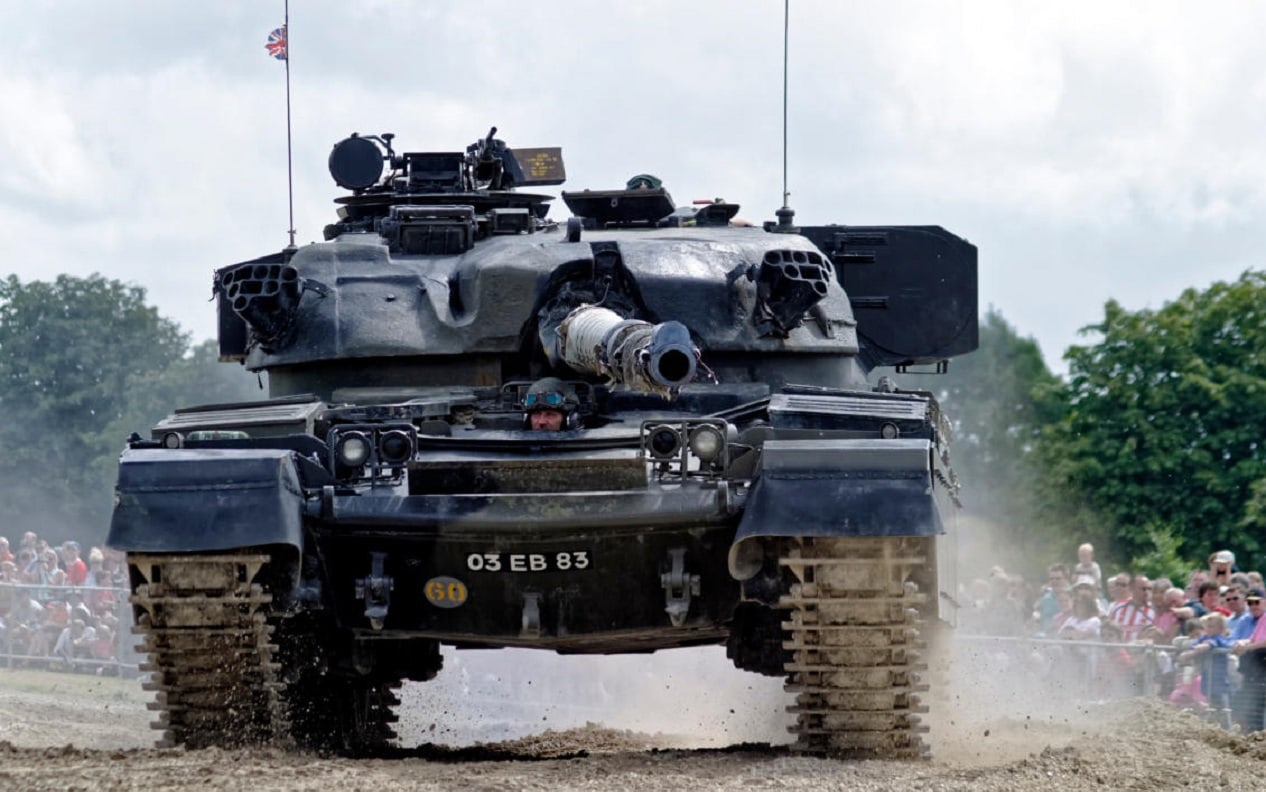
One of the larger arms purchases would be the Chieftain tank, built by the United Kingdom. “Last year, Iran accepted the first installment of almost 800 Chieftain medium battle tanks purchased from the UK two years ago,” the CIA noted.
“The Chieftains, armed with a very accurate 120-mm gun, give Iranian armored units a distinct advantage at long range over Iraq’s Soviet-made T-62 tanks, the most advanced Soviet tank now in use. Iran has also ordered 250 British-made Scorpion light tanks.”
First-hand Witness to the Chieftain
In theory, one of the most technologically advanced tanks of its era, the performance of Iran’s Chieftain tanks was far from that ideal.
Though some of their negative aspects could certainly be chalked up to insufficient training before plunging into battle — a trend widely attested to today in the ongoing war in Ukraine, where Russian soldiers sometimes have just a couple of weeks of basic training before finding themselves on the front lines of that conflict — another issue was the quality of the British-built tank.
One interview with Lieutenant General Ra’ad Majid Rashid al-Hamdani, who served as a staff officer for Iraqi armored and reconnaissance units during the Iran-Iraq War, was particularly revealing. “British weapons were not very good,” the general explained, adding that “the 90th Iranian Armored Division had Chieftain tanks; they had a lot of problems and did not fight effectively.”
“The 16th Iranian Armored Division, which was equipped with Chieftain tanks, lost a battle against the 10th Iraqi Armored Brigade with T-72 tanks. It is hard for an armored brigade to destroy a division in 12 hours, but it happened; it was a disaster for the Iranians.”
Domestic Upgrades
Despite difficulties experienced with the Chieftain tank during the war, Iran retained a sizable number of them after the end of hostilities.
It implemented several upgrades to address some of the issues revealed during combat with the British tank.
Dubbed the Mobarez in Iran, the upgraded tank’s engine was replaced with a higher-output diesel option, and its transmission and suspension were replaced with new ones, improving the tank’s power-to-weight ratio.
Night vision and a laser rangefinder were also integrated into the tank.
The improvements were certainly a step up from the original Chieftain tank, particularly in off-road mobility.
But the tank is still a relatively heavy, steel-armored platform from the 1960s and would, in all likelihood, be extremely vulnerable to modern munitions.
MORE – The X-15 Could Hit Mach 6.72
About the Author: Caleb Larson
Caleb Larson is an American multiformat journalist based in Berlin, Germany. His work covers the intersection of conflict and society, focusing on American foreign policy and European security. He has reported from Germany, Russia, and the United States. Most recently, he covered the war in Ukraine, reporting extensively on the war’s shifting battle lines from Donbas and writing on the war’s civilian and humanitarian toll. Previously, he worked as a Defense Reporter for POLITICO Europe. You can follow his latest work on X.