
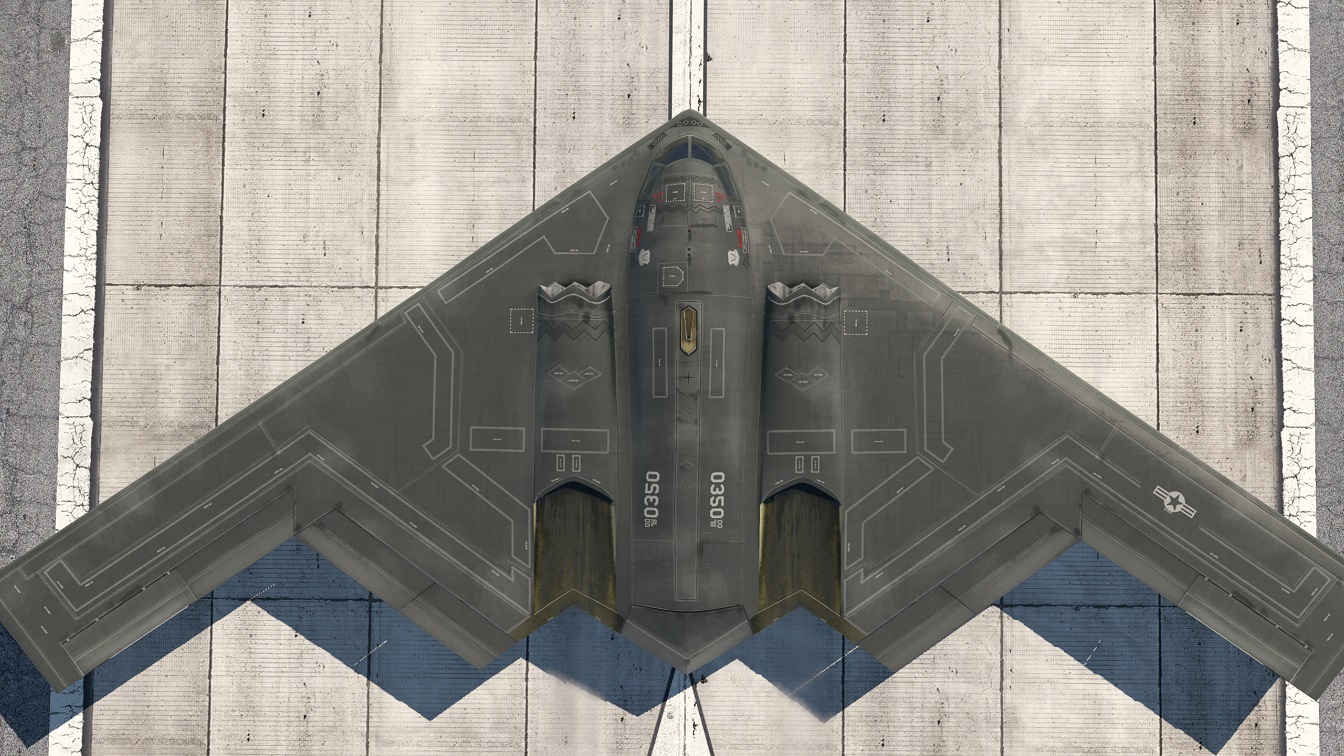
132 Bombers Became 21: The Full Story of the B-2 Cuts, and the $90 Billion Lesson the B-21 Must Learn – “It was the greatest mistake we ever made. The US Air Force, at least in my opinion, never really recovered from it.” That’s what a senior US Air Force officer told me a few weeks ago when I asked him about the cuts made to the B-2 Spirit stealth bomber program in the 1990s. He was equally worried about the B-21 Raider: “If the Iran war teaches us anything, it’s that we need as many stealth bombers as we can get. No one has that capability. Not Russia. Not China. They are a real game-changer. We must learn from the B-2 mistake.” How right he is.
The B-2 Spirit Bomber: The Slashing That Still Stings
On the night of January 28, 1992, the most advanced aircraft ever built was killed in front of a television audience of millions, and the chamber applauded. President George H.W. Bush stood before Congress delivering the first State of the Union of the post-Soviet world, announcing a sweeping drawdown of Cold War weapons as part of a package he said would save $50 billion over five years, and buried in the list was a single line of arithmetic: production of the B-2 bomber would stop at 20 planes, the ones already funded and no more. Twenty. The Air Force had planned on 132. In one sentence, the B-2 Spirit went from the backbone of American air power’s future to the most expensive orphan in aviation history, and the country is still living with the consequences of that sentence today.
What 132 Bombers Were For
Rewind a decade. Northrop won the Advanced Technology Bomber contract in 1981, in secrecy so deep the program officially did not exist, to solve the hardest problem in Cold War air power: putting nuclear weapons through the Soviet Union’s integrated air defenses, the densest ever constructed, and hunting the mobile missiles the Soviets shuttled along their rail lines.
The answer was a two-pilot flying wing with a 172-foot span, wider than a 767, carrying 40,000 pounds of weapons behind the radar return of a bird. And the plan was industrial: 132 aircraft, enough to fill Strategic Air Command’s war plan, enough to matter, and, critically, enough to spread the staggering research bill across a real production run. Stealth on that scale had never been engineered; the invention would always cost tens of billions. The plan only made financial sense if the invention was then stamped out 132 times.
How the Cuts Came
History had other plans. The Berlin Wall fell while the first aircraft was undergoing flight testing, and the program’s rationale began to dissolve in real time. In April 1990, Defense Secretary Dick Cheney’s major aircraft review cut the buy roughly in half, to 75, and the Air Force priced that fleet at $64.8 billion.
Then the Soviet Union itself ceased to exist in December 1991, weeks before Bush walked into the House chamber, and the target the B-2 was invented to penetrate vanished from the map.
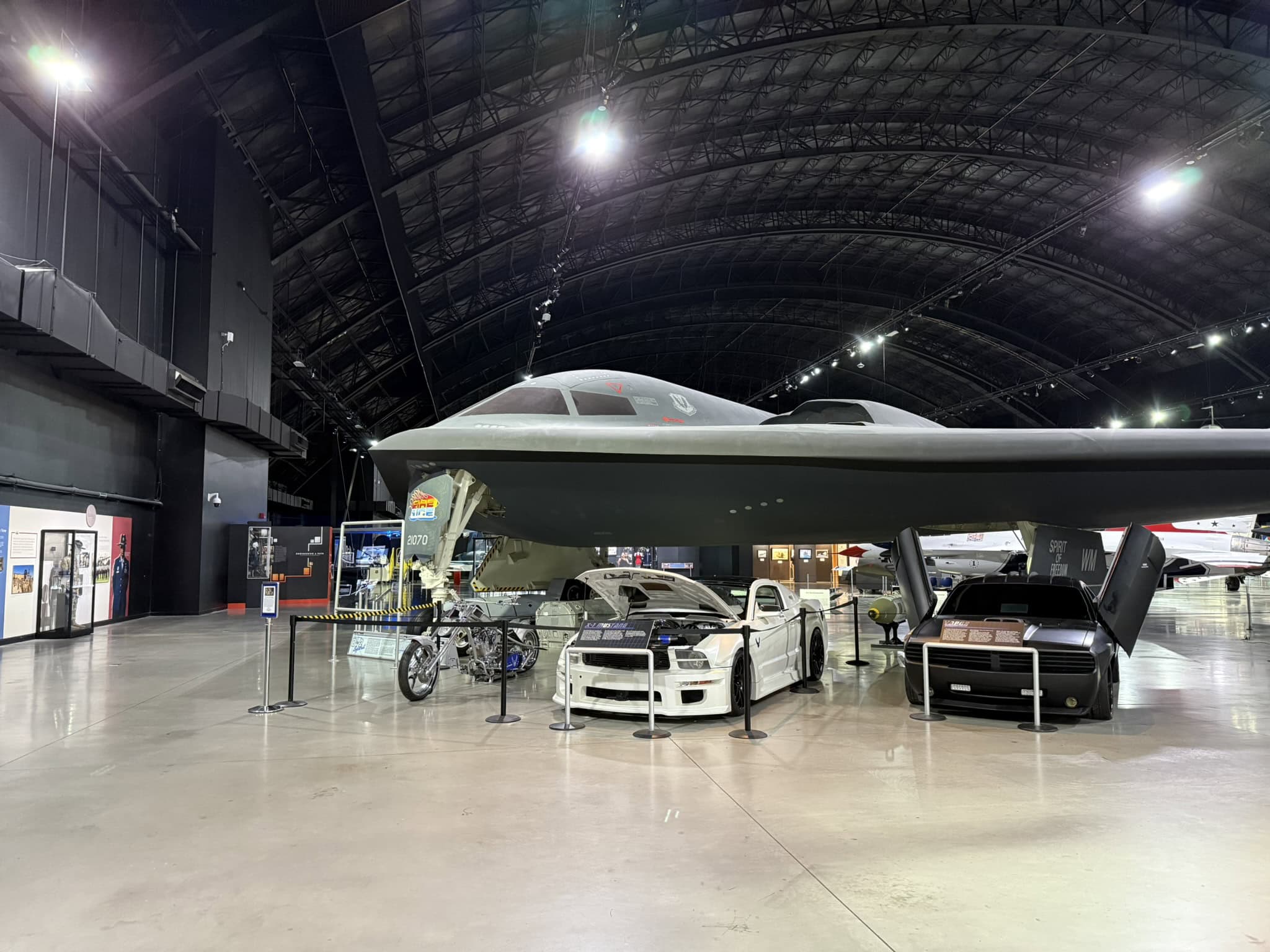
B-2 Spirit Bomber 19FortyFive Image from the National Museum of the U.S. Air Force
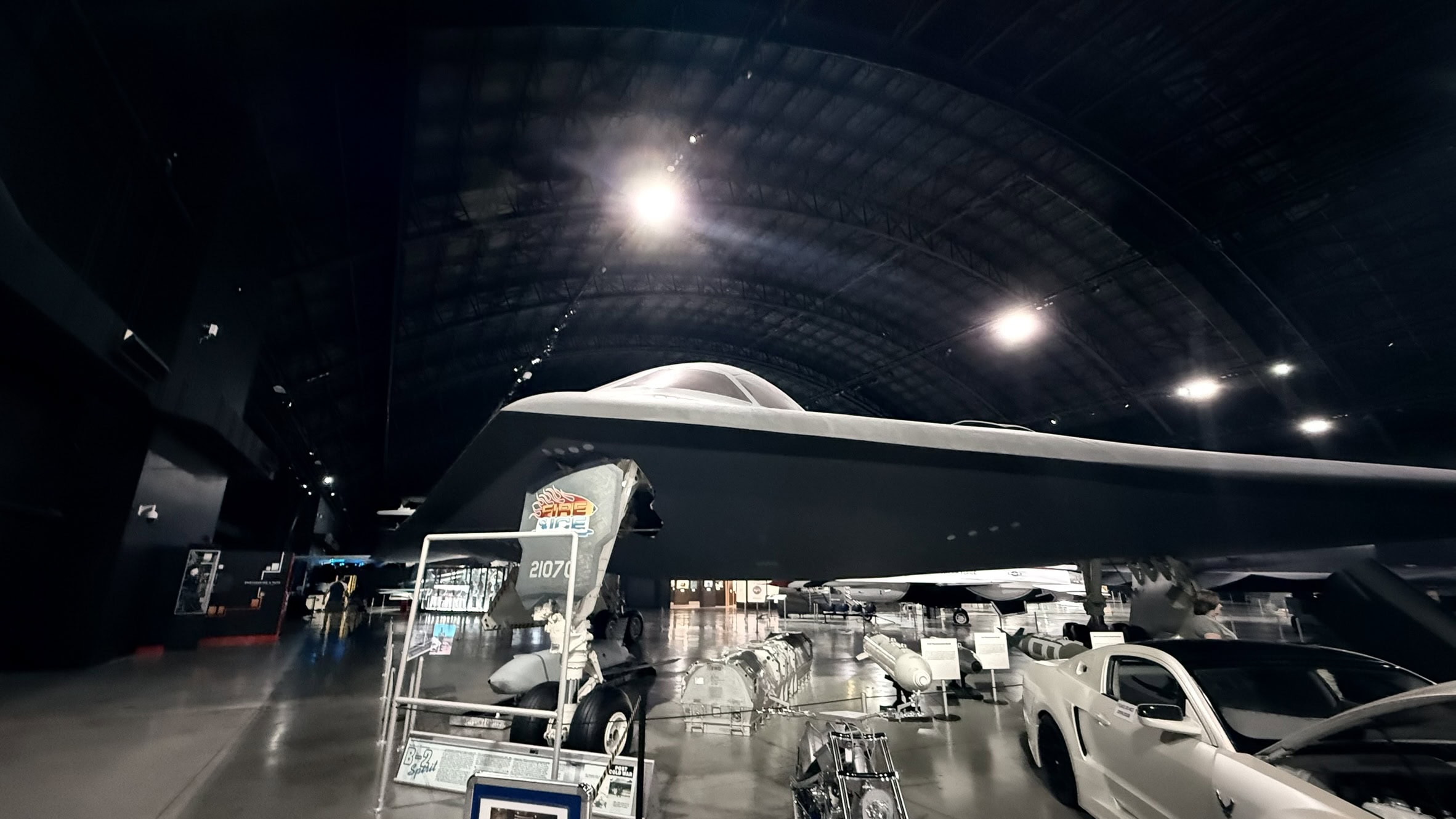
B-2 Spirit Bomber 19FortyFive Image from the National Museum of the U.S. Air Force
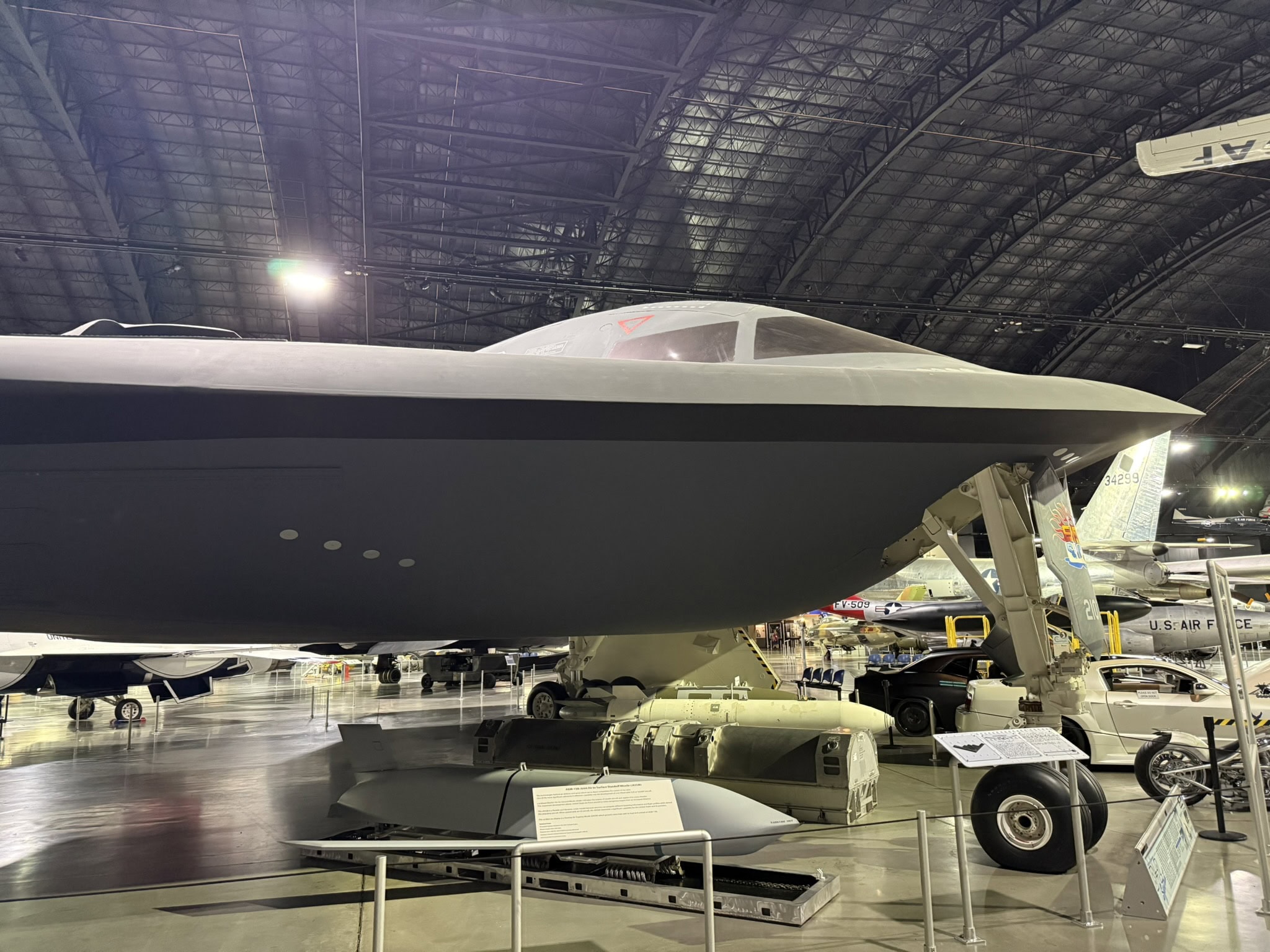
B-2 Spirit Bomber 19FortyFive Image from the National Museum of the U.S. Air Force
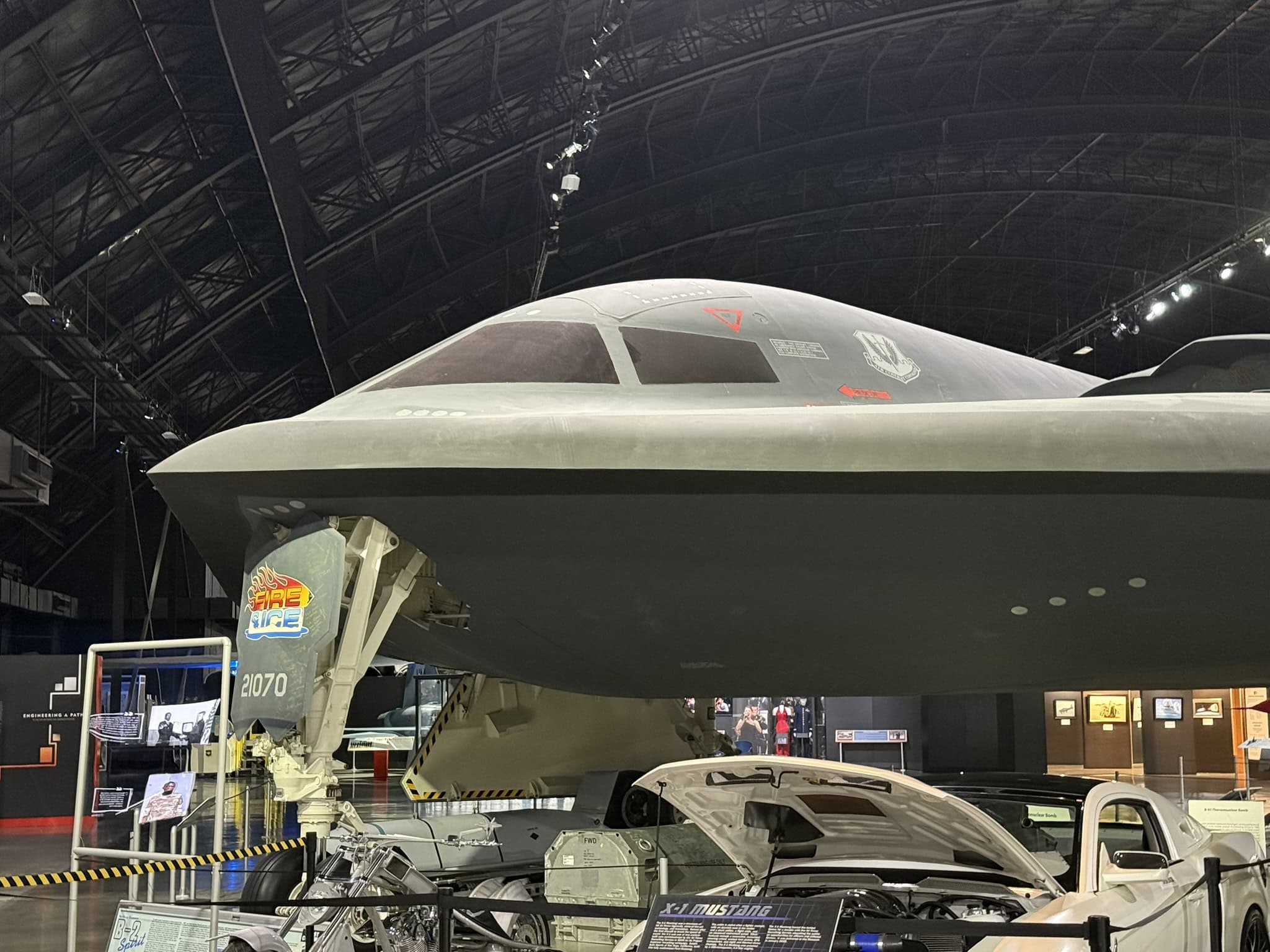
B-2 Spirit. 19FortyFive.com image take at the National Museum of the U.S. Air Force in July, 2025.
Congress, staring at a deficit and a public demanding a peace dividend, had already turned hostile; the Government Accountability Office itself concluded the final aircraft could not be justified on strategic nuclear grounds, and the same axe was falling everywhere, cutting the Seawolf submarine class from 29 boats to 3. The 1992 announcement settled it at 20 operational aircraft.
A final mercy came under President Clinton, when the first test airframe was upgraded to combat standard, making the fleet 21. The production line at Palmdale, tooled for a hundred more, went quiet, and the numbers tell that story too: a workforce that peaked at 13,000 people building bombers had shrunk, within a decade, to 1,200 doing maintenance.
The Cruelest Math in Aviation: And the B-2 Spirit Line Could Have Been Restarted
Here is what the cut did to the price, and it is the heart of the story.
The invention bill did not shrink when the order did; roughly $44.7 billion had been committed to the program by 1997, by the GAO’s settled accounting, whether America built 132 bombers or 12. Divided across 132 aircraft, that is a defensible cost per plane.
Divided across 21, it is $2.13 billion per bomber, a number that made the B-2 a permanent punchline about Pentagon excess even though the airplane itself, the flyaway cost of manufacturing one, was about $737 million in 1997 dollars.
Translated to 2026 money, the program’s $44.7 billion becomes roughly $90 billion, the per-bomber share about $4.3 billion, and the flyaway cost about $1.5 billion.
The bitterest footnote came in 2001, when Northrop offered to restart the line and build 40 more at roughly a third of the sunk per-unit cost, and Washington declined. The B-2 was not so much an expensive airplane as an expensive invention that America chose to buy almost none of.
The Bill That Came Later
For a decade, the choice looked defensible. The B-2 made its combat debut over Serbia in 1999, flying 30-hour round trips from Missouri, and spent the war-on-terror years dropping precision weapons on enemies with no radar to evade, a Ferrari running errands.
Then the world the 132 were designed for began to return. Russia rebuilt its air defenses and its appetite; China constructed exactly the kind of layered, modern air-defense system the B-2 was invented to beat, and draped it over the Pacific. Great-power competition returned as official American strategy, and the United States discovered what it had done to itself: the crash of one aircraft on Guam in 2008 cut the fleet to 20, maintenance demands mean only a fraction are ready on any given day, and the entire penetrating strike capacity of the world’s leading air power came to rest on a boutique force smaller than many airlines’ 737 fleets.
The strain is visible in 2026 in real time: the same tiny fleet that hammered Iran’s nuclear sites has spent this summer rotating through the Pacific to face China, a workload 21 airframes were never meant to carry. Every taxpayer dollar saved in 1992 has been repaid in scarcity.
The B-21 Choice
Which is why the next decision matters more than the last one. The B-21 Raider now flying at Edwards was designed in the B-2’s shadow, digitally engineered to be cheaper to build and, above all, built in numbers: the program of record calls for at least 100, at a unit cost in the $700 million class, with the Spirits themselves slated to retire in the 2030s as the Raiders take their place, and a growing chorus of officials and analysts argues for far more than 100, precisely because the strategic world of 2026, with a rising China and a belligerent Russia, resembles the world that ordered 132 far more than the one that settled for 21.
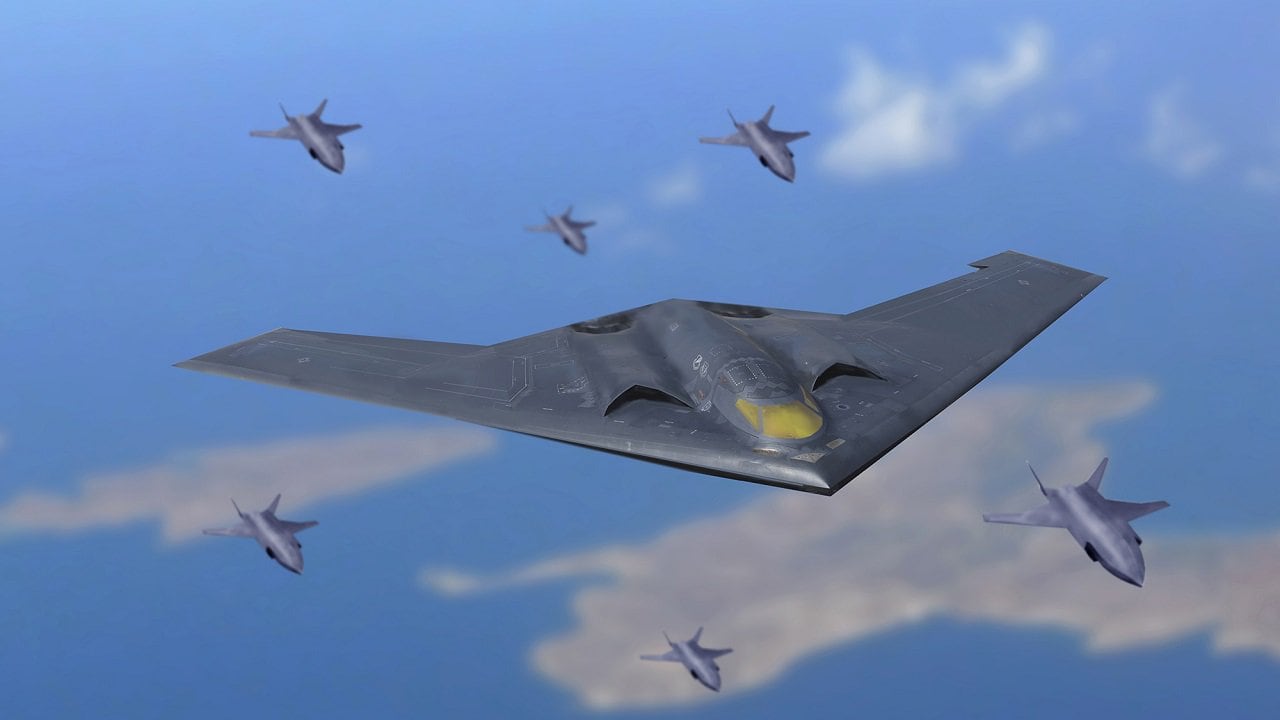
An artist illustration depicts a U.S. Air Force extended-range B-21 Raider escorted on a mission by armed unmanned next generation air dominance platforms. This fictional bomber features longer, wider wings, and a deeper fuselage that accommodates larger fuel tanks and dual weapons bays that enables the bomber to carry a much larger and varied payload. Mike Tsukamoto/staff; Greg Davis/USAF
The B-2’s lesson is not that stealth bombers cost too much.
It is that the invention is the cost, and the aircraft are nearly free by comparison, so the cheapest bomber per unit is the one you keep building. At Palmdale, Raiders are now accumulating on the same floor where the B-2 line stopped in the 1990s with its tooling warm. The last time America stood at this exact decision point, it chose 21 and spent thirty years paying for the savings.
The line is running again. The only question that matters is whether, this time, anyone lets it finish.
MORE – How the US Navy Brought the Iowa-Class Battleship Back to Life to Take on Russia
About the Author: Harry J. Kazianis
Harry J. Kazianis (@Grecianformula) was the former Senior Director of National Security Affairs at the Center for the National Interest (CFTNI), a foreign policy think tank founded by Richard Nixon based in Washington, DC. Harry has over a decade of experience in think tanks and national security publishing. His ideas have been published in the NY Times, The Washington Post, The Wall Street Journal, CNN, and many other outlets. He has held positions at CSIS, the Heritage Foundation, the University of Nottingham, and several other institutions related to national security research and studies. He is the former Executive Editor of the National Interest and the Diplomat. He holds a Master’s degree focusing on international affairs from Harvard University.

