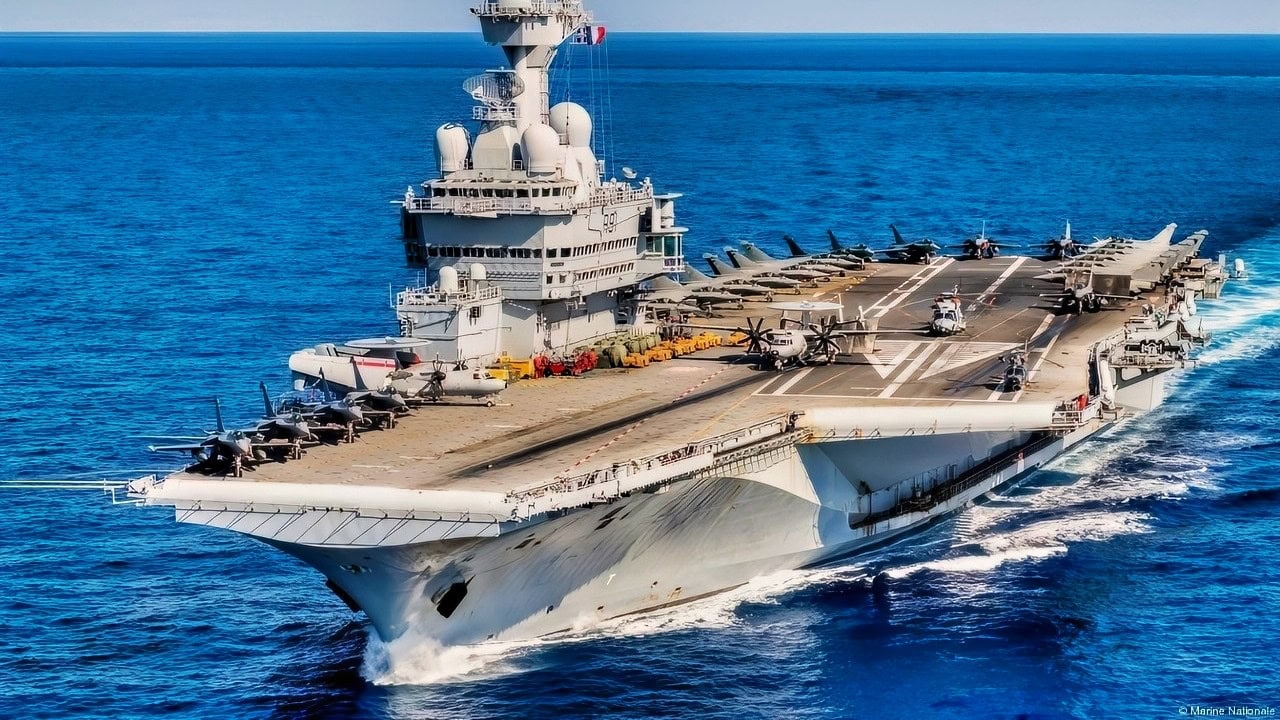
France is struggling through something of an identity crisis. It wants to be a great world power, as it was during its imperial era.
Yet it is a medium-sized power facing a bevy of domestic problems.
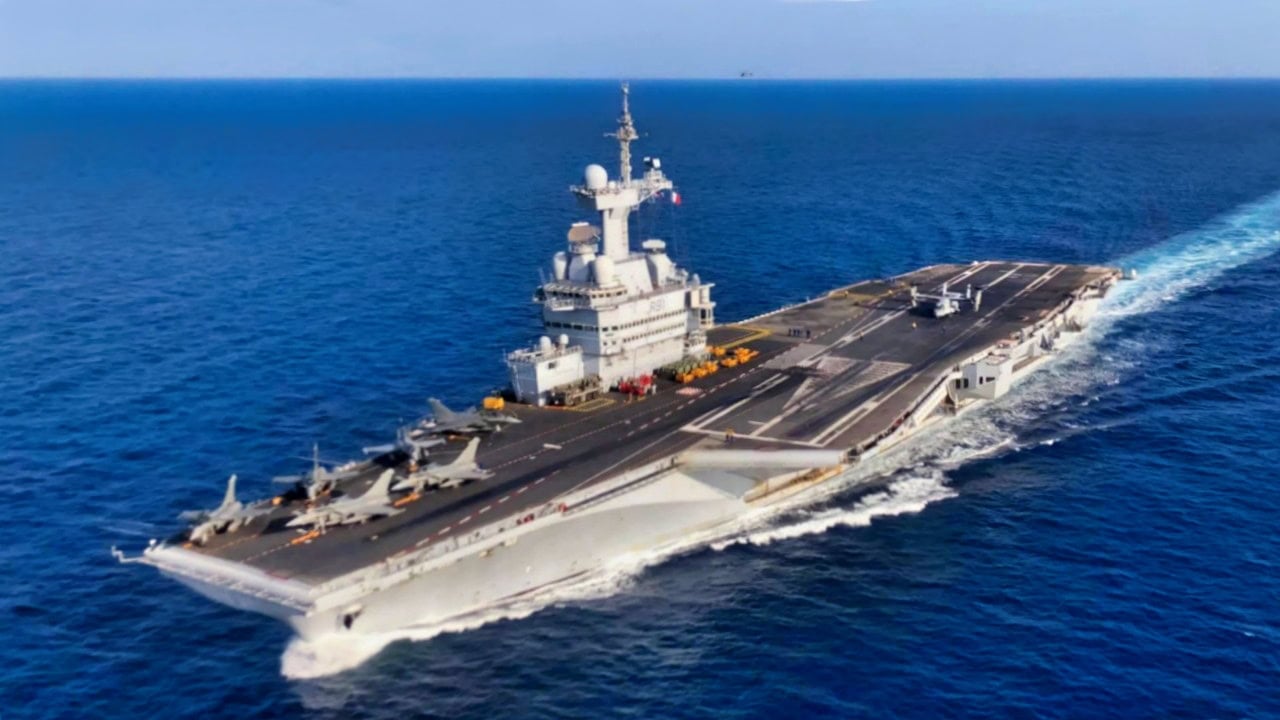
U.S. 5TH FLEET AREA OF OPERATIONS (April 24, 2019) A U.S. Marine MV-22 Osprey assigned to the 22nd Marine Expeditionary Unit sits on the flight deck of France’s Marine Nationale aircraft carrier FS Charles De Gaulle (R 91). This was the second time that Ospreys have landed aboard the French vessel. Marines and Sailors assigned to the 22nd MEU and Kearsarge Amphibious Ready Group are currently deployed to the U.S. 5th Fleet area of operations in support of naval operations to ensure maritime stability and security in the Central region, connecting the Mediterranean and the Pacific through the western Indian Ocean and three strategic choke points. (U.S. Marine Corps photo by Maj. Joshua Smith/Released)
Nevertheless, Paris has convinced itself that France requires a massive aircraft carrier, even though the cost of the system, and its continued relevance in the age of missile swarms, hypersonic weapons, and drones, are very much in doubt over the long term.
The French Navy already operates one nuclear-powered, catapult-assisted launch aircraft carrier: the Charles de Gaulle. The country has had that carrier for years.
It entered service in 2001, and France wants to replace it by 2038.
Paris plans to upgrade from the Charles de Gaulle to the larger nuclear-powered aircraft carrier France Libre, previously known as the PANG program.
When One Is Never Enough
Yet, the French can only afford to build (and maintain) a single aircraft carrier.
This is not only a long-term commitment (and an incredibly expensive one at that), but the French can only build one of these ships.
In other words, the French Navy can address only one problem at a time. So, the question some in France are asking is how much value this new carrier really adds to the French Navy’s already limited capabilities.
More importantly, what about the opportunity cost? Could the French Navy have used the money it spent on a single carrier to build multiple smaller warships or submarines instead?
France’s current primary flat top is the aging Charles de Gaulle. She displaces 42,000 tons and can launch Rafale M fighters, E-2C Hawkeye airborne early-warning aircraft, and helicopters.
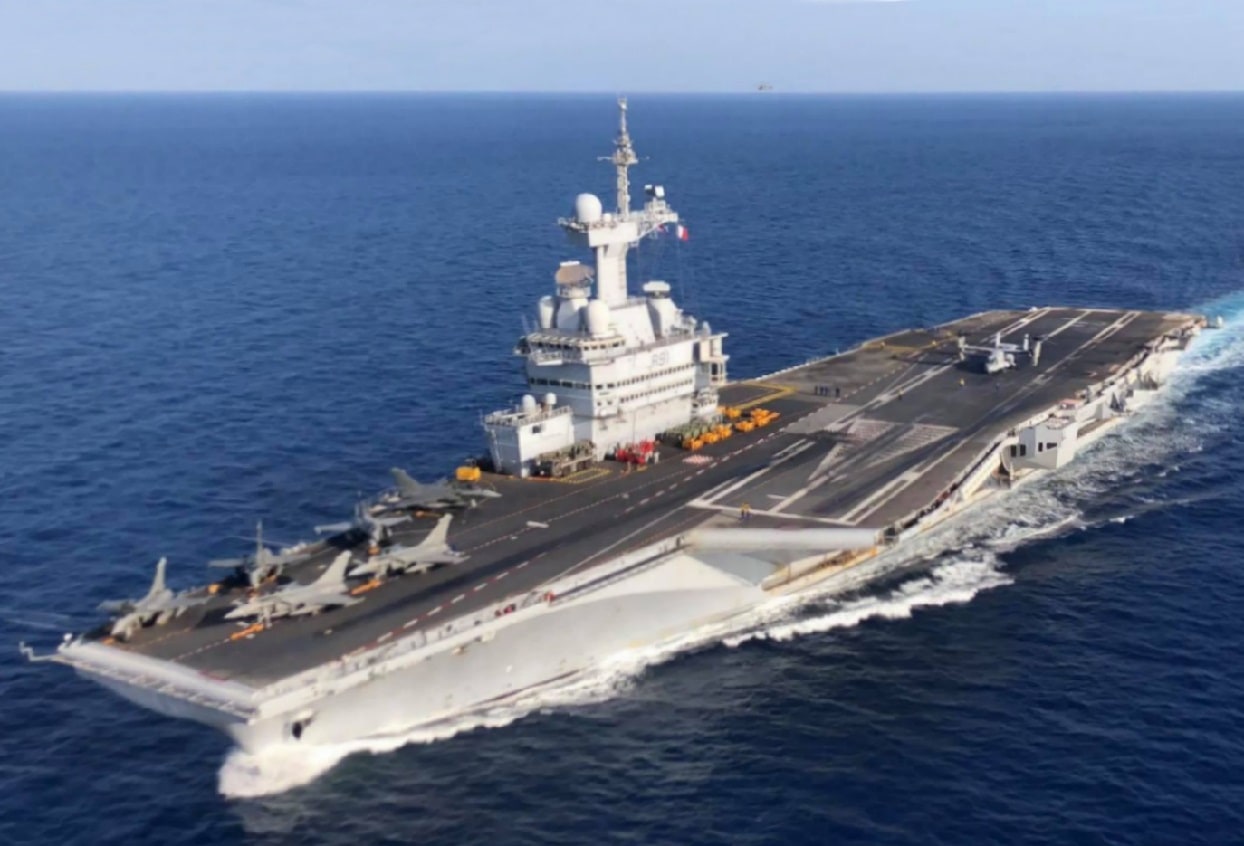
190424-M-BP588-1005 U.S. 5TH FLEET AREA OF OPERATIONS (April 24, 2019) A U.S. Marine MV-22 Osprey assigned to the 22nd Marine Expeditionary Unit sits on the flight deck of France’s Marine Nationale aircraft carrier FS Charles De Gaulle (R 91). This was the second time that Ospreys have landed aboard the French vessel. Marines and Sailors assigned to the 22nd MEU and Kearsarge Amphibious Ready Group are currently deployed to the U.S. 5th Fleet area of operations in support of naval operations to ensure maritime stability and security in the Central region, connecting the Mediterranean and the Pacific through the western Indian Ocean and three strategic choke points. (U.S. Marine Corps photo by Maj. Joshua Smith/Released)
This ship gives France capabilities it would otherwise lack (it would have to rely on allies with carriers, such as the Americans, which would limit its mission sets and curb its freedom of action).
Interestingly, the Charles de Gaulle operates the ASMPA-R nuclear cruise missile. So, the Charles de Gaulle forms a critical support leg of the country’s overall nuclear deterrent. Yet only one carrier remains.
Because carriers are complex systems, they require sophisticated repairs, long training periods, costly (and constant maintenance, and routine overhauls that pull the ship off the line for extended periods of time.
When the Charles de Gaulle undergoes maintenance, the French Navy is again without a carrier capability. And there is no evidence that Paris intends to operate two carriers.
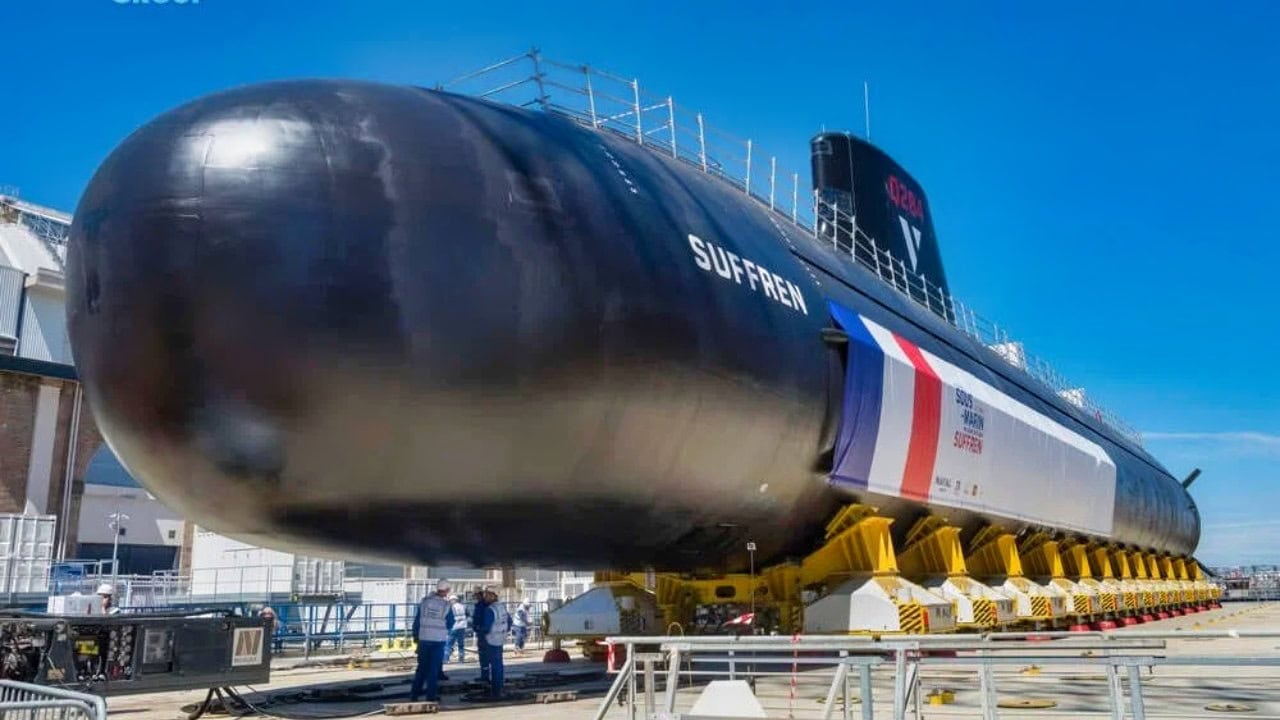
Suffren-Class Submarine SSN France
Once the France Libre is ready for sail, the Charles de Gaulle will be decommissioned, presenting the French Navy with the same amount of costly problems–only on a grander scale, considering the added complexity and greater size of the new carrier.
A Strained Budget
If the French are stretching their finite defense budget and technical capacity to maintain one aircraft carrier, then spending the money on a second would explode their budget.
Just look at the British Royal Navy. They built two conventionally powered Queen Elizabeth-class aircraft carriers, HMS Queen Elizabeth and HMS Prince of Wales. Yet London can barely maintain the two ships because of the enormous cost in money, resources, and manpower.
For a country the size of France to sustain two aircraft carriers, thereby ensuring no capability gap forms as one goes into maintenance or repairs, is not possible under current conditions.
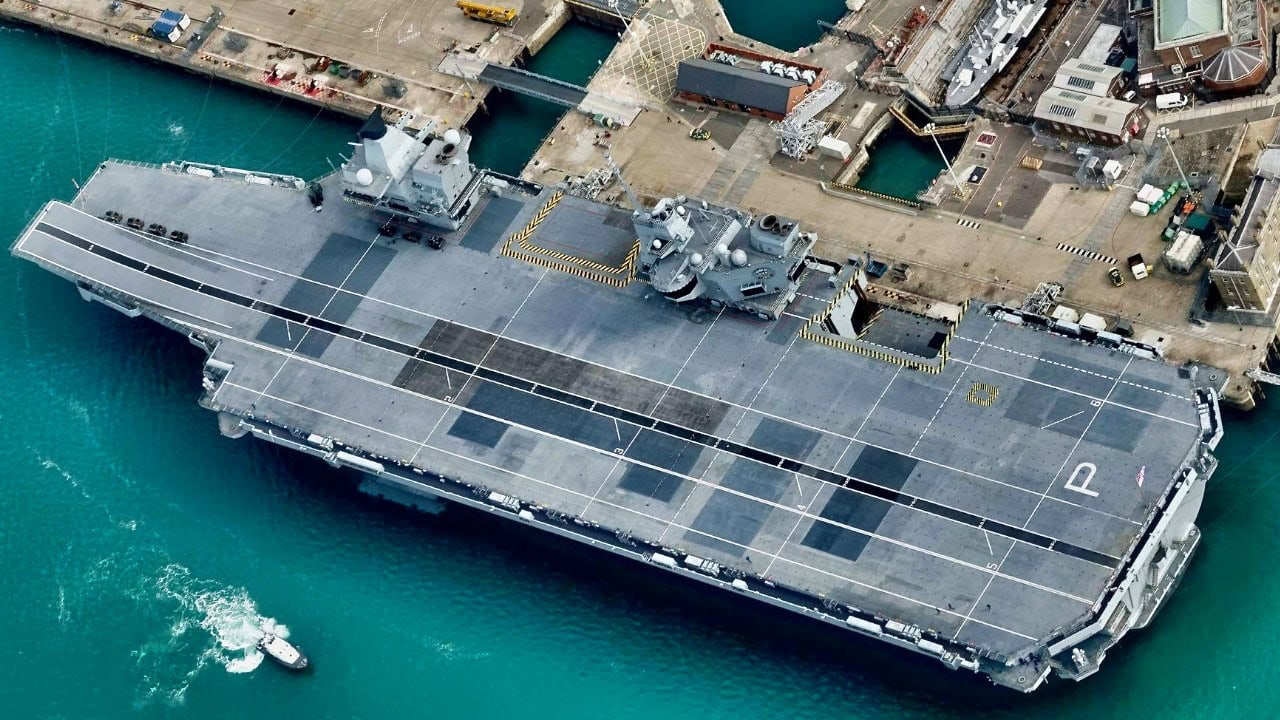
Royal Navy HMS Prince of Wales Aircraft Carrier. Image Credit: Creative Commons.
The French government would prefer intermittent availability in exchange for retaining a top-tier carrier capability. But one carrier alone is insufficient.
On the other hand, the French operate within the broader NATO alliance.
The British and American militaries have carrier capabilities that could, in theory, augment the French carrier’s capabilities.
And the French might assume they don’t have to replicate the American Navy’s need for multiple carriers. They could always operate with an ally.
But NATO is fraying. The Americans are stepping back. And one of the reasons the French are even investing in this capability is the return of nationalism.
Does Size Even Matter Here?
Just how big will the France Libre be?
She’ll displace 78,000 metric tons.
The new carrier will bring around 40 aircraft into battle, including future combat aircraft and unmanned systems. Electromagnetic catapults (EMALS) will launch these planes rather than steam-powered systems.
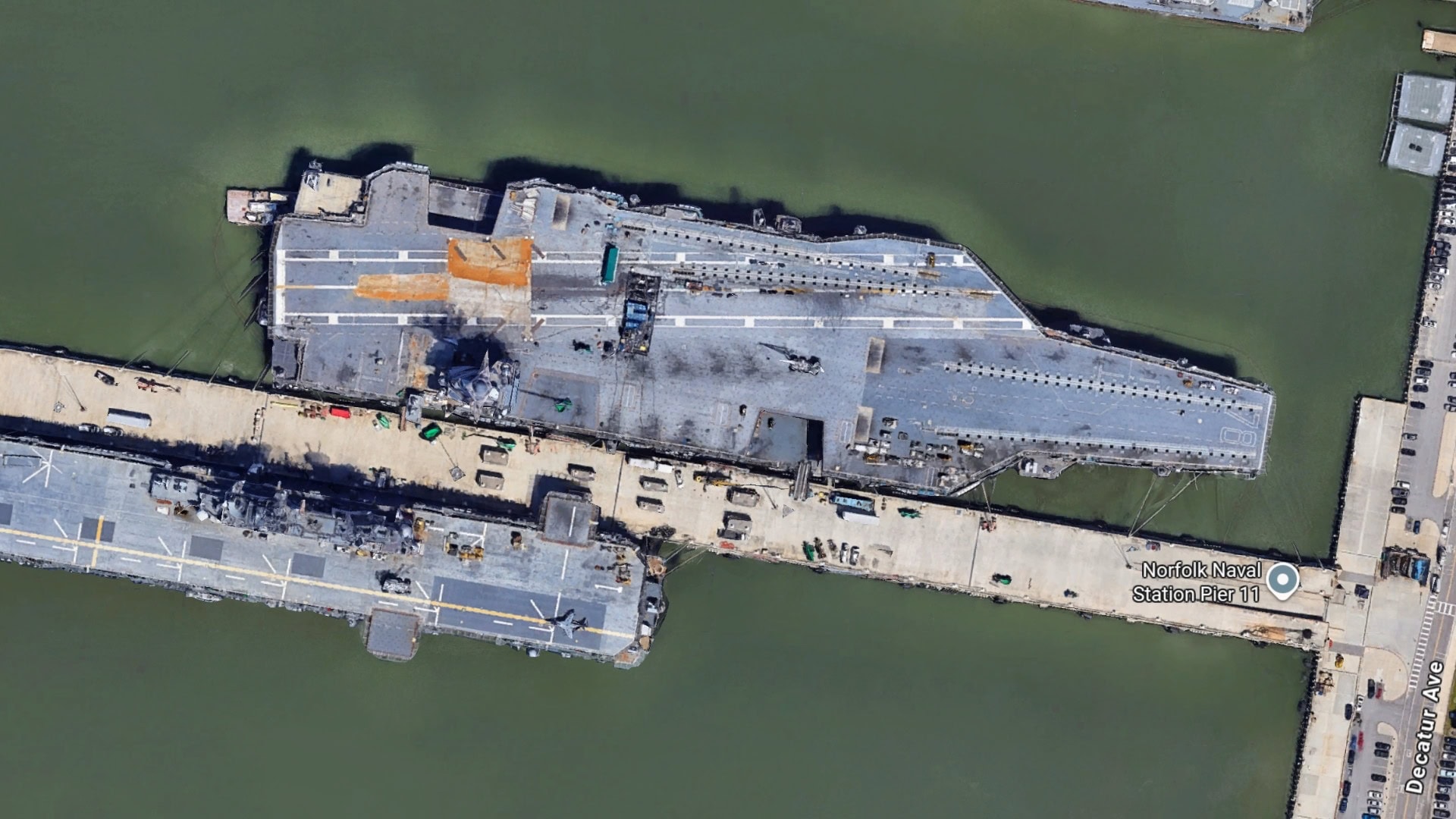
USS Gerald R. Ford Google Maps Photo Screenshot.
In fact, the French EMALS is derived from the EMALS that’s installed on the Gerald R. Ford-class (the same EMALS that has been giving the Americans fits, so much so that the current US president wants to rip the EMALS out of one of the carriers and replace it with the old steam-powered system).
If the French EMALS struggles as much as the American one does, that could be an even costlier issue for an already expensive and strategically ineffective platform.
A Fundamental Weakness
Even as aircraft carriers become increasingly obsolete, one carrier cannot realize the full value of such a massive investment.
Paris is spending vast sums of its tax dollars on a system that will not return on the investment. Sure, France will possess one of the most powerful naval aviation systems outside the United States.
That’s if its EMALS works well and it isn’t sitting in dry dock. That’s a very serious strategic gamble.
About the Author: Brandon J. Weichert
Brandon J. Weichert is the Senior National Security Editor at 19FortyFive.com. He also manages The Weichert Brief on Substack. Weichert also hosts “National Security Talk” on Rumble. He is the author of four bestselling national security books, the most recent of which is A Disaster of Our Own Making: How the West Lost Ukraine (Encounter Books). Follow him via Twitter/X @WeTheBrandon.