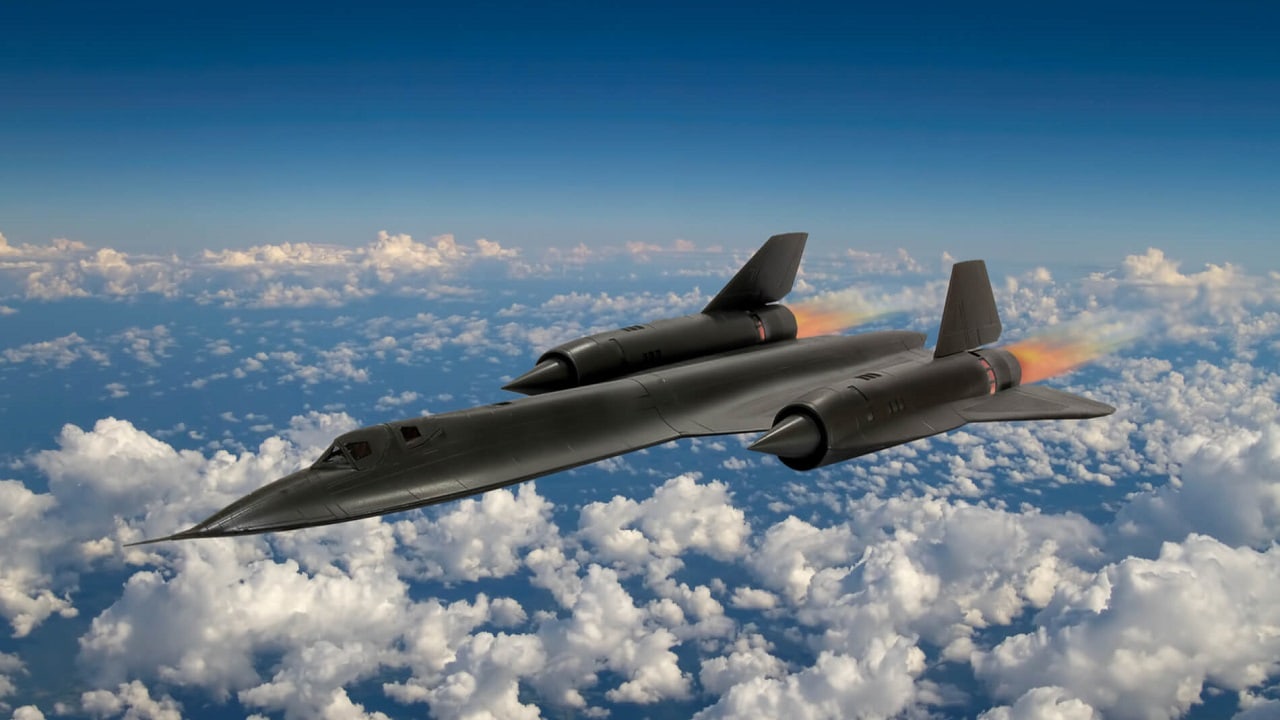
On March 6th, 1990, an SR-71A Blackbird flew its last operational mission — not over hostile territory, but from California to Washington, DC, in a farewell that doubled as a final demonstration of unmatched performance.
Piloted by Lieutenant Colonel Raymond “Ed” Yielding with Lieutenant Colonel Joseph Vida in the rear seat, the aircraft covered 2,299.7 miles from Los Angeles to the capital in 64 minutes and 20 seconds, averaging 2,144.8 miles per hour, or about Mach 3.2 the entire way.
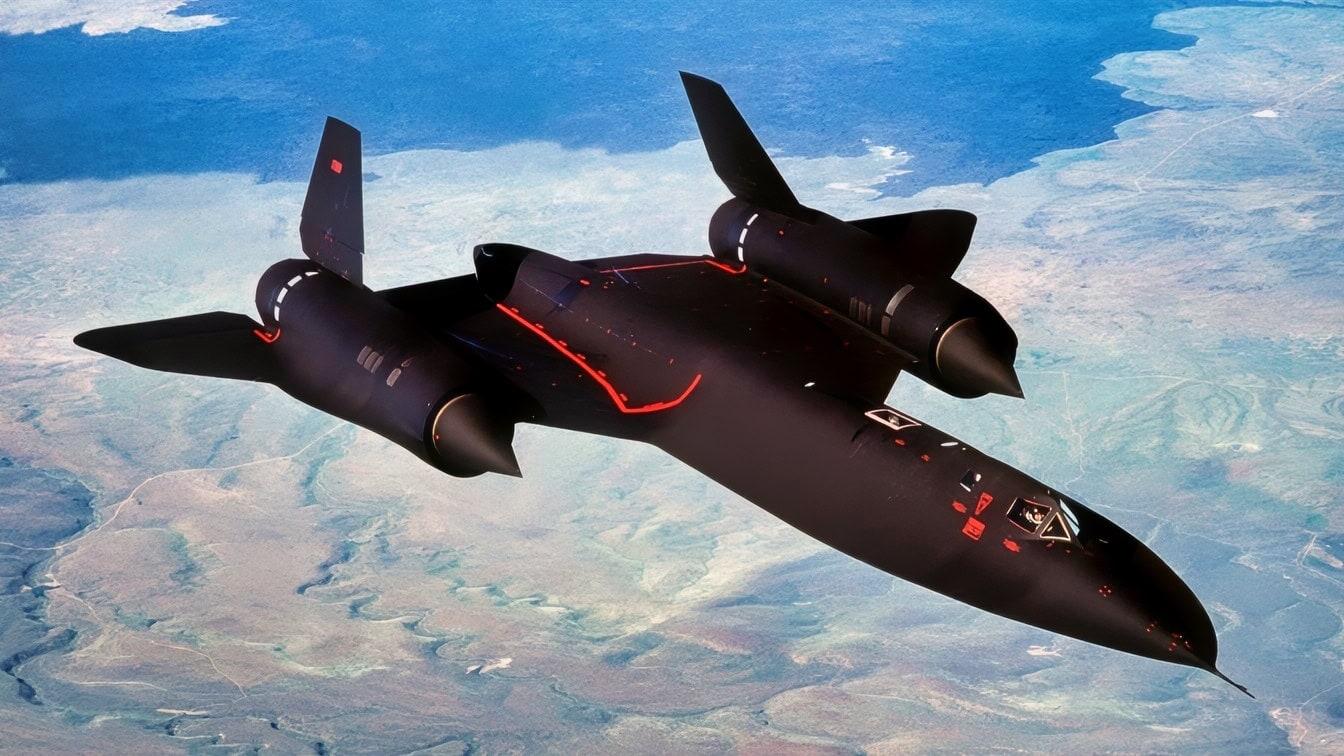
SR-71 Blackbird Creative Commons Photo
The flight established four National Aeronautic Association and three Fédération Aéronautique Internationale speed records, one of which was the coast-to-coast sprint in 67 minutes and 54 seconds.
A Spate of Records for SR-71 Blackbird
The Blackbird’s record book was already hefty before that day. In 1976, it set the two absolute benchmarks that still define crewed, air-breathing flight.
On July 28th, an SR-71 reached 2,193.2 miles per hour, and the same day another SR-71 climbed to an altitude of 85,069 feet.
Those are the records that matter the most: absolute speed and altitude of any conventional aircraft, not merely class- or distance-specific marks.
They endure because nothing else has been built that can cruise higher and faster for sustained periods while remaining under aerodynamic control and carrying a pilot.
Operational performance backs up those stats too. From the mid-1960s through to 1990, SR-71s flew strategic reconnaissance missions from bases including Kadena in Okinawa, Mildenhall in the United Kingdom, and Beale in California, routinely operating above 80,000 feet at speeds in excess of Mach 3.
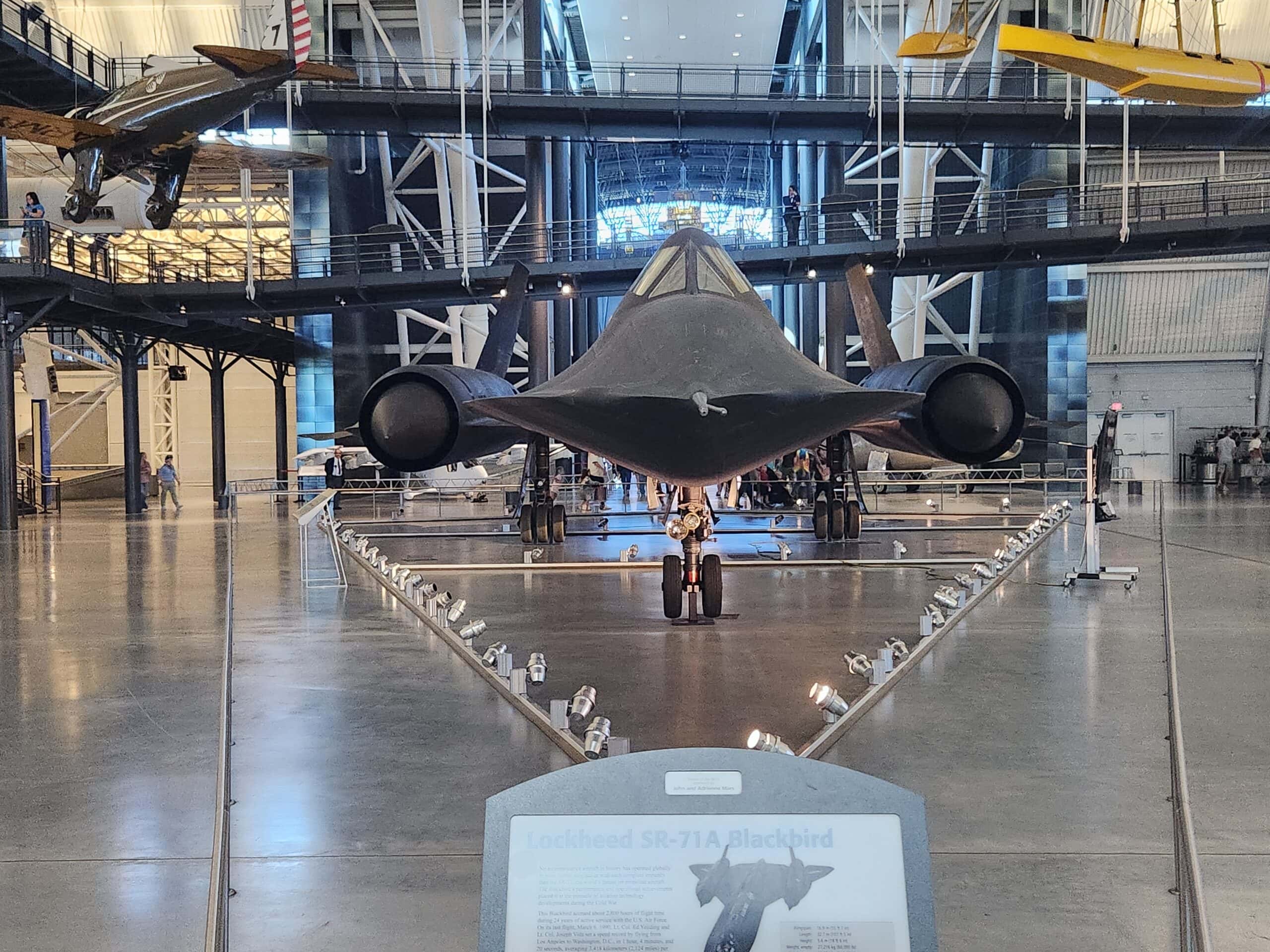
SR-71 Blackbird. 19FortyFive.com original image.
That flight envelope placed the aircraft beyond the reach of most interceptors and surface-to-air missiles of the era.
While Blackbirds did not escape danger entirely, missiles were launched at them in particular over North Vietnam and later in contested conflict zones, but not a single missile managed to land a hit on any Blackbirds. According to the United States Air Force, not a single SR-71 was ever shot down.
Never Shot Down — Ever
Some Blackbird losses did occur, though not due to enemy fire.
Of all the Blackbird aircraft ever built, including several close variants, 12 were lost in accidents and one crew member died, a record that reflects the punishing demands of sustained Mach-3-plus flight more so than vulnerability in combat.
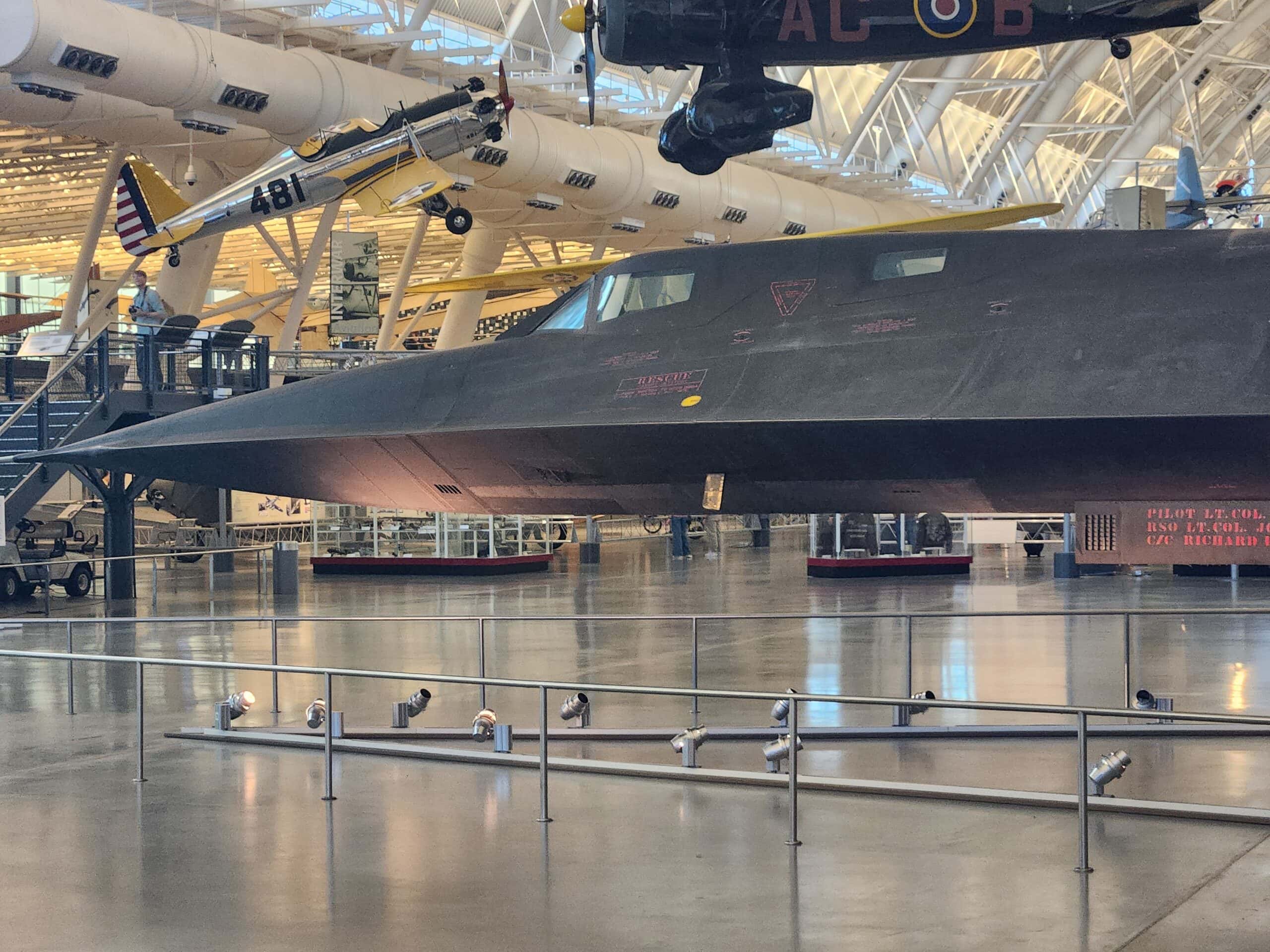
SR-71 Blackbird. 19FortyFive.com Image from the Smithsonian.
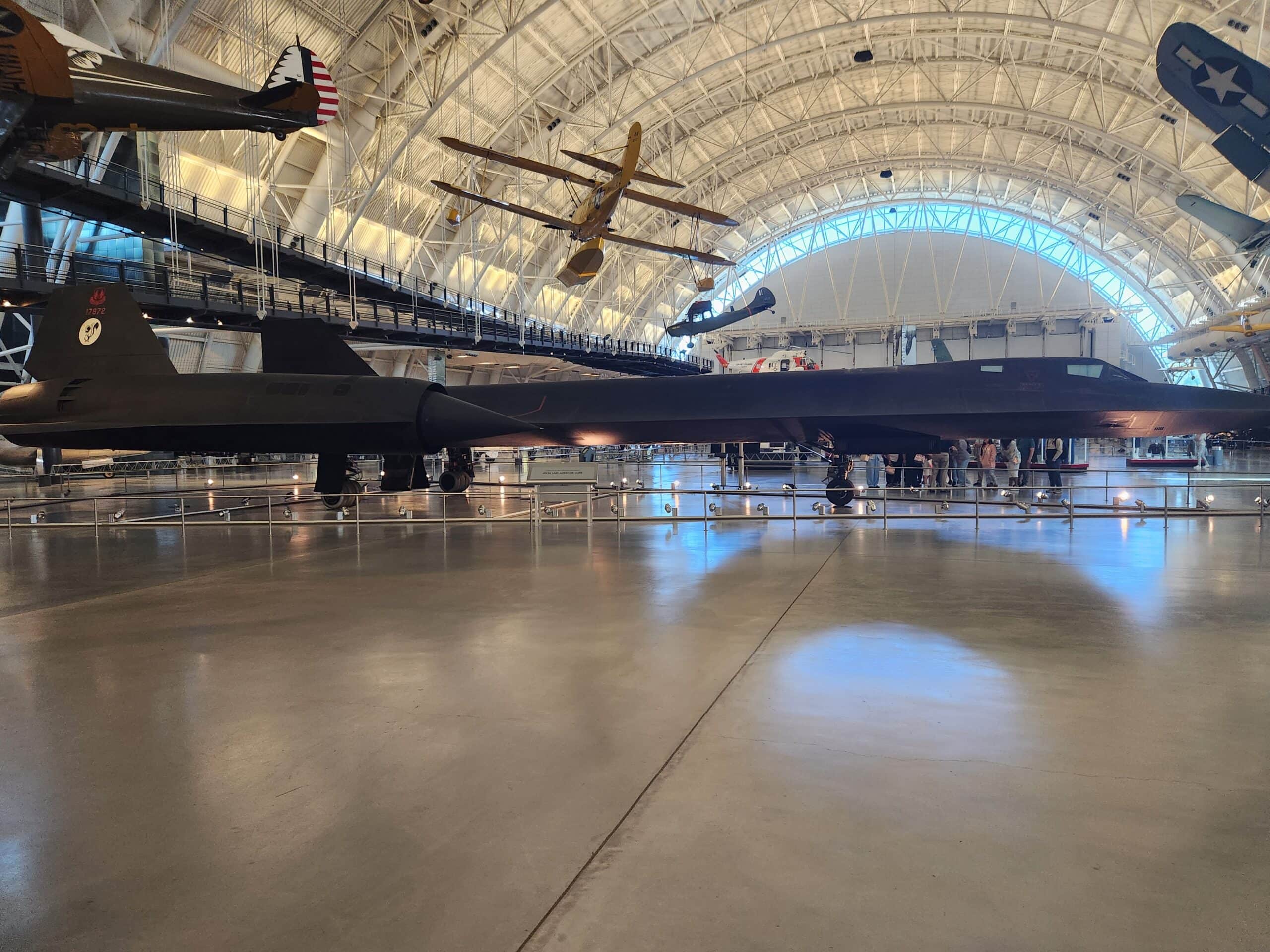
SR-71 Blackbird. 19FortyFive.com Image from the Smithsonian.
Crashes stemmed from factors such as engine upsets, fuel system leaks, and the extremely narrow margins of high-altitude, high-speed operations.
Several accidents occurred during testing or training, perhaps reflective of early teething issues with such a high-performance aircraft.
But in theater, during actual missions, the Blackbird’s combination of altitude, speed, and warning systems let the SR-71 crew outrun threats or alter course before missiles could hit the airplane.
As a result, Blackbird crews likely flew thousands of sorties over highly protected airspace but never once suffered a single combat loss.
The Final Flight and the End of an Era
The Blackbird’s final flight was deliberately symbolic.
With the Cold War on the wane and defense budgets shrinking, the U.S. Air Force ultimately decided to retire the Blackbird fleet in 1990 rather than maintain the small, costly force.
Sending the last Blackbird to the Smithsonian Institution National Air and Space Museum at record speed underscored the point that the Blackbird was still unparalleled at the time of its retirement, not because another, higher-performance aircraft had superseded its capabilities.
Fast forward to today, and the SR-71’s absolute speed and altitude records are a testament to its achievements, most of which were untouchable for five decades. The 1990 transcontinental flight record is intact too.
A New Blackbird?
There may, however, be a follow-up to the SR-71 quietly being prepared in the shadows.
Rumors of an SR-71 successor aircraft exist, and it is not difficult to see why.
A manned, Mach 3-plus reconnaissance platform would plug a gap created by the SR-71’s retirement.
Still, it is hard to separate fact from fiction, and credible evidence supporting a Blackbird successor aircraft is sparse at best.
The United States Air Force has denied operating a so-called SR-72 or any other hypersonic spy plane, Blackbird-derivative aircraft.
What definitely exists are classified unmanned experiments and hypersonic test vehicles, but these are fundamentally different from strategic long-range crewed aircraft.
And until verifiable data emerges, such as serial numbers, base assignments, or official acknowledgments, the idea of a secret SR-71 follow-on is more the stuff of myth than of fact.
Still, as a topic of legend, the idea of a Blackbird 2.0 is enticing — but its veracity remains to be seen.
About the Author: Caleb Larson
Caleb Larson is an American multiformat journalist based in Berlin, Germany. His work covers the intersection of conflict and society, with a focus on American foreign policy and European security. He has reported from Germany, Russia, and the United States. Most recently, he covered the war in Ukraine, reporting extensively on the war’s shifting battle lines from Donbas and writing on the war’s civilian and humanitarian toll. Previously, he worked as a Defense Reporter for POLITICO Europe. You can follow his latest work on X.