
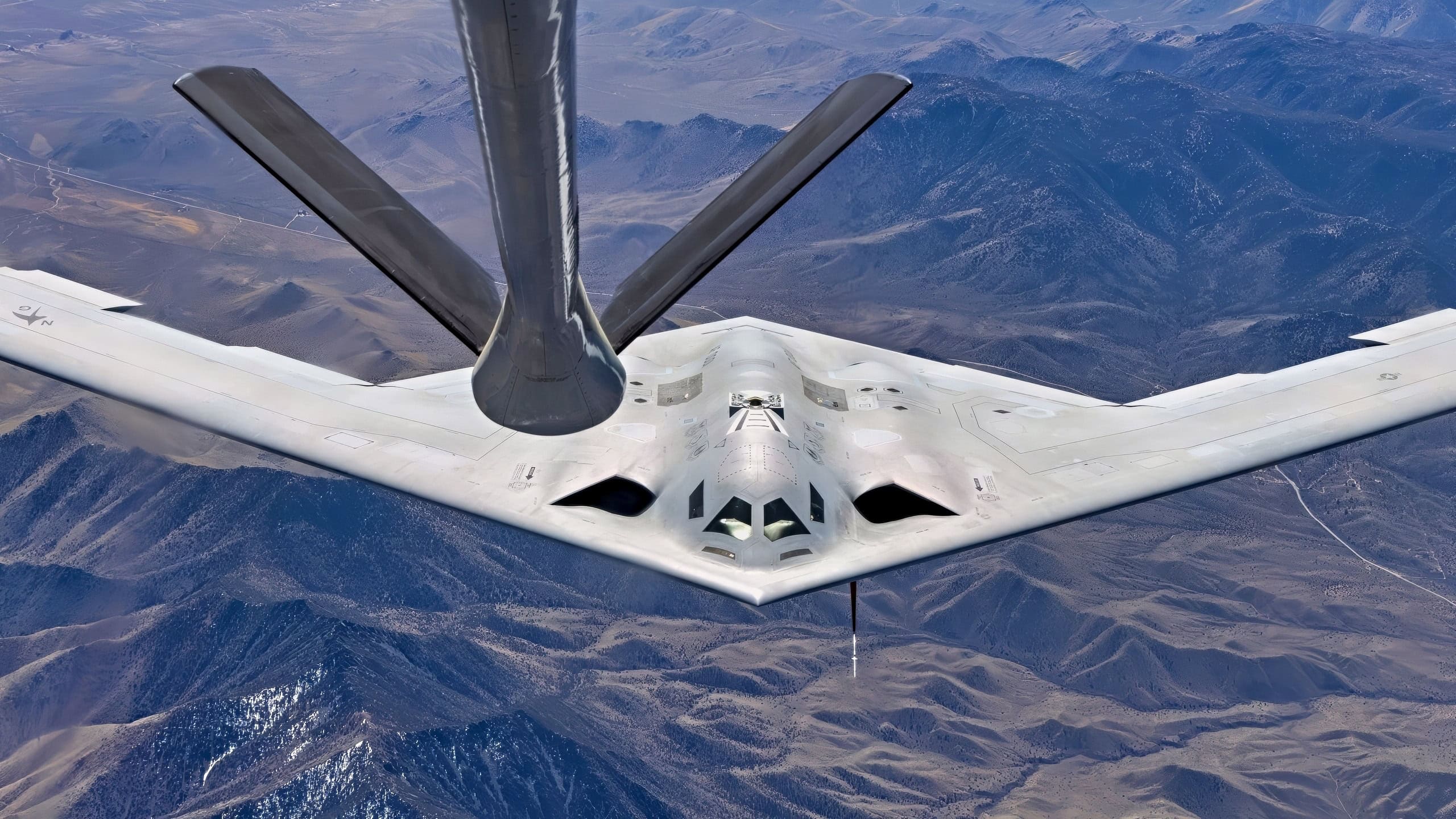
19 B-2 Spirit Stealth Bombers Carried the Hardest Missions of 2 Wars. The Next War Can’t Make Do With 19. – The B-2 Spirit has spent the past fifteen months writing the most consequential combat record of the stealth age, and it has done so with a fleet of nineteen airplanes. Between the June 2025 strike on Iran’s nuclear complex and the bombing campaigns of the 2026 war, the flying wing from Missouri has proven that it can reach the hardest targets on earth, and the same operations have exposed, in plain arithmetic, how few of these aircraft America owns.
Here is what we know about the B-2 against Iran, at least in the public record I could find, through today, and what the record argues about the bomber force the United States needs next.
I have also sprinkled pictures I took of the B-2 bomber last year at the National Museum of the US Air Force into this article to show the size and power of this amazing aircraft. I was literally standing within inches of the B-2.

B-2 Spirit Stealth Bomber 19FortyFive Image. Taken By Harry J. Kazianis at U.S. Air Force Museum in 2025.
Midnight Hammer and the B-2
The defining mission came on the night of June 21-22, 2025.
Israel’s air campaign had spent twelve days dismantling Iranian air defenses and missile production, but lacked the one weapon the deepest targets demanded, and Washington supplied it.
Seven B-2s of the 509th Bomb Wing launched from Whiteman Air Force Base on Operation Midnight Hammer, each carrying two 30,000-pound GBU-57 Massive Ordnance Penetrators, flying an outbound leg of roughly 18 hours with multiple aerial refuelings while a separate B-2 flight headed toward Guam as a deliberate decoy that pulled the world’s attention the wrong way.
Over Iran, six bombers put twelve MOPs into the mountain enrichment complex at Fordow while the seventh delivered two more against Natanz, all fourteen released inside a roughly 25-minute window, the first combat employment of the weapon and the longest B-2 mission since 2001; a Navy submarine launched about 30 Tomahawks against Isfahan, and the total package ran to some 125 aircraft and more than 75 precision weapons.
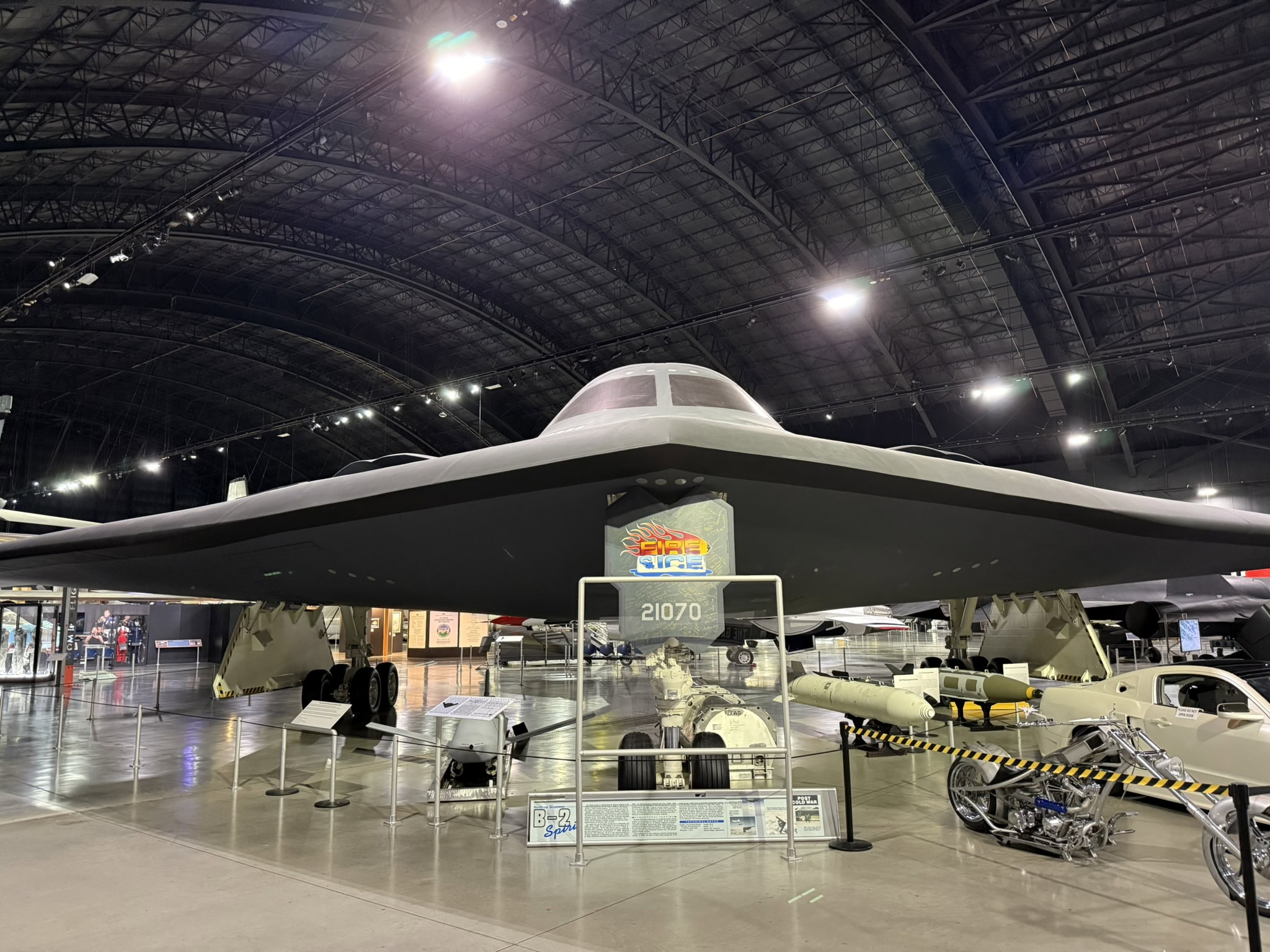
B-2 Spirit Stealth Bomber. 19FortyFive.com Photo from National Museum of the U.S. Air Force Visit in 2025.
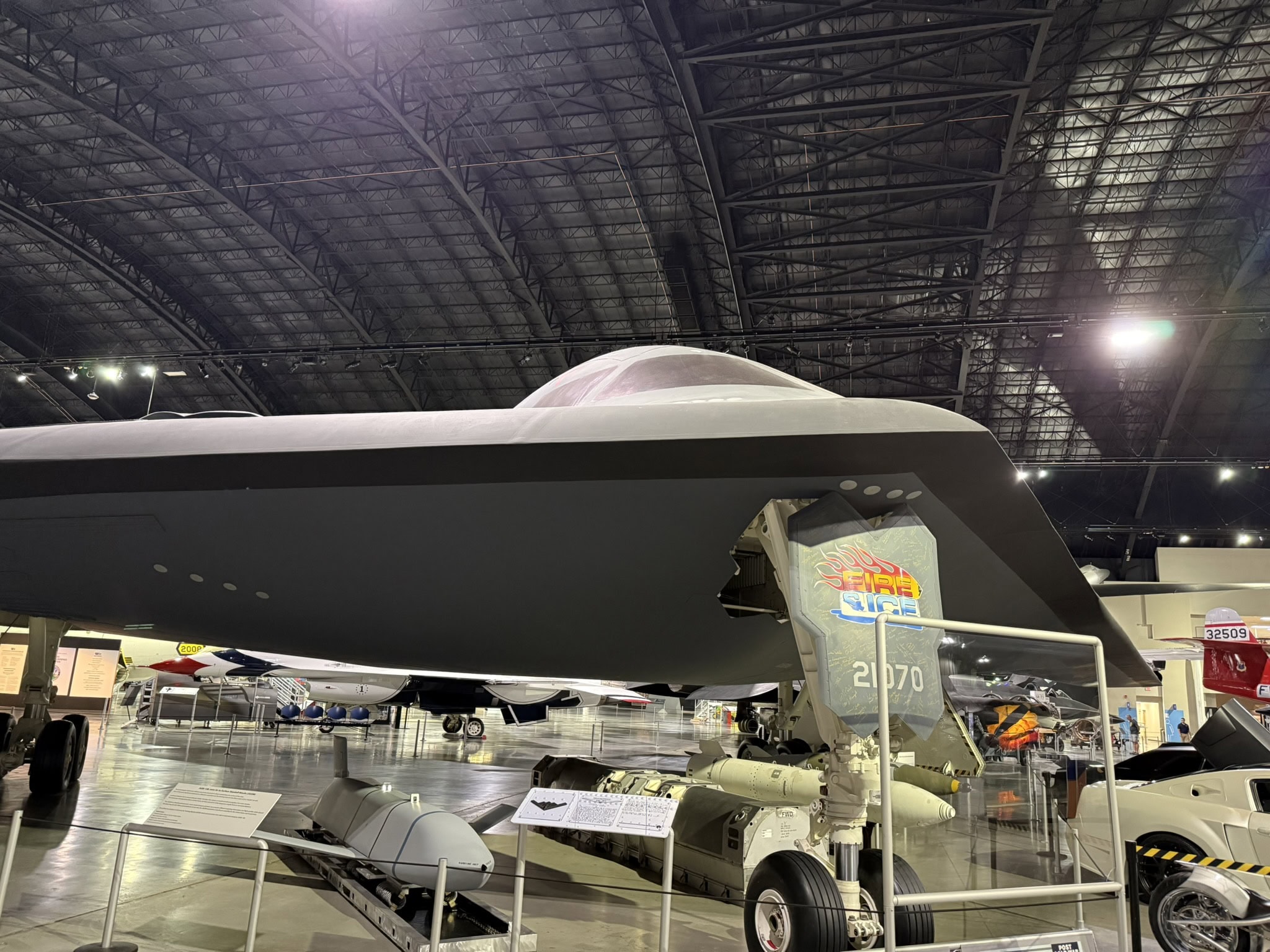
B-2 Spirit Stealth Bomber. 19FortyFive.com Photo from National Museum of the U.S. Air Force Visit in 2025.
Fighter escorts fired roughly 30 munitions at Iranian air defenses on the way in; whether those defenses were already blinded, could not find the stealth jets, or simply held fire is unknown, but no Iranian system engaged the bombers, and every aircraft came home without a scratch.
Air Force accounts later revealed the operation’s hidden depth: the targeting rested on more than 15 years of intelligence work against Fordow, and the crews’ own families learned of the mission only as the world did.
Chairman of the Joint Chiefs General Dan Caine called the delivery the product of daily rehearsal, and the seven bombers that flew it represented, by the Air Force’s own arithmetic, more than a third of the entire B-2 fleet.
What the Bombs Did
The damage question produced competing answers that remain unreconciled.
Caine told reporters that initial assessments showed all three sites sustained extremely severe damage, while cautioning that the joint force does not conduct battle damage assessments by design and that final judgments would take time.
The administration assessed the strikes had set Iran’s nuclear program back by roughly two years; a leaked Defense Intelligence Agency report suggested a setback of only months; the International Atomic Energy Agency confirmed enormous damage at the sites.
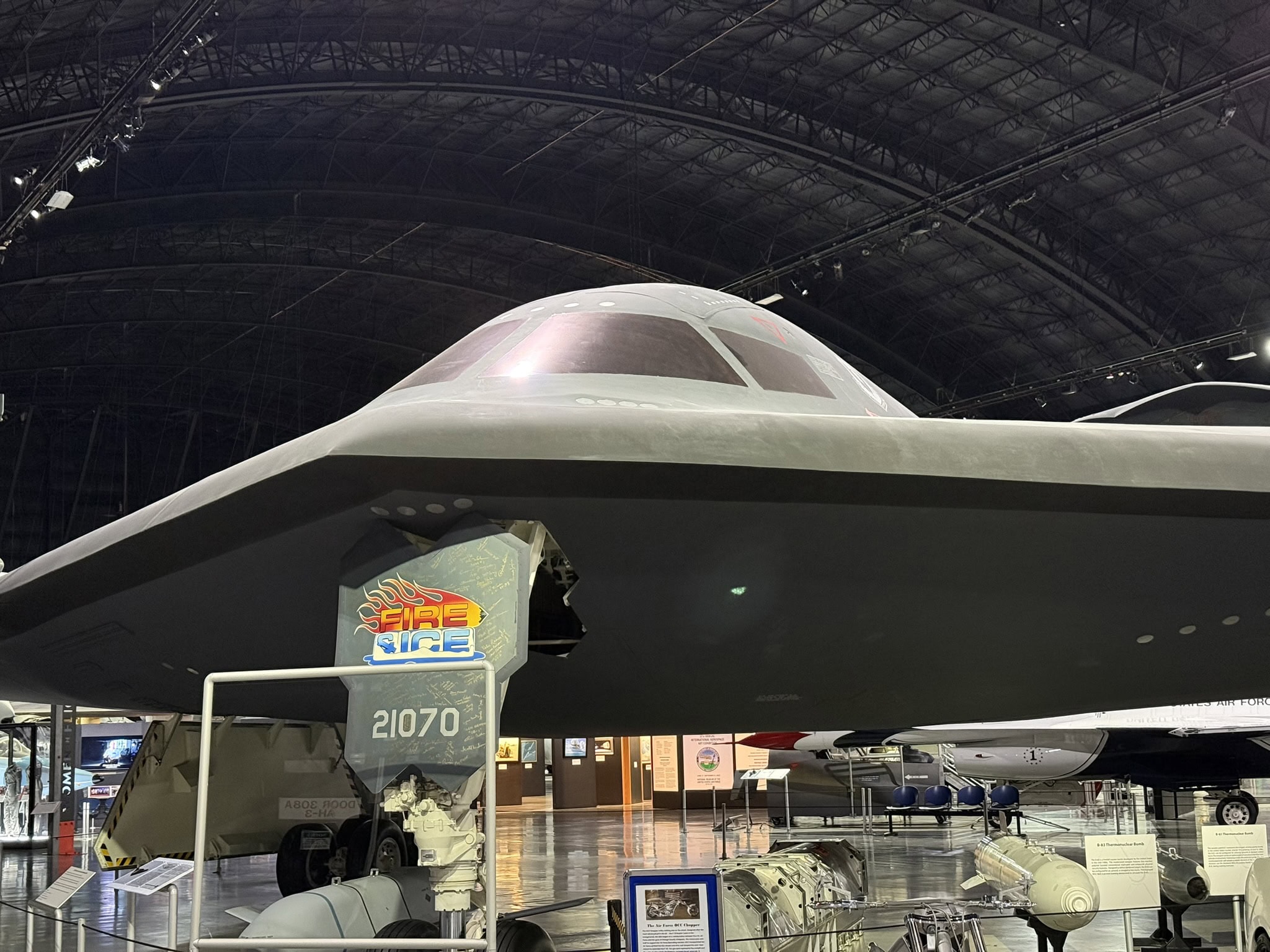
B-2 Spirit Stealth Bomber. 19FortyFive.com Photo from National Museum of the U.S. Air Force Visit in 2025.
The open questions Caine himself flagged, whether Iran moved enriched uranium before the strike and whether undisclosed sites exist, have never been publicly closed.
What no assessment disputed was the operational fact underneath: the B-2 had flown into the airspace of a prepared adversary, delivered the heaviest conventional weapons in the American arsenal against targets buried in a mountain, and departed untouched.
The 2026 War
The second chapter opened this year.
On February 28, 2026, the United States and Israel launched the broad campaign against Iranian infrastructure that began the current war, and on March 1 Central Command confirmed that B-2s flying from Whiteman had struck hardened Iranian ballistic missile facilities, four bombers delivering GBU-31 2,000-pound weapons against underground missile sites in a mission the command dubbed Operation Epic Fury, coverage this publication carried as it happened.
The March strikes marked a shift in the bomber’s employment: where Midnight Hammer was a single maximum-effort blow with the biggest bombs made, the 2026 missions used the B-2 as a repeating instrument against Iran’s missile complex, the world’s only operational stealth bomber flying combat as part of a campaign that has run to hundreds of strikes, with further B-2 attacks on Iranian military targets reported into May.
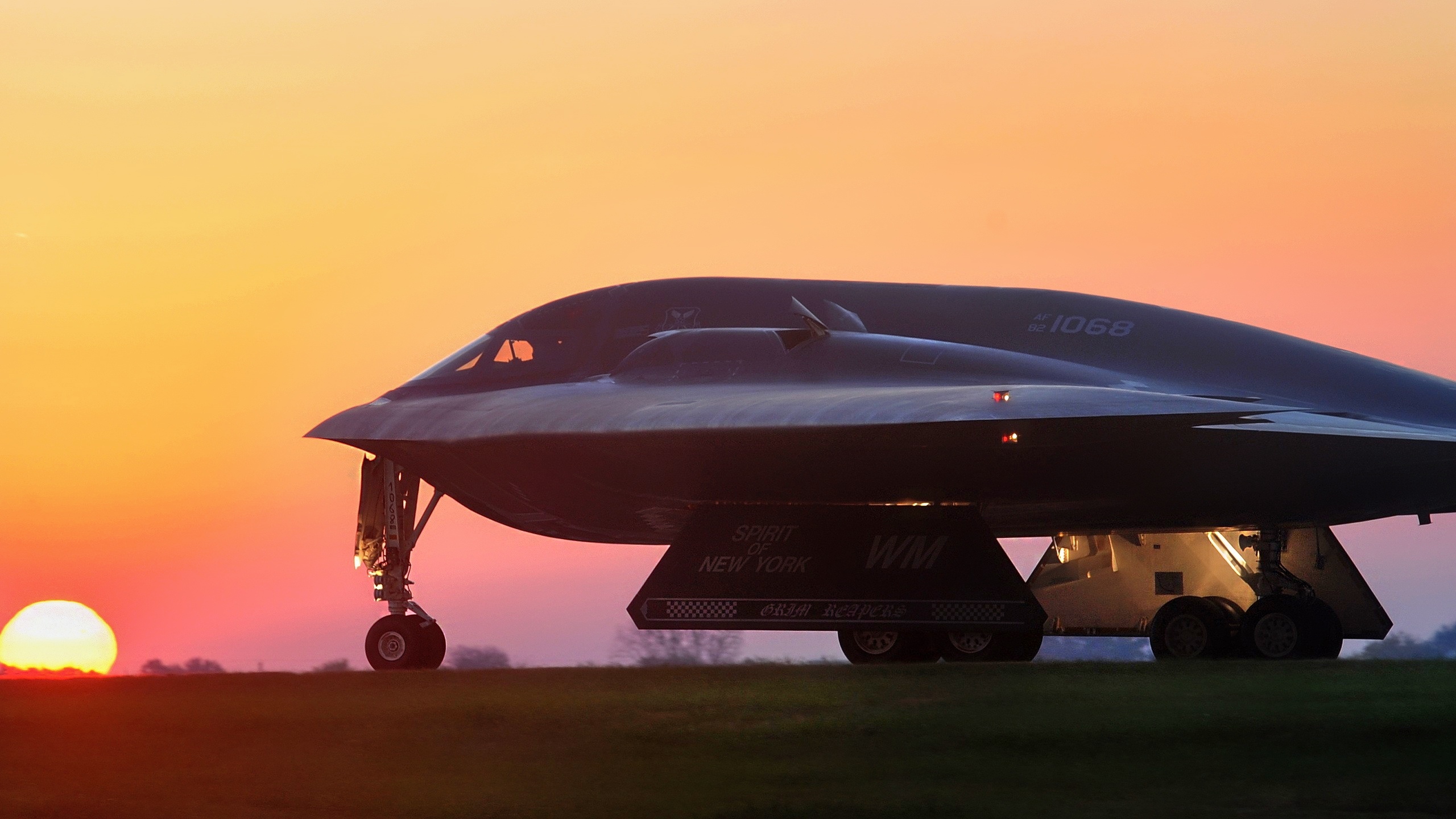
B-2 Bomber. Image Credit: Creative Commons.
The bomber’s software-driven modernization, which this publication has described as making the Spirit an almost entirely new aircraft, is what made that tempo possible, integrating new weapons and communications into a 1980s airframe through a dedicated software pipeline.
The B-2’s 2026 record stands, at least according to what information we have, as follows: repeated penetrations of defended airspace, no losses, and a target set — deeply buried missile cities — that no other aircraft in the world could hold at risk.
Nineteen Airplanes and the Case for a Big B-21 Raider Bomber Fleet
America built 21 B-2s, lost one to a crash in 2008, wrote off another after a 2022 accident, and today operates nineteen.
Midnight Hammer required seven of them, more than a third of everything that exists, for a single night against a regional power whose air defenses had already been degraded, and sustaining the 2026 campaign has meant cycling a handful of airframes through repeated combat missions with no reserve depth behind them. Against Iran, nineteen was enough.
Against China or Russia, it is not close.
A Pacific war would demand penetrating strikes across thousands of miles against defenses far denser than Iran’s, sustained for months rather than nights, while part of the fleet stood nuclear alert and part sat in the deep maintenance the stealth coatings demand; the same third-of-the-fleet math that put seven bombers over Fordow would leave a China contingency with single-digit stealth bombers available on any given day.
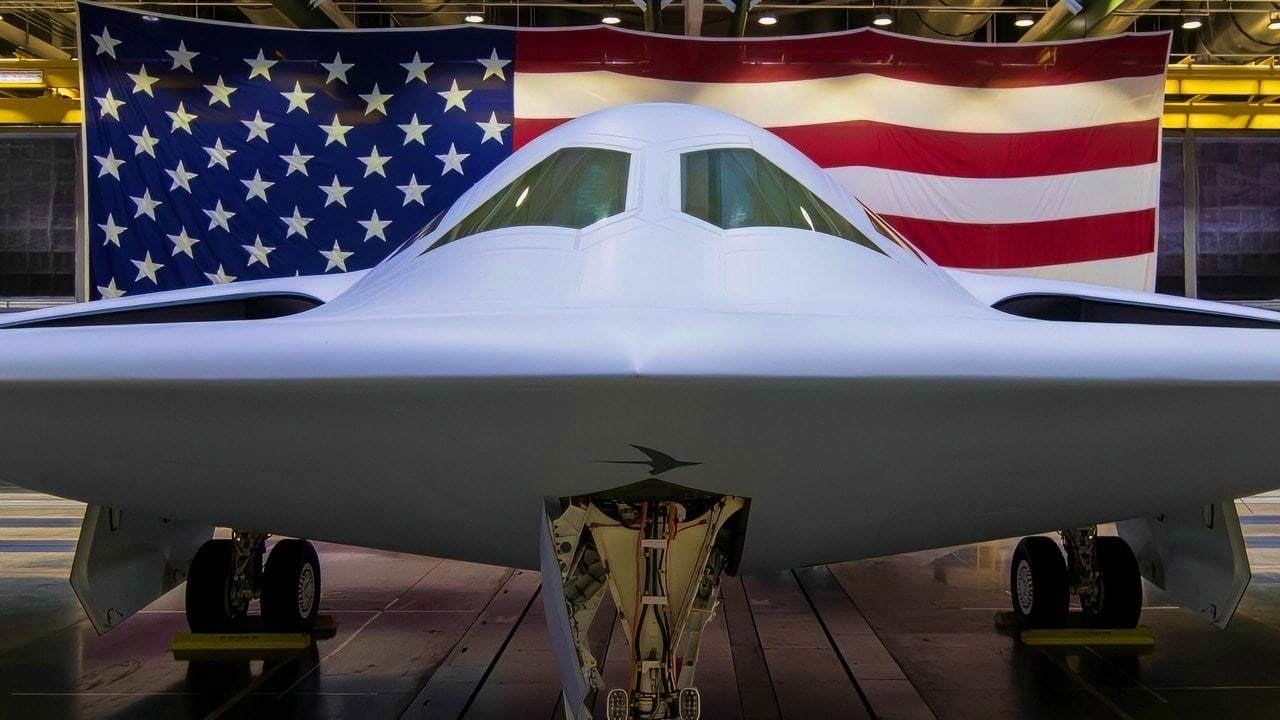
The B-21 Raider was unveiled to the public at a ceremony December 2, 2022 in
Palmdale, Calif. Designed to operate in tomorrow’s high-end threat environment, the B-21 will play a critical role in ensuring America’s enduring airpower capability. (U.S. Air Force photo)
That is the case for the B-21 Raider, and the Iran record has made it better than any briefing could.
The Raider, flying since 2023 and now in production at Palmdale, is planned at a minimum of 100 aircraft, and this publication has reported the push to surge production and buy beyond that floor, a number that would give the Air Force, for the first time since the Cold War, a penetrating bomber force sized for a great-power fight rather than a raid.
The B-2 has spent 2025 and 2026 demonstrating what a stealth bomber is worth, holding any target on earth at risk and coming home every time, and demonstrating it with a fleet so small that its own designed-in limits cannot be fixed, only replaced.
Nineteen airplanes carried the hardest missions of two wars.
The lesson of both is that the next war cannot be asked to make do with nineteen.
About the Author: Harry J. Kazianis
Harry J. Kazianis (@Grecianformula) was the former Senior Director of National Security Affairs at the Center for the National Interest (CFTNI), a foreign policy think tank founded by Richard Nixon based in Washington, DC. Harry has over a decade of experience in think tanks and national security publishing. His ideas have been published in the NY Times, The Washington Post, The Wall Street Journal, CNN, and many other outlets. He has held positions at CSIS, the Heritage Foundation, the University of Nottingham, and several other institutions related to national security research and studies. He is the former Executive Editor of the National Interest and the Diplomat. He holds a Master’s degree focusing on international affairs from Harvard University.

