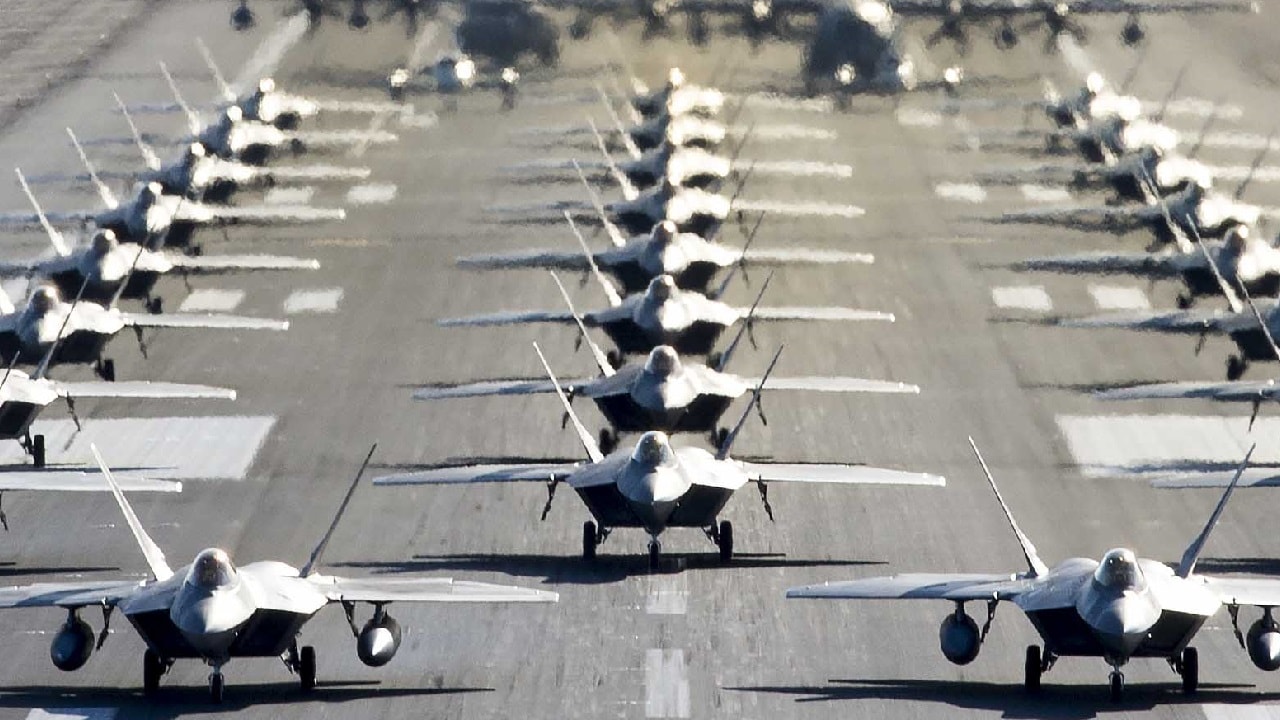
Summary and Key Points: The F-22 Raptor was built to kill an enemy fighter before that fighter knew it was there, at roughly $143,000,000 per aircraft. At the Advanced Tactical Leadership Course at Al Dhafra Air Base in November 2009, the exercise deliberately removed that advantage, forcing the Raptor into close-range engagements. Cockpit footage released years later shows a French Rafale — a fourth-generation fighter costing around 64,000,000 euros — moving into a firing position behind one and taking a simulated shot.
The US Air Force F-22 Raptor Can Be Beaten
America’s F-22 Raptor is one of the most advanced warplanes in the world.
A fifth-generation air superiority fighter with advanced stealth and maneuvering capabilities, this plane was meant to strike an enemy fighter before it even knew the F-22 was there.
But during a multinational exercise in the United Arab Emirates (UAE) in November 2009, a French Dassault Rafale managed something that few fighters could ever claim: the French warplane, of an older generation no less, successfully targeted the F-22 during close-range combat.
The Exercise F-22 vs. Dassault Rafale
The encounter occurred during the Advanced Tactical Leadership Course (ATLC) 2009, at Al Dhafra Air Base in the UAE,
F-22s belonging to the US Air Force’s First Fighter Wing at Langley Air Force Base, Virginia, were deployed to the UAE. There, these planes flew alongside French Rafales, British Eurofighter Typhoons, and other aircraft.
French Rafales reportedly conducted six one-on-one engagements within visual range against the F-22s.
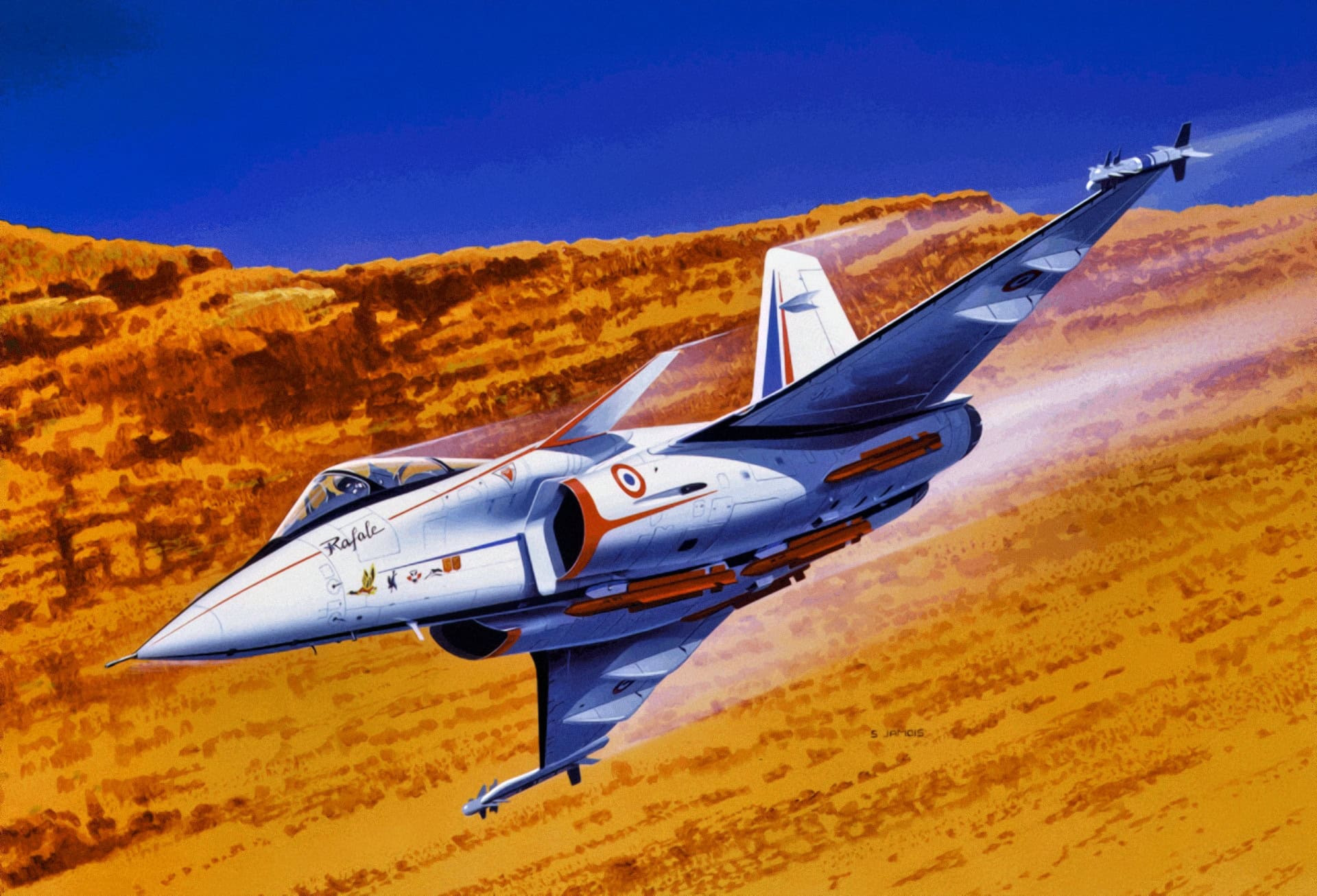
Dassault Rafale Artist Image. Image Credit: Creative Commons.
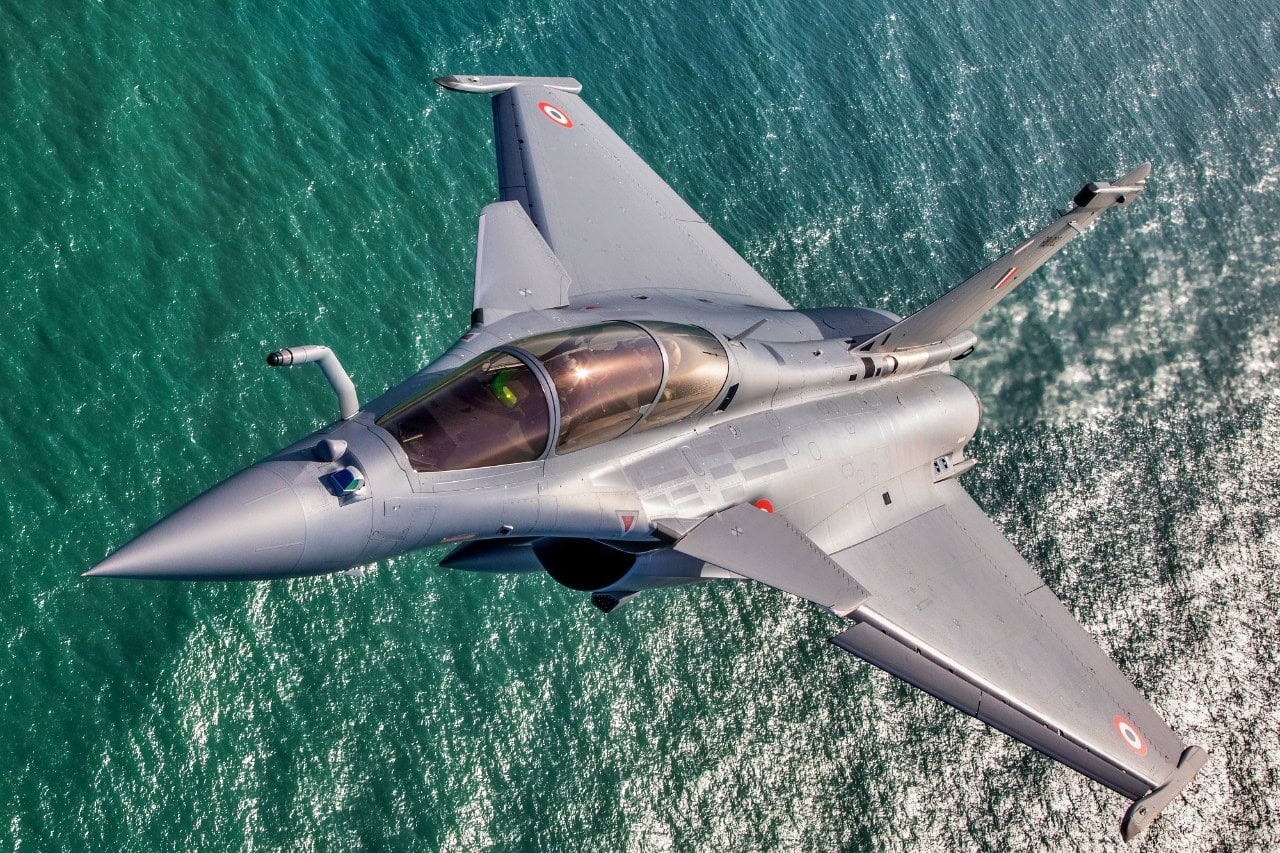
Dassault Rafale. Image Credit: Creative Commons.
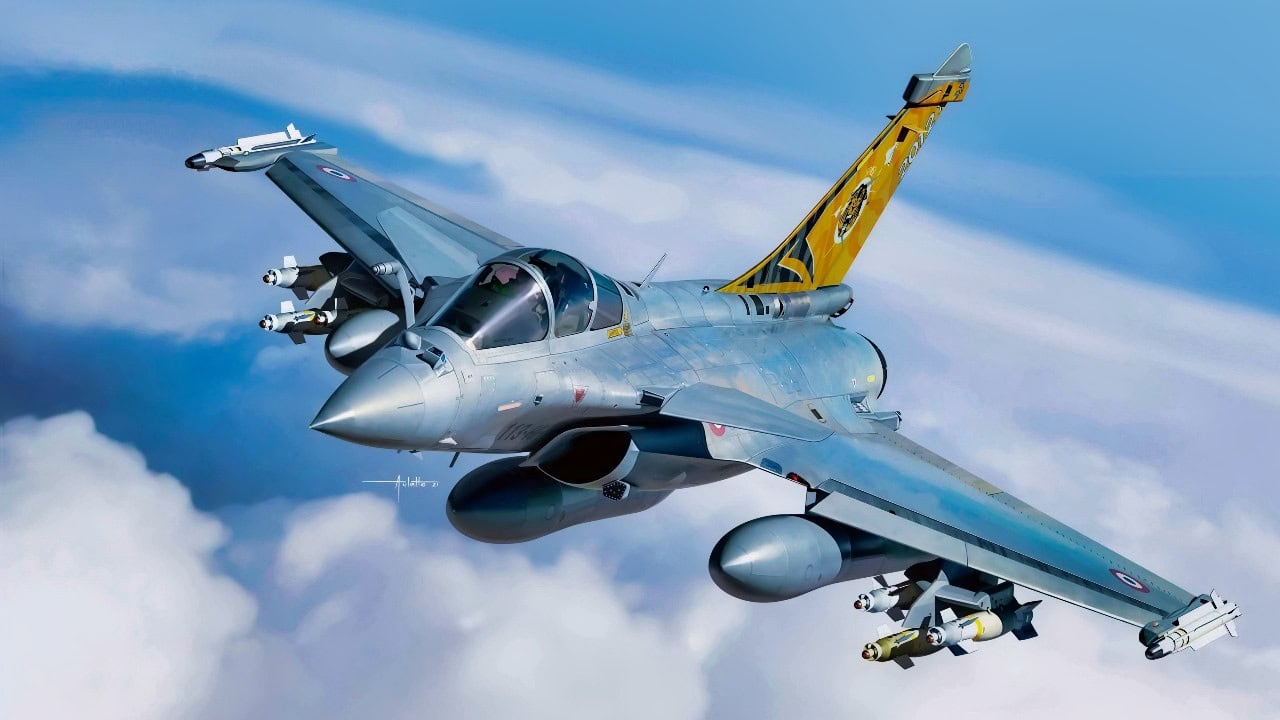
Dassault Rafale. Image Credit: Creative Commons.
It is believed that the French lost one of those engagements, with five others ending in draws.
Many years later, however, cockpit footage emerged showing a French Rafale moving behind an F-22 and acquiring a firing solution.
The Rafale conducted the simulated attack with an infrared-guided MICA missile.
The F-22’s main advantage is its ability to find and attack an enemy from beyond visual range (BVR) all while being shrouded by advanced stealth.
During the ATLC exercise, though, the military wanted to test the F-22’s close-range combat. Once the two fighters were within visual range, aerodynamics, energy management, and pilot skill became key to the engagement.
This became a 9G battle.
The Systems
Dassault claims its iconic Rafale has a maximum load factor of more than 9G and as low as 3.2G.
Its maximum speed is listed at Mach 1.8, and the plane has a service ceiling of 50,000 feet.
A Rafale’s maximum takeoff weight is 54,000 pounds.
Two Snecma M88 engines provide 7.5 metric tons of maximum thrust each. The fighter carries up to 10,300 pounds (4.7 metric tons) of internal fuel.
The F-22 is larger.
The Raptor measures 62 feet (compared to the Rafale’s 50-foot length).
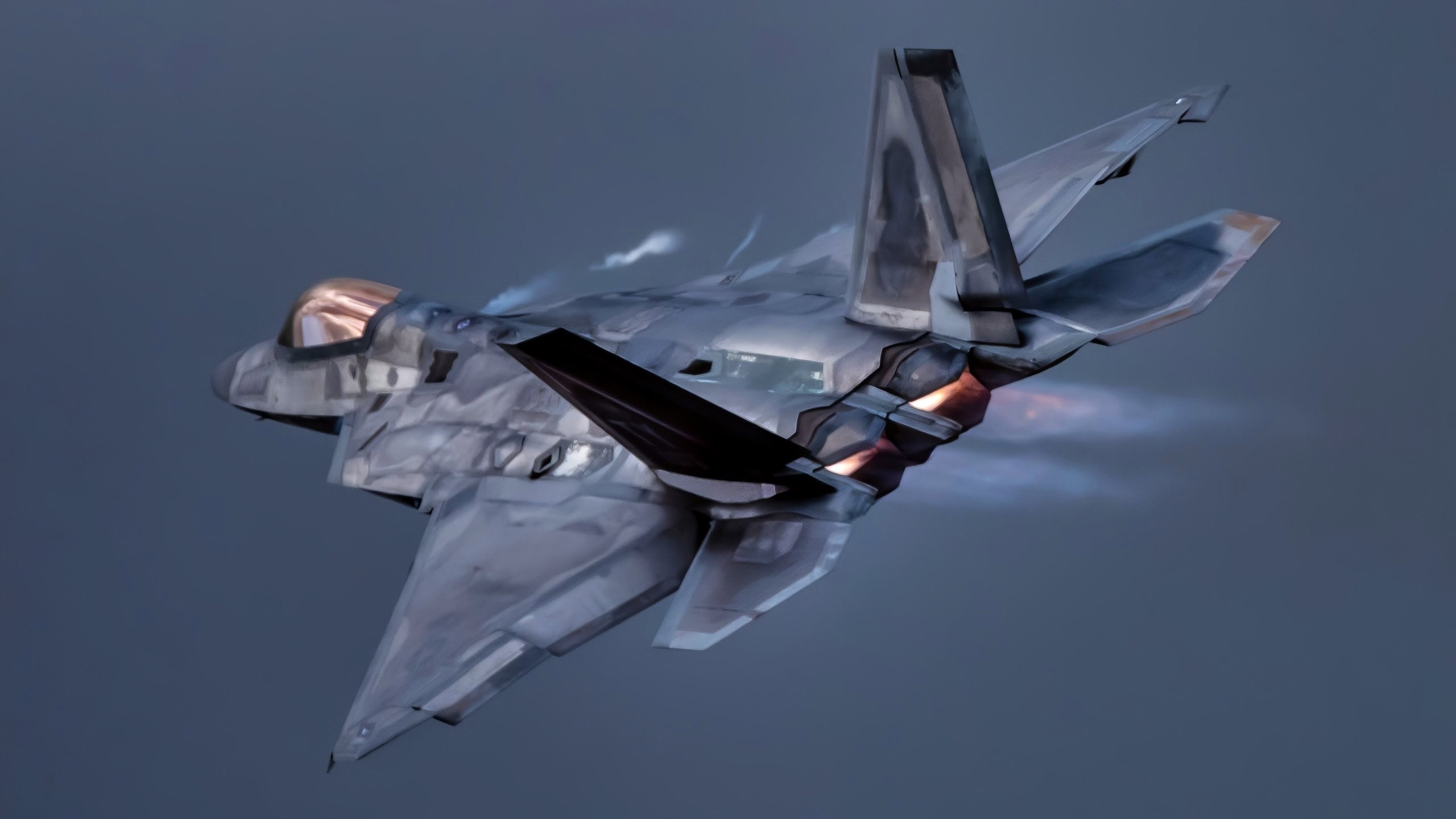
U.S. Air Force Maj. Josh Gunderson, F-22 Raptor Demonstration Team commander and pilot, flies a practice demo at Joint Base Langley-Eustis, Va., Dec. 6, 2019. Representing Air Combat Command, the F-22 Demo Team travels to air shows all across the world showcase the performance and capabilities of the world’s premier 5th-generation fighter. (U.S. Air Force photo by 2nd Lt. Sam Eckholm)
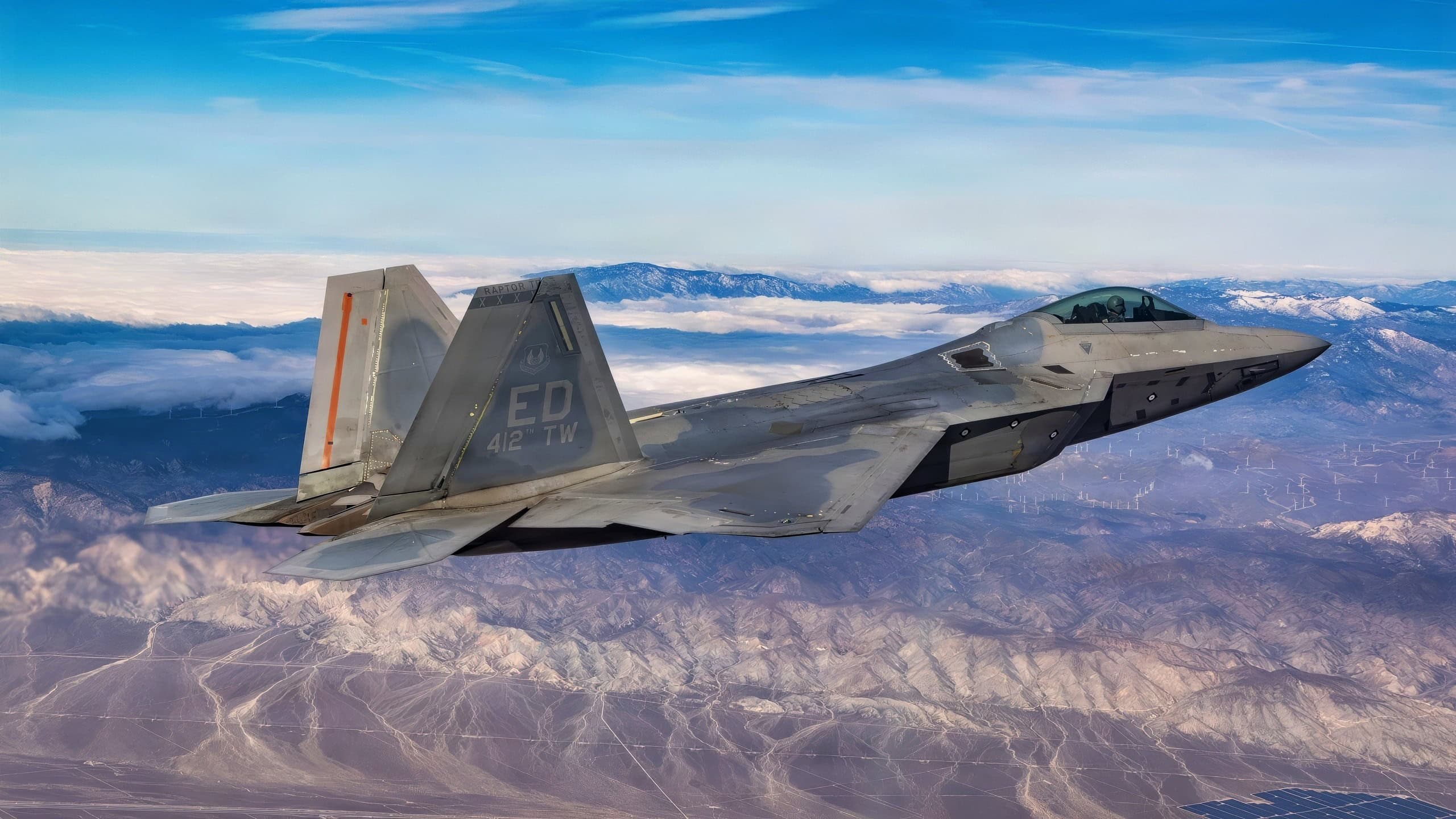
An F-22 Raptor assigned to the 411th Flight Test Squadron, Air Dominance Combined Test Force, soars over the Mojave Desert ahead of conducting high angle-of-attack maneuvers on Feb. 26, 2026. High AoA is a highly specialized set of combat aircraft maneuvers that are performed by experienced pilots and test pilots. Edwards AFB is one of the few places in North America where aviators can learn and become certified in this unique state of flying. (Courtesy photo)
The Raptor’s maximum takeoff weight exceeds 83,000 pounds.
Two Pratt & Whitney F119 engines, each generating 35,000 pounds of thrust, power the plane.
The F-22 also incorporates two-dimensional vectoring nozzles (key for close-in engagements and maneuvering).
An F-22 can exceed Mach 2 and supercruise above Mach 1.5 without an afterburner. Raptors carry 18,000 pounds of internal fuel and have a ferry range of 1,850 miles with two external tanks.
It, too, operates above 50,000 feet.
The F-22 carries an arsenal consisting of six AIM-120 AMRAAMs, two AIM-9 Sidewinders, and a 20mm M61A2 cannon (carrying up to 480 rounds).
France’s Rafale project was projected to cost Paris around 39.6 euros at the time of the 2009 encounter with the US F-22s.
France had already reduced its planned fleet from 294 to 286 planes. French lawmakers at that time estimated that the aircraft’s overall production cost–excluding development costs–was 64 million euros per plane (depending on which version, it could go as high as 70 million euros).
The F-22 was light-years beyond that in terms of relative cost.
When the Americans launched the Advanced Tactical Fighter (ATF) program in 1986,
development was supposed to take just nine years and cost only $12.6 billion.
It took 19 years and saw a painful 109 percent increase over the original estimate (for taxpayers).
One reason the F-22 never reached full maturity was that the cost and production delays were so severe that Washington capped production at 187 units.
The F-22 costs $143 million per plane, and the Air Force currently has 183 usable airframes in its inventory.
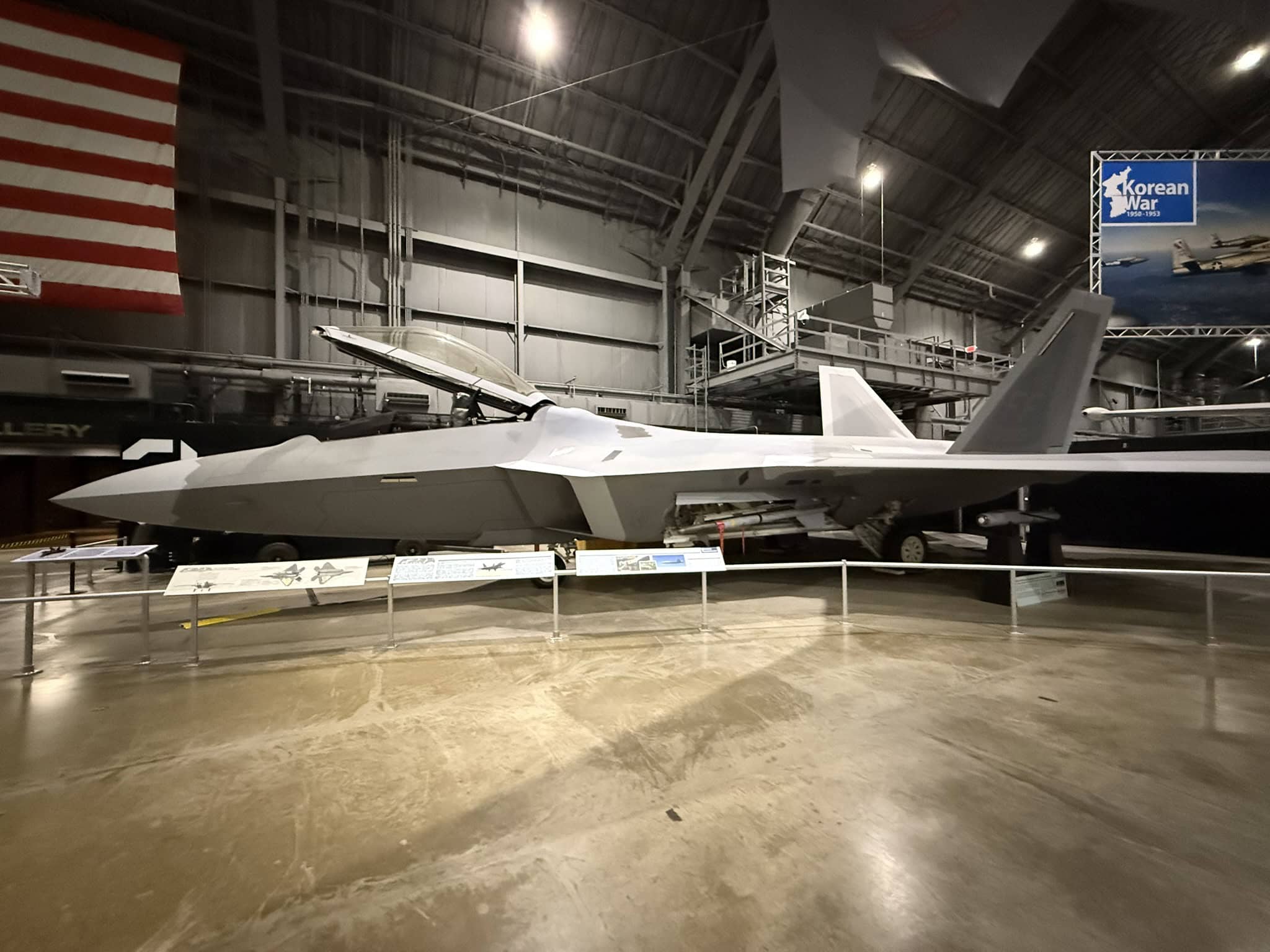
F-22 Raptor. Photo Taken for 19FortyFive.com by Harry J. Kazianis on July 19, 2025.
The spending, of course, did not stop once the production line ended.
The Air Force has projected that the F-22 modernization program will cost American taxpayers $11.7 billion; that’s more than double the original $5.4 billion projection.
A Warning Shot
Years after the infamous ATLC exercise, released combat footage of the encounter between the Rafale and F-22 shows the French fighter maneuvering against the F-22.
It managed to reach a firing position before the F-22 could maneuver out of the way.
Hence, the French Rafale got a simulated kill against the vaunted F-22.
Because the exercise was a controlled environment in which the F-22 was forced into a preordained visual-range dogfight, the pilots of the opposing French force were prepared for the attack.
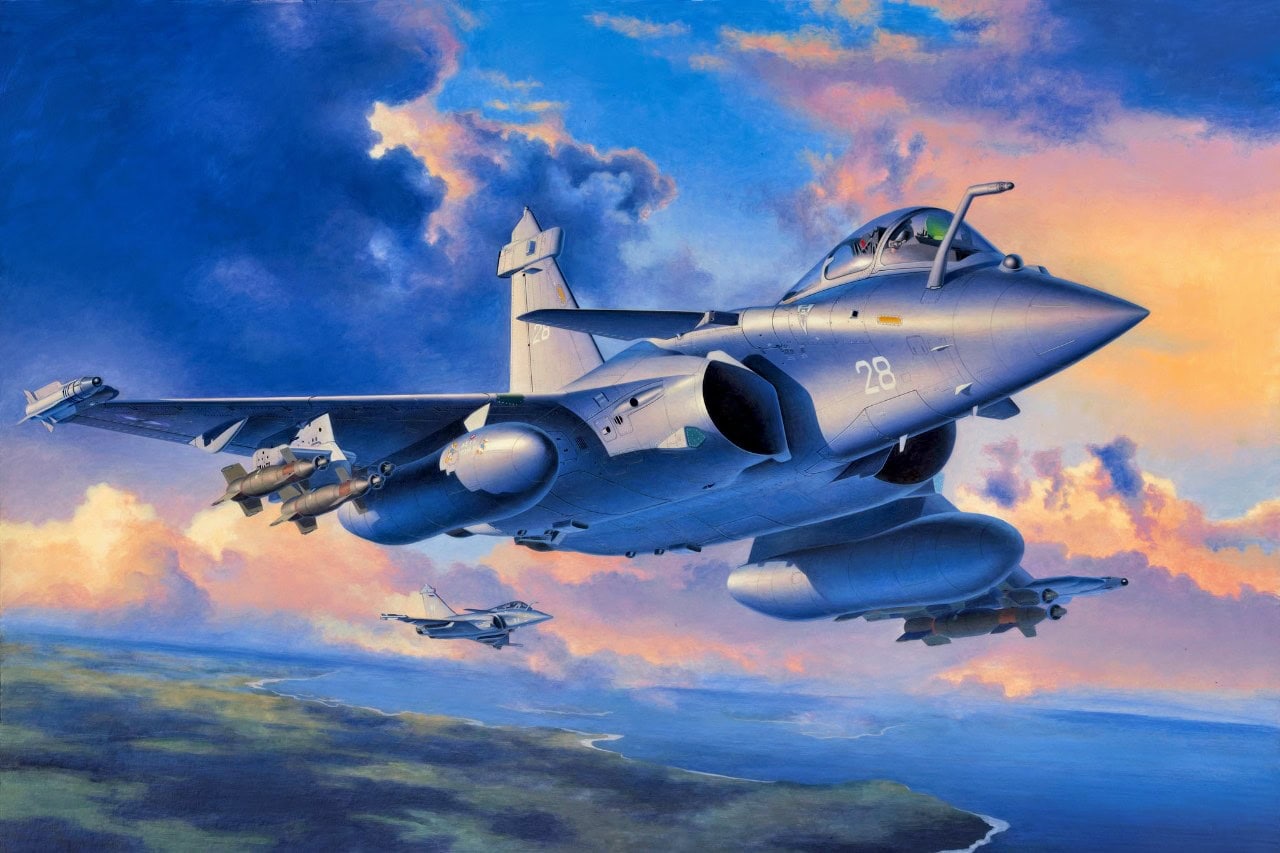
Dassault Rafale. Image Credit: Creative Commons.
They could anticipate where the F-22 was coming from.
So that all-important element of surprise essential to any dogfight was negated.
That development favored the French side.
Yet, the simulated dogfight proved that just because the F-22 has better maneuvering, higher stealth levels, and is more advanced, that doesn’t stop a ten-ton French Rafale that can easily pull 9Gs from threatening the F-22.
Yes, modern combat largely depends on BVR warfare. But the threat of closer-range dogfighting remains ever-present. The F-22 did not perform well under those conditions in 2009.
About the author: Brandon J. Weichert
Brandon J. Weichert is the Senior National Security Editor at 19FortyFive.com. He also manages The Weichert Brief on Substack. Weichert also hosts “National Security Talk” on Rumble. He is the author of four bestselling national security books, the most recent of which is A Disaster of Our Own Making: How the West Lost Ukraine (Encounter Books). Follow him via Twitter/X @WeTheBrandon.