
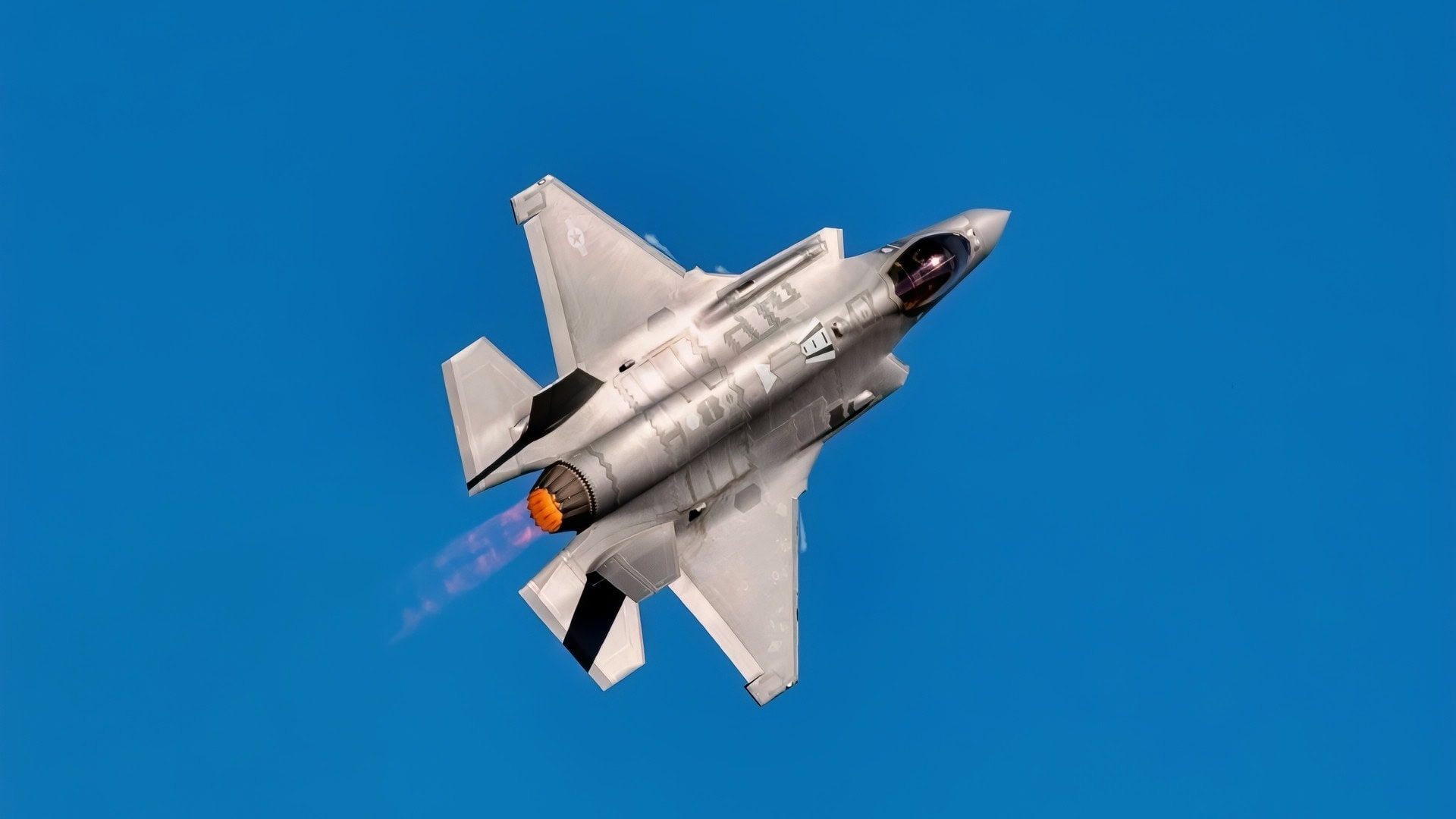
Summary and Key Points: Most supersonic fighters get there the expensive way. An afterburner injects raw fuel directly into the exhaust stream behind the turbine, producing a large jump in thrust and an enormous jump in consumption — which is why afterburner use in a fighter is measured in minutes, not hours. The F-22 Raptor does not have to do that. Two Pratt & Whitney F119-PW-100 engines, each producing roughly 35,000 pounds of thrust with the burners lit, generate enough dry thrust on their own to hold the aircraft above Mach 1.5 indefinitely.
F-22 Raptor Fighter and Supercruise Explained
U.S. Air Force F-22 Raptors are operating from Kadena Air Base in Japan, and they’re doing so at a particularly important moment for American air power in the Pacific — and globally. Aircraft from the 27th and 90th Fighter Squadrons were still flying from the Okinawa base between August and September, as part of a rotational deployment intended to maintain U.S. air power and readiness in the region. It is a deterrent measure, but it is also intended to ensure U.S. combat readiness.
And that deployment comes as Chinese military aircraft continue to operate around Taiwan, and analysts assess that Beijing is making moves to eventually invade.
Taiwan’s Defense Ministry reported around half a dozen Chinese military aircraft and several naval vessels around the island between September 11 and September 12, with five aircraft entering Taiwan’s northern and southwestern air defense identification zone.
Three days earlier, Taiwan detected 16 Chinese military aircraft involved in what Beijing described as a joint combat readiness patrol.
And if the United States should ever find itself fighting a major air war in the region, which is not out of the question, it has strength in the F-22. It is a capable aircraft that could prove particularly useful for its supercruise.
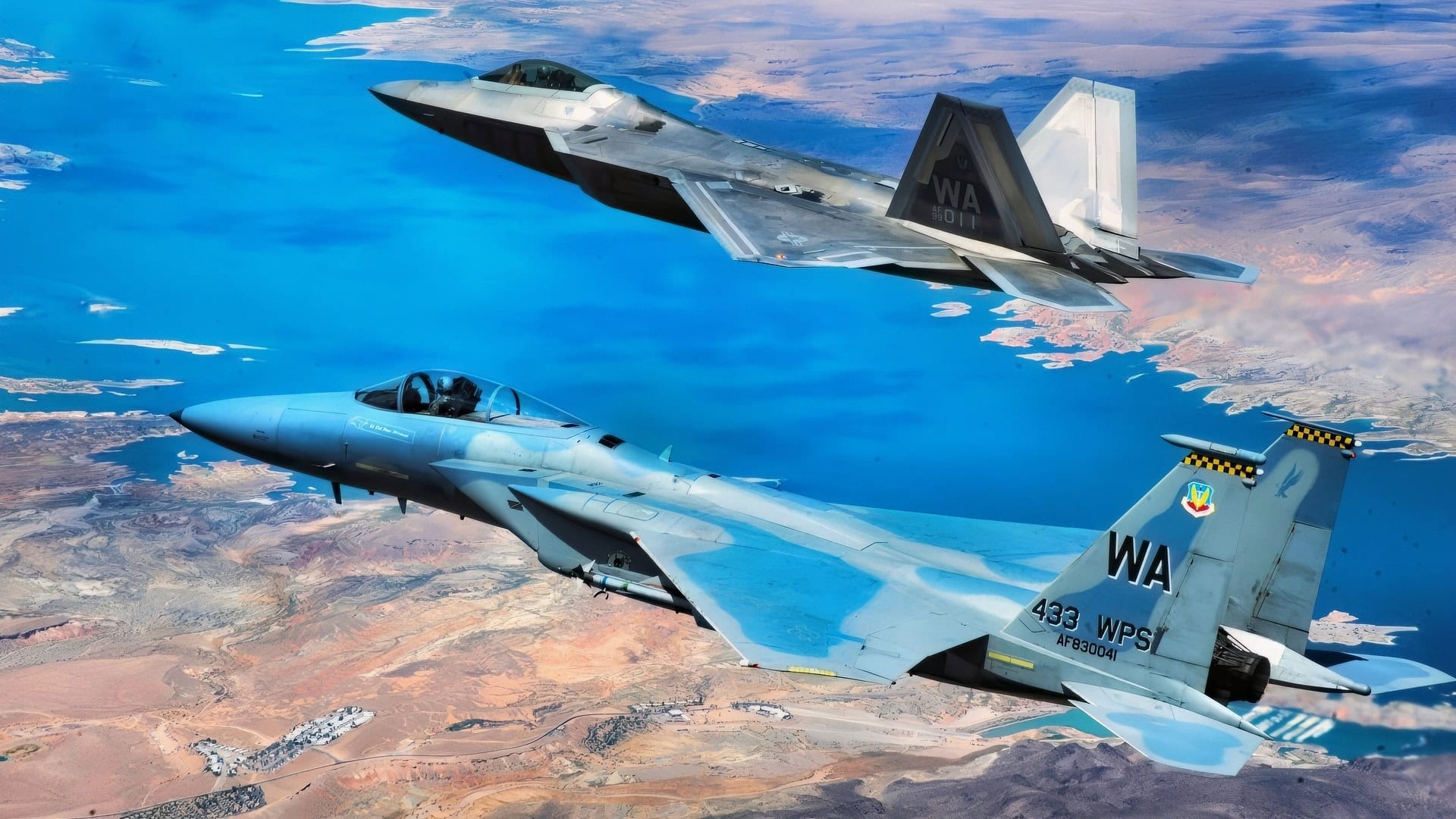
(U.S. Air Force photo/ Master Sgt. Kevin J. Gruenwald) released
What Is Supercruise?
Supercruise refers to the ability to maintain supersonic flight – meaning faster than the speed of sound – without using an afterburner. Most modern fighters are capable of exceeding the speed of sound, but they typically rely on afterburners to achieve it.
An afterburner injects additional fuel into the exhaust stream behind the engine’s turbine, thereby creating a substantial increase in thrust. It works, but it consumes a huge amount of fuel. That means fighters typically use afterburners for relatively short periods during flight.
But the F-22 works differently than that.
Using two Pratt & Whitney F119-PW-100 engines, combined with an aerodynamic design, the F-22 is capable of sustaining speeds greater than Mach 1.5 without ever using afterburners.
That means the F-22 doesn’t just have the ability to briefly accelerate; it can remain supersonic and avoid the massive fuel expenditure usually associated with reaching those speeds.
How the Engine Makes It Happen
Before the F-22, there was the Advanced Tactical Fighter program. The F-22 grew out of that program and the requirements it set, including supercruise.
The Raptor’s two Pratt & Whitney F119 engines do have afterburners. When used, each engine can produce approximately 35,000 pounds of thrust. The difference is that the F-22 doesn’t need them to remain supersonic. Those engines produce sufficient thrust without afterburner – and combined with the aircraft’s physical aerodynamic design and internal weapons carriage, the Raptor can sustain speeds over Mach 1.5.
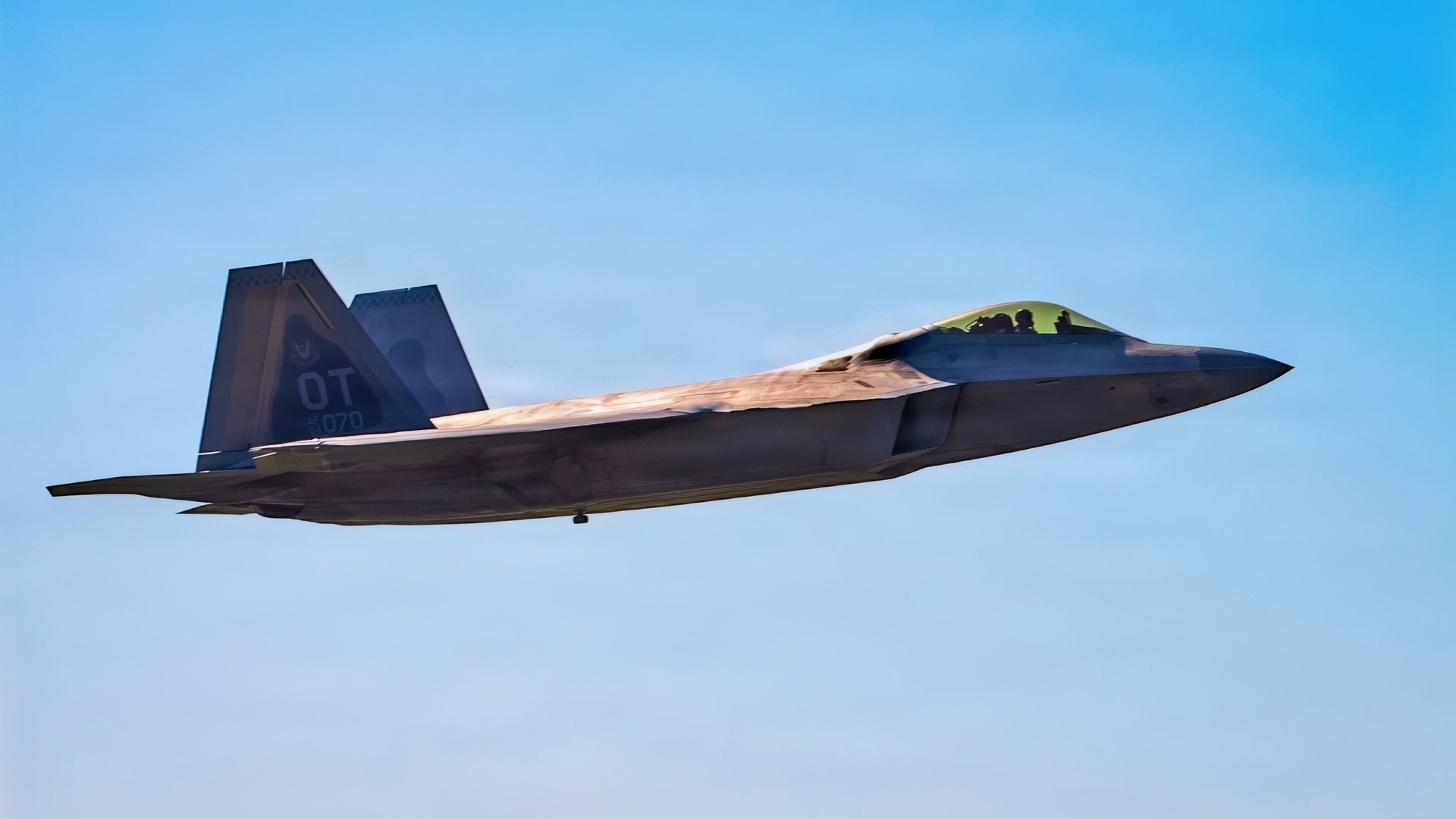
A U.S. Air Force F-22 Raptor departs Joint Base McGuire-Dix-Lakehurst, N.J., July 4, 2026, in support of the International Aerial Review during International Naval Review (INR) 250. The aircraft launched from JB MDL before participating in the aerial review over New York Harbor commemorating America’s 250th birthday. (U.S. Air Force photo by Rochelle Naus)
Those features give pilots two different options during flight. The F-22 can engage its afterburners when maximum thrust and acceleration are required, but doing so dramatically increases fuel consumption. Alternatively, the F-22 can remain supersonic using normal engine thrust, allowing it to maintain high speeds for much longer without burning through its fuel supply too quickly.
On June 30, Pratt & Whitney also announced that the F119 fleet had surpassed one million engine flight hours. The company actually delivered the final production F119 in 2013, but continues to support and modernize the engines as the F-22 remains central to U.S. Air Force planning.
Supercruise Shapes the Next Generation
Supercruise was an anomaly with the F-22, but it won’t be in the future.
The capability has helped define what the Air Force needed from an advanced air superiority fighter decades ago. Sustained high-speed performance is as relevant today as it ever was — arguably more so, in fact, as the service prepares for a whole new generation of aircraft designed to operate against increasingly sophisticated adversaries showing signs of catching up to U.S. air power.
The F-22 will be replaced soon enough by the F-47, the crewed next-generation fighter at the center of the Air Force’s Next Generation Air Dominance program.
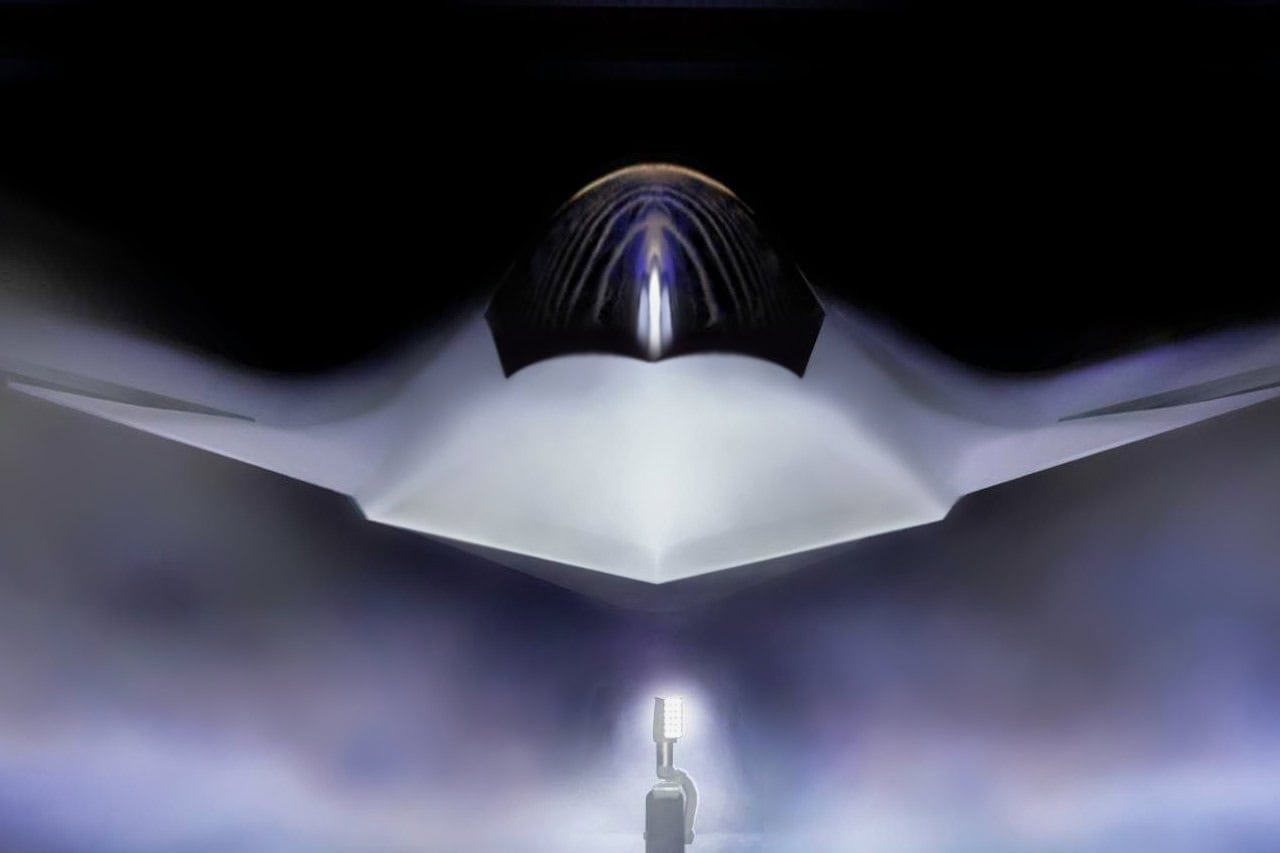
Shown is a graphical artist rendering of the Next Generation Air Dominance (NGAD) Platform. The rendering highlights the Air Force’s sixth generation fighter, the F-47. The NGAD Platform will bring lethal, next-generation technologies to ensure air superiority for the Joint Force in any conflict. (U.S. Air Force graphic)
Boeing was selected to develop the aircraft in March 2025, and the Air Force has said the F-47 will offer substantially greater range than the Raptor while also reaching speeds above Mach 2.
Much about that aircraft is still classified, including its precise performance, engine capabilities, and whether it will match or exceed the F-22’s supercruise performance — but given the pace of development, it’s not unreasonable to expect that it will likely exceed it.
Propulsion is also a major part of the Pentagon’s effort to build aircraft that can travel farther and faster while also using fuel more efficiently.
The future will be defined by supercruise capability and long-range performance, given the nature of expected future conflicts.
The wars American fighters have fought over the last several decades will likely be very different to those they may fight in the near future, with advanced Chinese and Russian air defenses threatening aircraft from hundreds of miles away. And, in an Indo-Pacific conflict, fighters will need to travel huge distances between dispersed bases.
Supercruise, then, will be an operational necessity.
About the Author: Jack Buckby
Jack Buckby is a British researcher and analyst specializing in defense and national security, based in New York. His work focuses on military capability, procurement, and strategic competition, and he produces and edits analysis for policy and defense audiences. He brings extensive editorial experience, with a career output spanning over 1,000 articles at 19FortyFive, and has previously authored books and papers on extremism and deradicalization.