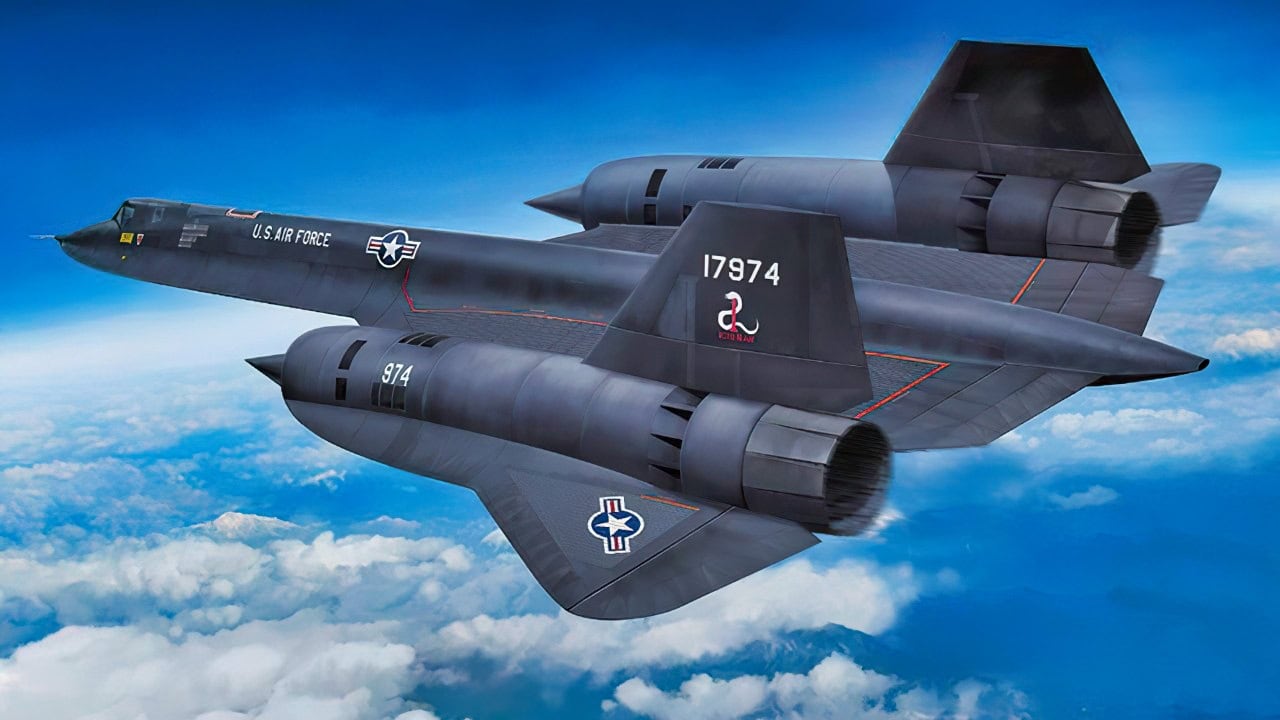
Summary and Key Points: Majors Buddy Brown and Mort Jarvis lifted off from Beale Air Force Base at 7:30 in the morning on June 17, 1970, headed for the Eglin Test Range in Florida to test electronic jamming equipment. Over El Paso they met two KC-135Q tankers — the modified Stratotankers that were the only aircraft in the world plumbed to carry the SR-71’s JP-7 fuel. The first hookup went normally and Brown took on about 35,000 pounds before dropping back and sliding in behind the second tanker. Two or three minutes into that contact the Blackbird bumped, as though it had hit turbulence on a morning that had been perfectly smooth. Then the nose pitched down, snapped hard up, and Brown’s aircraft struck the underside of the tanker. “The nose section was gone just forward of the cockpit, and the canopy had caved in on me,” he recalled. “I thought, ‘I’m inside the tanker; death is imminent!'”
The SR-71 Blackbird Accident Some History Books Miss
The U.S. Air Force is in the process of bidding farewell to one of the most important aircraft in its history and it’s one you might not expect.
The KC-135 Stratotankers are now leaving McConnell Air Force Base in Kansas as the 22nd Air Refueling Wing completes its transition to the newer KC-46A Pegasus – with some of the older aircraft now moving to other bases and others destined for retirement.
It has been 70 years since the KC-135 first entered service — an incredible achievement for an aircraft that, to this day, supports modern aircraft that push the limits of what’s possible.
The tanker has been critical to American military aviation for well over half a century, and during the Cold War, specially modified versions of the KC-135 supported one of the most advanced aircraft ever built: the SR-71 Blackbird.
On June 17, 1970, a mission involving one of those modified tankers and the SR-71 resulted in the two aircraft colliding in the skies near El Paso, Texas.
The Tankers That Made the SR-71 Possible
The SR-71 could fly at more than three times the speed of sound, and its speed record still stands today, even after fifty years.
It could also fly above 80,000 feet, but its extraordinary performance came with limitations.
The Blackbird was heavily dependent on aerial refueling to enable long-distance reconnaissance missions.
If it didn’t refuel, the Blackbird had a limit of around 2,000 nautical miles — but with tankers strategically positioned along its route, the SR-71 could cover far greater distances. Some of its missions even exceeded 12,000 nautical miles.
Modified KC-135Q tankers supported those long operations. They were equipped with modified fuel systems that allowed them to handle the specialized JP-7 fuel used by the Blackbird.
Their crews were also trained in various specialized procedures necessary to refuel the reconnaissance aircraft.
It was a symbiotic relationship that expanded the SR-71’s incredible global reach — but it ultimately meant that this historic and advanced aircraft depended on another, less advanced aircraft flying only feet above it periodically during its journey.
Routine Mission Goes Wrong
Maj. Buddy Brown and Maj. Mort Jarvis discovered just how dangerous that refueling process was during a test flight in June 1970.
The two U.S. Air Force service members departed Beale Air Force Base in California at 7:30 am and were flying to the Eglin Test Range in Florida, where they were both scheduled to test electronic jamming equipment.
Their route took them toward El Paso, where they would refuel with the support of two KC-135Qs.
According to their account of the journey, the first hookup went as expected.
Brown recalled taking about 35,000 pounds of fuel before disconnecting, then moving behind the second tanker to continue refueling.
“I moved to the pre-contact position behind number two, reset my refueling system for contact and called that I was ready to refuel.
The second boomer acknowledged ‘ready to refuel, and I pulled into the contact position and waited for boom contact,” Brown said.
But at that point, Brown and Jarvis felt a strange disturbance.
“Two or three minutes into the second refueling, the aircraft hit a sort of bump and shook as if it had just flown through some turbulent air.
I asked Mort, ‘Did you feel that?’ to which he emphatically answered, ‘Yes’. It felt quite unusual because the air had been so smooth that morning.
It may have been another aircraft’s jetwash that was laid across our track by an airliner that had passed earlier.
Again, another disturbance appeared, and I corrected it with a small stick input. Then it was quiet and smooth again,” Brown continued.
“Death Is Imminent!”
In his story, Brown recalled that the Blackbird suddenly pitched down and then moved violently upward again.
“Out of nowhere, the nose gave a small pitch down and a hard pitch up.
I pushed the stick quickly forward, but the nose and canopy struck the bottom of the tanker.
The nose section was gone just forward of the cockpit, and the canopy had caved in on me. I thought, ‘I’m inside the tanker; death is imminent!’” he recounted.
Brown ordered Jarvis to bail out and then began initiating his own ejection — and at that moment, he believed the Blackbird was directly underneath the KC-135.
He feared that his ejection seat would launch him directly into the tanker, but instead, the rocket-powered seat carried him clear of the destroyed aircraft.
He described a lot of noise and debris flying around as he was pushed into the air.
Brown said he stayed attached to his ejection seat during the initial fall before the system automatically separated him from it and deployed his parachute at around 15,000 feet.
The SR-71 was gone, but, incredibly, both crewmen survived the collision.
About the Author: Jack Buckby
Jack Buckby is a British researcher and analyst specializing in defense and national security, based in New York. His work focuses on military capability, procurement, and strategic competition, producing and editing analysis for policy and defense audiences. He brings extensive editorial experience, with a career output spanning over 1,000 articles at 19FortyFive and National Security Journal, and has previously authored books and papers on extremism and deradicalization.