
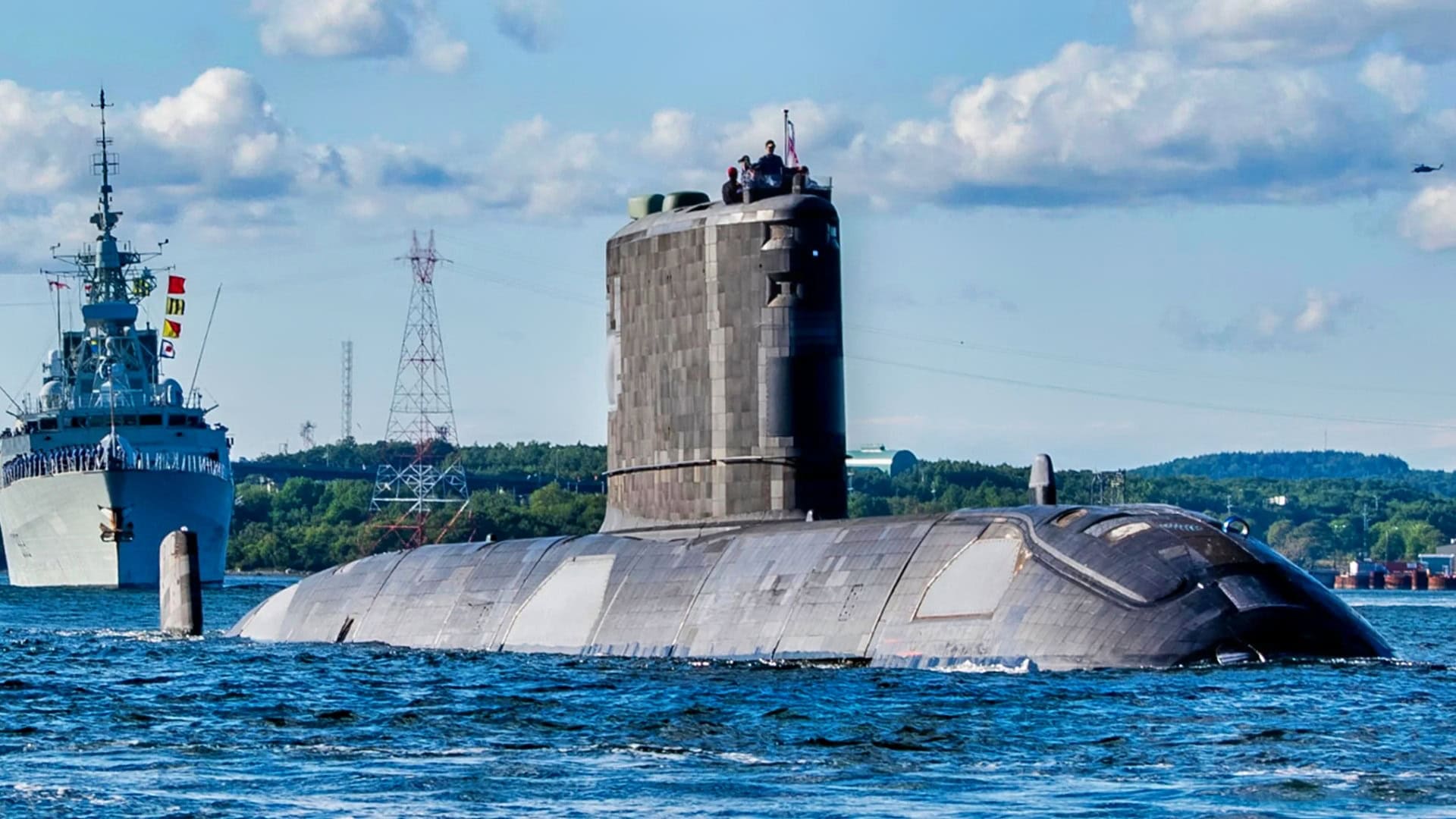
Canada, sprawling and massive, with thousands of miles of coastline, operates just four submarines: the Victoria-class, which includes the Victoria, Windsor, Corner Brook, and Chicoutimi. Diesel-electric rather than nuclear-powered, the Victoria-class was originally built for Britain’s Royal Navy as the Upholder-class.
But Canada acquired the four boats from Britain in the late 1990s after they had been laid up for years. On paper, the acquisition looked fantastic: four relatively modern submarines for just C$750 million under a lease-to-buy arrangement.
Canada’s Victoria-Class Diesel Submarines Have Royal Navy DNA
But reality proved more complicated. Fires, corrosion, maintenance problems, and lengthy refits kept reducing the submarines’ availability.
Yet when occasionally operational, the Victoria-class submarines do give Canada the ability to conduct covert surveillance and sea denial beneath the Atlantic and Pacific.
And with Russian submarine activity in the North Atlantic, and increasing strategic competition in both the Pacific and Arctic, Canada needs the Victoria-class more than when the boats were purchased.
British Roots
Britain designed the Upholder during the late Cold War as the successor to the aging Oberon-class diesel submarines, intending to use the new submarines for anti-submarine warfare, anti-surface warfare, patrol, and surveillance.
Built by Vickers Shipbuilding and Engineering at Barrow-in-Furness, the submarines entered Royal Navy service in 1990. Of course, that meant awkward timing. The Cold War was ending just as the class was arriving.
The purpose for which the submarines had been built no longer really existed. Simultaneously, Britain decided to standardize its submarine force around nuclear-powered SSNs, which put the Upholder on the outs; indeed, all four boats were decommissioned by 1994 despite being quite young and then placed in storage.
Not much of a service life.
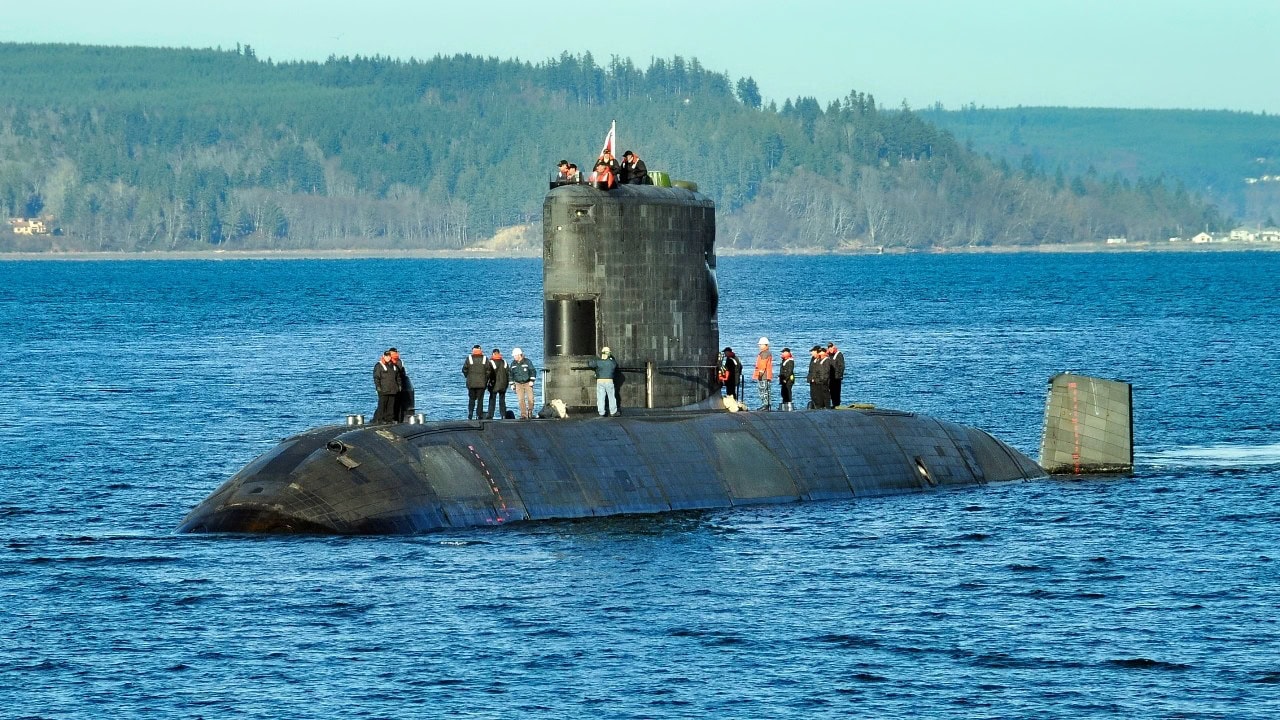
(Dec. 12, 2011) The Royal Canadian Navy long-range patrol submarine HMCS Victoria (SSK 876) arrives at Naval Base Kitsap-Bangor for a port call and routine maintenance. The visit is Victoria’s first to Bangor since 2004. (U.S. Navy photo by Lt. Ed Early/Released)
But Canada, across the Atlantic, was seeking a replacement for its own Oberons, and in 1998 an agreement between the two nations was announced; the submarines were transferred, beginning in 2000, and renamed the Victoria-class.
Technical Specifications
The Victoria is a diesel-electric attack submarine (SSK) measuring 230 feet with a 25-foot beam.
The submerged displacement is roughly 2,400–2,500 tonnes.
The crew size varies by mission type but is usually around 48.
Two diesel generators charge batteries, and an electric motor drives a single propeller shaft.
The submerged speed is cited as around 20 knots (23 mph), and the exact operational diving limit is not publicly known.
The boat carries six 21-inch torpedo tubes and is modified to fire Mk 48 heavyweight torpedoes.
Onboard sensors include bow/active-passive sonar; flank arrays; passive towed-array capability; electronic support measures; and periscopes/optronics, depending on the modernization state.
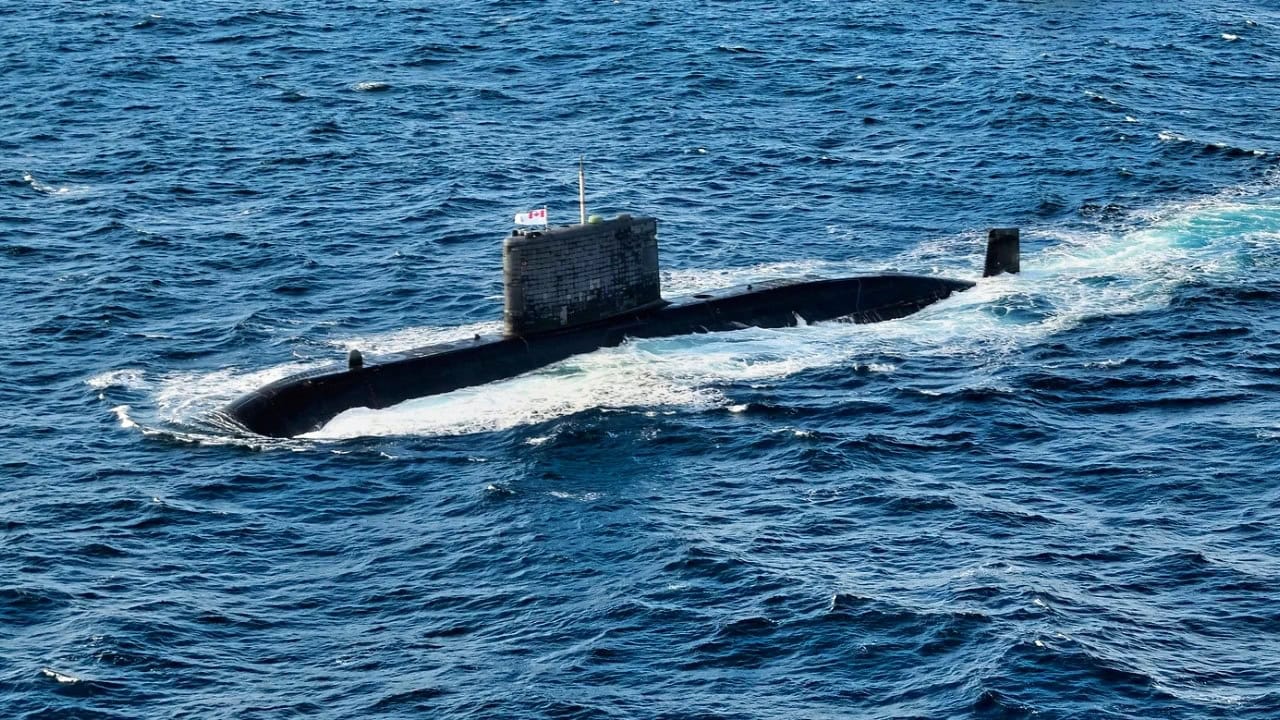
Victoria-Class Submarine at Sea. Image Credit: Creative Commons.
Not So Primitive
There’s a misconception that diesel-electric submarines are primitive relative to nuclear-powered submarines.
That’s not necessarily the case. Nuclear submarines enjoy globe-spanning endurance and sustained high submerged speed, yes, while diesel-electric boats must eventually snorkel or surface to run diesels and recharge batteries. That does create a vulnerability that nuclear boats can mostly avoid. But diesel-electric boats do have some advantages.
Namely, while running purely on batteries, conventional submarines can be extremely quiet because there are no large reactor coolant pumps or steam plant. Electric propulsion at low speed produces a minimal acoustic signature.
This is particularly useful when patrolling chokepoints, waiting in ambush, and conducting surveillance. So the basic trade-off can be summarized as follows: SSNs offer endurance, speed, and global mobility, while SSKs are cheaper and quieter but must surface more frequently.
Summed Up in 4 Words: They Must Be Replaced
While the bargain deal initially seemed like a steal, Canada’s acquisition of the Victoria-class quickly accumulated problems.
The boats had been sitting in British storage for years before the transfer, and getting them back into seaworthy shape required in-depth work.
The most telling anecdote comes from the HMCS Chicoutimi.
In October 2004, she was leaving Britain for Canada when heavy seas entered through open hatches.
Seawater came into contact with electrical equipment, and major electrical fires erupted aboard the submarine.
One crew member died, and others were injured.
The boat eventually returned to Canada and remained out of service for years. The other boats had problems too, with corrosion, electrical glitches, and maintenance delays.
Even today, availability is the Achilles’ heel of the Victoria fleet.
And given that the boats were constructed in the late 1980s and 1990s, Canada will need a replacement soon to keep pace with the increase in backyard competition.
About the Author: Harrison Kass
Harrison Kass is a writer and attorney focused on national security, technology, and political culture. His work has appeared in Tablet, City Journal, The Hill, The Spectator, and The Cipher Brief. He holds a JD from the University of Oregon and a master’s in Global & Joint Program Studies from NYU. More at harrisonkass.com.