
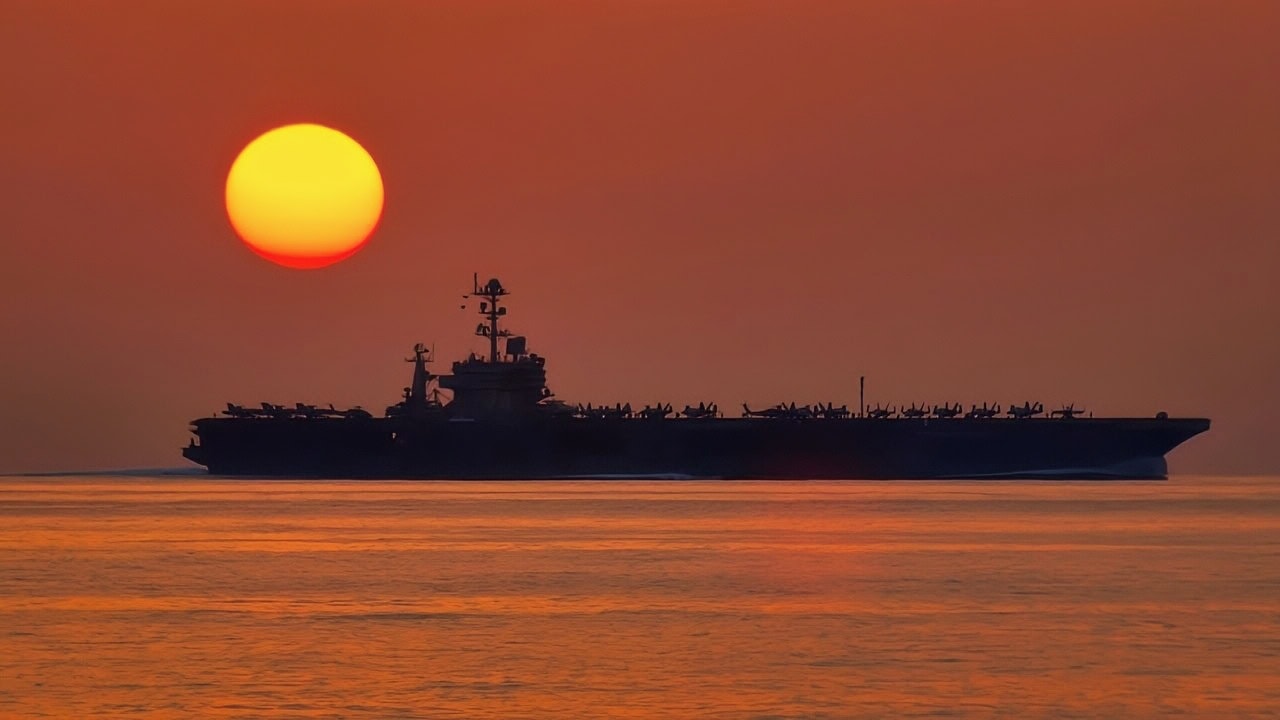
U.S. President Donald Trump has said he has a “big decision” to make regarding the Iran war.
In an interview with Axios last week, the President said he could “annihilate” Iran in the coming weeks, but stopped well short of committing to another major military campaign.
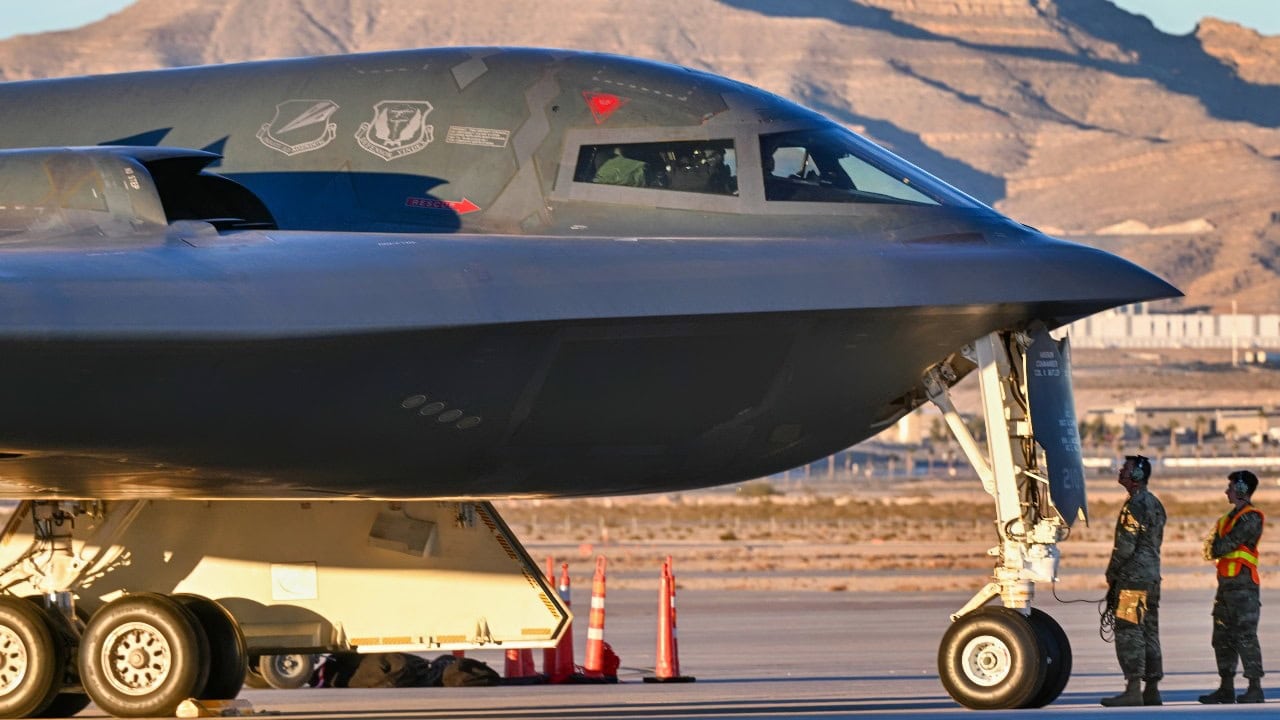
A B-2 Spirit prepares to take-off from Nellis Air Force Base, Nev. during Bamboo Eagle, Jan. 29, 2024. Bamboo Eagle provides Airmen, allies, and partners with a multidimensional, combat-representative battle-space to conduct advanced training in support of U.S. national interests. (U.S. Air Force photo by Senior Airman Bryson Britt)
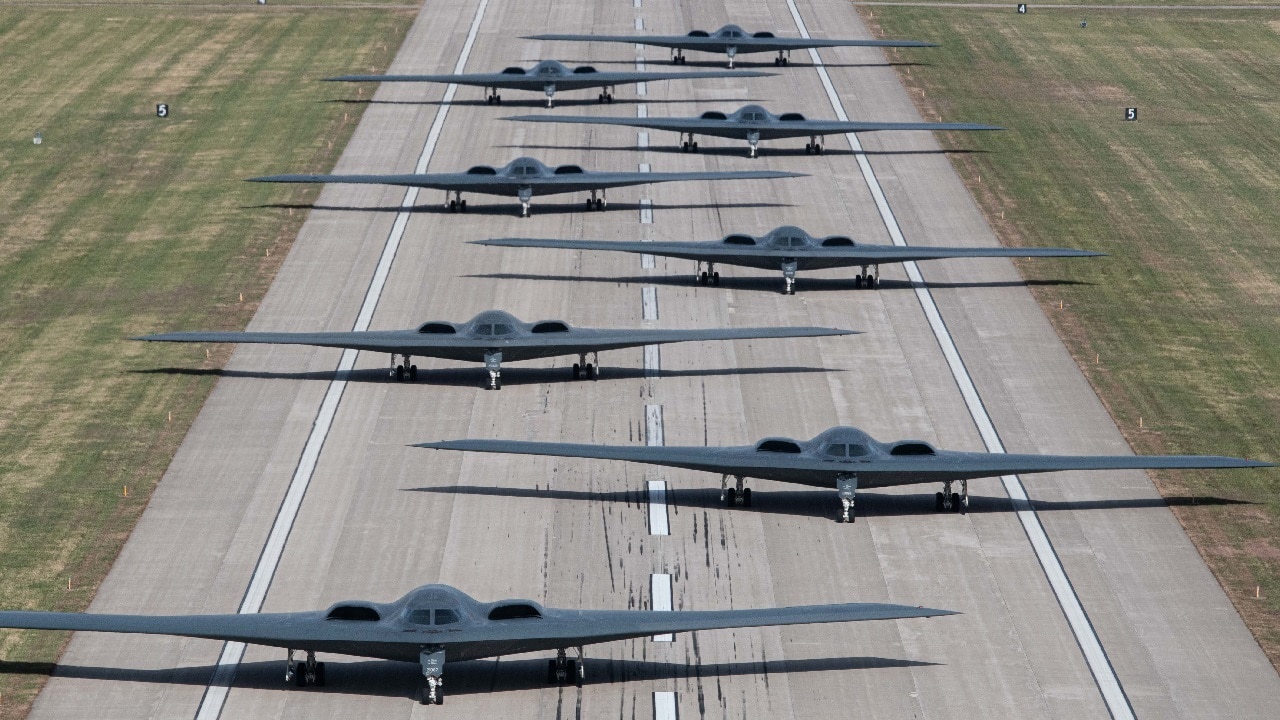
B-2 Spirit stealth bombers assigned to Whiteman Air Force Base taxi and take-off during exercise Spirit Vigilance on Whiteman Air Force Base on November 7th, 2022. Routine exercises like Spirit Vigilance assure our allies and partners that Whiteman Air Force Base is ready to execute nuclear operations and global strike anytime, anywhere. (U.S. Air Force photo by Airman 1st Class Bryson Britt)
His comments come days before the United Nations General Assembly soon, where Trump is expected to meet with leaders from the Gulf states.
Trump’s Big Decision
For nearly six months, the U.S. approach has prioritized economic measures over the military action seen in the conflict’s early weeks.
A U.S. naval blockade has been imposed, preventing Iranian oil exports from reaching their destination, while sweeping sanctions have been imposed, designed to cripple the Iranian economy.
Tehran has held firm, even in the face of spiraling economic problems.
It maintains a blockade in the Strait of Hormuz, with knock-on effects worldwide as oil from the Gulf states cannot pass through.
Direct discussions between U.S. and Iranian officials have been rare, creating an ongoing stalemate in which escalation could occur at any moment.
Debate continues over whether the U.S. strategy is working.
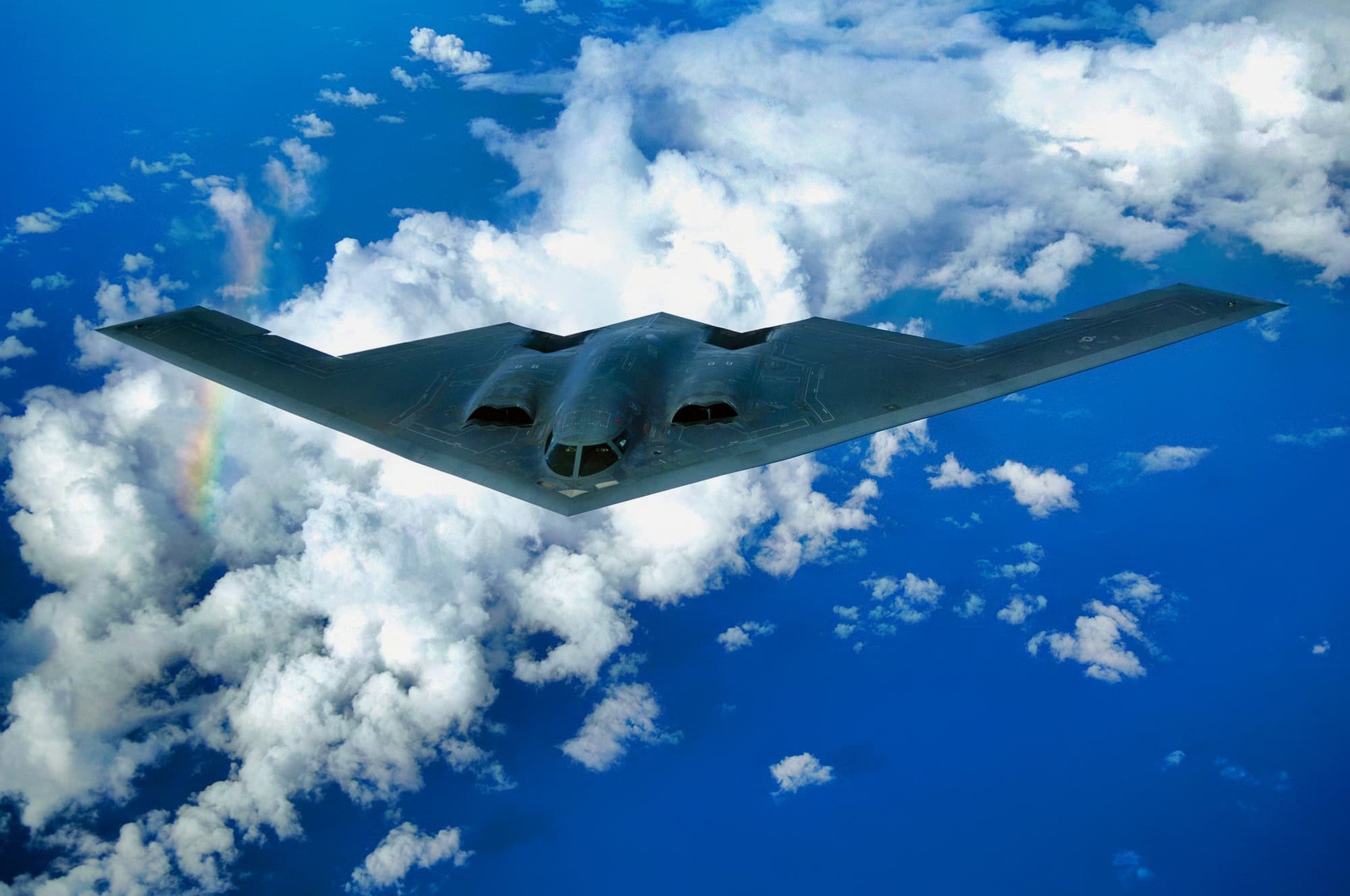
A B-2 Spirit soars after a refueling mission over the Pacific Ocean on Tuesday, May 30, 2006. The B-2, from the 509th Bomb Wing at Whiteman Air Force Base, Mo., is part of a continuous bomber presence in the Asia-Pacific region. (U.S. Air Force photo/Staff Sgt. Bennie J. Davis III)
The Iranian economy is suffering heavily, yet Tehran remains resistant to coming to the negotiating table, refusing to beg for compromise.
Given how the U.S. and Israel dominated the war’s first six weeks, some have called for a renewed military campaign to wipe out the authoritarian regime once and for all.
“I have a big decision coming up,” Trump said on his approach to the Iranian regime. “Do I want to go in and annihilate them, or do I not? It’s a big decision. Anything can happen with me.”
The Gulf Course
The President is expected to meet leaders from the Gulf states at next week’s U.N. General Assembly, namely Saudi Arabia, the United Arab Emirates, Qatar, Bahrain, Kuwait and Oman.
These six nations have borne the brunt of Iranian retaliation, with Tehran launching projectiles towards military bases on the territory of U.S. allies.
Their support is vitally important. While Trump does not theoretically need their backing for a major offensive, a supportive Gulf helps in the U.S.-Israeli war against Iran. In the end, it’ll be the air defenses of America’s allies that protect American bases on foreign soil.
Last month, Trump called off a major escalation after concerns from the Gulf that Iran would retaliate by bombing Saudi oil and gas facilities.
Although no agenda has been shared, Trump may still use next week’s meeting to unify allies in favor of major combat operations.
“I want to find out where they are and how they are doing,” Trump said. “We have been very protective of them.”
Military on Standby
Trump and Secretary of Defense Pete Hegseth have ordered the military to remain in the Middle East, even though much of the fighting ended in April.
Alas, a return to full-scale combat remains possible at a moment’s notice.
This has raised concerns among key figures in the U.S. armed forces. Some personnel have been away for almost a year, while warships and carrier strike groups have been redirected from other parts of the world, including the Pacific.
The war also has a price tag, with a Pentagon watchdog report revealing a total cost of $33 billion earlier this week. The same report also warned of “strategic inventory shortfalls” of critical munitions along with “bottlenecks” in supply chains.
What Does Trump Do Next?
The President is right: it’s a major decision.
The shift to an economic conflict has seen Tehran hold out for nearly six months, and its persistence means it is unlikely to admit defeat even if its economy is in ruins.
Trump knows that the U.S. firepower, albeit somewhat depleted, obliterates that of Iran, and so a full-scale attack could solve a problem which has dominated the election year.
On the flip side, the Gulf states have already urged caution over a re-escalation, and with Saudi oil coming under attack once more, further hostilities may not be the preferred answer in an already volatile region.
There are also U.S. stockpiles, and questions remain as to whether a repeat of March’s fighting is even possible.
Trump has had many big meetings during his presidencies, and he has several more in New York next week. It could be the most important seven days of his political life.
About the Author: Shay Bottomley
Shay Bottomley is a British journalist. He has written for the Western Standard, Business Insider, Maidenhead Advertiser, Slough Express, Windsor Express, Berkshire Live and Southend Echo.