
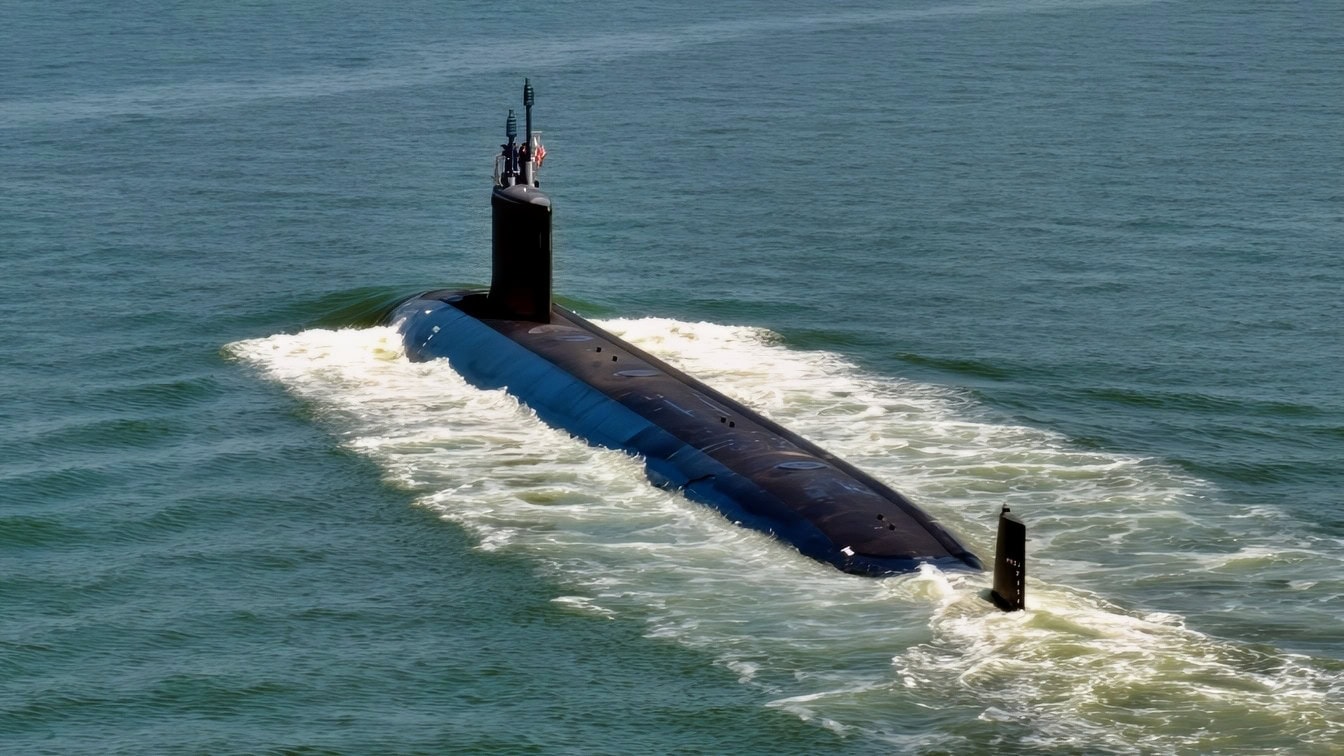
The United States Navy’s Virginia-class submarines represent the latest & greatest in the USN’s nuclear-powered attack submarines (SSNs, i.e., Submersible Ship, Nuclear), succeeding not just one but two prestigious, time-honored USN SSN classes: the Los Angeles-class and Seawolf-class warships.
The Virginias, aka the SSN 774 class, are arguably right up there with the Royal Navy’s Astute-class for the title of best SSNs in NATO.
As a sign of continuous improvement, four operational Blocks of the Virginia-class boats are already in service, with a fifth class on the way.
So then, what are the Top 3 Best Features of the Block IV Virginia-class subs? In no particular order…
Block IV Highlight #1: Enhanced Stealth, Speed, and Survivability
Right from their inception, one of the key advantages of undersea boats has been stealth. Indeed, during World War II, the Navy’s submarine fleet was known as the “Silent Service.” Well, as truly “silent but deadly” as those “Pig Boats” of WWII were, they were like New Year’s Eve party noisemakers compared to the stealth that a Block IV Virginia can attain.
The SSN 774s achieve improved acoustic stealth through advanced sound-dampening materials and design modifications that reduce the submarine’s acoustic signature and, of course, make the subs harder for enemy forces to detect, improving the crews’ chances of returning to homeport alive and in one piece.
Speed also comes with that stealth, thanks to an S9G nuclear reactor that delivers 40,000 shaft horsepower and boosts the boats to an official top speed of 15 knots on the surface and 34 knots submerged.
Block IV Highlights #2: SpecOps/SEAL Insertion Capability and Compatibility
Hand in hand with the stealth of the Block IV SSN 774 boats is their compatibility with a category of stealthy warriors: America’s elite special operations forces (SOFs), especially the Navy SEALs.
The Virginias are optimized to launch sizable loads of these super seamen—approximately nine to twelve—thanks to the design of the torpedo room and a large integrated lockout chamber.
Moreover, the Virginia Payload Module Seal Delivery Vehicle (VPM SDV) exists.
For obvious reasons, the specifics of the VPM SDV’s construction are classified, but it’s generally understood that it uses advanced composites and specialized alloys, selected not only for structural integrity and the ability to withstand deep-sea pressure but also for acoustic dampening—much like the host submarine.
There is also a conspicuous absence of sharp angles and protruding elements, further reducing sonar reflectivity, and the SDV’s hull shape likely employs hydrodynamically efficient designs that minimize water resistance.
Block IV Highlight #3: Deadlier Payload
As vitally important as a submarine’s stealth features are, it’s a paradoxical truth that a military submarine wouldn’t be complete without the ability to make noise, i.e., inflicting things that go “BOOM!” upon enemy forces.
Which brings us back to the Virginia Payload Module concept.
In addition to the dozen vertical launch system (VLS) tubes for BGM-109 Tomahawk cruise missiles carried over from the earlier Virginia Blocks, the VPM places four additional large-diameter payload tubes in the middle of the boat, each carrying seven additional Tomahawks.
As a semantic sidebar note, according to an official Navy press release dated 3 August 2026, the VPM-equipped Virginias are being reclassified as guided-missile submarines (SSGNs): “This pivotal shift clearly differentiates these advanced platforms from traditional Virginia Class fast attack submarines (SSNs), signaling a leap forward in undersea warfighting capability, lethal combat power, and global deterrence.”
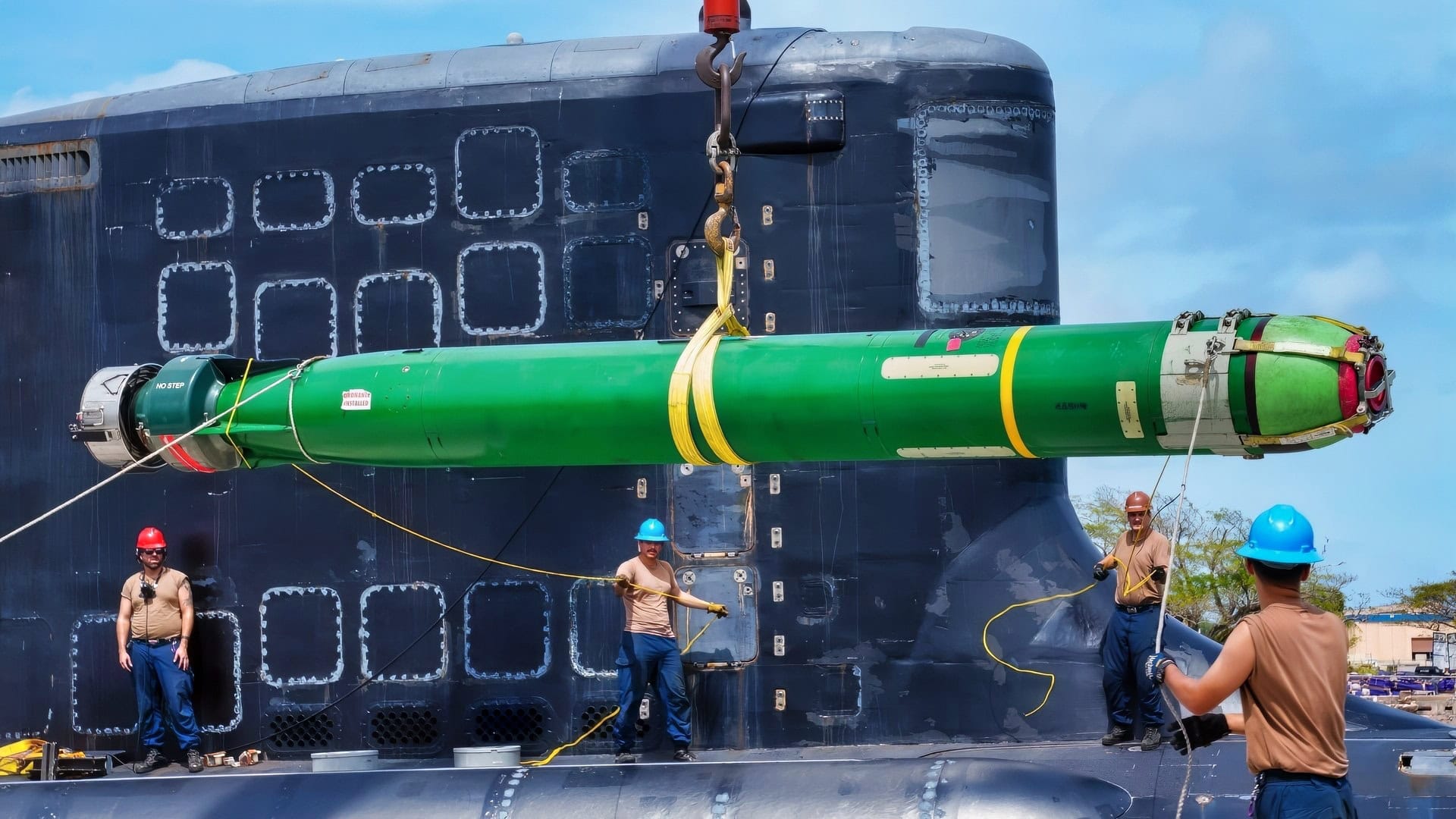
NAVAL BASE GUAM (Feb. 3, 2025) – Sailors assigned to the Virginia-class fast-attack submarine USS Minnesota (SSN 783) guide a Mark 48 ADCAP (Advanced Capability) torpedo during a weapons offload onboard Naval Base Guam, Feb. 3, 2025. Assigned to Commander, Submarine Squadron 15, based at Polaris Point, Naval Base Guam, Minnesota is one of five forward-deployed fast-attack submarines. Renowned for their unparalleled speed, endurance, stealth, and mobility, fast-attack submarines are the backbone of the Navy’s submarine force. Regarded as apex predators of the sea, Guam’s fast-attack submarines serve at the tip of the spear, helping to reaffirm the submarine force’s forward-deployed presence in support of a free and open Indo-Pacific. (U.S. Navy photo by Mass Communication Specialist 1st Class Nikita Custer)
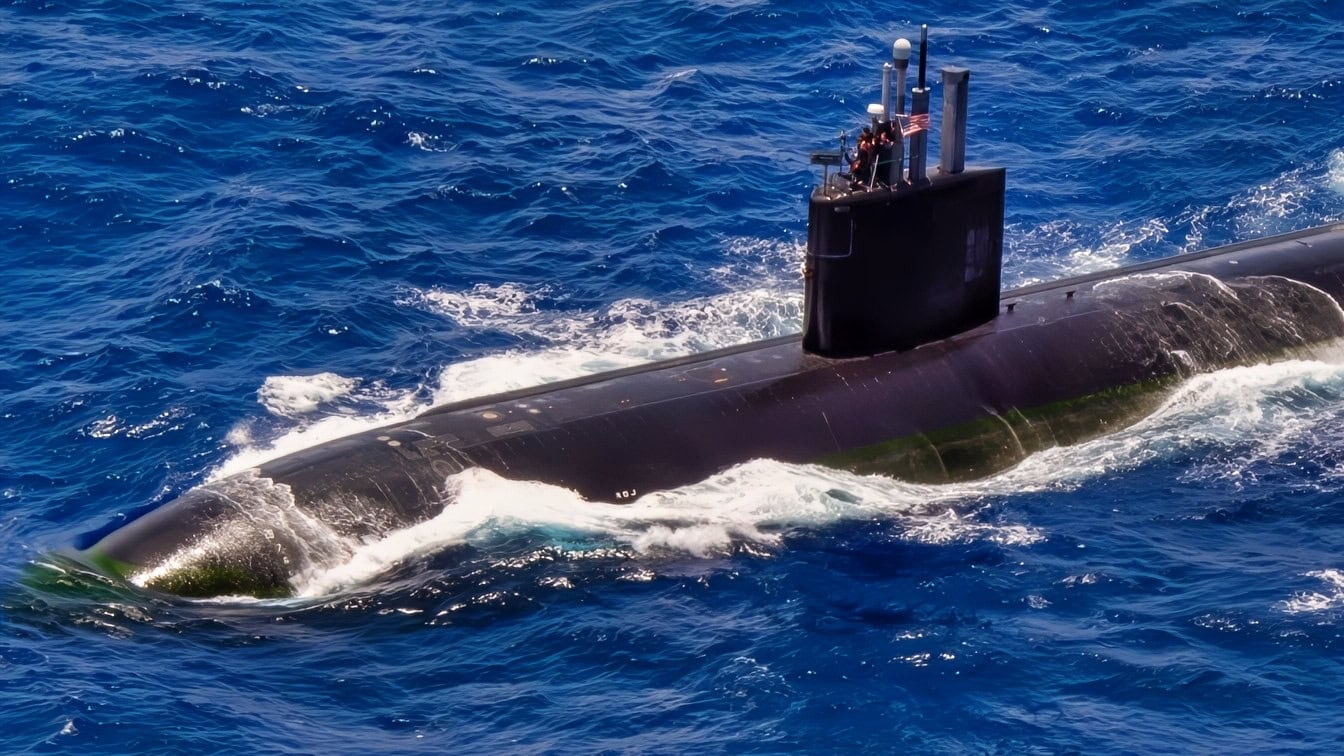
Virginia-class submarine USS North Carolina (SSN-777) sails during the at-sea phase of Exercise Rim of the Pacific (RIMPAC) 2024. Twenty-nine nations, 40 surface ships, three submarines, 14 national land forces, more than 150 aircraft and 25,000 personnel are participating in RIMPAC in and around the Hawaiian Islands, June 27 to Aug. 1. The world’s largest international maritime exercise, RIMPAC provides a unique training opportunity while fostering and sustaining cooperative relationships among participants critical to ensuring the safety of sea lanes and security on the world’s oceans. RIMPAC 2024 is the 29th exercise in the series that began in 1971. (U.S. Navy photo by Mass Communication Specialist 2nd Class Terrin Hartman)
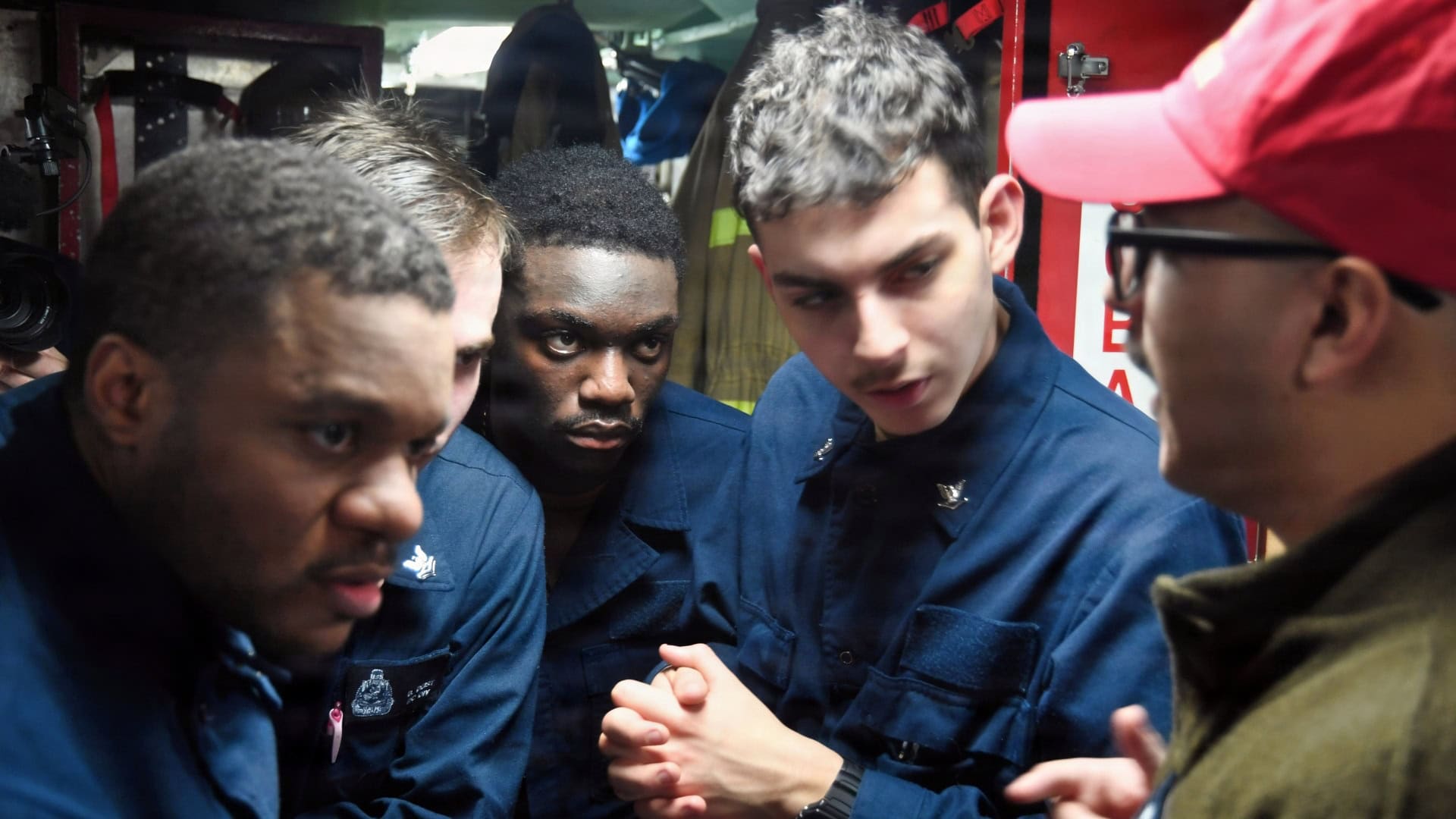
260321-N-ME988-1286 ARCTIC OCEAN (March 21, 2026) Machinist’s Mate (Nuclear) 1st Class Christian Garcia, right, assigned to the Virginia-class fast attack nuclear-powered submarine USS Delaware (SSN 791), provides feedback during a Crucible event to earn the Submarine Warfare qualification, commonly referred to as “fish,” while Delaware transits the Arctic Ocean, March 21, 2026. The Crucible event is the final stage in earning the Submarine Warfare qualification and consists of a question-and-answer board as well as damage control drills to demonstrate knowledge and skills learned. Delaware and crew operate under Submarine Squadron (SUBRON) 12 whose primary mission is to provide fast-attack submarines that are ready, prepared, and committed to meet the unique challenges of undersea combat and deployed operations in unforgiving environments across the globe. (U.S. Navy photo by Chief Mass Communication Specialist Darren M. Moore)
The Present and the Way Forward for the Virginias
The Block IV iteration commenced with the USS Vermont (SSN-792), which was laid down in February 2017, launched on March 29, 2019, commissioned on April 18, 2020, and is currently homeported at Pearl Harbor, Hawaii; meanwhile, the most recently commissioned boat of the bunch, USS Idaho (SSN-799), was laid down on 24 August 2020, launched on 6 August 24, commissioned on 25 April 2026, and is homeported at Naval Submarine Base New London in Groton, Connecticut.
Of the 26 Virginias commissioned thus far, 8 are Block IVs.
Two more Block IVs are on the way: USS Arkansas (SSN-800) and USS Utah (SSN-801) launched on 2 July 2025 and 17 May 2026, with projected commissioning years of 2028 and 2027, respectively.
Meanwhile, the Virginia boats’ two contracted manufacturers, General Dynamics Electric Boat (GDEB) and Huntington Ingalls Industries (HII) Newport News Shipbuilding, are not content to rest upon their laurels, as they’re already hard at work upon the upcoming Block V warships, with four of the Vs already having been laid down.
As to what improvements these Block Vs will offer over the already uber-impressive Block IVs, that’ll be the subject of the next installment in this series, so stay tuned, dear readers.
About the Author: Christian D. Orr
Christian D. Orr is a Senior Defense Editor. He is a former Air Force Security Forces officer, Federal law enforcement officer, and private military contractor (with assignments worked in Iraq, the United Arab Emirates, Kosovo, Japan, Germany, and the Pentagon). Chris holds a B.A. in International Relations from the University of Southern California (USC) and an M.A. in Intelligence Studies (with a concentration in Terrorism Studies) from American Military University (AMU). He is also the author of the book “Five Decades of a Fabulous Firearm: Celebrating the 50th Anniversary of the Beretta 92 Pistol Series,” the second edition of which was recently published.