
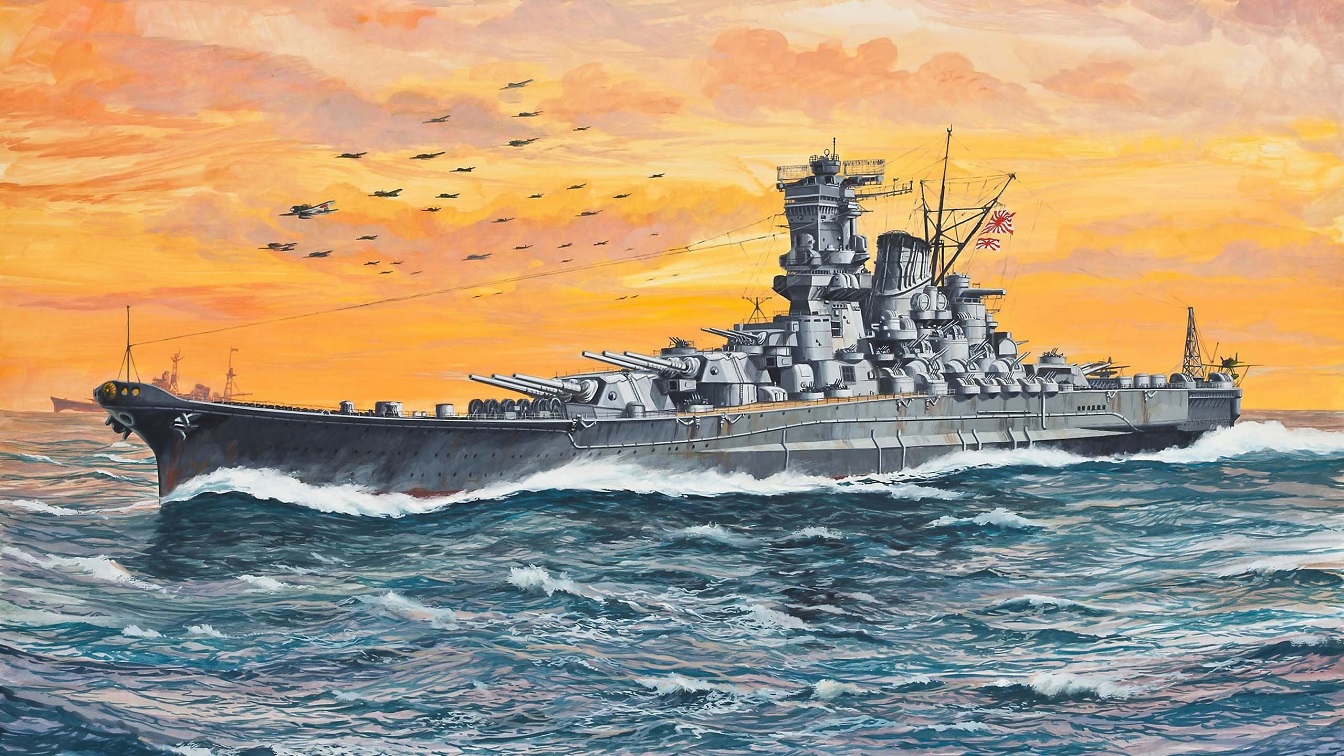
Summary and Key Points: On October 25, 1944, in the Battle off Samar, the Taffy 3 task unit of six escort carriers, three destroyers, and four destroyer escorts met four Japanese battleships, including the 72,000-ton battleship Yamato and her 18-inch guns, plus eight cruisers and 11 destroyers. The outgunned Americans charged. Taffy 3 lost five ships and 1,161 men, sank three Japanese cruisers, and Admiral Kurita retreated. Commander Ernest Evans of USS Johnston earned a posthumous Medal of Honor.
Japan’s Battleship Yamato at 72,000 tons Goes to War
In the annals of United States Navy history, the Battle of Samar phase of the Battle of Leyte Gulf on 25 October 1944 was the ultimate “David vs. Goliath” showdown.
To be more precise, it was more like multiple Davids—as in the six escort carriers (CVEs, aka “jeep carriers”), three destroyers (DDs), and four itty-bitty destroyer escorts (DEs), and 322 aircraft—of the USN squaring off against multiple Goliaths—as in four battleships, six cruisers, two light cruisers, 11 destroyers, and 36 kamikaze aircraft—of the Imperial Japanese Navy (IJN).
As if those odds weren’t already scary enough, the IJN battleship contingent included the super-battleship Yamato with her 18-inch guns and 72,000-ton displacement.
Sounds like a total mismatch and a virtually guaranteed victory for the Imperial Japanese, right? Yet, against all odds, the Americans held out, and the IJN admiral blinked.
Prelude to the Battle
The Battle of Leyte Gulf was the IJN’s ultimately failed effort to counterattack the American landing force that was liberating the Philippines.
The Samar phase was a deviously clever setup on the part of Admiral Takeo Kurita, luring American surface ships into chasing the sacrificial Northern Force while his Central and Southern Force ravaged the landing fleet.
Kurita faced two early setbacks: Yamato’s sister ship Musashi was sunk by USN carrier warplanes, and the Southern Force was crushed by Admiral Jesse Oldendorf’s battleships in the Battle of Surigao Strait.
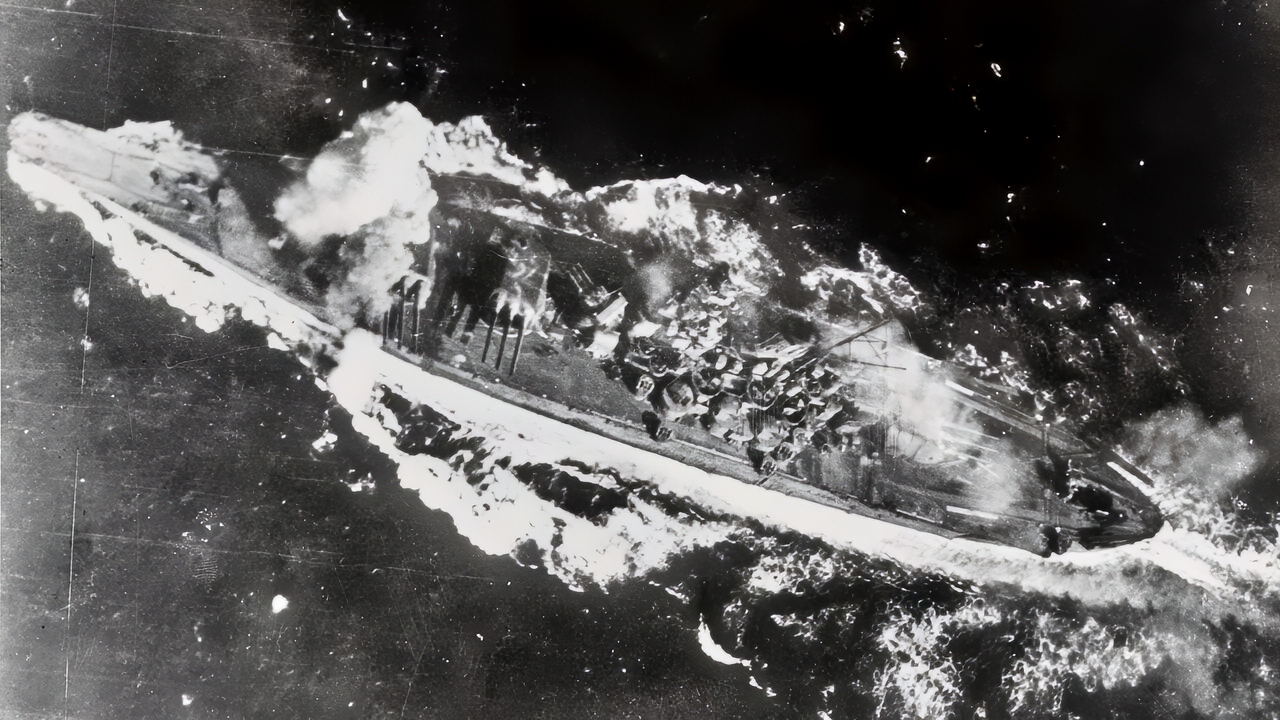
Yamato-Class Battleship Under Attack
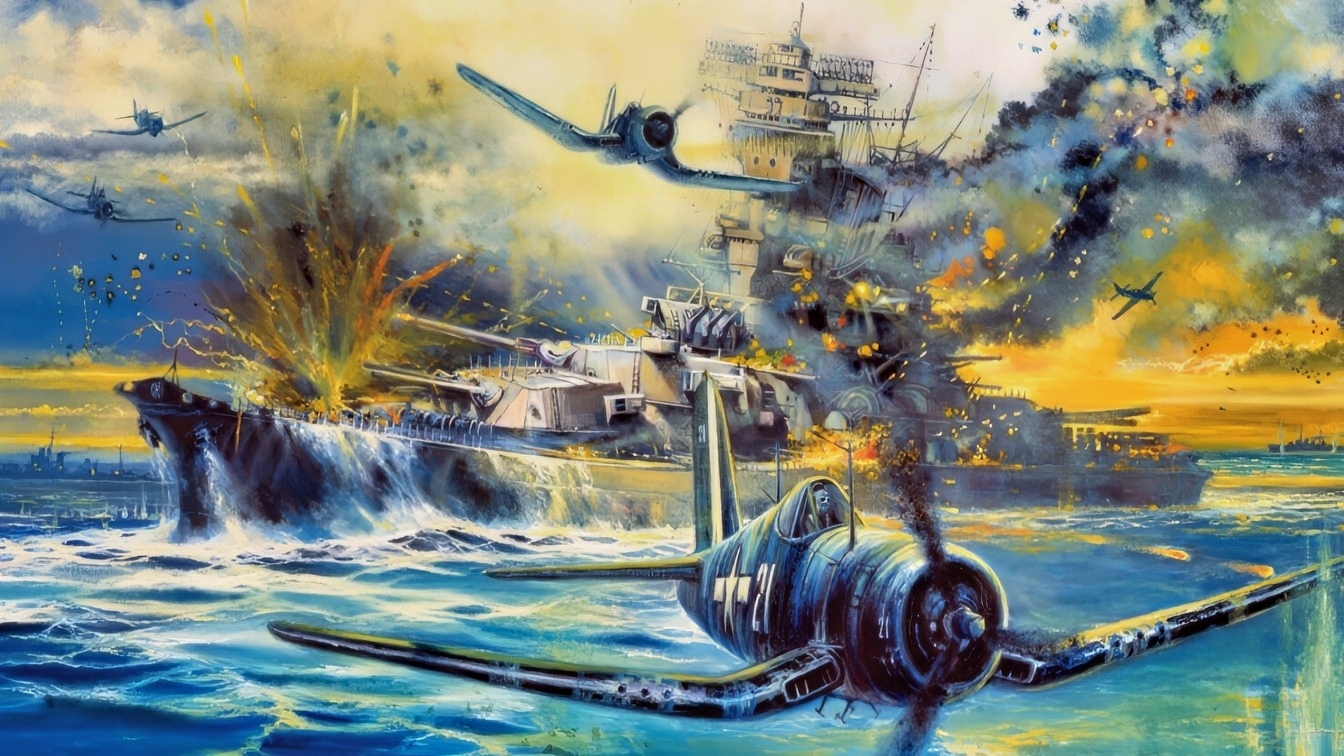
Yamato Battleship Under Attack by US Navy Creative Commons Photo
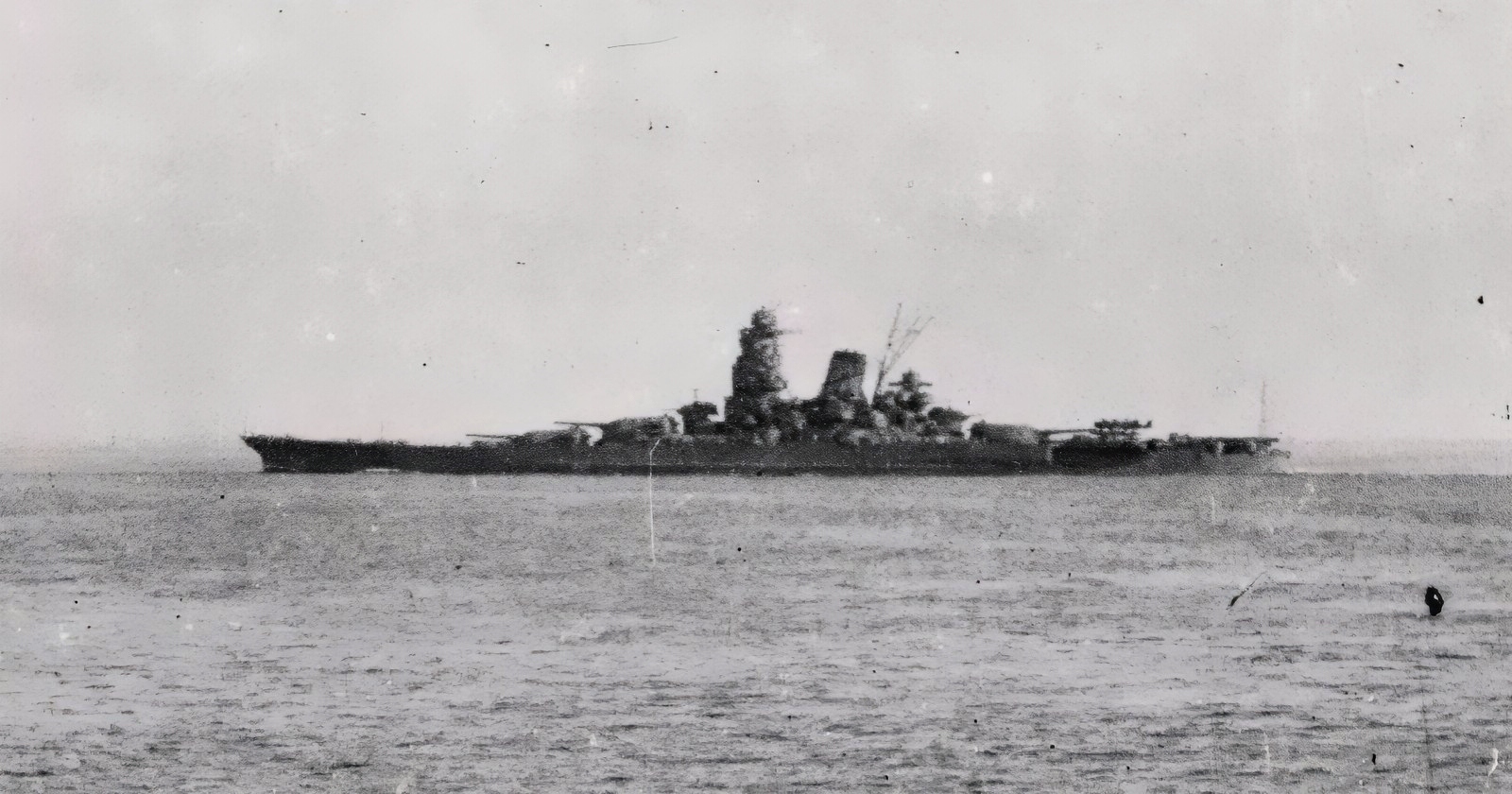
Yamato-Class Battleship in 1944 Creative Commons Image
Undeterred, Admiral Kurita doubled back through the San Bernardino Strait with the Central Force. All that stood in Kurita’s way was Rear Admiral Clifton “Ziggy” Sprague‘s Task Unit 77.4.3 (“Taffy 3“).
The Battle in Brief
“This will be a fight against overwhelming odds from which survival cannot be expected.
We will do what damage we can.” These were the words then-Lieutenant Commander Robert Witcher Copeland used as he addressed the crew of the USS Samuel B. Roberts (DE-413) at the outset of battle.
The more famous quote attributed to a fighting skipper of Samar was actually uttered 363 days before the epic engagement: during the commissioning of USS Johnston (DD-57) on 27 October 1943, Commander Ernest Edwin “Big Chief” Evans boldly declared, “This is going to be a fighting ship. I intend to go in harm’s way, and anyone who doesn’t want to go along had better get off right now.”
Johnston’s sailors would not let their skipper down during the Samar engagement, and neither did the crews of the other USN ships in the fight.
They threw everything but the proverbial kitchen sink at the superior Japanese force, employing 5-inch naval guns, torpedoes from the surface ships, as well as Grumman TBF Avenger torpedo bombers, Curtiss SB2C (“S.O.B. 2nd Class) Helldiver bombers, and obsolescent Grumman F4F/FM-Wildcat fighters.
To make matters worse, very few of these warbirds carried anti-ship bombs or aerial torpedoes, so they had to make do with rockets, depth charges, and Browning “Ma Deuce” .50 caliber machine guns and M1919 .30 caliber machine guns on desperation strafing runs.
Meanwhile, besides the 18-inch guns of the Yamato, the IJN also had the 16-inch guns of the battleship Nagano, the 14-inchers of the battleships Kongō and Haruna, and the respective 8- and 6-inchers of the heavy and light cruisers.
But as Fate/Karma/Joss/Lady Luck would have it, the big guns in Kurita’s battlewagons were loaded mostly with armor-piercing (AP) shells instead of high-explosive (HE) shells; the AP rounds were ideal for heavily armored enemy battleships, but against the minimal-to-nonexistent armor of the CVEs, DDs, and DEs, the AP rounds punched holes without exploding, thus saving the American warships from total slaughter.
Still, the Americans lost two of the “jeep carriers”—namely the USS Gambier Bay (CVE-73) and the USS St. Lo (CVE-63)—along with the Johnston, the USS Hoel (DD-533), and the Roberts. 1,161 American sailors and aviators lost their lives, including CDR Evans, who was posthumously awarded the Medal of Honor.
But their sacrifice was not in vain. In exchange, the hardy warriors of Taffy 3 sank three Japanese cruisers—Chōkai, Chikuma, and Suzuya—and damaged the cruiser Tone beyond repair.
Meanwhile, two IJN heavy cruisers were heavily damaged, and two battleships, one light cruiser, and one destroyer suffered moderate damage. The Japanese suffered in excess of 2,700 casualties.
With absolutely nothing to lose, Evans’s Johnston led the USS Heermann (DD-532) and the aforementioned Hoel and Roberts on a seemingly suicidal charge at Kurita’s fleet.
Embodying the spirit of his skipper, Johnston’s gun boss said quietly, “Please, sir, let us not go down before we fire our damn torpedoes.” He got his wish. The “tin cans” unleashed their “tin fish” along with their 5-inch guns and smoke screens. One of Johnston’s torpedoes scored a direct hit on the IJN heavy cruiser Kumano and blew off her bow.
Amazingly enough, despite his above-quoted words, LCDR Copeland survived the sinking of his own ship and lived to see the end of the war; he retired from the Naval Reserve and passed away on 25 August 1973.
Stunned by the sheer audacity of the Taffy 3 counterattack, and perhaps fooled in the midst of the “fog of war” into thinking he was actually facing a more powerful American task force, Admiral Kurita retreated.
The liberation of the Philippines proceeded as planned, and the Battle of Leyte Gulf as a whole ended as a smashing U.S. victory.
Further Reading
The best-regarded book on the subject is “The Last Stand of the Tin Can Sailors: The Extraordinary World War II Story of the U.S. Navy’s Finest Hour,” by James D. Hornfischer.
There’s also “The Battle of Leyte Gulf: Disaster and Triumph in the Bloodiest Sea Battle of World War II,” written by Edwin P. Hoyt in 1972, which describes the Samar battle in engrossing and harrowing detail; though out of print, used copies are readily available on Amazon and multiple other online booksellers.
About the Author: Christian D. Orr
Christian D. Orr is a Senior Defense Editor. He is a former Air Force Security Forces officer, Federal law enforcement officer, and private military contractor (with assignments worked in Iraq, the United Arab Emirates, Kosovo, Japan, Germany, and the Pentagon). Chris holds a B.A. in International Relations from the University of Southern California (USC) and an M.A. in Intelligence Studies (with a concentration in Terrorism Studies) from American Military University (AMU). He is also the author of the book “Five Decades of a Fabulous Firearm: Celebrating the 50th Anniversary of the Beretta 92 Pistol Series,” the second edition of which was recently published.