
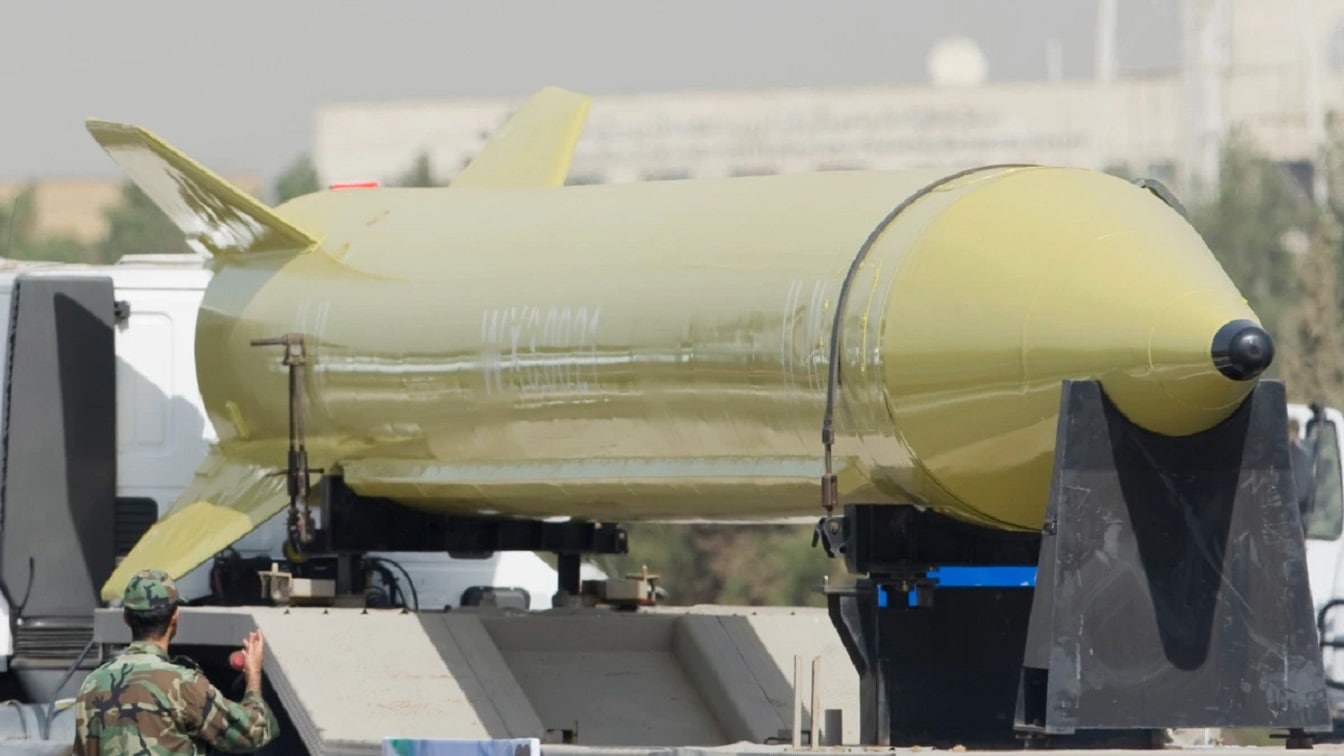
Some 32 former top Iranian officials are demanding Tehran withdraw from the Nuclear Non-Proliferation Treaty “in the shortest time possible,” which would eliminate a major hurdle for the regime to pursue nuclear weapons.
The demand – in a statement from (among others) former vice presidents, ministers, and parliamentarians – reflects growing sentiment in Iranian government circles that, notwithstanding Tehran’s purported decades-long pledge to not pursue nuclear weaponry, it should explicitly reverse course and do so.
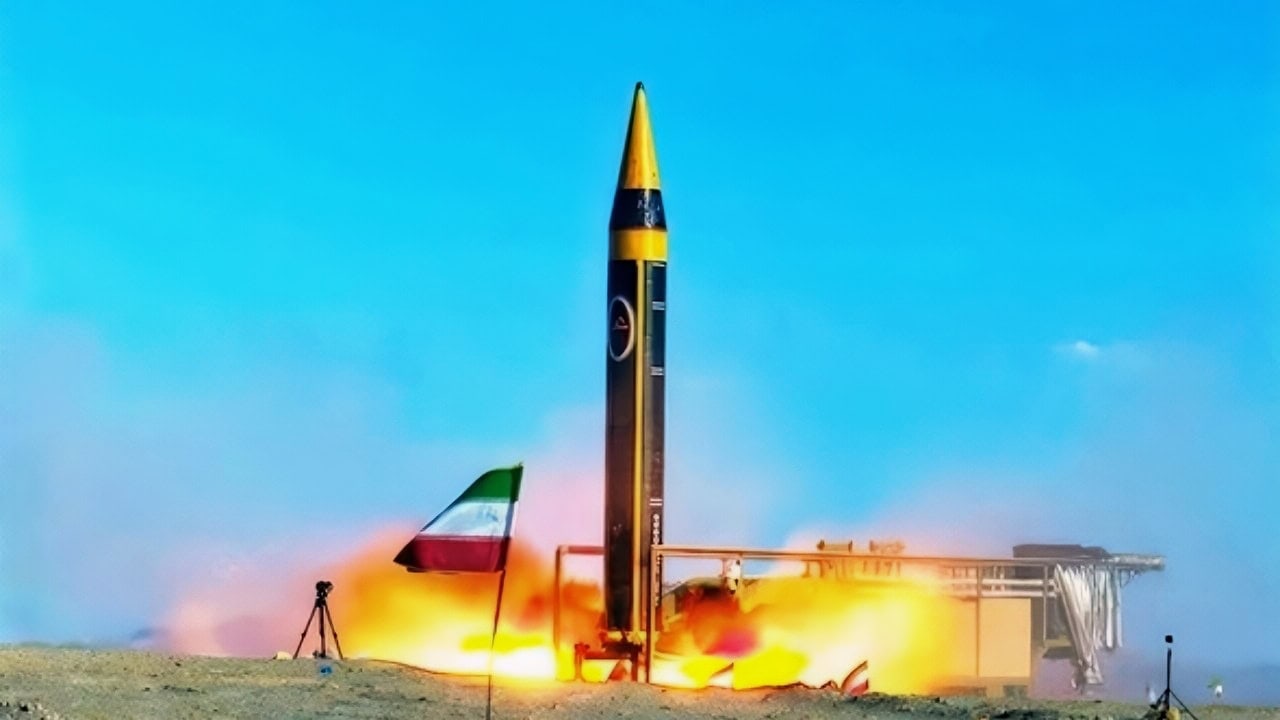
Khorramshahr-4 Iran State Media Photo
The demand comes as international mediators are seeking to reinvigorate talks between Washington and Tehran to end the U.S.-Iran war and, once that’s done, resume talks over Iran’s nuclear program.
Growing sentiment in Tehran to scrap the NPT and pursue nuclear weapons, however, offers a big reason why Washington should eschew more talks on the nuclear front. They are now less likely to produce an agreement Washington would like, and they would also let the regime bide its time, perhaps secure economic concessions from hopeful U.S. negotiators, and, as a result, strengthen its standing at home.
Instead, Washington should pursue a two-part strategy of economic pressure and public outreach: It should continue tightening the financial screws, further weakening Iran’s already shaky economy and, hopefully down the road, loosening the regime’s grip on power. At the same time, it should speak directly to Iran’s long-suffering people, making clear that Washington seeks a brighter future for them and a friendlier government in Tehran to work with.
At the moment, of course, the two sides are locked in a broader war that began in February with U.S. and Israeli airstrikes that targeted Iran’s military facilities and killed its supreme leader and other top officials.
Tehran wants to build upon the Memorandum of Understanding of June that was supposed to end the war – under which the United States would halt its blockade of Iranian ports, release frozen Iranian funds, and lift sanctions; Iran would reopen the Strait of Hormuz; and the two sides would negotiate a final agreement over Iran’s nuclear program and other issues.
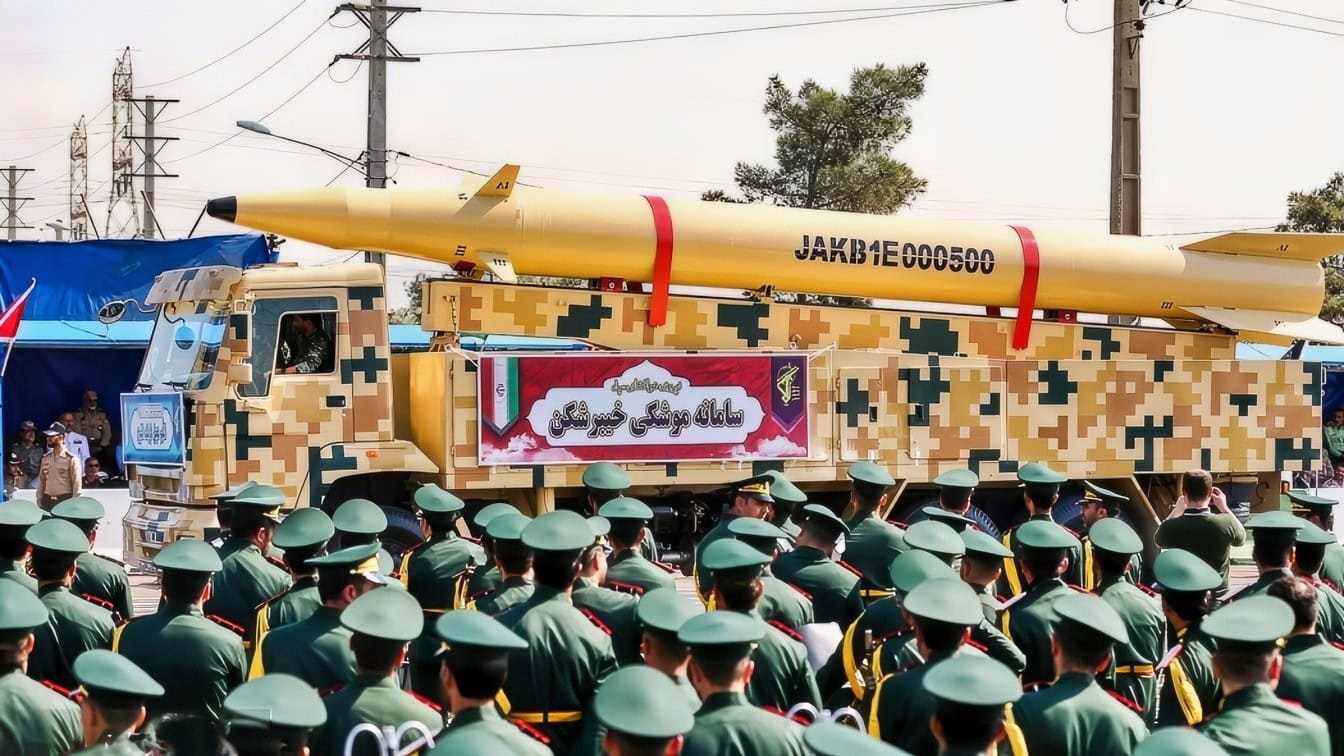
Iranian Kheibar Shekan “Fortress Buster” Ballistic Missile Creative Commons Image
Even with nuclear talks dormant, however, Tehran is sending mixed signals about whether it would ever accept restrictions on its nuclear pursuits that would alleviate U.S. and other Western concerns.
“We stand firm in the face of any new aggression, even if it comes to a doomsday war,” Iranian Foreign Minister Abbas Araghchi said over the weekend. “But at the same time we stand ready for diplomacy.”
Privately, Tehran is taking a far harder line. Iranian officials reportedly are insisting that Washington offer concessions before they will negotiate over the nuclear program. More strikingly, a senior Iranian official said that even if the two sides agree to open the Strait and end the U.S. blockade, Tehran “would give no concessions over its rights, including enriching uranium or shipping its highly enriched uranium out of the country, one of the main U.S. demands.”
But while Tehran may feel confident it can outlast Washington in a test of wills, especially with President Trump presiding over an unpopular war and his party facing potentially sizeable losses in upcoming congressional elections, the tide seems to be turning toward the United States, both economically and geopolitically.
Iran’s rial hit a new low this week, trading at 2.5 million to the dollar, extending a pattern of continuing record lows since the war began, caused by mounting U.S. sanctions and the U.S. blockade of Iranian oil. Inflation in Iran is projected to approach 69 percent this year.
Washington is applying further pressure by forcing nations to choose between trade with the United States or with Iran. In response in recent days, Oman and the United Arab Emirates blocked all flights by Iranian airlines, the UAE prohibited local branches of Bank Melli Iran from doing business involving Iran, and Turkey canceled the license of Iran’s Bank Mellat, which had facilitated trade between Iran and Turkey.
Thanks to U.S. naval efforts, far more oil from Gulf nations now moves through the Strait and could soon meet nearly all global market demand. Iranian exports through the Strait, however, have collapsed – from 1.85 million barrels a day in March to an estimated 255,000 barrels a day in August.
Average Iranians, rich and poor alike, are feeling the squeeze as costs for food, rent, medicine, and other necessities soar. As consumers struggle to afford even basic goods and, when they can, buy fewer, struggling shop owners are laying off employees to stay afloat.
While maintaining the economic pressure, U.S. leaders also should speak directly to the Iranian people, reminding them that it’s their odious regime – and not them – with which Washington is at war.
Were Iranians finally to find the wherewithal to topple their hugely unpopular regime, we should want them to view the United States as an ally, not an adversary.
About the Author: Lawrence J. Haas
Lawrence J. Haas is a senior fellow at the American Foreign Policy Council and the author of, among other books,Harry and Arthur: Truman, Vandenberg, and the Partnership That Created the Free World.