
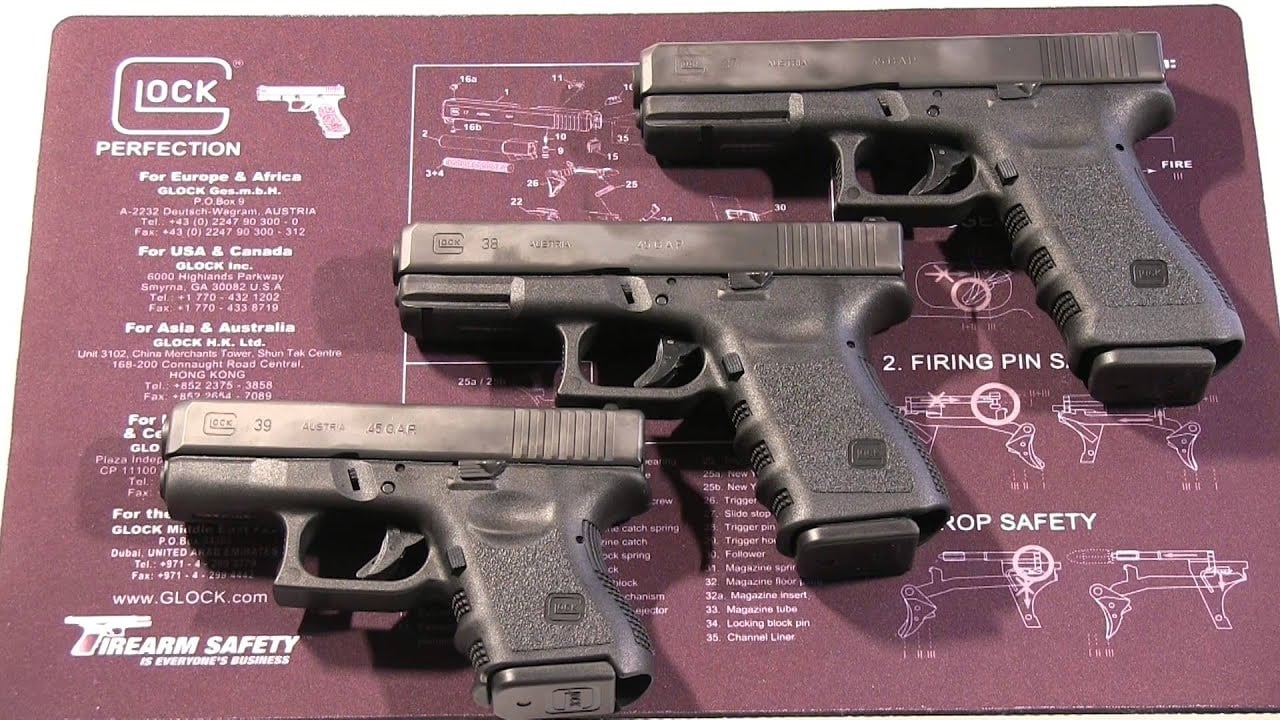
Some cartridges fade away because they don’t work. The .45 GAP worked just fine. So, why did it fail? The Glock 37 was designed around a simple idea: give shooters .45-caliber performance in a pistol sized like a 9mm. On paper, it was a smart answer to a real problem.
A large segment of law enforcement agreed, and for a few years state troopers from New York to Florida carried the G37.
However, the civilian market for the Glock 37 never truly materialized because of the scarcity and high cost of .45 GAP (Glock Automatic Pistol) ammunition, and the expiration of the 1994 Federal Assault Weapons Ban.
Today the Glock 37 is a niche gun chambered for a niche round, and most shooters under the age of 30 have never fired one.
That’s a shame, because the pistol itself was never the problem.
Why Glock Wanted A Shorter .45
Back in 2003, the .40 S&W ruled American police holsters, and after the FBI’s 1986 Miami shootout, agencies wanted more than 9mm.
Many still liked the .45 ACP.
However, the Glock 21 had a grip that was simply too fat for many hands.
Small-handed officers struggled to qualify with it, and even big-handed shooters gave up some control.
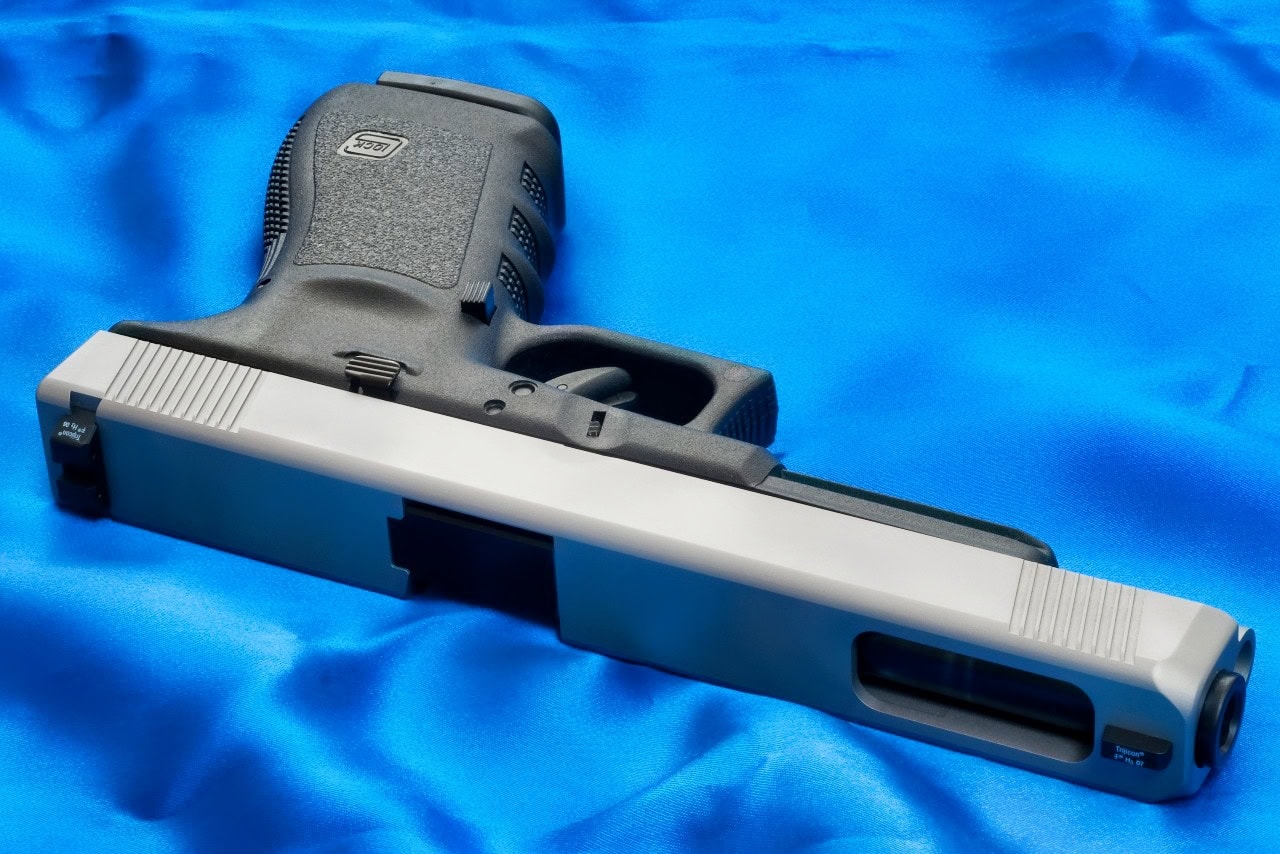
Glock. Image Credit: Creative Commons.
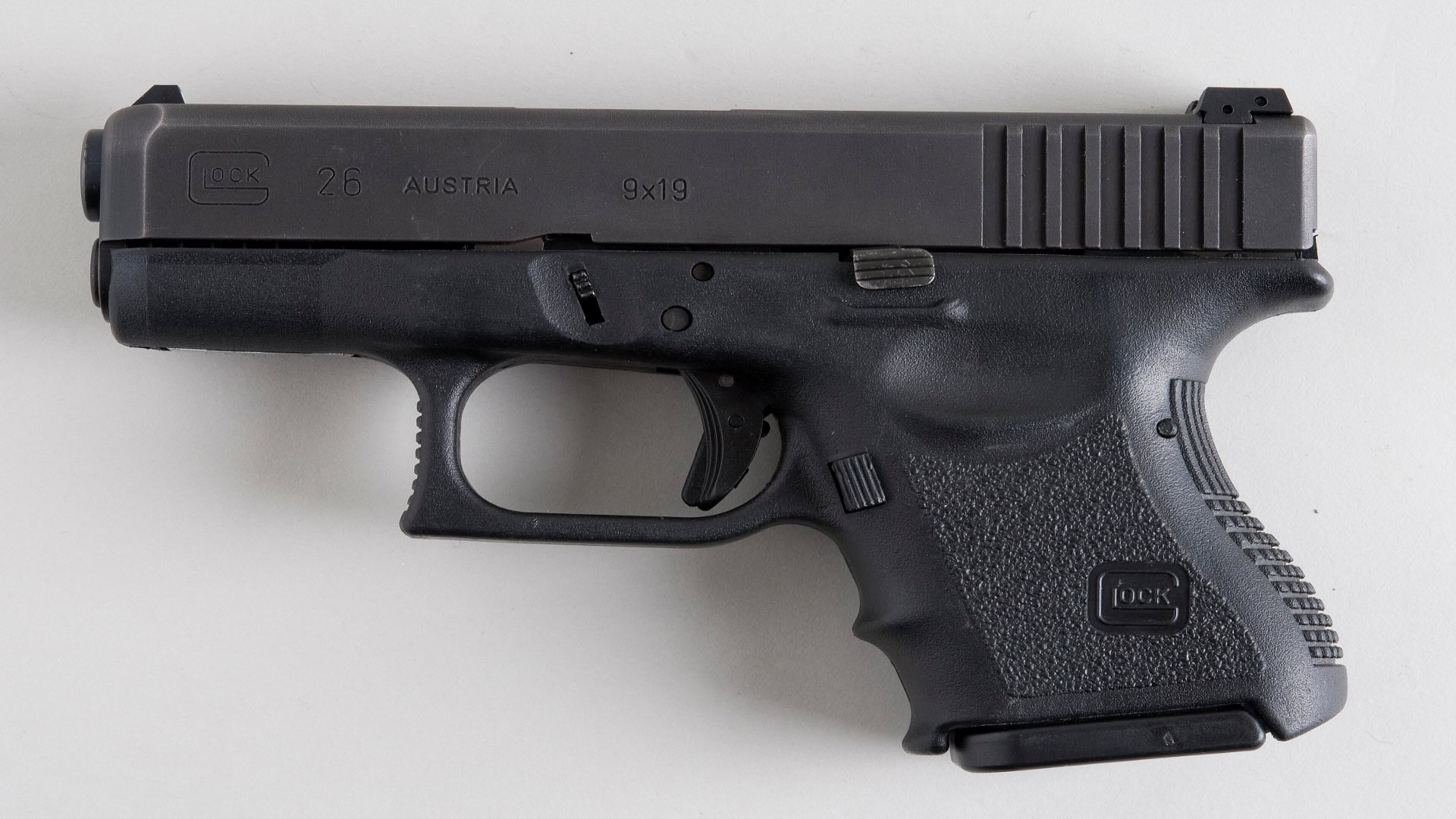
Glock 26 Creative Commons Image
So Glock went to ammunition maker CCI/Speer, then part of ATK, and asked for a cartridge with .45 ACP ballistics that would fit a 9mm-sized frame.
An engineering team led by Ernest Durham delivered the .45 GAP (Glock Auto Pistol).
It shares the .45 ACP’s .452-inch bullet diameter but uses a shorter case and a small pistol primer.
Getting full-size .45 power out of less case volume required creative powder work and higher operating pressures, roughly +P territory.
And in a move similar to what Colt did with the .45 ACP, Gaston Glock named the cartridge after his company.
A Glock 17 Frame With A .45 Punch
If you’ve held a Glock 17, you’ve essentially held a Glock 37.
Glock built the G37 on the same standard frame as its 9mm/.40 S&W/.357 SIG guns, then topped it with a wider, heavier slide to handle the bigger round.
According to Glock’s spec sheet, the G37 runs a 4.49-inch barrel and measures 8.03 inches overall, 5.47 inches tall, and 1.30 inches wide.
It weighs 26.10 ounces empty without a magazine and 35.27 ounces fully loaded.
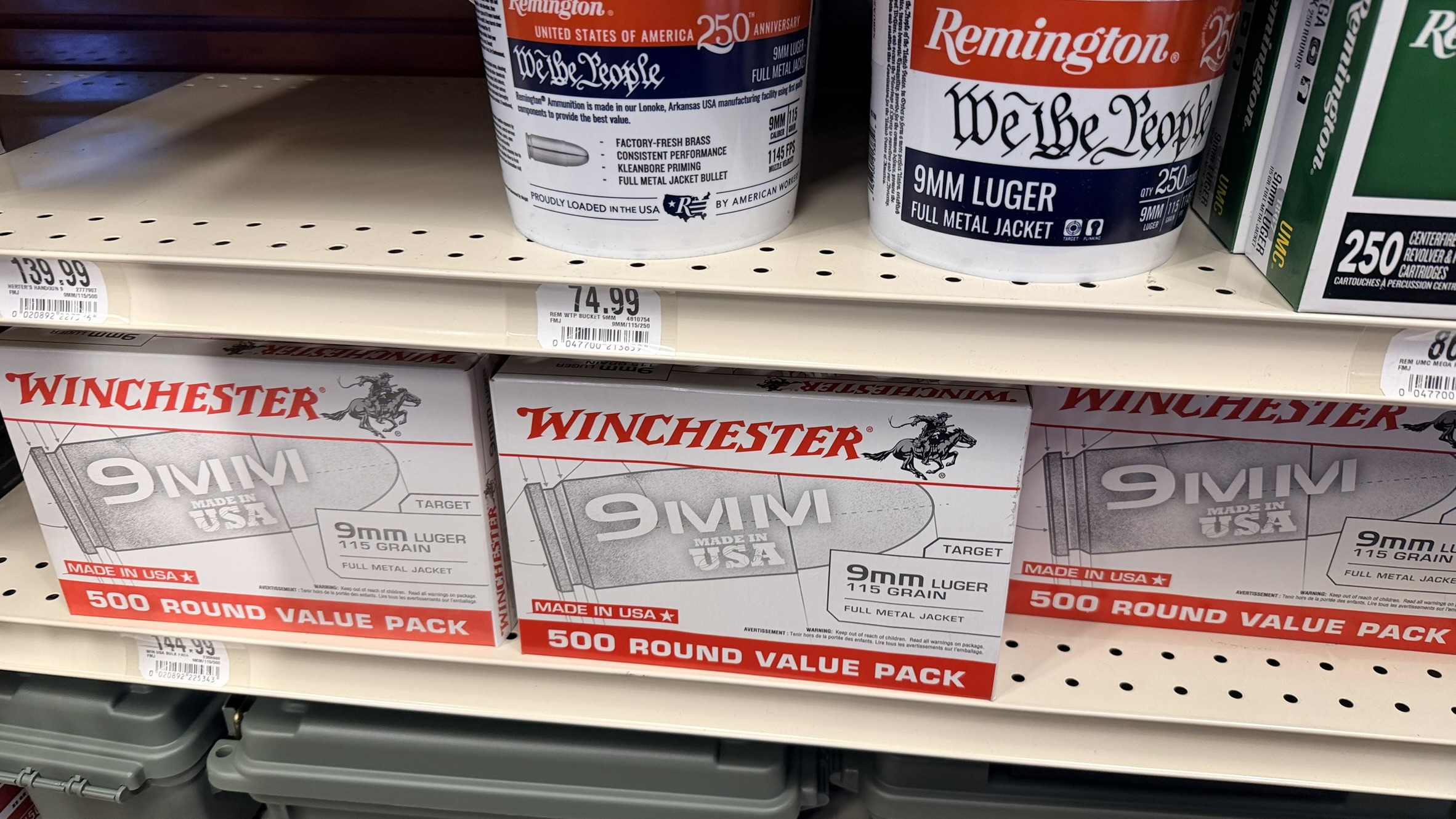
Stocked Ammo Shelves. 19FortyFive Photo from Bass Pro Shops in Orlando, Florida.
The magazine holds 10 rounds, and the trigger is the standard Safe Action, with a pull of roughly 5.5 pounds.
For anyone interested, the Glock 17 Gen4 is 7.95 inches long and 5.47 inches high. The G37 is less than a tenth of an inch longer and about 3.7 ounces heavier. That’s the whole point.
The most prevalent duty load was the 200-grain Speer Gold Dot bonded hollow point at 1,000 feet per second or better, which works out to about 444 foot-pounds of energy.
That matches a good .45 ACP load out of a gun with a 9mm-sized grip.
Winchester later made 230-grain bullets for the GAP, though most agencies stuck with the 200-grain Gold Dot.
Glock rounded out the family with the compact G38 and subcompact G39, giving troopers a matching backup gun.
The State Troopers Went All In On The G37
The New York State Police were the first to adopt it.
They had lost a trooper whose 9mm rounds failed to stop his killer, and they traded their Glock 17s for the G37.
Other State police agencies followed quickly.
Pennsylvania, South Carolina, Georgia, and Florida all adopted the G37.
Within a few years, about 10 percent of America’s state police and highway patrol agencies were carrying the .45 GAP, along with local departments in places like Berkeley, Missouri.
Florida’s decision says a lot.
The Florida Highway Patrol ran a 16-month evaluation before picking the G37 Gen4 in 2010.
Of the roughly 18 committee members, only two voted for the Glock 21SF.
Everyone else picked the G37.
Florida bought about 2,500 of them to replace its .40-caliber Beretta 96Gs.
FHP instructors found the GAP outperformed nearly every other caliber they tested through auto bodies and windshield glass, and troopers with small hands shot it better than the G21.
In the field, it delivered.
Massad Ayoob, who debriefed troopers on several GAP shootings, has written that stopping power was never the complaint from any agency that later dropped it.
None of that saved it. BTW, Ayoob stated that he’d still carry a Model 1911A1 .45 ACP.
The Ammo Is The Honest Trade-Off
So what killed the GAP? Not performance. Ammunition.
The 2012 ammo drought forced manufacturers to pour everything into 9mm, and niche rounds like the .357 SIG and .45 GAP became scarce and more expensive.
Then the FBI moved back to the 9mm round in the 2010s, convincing much of law enforcement that modern hollow points had closed the gap with the bigger calibers.
However, the biggest blow came from Glock itself.
The Glock 21SF, and later the Gen4 frames, trimmed grip size and trigger reach on the .45 ACP guns, solving the same problem the G37 was built to solve, with a cartridge you could buy anywhere.
Soon afterward, Pennsylvania switched to the Glock 21 in .45 ACP, and Georgia and South Carolina opted for the 9mm.
Florida, the last big holdout, retired the G37 in 2020 for the 9mm Glock 45.
Ayoob says he doesn’t know of a single agency still issuing the round.
Glock’s European site now lists the G37 as discontinued.
Unfortunately, that was a bad ending for a good pistol.
The G37 is accurate, soft-shooting for a .45, and fits average hands far better than a G21.
Those Florida trade-ins hit the used market for around $289, which made them one of the best bargains in big-bore handguns.
However, GAP ammo is still scarce and expensive, often 60 cents a round or more, if you can find it.
If you buy one, buy the ammo the same day.
Personally, I’d also pick up a spare 9mm or .40 S&W slide, since the frame accepts standard-length Glock 17 and 22 Gen4 top ends.
The Glock 37 did exactly what it was designed to do.
It put a full-power .45 in a gun most shooters could actually hold.
The G37 was a good pistol, but just lost a fight with the supply chain.
Some cartridges die because they don’t work.
This one died because it never caught on in the civilian marketplace, and nobody could find those niche rounds on the shelf.
About the Author: Steve Balestrieri
Steve Balestrieri is a National Security Columnist. He served as a US Army Special Forces NCO and Warrant Officer. In addition to writing on defense, he covers the NFL for PatsFans.com and is a member of the Pro Football Writers of America (PFWA). His work was regularly featured in many military publications