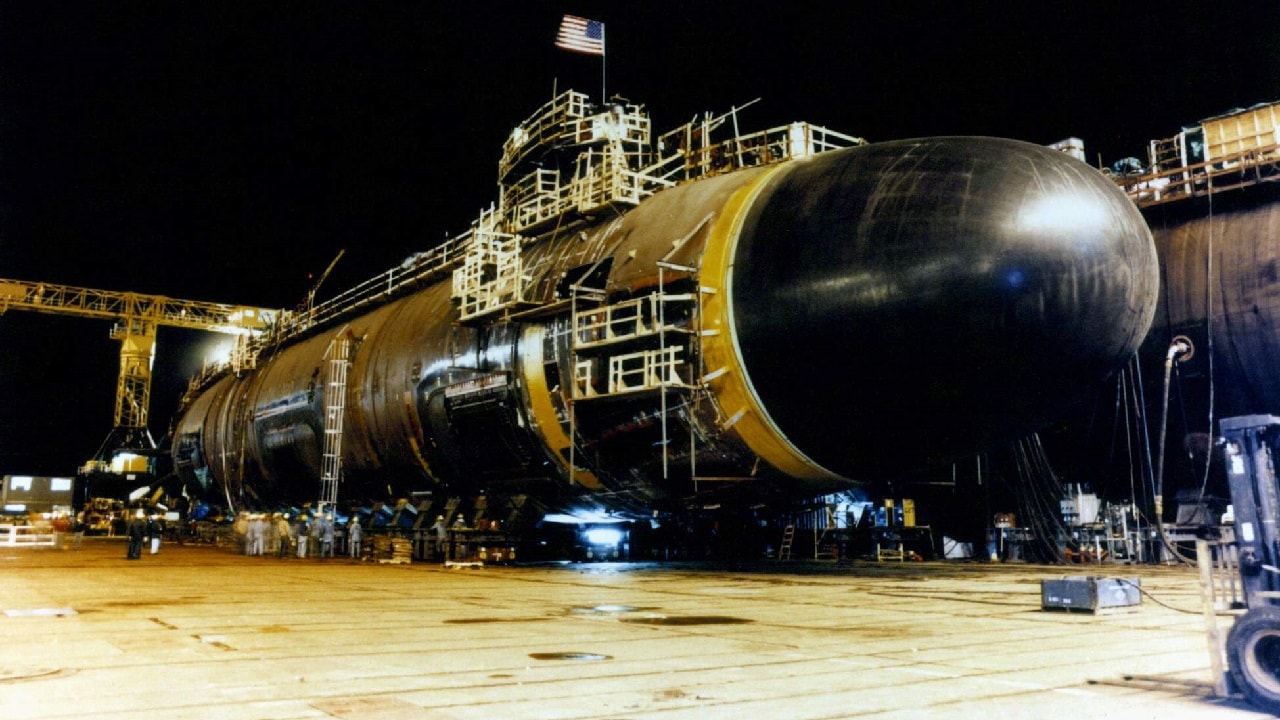
In the 1980s, the US Navy applied everything it learned from operating its Los Angeles-class submarines and began designing the stealthiest submarine possible, with no expense spared: the Seawolf-class.
Rather than continue the sequential hull-numbering scheme ending with the latest Los Angeles-class boat commissioned in 1996, the USS Cheyanne SSN-773, the Seawolf received hull number 21.
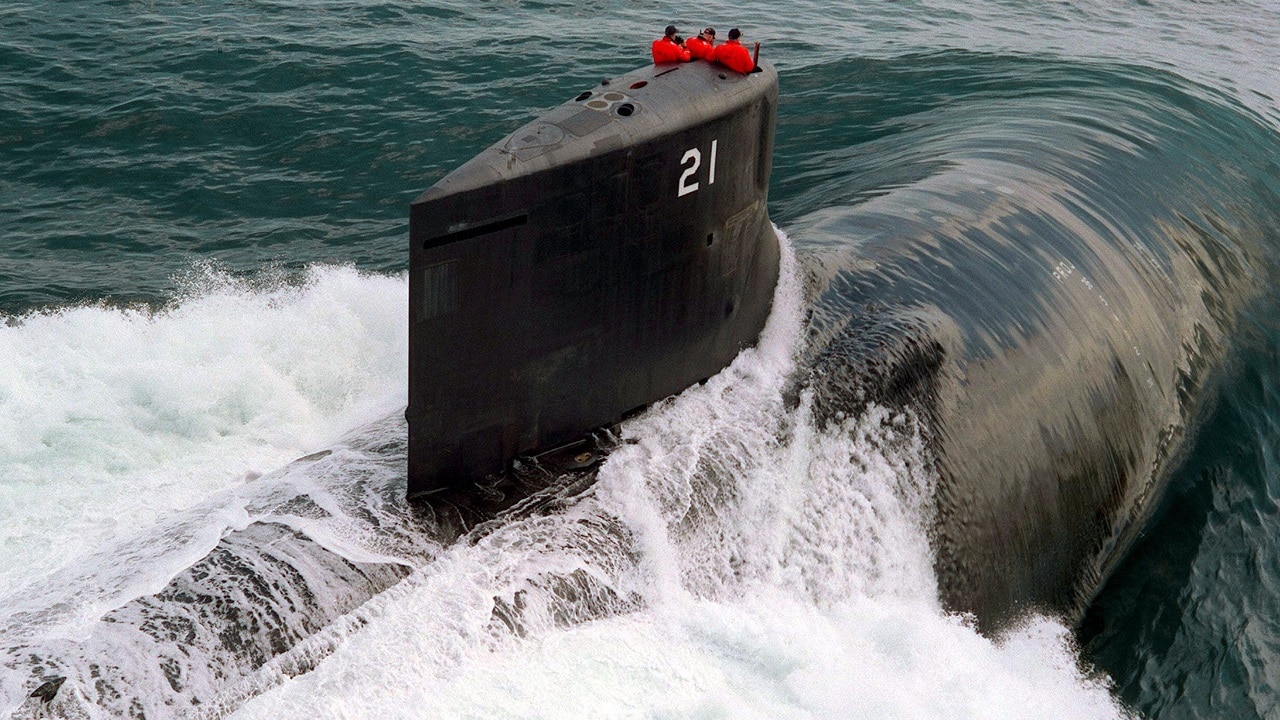
The U.S. Navy’s newest attack submarine, USS Seawolf (SSN 21), conducts Bravo sea trials off the coast of Connecticut in preparation for its scheduled commissioning in July 1997.
This represented the notion that the Seawolf would be the submarine of the 21st Century.
But that program would become, like much military hardware in the late 1980s and early 1990s, a victim of history and bad timing.
Going Under The Ice For One Specific Target
The Seawolf was designed with a specific target in mind: finding and killing what remains the largest submarine ever built, the Soviet Typhoon-class ballistic missile submarine.
Nearly 600 feet long and displacing 48,000 tons submerged, the Typhoon carried 20 ballistic missiles capable of releasing 200 individually targeted nuclear warheads on targets some 5,200 miles away.
Previous versions of Soviet SSBNs patrolled the open waters off the East and West coasts of the United States.
To reach their targets, these missile boats had to confine themselves to specific patrol zones.
Zones that US submarines could predict and patrol themselves.
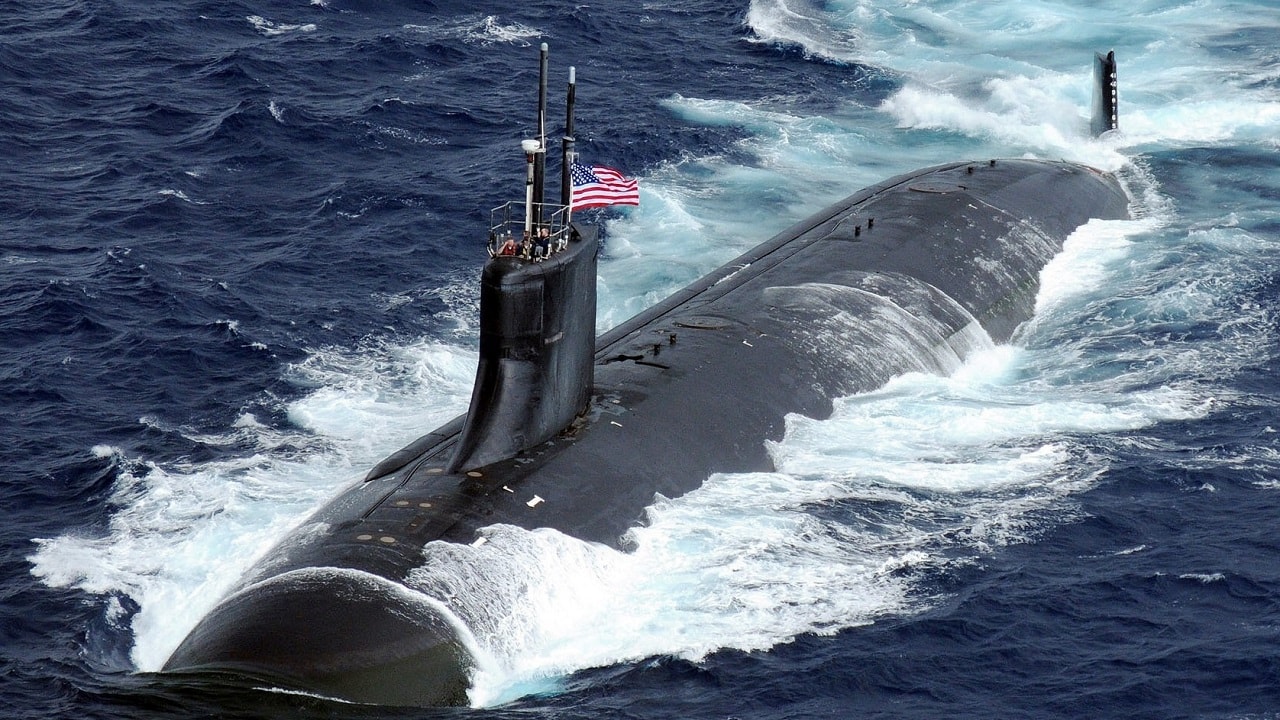
Seawolf-Class Submarine USS Seawolf. Image Credit: Creative Commons.
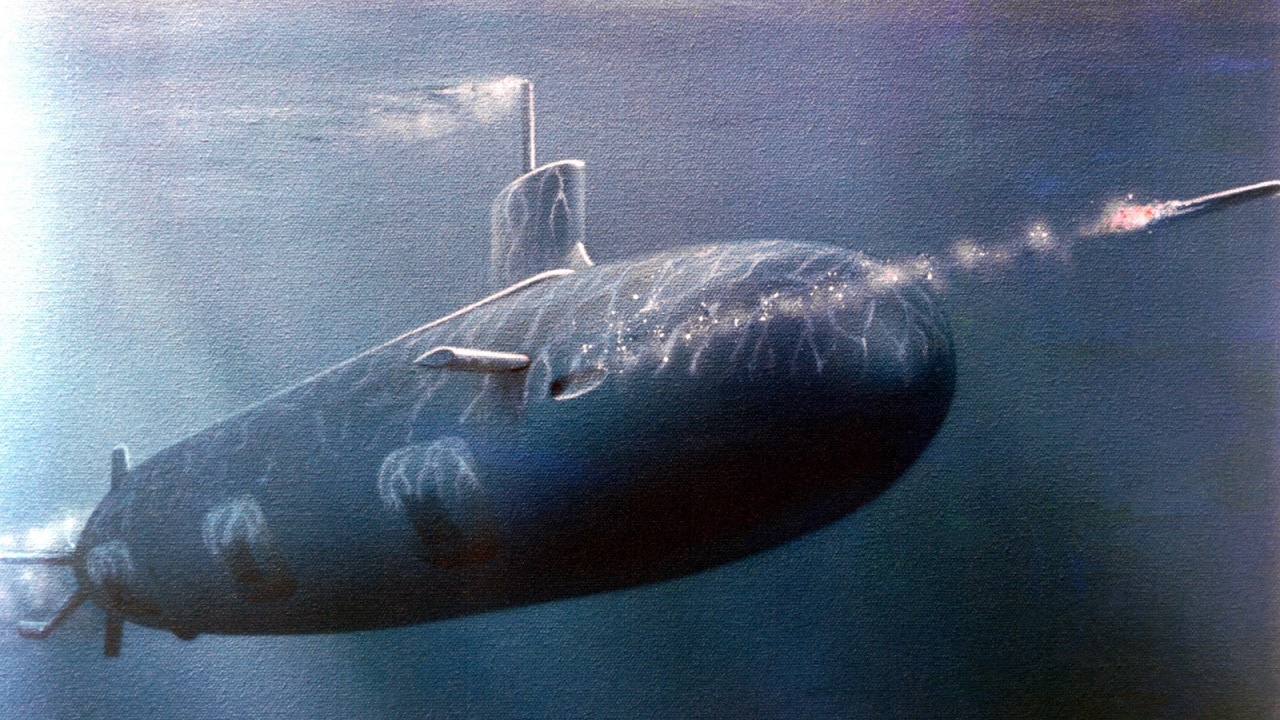
An artist’s concept of the nuclear-powered submarine SEAWOLF (SSN-21).
Soviet SSBNs were also based in the northern reaches of the Soviet Union, requiring them to transit choke points like the gap between Greenland, Iceland, and the UK in the Atlantic, and the Baring Strait and the straits at the northern and southern ends of the Sea of Japan.
To control these choke points, the US laid a vast submerged network of listening hydrophones called SOSUS to detect Russian “Boomers” in transit.
The US Navy’s attack submarines could sit silently in the straits, waiting to fall in behind and trail Soviet missile subs as they exited for open water.
The Typhoon changed everything.
Built to patrol Arctic waters, it covered five million square miles of Arctic Sea, which was ice-covered 97% of the year.
The Typhoon never had to transit the choke-point straits and risk detection by US attack subs waiting for them like cops behind a road sign.
It was also discovered that Typhoons did not patrol alone.
Perhaps the Kremlin was fearful of sending a captain to sea with 200 nuclear warheads all to himself.
Perhaps they wanted to ensure the Typhoons’ protection, but one or more Soviet attack submarines would routinely shadow this monster of the deep on its patrols.
To track these Typhoons, US Navy subs would have to force these straits themselves, and risk being detected and trailed by Soviet subs instead.
The Russians had turned the chessboard around.
Navigating and tracking targets under the ice was not easy.
Sound traveling underwater will bounce up and down off the sea floor within channels of water called “Thermoclines.” Arctic waters covered in ice create thermoclines with both a floor and a roof.
Under certain conditions related to the water’s temperature, depth, and salinity, sounds emitted by submarines bounce repeatedly between the bottom and the ice roof above.
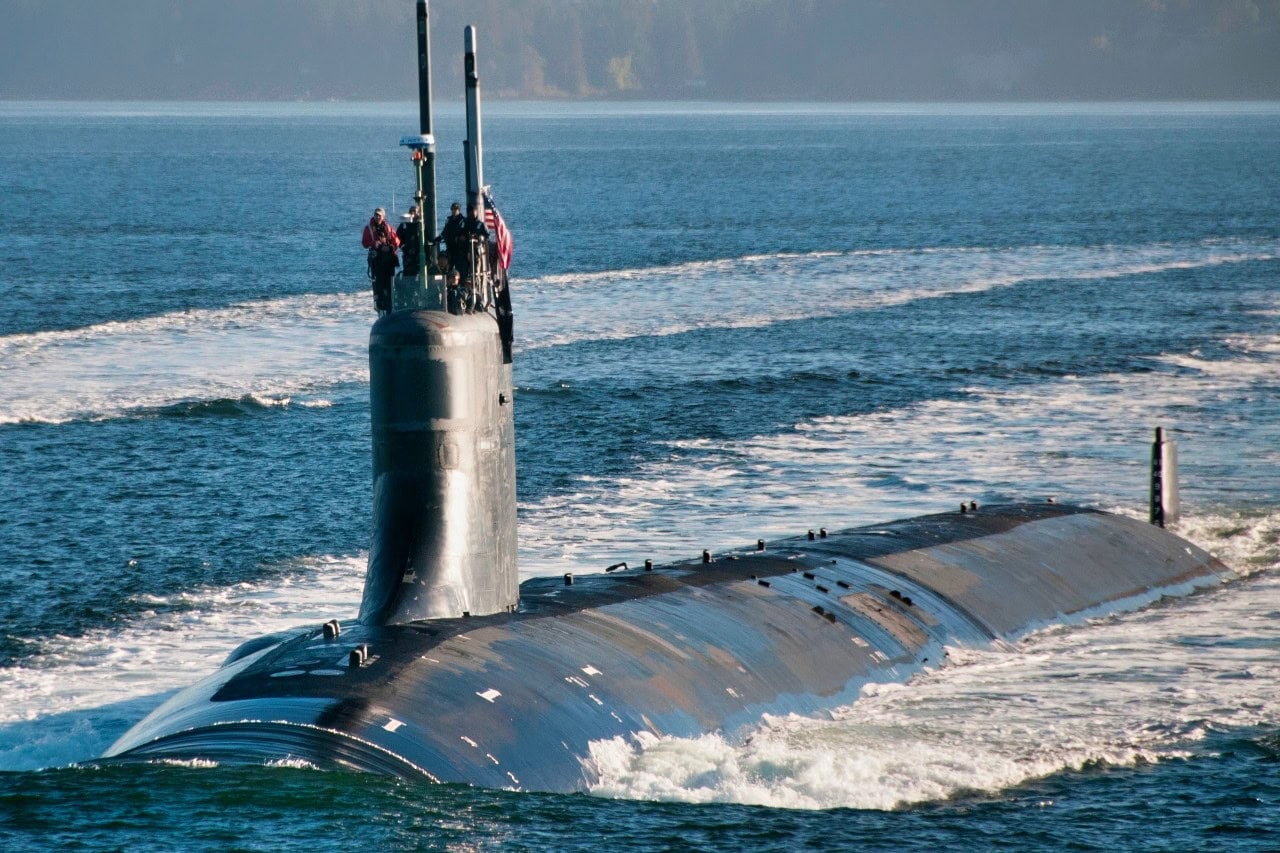
PUGET SOUND, Wash. (Sept. 11, 2017) The Seawolf-class fast-attack submarine USS Jimmy Carter (SSN 23) transits the Hood Canal as the boat returns home to Naval Base Kitsap-Bangor. Jimmy Carter is the last and most advanced of the Seawolf-class attack submarines, which are all homeported at Naval Base Kitsap. (U.S. Navy photo by Lt. Cmdr. Michael Smith/Released)
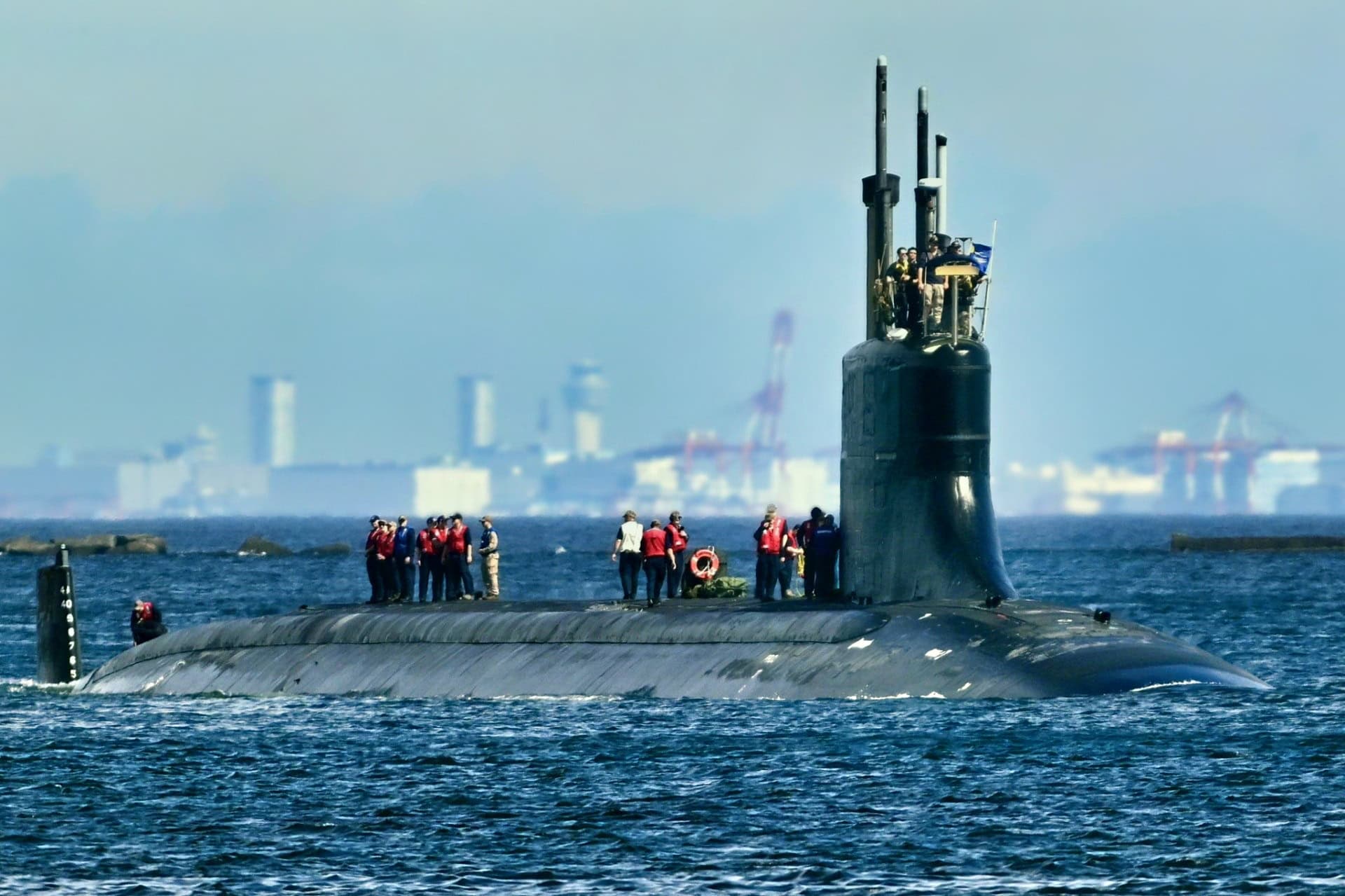
Seawolf-Class Submarine. Image Credit: Creative Commons.
This creates an echo effect with passive sonar that makes tracking submarines under the ice a fine art.
The Seawolf was the answer to finding submarines under the ice.
It made almost no noise in the water, bouncing around to confuse sonar operators about who they were really listening to.
The only sound in the water would be the Russians, and they could follow that.
The Navy planned to build 29 Seawolf-class submarines and began with the first two: USS Seawolf (SSN-21) and USS Connecticut (SSN-22).
These first two boats would serve as proof-of-concept platforms to work out kinks and refine future hulls.
Basic Specifications
Dimensions: 353 feet long with a 40-foot beam. (The USS Jimmy Carter is 100 feet longer with a section added for Special Operations missions.
Displacement: 9,136 tons submerged (USS Jimmy Carter’s SpecOps Section added 3,020 tons to her weight)
Hull Construction: HY-100 high-yield steel alloy.
This steel reduces “hull popping” noise during depth changes and gives the class an operational depth exceeding 2,000 feet, compared to the 1,200-foot limit of the Los Angeles hulls.
The Seawolf cost an eye-popping $ 3.5 billion
These first two cost an eye-popping $3 to $3.5 billion each.
This was more than three times the cost of a Los Angeles-class boat.
The Seawolf delivered something for the mounds of treasure it took to build it: silence.
The Seawolf Was Built For Silence At Speed
A submarine protects itself by making as little noise as possible.
It hunts its quarry by detecting the other guy before he can detect you.
If you can hear him two to three miles away and he can’t hear you until you are just one mile away, you have a major combat advantage.
The Seawolf was nearly undetectable by sound unless you were practically sitting on it, and estimates put it at about 70 times quieter than the Los Angeles-class.
Some said a Los Angeles-class submarine tied to the pier on shore power was louder than the Seawolf submerged and running at 20 kts.
The submarines the Seawolf would hunt are quietest at speed below 6 knots.
A Nearly Silent Propulsion System
The Seawolf discarded the tried-and-true six-bladed propeller in favor of a Pump-Jet Propulsor System which resembles a shrouded turbine jet engine.
This is a major factor in the Seawolf’s quiet operation, as spinning slower provides more thrust with little of the cavitation noise propellers create at higher speeds.
This pump-jet gets its power from a single Westinghouse S6W nuclear reactor producing 52,000 shaft horsepower.
The Seawolf uses extensive acoustic coating on the hull to quiet water flow and absorb internal noise.
Inside, every piece of equipment is designed for quiet, minimal-vibration operation and mounted on noise- and vibration-dampening bushings.
The Seawolf Had A Full Set Of Fangs
The Seawolf had eight forward-firing torpedo tubes in a two-story-sized torpedo compartment, giving it quite a punch.
The ability to guide eight wire-guided Mark 48 ADCAP torpedoes at individual targets at once enables the Seawolf to take on an entire naval task force on its own.
If hunting a Typhoon and an Akula escorting it, the sub could track and attack both with overwhelming firepower.
From these eight torpedo tubes, the Seawolf could also launch Tomahawk cruise missiles.
Internal storage allows the sub to carry a mix of up to fifty torpedoes and cruise missiles.
Configured for land attack or as a sub- and surface-ship hunter, this large magazine would let the Seawolf remain at sea and on station for a considerable time without returning to port to reload.
The Peace Dividend Ended The Seawolf Program
The Collapse of the Soviet Union left Russia with a fleet mostly confined to port, lacking the money or workforce to put large fleets of ships and submarines to sea.
This, in turn, led to major cuts to the US budget, known as the Peace Dividend, in the early 1990s.
With the Russian navy mostly in port and the threat of nuclear Armageddon apparently averted, the Seawolf was deemed a luxury that could no longer be afforded.
The Pentagon was loath to give up the Seawolf as an advancement in submarine technology and allowed the completion of the USS Jimmy Carter (SSN-23) in a heavily modified form.
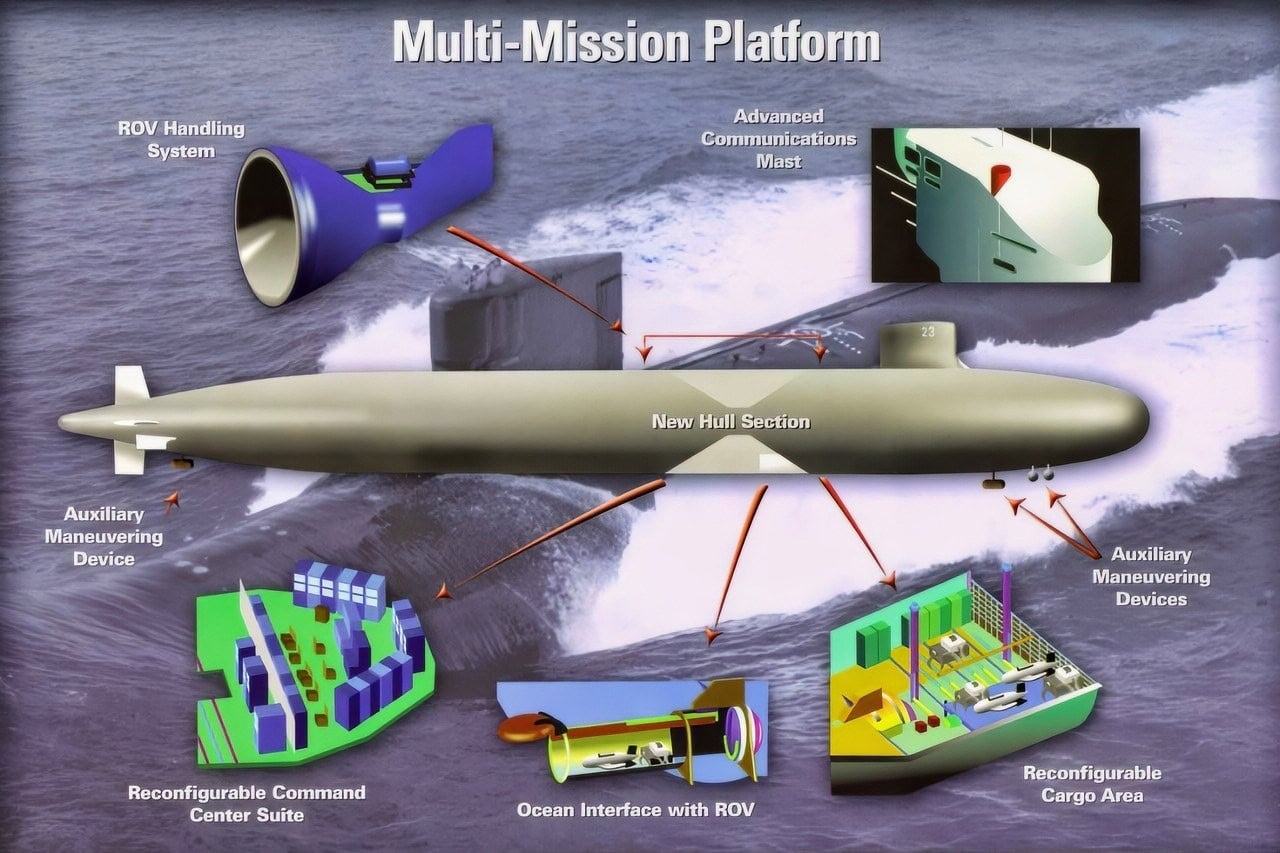
USS Jimmy Carter Seawolf-Class. Image Credit: Creative Commons.
Those modifications involved adding a 100-foot section to her hull to store equipment and accommodate Special Operations Forces for clandestine missions.
With a seawater-filled “Moon Pool” inside the pressurized compartment, the Carter can deploy and recover Navy SEALs, submersibles, and autonomous drones for surveillance and reconnaissance missions.
It is also widely believed that SSN-23 can lie near the bottom and tap fiber-optic communications cables that span the seabeds of the open oceans worldwide.
In the generally secret world of the Submarine Service, the USS Jimmy Carter may be the most secretive of all.
Seamounts Are Very Quiet Too
Yet despite its stealth and advanced sensors and equipment, the Seawolf is not invincible.
On October 2nd, 2021, the USS Connecticut (SSN-22) was traveling at high speed and hit an uncharted seamount in the South China Sea.
This is the second time a modern US submarine has collided with an uncharted seamount in the Pacific.
The Los Angeles-class submarine USS San Francisco (SSN-711) struck one off the Caroline Islands in January 2005.
Fortunately, no one died, and only 11 crew members were injured.
In this collision, the Seawolf proved to have the same kind of structural toughness as the class it replaced.
The sonar-dome nose and forward ballast tanks were destroyed, but the sub remained controllable and surfaced safely.
Like the San Francisco before her, which suffered nearly identical damage in her own collision, the Seawolf proceeded under her own power to Guam.
As expensive as the Seawolf was to build, it will likely be expensive to repair.
The USS Connecticut has been in drydock since 2022 and is not expected to return to service until 2025.
About the Author: Sean Spoonts
Sean Spoonts is the former Editor-In-Chief of SOFREP.com. He is a military analyst, writer, and commentator whose work has appeared in Newsweek, CNS News, Ukrinform, and various military/veteran media networks and professional publications, including the Military Intelligence Professional Bulletin. He is a U.S. Navy veteran, having served as an Aviation Anti-Submarine Warfare Operator and Search and Rescue Helicopter Aircrewman.