
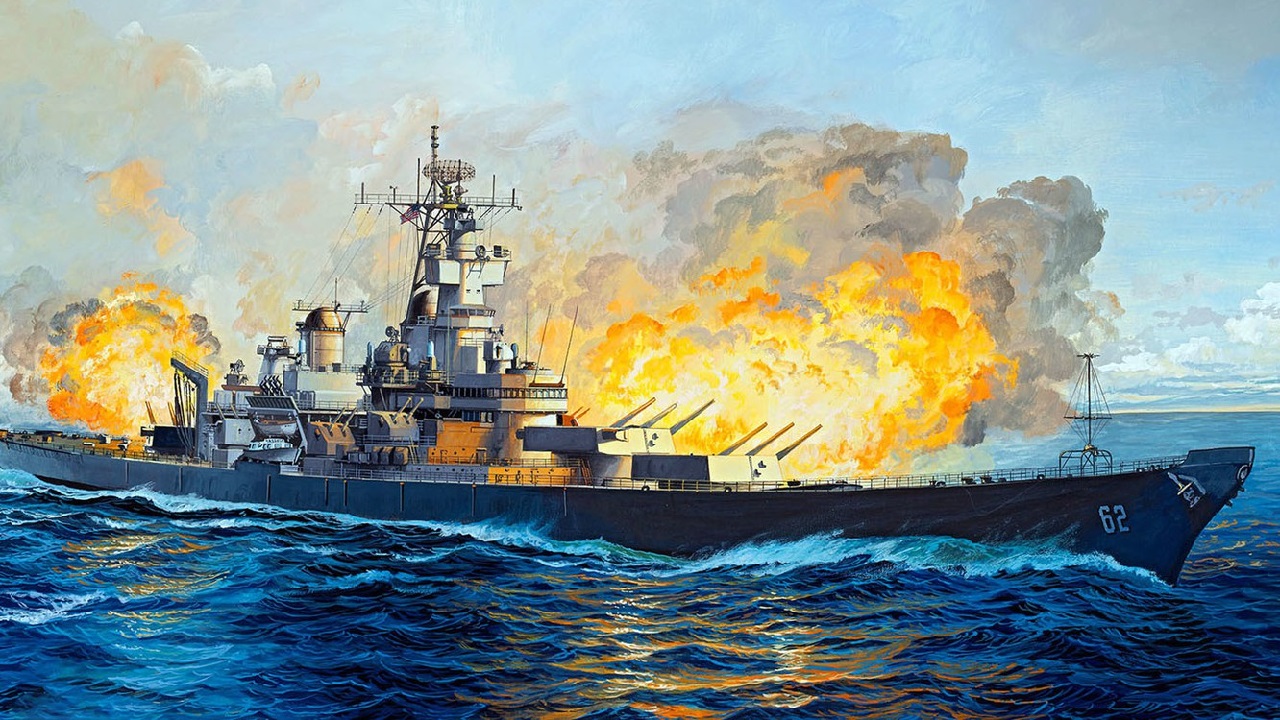
Summary and Key Points: Christian D. Orr revisits the Montana-class battleships, the last ordered by the U.S. Navy under the July 1940 Two-Ocean Navy Act: five ships, Montana (BB-67) through Louisiana (BB-71), of 921 feet, 72,104 tons, twelve 16-inch/50 Mark 7 guns, 21,000 tons of armor and 2,355 crew, canceled after Coral Sea and Midway because 28 knots could not keep pace with carriers. He imagines them refitted with Tomahawks and Harpoons for Korea, Vietnam, Lebanon and Desert Storm.
Military History Explained: The Great USS Montana-Class Battleship Mistake?
Even more so than the never-completed USS Illinois and USS Kentucky of the Iowa class of battleships, the star-crossed Montana-class battleships of the United States Navy provide us with one of the great “What if?/What might have been” /“Coulda, shoulda, woulda” quandaries of maritime military history.
The Iowas have gone down in history as the most successful battleships of all time, serving for 48 years across five conflicts; the Montanas could’ve claimed that lofty status instead had they come to fruition.
Alas, the “Mighty Montanas”—an intentional wordplay on the extant “Mighty Mo,” i.e., the Iowa-class battleship USS Missouri (BB-63)—were never actually built.
With the benefit of 20/20 hindsight, one cannot help but wonder whether it was a major mistake not to build at least one or two Montana-class battlewagons, especially given the multiple comebacks in the post-World War II era, i.e., the Cold War.
Fascinating Fearsome Premise: Montana-Class Concept and Prospective Vital Stats
Named for “The Treasure State”—which, like “The Hawkeye State” of Iowa, is ironically a landlocked state that inherently lacks a coastline—the Montana-class vessels were the last battleships ever to be ordered by the U.S. Navy, authorized under the Two Ocean Navy Act—AKA the Vinson–Walsh Act—shipbuilding program of July 1940 and funded in Fiscal Year 1941.
On paper, the Treasure State’s seagoing namesakes would’ve been nearly a third larger than their Iowa-class ancestors, with a hull length of 921 feet, a beam width of 121 feet (36.88 meters), a draft of 36 feet, and a fully laden displacement of 72,104 tons.
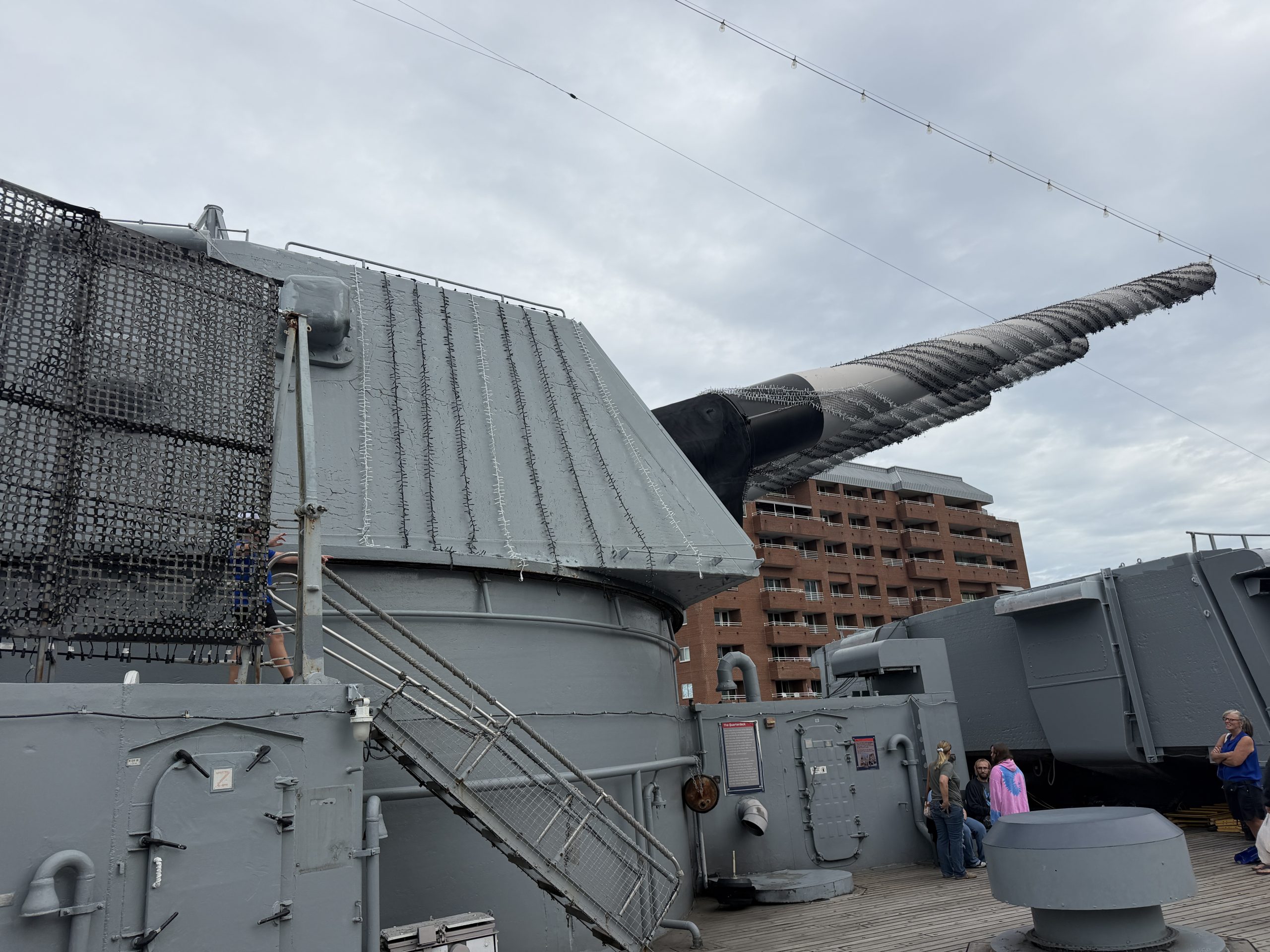
USS Wisconsin Iowa-Class Battleship Tour. Photo by 19FortyFive Reporter Christian D. Orr.
The Montana super battleships would have retained the 16-inch/50 caliber Mark 7 main guns of the Iowa predecessors, but with an added, deadlier twist: three extra such guns, for a dozen in total—two triple turrets fore, two such turrets aft.
The newer ships would’ve also seen an upgrade in their ability to absorb punishment and dish it out: thicker armor, 21,000 tons, with 18 inches of plating and bulkheads.
Total crew complement would’ve consisted of 2,355 enlisted seamen and commissioned officers.
The Navy ordered five of these would-be warships.
The lead ship of the would-be Fab Five, USS Montana (BB-67), would’ve been built at the Philadelphia Navy Yard along with the Ohio (BB-68), whilst Maine (BB-69) and New Hampshire (BB-70) were to be constructed at the New York Navy Yard in Brooklyn; and the Louisiana (BB-71) at the Norfolk Navy Yard in Portsmouth, Virginia.
What Went Wrong?
Sadly, these oh-so-promising battlewagons were never built, and the biggest reason for this mechanical and fiscal abortion was a literal and figurative sea change in naval warfare.
It was starkly demonstrated during World War II—especially during the Battle of the Coral Sea and the epic Battle of Midway—that aircraft carriers had dethroned battleships as the predominant “capital ships” of naval power projection.
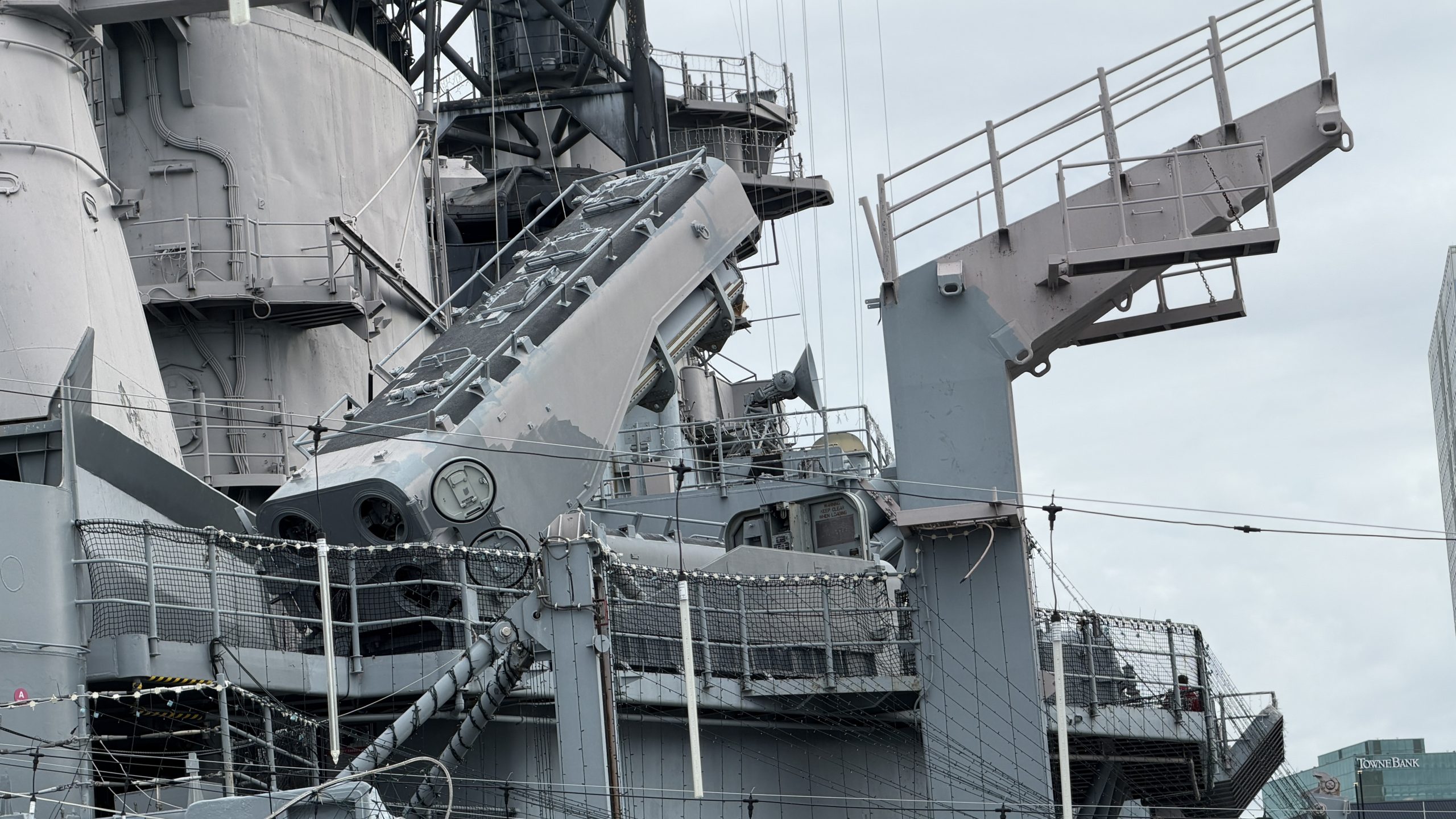
USS Wisconsin Iowa-Class Battleship Tour. Photo by 19FortyFive Reporter Christian D. Orr.
Even with their bristling anti-aircraft guns, battleships were quite vulnerable to the ravages of carrier-borne dive bombers and torpedo bombers.
The Montana program’s final death knell was spurred by the ships’ speed, or lack thereof: a max speed of 28 knots compared with the 33-knot maximum speed capability of the Iowas.
This wasn’t fast enough to keep up with the carriers.
Not Missing In Action, But Rather Missing Out on the Action
Had the Montanas actually come to pass, it seems reasonable to think that they would’ve had the same longevity as their Iowa-class predecessors, especially if they had demonstrated the same degree of “Semper Gumby” adaptability to modernized armament, as in:
-32 × BGM-109 Tomahawk Land Attack Missile (TLAM)/cruise missile launchers
-16 × RGM-84 Harpoon anti-ship missile launchers
-4 × 20 mm MK 15 Phalanx CIWS (close-in weapon system)
As proof of concept, during their Desert Storm swan song, USS Missouri (BB-63) fired 28 TLAMs in addition to 759 16-inch shells, whilst USS Wisconsin (BB-64) fired 24 of her own TLAMs in addition to 528 16-inchers, 881 5″ rounds; for good measure, “Big Wisky” also expended 5,200 20mm CIWS rounds.
Given the Montanas’ hypothetical significant size increases over the Iowas, they certainly wouldn’t have lacked the sufficient space to accommodate Harpoons, Phalanxes, and Tomahawks.
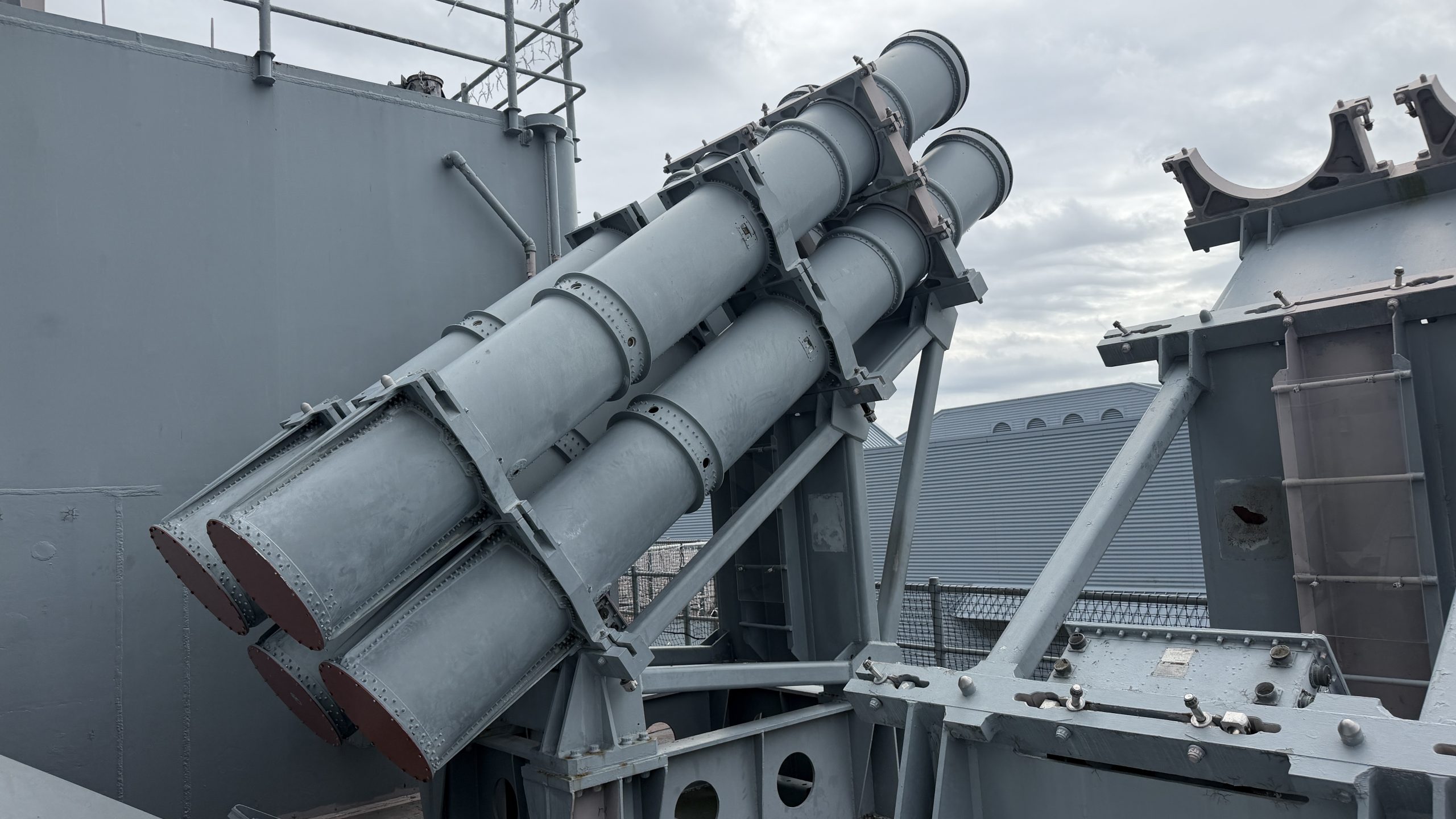
USS Wisconsin Iowa-Class Battleship Tour. Photo by 19FortyFive Reporter Christian D. Orr.
One can only imagine how much additional physical *and* psychological havoc the Montana-class behemoths coulda-shoulda-woulda have wreaked upon (1) North Korean communist forces in the 1950s, (2) North Vietnamese communist forces in the 1960s and early 1970s, (3) Syrian/Druze forces in Lebanon in 1983, and (4) then-Iraqi dictator Saddam Hussein’s forces occupying Kuwait in early 1991.
All four of these conflicts were “hot wars” of the Cold War in which the Iowa-class warships proved their worth in battle yet again, and thus garnered all the glory they might’ve shared with the Montana-class battleships in an alternate-history timeline.
Oh, what might’ve been.
About the Author: Christian D. Orr
Christian D. Orr is a Senior Defense Editor. He is a former Air Force Security Forces officer, Federal law enforcement officer, and private military contractor (with assignments worked in Iraq, the United Arab Emirates, Kosovo, Japan, Germany, and the Pentagon). Chris holds a B.A. in International Relations from the University of Southern California (USC) and an M.A. in Intelligence Studies (with a concentration in Terrorism Studies) from American Military University (AMU). He is also the author of “Five Decades of a Fabulous Firearm: Celebrating the 50th Anniversary of the Beretta 92 Pistol Series,” whose second edition was recently published.