
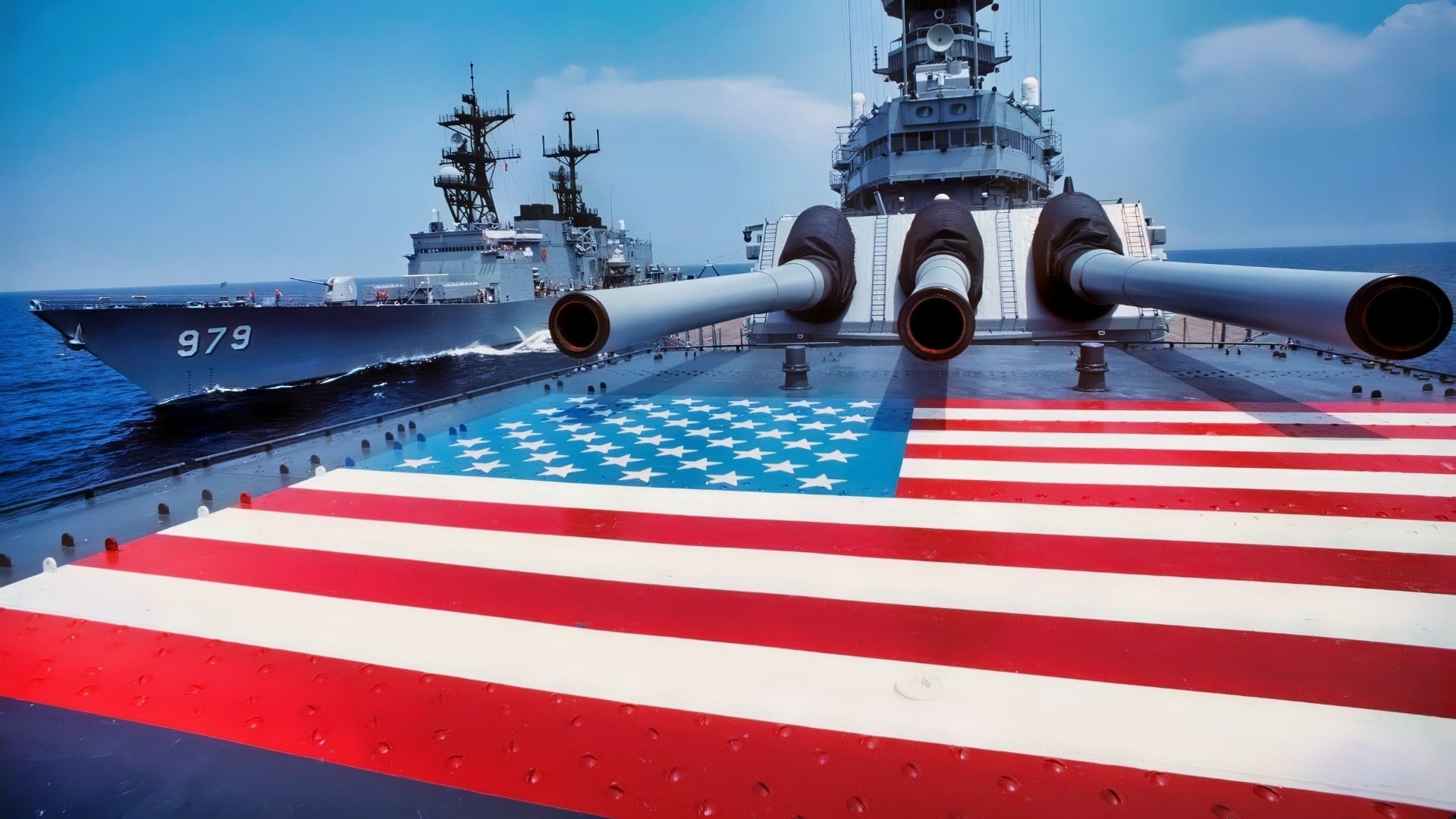
Attention, billionaires: for a minute fraction of your combined wealth—heck, probably your pocket change—you could safeguard America’s naval heritage and preserve U.S. maritime power and prestige indefinitely. And that’s a worthy cause. America is a maritime nation, and always will be. Nowadays, few citizens serve in U.S. Navy, Marine Corps, or Merchant Marine uniforms relative to the size of the populace. Museum ships are one of the few ways to pass down nautical heritage to generations who know little of the sea—and to ensure those generations support maritime trade and warfare.
Let’s talk battleships because that’s what I know best.
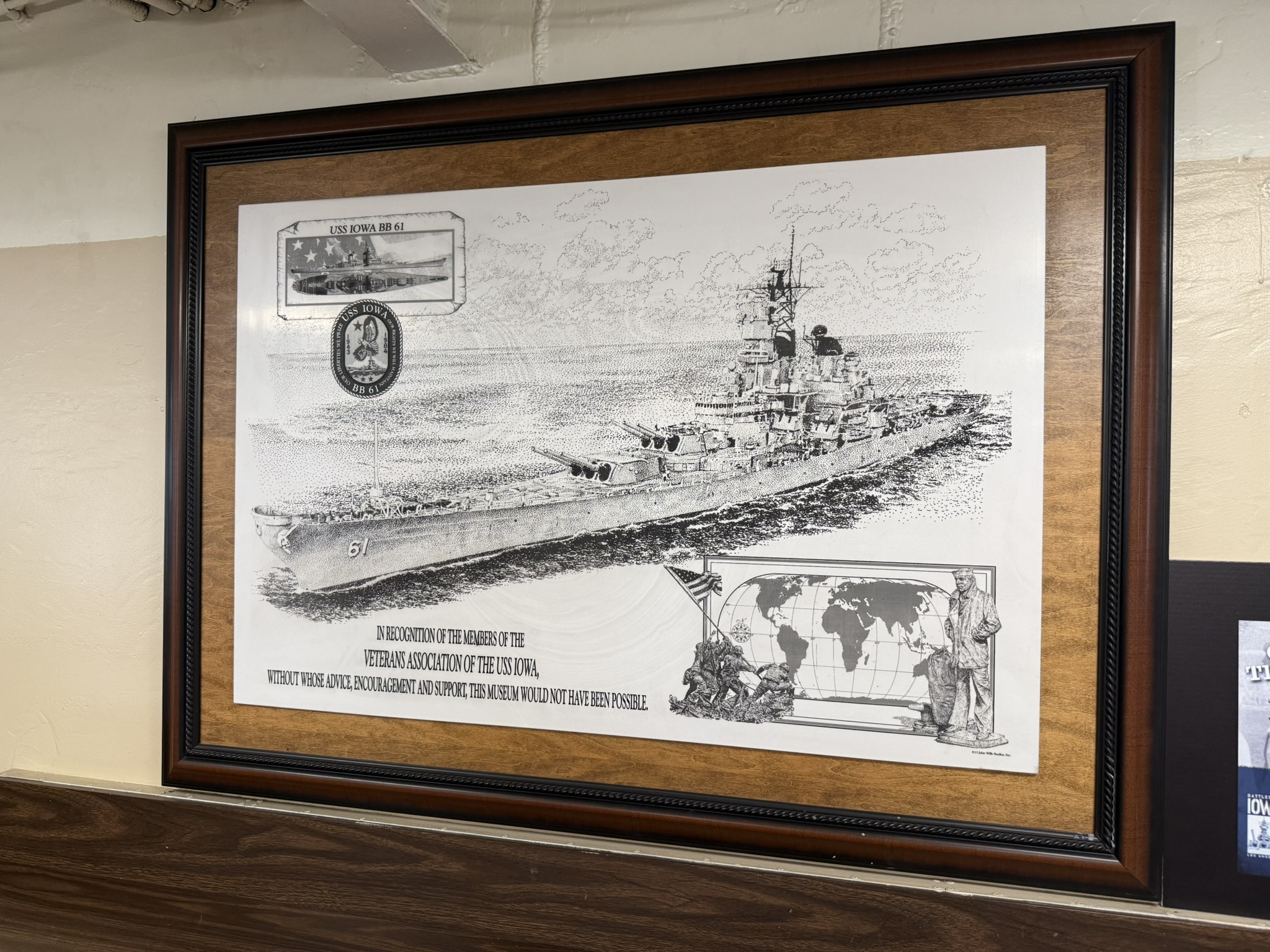
USS Iowa Battleship tour 19FortyFive conducted back in July of 2025.
By museum ships, I mean those elderly ships of war that haunt seaports along our coastlines. Prominent among them are the battleship Missouri at Pearl Harbor, in whose wardroom I have had the privilege to speak twice, the battleship Alabama, near where I grew up, my own former home, Wisconsin, along the waterfront in Norfolk, Virginia, and the battleship Massachusetts and a clutch of smaller warships at Battleship Cove in Fall River, Massachusetts—the latter a hop, skip, and a jump from my princely mansion somewhere along the shores of the Narragansett Bay.
And those are only the ones I know well. Others abound.
These ships manifest a precious legacy. The trouble with museum ships is that they’re hard to maintain, and funding and labor to do so is intermittent and hard to come by. Some ships pay for themselves through visitors’ admissions, sales of bling, or government largesse; others don’t. But all are worthwhile. Preserving a retired ship for the future is easy in principle but hard in practice. Preservation mainly means scraping off rust and repainting hulls and superstructures. Engines, sensors, weapon systems, and so forth are idle, probably forever. But ships constantly attack the elements.
Contrary to pop-culture lore like the 2012 movie Battleship (which was a fun film, by the way; ignore the critics and audiences from places like Rotten Tomatoes who panned it), no one keeps these vessels fueled and armed sitting in retirement. Nor is there a corps of oldtimers like me who served in them, waiting ashore to come aboard and fight aliens—or anyone else. Trust me, you don’t want me steaming a propulsion plant or firing a gun or missile at my age—and I was among the youngest battleship sailors.
Nor, more to the point, are there battleship sailors waiting around to scrape and paint. I know of two of us on the Narragansett Bay, and this is a seat of U.S. naval power. Volunteer manpower is too scarce to keep up Massachusetts and her smaller Fall River brethren. So upkeep requires professional help—and professionals don’t work for free.
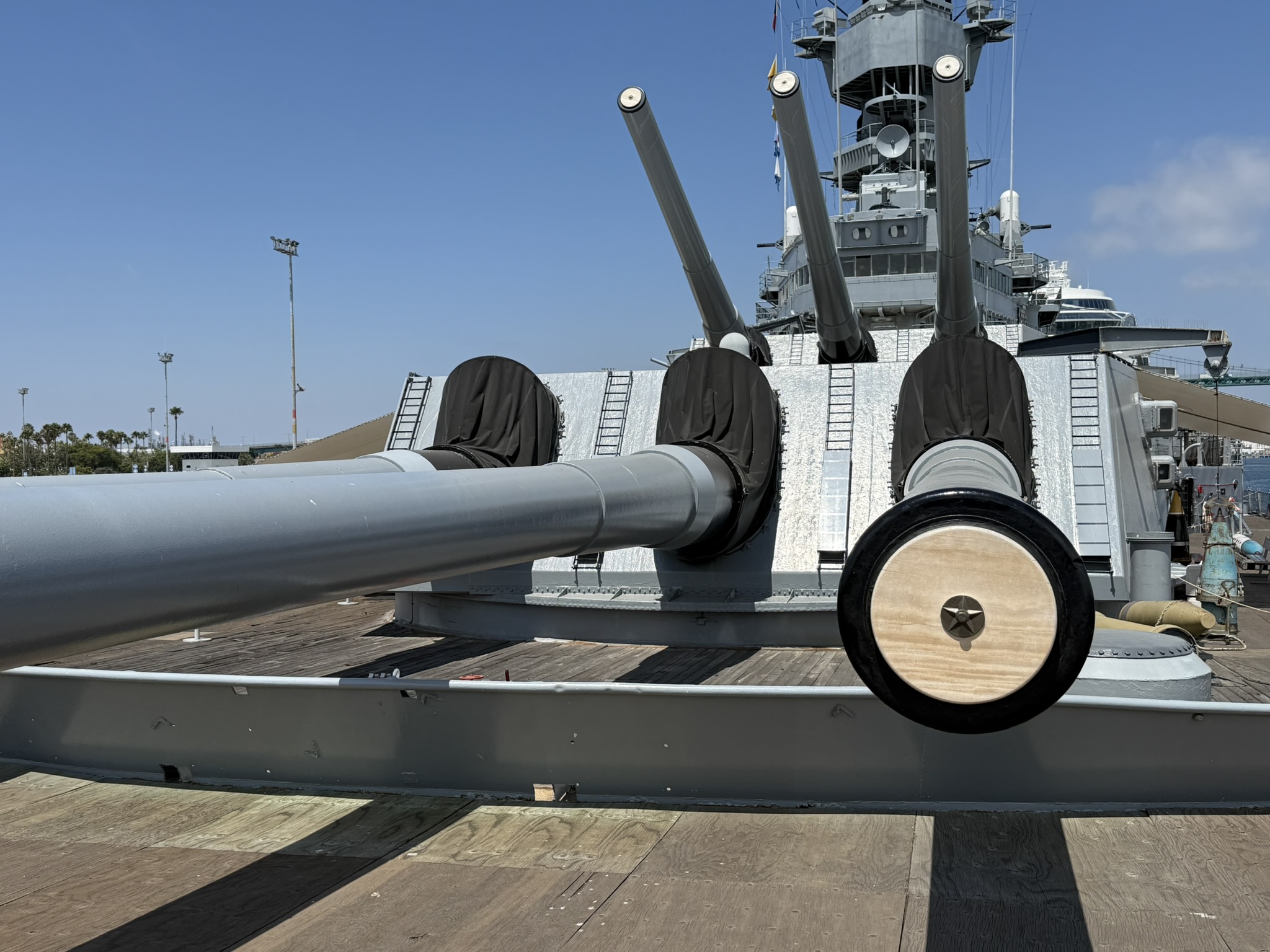
USS Iowa Battleship Guns. Taken on August 15, 2025 by Harry J. Kazianis.
Keeping a ship rust-free is at once an invisible and a straightforward chore. Metal and seawater do not get along. That’s why navies take extravagant measures to protect the underwater portion of an active-duty ship’s hull from corrosion. For instance, there’s cathodic protection, which, to oversimplify, draws corrosion into sacrificial components strewed along a ship’s hull in order to spare the hull itself. But even the topside surfaces—the above-water hull and superstructure—endure exposure to salty air. They rust—and museum ships no longer have crews on board who spend much of their days combating corrosion.
Manpower is huge. The Iowa class, the last class of U.S. Navy battlewagons—youthful, with the last two hulls commissioned in 1944—hosted crews ranging from bout 3,000 officers and sailors during their World War II lives. But even after technological advances reduced crew sizes in the 1980s and 1990s, they still had nearly 1,600 sailors on board to care for them. In retirement, it’s tough to come by enough manpower to stay ahead of rust. As scribe Jonathan Waldman observes, the war against rust is humanity’s longest war.
And probably unwinnable.
Compounding the dilemma is the passing of a generation of navalists and former crewmen who have a vested interest in preserving museum ships. I rank among the youngest battleship sailors still around, and my age now starts at 6. So volunteers are scarce—hence the need to bankroll experts to maintain the vessels. Some museum ships are relatively well off, such as my Wisconsin. The city of Norfolk owns the ship and takes pride in maintaining it, providing public funding. The USS Wisconsin was fairly rust-free the last time I was on board, in 2023.
Other museum ships have to make do without government resources. Missouri depends on admissions fees, sales of t-shirts, ballcaps, and so forth. Missouri will be fine because it sits in Pearl Harbor, and most people know World War II ended with a surrender ceremony on its decks. Everyone wants to stand where Nimitz, MacArthur, and Japanese dignitaries signed the surrender agreement. If you travel to Hawaii, you’ll likely visit the naval sites and spend a little cash.
Cash is life for museum ships.
But what about lesser-known nautical sites in southern New England? New England remains a tourist magnet, and rightly so. Newport, Rhode Island, is flourishing, but Newport is no longer a naval seaport except for training and education. We do have U.S. Coast Guard and NOAA ships at the piers, but Navy gray hulls have been scarce for thirty years. A wise man once said the past is a foreign country; people do things differently there. Preserving artifacts from past times helps narrow the chasm between present and past—and keeps us moored in it. Acquaintanceship helps us learn. Physical artifacts help us rediscover worthy aspects of our common past while alerting us to the worst so we don’t repeat it.
What do museum ships offer visitors? They mainly make history concrete for novices. They help visitors glimpse what the physical setting was like for sailors and embarked marines and merchant mariners in past conflicts. That’s why museum ships typically feature programs whereby youngsters can sleep on board and learn what daily routine was like for crews. There’s also the purely historical aspect. For instance, Missouri and Wisconsin fought in the Persian Gulf in 1990-1991, Massachusetts fought both in the Atlantic and the Pacific theaters of World War II. New Jersey (now freshly refitted in Camden, New Jersey, directly opposite downtown Philadelphia), bombarded Indochinese coasts during the Vietnam War. New Jersey ranks among the most decorated warships in history. And as noted, Missouri hosted the surrender ceremony in Tokyo Bay in 1945.
Ships make history real.
Then there are the less obvious things visitors might learn about ancient ships. My first skipper in Wisconsin liked to boast to visitors that a battleship could arrive on station and stay a long time. A 58,000-ton ship could carry prodigious fuel and supplies. That sounded banal to us youngsters, but it is actually profound. Staying power is colossal from a logistical standpoint, as the ongoing Iran war has reminded everyone. In fact, another of my ships (briefly), the aircraft carrier USS Theodore Roosevelt, is bound for the Middle East right now after being outfitted with extra storage for food and assorted necessaries to alleviate well-documented logistical difficulties besetting ships underway in the region.
Again, battleships boasted extraordinary fuel capacity, around 2.5 million gallons of marine diesel fuel. NoA battlewagonould a ep steaming for long stretches, buandt spcarriedhe rigs neneededo refuel smaller vessels whose tanks were too small to support long high-seas cruises byon their ownIn effect a dreadnought was a fleet auxiliary, a de facto tanker for “small boys” such as frigates. Its logistical contributions went on. For example, after removing the seaplane catapults that festooned their aft decks during World War II, the battleships sported expansive flight decks to receive and launch helicopters, along with rudimentary drones for gunfire spotting. Battleships received mail from “Desert Duck” helicopters in the Gulf and distributed it out to the fleet.
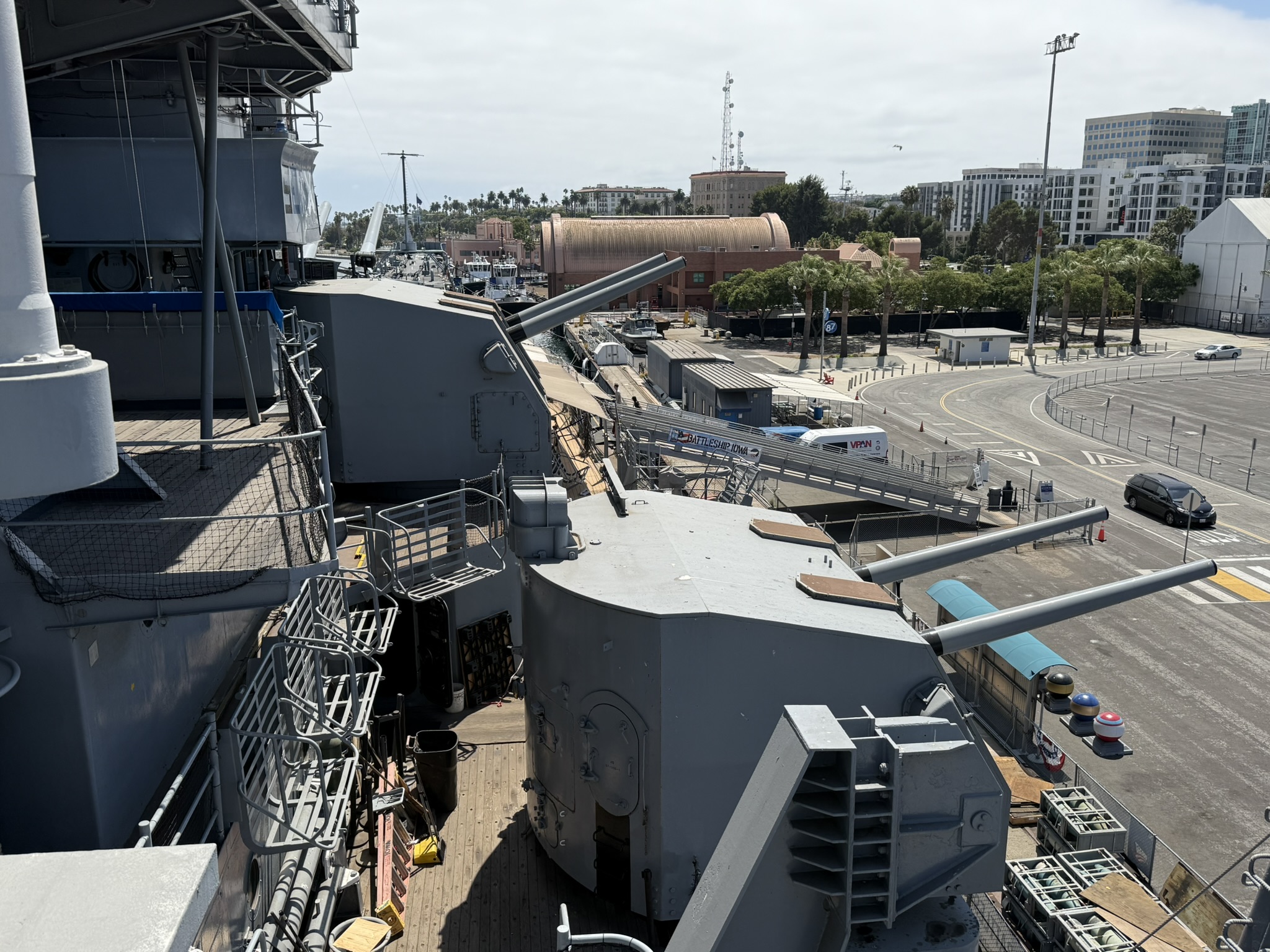
USS Iowa visit. Iowa-Class Battleship. Image taken by Harry J. Kazianis.
That was a major boost to naval morale.
And a battleship tour could reveal the potential tragedy of naval life. An Iowa-class dreadnought mounted three 16-inch gun turrets, in effect six-story towers embedded in its hull equipped with all the machinery and ordnance necessary to loft 1,900- or 2,700-pound projectiles twenty or more miles downrange. The standard talking point during tours was that our rounds weighed the same as a VW Bug (the original 1960s Bug). But a turret tour would also allow visitors to imagine the horror following the 1989 gunnery blast on board Iowa, which claimed the lives of 47 sailors. Visitors could envisage why the explosion transpired (we will never know for sure). They would learn how the U.S. Navy leadership disgraced itself pointing fingers at supposed culprits among the Iowa gun crew rather than going by Occam’s Razor, a default explanation that some technical defect in the Iowa main battery or ammunition had caused the mishap.
In short, the Iowa disaster represented a parable about a large bureaucracy’s defensive instincts. The American people deserve to know both the worst and the best of their institutions.
But war is more than warfare—a.k.a., more than fighting. Capital ships are implements of diplomacy as much as they are fighting ships. In fact, that not-strictly-military dimension steered me into a career in international relations, first as a practitioner and then as a teacher. I wondered why we had done the diplomatic duties we did. We youngsters in the Persian Gulf during Desert Shield and Storm saw tours for U.S. and foreign dignitaries as a needless distraction from combat. Why was I giving up scarce time to give a ship tour to, say, the Qatari chief of naval staff or a congressional delegation whose members knew nothing about naval power?
But we youngsters were wrong. Such supposed wastes of time were invaluable for constructing and maintaining alliances, partnerships, and friendships, both overseas and at home.
One anecdote from the domestic alliance-building front: during a 1990 visit by a congressional delegation to the state, I gave a turret tour to Senator Paul Sarbanes, a D-Maryland Democrat and opponent of the Republican administration of George H. W. Bush. Senator Sarbanes called my wife personally afterward as repayment. That meant a lot back then, when being deployed overseas meant being out of touch. Cellphones were in their infancy, long before everyone had one to stare at. And we were not even his constituents—he had nothing to gain. And while Sarbanes presumably voted against the joint resolution authorizing the Bush administration to wage war in the Gulf—the margin saying yea to martial action was razor-thin—the senator was always a friend to the military.
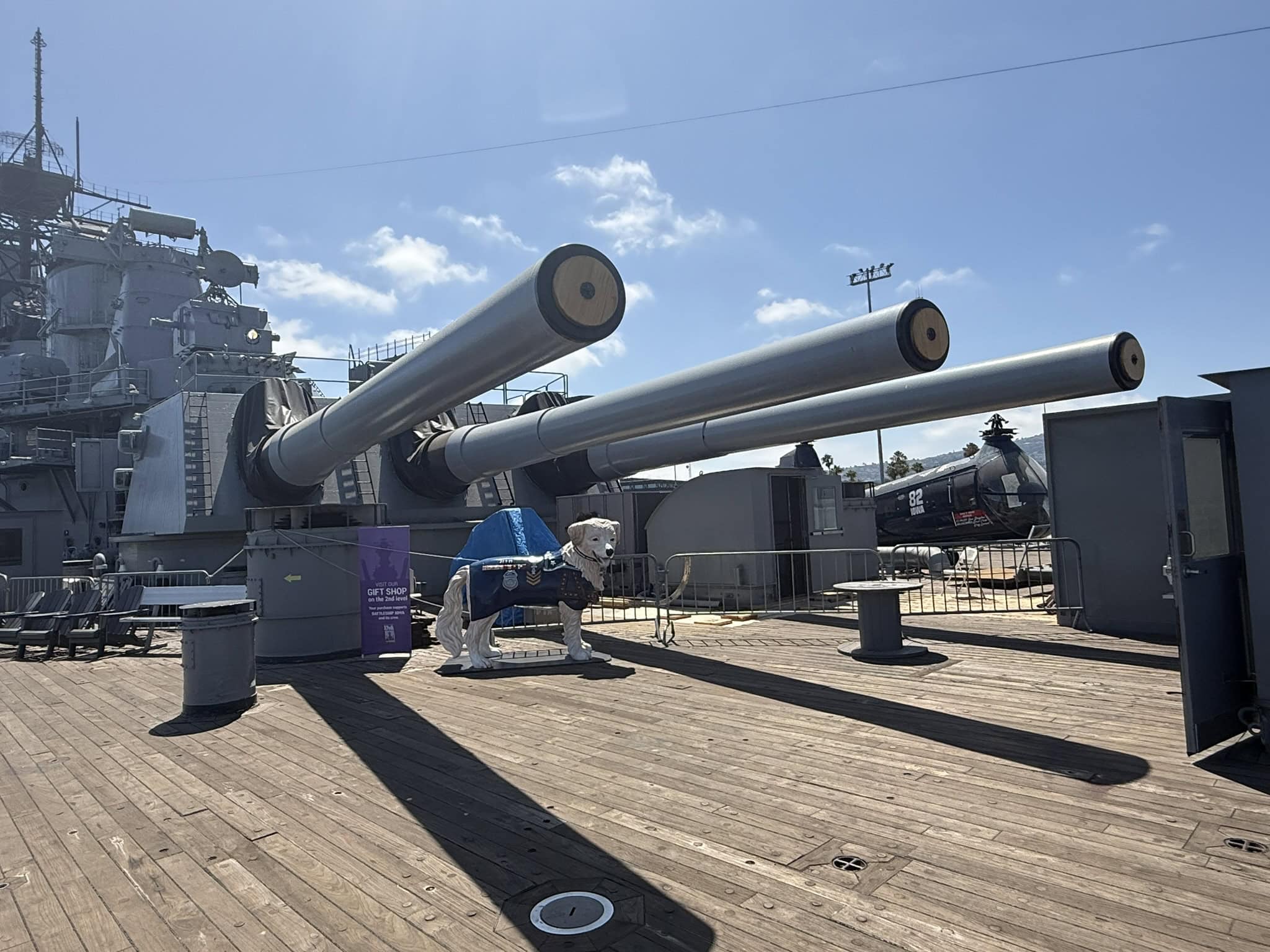
USS Iowa Battleship visit by Harry J. Kazianis for 19FortyFive.com. Taken back in August 15, 2025.
You have to think of such diplomatic developments as the product of combining metal, water, and history. Alliance-building is as much a function of warships as combat is.
So, billionaires pass on the realities of naval life to future generations and show what sea power can accomplish. Drop your pocket change in the kitty at your local naval museum. We will all be better for it.
About the Author: Dr. James Holmes, US Naval War College
Dr. James Holmes is J. C. Wylie Chair of Maritime Strategy at the US Naval War College and an Adjunct Professor at the Daniel K. Inouye Asia-Pacific Center for Security Studies, Honolulu. The views voiced here are his alone.