
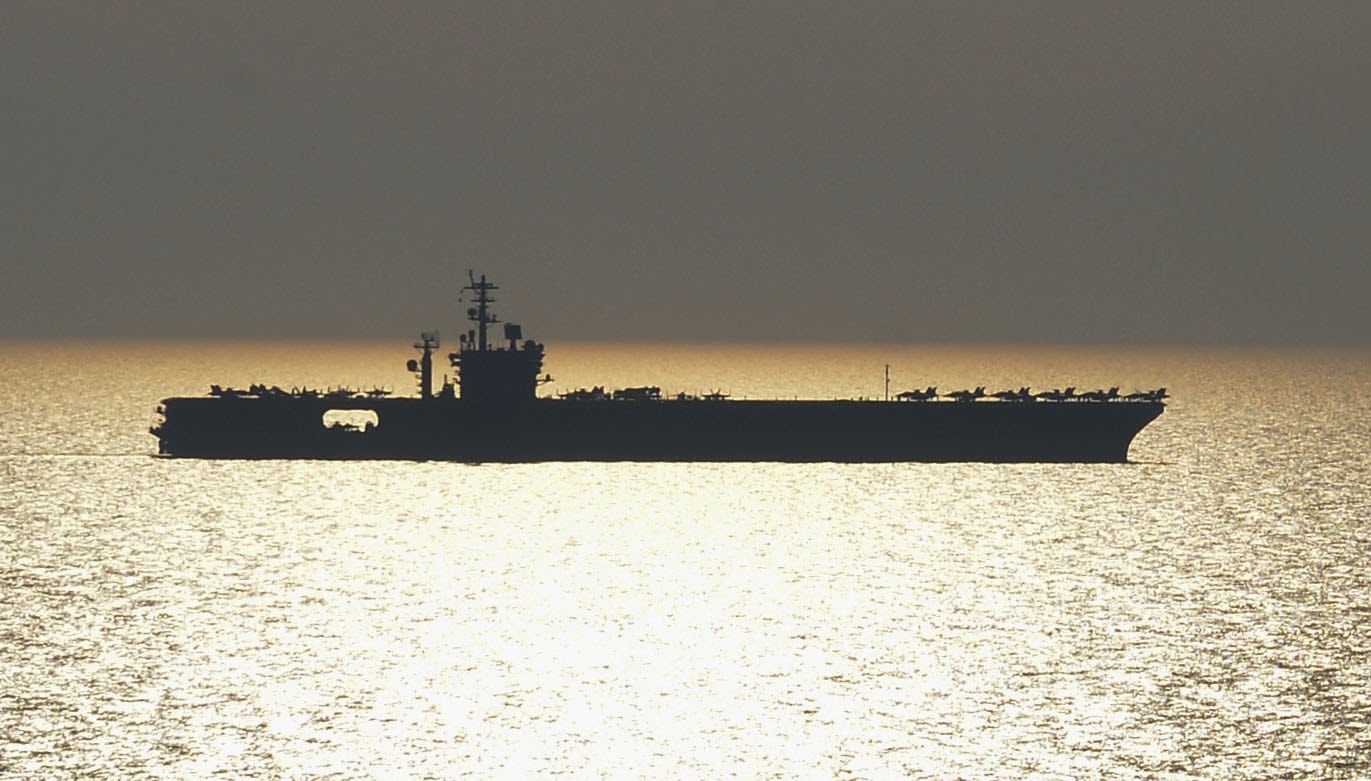
Summary and Key Points: The USS Nimitz (CVN-68), nearing its retirement after nearly 50 years of distinguished service, will begin deactivation in Norfolk in 2026.
-The meticulous, complex process includes safely deactivating its nuclear propulsion system, a task that will extend into 2027.
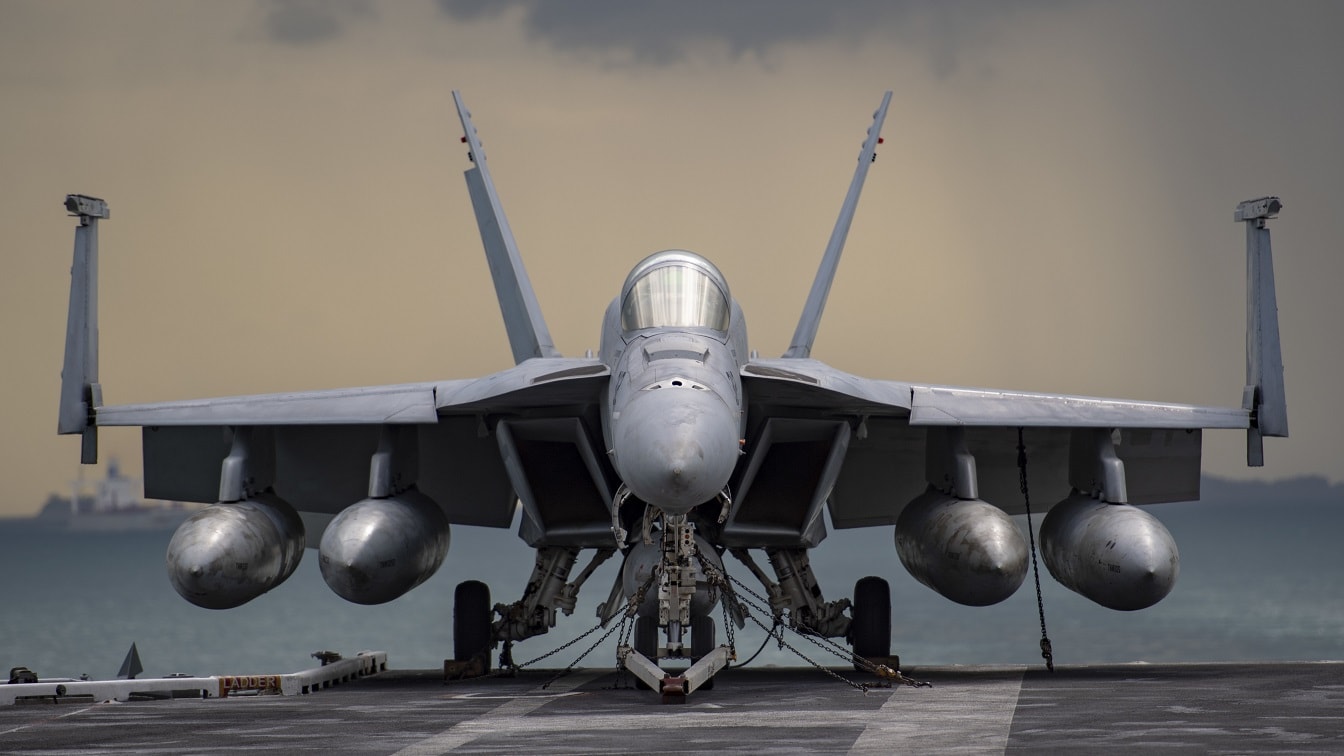
A (Feb. 5, 2021) An F/A-18E Super Hornet, from the “Kestrels” of Strike Fighter Squadron (VFA) 137, rests on the flight deck of the aircraft carrier USS Nimitz (CVN 68) during a strait transit. Nimitz is part of the Nimitz Carrier Strike Group and is deployed conducting maritime security operations and theater security cooperation efforts. (U.S. Navy photo by Mass Communication Specialist 3rd Class Elliot Schaudt/Released)
-This retirement coincides with delays in bringing online new Gerald R. Ford-class carriers, potentially creating capability gaps in U.S. Navy global presence.
-With the USS Eisenhower also retiring soon, the Navy faces operational pressures, notably in regions like the Indo-Pacific and Middle East.
-Timely completion of Ford-class carriers is crucial to ensure continued U.S. naval dominance and effective deterrence globally.
What Happens When the USS Nimitz Carrier Retires?
While it is nice for the U.S. Navy to have 11 active aircraft carriers, it is time for one to retire. The 50-year-old USS Nimitz, the lead carrier in its class, is nearing the end of its service life. The Navy plans to decommission the Nimitz in 2026 and re-assign its 3,000 sailors to Norfolk, Virginia.
The retirement process started last September when the Navy awarded Huntington Ingalls $18.4 million to decommission the famous carrier. The first aspect of this process is to deactivate the ship’s nuclear propulsion system. This is a painstaking task on the two nuclear reactors that will take sustained efforts for months. HII submitted a plan for this endeavor in November of last year.
The reactors power the four turbines that pass energy to four propellers that are 25 feet in diameter. They each weigh 66,000 pounds. These push out a top speed of 30 knots.
Deactivation Work Will Take Place in Norfolk
The deactivation plan will take until 2027 to execute. The Nimitz in home-ported with the USS Ronald Reagan carrier in Naval Base Kitsap in Washington state, but retirement work for the Nimitz will be done in Norfolk. Naval Sea Systems Command is in charge of this procedure.
The Nimitz has served since 1975 and is named after the famed Admiral Chester Nimitz, who played an outstanding role in World War Two. All of the Nimitz-class carriers were built in Newport News from 1968 to 2006.
New Aircaft Carriers Are Coming Online
The Nimitz was the second nuclear-powered carrier that has served the Navy after the USS Enterprise.
The Gerald R. Ford-class super carrier USS John F. Kennedy will replace the Nimitz. The USS Dwight D. Eisenhower carrier will retire in 2026 too and be replaced by the new USS Enterprise in 2029. The Enterprise has been delayed by 18 months.
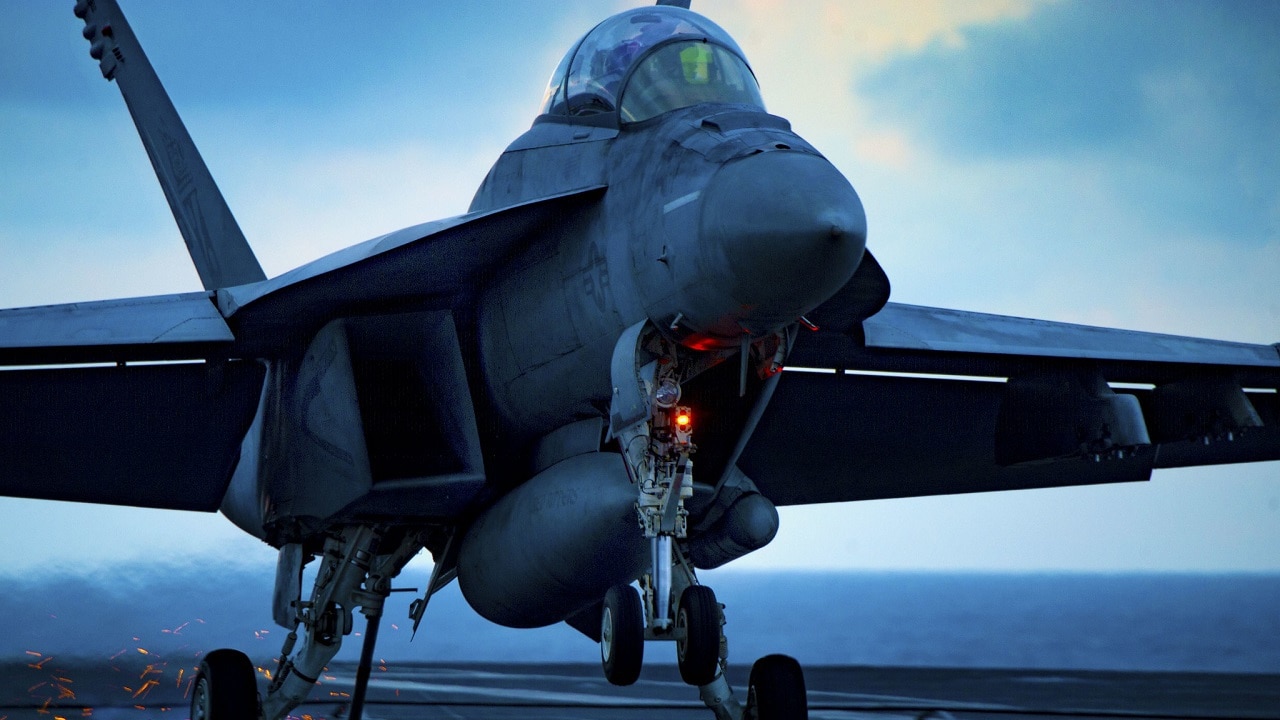
ATLANTIC OCEAN (July 4, 2018) An F/A-18F Super Hornet assigned to the “Red Rippers” of Strike Fighter Squadron (VFA) 11 sits on the flight deck of the Nimitz-class aircraft carrier USS Harry S. Truman (CVN 75). Harry S. Truman is deployed as part of an ongoing rotation of U.S. forces supporting maritime security operations in international waters around the globe. (U.S. Navy photo by Mass Communication Specialist 3rd Class Rebekah A. Watkins/Released) 180704-N-UJ486-0313
The Nimitz retirement was supposed to come earlier, but the Ford-class has endured schedule slips and cost overruns due to difficult technological hurdles. The Ford-class is also expensive at over $13 billion per vessel.
One Last Patrol for USS Nimitz
The USS Nimitz is making the last historical deployment of its service life. It left Naval Base Kitsap on March 21st for a deployment in the Indo-Pacific to patrol the waters in case China causes mischief.
The carrier will operate several squadrons led by the F/A-18 E/F Super Hornet, the EA-18G Growler electronic warfare jet, the E-2D Hawkeye command and control early warning airplane, and various helicopters for anti-submarine warfare.
The deployment for the Nimitz is important because the permanent forward-deployed carrier in East and Southeast Asia, the USS George Washington is in maintenance at Yokosuka, Japan.
The Houthis Are a Headache
Does the United States have enough carriers in service to maintain levels of stability in Europe, the Middle East, and Asia? The USS Harry S. Truman is tied up with fighting the Houthi terrorists in the Red Sea and the Gulf of Aden.
The Truman is essentially at war with the insurgents and there is always the possibility that it could be hit by a missile from the terror group. That is why it is patrolling from long range – about 480 miles away from Yemeni shores.
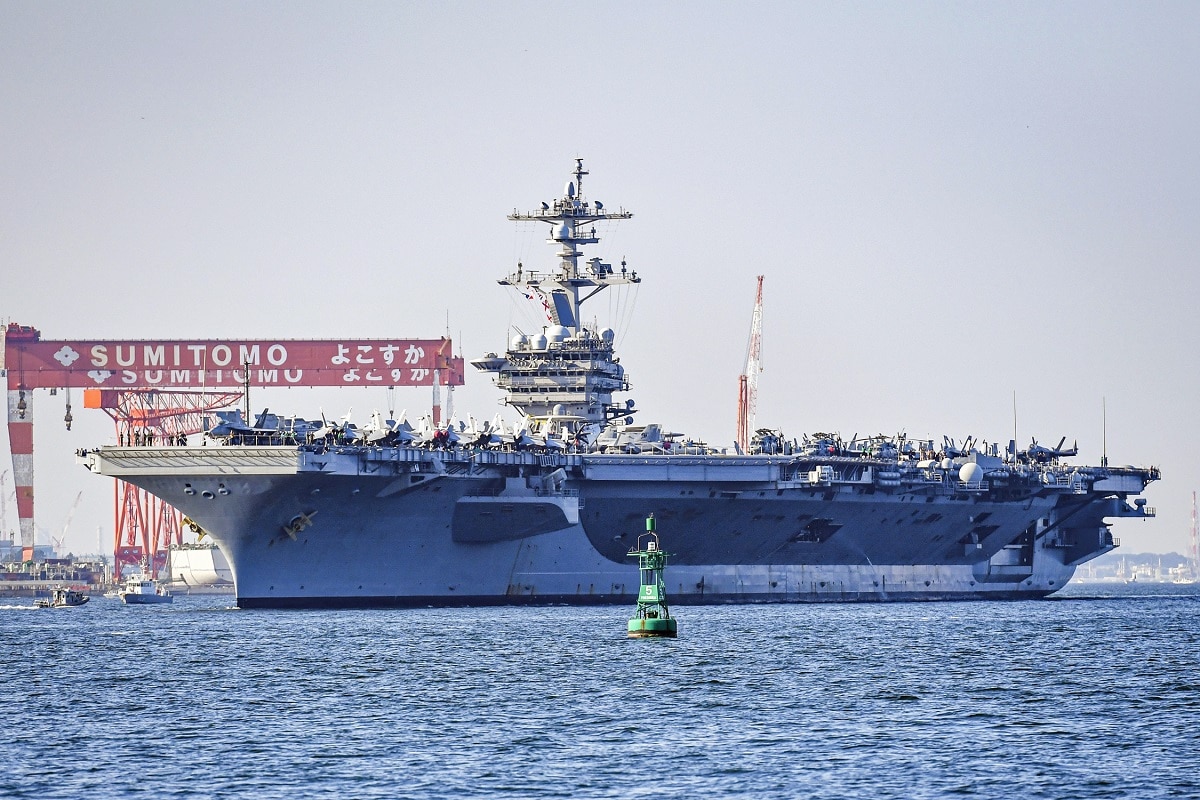
YOKOSUKA, Japan (Aug. 28, 2021) — The Nimitz-class aircraft carrier, USS Carl Vinson (CVN 70), navigates Tokyo Bay on the way to Commander, Fleet Activities Yokosuka for a scheduled port visit. Carl Vinson, homeported in San Diego, Calif., and the accompanying Carrier Strike Group (CSG 1), are on a rotational deployment in the U.S. 7th Fleet area of operations to enhance interoperability with partners and serve as a ready-response force in support of a free and open Indo-Pacific region. (U.S. Navy photo by Mass Communication Specialist 1st Class Ian Cotter)
This deployment is troubling since the Nimitz and Eisenhower will be retiring this year and next. The Ford-class cannot suffer more setbacks in the acquisition program or the Navy could face the reality that it cannot respond to a two-front war in the Middle East and the Indo-Pacific. The United States must have a high level of deterrence and global presence to keep enemies at bay.
‘One Thirds’ Rule
Just because there are 11 active carriers doesn’t mean that number is “active” at all times. “Carriers typically abide by the one-third rule that governs most fleets: At any one given time, one-third of ships are patrol, one third are preparing for or just coming off patrol, and another third are in maintenance at the shipyard,” according to Popular Mechanics.
This means that the carrier force could be stretched too thin. The Nimitz retirement thus places pressure on the Navy to make sure the Ford-class construction does not have any more delays. The problem is that the maritime branch depends so much of its naval strategy on carrier warfare.
But the “one-third” rule works against it. The die is already cast for the Nimitz. It is definitely going away after this last patrol in the Indo-Pacific.
Naval battle planners must realize that current force requirements, especially for this ongoing conflict with the Houthis, negatively affect the number of carriers that can be deployed to East Asia.
China is sure to notice this and it has its own carriers that can be used in a conflict with Taiwan should that arise. The USS Nimitz will be missed, and the Navy will have to adjust to the reality of having one less carrier until the Gerald Ford-class can fully be ready to answer the call on schedule.
About the Author: Dr. Brent M. Eastwood
Brent M. Eastwood, PhD is the author of Don’t Turn Your Back On the World: a Conservative Foreign Policy and Humans, Machines, and Data: Future Trends in Warfare plus two other books. Brent was the founder and CEO of a tech firm that predicted world events using artificial intelligence. He served as a legislative fellow for U.S. Senator Tim Scott and advised the senator on defense and foreign policy issues. He has taught at American University, George Washington University, and George Mason University. Brent is a former U.S. Army Infantry officer. He can be followed on X @BMEastwood.