
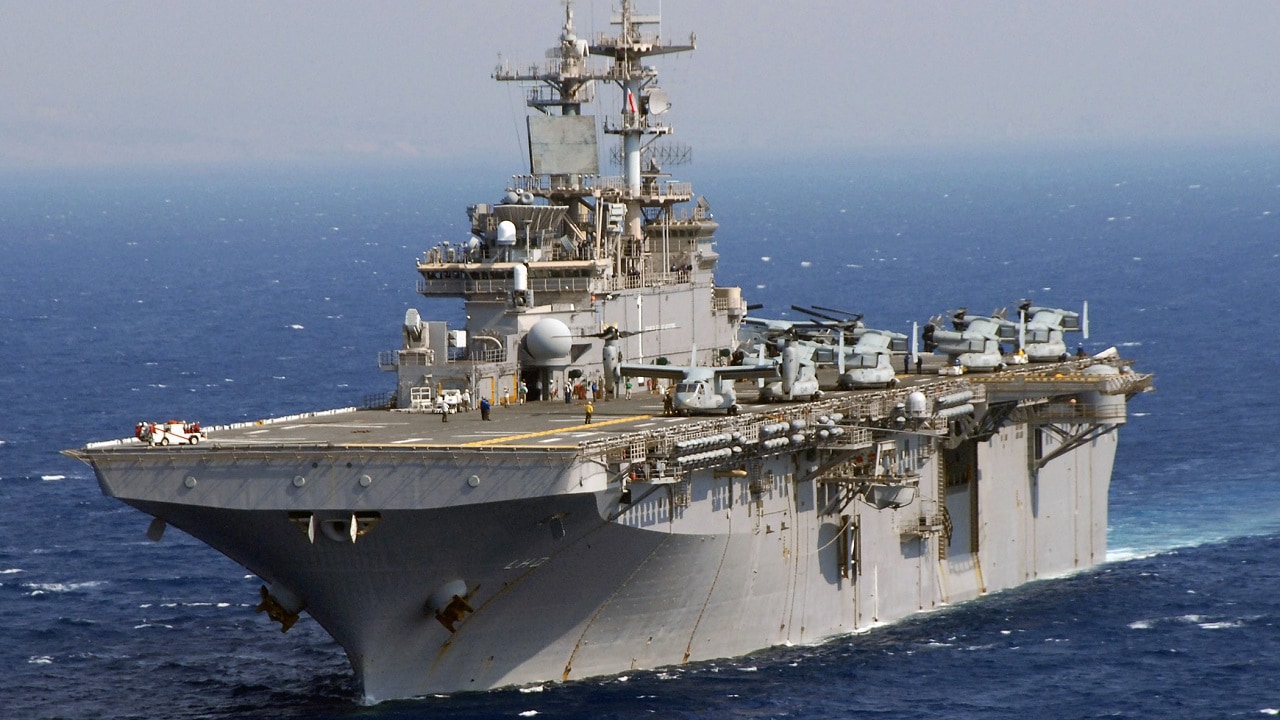
Key Points and Summary – In the 1970s, the U.S. Navy seriously considered building a class of 50,000–60,000-ton CVV medium carriers to bulk up its aviation power during Vietnam and the broader Cold War.
-Conventionally powered, cheaper, and faster to build than Nimitz-class supercarriers, the CVV was meant to supplement aging Midway-class ships, create more dispersed carrier battle groups, and cover neglected theaters like the Indian Ocean and Arctic.
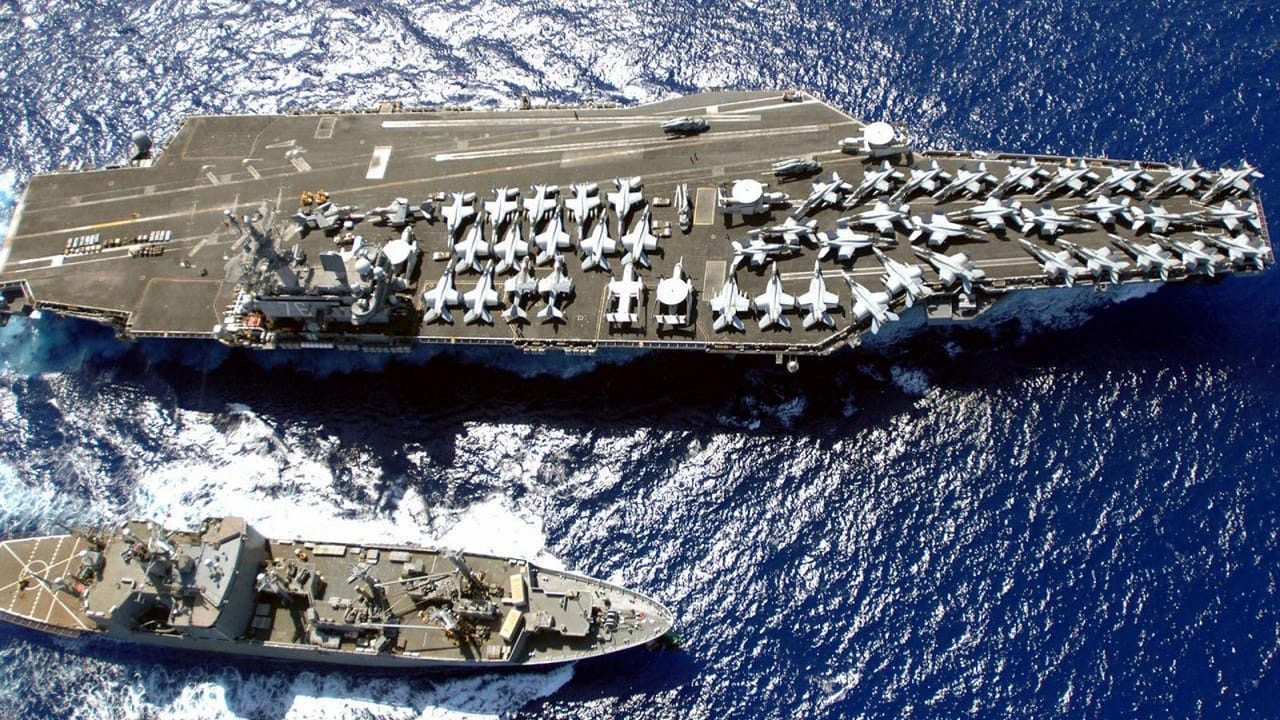
US Navy Aircraft Carrier. Image Credit: Creative Commons.
-But costs ballooned from $550 million to roughly $1.5 billion, and the ship’s smaller air wing and limited capacity ultimately killed the idea.
-The result: a lost chance to field more, smaller carriers when America was stretched thin.
The CVV Medium Carrier Had One Big Advantage the Navy Walked Away From
The U.S. Navy in the past came close to constructing a class of medium-sized aircraft carriers to supplement its fleet.
The option was considered during the Vietnam War – the Navy wanted to strengthen its regular force of carriers to increase the weight of aviation in the maritime battlespace.
The proposed CVV medium carrier would cost less and would be easier and quicker to produce at a time when the Navy needed all the ships and aviation assets it could get.
The CVVs would displace 50–60,000 tons, making them lighter and a shade faster than other carriers such as the Midway-class were at the time.
The Navy was ready to invest $550 million into the CVV program – but the cost soon ballooned to a gargantuan sum of $1.5 billion.
Despite the costs, there were several good reasons to go ahead and build the CVV.
The CVV Construction Could Have Been Quicker and More Efficient
First, the CVV would have been faster and more fuel-efficient than existing carriers. They were conventionally powered but easier to produce than Nimitz-class supercarriers.
This would give shipbuilders a shot in the arm and allow Congress to breathe easier after spending so much money on the Vietnam War.
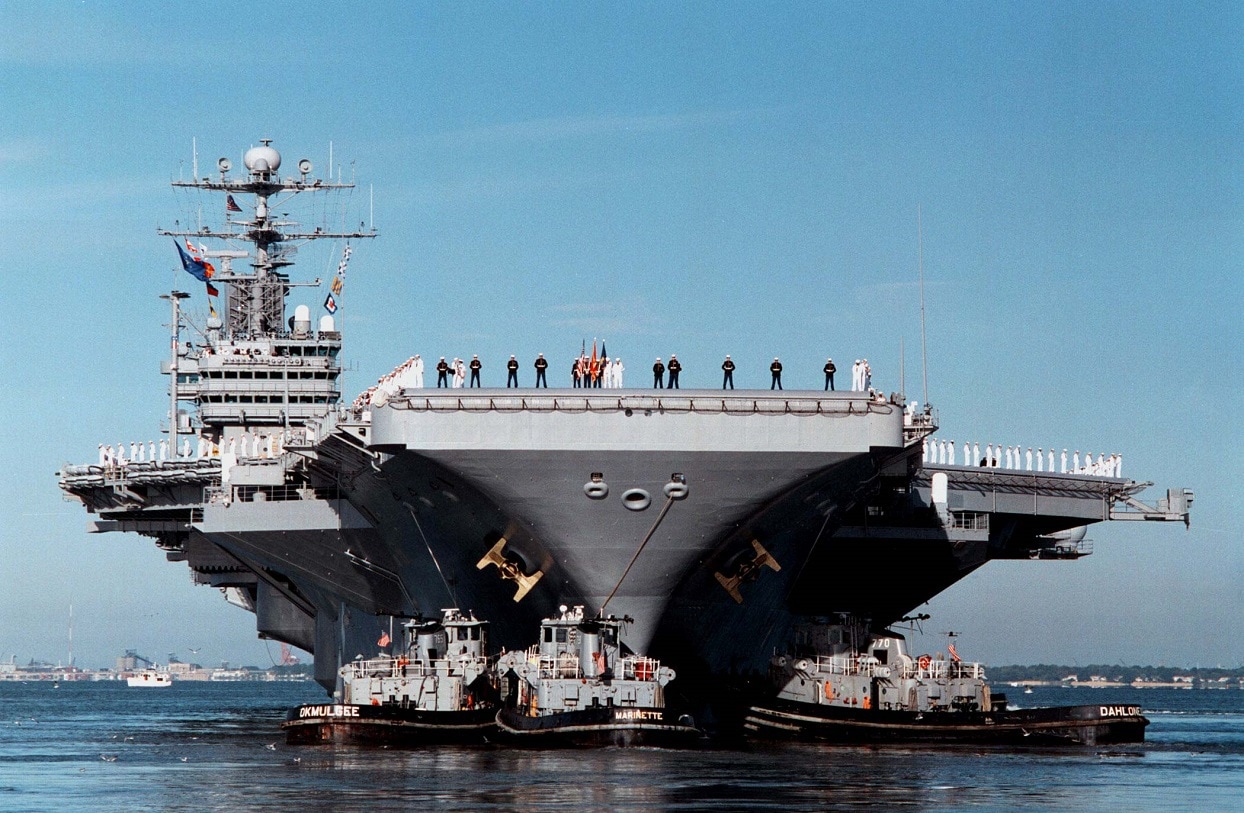
Sailors and Marines man the rail as three harbor tugs push the aircraft carrier USS George Washington (CVN 73) away from Pier 11 at Norfolk Naval Base on Oct. 3, 1997, for a scheduled six-month deployment. The George Washington will relieve the USS John F. Kennedy (CV 67) to conduct operations in the Mediterranean Sea. DoD photo by Petty Officer 2nd Class Christopher Vickers, U.S. Navy.
The Shipbuilding Know-how and Expertise Already Existed
Second, shipbuilders would not have needed to reinvent the wheel when it came to designing and building the propulsion system.
The Navy would have had a way to build more carriers while waiting for the Nimitz-class to be fully mature.
The Cold War was going to require a naval build-up to face down the Soviets in Europe. The CVV could have been more interoperable with NATO allies, who also needed an aviation boost against the Russians.
Protecting the Fleet With More Combat Power
Further, additional carrier battle groups could have taken shape around the CVV medium-sized carriers.
The CVV could have been an escort carrier similar to the Casablanca-class in World War Two. It could have protected the flanks of surface ship flotillas. Its anti-submarine aircraft would have defended effectively against enemy submarines.
The CVV could have performed intelligence, surveillance, and reconnaissance duties, too.
More Aircraft Carriers to Span the Globe
The CVV would also have allowed for a more dispersed and decentralized Navy. Exclusive focus on theaters such as the Pacific and Atlantic left much of the globe unattended in the 1970s.
A CVV could have patrolled the Indian Ocean, the Arctic, Oceania, and the Western Hemisphere.
More global coverage would have stimulated innovative thinking about how to transform strategic doctrine for the Navy.

Arabian Sea (Feb. 21, 2007) – A CH-53E Super Stallion, assigned to Medium Marine Helicopter Squadron Two Six Four (HMM-264) (Reinforced), lifts palettes of Meals-Ready-to-Eat (MRE) from amphibious assault ship USS Bataan (LHD 5). Bataan left her homeport of Norfolk, Va., Jan. 4, 2007, on a scheduled deployment as the flagship of the Bataan Expeditionary Strike Group (ESG). U.S. Navy photo by Mass Communication Specialist 2nd Class Justin Webster (RELEASED)
CVV Replacing the Older Midway-Class
Finally, the Midway-class carriers were aging, and the Navy needed a carrier that could bridge the service to the Nimitz-class.
This made logistical sense. The CVV, being conventionally powered, would need less maintenance and would not require a mid-life nuclear refueling period that would take it out of action for long periods.
The CVV had presidential support. President Gerald Ford was on board, and President Jimmy Carter followed. Naval planners saw the CVV as an asset to strengthen maritime aviation. It would have given the Navy more operational diversity, allowing it to support a two- or even three-front war.
Battle planners did not know how long Vietnam would last. There were issues in North Korea that forced the Navy to consider contingencies. The Soviet Union and the Warsaw Pact were a steady threat, and terrorism was ramping up in the Middle East. The U.S. military was stretched too thin. Being able to project power with a quicker and lighter medium carrier made strategic sense.
Ultimately the CVV was not pursued. Cost was a factor. But additionally, it could only carry about 50 aircraft with just two steam catapults and two elevators. The Nimitz-class, thanks to its nuclear-powered propulsion, could stay out to sea longer, and it could also deploy more aircraft.
The CVV concept was sound on paper. The Navy did not predict cost overruns, but it was important for aviation leaders to have more options, with the war in Vietnam raging amid a steady demand for attention from other regions.
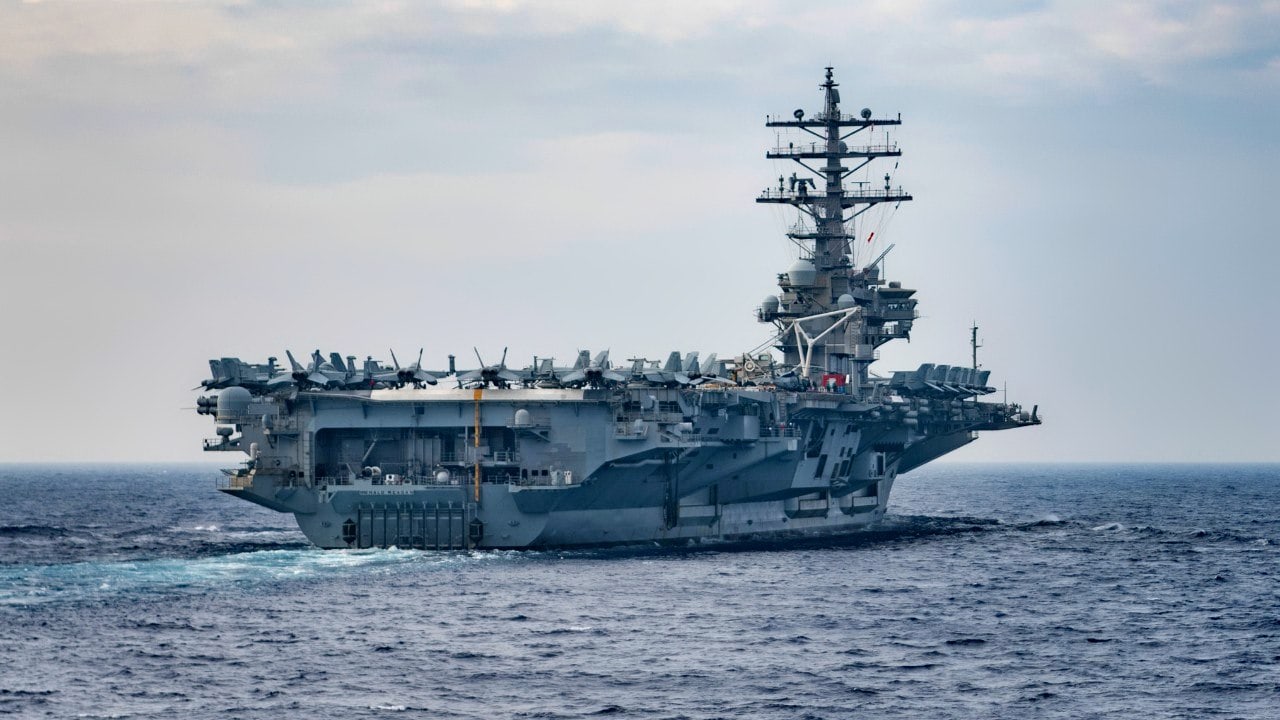
(May 30, 2020) The Nimitz class aircraft carrier USS Ronald Reagan (CVN 76) conducts routine operations in the Philippine Sea. Ronald Reagan is forward-deployed to the U.S. 7th Fleet area of operations in support of security and stability in the Indo-Pacific region. (U.S. Navy photo by Ltjg. Samuel Hardgrove)
But the CVV would have required more surface vessels as escorts, further adding to costs.
We’ll never know what the CVV might have accomplished. But the carriers would have been valuable assets allowing for a diverse range of geographical deployments. I liked the idea of having more carriers in the water to better project power and deter enemies in the 1970s.
U.S. power seemed to be fading at the time, with a force that was stretched too thin. The CVV could have renewed its maritime power projection capabilities – but it was not to be.
About the Author: Brent M. Eastwood
Brent M. Eastwood, PhD is the author of Don’t Turn Your Back On the World: a Conservative Foreign Policy and Humans, Machines, and Data: Future Trends in Warfare plus two other books. Brent was the founder and CEO of a tech firm that predicted world events using artificial intelligence. He served as a legislative fellow for US Senator Tim Scott and advised the senator on defense and foreign policy issues. He has taught at American University, George Washington University, and George Mason University. Brent is a former US Army Infantry officer. He can be followed on X @BMEastwood.