
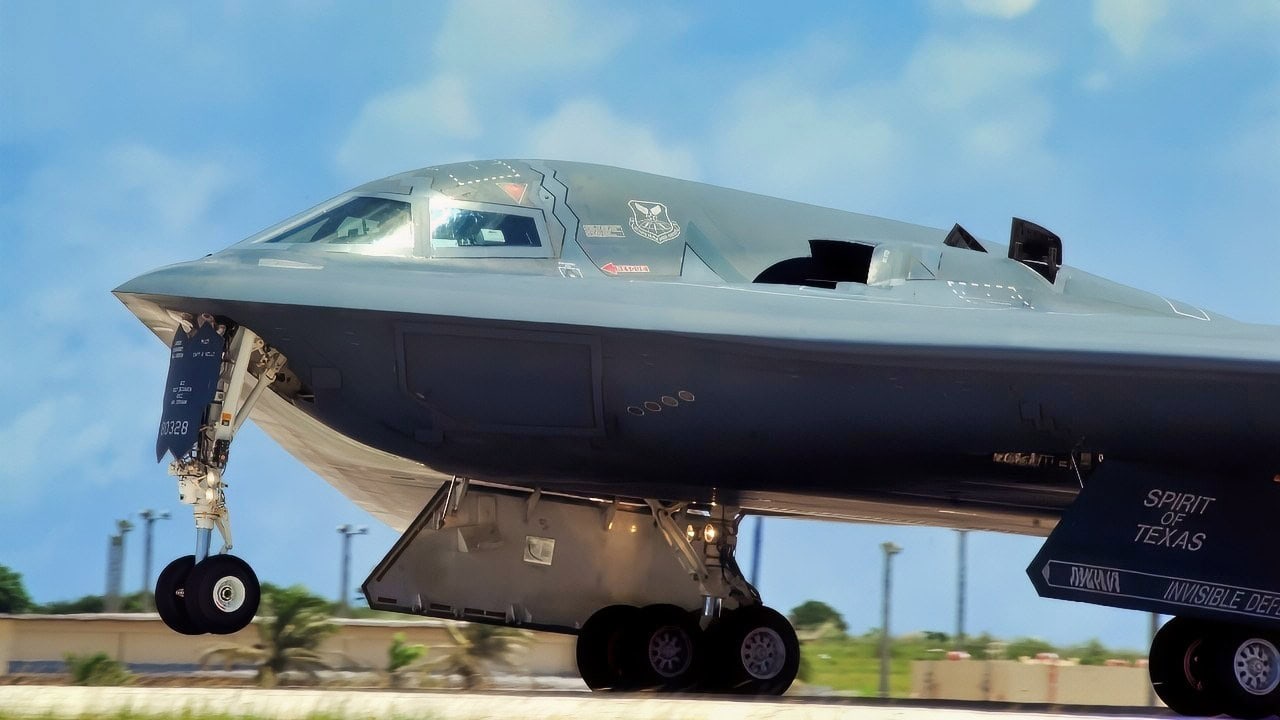
Key Points and Summary – China’s long-rumored H-20 is billed as Beijing’s answer to the B-2 and B-21, a stealth flying-wing bomber meant to give the PLA real intercontinental reach and complete its nuclear triad.
-Yet years of teasers have produced no rollout, raising doubts about China’s ability—or willingness—to field such a complex aircraft.
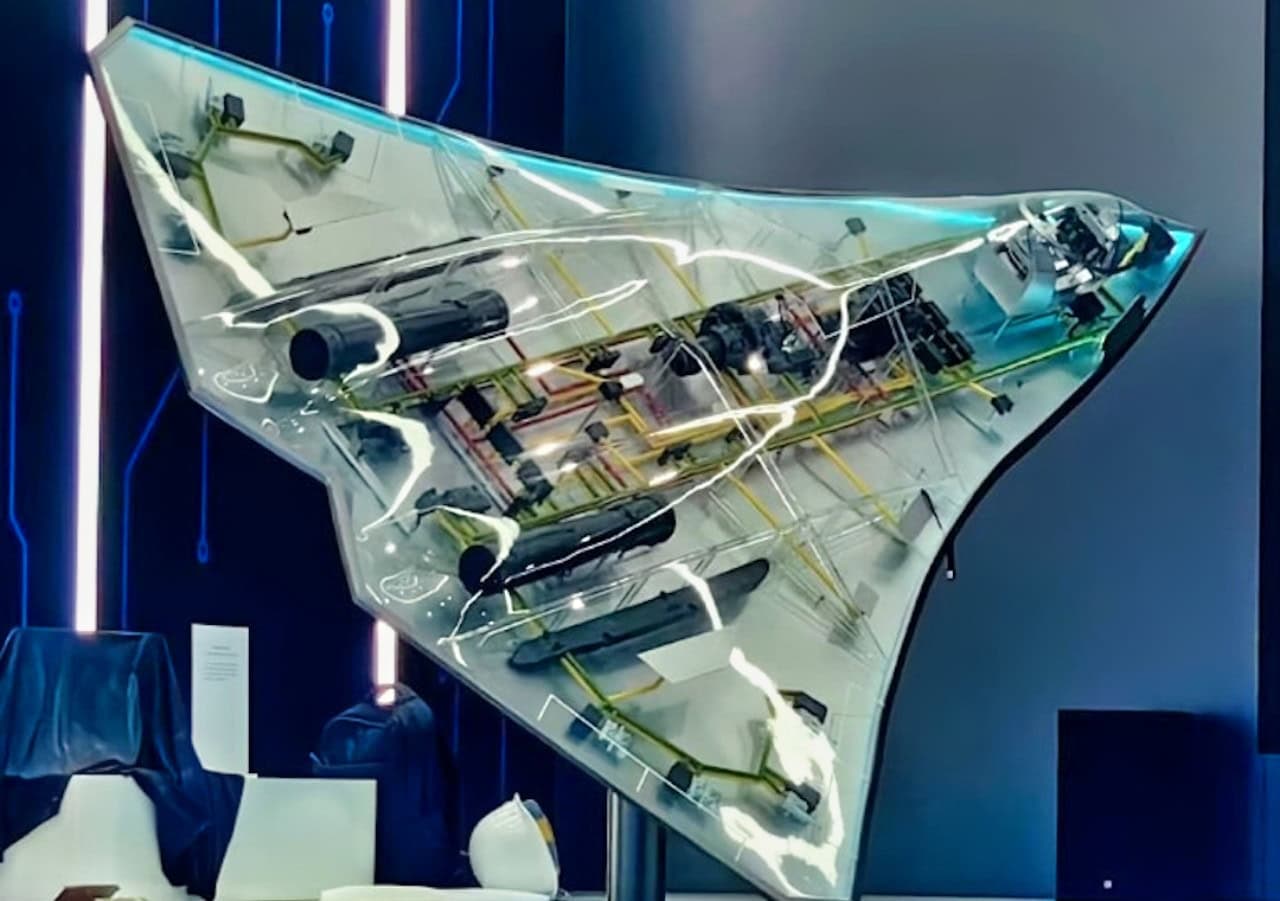
6th Generation Fighter from China mockup via social media.
-China can still threaten Taiwan and the region with missiles, H-6 bombers, ships, and subs, but without an H-20, it remains a missile-first, primarily regional power.
-If the bomber never appears, Beijing will cede the strategic bomber edge and much of the global signaling role to the United States.
In One Word: Cancelled?
China’s H-20: Stealth Super Bomber or Overhyped Mirage?
The H-20 is China’s long-rumored stealth strategic bomber, often described as Beijing’s answer to the B-2 and B-21.
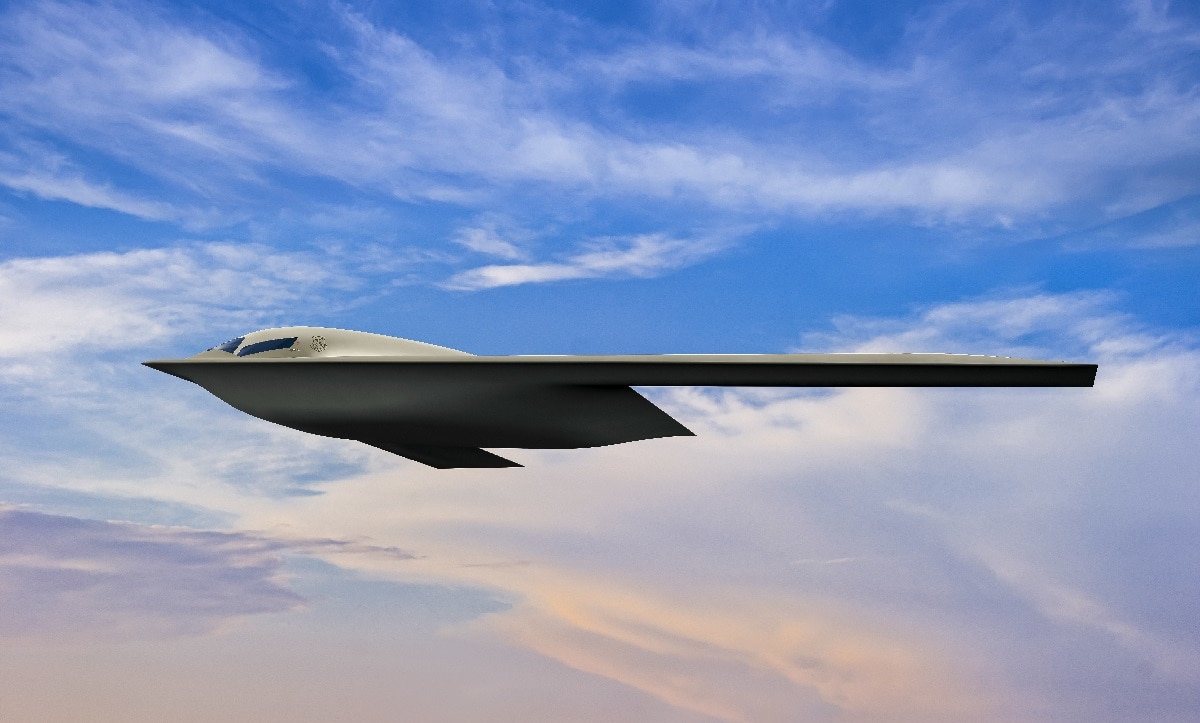
B-21 Raider. Image: U.S. Air Force
Yet despite years of speculation, official teasers, and statements, the aircraft has never been publicly unveiled, raising the question: Will China ever field the H-20?
And if not, would that represent a strategic failure, or is the H-20 less essential to China’s military strategy than previously assumed?
Historical Context on H-20 Stealth Bomber
Historically, China has lagged behind the West in long-range bomber aviation.
The PLA Air Force has relied upon the H-6, a licensed derivative of the Soviet Tu-16 Badger, a platform that has been outdated for decades despite incremental upgrades.
Unlike the US and Russia, China has never previously pursued actual intercontinental bombers or stealth penetration bombers.
This gap was consistent with Chinese doctrine, which was missile-centric and regionally focused. But as China modernizes and projects power outward, the H-20 ostensibly became an effort to complete a nuclear triad.
To date, little is known about the H-20.
The platform is likely a subsonic flying-wing stealth bomber designed for conventional strike or nuclear delivery.
The expected range may exceed 8,000 kilometers, giving China a valid intercontinental option.
The design emphasis is presumed to be based on low observability, long endurance, and internal weapons bays—a starting point consistent with Northrup Grumman’s stealth bomber designs.
What is not known is whether the H-20 will be manned or unmanned; whether the platform is still in development or already operational; what the radar cross-section measurements are; production scale and cost.
The lack of disclosure may be a signal in and of itself, suggesting technical difficulty or shifting priorities.
Creating a stealth strategic bomber is an industrial endeavor. Only one nation has ever accomplished such an endeavor: the US.
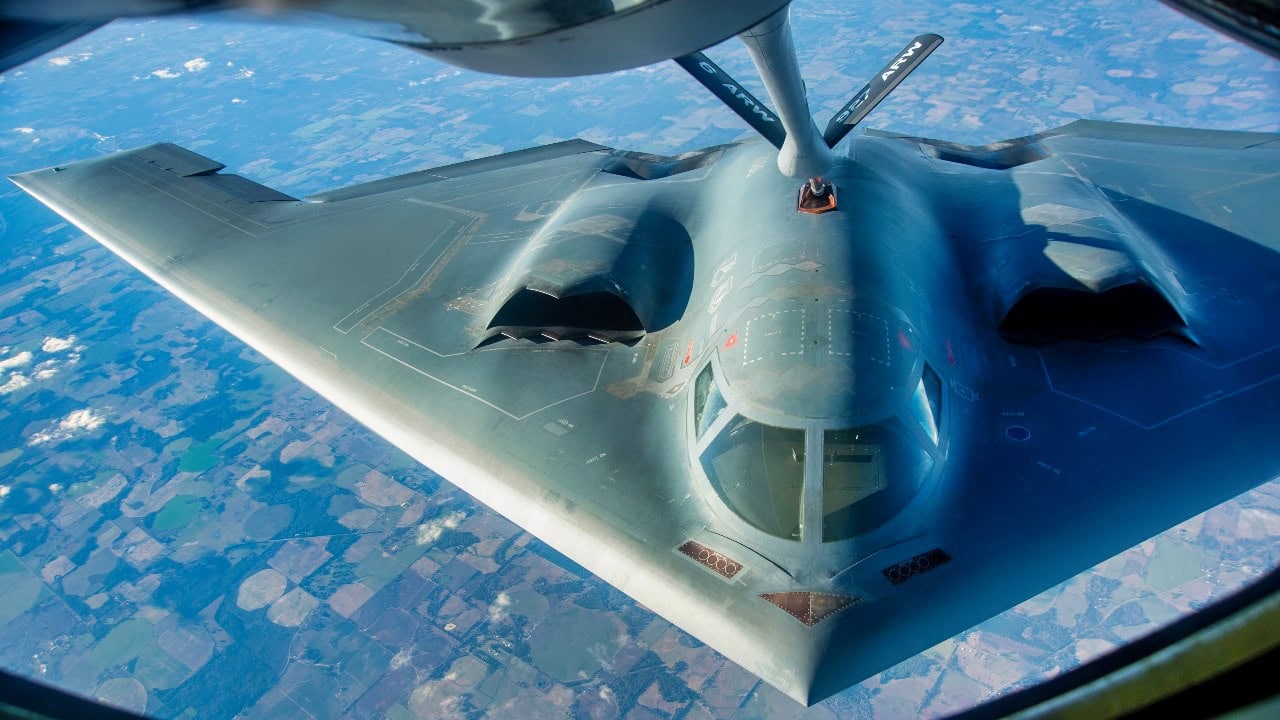
A B-2 Spirit assigned to Whiteman Air Force Base, Mo., receives fuel from a KC-135 Stratotanker, Feb 7, 2021. A B-2 Spirit performed alongside a B-1B Lancer and a B-52 Stratofortress for the Super Bowl LV flyover on Feb. 7, 2021. (U.S. Air Force photo by Airman 1st Class David D. McLoney)
The technical challenges are myriad, including stealth shaping, materials, engines, and avionics integration—all of which must be orchestrated from scratch to a standard sufficient to evade sophisticated air defense systems.
The presumption has been that China wanted the H-20 to extend its strategic reach, to gain the ability to strike beyond the first and second island chains.
The H-20 also would have completed China’s nuclear triad alongside already-operational ICBMs and SLBMs. And as a bipolarity between the US and China emerges, the H-20 would have given China psychological parity with the US bomber force, comfortably the best in the world.
But with no word on whether the H-20 will ever become operational, the question shifts: can H-20 operate without the H-20? Yes, but with tradeoffs.
China already has an impressive missile arsenal, i.e., DF-21D, DF-26B, DF-27, long-range cruise missiles, and hypersonic glide vehicles.
These systems reach targets faster, are harder to intercept, and do not require putting a pilot at risk. For strictly regional purposes, missiles often outperform bombers.
China also has air and naval substitutes to the H-20. The H-6 bomber, for example, is still operational, with long-range standoff weapons.
Surface ships and submarines have cruise missiles.
And the greater architecture of Chinese defense, the A2/AD bubble, does not require strategic bombers the way US power projection does.
What Happens if the H-20 Never Flies?
But without the H-20, China would be giving up global reach; missiles excel regionally, but bombers can show presence abroad, offering operational flexibility over long distances. Bombers also serve a nuclear signaling function; bombers are visible and recallable, whereas missiles are less controllable, and submarines are entirely opaque.
And then there are the optical considerations. The absence of a strategic bomber reinforces the perception that China remains a regional power, not a full peer to the US.
If the H-20 never materializes, China will remain a missile-first power, conceding the bomber advantage to the US.
And the absence of H-20 would also cap the PLA’s influence at the regional level, preventing any sort of global power projection.
China would get by; the H-20 wouldn’t be essential in a conflict with Taiwan or to deny US access in the Indo-Pacific. But the H-20 would enhance China’s strategic symbolism, global reach, and nuclear triad.
Time will tell whether China is committed to a stealth strategic bomber; Beijing may pivot away from the H-20 vision.
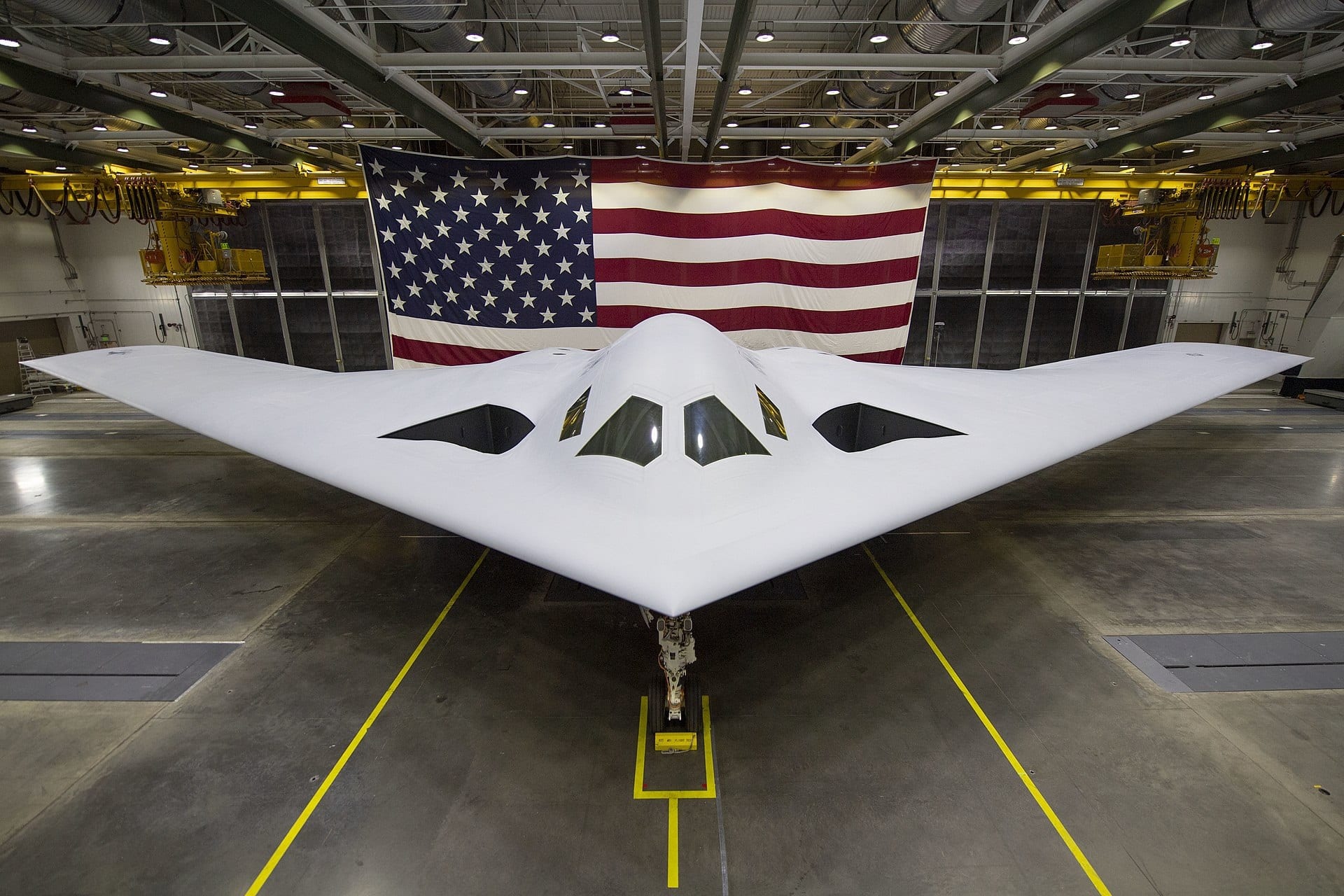
The B-21 Raider was unveiled to the public at a ceremony December 2, 2022 in..Palmdale, Calif. Designed to operate in tomorrow’s high-end threat environment, the B-21 will play a critical role in ensuring America’s enduring airpower capability. (U.S. Air Force photo)
Or it’s possible that despite a commitment to the H-20, China cannot simply pull it off. Either way, the H-20 is no guarantee, and its presence, or lack thereof, will likely influence Chinese strategy moving forward.
About the Author: Harrison Kass
Harrison Kass is an attorney and journalist covering national security, technology, and politics. Previously, he was a political staffer and candidate, and a US Air Force pilot selectee. He holds a JD from the University of Oregon and a master’s in global journalism and international relations from NYU.