
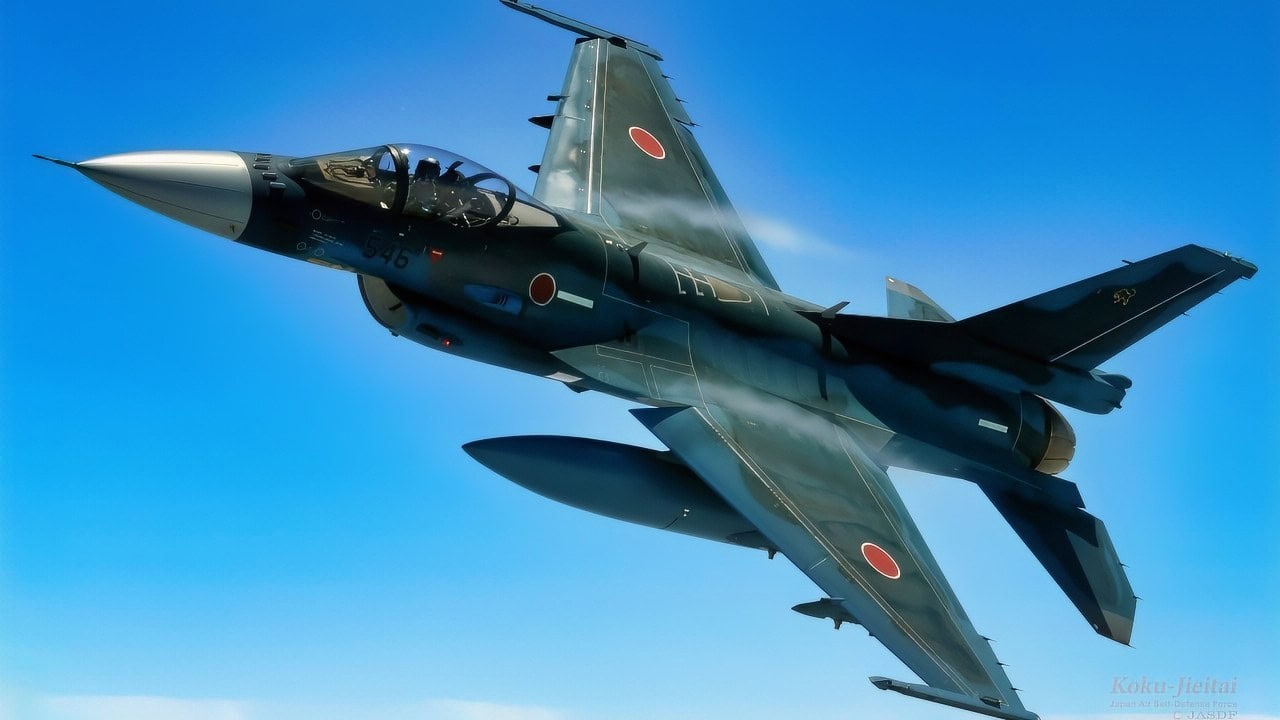
Key Points: Japan’s F-2 “Viper Zero” is a stretched, up-engined F-16 derivative built around one mission: defending Japan’s sea lanes.
-With enlarged composite wings, a powerful F110 engine, and one of the first operational AESA radars, it carries a serious anti-ship punch via ASM-1/ASM-2 missiles and a versatile 11-station weapons layout.
-The jet’s agility and sensor suite make it a credible multirole platform, but short-legged U.S. missile options and rising Chinese and Russian long-range weapons expose its limits.
-As Japan buys 147 F-35s and bets on the GCAP next-gen fighter, the F-2 is becoming a capable but clearly transitional workhorse.
Inside Japan’s F-2 ‘Viper Zero’: The F-16 Variant Built to Kill Ships
The F-2 Support Fighter is a multirole, single-engine fighter aircraft produced for the Japan Air Self-Defense Force (JASDF).
It was jointly developed in the mid- to late 1980s and jointly produced in the early 1990s by Mitsubishi Heavy Industries and Lockheed Martin Aeronautics.
The F-2 is nicknamed “Viper Zero,” a reference to the F-16’s semi-official nickname, “Viper,” and the Mitsubishi A6M Zero of World War II fame.
Meet The Japanese F-2, An F-16 Variant
The F-2 is a very capable multirole fighter, blending the F-16’s agility with significant upgrades, including a large AESA radar, extensive use of composite materials for durability, and a heavy payload capacity for ground attack (especially anti-ship) and air combat. However, its large size can affect high-altitude speed, and it lacks a helmet-mounted display.
The F-2 is based on the Lockheed Martin F-16 Fighting Falcon and is capable of both air-to-air and close air support, but it was designed as a maritime strike aircraft to protect Japan’s sea lanes.
The F-2 is powered by a General Electric F110-IHI-129 engine that powers the aircraft to Mach 2 (1,320 mph). It has an outstanding thrust-to-weight ratio.
The F-2 was also the world’s first production fighter to be equipped with an Active Electronically Scanned Array (AESA) radar.
This highly sophisticated system has a significantly reduced signature for improved survivability in beyond-visual-range engagements, a feature later deployed by the U.S. F-22 Raptor fifth-generation stealth fighter.
It excels with its potent AESA radar and powerful missiles, such as the AAM-4/AAM-3, making it versatile for both air-to-air and ground support. Still, its performance and missile loadouts have specific trade-offs compared to other top-tier jets in some scenarios.
The F-2 uses the J/APG-2 radar, which enables the fighter to engage targets beyond visual range. To accommodate the new radar, the Japanese fighter has a longer and wider nose than the standard F-16.
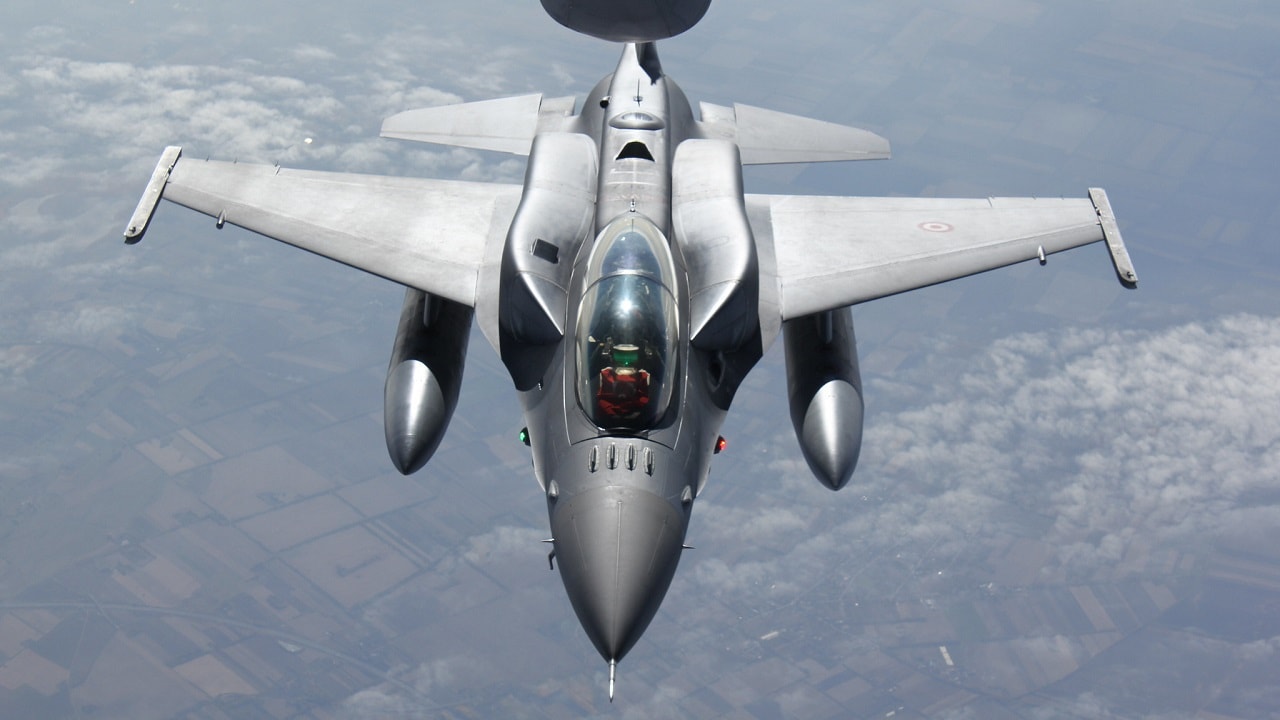
NATO F-16 Fighter. Image Credit: Creative Commons.
In 2015, the F-2 became the eighth aircraft platform to be equipped with Lockheed Martin’s Sniper Advanced Targeting Pod.
This is an excellent and highly effective system, offering long-range, high-definition targeting and surveillance for modern warfare, significantly improving the capabilities of 4th-generation fighters with its advanced sensors, image processing, and network integration, enabling precision strikes and real-time data sharing for ISR (Intelligence, Surveillance, Reconnaissance) missions.
It’s combat-proven, versatile across numerous platforms (F-16, F-15, B-1, etc.), and its recent upgrades add crucial networking to link legacy aircraft with stealth platforms like the F-35, creating robust “kill webs”.
However, the US-made missiles have much shorter ranges than comparable Chinese and Russian missiles, putting the F-2 at a range disadvantage.
The Mitsubishi F-2 has outstanding agility and roll rate, inherited from its F-16 roots and enhanced by advanced avionics and CCV (Control Configured Vehicle) technology.
F-2 Armaments
The F-2 is designed to carry a wide range of weapons, including air-to-air, air-to-ground, guided, and anti-ship missiles. It carries 1 × 20 mm JM61A2 Vulcan 6-barrel rotary cannon with 515 rounds.
The aircraft has 11 hardpoints: 9 external and two on the wingtips. These hardpoints can carry a mix of weapons and fuel tanks, depending on mission requirements.
The F-2 is particularly well-suited for maritime strike missions, equipped with the Mitsubishi ASM-2 anti-ship missile, which has a range of over 100 miles (160 km) and can penetrate ship defenses to deliver precision strikes.
Wing Design Enlarged
The designers enlarged the wing area approximately 25 percent over the F-16’s. The larger wing allows more internal fuel storage and the ability to carry four anti-ship missiles (such as the ASM-1/ASM-2) or medium-to-long-range missiles (such as the AIM-7M).
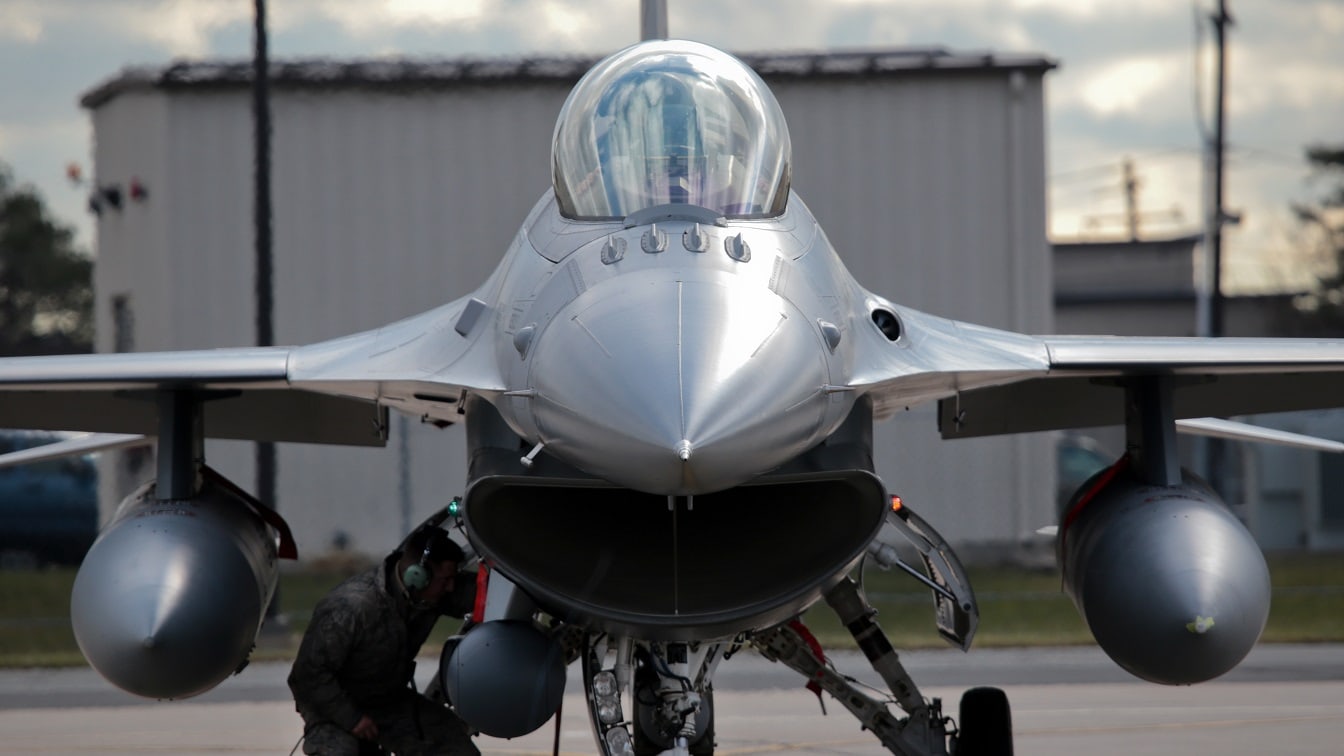
U.S. Air Force Senior Airman Austin Daniel, an F-16 crew chief from the New Jersey Air National Guard’s 177th Fighter Wing, looks over his assigned aircraft prior to a training mission at Atlantic City Air National Guard Base, N.J., Dec. 17, 2014. (U.S. Air National Guard photo by Tech. Sgt. Matt Hecht/Released)
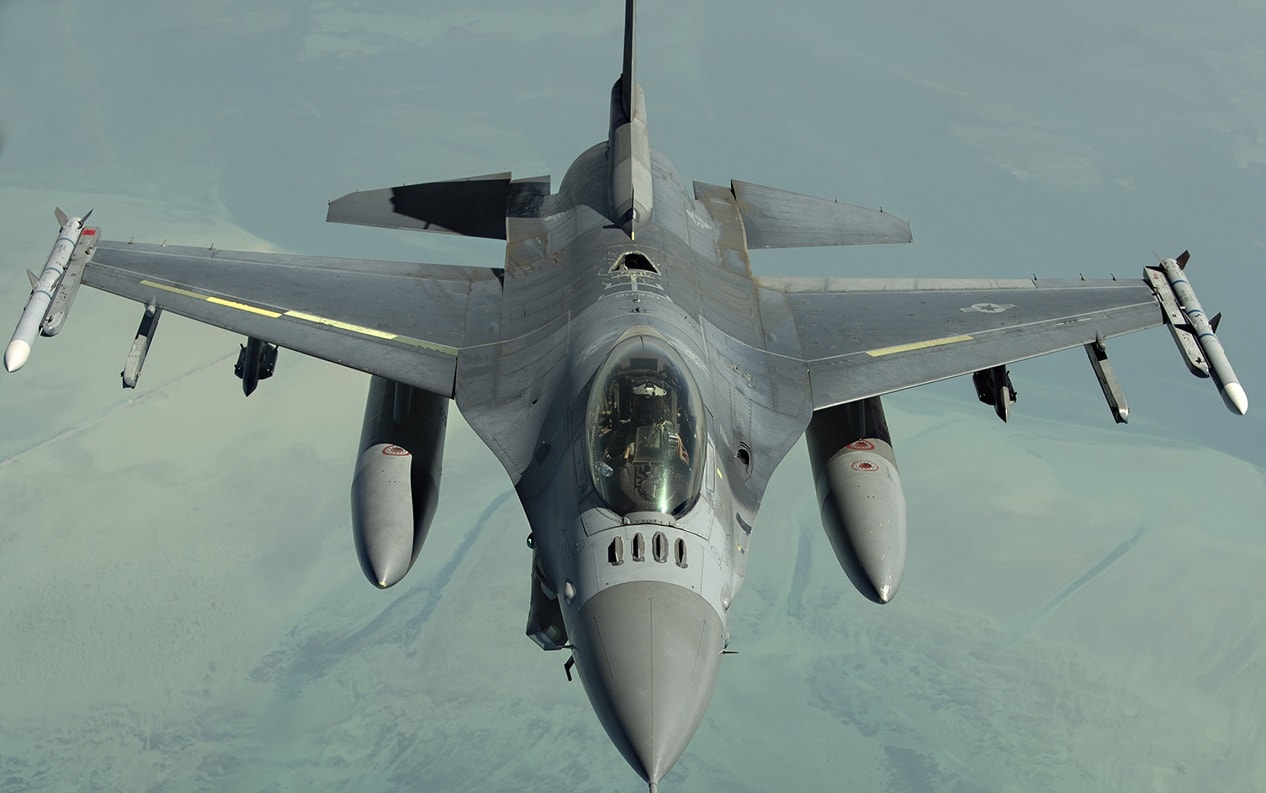
A U.S. Air Force F-16 Fighting Falcon assigned to the 77th Expeditionary Fighter Squadron flies over Southwest Asia, Feb. 24, 2021. U.S. Central Command maintains robust defensive capabilities to preserve security and stability throughout the region. (U.S. Air Force photo by Senior Airman Bryan Guthrie)
The increased wing area also provides better lift and low-speed handling, which are beneficial for operations, especially on potentially shorter runways.
The wing substructure was fabricated using graphite-epoxy, and state-of-the-art co-cured composite technology was applied to maximize strength while minimizing weight. In addition to the larger wing area, the F-2 fuselage is approximately 17 inches longer than that of the F-16. The horizontal tails are also larger.
Japan Working On The F-2 Replacement
Japan is currently working on a next-gen fighter in partnership with the U.K. and Italy under the Global Combat Air Program, and it already uses Lockheed Martin’s fifth-generation F-35 Lightning II.
What seems inevitable is that the F-2 will remain in service for at least the next decade, until the Japan Air Self-Defense Force can get a homegrown replacement off the ground.
However, due to the delays in the GCAP program, Japan is heavily investing in the F-35.
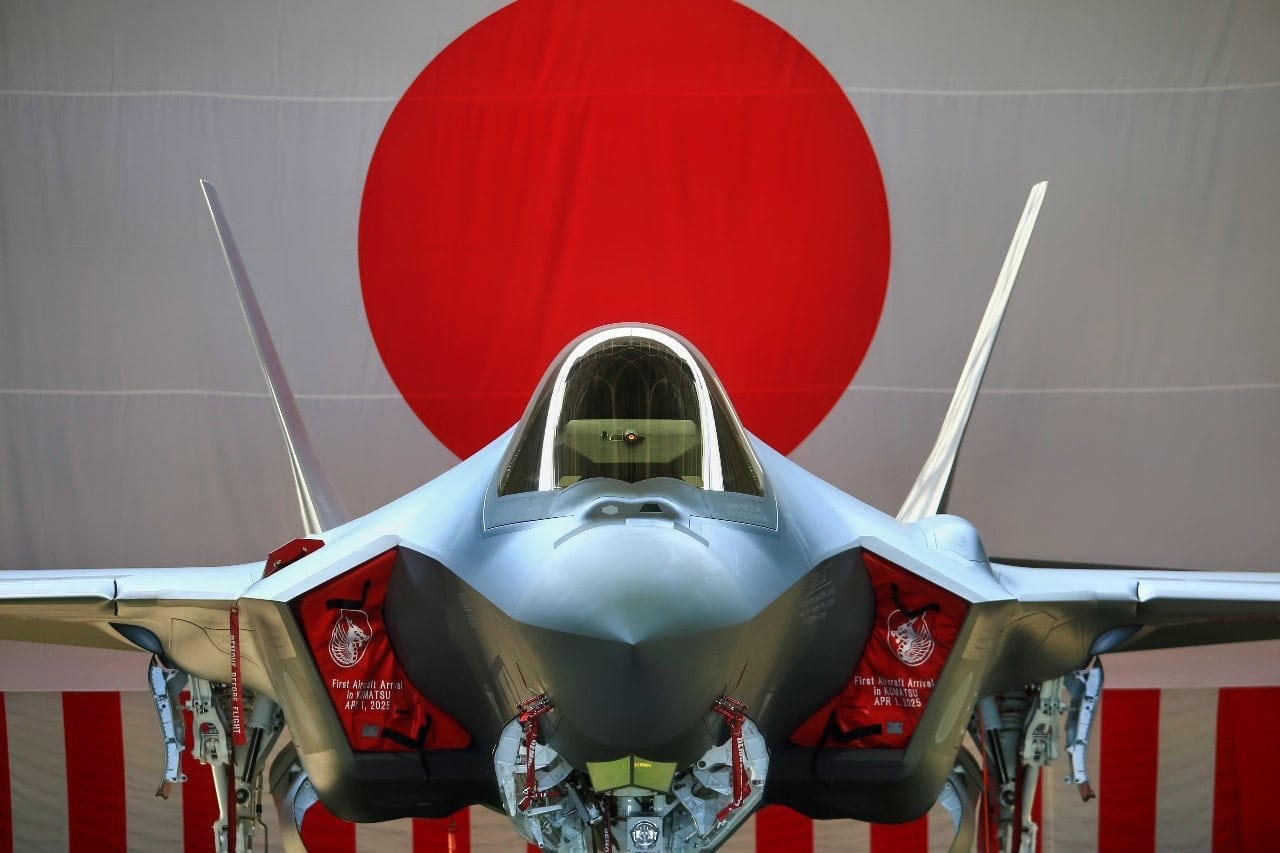
The Japan Air Self-Defense Force (JASDF) held an F-35 aircraft delivery ceremony at Komatsu Air Base, Japan, April 26, 2025. Japan received its first three F-35 aircraft in country, marking a historic milestone for the nation. Image provided to the F-35 Joint Program office by the JASDF.
Japan is buying the F-35 Lightning II in bulk, planning to acquire 147 aircraft. This significantly increases its fleet from an initial plan of 42, making it the second-largest operator of the F-35 after the United States.
The large order was approved by the U.S. in 2020 and includes both the conventional takeoff and landing (F-35A) and the short-takeoff/vertical-landing (F-35B) variants.
The order includes 105 F-35A models and 42 F-35B models. Japan’s decision is a response to China’s military buildup and a way to replace its aging F-15 and F-2 fleets.
About the Author: Steve Balestrieri
Steve Balestrieri is a National Security Columnist. He served as a US Army Special Forces NCO and Warrant Officer. In addition to writing on defense, he covers the NFL for PatsFans.com and is a member of the Pro Football Writers of America (PFWA). His work was regularly featured in many military publications.