
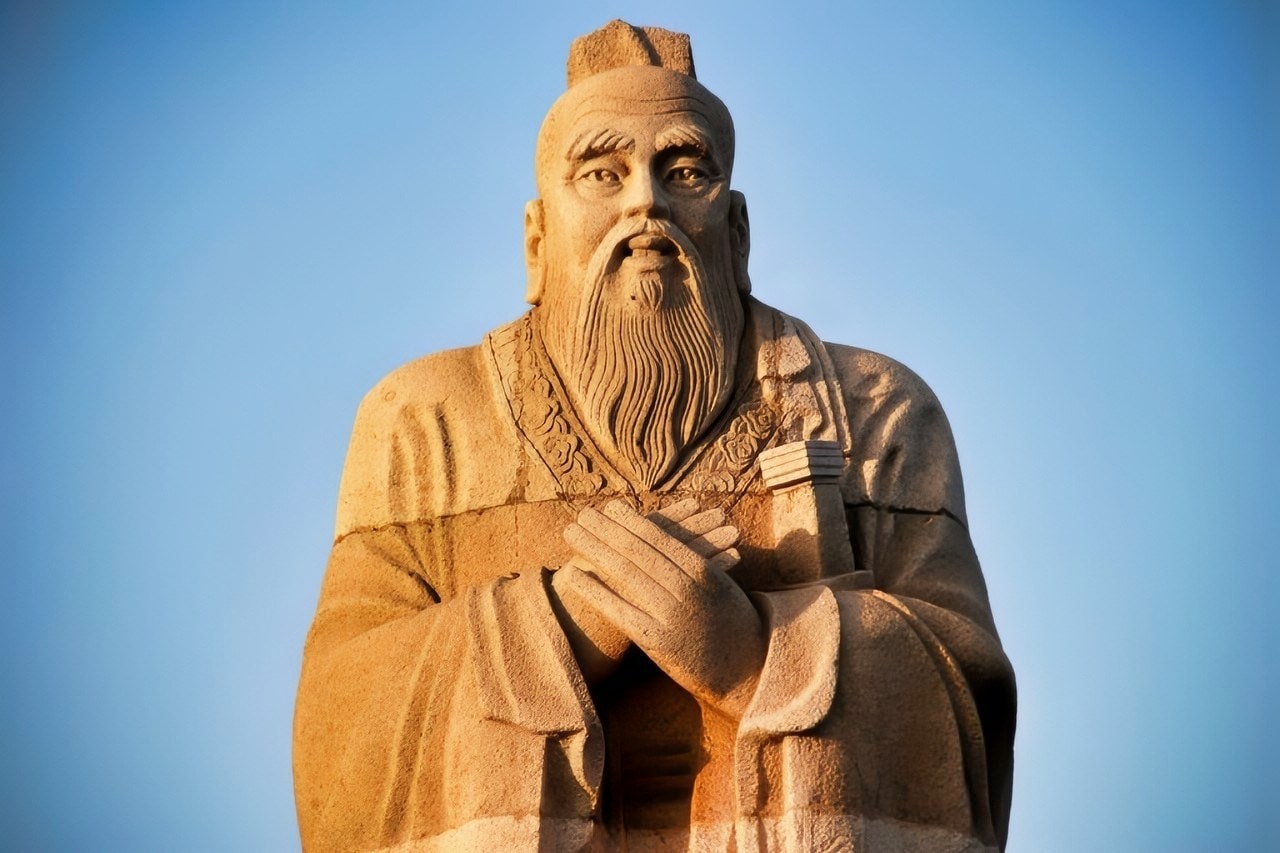
Key Points and Summary – Confucius wasn’t a general, but his best-known lesson—real glory is rising after failure—fits military life perfectly.
-Born in the state of Lu around 551 BCE, he rose from modest roots, served in government, then left in frustration and spent years teaching across China.

F-14 Tomcat Fighters. Image Credit: Creative Commons.
-His ideas—merit over birth, disciplined leadership, and moral limits on violence—still echo in modern armed forces.
-The piece links Confucian restraint to contemporary warfighting norms and uses Desert Storm as a modern example of punitive force bounded by rules and objectives. It closes with a personal “bounce back” lesson that reinforces the theme.
The Confucius Quote Everyone Knows—And What It Really Means for Leaders
“Our greatest glory is not in never falling, but in rising every time we fall..”—That quote belongs to the great Confucius, AKA “Kongzi” (“Master Kong”), the Father of Chinese ethics.
Mind you, as a Senior Defense Editor for 19FortyFive, this writer typically writes about military leaders and/or political leaders and/or gunmakers.
Confucius was none of those things, yet to say he had a profound impact on American and East Asian societies.
And that above-quoted nugget is certainly applicable to both military leadership and followership.
So then, without further ado…
Early Life
Very little is known about Confucius’s early life.
We do know that, though he wasn’t a soldier, his father certainly was, and than the future philosopher lived in the Eastern Zhōu Dynasty, at the time when the so-called “Springs & Autumns” period was becoming the “Warring States” period.
He was born Kong Qiu in the state of Lu circa 551 BCE; alas, his soldier father died when Kong Qiu was only three years of age, leaving his widowed mother to raise him for the remainder of his childhood. (His mother also died young, before she even reached her 40th birthday.)
According to one of his mini-bios, “Confucius’ family was part of a growing middle class of people in China called ‘shi.” They weren’t part of the nobility, but were considered above the common peasants. This gave him a different outlook on life than most people. He thought that people should be promoted and rewarded based on their talents, not on what family they were born into.”
From Working Class to Government VIP
“Confucius didn’t start out as a wise teacher; he worked a number of normal jobs first. They included being a shepherd and a clerk.”
Along the way, he married Lady Qiguan at the age of 19 and had a child named Kong Li; that turned out to be quite a fruitful bloodline, as today there are over 2 million known and registered descendants of Confucius.
Soon enough, started as the governor and Minister of Crime of a small town and worked his way up until he became an advisor at the top levels of government.
This was fitting, as he was a firm believer in a strong, organized central government.
Later Life and Death
However, Confucius left government service at the age of 51, disillusioned that the leaders were not following his teachings.
He then became a wandering philosopher, traveling and teaching throughout China for many years.
He spent his twilight years in his hometown of Qufu, dying of natural causes circa 479 BCE. His teachings became the state philosophy of China during the Han Dynasty and the basis of the government civil service exams.
Influence Upon the U.S. Military
The Abstract of a peer-reviewed September 2012 academic paper by Sumner B. Twiss*, Jonathan K.L. Chan of the Hong Kong Baptist University Centre for Applied Ethics, titled “The classical confucian [sic] position on the legitimate use of military force,” “explore[s] Confucian criteria for justifying resort to the use of force, giving special attention to undertaking punitive expeditions to interdict and punish aggression and tyranny. Following this discussion, the essay then attends to important Confucian moral constraints on how military force is properly employed, including prohibitions on attacking the defenseless, indiscriminate slaughter of enemy forces, destruction of civilian infrastructure, prisoner abuse, and non-consensual annexation of territory.”
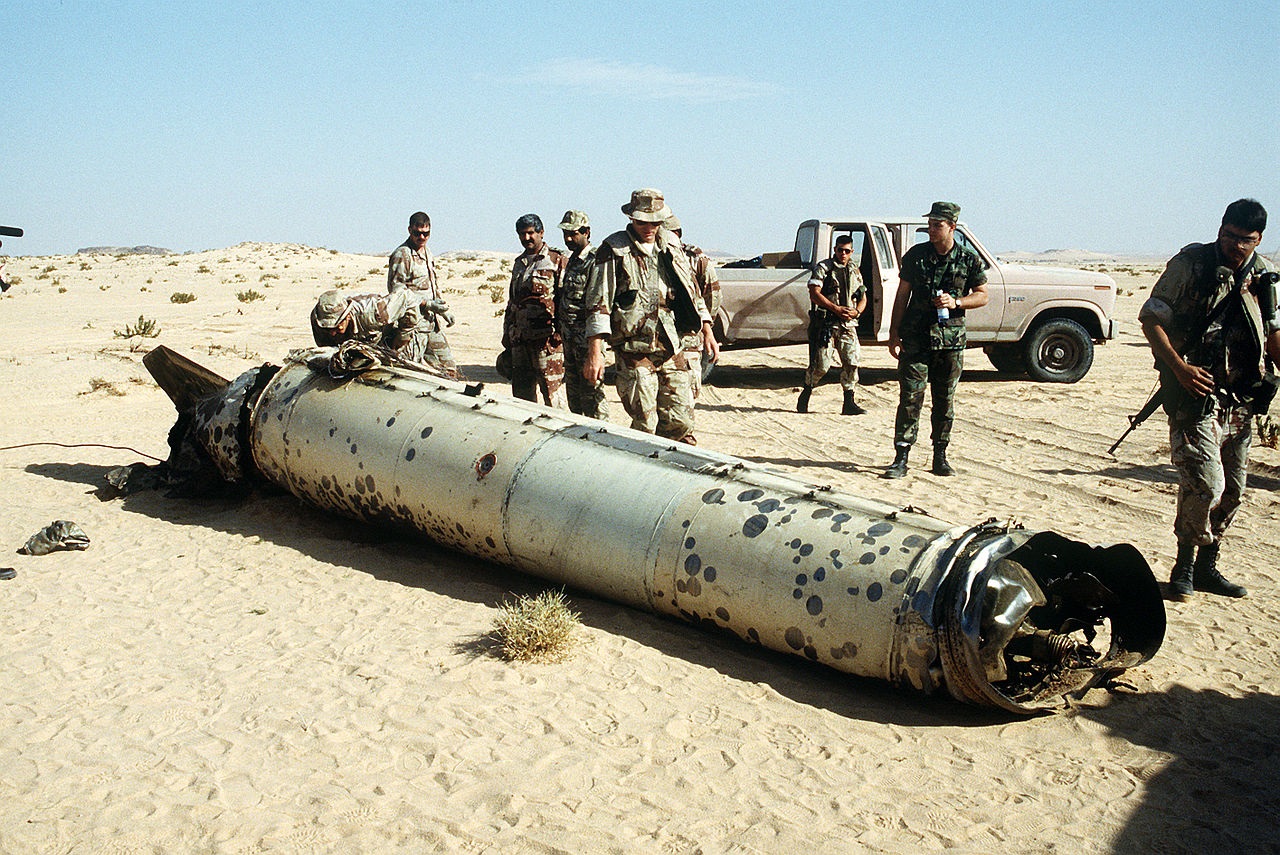
Military personnel examine a Scud missile shot down in the desert by an MIM-104 Patriot tactical air defense missile during Operation Desert Storm.
A perfect example is the 1991 Persian Gulf War, AKA Operation Desert Storm. Then-Iraqi dictator Saddam Hussein’s August 1990 invasion of Kuwait constituted “non-consensual annexation of territory,” and accordingly, then-U.S. President George H.W. Bush assembled a multinational military coalition as a “punitive expeditions to interdict and punish aggression and tyranny.”
When the shooting war started, the coalition air forces used precision-guided munitions to avoid “attacking the defenseless” and minimize “destruction of civilian infrastructure” (although some degree of “collateral damage” inevitably still did tragically occur).
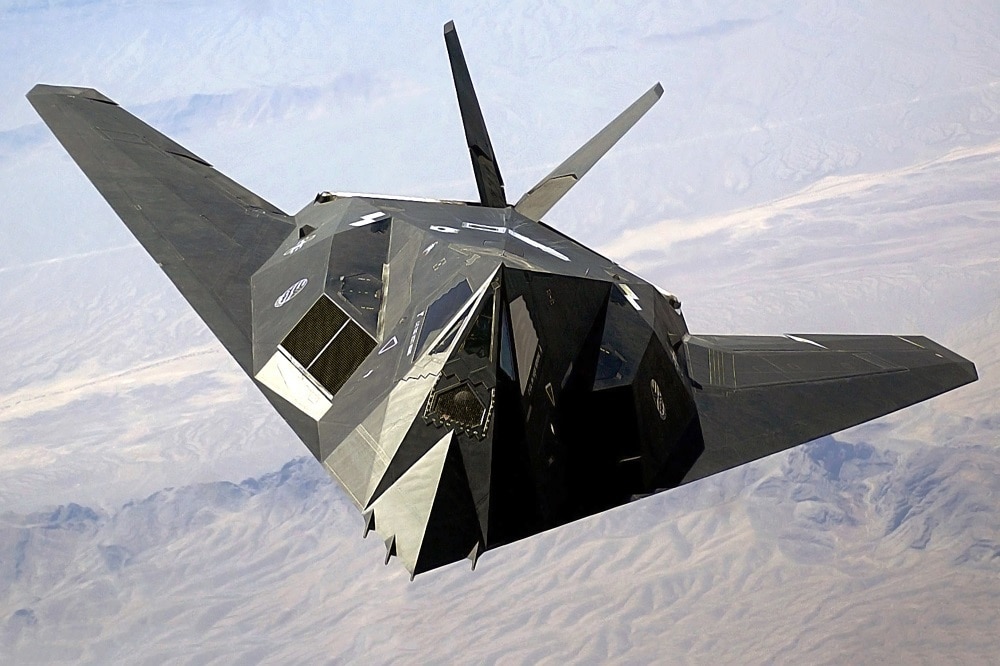
The USAF F-117 Nighthawk, one of the key aircraft used in Operation Desert Storm.
When the beleaguered Iraqi troops surrendered in droves, their American captors strove to treat them humanely and thus avoid “prisoner abuse.”
And to avoid “indiscriminate slaughter of enemy forces,” Mr. Bush and then-Chairman of the Joint Chiefs of Staff called off the proverbial dogs before the Iraqi Army was annihilated.
Also, going back to the notion that “people should be promoted and rewarded based on their talents,” that’s embodied in the U.S. Armed Forces’ merit-based promotion system, a sharp contrast to, say, the colonial-era British Army, many of whose officers purchased their commissions.
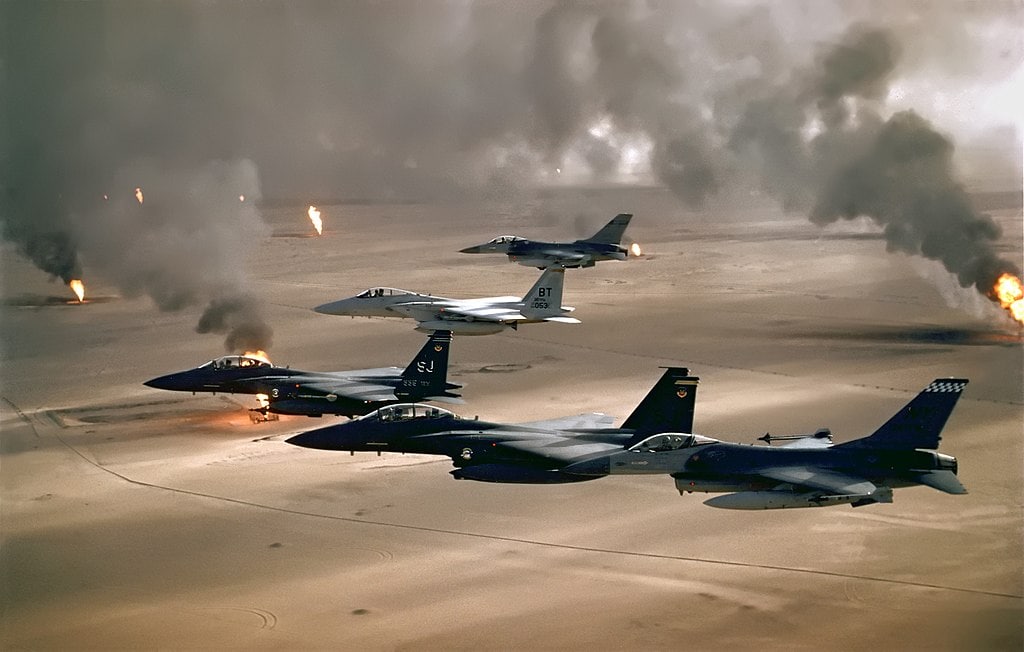
USAF aircraft fly over retreating Iraqi forces in Kuwait during Operation Desert Storm
And from a personal standpoint, as a military veteran, let me readdress that quote at the beginning of this article.
I first applied to U.S. Air Force Officer Training School (OTS) in the summer of 1997, right after my graduation from the University of Southern California (USC) School of International Relations.
Well, that first application to OTS was unsuccessful (not surprising, at OTS had a mere 20 percent selection rate at the time), and I was feeling pretty down in the dumps about it.
Well, my USC College Republican buddy, Daryl Acumen (who later became Vice Chairman of the Utah County Republican Party), came to the rescue.
Giving me a pep talk over a couple of bottles of beer, he consoled me with the words “Success is not measured by how high you climb, but how high you bounce back after you fall,” and then, raising his beer bottle in toast, added, “Here’s to bouncing back.”
Though he wasn’t quoting the Chinese philosopher verbatim, Daryl was at least subconsciously channeling Confucius.
And suffice to say, I took those words to heart and eventually bounced back: on September 27, 2001, I finally graduated and earned my commission as a USAF 2nd Lieutenant with OTS Basic Officer Training (BOT) Class 01-08, the first post-9/11 OTS BOT class.
About the Author: Christian D. Orr, Defense Expert
Christian D. Orr is a Senior Defense Editor. He is a former Air Force Security Forces officer, Federal law enforcement officer, and private military contractor (with assignments worked in Iraq, the United Arab Emirates, Kosovo, Japan, Germany, and the Pentagon). Chris holds a B.A. in International Relations from the University of Southern California (USC) and an M.A. in Intelligence Studies (concentration in Terrorism Studies) from American Military University (AMU). He is also the author of the newly published book “Five Decades of a Fabulous Firearm: Celebrating the 50th Anniversary of the Beretta 92 Pistol Series.”