
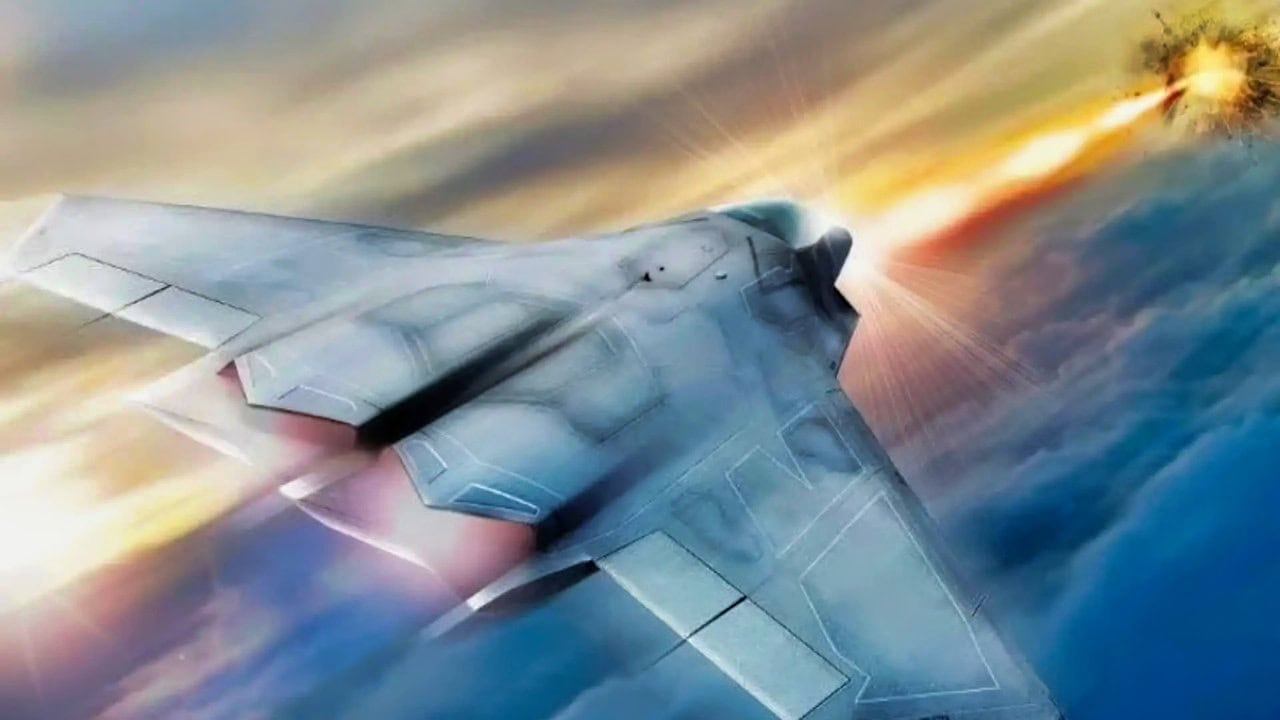
Synopsis: The U.S. Air Force is attempting a sweeping modernization push, replacing aging Cold War-era aircraft with next-generation systems meant to preserve air dominance into the mid-21st century. In fact, the Air Force’s biggest problem isn’t China or Russia, persay, but getting ready to deal with the modernization needs to tackle both nations if a war ever occurred.
-The effort spans NGAD’s sixth-generation “family of systems,” continued F-35A procurement, F-15EX buys as a near-term hedge, and the B-21 Raider stealth bomber—plus critical enablers like the KC-46 tanker and T-7 trainer.
-But the bill is enormous, and the “divest to invest” strategy is politically difficult as Congress resists retiring legacy fleets. With China modernizing quickly, the real question becomes not whether the Air Force can afford it—but how it can’t.
The Big Problem: Can the Air Force Afford NGAD, B-21, F-35, and F-15EX All at Once?
In recent years, the United States Air Force has pushed ahead with an ambitious program to modernize nearly every primary aircraft type in its inventory – and despite budget pressures and schedule slippage, those efforts are moving ahead (essentially) as planned.
From next-generation fighters to stealth bombers and new trainer jets, the service is attempting to replace aging Cold War-era platforms with high-tech systems designed to maintain U.S. military dominance well into the mid-21st century.
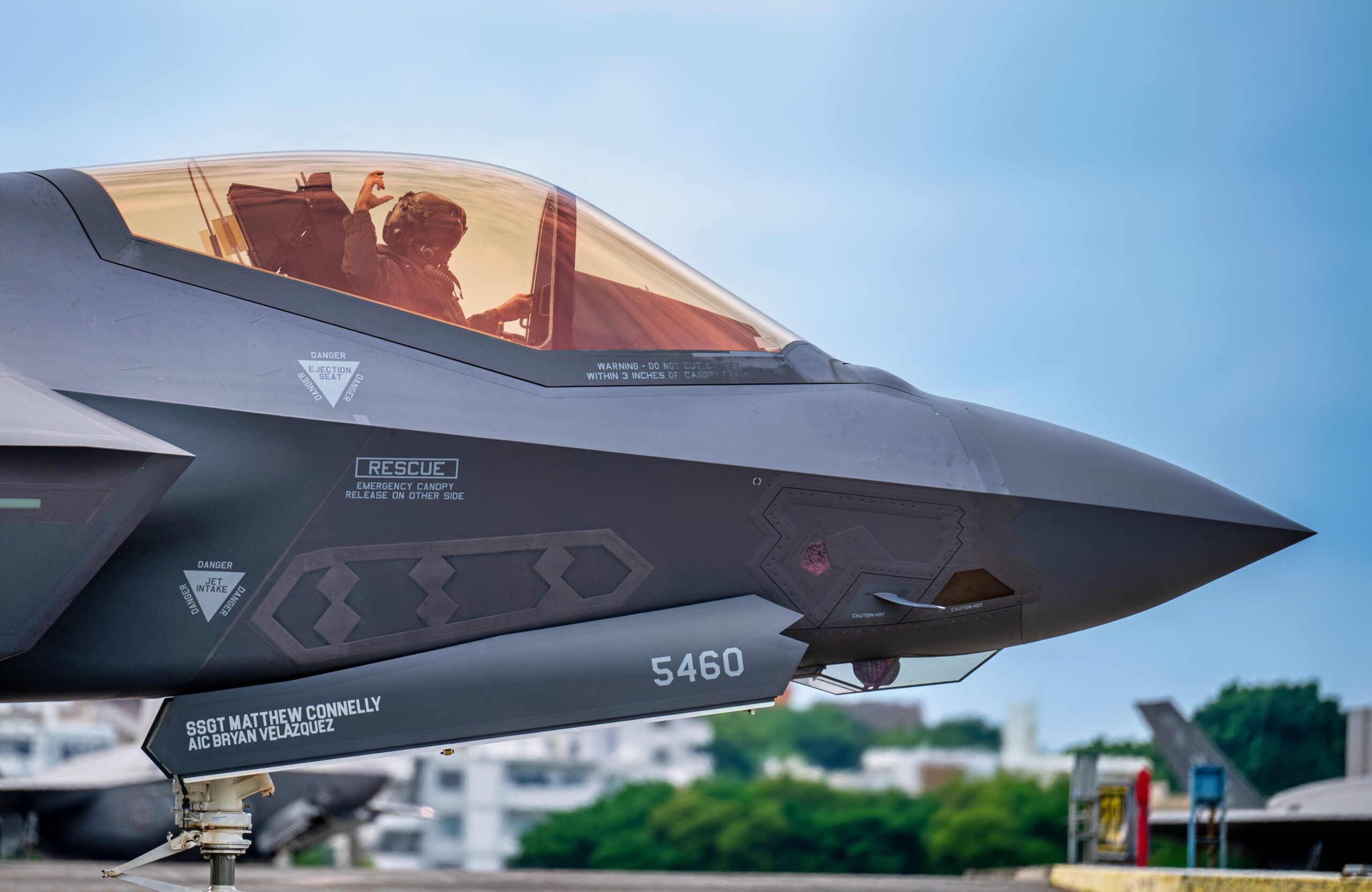
A U.S. Air Force F-35A Lightning II pilot assigned to the 355th Expeditionary Fighter Squadron taxis on the flightline at Marine Corps Air Station Futenma, Japan, during a routine 18th Wing readiness exercise at Kadena Air Base, Japan, May 6, 2025. The U.S. Air Force continues to work on its ability to meet new challenges in dynamic environments. In line with this direction, U.S. Pacific Air Forces is constantly evaluating and validating new warfighting concepts. (U.S. Air Force photo by Senior Airman Catherine Daniel)
Those efforts come as the fast pace of Chinese military growth becomes increasingly alarming, and as defense budgets constantly shift, forcing the Air Force and the Pentagon into a situation where affordability and strategic necessity are constantly at odds.
What the Air Force Is Buying – and What It Will Cost
The U.S. Air Force’s Fiscal Year 2026 budget reflects the scale of the ongoing investments. The service requested approximately $209.6 billion to operate and modernize its forces – an increase of nearly $25 billion over the previous year – with significant funds earmarked for new aircraft procurement and research and development.
At the heart of the modernization is the Next Generation Air Dominance (NGAD) program – a sixth-generation fighter family of systems that includes both a crewed fighter and a fleet of connected unmanned “loyal wingman” drones.
NGAD has been repeatedly framed by Air Force leadership as essential to countering advanced adversary air defenses and maintaining air superiority, which by all measures it is – but details on cost and procurement numbers are still far off from being accurate or confirmed.
Industry reporting and analysis have suggested that the program will be one of the most expensive in Air Force history, with estimates that individual platforms could cost more than existing fighters to procure and operate.
And that seems perfectly likely, given the cutting-edge technologies that will need to be integrated at scale.
Meanwhile, the Air Force’s current fighter fleet modernization efforts include the Lockheed Martin F-35A Lightning II. In the FY2025 defense budget, the Pentagon asked for roughly $12.4 billion to procure F-35 aircraft and support ongoing development, including 42 F-35As for the Air Force.
The Joint Strike Fighter Program – which birthed the F-35 – is the largest U.S. aircraft procurement effort ever undertaken, with total development and production costs projected at more than $485 billion for thousands of jets across all services.
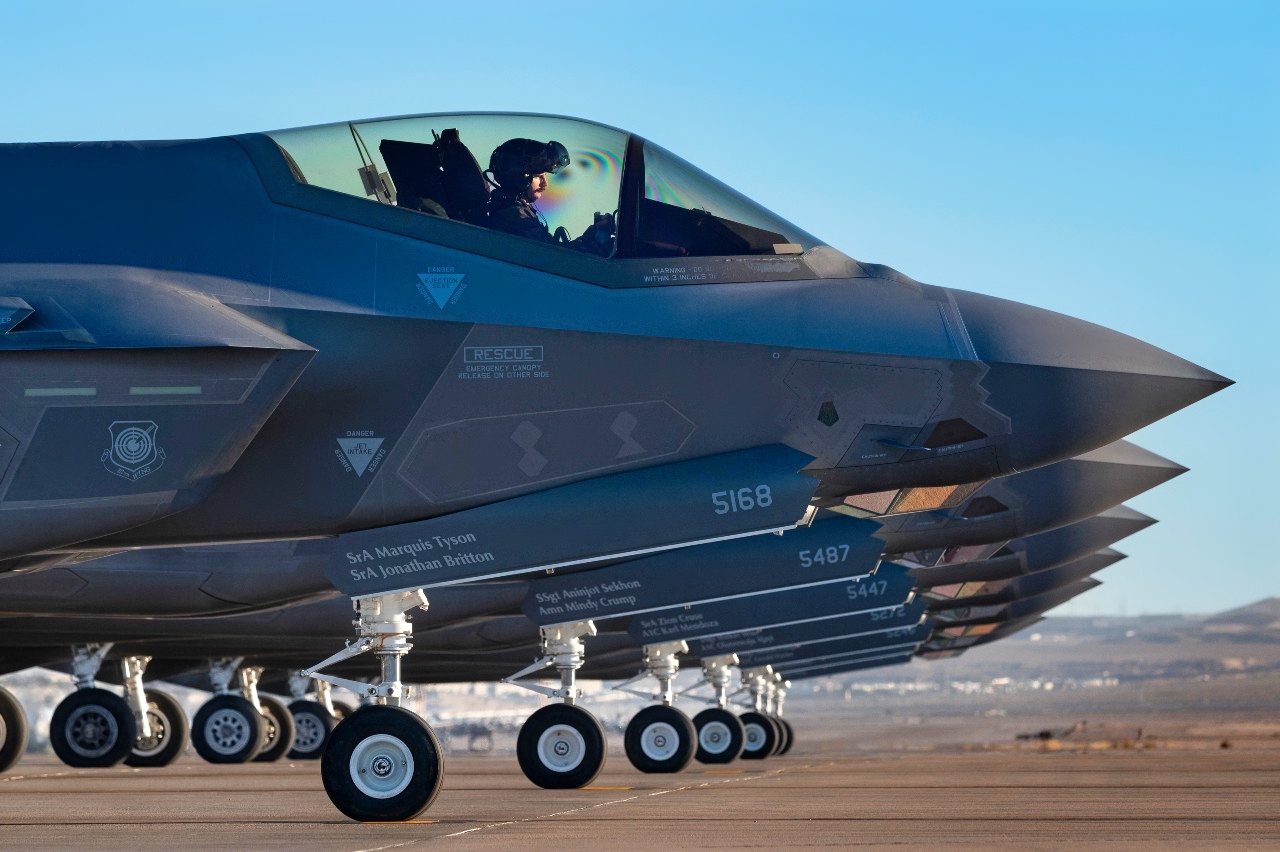
Seven F-35 Lightning II aircraft wait to take off for a U.S. Air Force Weapons School training mission at Nellis Air Force Base, Nevada, Jan. 31, 2024. The U.S. Air Force Weapons School teaches graduate-level instructor courses that provide advanced training in weapons and tactics employment to officers and enlisted specialists of the combat and mobility air forces. (U.S. Air Force photo by William R. Lewis)
And alongside stealth fighters, the Air Force is also buying F-15EX Eagle II aircraft as a near-term hedge. The multirole jets are meant to replace aging F-15C/D models and are less expensive on a per-aircraft basis than stealth platforms – but that being said, the costs remain substantial.
Recent budget activity surrounding F-15EX purchases has indicated a cost of $3.1 billion for planned purchases of two dozen aircraft – an acquisition designed to maintain force structure while newer systems begin to enter service. Reports also suggest that the Air Force could increase F-15EX procurement to 36 jets annually with sufficient funding.
But arguably the most visible part of the modernization program is the B-21 Raider, in part because the aircraft and its predecessor, the B-2 Spirit, are so iconic.
The upcoming stealth bomber, intended to replace both the B-1 and B-2 fleets, is under development by Northrop Grumman and is designed to carry both conventional and nuclear weapons; the Air Force is already aiming for at least 100 aircraft.
Should analysts get their way, procurement could reach 200. Unit costs have been reported to be extraordinarily high, however, at as much as $800 million per aircraft – a figure that reflects the complexity of the program.
Lawmakers even approved an additional $1 billion in funding for bomber infrastructure to support construction and basing improvements.
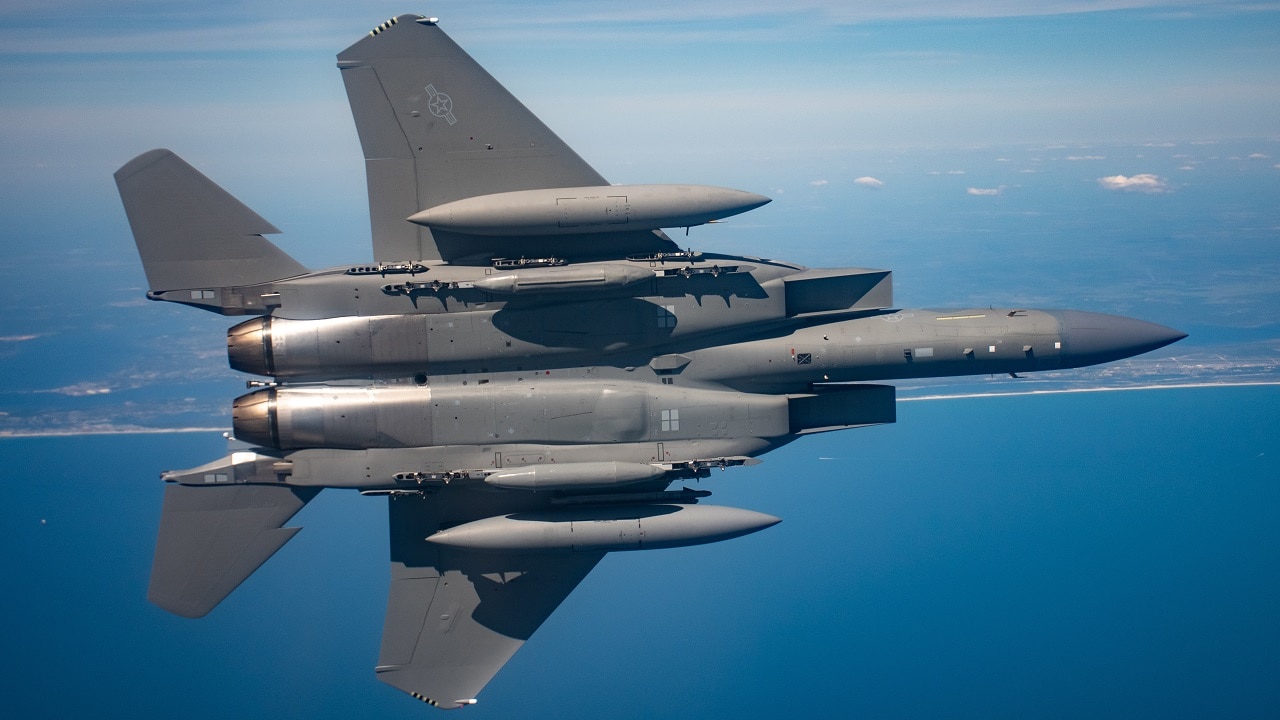
An F-15EX Eagle II from the 85th Test and Evaluation Squadron, 53rd Wing, takes flight for the first time out of Eglin Air Force Base, Fla., April 26, 2021, prior to departure for Northern Edge 2021. The F-15EX brings next-generation combat technology to a highly successful fighter airframe that is capable of projecting power across multiple domains for the Joint Force. (U.S Air Force photo by 1st Lt Savanah Bray)
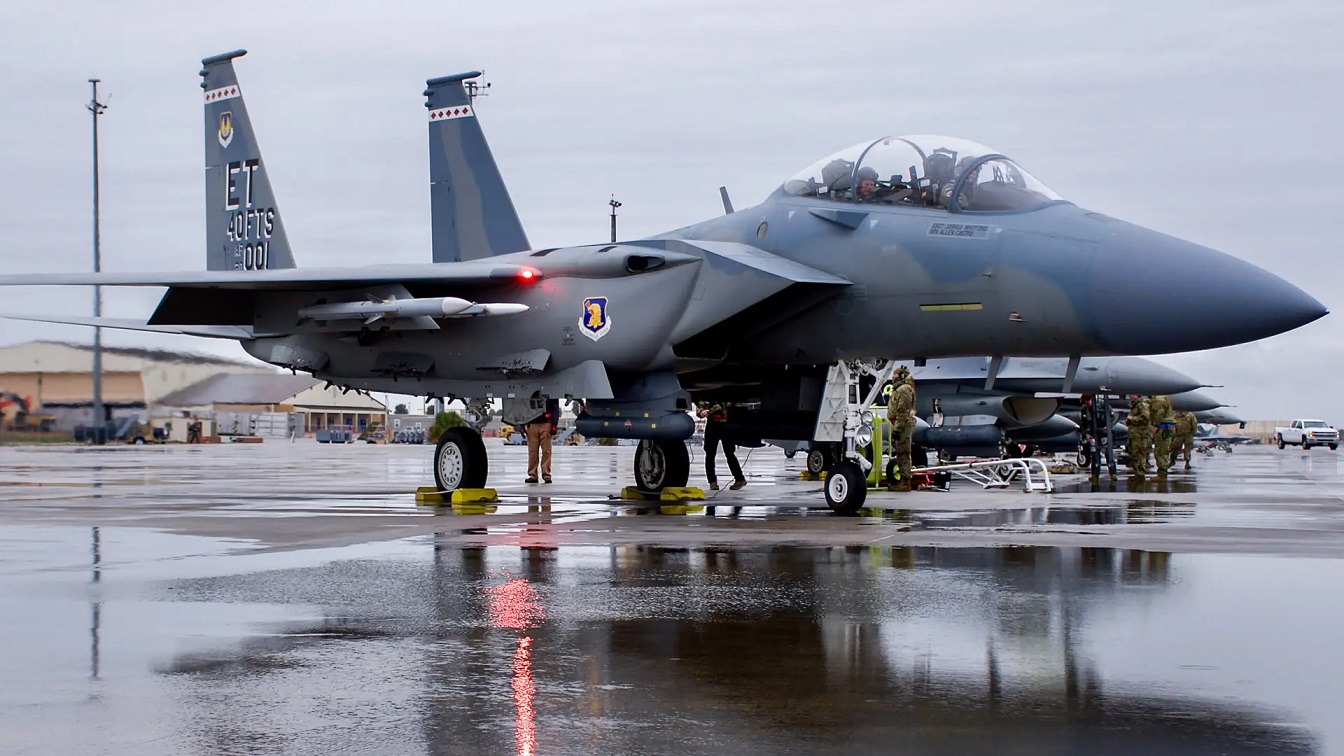
F-15EX. Image Credit: U.S. Air Force.
Beyond fighters and bombers, the Air Force is also investing in support platforms like the KC-46A tanker, used for aerial refueling, and the T-7A Red Hawk trainer, designed to replace the decades-old T-38 fleet. These systems are critical to sustainment and force generation, but they add billions more to the overall cost of modernization.
Can the Air Force Afford It?
With all that spending, it’s hard to ignore the question: Can we afford this?
Service leadership has repeatedly stressed the concept of “divest to invest,” arguing that retiring legacy aircraft is necessary to free up funds for advanced systems – but congressional resistance to retiring older platforms complicates the trade-off.
Budget pressure from other defense priorities is creating tension over funding allocation. In short: it’s a mess.
Some argue that the Air Force’s planned procurement rates still fall short of what would be needed to counter major threats.
Some reports have indicated that to meet stated force structure goals fully, the Air Force would need to buy roughly 100 F-35s and more than three dozen F-15EXs annually – far above current production levels and potentially pushing industry capacity to the limit.
And while it could be argued that spending must be reined in, it’s essential to consider the context underpinning all the decisions being made: China’s rapid military modernization.
The Pentagon’s annual China Military Power Report has shown just how much sustained growth the People’s Liberation Army continues to see in capabilities, spanning advances in fighter aircraft, missile systems, and integrated air defenses.
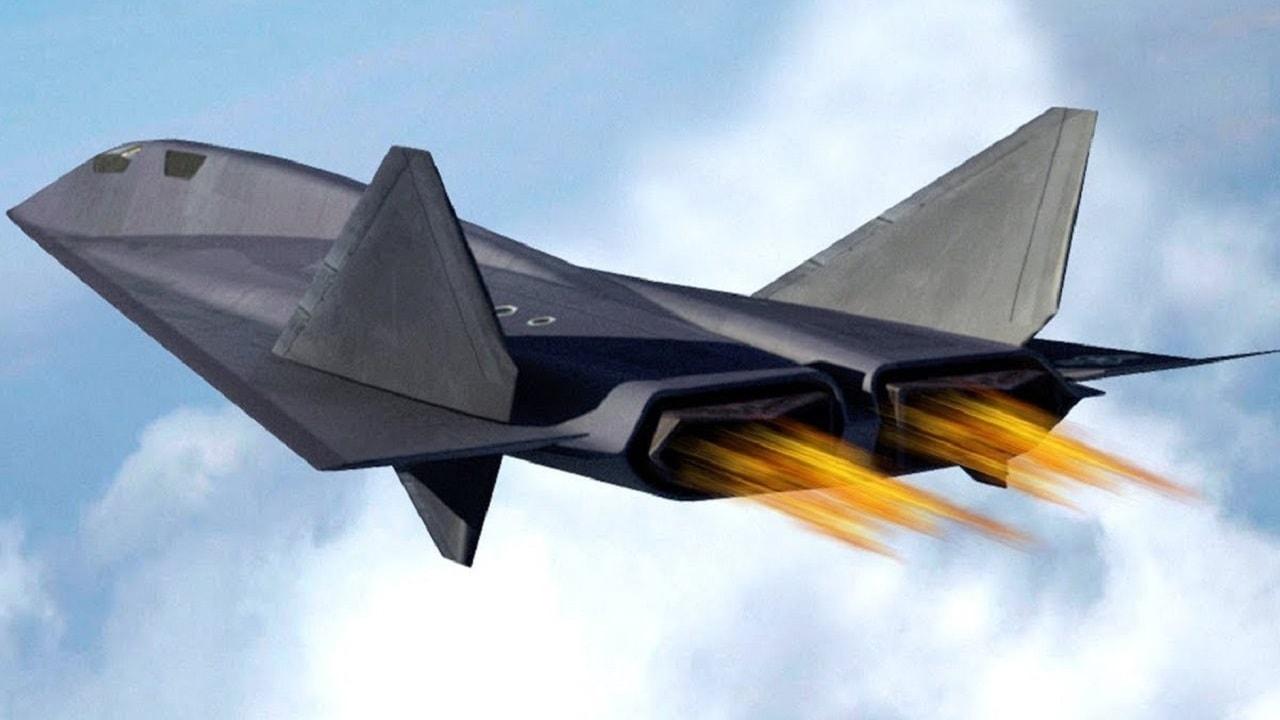
By: Image Credit: Rodrigo Avella
And while China’s defense budget remains lower on paper than that of the United States, its industrial base has been rapidly expanding production capacity for modern combat aircraft, iterating more quickly than that of the United States, and presenting a significant challenge for U.S. planners who must balance both quality and quantity of American assets.
Ultimately, the question may not be “can we afford it?” but “how can we afford it?”
Without continued U.S. development and significant investments in American infrastructure and industrial systems, the U.S. risks exposing itself to new vulnerabilities as China increases production tempo and narrows the technological-capability gap with the world’s most significant air force.
About the Author:
Jack Buckby is a British author, counter-extremism researcher, and journalist based in New York who writes frequently for National Security Journal. Reporting on the U.K., Europe, and the U.S., he works to analyze and understand left-wing and right-wing radicalization, and reports on Western governments’ approaches to the pressing issues of today. His books and research papers explore these themes and propose pragmatic solutions to our increasingly polarized society. His latest book is The Truth Teller: RFK Jr. and the Case for a Post-Partisan Presidency.