
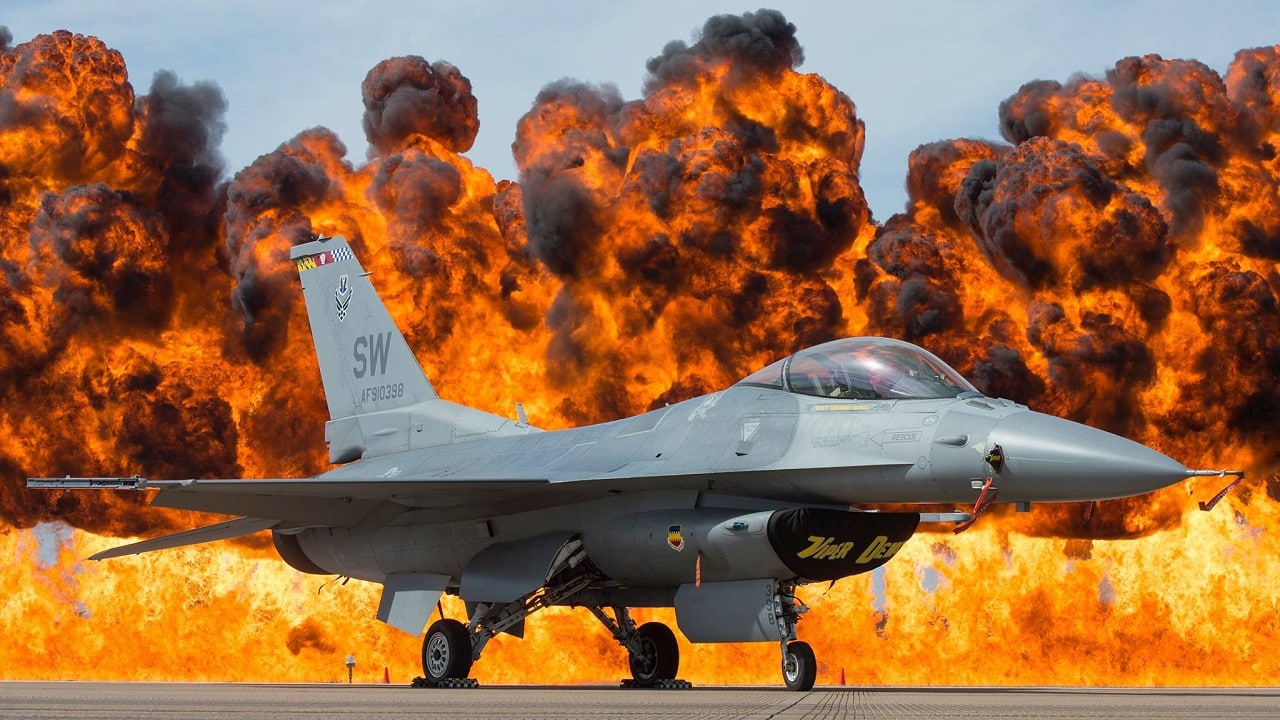
Key Points and Summary: The proposed F-16 Block 80 is pitched as a low-risk, high-tech way to quickly bulk up America’s shrinking fighter fleet.
-Built on the export F-16V line, it would add an APG-85-class GaN AESA radar, modern electronic warfare for “electronic stealth,” F-35-style sensors, and upgraded F110 engines—essentially a “mini F-15EX” for missions that don’t demand full stealth.

A U.S. Air Force F-16 Fighting Falcon receives fuel from a U.S. Air Force KC-135R Stratotanker above the United States Central Command area of responsibility, Dec. 8, 2021. The F-16 is a compact, multi-role fighter aircraft that delivers war-winning airpower to the USCENTCOM AOR. (Photo by Staff Sgt. Frank Rohrig)
-But the concept has no fixed configuration, the USAF has stopped buying F-16s, and Greenville’s small production line is export-focused.
-The Block 80 highlights a hard question: is Washington quietly planning for too few F-35s and F-47s to meet future demand?
The F-16 Block 80 Program: Will It Ever Fly?
The F-16 Block 80 is a proposed, highly advanced F-16 variant being considered by the U.S. Air Force (USAF) as a cost-effective way to boost fighter numbers.
The Block 80 concept would enhance export-only Block 70/72 F-16 aircraft—much as the F-15EX updated the F-15—by adding an APG-85-class GaN AESA, expanded electronic warfare for “electronic stealth,” modern weapons, and F110-GE-132 engine enhancements.
Some of this technology would be integrated from the F-35 fifth-generation stealth fighter. However, it remains a hypothetical concept based on current F-16V (Block 70/72) export models, with no final decision made, according to recent 2025 discussions.
It aims to bridge gaps in the fighter fleet, offering a potent, modernized aircraft for various roles, possibly serving as a “mini F-15EX” or supporting fifth-gen fighters. Would the Air Force even want to spend money on updating older aircraft? That remains to be seen.
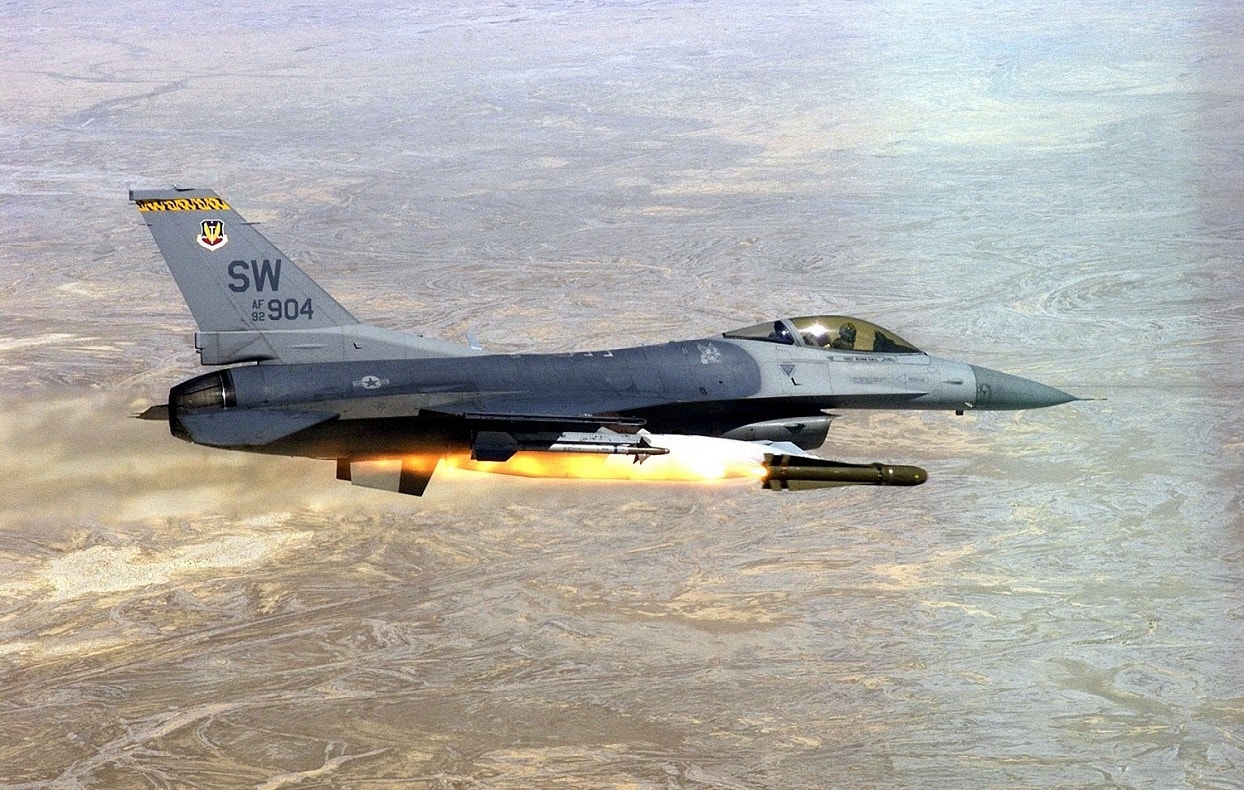
F-16 Image: Creative Commons.
F-16s Remain The Most Common Air Force Fighter:
Back in May, then-United States Air Force (USAF) Chief of Staff General David Allvin spoke to the Senate Intelligence Committee about the shrinking US fighter fleet. And as a possible stopgap measure, he mentioned that an advanced F-16 variant could be a viable and affordable solution.
While it was a hypothetical design concept at the time, the proposed version was designated the “F-16 Block 80.” The F-16 is the Air Force’s most numerous fighter and has been the world’s largest export fighter.
Turning the F-16 into a Block 80 would be a near-parallel process of incorporating F-35-era technology into the older airframe.
Key Concepts & Potential Features
The Block 80 would bridge the gap until the F-47 enters full-scale production. Aims to provide more fighters for the USAF without the full cost of acquiring more F-35s or next-gen fighters, filling roles where complete stealth isn’t essential.
The Block 80 would bring advanced features from the F-35 (such as sensor fusion) and the F-16V (Block 70/72) (such as the APG-83 AESA radar and a new cockpit) into a new or upgraded airframe for the USAF.
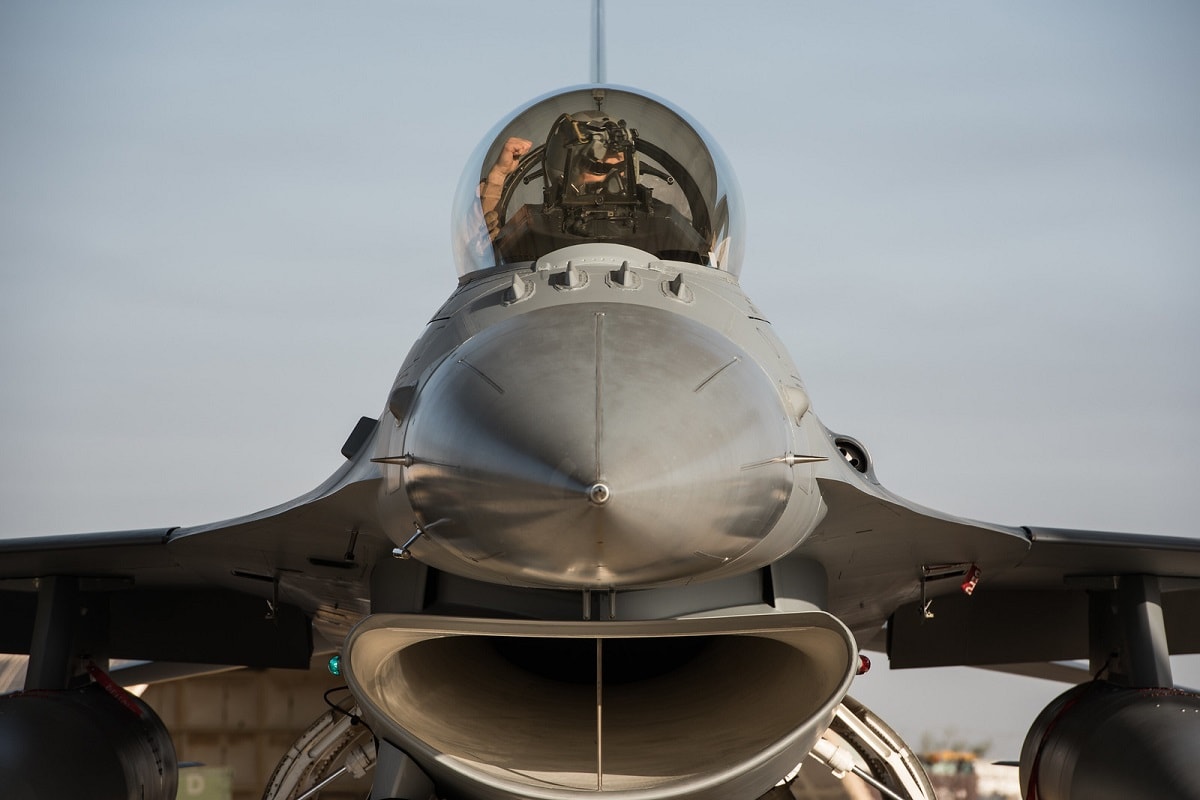
An F-16 Fighting Falcon pilot assigned to the 134th Expeditionary Fighter Squadron performs preflight checks at the 407th Air Expeditionary Group, Dec. 29, 2016. The 134th EFS is flying combat missions for Operation Inherent Resolve to support and enable Iraqi Security Forces’ efforts with the unique capabilities provided by the fighter squadron. (U.S. Air Force photo/Master Sgt. Benjamin Wilson/Released)
The Block 80, like the original F-16, would have multi-role capability. Designed for air-to-air, ground strikes, and electronic warfare, potentially controlling unmanned aircraft, such as the Collarborative Combat Aircraft (CCA).
It could be cost-effective. Positioned as a more affordable alternative to other advanced fighters, potentially lowering overall fleet costs. However, it should be noted that the Air Force has stopped procuring F-16s.
The Block 70/72 production line has been moved out of Air Force Plant No. 4 in Fort Worth, Texas, to make room for the F-35 line. The Block 70/72 production line is now located in Greenville, South Carolina, and it is strictly producing export aircraft.
“The question is whether the USAF would want to consider going back to procuring F-16s of any configuration,” a former US defense industry executive said.
“Do they have any of the proverbial ‘muscle memory’ left required to design and procure a new F-16 variant, and do they even want to remember how to do that?”
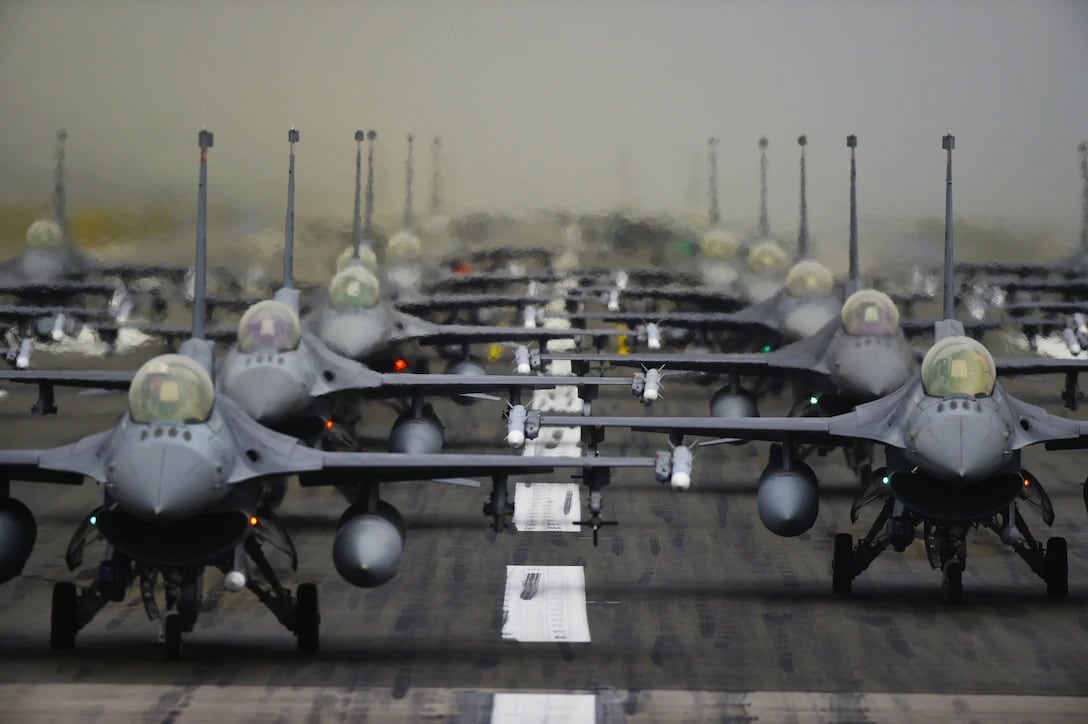
U.S. Air Force 52nd Fighter Wing F-16 Fighting Falcons line up in formation on the runway for a show of forces display at Spangdahlem Air Base, Germany, Oct. 1, 2019. The 52nd FW has a suppression of enemy air defenses mission and must be able to respond to emerging competitors. (U.S. Air Force photo by Staff Sgt. Joshua R. M. Dewberry)
Producing A Mini-F-15EX Eagle II?
The precedent for the Block 80 program would be the F-15EX. Just like the F-16, the F-15 hadn’t been produced for the US in many years, and then was restarted, strictly for export orders.
The Air Force would use the Block 70/72 as a template and build the Block 80 version, much like they built the F-15G model for Singapore. However, there remains one “not-so-small” problem.
There is currently no concrete Block 80 configuration. And as we’ve seen time and again, the services will continually tinker with a concept that takes time and inevitably leads to cost overruns.
Another issue is the plant at Greenville itself. It is small and produces only about three aircraft per month.
Why The F-16 Block 80 Concept Matters
Fleet modernization is imperative, and a Block 80 F-16, despite its upgrades, remains a step backward. While it addresses the USAF’s need for more fighter capacity and modernized capabilities as older F-16s are retired, the F-16 is no longer a top-of-the-line fighter.
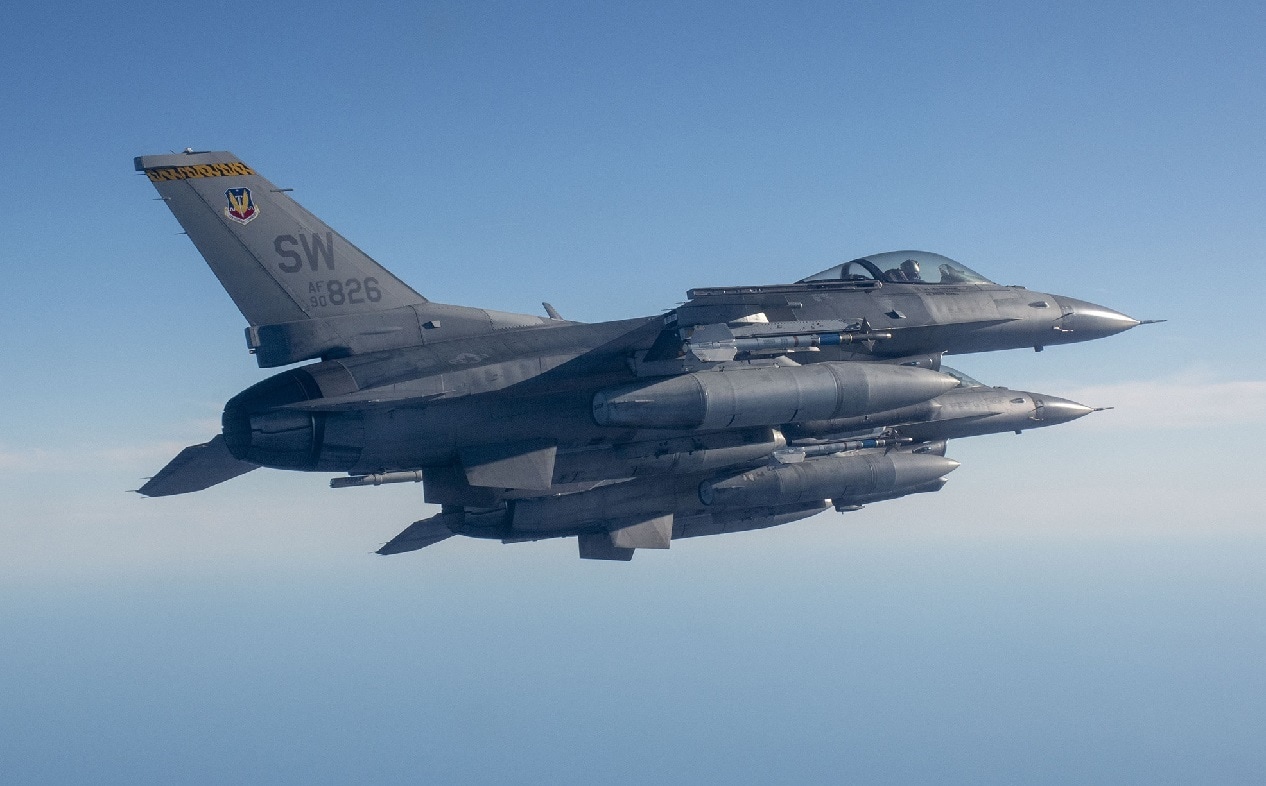
TYNDALL AIR FORCE BASE, Fla. – A pair of F-16C Fighting Falcons assigned to the 79th Fighter Squadron participate in the 53rd Weapons Evaluation Group’s Weapons System Evaluation Program East 22.02, hosted at Tyndall Air Force Base, Fla., Nov. 16, 2021. WSEP tests and validates the performance of crews, pilots, and their technology to enhance readiness for real-world operations.
Complementing F-35s is the most likely way the Air Force plans to utilize the F-16 Block 80. The Block 80 will provide a valuable asset for lower-intensity conflicts, homeland defense, and as a “wingman” for stealth fighters.
But is the Air Force planning to have insufficient F-35s and F-47s to meet our defense needs?
About the Author: Steve Balestrieri
Steve Balestrieri is a National Security Columnist. He served as a US Army Special Forces NCO and Warrant Officer. In addition to writing on defense, he covers the NFL for PatsFans.com and is a member of the Pro Football Writers of America (PFWA). His work was regularly featured in many military publications