

Key Points and Summary – U.S. shipyards need welders and electricians, but many workers can earn comparable pay at Amazon or even Buc-ee’s without the heat, confined spaces, and relentless overtime.
-Navy Secretary John Phelan argues the industrial base cannot compete with China if shipbuilding wages and quality of life lag behind local employers.

(Dec. 6, 2015). USS Carney (DDG 64) awaits the return of its small boat crew during a passenger transfer Dec. 6, 2015. Carney, an Arleigh Burke-class guided missile destroyer, forward deployed to Rota, Spain, is conducting a routine patrol in the U. S. 6th Fleet area of operations in support of U.S. national security interests in Europe. (U.S. Navy photo by Mass Communication Specialist 1st Class Theron J. Godbold/Released)
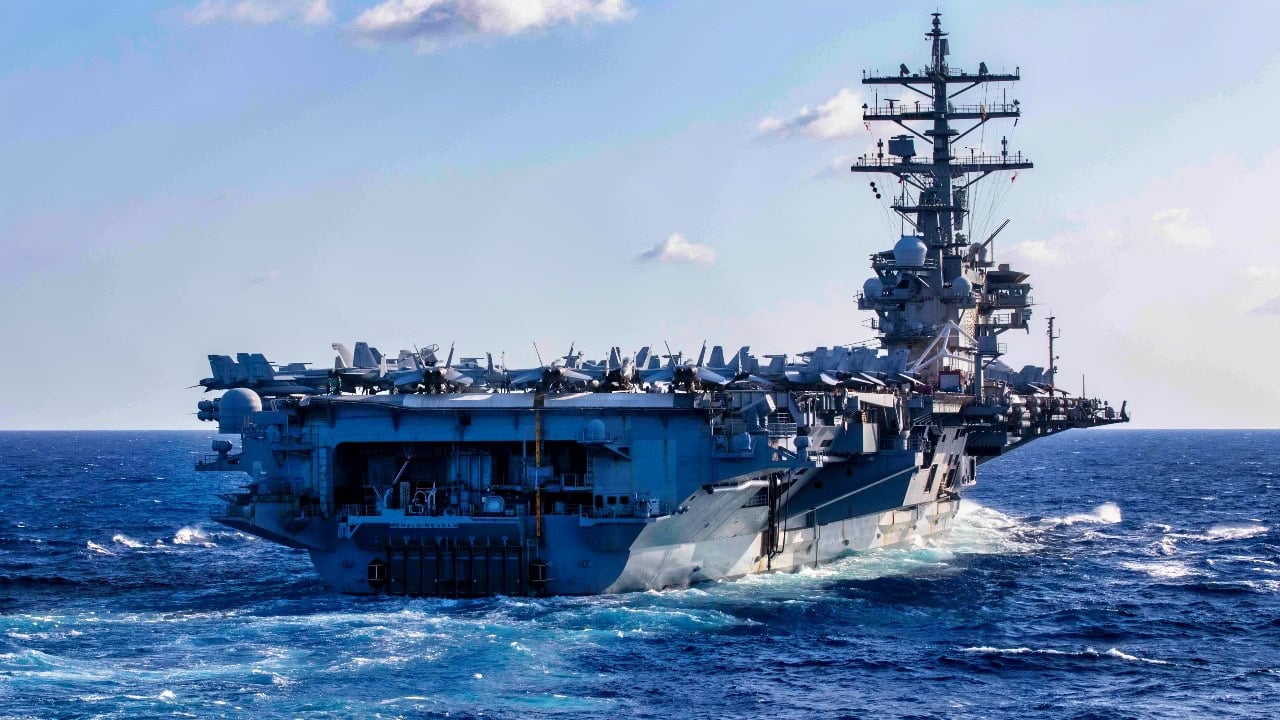
(June 4, 2024) The Arleigh Burke-class guided-missile destroyer USS Ralph Johnson (DDG 114) conducts a replenishment-at-sea with the U.S. Navy’s only forward-deployed aircraft carrier, USS Ronald Reagan (CVN 76) in the Philippine Sea, June 4. Ralph Johnson is forward deployed and assigned to Destroyer Squadron (DESRON) 15, the Navy’s largest DESRON and the U.S. 7th fleet’s principal surface force. (U.S. Navy photo by Mass Communication Specialist 1st Class Jamaal Liddell)
-Beyond pay, shipyards must improve training pipelines, safety, automation, housing access, and predictable schedules to keep skilled labor from churning.
-Contractors may face pressure to set higher minimum labor rates.
-The pitch is simple: match the money—and offer pride in building the fleet before delays, cost overruns, and backlogs become permanent.
The Navy’s Shipbuilding Bottleneck Isn’t Steel—It’s Skilled Labor
If you are an American shipbuilder toiling as a welder or electrician, the work is steady and mostly pays a fair wage. But these are not easy jobs, and they are physically demanding and painstaking. With the backlog in US Navy shipbuilding, employees may have to take extra shifts and be away from their families due to the never-ending work. These positions are notoriously difficult to fill, and there is a shortage of qualified experts in shipbuilding.
Recruiting and Retention of Shipbuilders Is Difficult
This is a well-known problem both for military and commercial manufacturers. How do you attract more workers to these challenging fields? One way is high compensation. US Navy Secretary John Phelan wants to raise shipbuilders’ pay. This is obviously important as firms compete for talent. Welders and electricians can make more money while starting their own businesses and focusing on construction as independent contractors rather than building ships.
It’s All About Competitive Pay
How can shipyards compete? Phelan has addressed these problems head-on in public talks, such as the one he gave at a defense conference in Fort Wayne, Indiana. The naval industrial base must be improved to compete with China, Phelan said. Shipbuilding must become top of mind to recruit and retain skilled workers.

The guided missile destroyer USS Laboon arrives for a routine port visit to the island of Crete. Laboon is on a scheduled six-month deployment in support of Standing NATO Maritime Group (SNMG) 2 and is conducting operations in support of Operation Active Endeavor. Active Endeavor operates in the Mediterranean Sea and is designed to prevent the movement of terrorists or weapons of mass destruction as well as to enhance the security of shipping in general. U.S. Navy photo / Paul Farley.
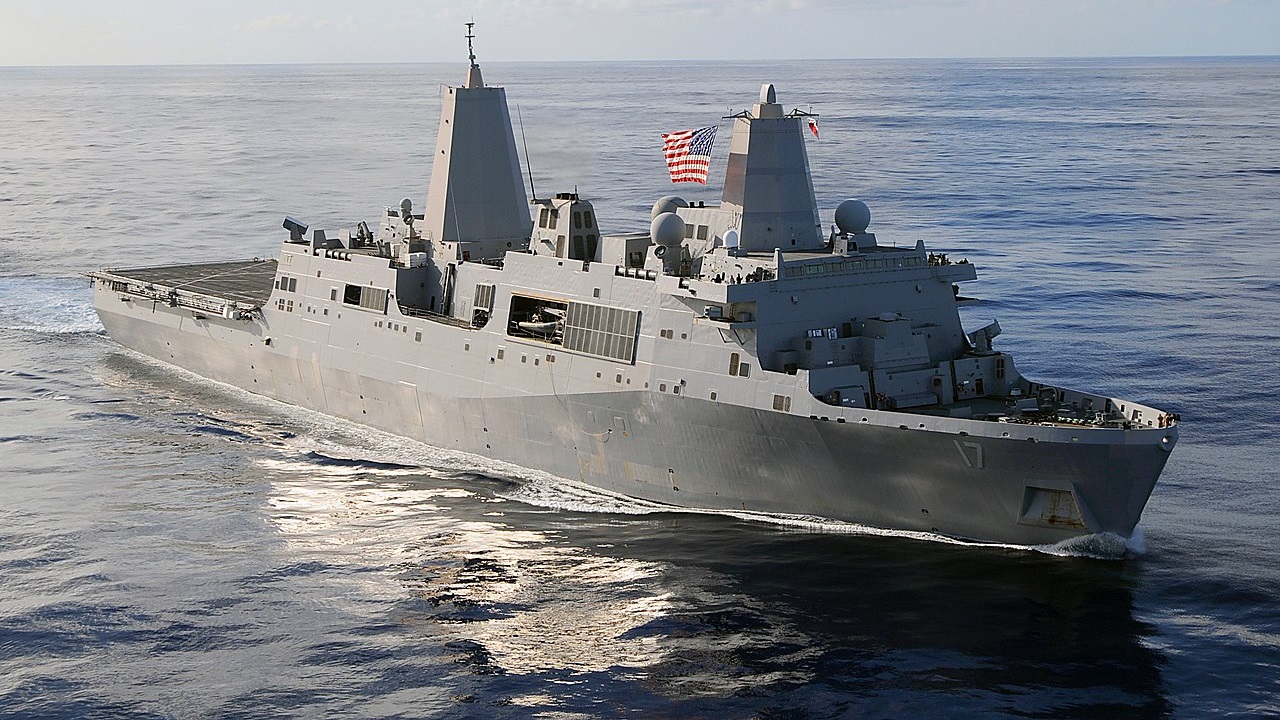
080906-N-1082Z-254 ATLANTIC OCEAN (Sept. 06, 2008) The amphibious transport dock ship USS San Antonio (LPD 17) transits the Atlantic Ocean. San Antonio is deployed as part of the Iwo Jima Expeditionary Strike Group (ESG) in support of maritime security operations in the Navy’s 5th and 6th Fleet areas of responsibility. The Iwo Jima ESG is made up of San Antonio; the amphibious assault ship USS Iwo Jima (LHD 7); the guided-missile cruiser USS Vella Gulf (CG 72); the guided-missile destroyer USS Ramage (DDG 61); the amphibious dock landing ship USS Carter Hall (LSD 50); all homeported at Norfolk, Va.; the guided-missile destroyer USS Roosevelt (DDG 80), homeported at Mayport, Fla.; and the fast attack submarine USS Hartford (SSN 768), homeported at Groton, Conn. US Navy photo by Mass Communication Specialist 2nd Class Jason R. Zalasky (Released)
“I think this is really an issue of wages, to be honest, when I look at it across states,” Phelan said. He added that “when workers can make the same money they might earn at a Buc-ee’s convenience store or at Amazon, but instead spend all day welding in tight spaces, it’s hard to get that person to want to do that job.”
What Is Buc-Ee’s?
You are familiar with Amazon, but you may not have heard of Buc-Ee’s. This is a mammoth gas and convenience store chain headquartered in Texas, and its beaver logo is everywhere in the South. There are dozens of stalls to pump fuel and scores of immaculately clean bathroom stalls– perfect for the American motorist who needs a full tank and a bite to eat of high-quality barbecue. Buc-Ee’s is famously known for paying its employees well.
Pay at Buc-Ee’s can range from $16 to $31 an hour, depending on skill and responsibility, at the entry level. Upper management positions of a store can pay upwards of $125,000 for an assistant manager to $250,000 for a general manager. That’s without a college degree in some circumstances. Why sweat it out at a shipyard when Buc-Ee’s beckons with this level of compensation?
There Are Opportunities at Amazon Too
Meanwhile, work at Amazon is notoriously tricky, but there are many positions available. Amazon driver/loader pay runs from $19 to $23 an hour—college degree optional, with no high-level training required to be an electrician or welder.
Many shipyard workers are members of unions that do not disclose pay, but Amazon and Buc-Ee’s may pay better for less physically demanding jobs. Working for the Navy has also historically led to health problems like mesothelioma from asbestos exposure. Employment at Amazon and Buc-Eee’s will not give you that affliction, and it mainly saves wear and tear on knees, backs, and other body parts.
How Can the Job Environment Be Improved at Shipyards?
The employee environment must be improved before more workers choose a career in shipbuilding. “Better quality of life and working conditions at shipyards, more automation and improved training, affordable housing nearby, and more benefits have also been identified as potential fixes,” Business Insider explained.
Another practice the Navy could adopt is requiring minimum shipbuilding pay for contract winners. This would help employees receive better compensation. Optional overtime could help. Also, shipbuilders must be assured that their jobs are safe from layoffs and that working conditions are free from accidents that could physically harm workers.
The Downside of Retiring Workers
Shipbuilder Huntington Ingalls Industries (HII) is aware of its recruiting and retention problems and is working to alleviate worker shortages. The company is losing Baby Boomer and Generation X employees to retirement, and it is difficult to replace that institutional knowledge and high skill developed on the docks over decades.
Professional development classes in management are one way a less-experienced shipyard worker can earn more by advancing through promotions.
Also, manufacturers could improve work-life balance by offering paternity leave or granting long-term disability benefits for injured workers.
Another problem in the shipyards is young employees leaving their jobs for better pay and benefits. Then producers like HII must invest time and money in training new employees. Higher compensation rates for other workers could offset this cost.
Regional training programs could also be populated by new workers educated at vocational-technical schools. These are good educational centers that respond well to recruiters.
Appeal to People’s Patriotism With Success That Can’t Be Found Elsewhere
Shipbuilders could also hold more job fairs and emphasize the high pay and sense of patriotic duty to make warships that protect American interests overseas. There is a point of pride when a new aircraft carrier is completed and commissioned into service.
That is an accomplishment you can’t get at Amazon and Buc-Ee’s. This sense of patriotism in one’s country should be one way to recruit more shipbuilders. Couple that with competitive pay and benefits, and perhaps shipbuilding employment can make a comeback.
About the Author: Brent M. Eastwood
Author of now over 3,000 articles on defense issues, Brent M. Eastwood, PhD is the author of Don’t Turn Your Back On the World: a Conservative Foreign Policy and Humans, Machines, and Data: Future Trends in Warfare plus two other books. Brent was the founder and CEO of a tech firm that predicted world events using artificial intelligence. He served as a legislative fellow for US Senator Tim Scott and advised the senator on defense and foreign policy issues. He has taught at American University, George Washington University, and George Mason University. Brent is a former US Army Infantry officer. He can be followed on X @BMEastwood.