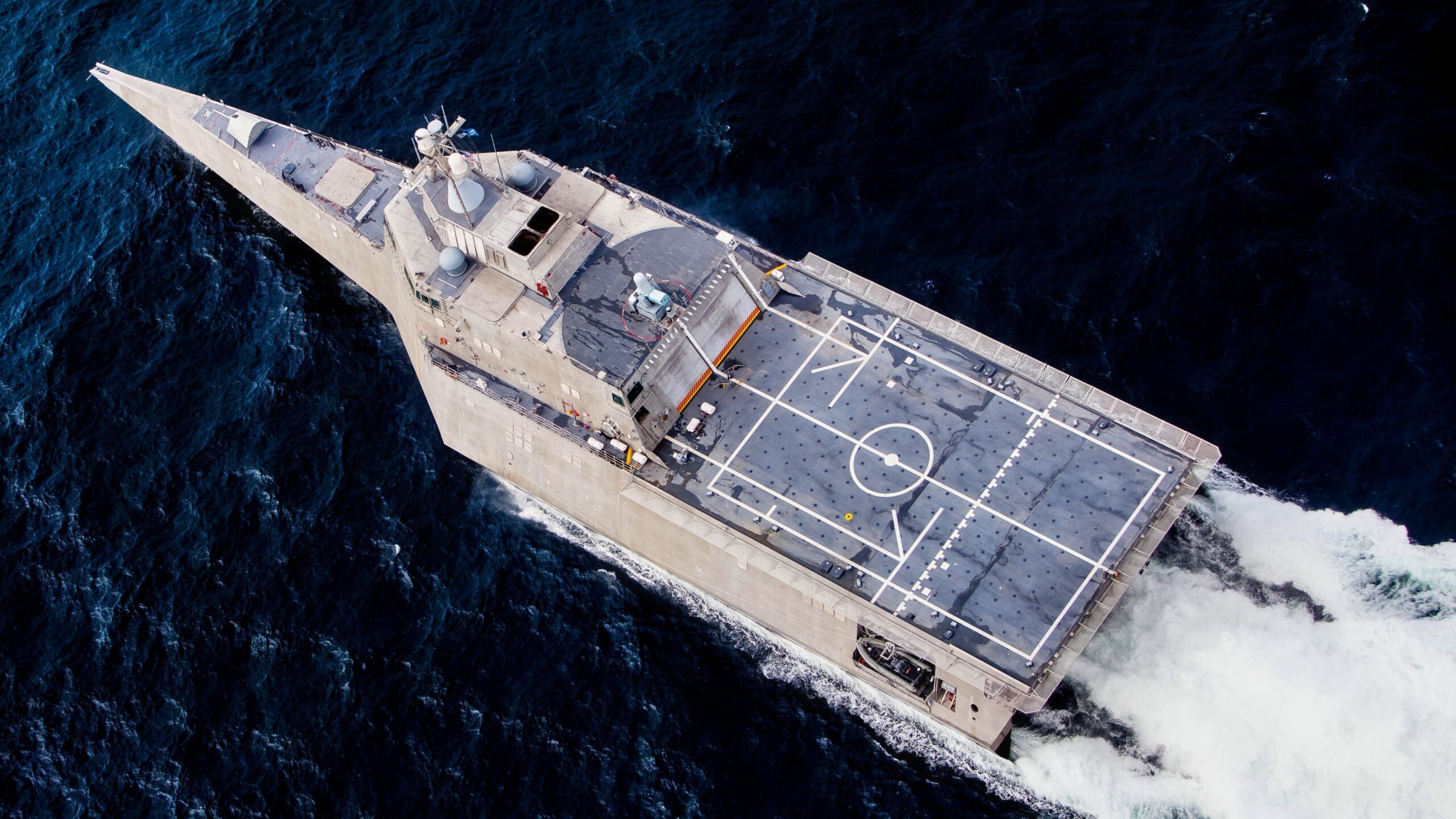
Key Points and Summary – China’s navy is now larger than the U.S. Navy on paper, but numbers hide a critical imbalance.
-While Beijing surges new carriers, Type 055 destroyers, and hypersonic YJ-21 missiles, it still lacks true carrier-borne fifth-generation airpower.
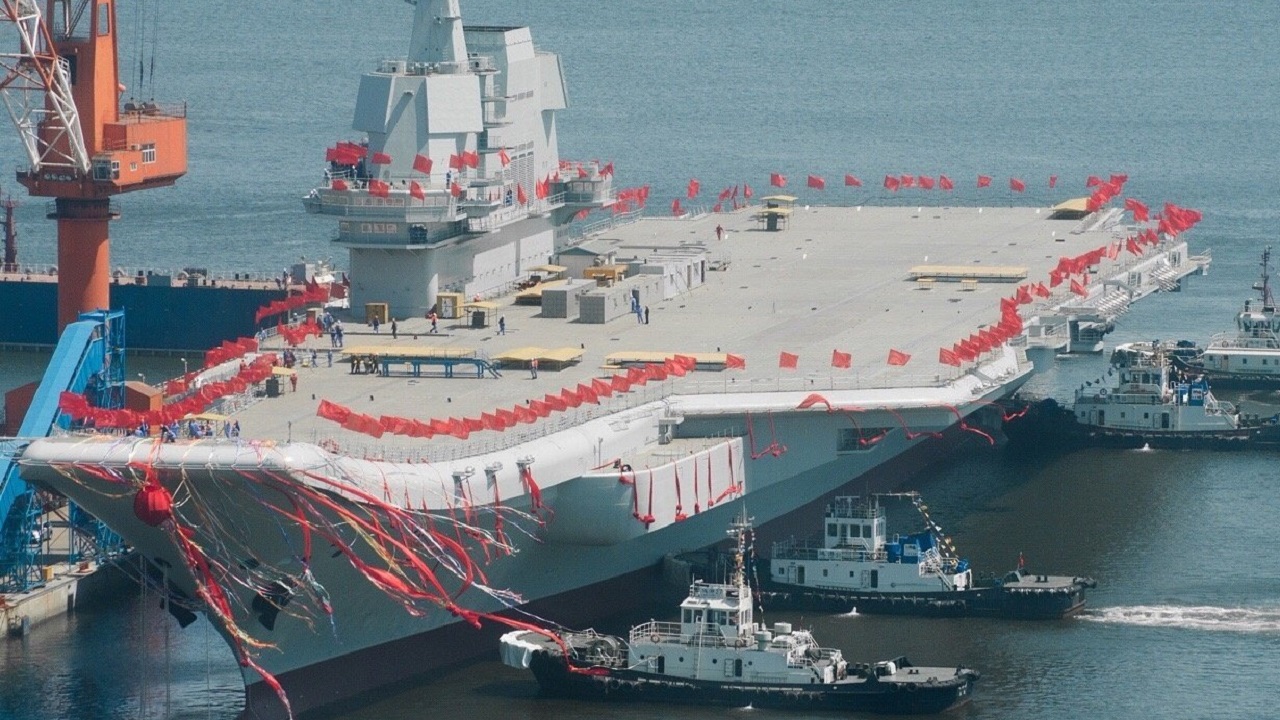
Fujian, China’s new aircraft carrier. Image Credit: Chinese Internet.
-The PLAN is only beginning to field the J-35 in tiny numbers and has no equivalent to the short-takeoff F-35B.
-By contrast, U.S. carriers and America-class amphibs can put scores of F-35Cs and F-35Bs over the fight, gaining air superiority and targeting Chinese ships from range.
-That airpower edge could blunt China’s surface advantage and remain the Navy’s decisive trump card in any clash.
China’s ‘Bigger’ Navy Can’t Beat America’s Carrier Air Wing
Ten years ago, many Pentagon experts stated that by 2020 the Chinese Navy would be larger in sheer size than the US Navy, a prediction that has indeed come true.
Today’s People’s Liberation Army Navy (PLAN) is larger in terms of pure fleet size than the US Navy, which naturally raises the question of whether China does, in fact, have a superior Navy.
Catching and passing the US Navy in terms of sheer size has happened quickly, and the gap is quickly growing larger.
As of the end of 2024, the US Navy operated roughly 290 ships, whereas China operated 370; estimates project that China will operate as many as 435 ships by 2030, given the pace at which it is adding new warships.
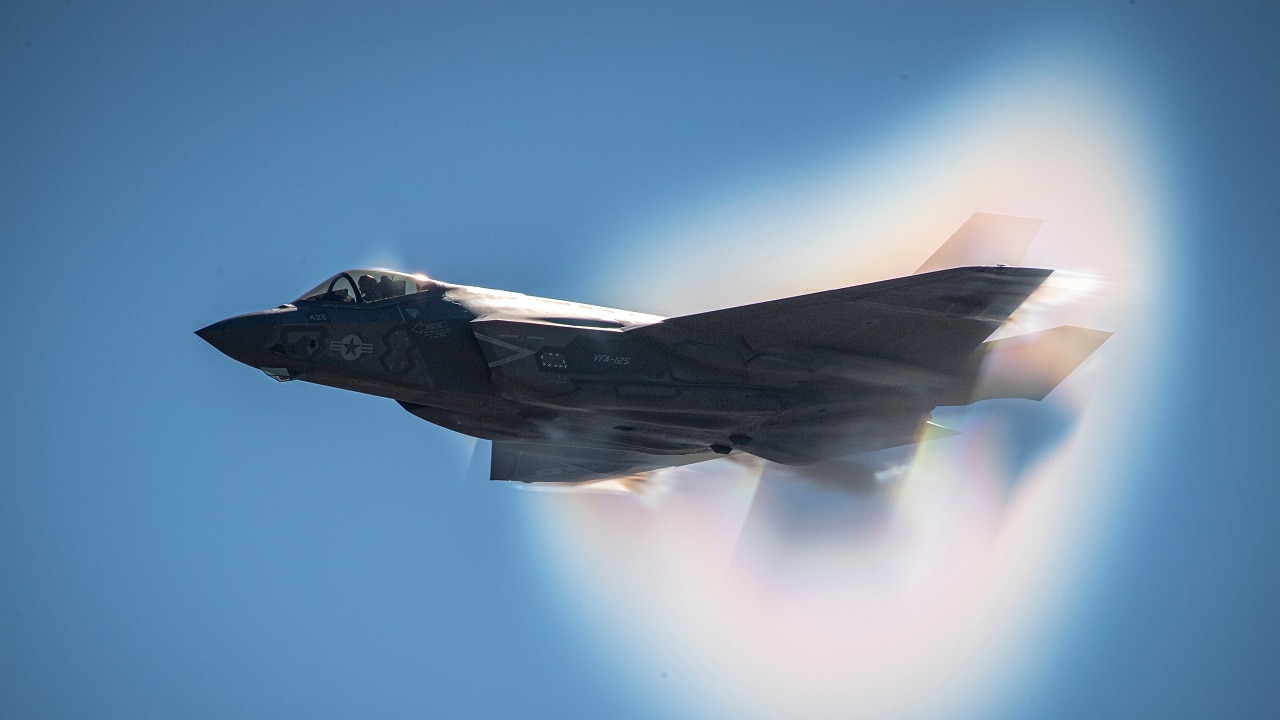
A U.S. Navy F-35C Lightning II fighter jet performs during the California International Air Show in Salinas, California, Oct. 29, 2021. The F-35C has a larger wingspan and internal fuel capacity as well as stronger landing gear than the F-35A and F-35B variants. (U.S. Air Force photo by Staff Sgt. Andrew D. Sarver)
China is well known for its shipbuilding capacity and for its often-discussed civil-military fusion, enabling rapid industrial construction of warships.
Several years ago, prominent House Republican Rep. Rob Wittman (R-Va) told Warrior Maven that China does not only have “quantity” in terms of naval capability but also now has “quality.”
This appears to be increasingly true as the PLAN builds its fourth aircraft carrier, adds new quasi-stealthy Type 055 destroyers, and accelerates the arrival of its new Type 076 amphibious assault ships.
China is increasingly arming these warships with advanced surface-to-air, surface-to-surface, and surface-to-land weapons capable of precisely targeting US assets from long ranges. For instance, the PLAN Type 055 Destroyer has test-fired the YJ-21 hypersonic missile, capable of traveling several thousand miles at speeds exceeding Mach 5.
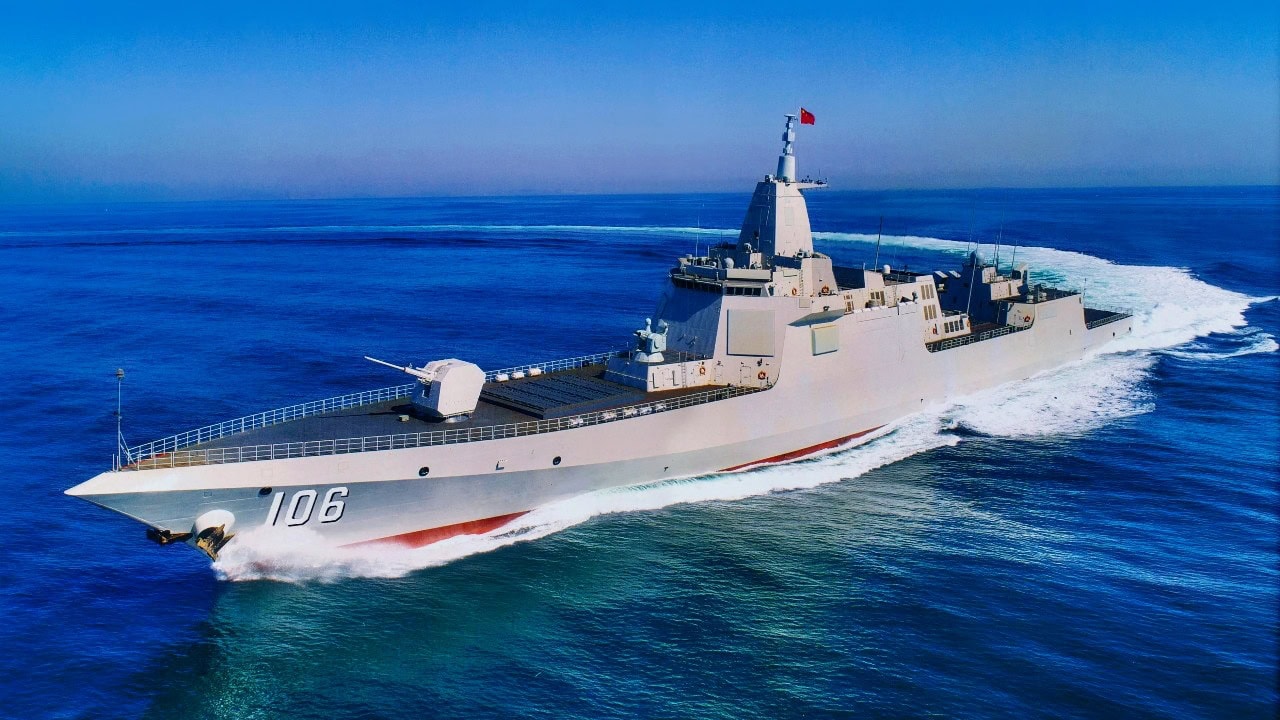
Type 055 Destroyer from China. Chinese Navy Handout/State Media.
This means not only that the PLAN now has more warships, but also, as Wittman indicated several years ago, that it has a much-improved quality.
It may not be known whether China’s warships are comparable in warfighting prowess to the US Navy.
Yet, there appears to be enough information for the Pentagon to take the PLAN threat very seriously.
The hypersonic missile gap between the US and China is closing, however, as the US Navy Zumwalt destroyers will be armed with hypersonic Conventional Prompt Strike weapons in 2026.
Air & Undersea Deficit
Despite the growing threat of China’s surface naval fleet, the PLAN is now operating at a substantial deficit when it comes to sea-launched air power.
The PLAN is just now introducing the J-35, a 5th-generation stealth carrier-launched fighter, in very small numbers, yet the US operates hundreds of F-35Cs and F-35Bs.
A US Navy America-class amphibious assault ship, for example, can deploy with as many as 20 F-35Bs, and a single US carrier can launch up to 90 F-35Cs if fully maxed out with 5th-gen aircraft. This means China would be unable to launch a 5th-generation stealth air attack from the ocean.
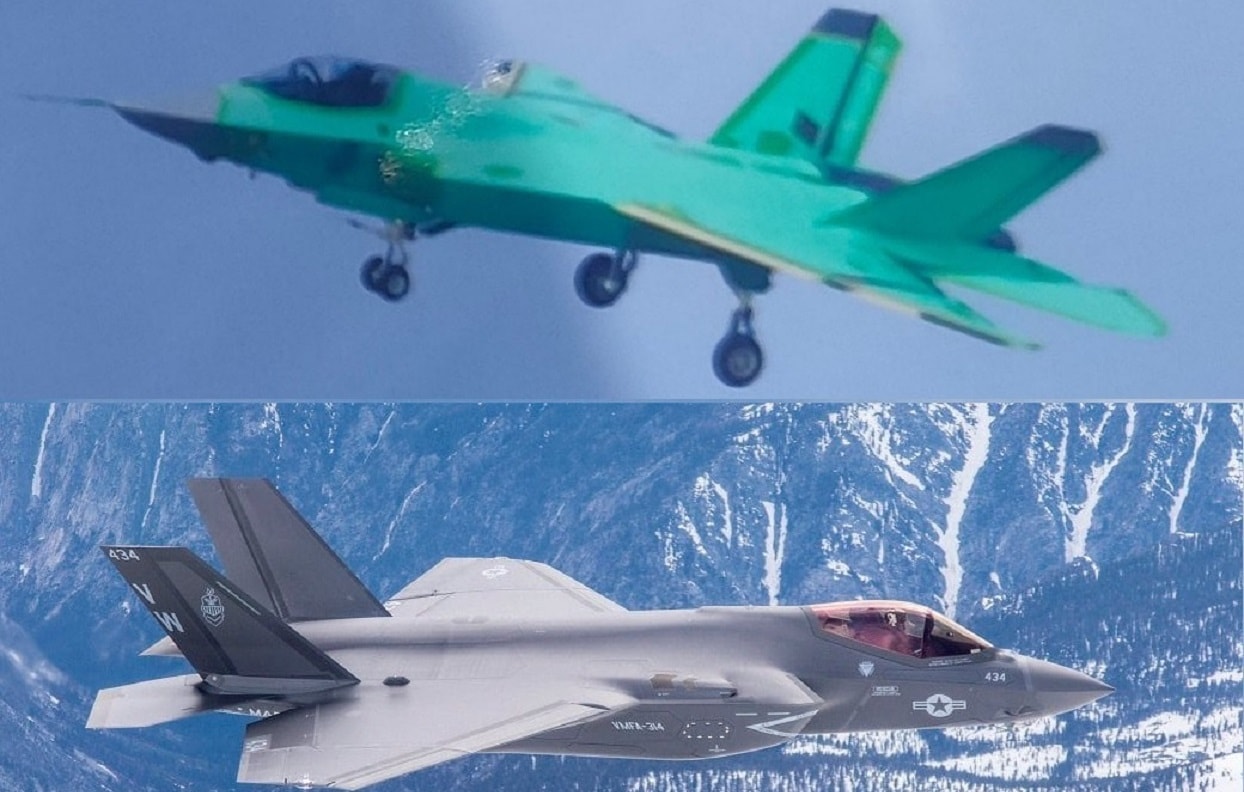
J-35 vs. F-35 Comparison. Image by Twitter User RupprechtDeino.
Not only does the PLAN have vastly fewer carrier-launched stealth jets, but it also has no F-35B equivalent; the F-35B can, of course, take off and land vertically on an amphibious warship with a short take-off-and-landing, whereas China has no such known capability.
Therefore, in any substantial Naval engagement, China would be ill-equipped to match the US Navy in the air, which would place it at a huge tactical disadvantage.
If PLAN warships were roughly equivalent in warfighting capability to US surface warships, it would matter less in a large-scale engagement, given the extent to which the US Navy would operate with air superiority.
An ability to control the skies and keep Chinese warships at risk from the air would offset or, in effect, “cancel” any surface warfare advantage or “match” the PLAN may have against the US Navy.
About the Author: Kris Osborn, Defense Expert
Kris Osborn is the President of Warrior Maven – Center for Military Modernization. Osborn previously served at the Pentagon as a highly qualified expert in the Office of the Assistant Secretary of the Army—Acquisition, Logistics & Technology. Osborn has also worked as an anchor and on-air military specialist at national TV networks. He has appeared as a guest military expert on Fox News, MSNBC, The Military Channel, and The History Channel. He also has a Masters Degree in Comparative Literature from Columbia University.