
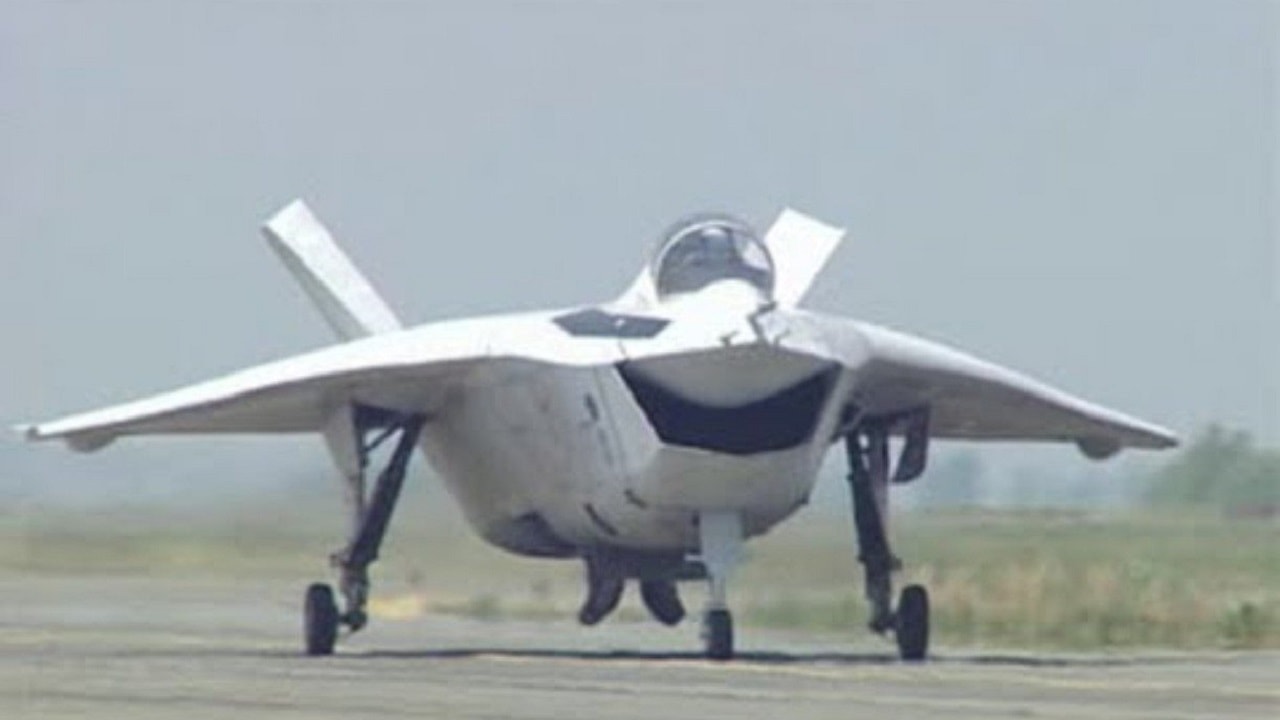
Key Points and Summary – Boeing’s X-32 nearly became the Joint Strike Fighter, but Lockheed’s X-35 won and evolved into today’s F-35. Some called the plane the ‘smiling hippo’ for its strange-looking airframe.
-In an alternate F-32 timeline, Boeing would have faced a major redesign to satisfy Navy carrier standards, improve inlet airflow at high angles of attack, and tune approach-speed margins.
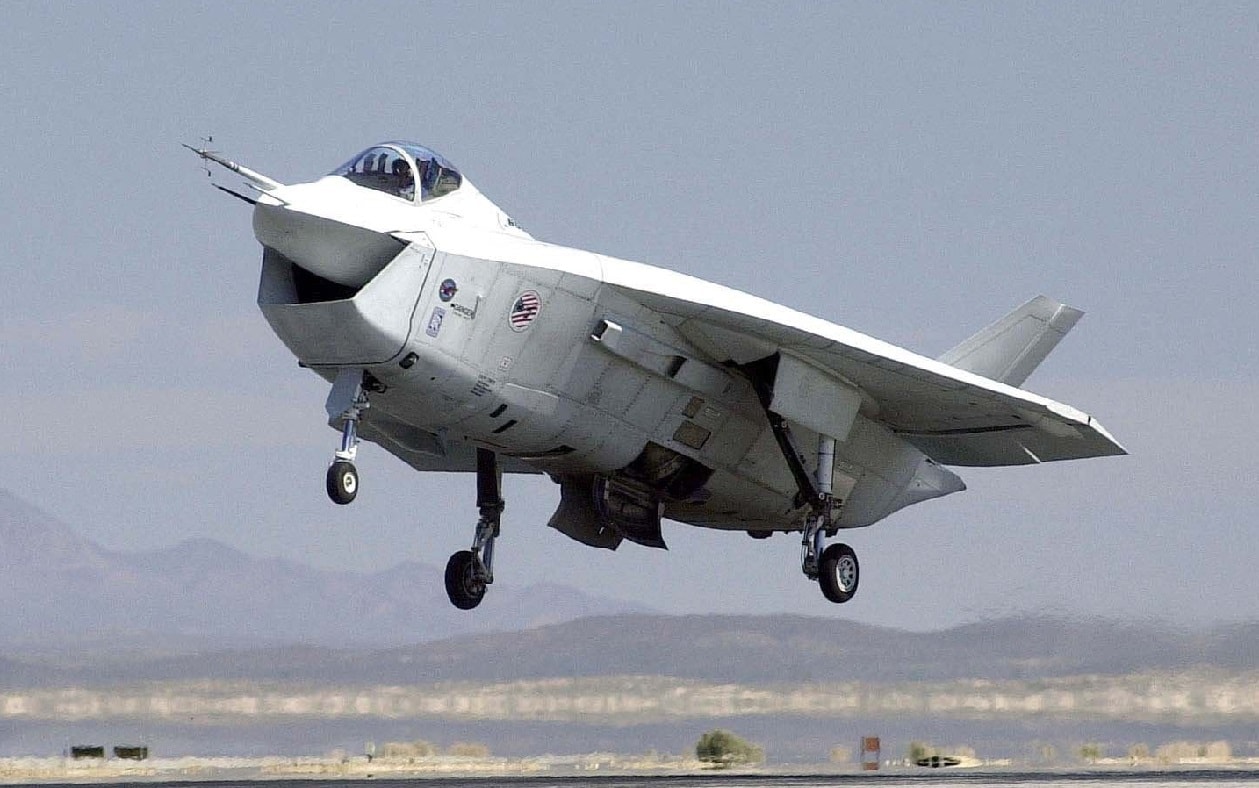
X-32. Image Credit: Creative Commons.
-The toughest hurdle would be the Marine Corps’ STOVL version, where hot-gas ingestion, deck heating, and thermal management would drive compromises and likely delay IOC.
-It might be cheaper to build, but avionics integration, software blocks, and sustainment would bite hard. The Air Force would get a striker, but reliability and timelines could slip.
What If Boeing’s X-32 Beat the F-35? The Fighter That Almost Won JSF
Boeing created the X-32 demonstrator aircraft to compete in the Joint Strike Fighter competition against Lockheed Martin’s X-35, which later became the F-35 Lightning II.
The X-32 has received a lot of criticism ever since it was unveiled to the public.
Some of it stems from legitimate disadvantages compared to its competitor, while most of it is just making fun of how ugly the aircraft looked.
Despite its unsavory design, the X-32 did have its own set of advantages compared to Lockheed Martin’s submission, even if they were not enough to win the competition.
The aircraft could have been accepted as the F-32.
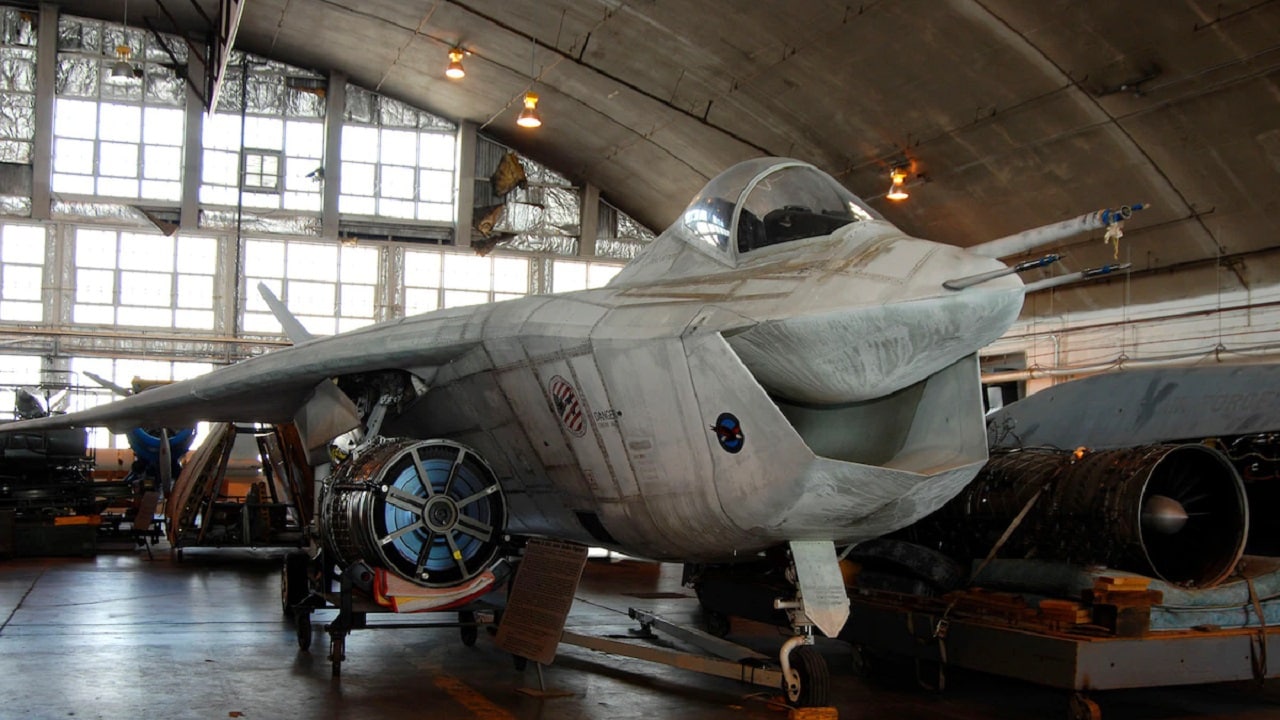
DAYTON, Ohio (02/2007) – The Boeing X-32A in the restoration hangar at the National Museum of the U.S. Air Force. (U.S. Air Force photo by Ben Strasser)
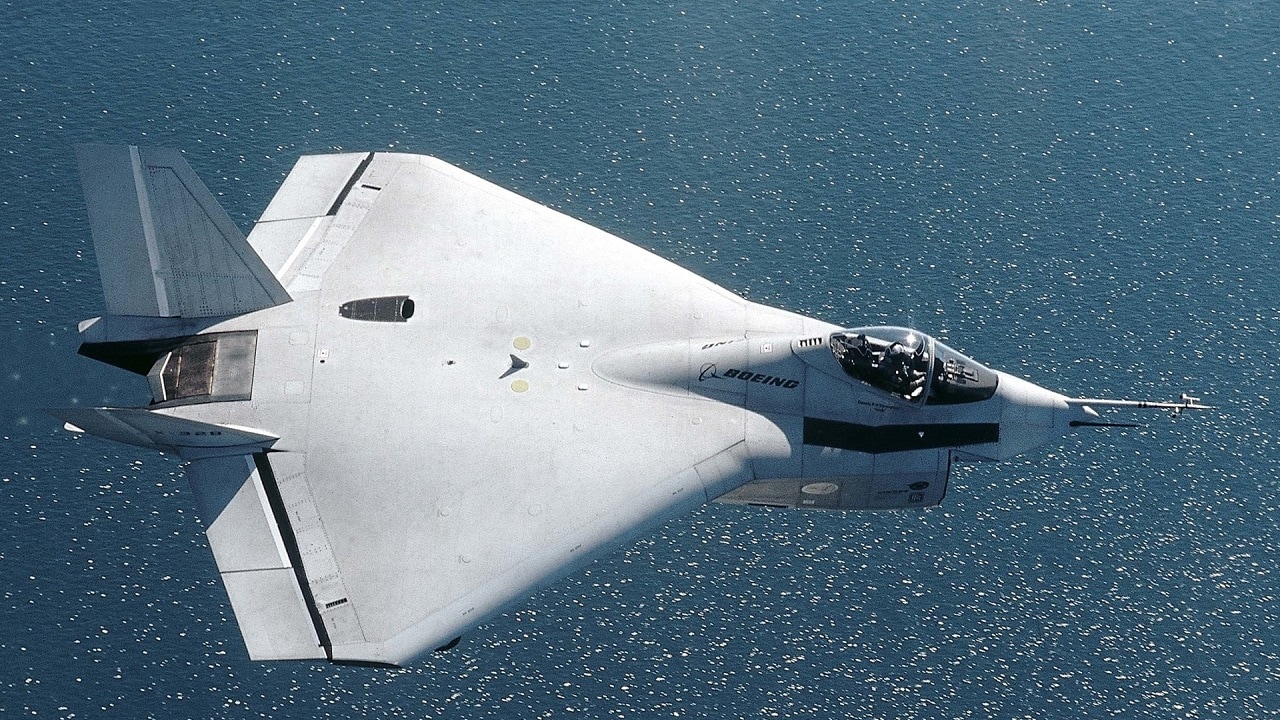
X-32 Stealth Fighter from Boeing. Image Credit: Creative Commons.
But how would it have affected the Air Force?
Did the USAF make the right call in settling with the F-35?
What if the X-32 Won the JSF Competition?
The X-32 entered the competition with a distinctive design: a large delta wing and a blended fuselage for manufacturing simplicity and internal volume. Boeing’s approach promised fewer parts, a high degree of structural integration, and composite-heavy assemblies that could be produced at scale.
The demonstrator’s single, oval “smile” inlet fed a large turbofan, reflecting that same philosophy of simplicity.
For the short takeoff/vertical landing (STOVL) requirement, Boeing pursued direct lift by vectoring and augmenting the central engine exhaust rather than adding a separate lift fan. This compromise came at the cost of thermal challenges, particularly regarding hot-gas recirculation and deck heating.
These challenges would definitely have reared their ugly heads had the X-32 won.
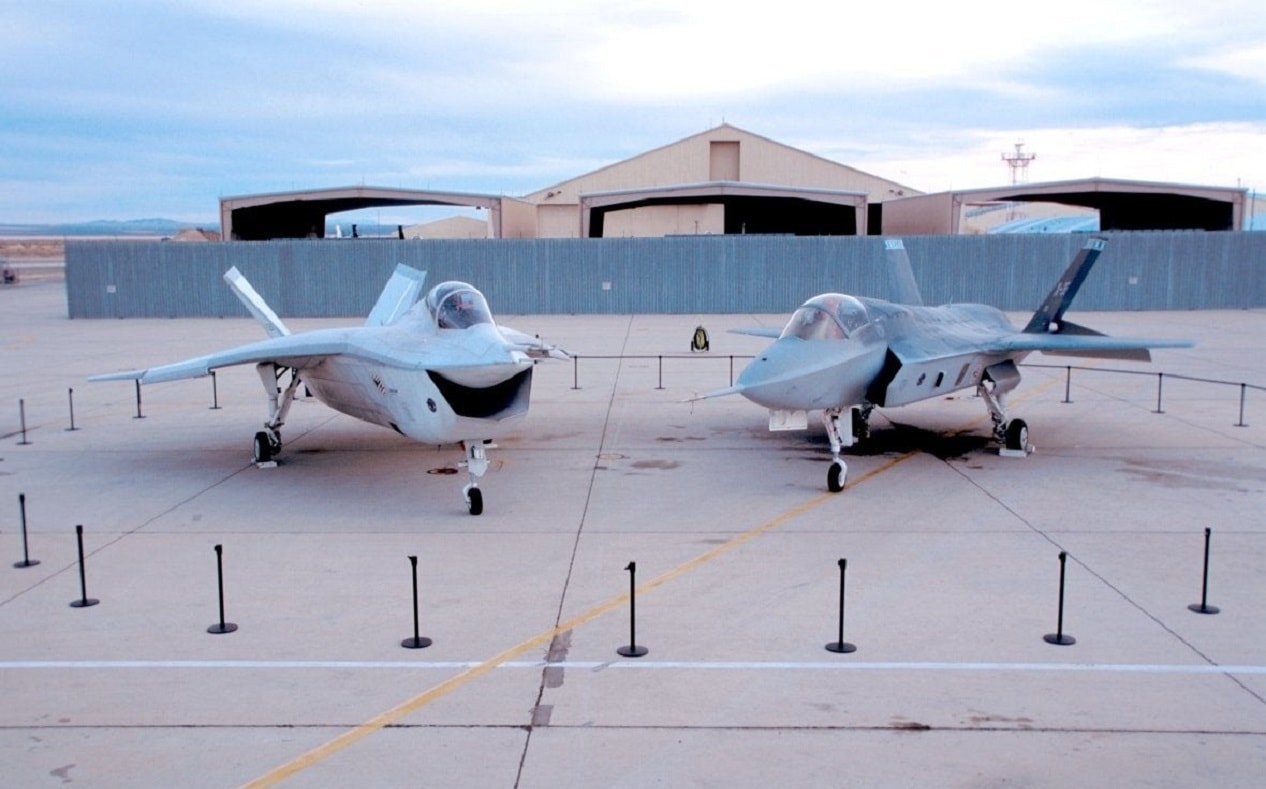
Boeing X-32 vs. Lockheed Martin then X-35. Image Credit: US Government.
Had the F-32 been accepted, Boeing would have had to undertake a substantial redesign to satisfy the U.S. Navy’s carrier suitability standards
(Boeing did have such modifications already planned out.)
The initial platform was ideal for manufacturing but left a lot to be desired regarding airflow quality at high angles of attack, approach speed margins, and low-speed handling.
Early in the post-selection period, Boeing’s engineers would likely have revised the inlet configuration and forebody shaping to ensure stable engine airflow during aggressive maneuvers and to fine-tune radar cross-section management across a broader range of viewing angles.
This would add weight and complexity compared to the demonstrator but improve reliability and handling. Wing geometry, control surfaces, and landing gear would also be reinforced or reconfigured to meet carrier operations’ unique demands. In effect, the Navy would exert gravitational pull on the design, compelling Boeing to evolve the airframe in ways that improved approach behavior, buffet resistance, and lateral-directional stability, even if that meant slipping the schedule by a few years as it transitioned from prototype geometry to a carrier-optimized configuration.
Overcoming the X-32’s Design Flaws
The STOVL variant would be the most complex challenge in this hypothetical alternative history. The requirements provided by the Marines needed range, payload, and stealth, not just hovering capabilities. Thermal management would be the biggest hurdle.
Nozzle geometries, plume spread, and mitigation of hot-gas recirculation require careful design and deployable flow fences or deflectors to protect the aircraft and the deck.
Those measures, while practical, could complicate signature control and add mechanisms that have to be ruggedized for shipboard life.
In short, STOVL would reach initial operational capability later than the conventional takeoff/landing variant by a few years, and when it did, early tactics and operating procedures would likely emphasize shorter-range missions.
The X-32 would likely have a stealth signature in the same ballpark as the F-35, though the specific redesigns forced by Navy and STOVL demands complicate signature management. Each added edge, seam, or access panel from practical fixes would need meticulous shaping and radar-absorbent material treatments to prevent signature creeping.
Handling at high angles of attack and in the transonic regime would improve as wing, control laws, and inlet revisions came together, producing an aircraft that is entirely credible for first-day-of-war strike, SEAD/DEAD, and ISR missions.
In terms of pure flight performance, the X-32 would occupy the same neighborhood as the F-35 family: that is to say, not optimized for raw dogfighting performance but potent thanks to low observability.
Like the F-35, it probably would not be capable of supercruise, given the compromises made to accommodate its profile.
X-32: A Better Choice than the F-35?
After its acceptance, Boeing would likely begin an intensive redesign between 2001 and 2004, focusing on inlets, forebody shaping, wings, and carrier-specific structures, alongside the maturation of STOVL nozzle geometries and thermal protection systems.
Between 2005 and 2007, the conventional variant would conduct system-level flight tests, prove basic fusion, start weapons separation trials, and enter low-rate initial production.
STOVL would trail, achieving safe vertical-landing capability with deck constraints between 2008 and 2010, while the Navy variant cleared arrested-landing trials.
The USAF would reach initial operational capability around 2011–2012, the USMC later, perhaps 2013–2014, and the Navy following once carrier certifications and software blocks matured. After 2015, block upgrades would expand weapons, improve electronic warfare, and upgrade sustainment tooling, delivering the stepwise capability growth familiar from the real-world JSF.
Overall, it is hard to say whether the X-32 would be significantly better or worse than the F-35. In some ways, it would have had better performance metrics, but at the cost of worse STOVL capabilities and slightly worse stealth.
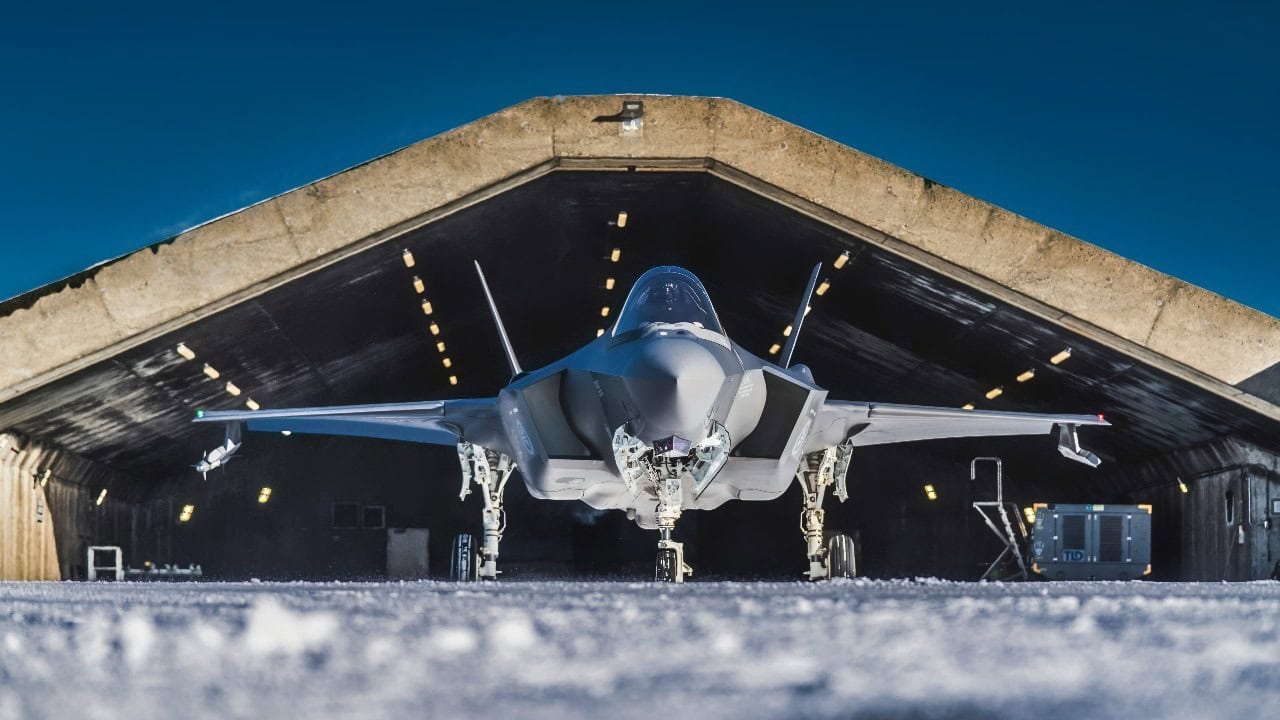
A Royal Norwegian Air Force F-35 Lighting II fighter leaves its shelter at Keflavík Air Base in Iceland. Norway sent the fighters to Iceland, which doesn’t have its own air force, in February 2020.
What we can say is that the fighter likely would have been cheaper and easier to manufacture thanks to Boeing’s design philosophy and technical prowess.
Had it been accepted, the F-32 would likely have had many of the same issues as the F-35, those being tech issues with new avionics, coding issues, and stealth maintenance issues.
About the Author: Isaac Seitz
Isaac Seitz, a Defense Columnist, graduated from Patrick Henry College’s Strategic Intelligence and National Security program. He has also studied Russian at Middlebury Language Schools and has worked as an intelligence Analyst in the private sector.