

F-35 Hits a Record 191 Deliveries in 2025—And the Pentagon Still Has a Sustainment Problem
The F-35 Lightning II program, in 2025, broke its record for fighter jet deliveries, delivering 191 of them, Lockheed Martin announced on January 7. The previous record for deliveries was 142.
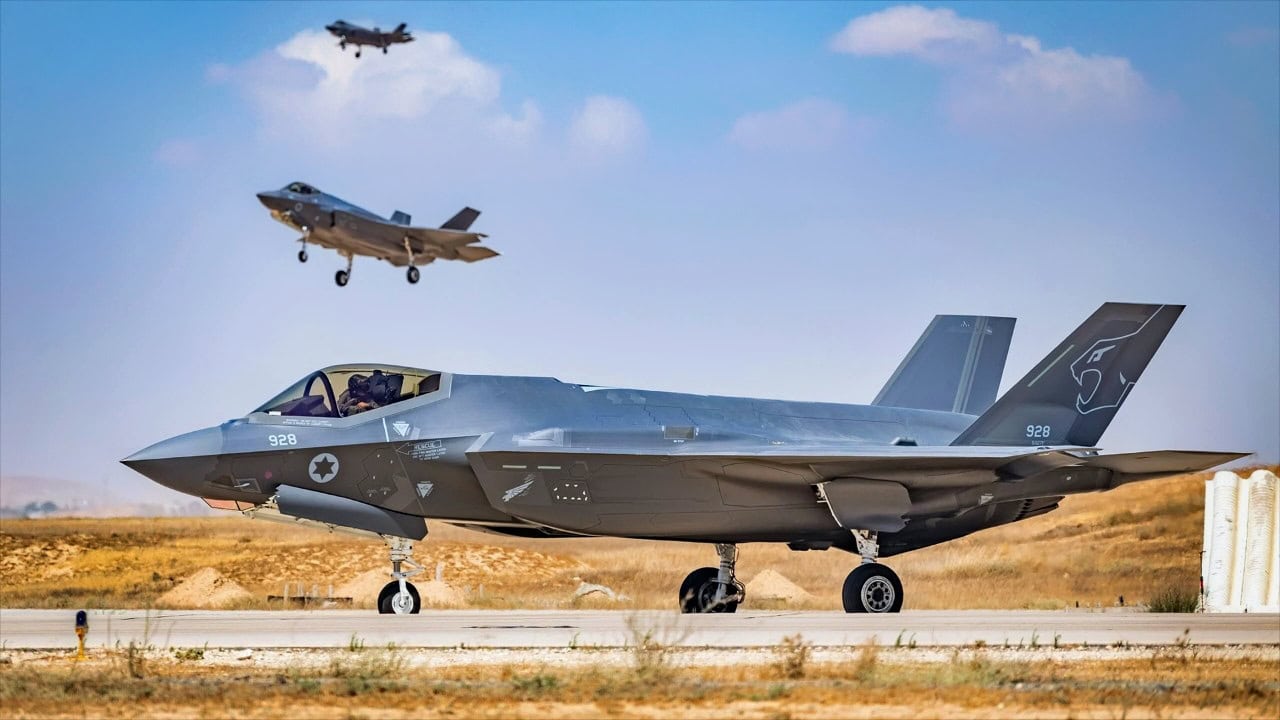
F-35I Adir. Image Credit: Creative Commons.
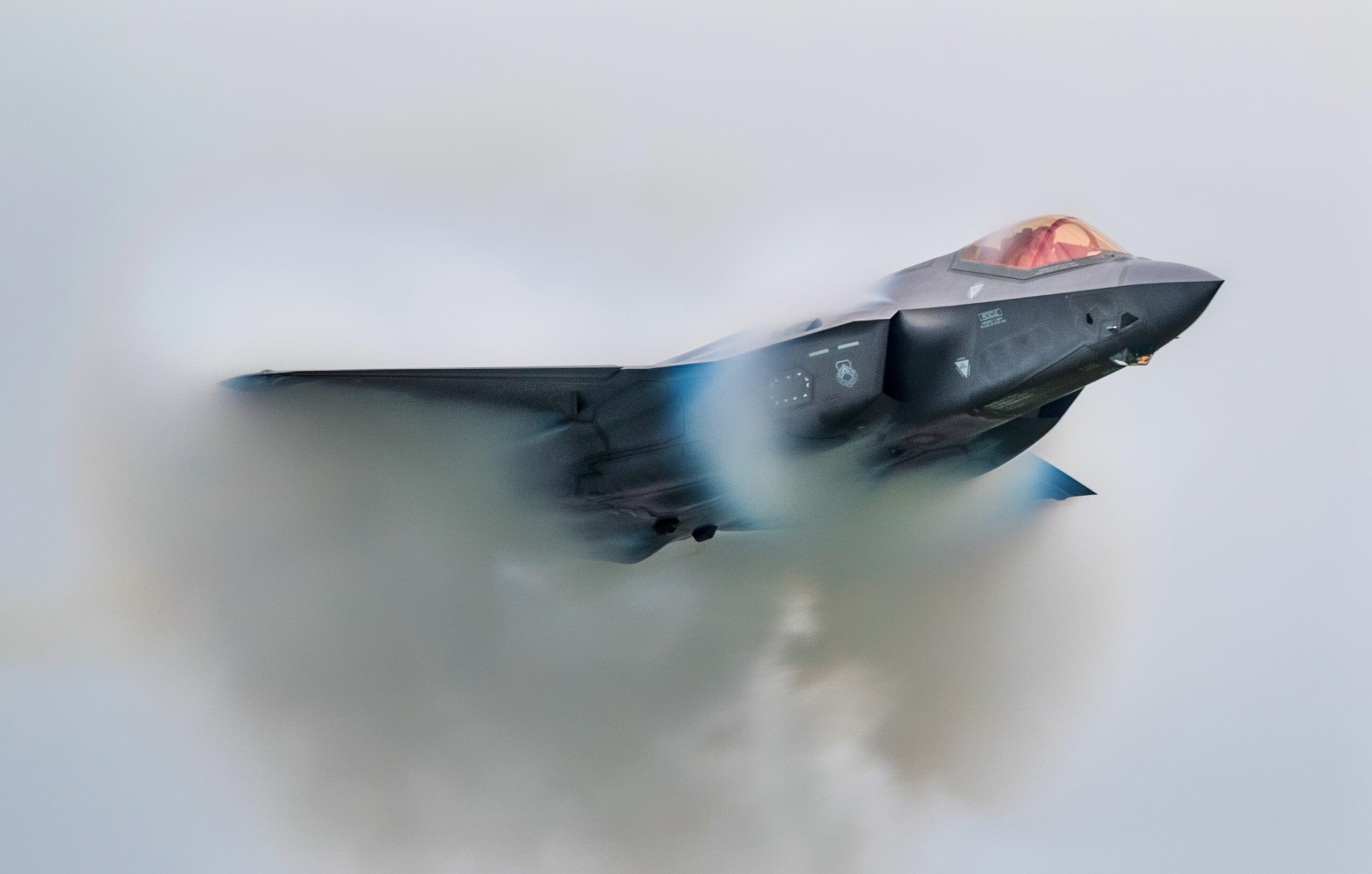
Capt. Andrew “Dojo” Olson, F-35 Demo Team pilot and commander performs aerial maneuvers during the Aero Gatineau-Ottawa Airshow in Quebec, Canada, Sept. 7, 2019. The team consists of 10 Airmen who help showcase the world’s most technologically advanced fifth-generation fighter jet. (U.S. Air Force photo by Senior Airman Alexander Cook)
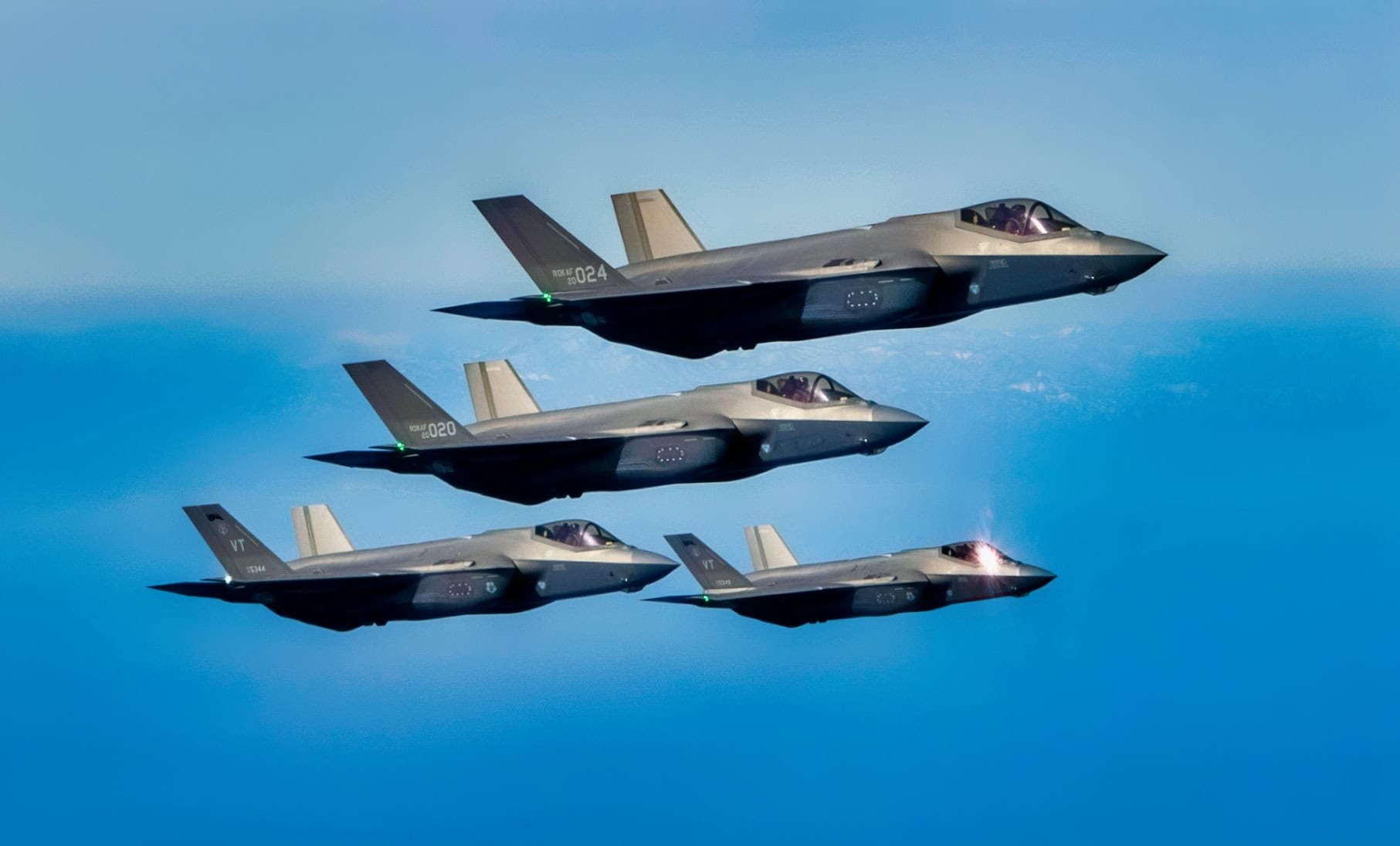
Two U.S. Air Force F-35A Lighting IIs fly in formation with two ROKAF F-35As during Freedom Shield 25, a defense-oriented exercise featuring live, virtual, and field-based training, March 13, 2025. The aircraft participated in dynamic targeting and aerial refueling training, validating the capability of ROK and U.S. Air Forces, to find, fix, and defeat a range of threats. (Photo courtesy of Republic of Korea Air Force)
“Annual F-35 production is now running at a pace five times faster than any other allied fighter currently in production, underscoring the program’s scale and maturity,” Lockheed said in the announcement. Earlier in the year, the F-35 had crossed the milestone of one million flight hours.
Lockheed also touted combat successes around the world for the program in 2025, which include “Playing a key role in suppressing Iran’s air defenses during Operation Midnight Hammer, Recording nearly 5,000 mishap-free flight hours during a U.S. Marine Corps F-35B deployment, and eliminating Russian drones over Poland, marking the first time NATO F-35s have engaged threats in allied airspace.”
Demand is increasing for the jets, according to Lockheed. Italy and Denmark have increased their fleet sizes, with Belgium and Norway also taking delivery. And the F-35 Joint Program Office (JPO) and Lockheed “reached final agreement of Lots 18-19 for the production and delivery of up to 296 F-35s for $24 billion, marking the finalization of the largest production contracts in program history.”
It’s not mentioned in Lockheed’s press release, but there’s talk about a couple of other new countries getting into the F-35 game. The White House, in December, agreed to approve the sale of F-35s to Saudi Arabia, which would put the jets in the hands of a non-democracy, and a Middle Eastern country besides Israel, for the first time. The announcement has been controversial, with concerns expressed from Israel about the sale and what it means for the longstanding “qualitative military edge” doctrine.
Meanwhile, Turkey, the only country ever kicked out of the F-35 program, wants back in it. For the last two weeks, arguments have been articulated on the Wall Street Journal letters page over whether allowing that is a good idea.
“I’m immensely proud of the F-35 enterprise for delivering on our production commitments, performing with excellence, and growing our global partnerships in 2025,” said Chauncey McIntosh, Vice President and General Manager of the F-35 Lightning II Program.
“As our warfighters continue to employ the F-35 to protect the interests of America and our allies around the world, we’re committed to continuing to push the latest technology into the hands of the warfighter to defeat any threat.”
Concerns Remain
However, that doesn’t mean all is well with the F-35 program.
In December, the Inspector General of the Department of Defense released an audit report titled “Audit of the DoD’s Oversight of Contractor Performance for the F‑35 Joint Strike Fighter Sustainment Contracts.”
The purpose of the audit, per the report, was to “assess the DoD’s oversight of contractor performance on air vehicle sustainment contracts for the F-35 Joint Strike Fighter (F-35) aircraft.” The report also noted that the program is the Pentagon’s largest acquisition program.
The finding?
“The DoD did not adequately oversee contractor performance on the June 2024 air vehicle sustainment contract,” the Pentagon inspector general said.
“Although the F‑35 JPO monitored Lockheed Martin’s performance, it did not always hold Lockheed Martin accountable for poor performance related to F‑35 sustainment. This occurred because the F‑35 JPO did not include aircraft readiness performance or other measurable contract requirements and did not enforce material inspection and government property reporting requirements in the air vehicle sustainment contract.”
The Inspector General issued recommendations on how to address the problem.
“These included recommendations to include incentive metrics that support the Military Service performance requirements or obtaining a waiver for not including the performance requirements from each Military Service; aligning the contracting officer’s representative responsibilities to monitor and report impactful evaluation data on Lockheed Martin’s performance; and evaluating contracting officer’s representative requirements and completing a workforce study to determine appropriate staffing levels at all bases where F‑35 oversight is required,” the Inspector General said.
The GAO’s Report
This followed a report from last September by the Government Accountability Office that every single F-35 delivered to the U.S. military in 2024 was late, and that the jets were delivered, on average, 238 days late that year.
GAO had made six recommendations in that report, including that “it evaluates Lockheed Martin’s capacity to meet planned deliveries on time; reevaluates the use of incentive fees to better achieve the desired schedule; and expands and formalizes the use of leading practices for product development. DOD concurred with four recommendations and partially concurred with two.”
Uncertainty Remains in Canada
Those reports have arrived amid continued uncertainty over the status of Canada’s F-35 order. Canada had agreed years ago to purchase 88 F-35s, although the nation has been conducting a review of the next tranche of that purchase, one put in place by Prime Minister Mark Carney after he took office last spring. This has come in light of continuing tension between the U.S. and Canada over tariffs and President Donald Trump’s talk of making Canada the 51st state.
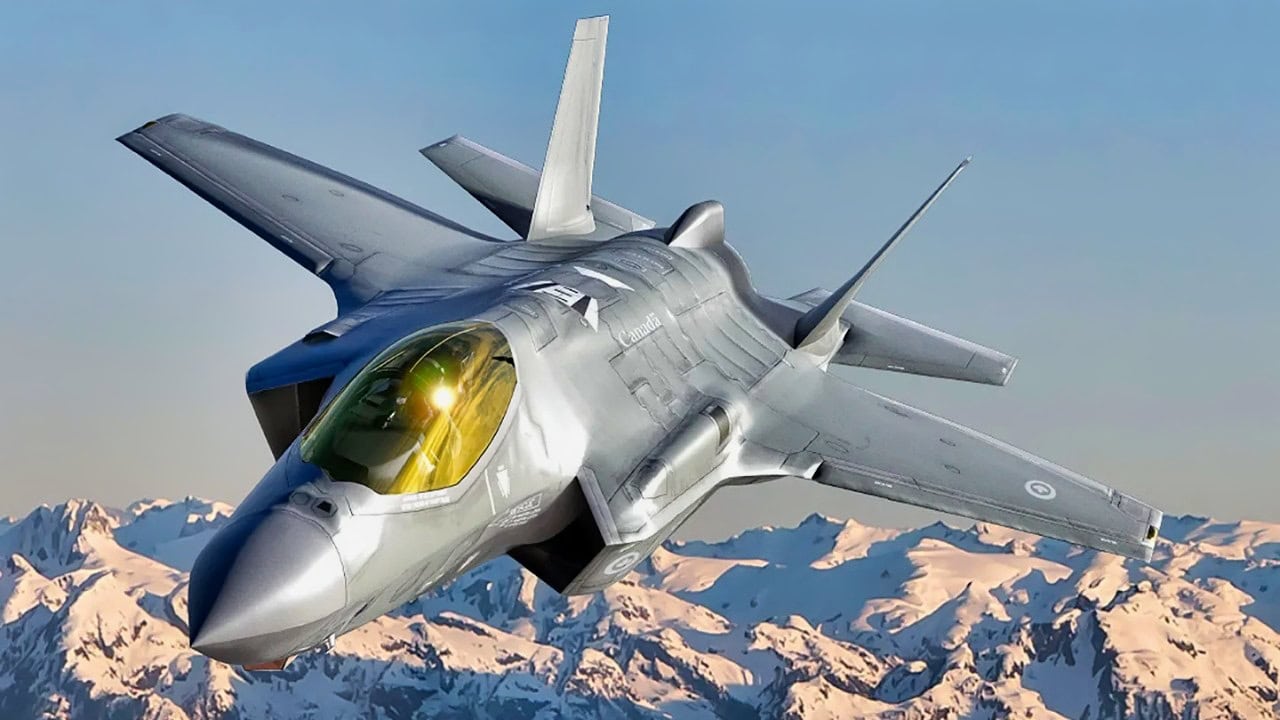
Canada F-35. Image Credit: Creative Commons.
A final decision had been expected last fall, but the new year passed without any announcement from Canada’s government. Saab has been pitching the Gripen E as a possible alternative to the F-35, although that jet is missing some fifth-generation capabilities. Canada has been “part of” the F-35 program going back to the 1990s, according to the program’s official website.
According to the National Post, Pete Hoekstra, the U.S. ambassador to Canada, expressed irritation with the ongoing situation in a December interview.
“Canada can do what it wants on the F-35, OK?,” the ambassador told the newspaper. “Does it irritate me, personally, that we’re revisiting this issue again? Yeah, it’d be nice to put this one to bed and just move forward.”
“It would be nice if Canada made a commitment,” Hoesktra added. “But if they want to go through another review, they can go through another review.”
About the Author: Stephen Silver
Stephen Silver is an award-winning journalist, essayist, and film critic, and contributor to the Philadelphia Inquirer, the Jewish Telegraphic Agency, Broad Street Review, and Splice Today. The co-founder of the Philadelphia Film Critics Circle, Stephen lives in suburban Philadelphia with his wife and two sons. For over a decade, Stephen has authored thousands of articles that focus on politics, national security, technology, and the economy. Follow him on X (formerly Twitter) at @StephenSilver, and subscribe to his Substack newsletter.