
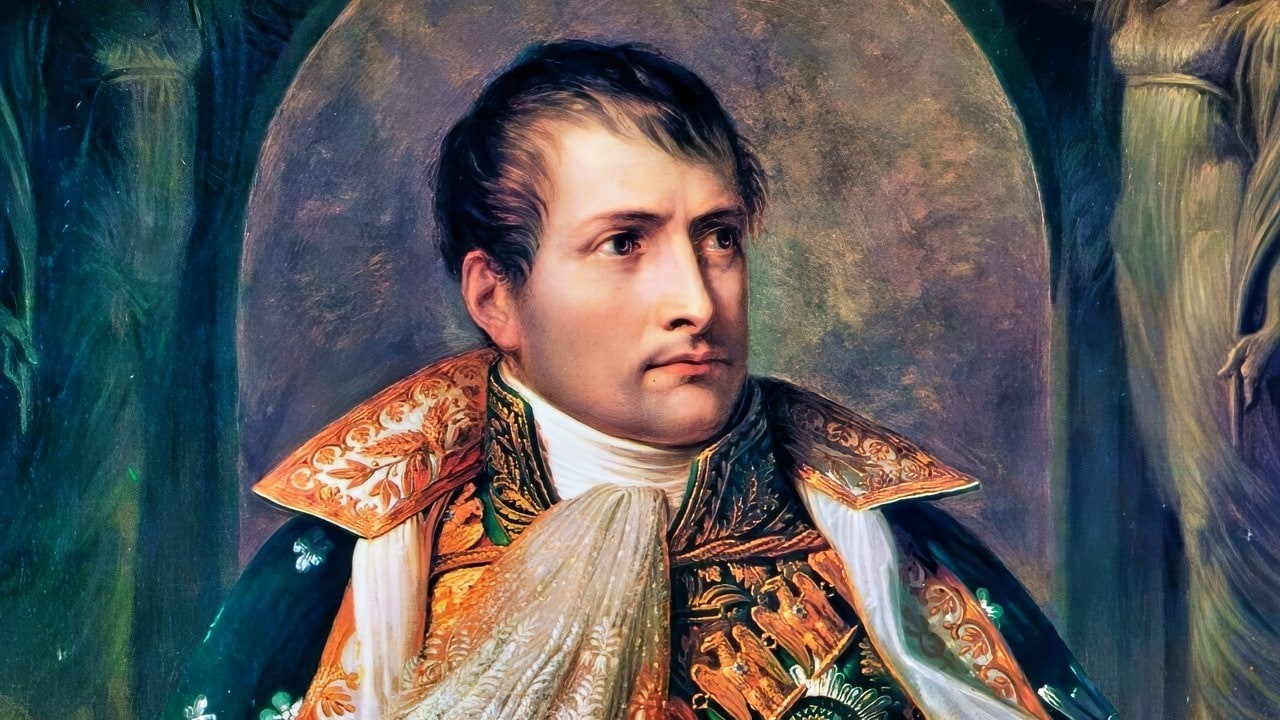
Synopsis: Despite his egalitarian philosophy and military genius, Napoleon Bonaparte suffered three catastrophic defeats that dismantled his empire.
-The Russian Campaign (1812) proved most deadly, wiping out 90% of his Grande Armée through winter attrition and scorched-earth tactics.
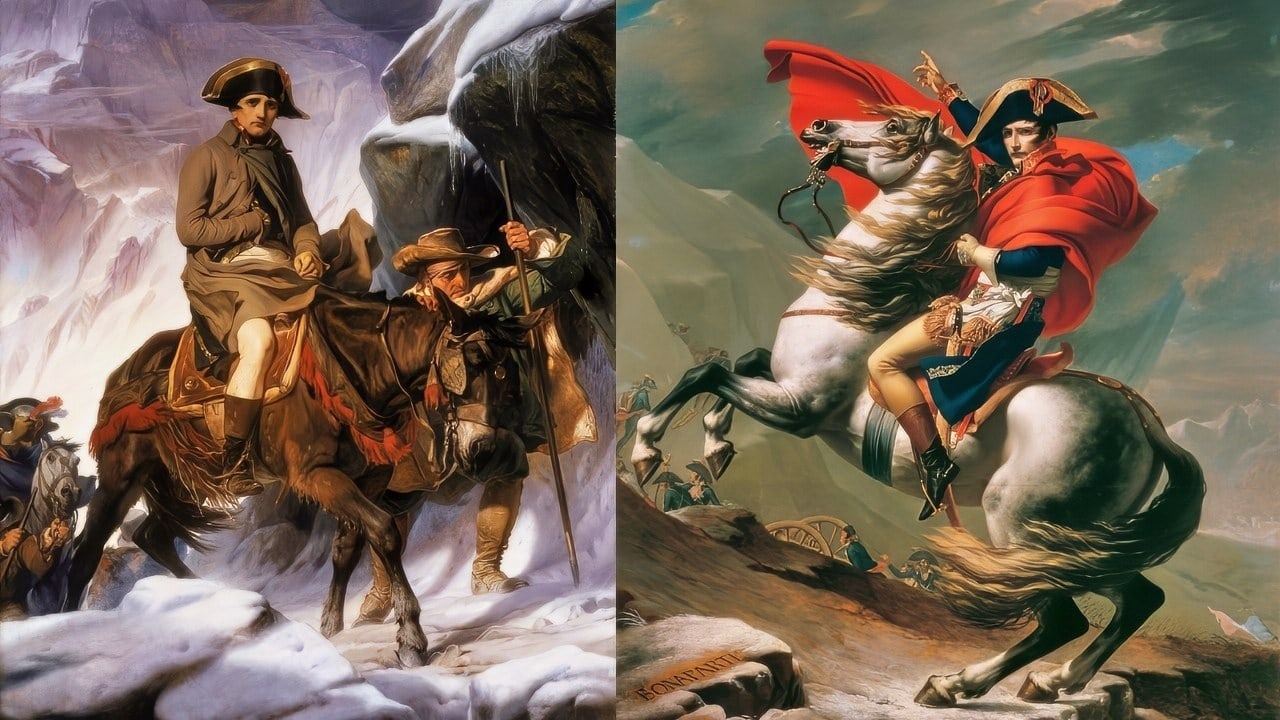
Napoleon Quote of The Day Two Looks. Image Credit: Creative Commons.
-This was followed by the Battle of Leipzig (1813), where overwhelming Allied numbers forced his first exile to Elba.
-His final undoing came at the Battle of Waterloo (1815), where the Duke of Wellington’s use of “reverse slope” tactics and shrapnel neutralized French artillery, leading to Napoleon’s permanent banishment to St. Helena.
The 3 Devastating Battles That Doomed Napoleon Bonaparte
“When soldiers have been baptized in the fire of a battlefield, they have all one rank in my eyes.”
Napoleon’s surprisingly egalitarian statement calls on officers to understand that they earn the greatest respect and credibility among their troops when they share the same risks and privations. (Colonel David Hackworth and Commander Richard “Demo Dick” Marcinko certainly believed in this.)
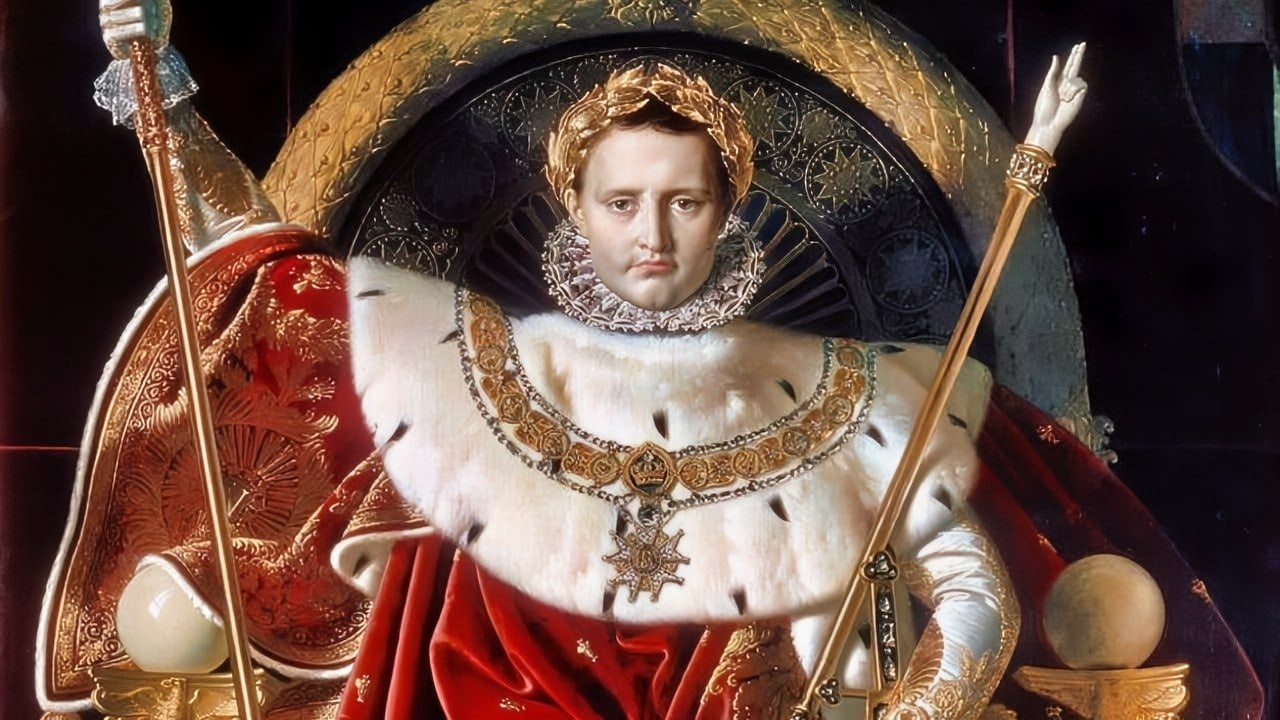
Napoleon the Emperor. Image Credit: Creative Commons.
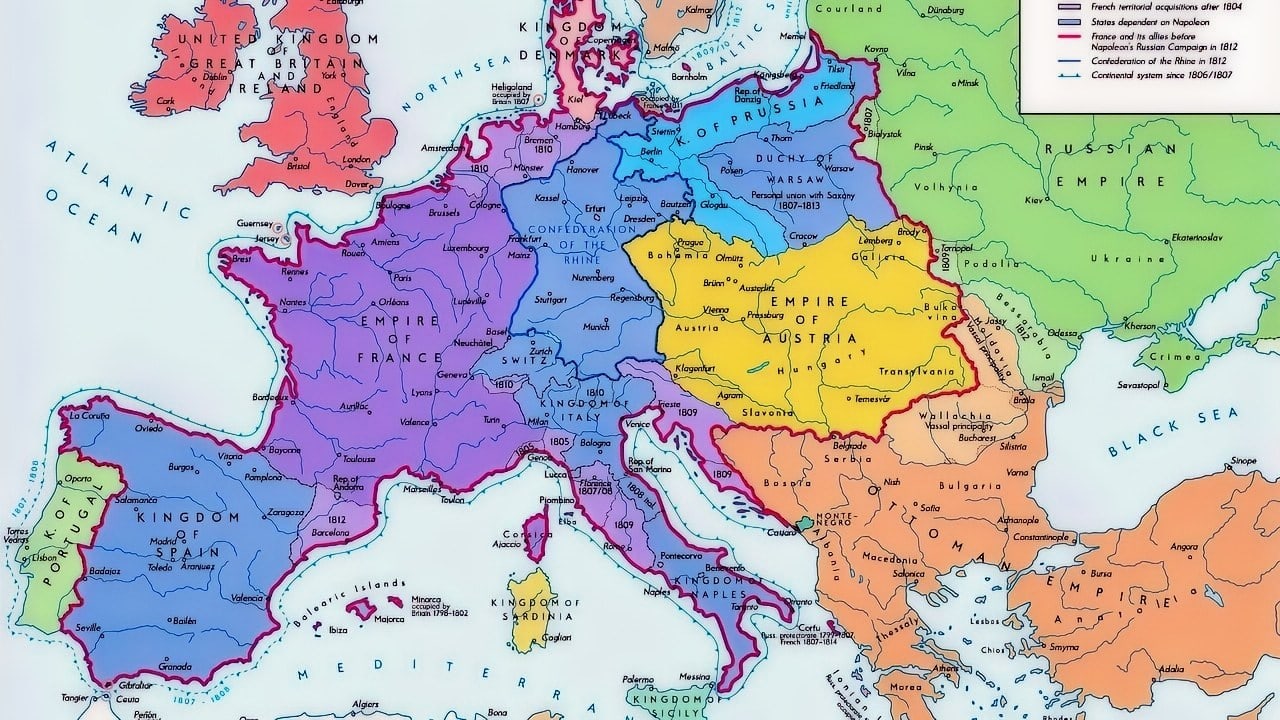
Map of Napoleon’s Empire. Image Credit: Creative Commons.
We now take a look at Napoleon’s three biggest defeats.
Defeat #1: Battle of Waterloo, June 18, 1815
We might as well start with his biggest and most famous defeat.
Waterloo didn’t start off as a disaster for l’empereur. Indeed, his vaunted artillery started the battle with a distinct numerical advantage over the Seventh Coalition forces of Britain and the Netherlands, with 252 large guns versus 156.
However, the Duke of Wellington, Field Marshal Arthur Wellesley, figured out a way to mitigate the effects of the fearsome French artillery. He positioned most of his troops slightly behind the ridge of Mont St. Jean. He commanded the cavalry to dismount and some of the front infantry regiments to lie down on the ground. This “reverse slope” concealed the Allied troops from the French cannon, who were on a much smaller ridge on the other side of the valley.
Moreover, the coalition made good use of two ordnance types that helped offset their artillery pieces’ numerical disadvantage: rockets and shrapnel. The latter was seen as something of a “secret weapon” exclusive to the Brits during this war, invented by the eponymous Captain (later General) Henry Shrapnel. It was a “spherical case shot” filled with musket balls and designed to detonate at around head height over enemy formations, unleashing a lethal circle of balls that would eviscerate anyone unfortunate enough to be within its reach.
It was because of these innovations that the troops of Bonaparte got blown apart.
When all was said and done, roughly 25,000 of Napoleon’s troops lay dead or wounded, versus 17,000 casualties for Wellington’s men and 7,000 for Blücher. In the Duke of Wellington’s own words, “It had been a damned nice thing—the nearest run thing you ever saw in your life. “
Some later (and probably apocryphal) accounts claimed that Napoleon muttered, “Merde” as his elite troops retreated. In any event, this battle resulted in his second abdication. From there, as eloquently noted by Lara Jacobs of History UK, “Imagine Napoleon’s dismay when he realised he was not being banished to America as he anticipated, but to the remote island of St Helena in the mid-Atlantic instead. Located 1,200 miles from the nearest landmass off the west coast of Africa, St Helena was the ideal choice for Napoleon’s exile…after all, the last thing the British wanted was a repeat of Elba!”
Six years into his St. Helena exile, on May 5, 1821, Napoleon died under mysterious circumstances.
Defeat #2: Battle of Leipzig AKA The Battle of Nations, October 16–19, 1813
“The Battle of Nations” label stems from the large number of armies involved. The allied powers of Russia, Prussia, Austria, and Sweden combined their forces to outnumber the French nearly two to one. As would later be the case at Waterloo, the Battle of Leipzig started well enough for the French forces, as they resisted enemy pressure and even secured temporary advantages, especially along the southern approaches.
However, things soon started going south for Napoleon. As noted by the History Skills website, “French attempts to withdraw became increasingly difficult because fresh Allied reinforcements had arrived from the north and east, which had surrounded Napoleon’s position, and the only escape route, a bridge over the Elster River, became the focus of retreat operations…An early explosion of the bridge reportedly left tens of thousands stranded.”
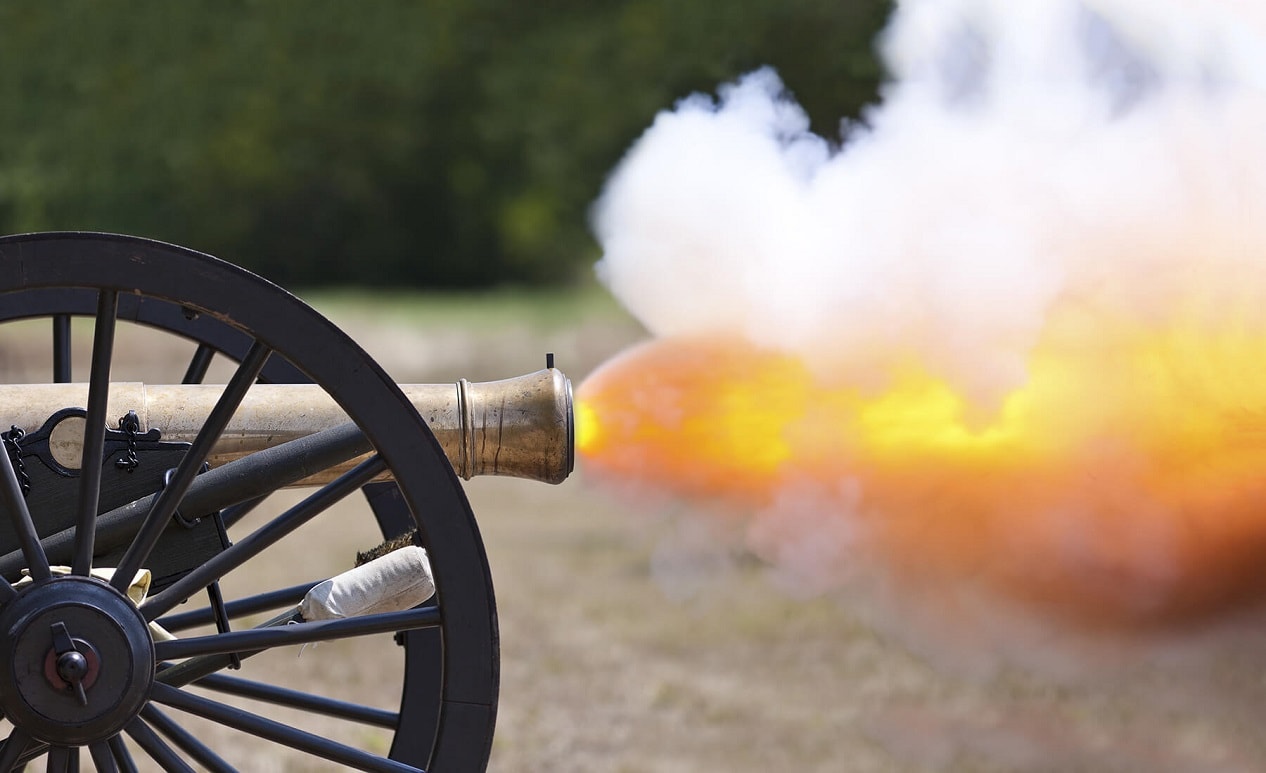
Cannon Firing. Image Credit: Creative Commons.
A mass defection of Saxon troops certainly didn’t help the French cause either.
The defeat largely ended Napoleon’s control over Germany and his influence in central Europe. It led to his first exile, on the island of Elba.
Defeat #3: The Russian Campaign (June 24 – December 14, 1812)
During his campaign in Russia, Napoleon’s French Empire was allied with Austria, Prussia, Denmark, and the German client states of the Confederation of the Rhine. This sizable coalition still wasn’t enough to defeat the Russian forces under the command of Emperor Alexander I.
As noted by Kevin Eberle of History Chronicler, “Napoleon was counting on a quick victory, aiming to catch and decisively defeat the Russians in a major battle. Instead, the Russian generals Kutuzov and Barclay de Tolly avoided major battles and retreated eastward, drawing the French deeper into Russia. The Russians planned to exhaust the French, banking on the harsh winter and the scorched-earth policy to weaken the invaders.”
The Kutuzov/de Tolly strategy received its ultimate vindication when the French troops finally arrived in Moscow later that month. The city was ablaze and almost empty, and Napoleon was forced to order a humiliating retreat. The Grande Armée began to suffer in October from frostbite, hunger, and Russian attacks, which cumulatively wiped out 90 percent of Napoleon’s 600,000 troops.
History would repeat to the detriment of Nazi Germany during the Battle of Stalingrad 130 years later.
About the Author: Christian D. Orr, Defense Expert
Christian D. Orr is a Senior Defense Editor. He is a former Air Force Security Forces officer, Federal law enforcement officer, and private military contractor (with assignments worked in Iraq, the United Arab Emirates, Kosovo, Japan, Germany, and the Pentagon). Chris holds a B.A. in International Relations from the University of Southern California (USC) and an M.A. in Intelligence Studies (concentration in Terrorism Studies) from American Military University (AMU). He is also the author of the newly published book “Five Decades of a Fabulous Firearm: Celebrating the 50th Anniversary of the Beretta 92 Pistol Series.”