
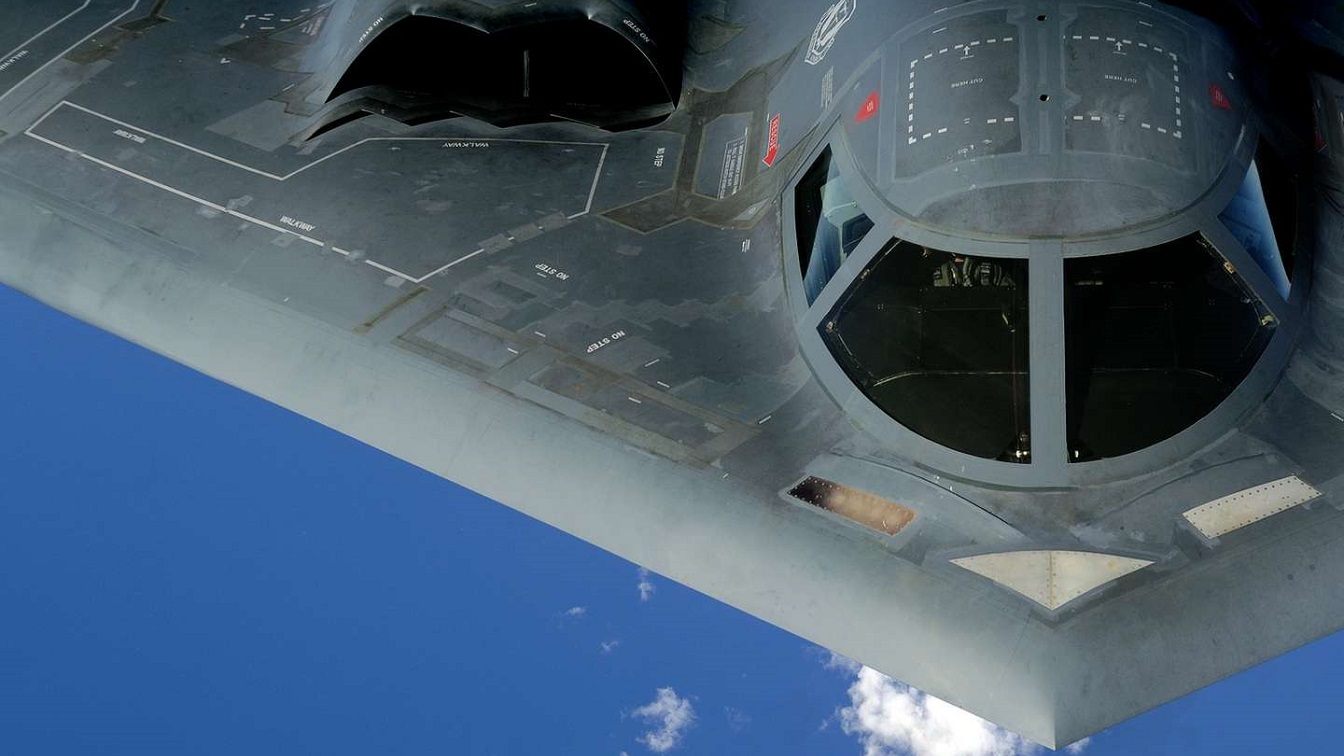
Key Points and Summary – Dr. Andrew Latham argues that Trump treats foreign policy like a prizefight: a dramatic opening swing, a declared victory, and a quick pivot to the next headline.
-That instinct can generate leverage and momentary awe, but it also leaves unfinished endgames that allies must manage and adversaries can outlast.
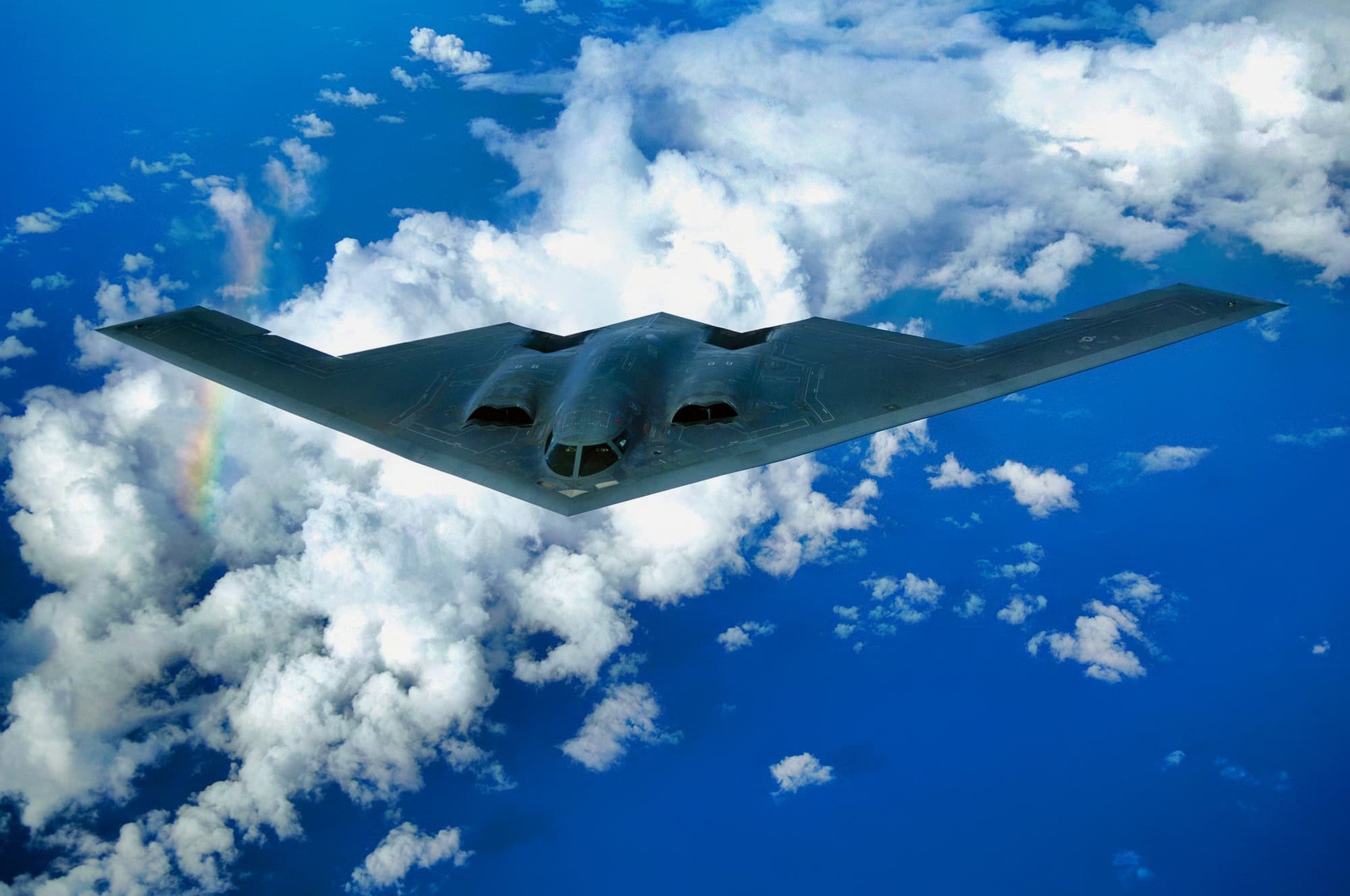
A B-2 Spirit soars after a refueling mission over the Pacific Ocean on Tuesday, May 30, 2006. The B-2, from the 509th Bomb Wing at Whiteman Air Force Base, Mo., is part of a continuous bomber presence in the Asia-Pacific region. (U.S. Air Force photo/Staff Sgt. Bennie J. Davis III)
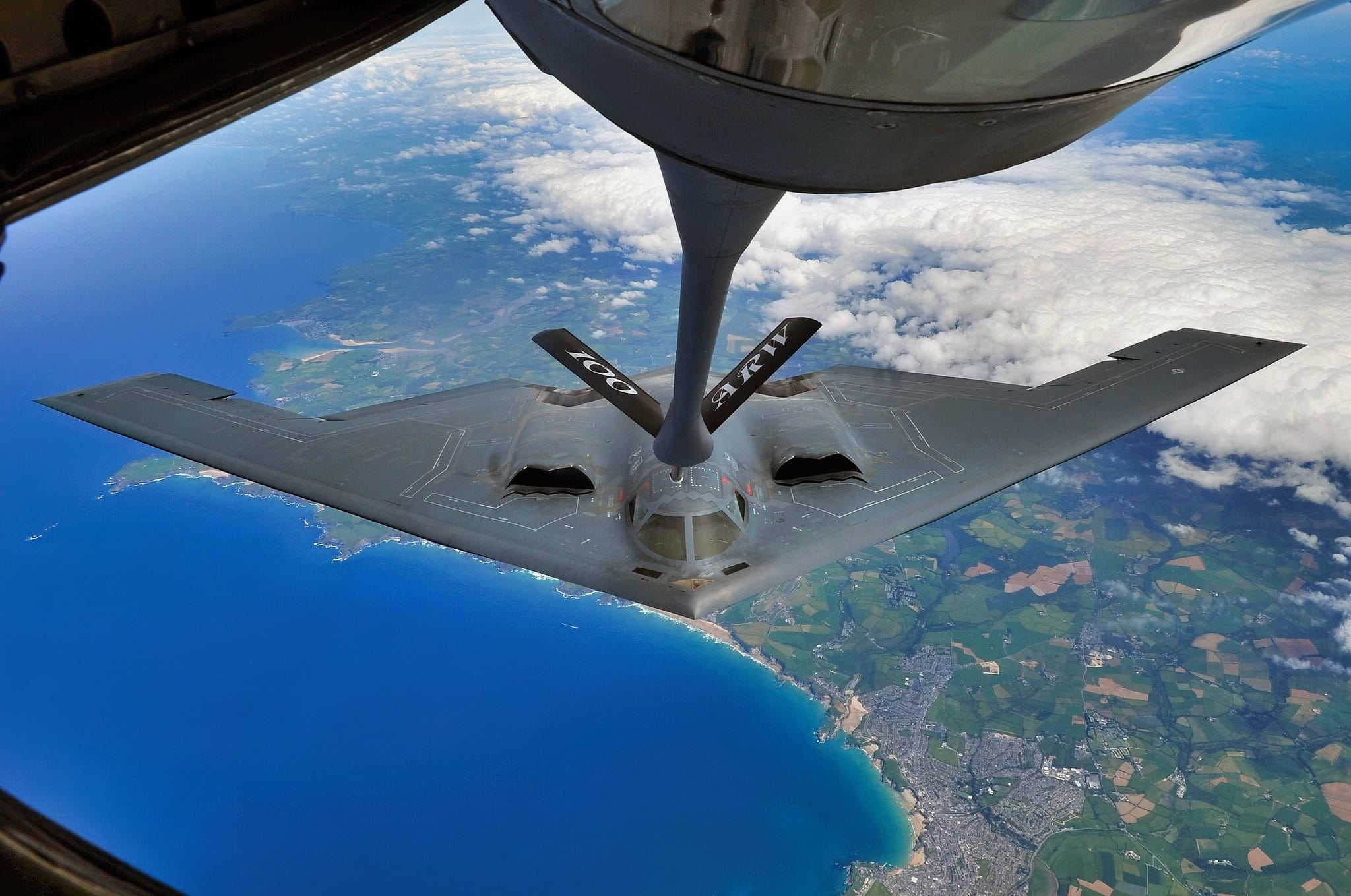
B-2 Bomber. Image Credit: Creative Commons.
-The essay contrasts Trump’s stated second-term framework—selective commitments, coercion, deterrence—with his unscripted preference for theater over consolidation.
-From North Korea summits to Iran pressure and tariff politics, the pattern repeats: bold action, maximal messaging, premature closure.
-Venezuela becomes the key test of whether the U.S. will stabilize outcomes—or simply claim them.
Trump’s Foreign Policy Problem in 1 Line: Big Moves, Small Endgames
Donald Trump approaches foreign policy the way a prizefighter approaches a bout: charge out of the corner, throw a heavy swing, lift your arms, and let the crowd decide whether the fight is over.
It’s not about what happens after the noise dies down, but what happens in the moment of impact.
As a result, allies are often left trying to figure out whether they have witnessed a genuine knock-out blow or merely an opportunistic jab. Adversaries take the hit and get on with it. Commentary ranges from awe to alarm. A simpler reading fits the record better.
Trump tends to treat foreign policy success as something to seize and announce, rather than to secure painstakingly. As soon as the headline lands, he loses interest and moves on to his next fixation.
And that habit comes with costs beyond those of presentation. Claiming victory freezes a problem in place as much as it solves it. The achievement of the moment leaves accounts to be settled and open questions long after the spotlight has shifted. In those circumstances, performance crowds out resolution.
Trump has demonstrated repeatedly that he can manufacture the moment. The question that remains, one that already hangs over possible flashpoints such as Venezuela, is whether he is prepared to stay engaged once the audience has moved on.
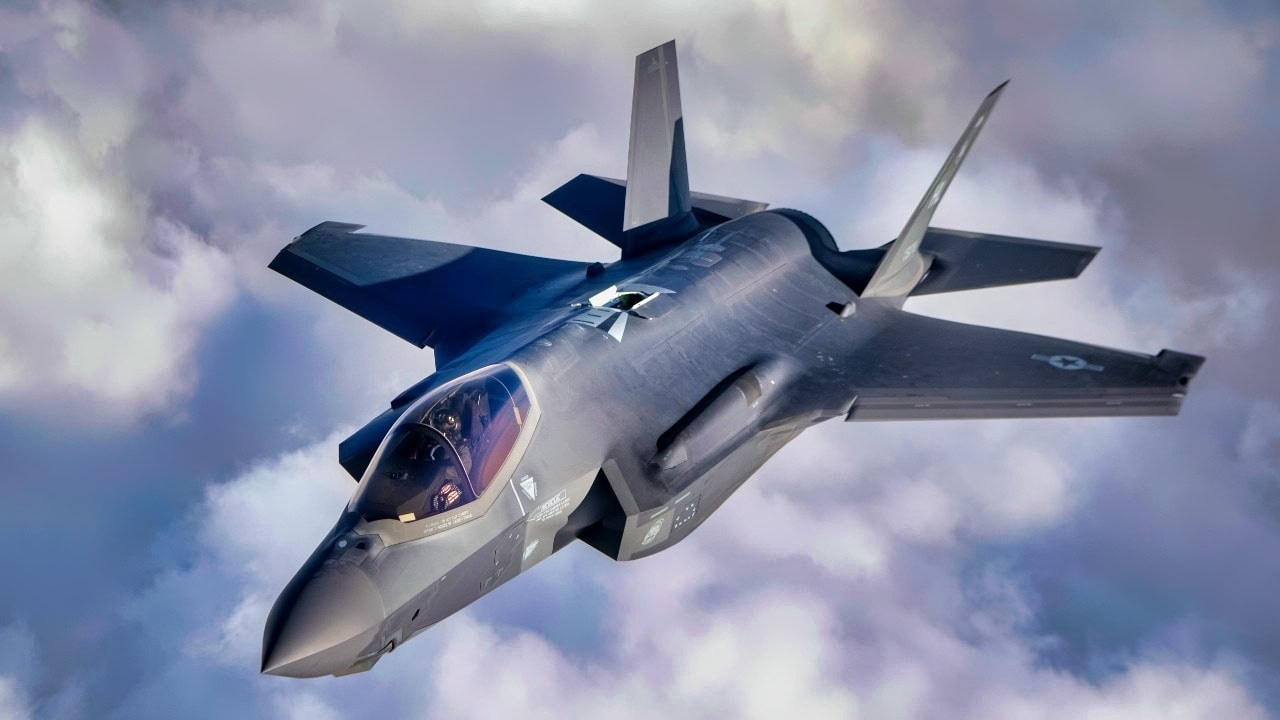
A U.S. Air Force F-35 Lightning II flies over the U.S. Central Command area of responsibility, July 15, 2020. The F-35 Lightning II is an agile, versatile, high-performance, multirole fighter that combines stealth, sensor fusion and unprecedented situational awareness. (U.S. Air Force photo by Airman 1st Class Duncan C. Bevan)
The Paper Strategy
Set against this personal style, Trump’s second-term foreign policy as formally presented, promises to be direct and unsentimental. Sovereignty is treated as a constraint to be respected. Allies are expected to take greater responsibility for their own defense. Rivals are to be confronted. American freedom of action is to be guarded closely with limited tolerance for commitments that lack clear limits and an explicit payoff.
This approach is grounded in a long-standing hostility to liberal internationalism, and it taps into a wariness among the public about international commitments that are open-ended and don’t yield clear and certain benefits. Deterrence, not political change. Coercion, not persuasion. Democracy promotion goes out the window. Open-ended commitments should be considered a weakness, not a sign of strength.
Taken as a statement of intent, the framework is strong on selectivity and resolve. It imagines a United States that will act forcefully, then stand down once objectives appear to have been met. The strain emerges later, when initial displays of resolve fade and leverage needs to be translated into arrangements that can last.
Trump Unscripted
Trump’s off-the-cuff comments may offer a clue into why that translation can go so awry. Unscripted, he tends to embrace opportunities to appear strong and in command. Threats are valued for their immediate impact. Meetings are significant because they can be framed as milestones. Command of the moment is often valued more than accountability for the future.
Over time, this has given his foreign policy a theatrical quality. High-profile encounters come to eclipse the frameworks meant to support them. Announcements draw attention away from the machinery required to enforce and outcomes. Success comes to be something that is experienced in real time rather than something that can be assessed by whether disputes are being resolved or even tightly contained.
That tendency also helps to explain Trump’s comfort with ambiguity once the spotlight moves on. After a dramatic move has been labeled historic, the incentive to push through the slow work of consolidation weakens. The narrative advances, victory is proclaimed, and loose ends are deferred.
Acta Non Verba
Measured against Trump’s record, that pattern becomes harder to dismiss.
The summits between Trump and Kim Jong Un were like nothing that preceded them, either in form or imagery. To be sure, the meeting of the American president and the North Korean leader was a break with decades of diplomatic convention and captured global attention.
And the symbolism was powerful.
But, ultimately, the substance was thin. North Korea’s nuclear program remained intact, and there has been little to show in geopolitical terms since the handshake.
Similarly, Iran’s nuclear program has also been damaged, disrupted, and delayed but not dismantled. Pressure campaigns and strikes have added costs and altered calculations without bringing about an outcome that can be sustained. The crisis has been contained but not concluded.
Tariffs were presented as economic warfare meant to revive American manufacturing. In practice, the cost fell largely on consumers, produced only limited reshoring, and served more as negotiating tools than as drivers of industrial renewal.
China was confronted both rhetorically and through trade pressure, yet the long-promised grand bargain between Washington and Beijing never materialized. The relationship grew sharper and more volatile, without delivering the decisive settlement that had been repeatedly suggested.
Taken together, those cases reveal a pattern. A bold opening move that captures attention is followed by strong language signalling resolve. Then victory is declared.
That pattern sharpens the question now hanging over Venezuela. Now that Trump has ousted Maduro does that mark the end of American involvement in the country or merely the beginning? Would Washington commit to stabilizing a fractured state or declare victory and move on, leaving disorder to fester and spread outward?
The record offers little reason for reassurance.
The Neo-Con Masquerade
Some observers have argued that this pattern is a form of deliberate calculation. In that view, Trump projects an aggressive posture in order to extract concessions while avoiding the costs associated with more sustained intervention. Loud threats are meant to compensate for limited follow-through.
There’s some truth to that. Trump has little patience for forever wars or, for that matter, the bureaucratic structures that perpetuate them. He is instinctively skeptical of open-ended conflicts that can’t be cast as short, sharp campaigns. No question, that instinct can yield leverage in the short term. It also blurs American red lines and leaves partners unsure how far Washington will actually go when those commitments are tested.
Positioning can rattle adversaries and create tactical advantage. It is far less useful at generating durable outcomes once the heat of the moment dissipates.
This Is What It Means
Trump’s foreign policy is neither chaotic nor fully choreographed. It is an amalgam of both ideas and a governing temperament that inflects how those ideas are deployed. Action is often a proxy for achievement. Visibility is often a proxy for success. Declarations are treated as closure. Momentum is prized over maintenance, with resolution often left for later.
That instinct can jar complacent adversaries and upend sclerotic diplomatic scripts. It can also leave arrangements half-made and conflicts half-won in its wake. The danger is not boldness itself, but the impulse to stop short, to conflate movement with resolution, and to mistake applause for accomplishment. In a world already glutted with frozen conflicts and unfinished wars, one more victory claimed without a game plan for the finish line may prove more destabilizing than decisive.
About the Author: Dr. Andrew Latham
Andrew Latham is a non-resident fellow at Defense Priorities and a professor of international relations and political theory at Macalester College in Saint Paul, MN. You can follow him on X: @aakatham.