Synopsis: The piece argues Trump’s seizure of Nicolás Maduro is best understood as a preventive force rather than a step toward wider war. It contrasts Trump’s first term with a second-term pattern of sharper strikes, claiming limited, decisive action can avert larger conflicts—citing Obama-era restraint toward ISIS, Syria, and Iran as cautionary examples. It frames Venezuela’s collapse under Chávez and Maduro as a familiar authoritarian cycle: economic failure, paranoia, and external confrontation as distraction.
-The central claim is that Maduro’s trajectory—border revisionism toward Guyana and deeper ties to China or Iran—risked escalation, and removal disrupts that path.
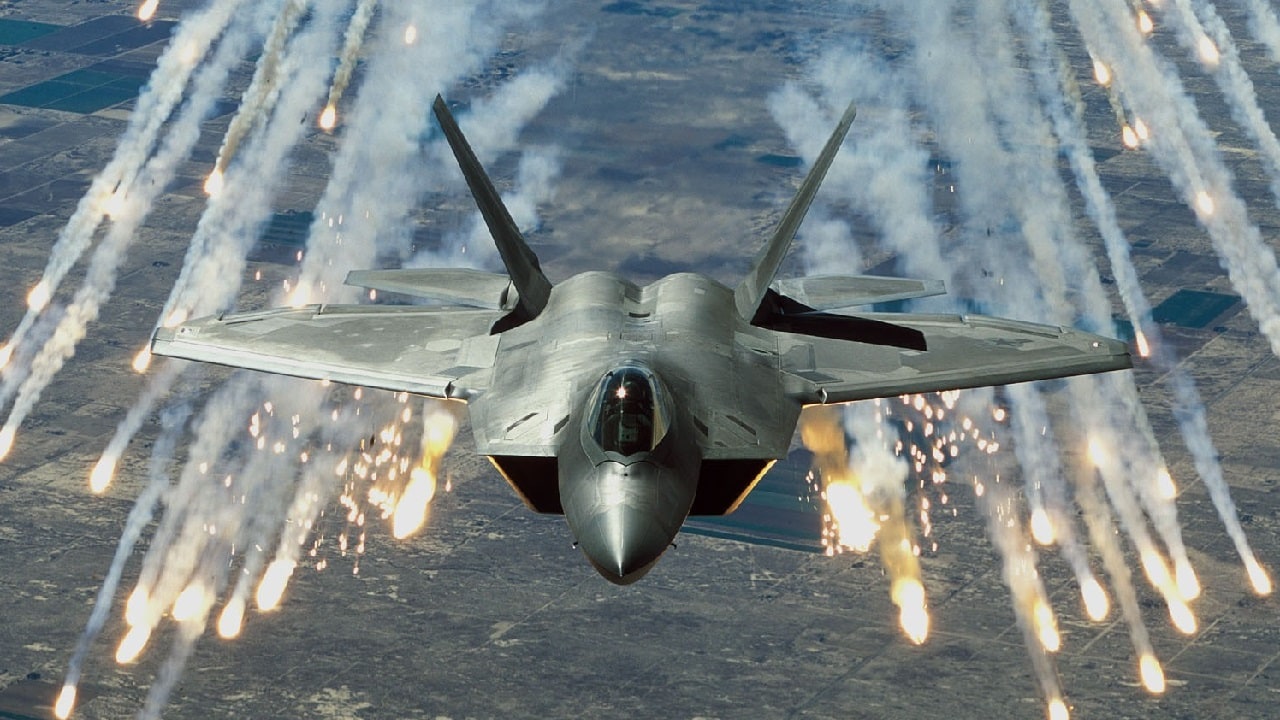
F-22 Raptor. Image Credit: Creative Commons.
Trump’s Venezuela Move Prevents War, Not Sparks One
President Donald Trump long bragged after his first term that he was the first president in decades not to engage the United States in war.
He was right. While Jimmy Carter sent U.S. forces into combat, the ill-fated hostage rescue attempt in Iran aside, Ronald Reagan had ordered the invasion of Grenada, backed the Contras in Nicaragua, and bombed Libya. George H.W. Bush intervened in Panama in an operation reminiscent of today, sent U.S. forces into Somalia, and then oversaw the liberation of Kuwait. Bill Clinton bombed Iraq, Afghanistan, and Sudan, and intervened in the Balkans. George W. Bush invaded both Afghanistan and Iraq. Despite a campaign promise to end “stupid wars,” Barack Obama not only kept U.S. troops in Afghanistan and Iraq, despite a brief withdrawal from the latter, but also intervened in Libya and Syria. Biden later claimed he had not sent U.S. forces into combat, but the sailors involved in Operation Prosperity Guardian in the Red Sea might disagree.
With his 53-day bombing campaign against the Houthis, dropping bunker buster bombs on Iran’s nuclear sites, and now his snatching of Venezuelan dictator Nicolás Maduro, Trump’s second term is the opposite of his first term. Many former Trump supporters are angry at the president’s turn. “We voted AGAINST America LAST,” former ally Republican Congresswoman Marjorie Taylor-Greene tweeted.
Trump The Warmonger? No, Not Exactly
The characterization of Trump as a warmonger may be unfair. Instead, Trump has simply learned from his own previous experience and that of his predecessors. What differentiates Trump from his first-term self and from predecessors like Obama is that he now recognizes that a small short-term investment in force can obviate the need for a much greater conflict in the longer term.
The Obama Example
Consider Obama. Obama thought his restraint clever when the Islamic State first arose. Still, by failing to nip it in the bud, he allowed the would-be caliphate to expand exponentially and made a far greater conflict inevitable. The same held with Syria, where Obama’s initial decision to stand aloof kneecapped a more secular opposition and let violence proliferate into the third bloodiest conflict in the history of the Middle East after the Mongol sacking of Baghdad and the Iran-Iraq War.
Likewise, had the international community cracked down on Iran’s nuclear program when the regime’s defiance of the International Atomic Energy Agency first came to light, it would have faced a far less formidable and armed regime than it is now, having invested tens of billions of dollars into fortified nuclear sites, Russian anti-aircraft batteries, drones, and ballistic missiles.
While Trump errs if he creates a vacuum that causes Venezuela to fester, his decapitation of the Maduro regime likely prevents further conflict. There is a reason why Venezuelans celebrate Maduro’s ouster.
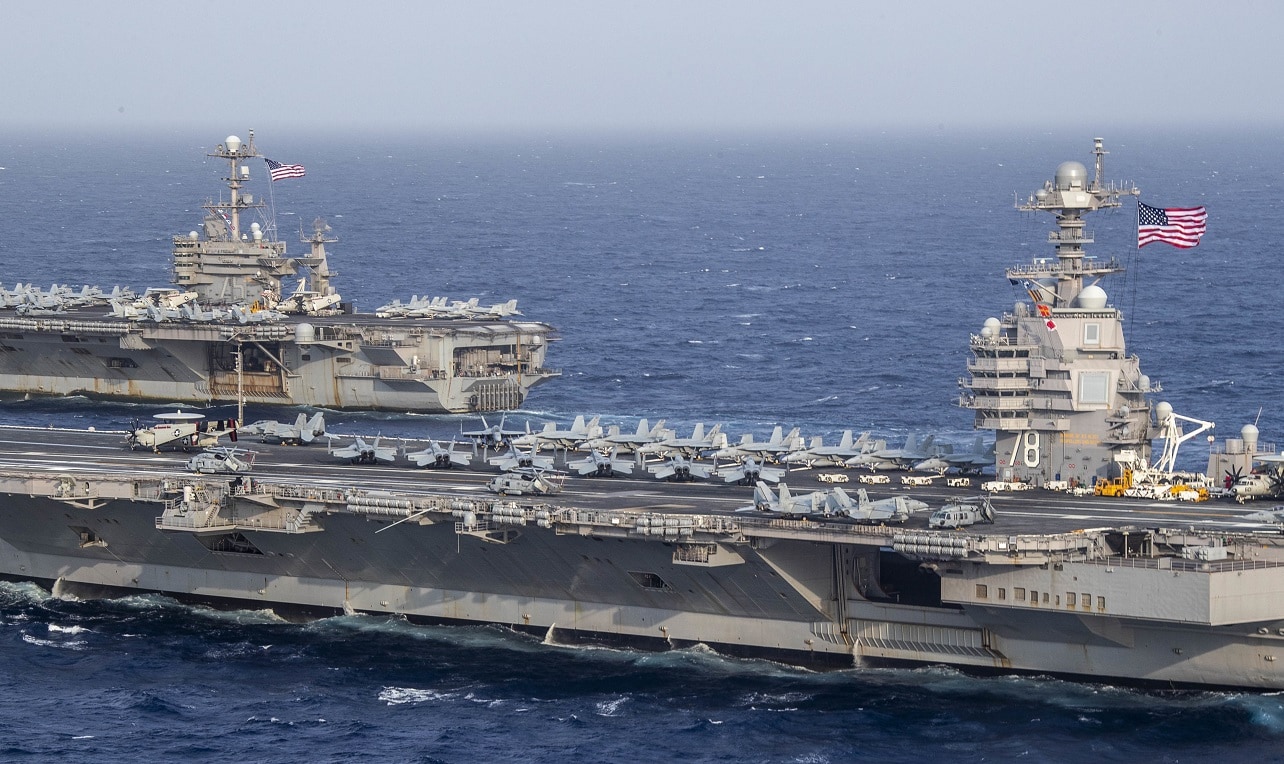
The Ford-class aircraft carrier USS Gerald R. Ford (CVN 78) and the Nimitz-class aircraft carrier USS Harry S. Truman (CVN 75) transit the Atlantic Ocean June 4, 2020, marking the first time a Ford-class and a Nimitz-class aircraft carrier operated together underway. Ford is underway conducting integrated air wing operations, and the Harry S. Truman Carrier Strike Group remains at sea in the Atlantic as a certified carrier strike group force ready for tasking in order to protect the crew from the risks posed by COVID-19, following their successful deployment to the U.S. 5th and 6th Fleet areas of operation. (U.S. Navy photo by Mass Communication Specialist Seaman Riley McDowell)
Venezuela’s danger was in the combination of the failure of its regime, its ideology, and Maduro’s refusal to accept accountability for that failure. It is a familiar pattern: When regime incompetence leads to economic collapse, dictators often seek to distract by sparking confrontation.
This was the story of late Iraqi President Saddam Hussein’s invasion of Kuwait and Russian President Vladimir Putin’s repeated invasions of neighboring states. It was also the basis of decades of Arab animosity toward Israel until the Abraham Accords offered a different path. Distracting the public with a nationalist flag can be a potent anecdote to accountability.
Venezuela’s Descent into the Socialist Abyss
Seldom has there been such a stark but avoidable collapse as Venezuela’s.
When Hugo Chávez defeated Henrique Salas Römer, a Yale-educated economist and former governor of Venezuela’s industrial heartland, in 1998, the retired army officer was magnanimous in victory. “I guarantee that the government I will choose in a few days will be a government of harmony, union, and peace. We are going to forge a country that will make us all proud: businessmen, workers, political leaders, political parties, everybody.”
It was anything but. Just as Ayatollah Ruhollah Khomeini and Turkish President Recep Tayyip Erdoğan each sought to reassure domestic critics and foreign diplomats after taking power, so too did Chávez. “It is very far-fetched to [believe] that I will install a military dictatorship and that I will close the media in Venezuela.” He explained, “I cannot deny that I went to Cuba once, that Fidel Castro welcomed me at the airport, and that we embraced and talked for several hours. However, from this to assert that I am going to install a Cuban-style dictatorship, a communist system in Venezuela is very far from the truth.” Eva Golinger, an American leftist and Chávez confidante, reassured outsiders that Chávez advocated a ‘third way,’ akin to that of Prime Minister Tony Blair in the United Kingdom.
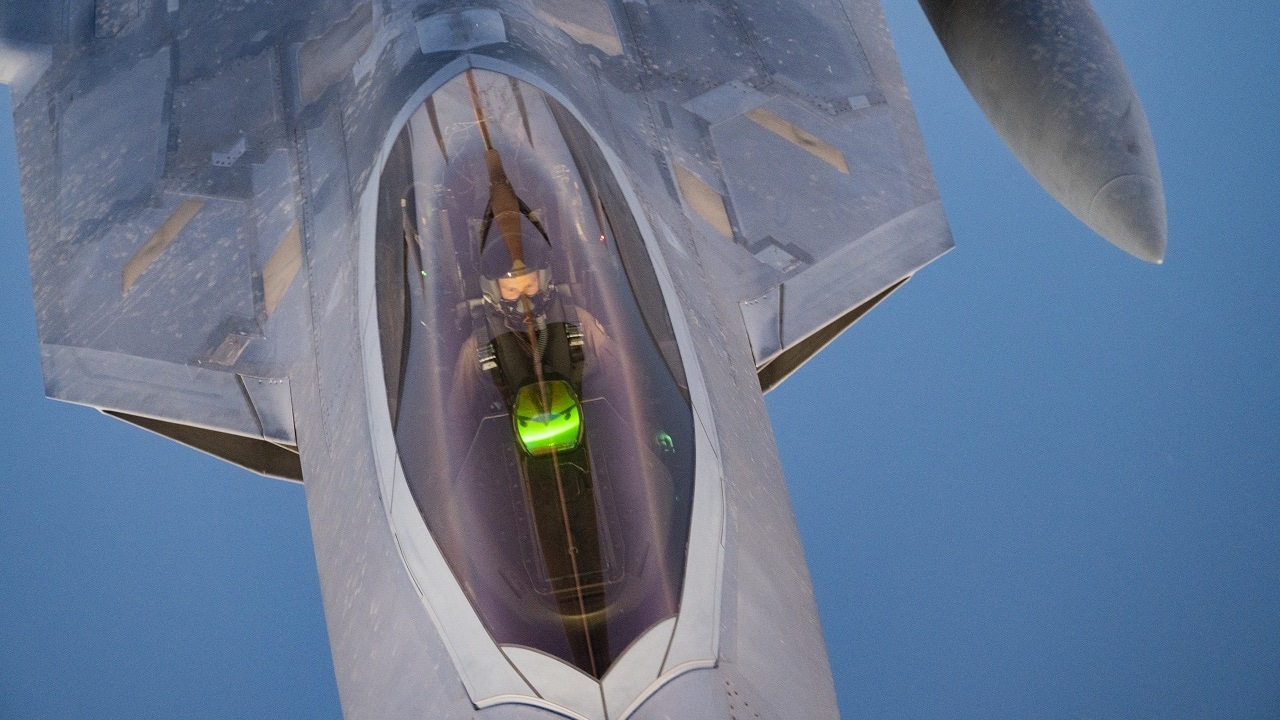
A U.S. Air Force F-22 Raptor receives fuel from a U.S. Air Force KC-135 Stratotanker assigned to the 340th Expeditionary Air Refueling Squadron, above the U.S. Central Command area of responsibility, March 14, 2022. The F-22 Raptor is a fifth-generation aircraft that combines stealth, supercruise, maneuverability, integrated avionics, and is designed to project air dominance, rapidly and at great distances, and deter regional aggressors while deployed in the USCENTCOM AOR. (U.S. Air Force photo by Staff Sgt. Frank Rohrig)
In hindsight, Chávez’s calming words hid a radical agenda and a deep grudge. In 1998, the U.S. Embassy in Caracas denied him a visa to the United States on the grounds of “prior terrorist activity,” a reference to his involvement in the 1992 coup. He never forgave Washington. Compounding his animosity was a subsequent visit to the United States, where he secretly met Bill Clinton. Chávez, however, grumbled that Clinton disrespected him by receiving him in secret, wearing jeans and a t-shirt, and without any of the pomp and circumstance Chávez believed himself due.
First under Chávez, then under Maduro, paranoia reigned supreme. When Clinton offered emergency aid after floods, Chávez saw a conspiracy because the U.S. Navy would transport it. In 2005, the USS Saipan docked in Curaçao, Venezuela claimed the port call was evidence of saber-rattling. In reality, the ship carried 1,200 tons of construction supplies as part of a humanitarian exercise. Likewise, after the 2010 earthquake in Haiti, the Pentagon dispatched the USNS Comfort to Haiti to provide emergency medical care. Chávez demanded that Telesur, Venezuela’s flagship television station, be allowed on board to show that the Pentagon was secretly sending soldiers to Haiti instead of doctors.
Venezuelan discord grew as Chávez consolidated power. On April 11, 2002, Pedro Carmona, a Caracas businessman, briefly took power, dissolved both Congress and the Supreme Court, and announced the cancellation of the laws Chávez passed under a new constitution the Venezuelan dictator had imposed. After the military arrested Chávez, his supporters took to the streets en masse and, two days later, Chávez returned to power. Carmona fled to Colombia and received political asylum. Chávez’s supporters likened the attempt to the CIA-backed coup to oust Chilean leader Salvador Allende. They did not see the irony that Chávez himself had been a coup leader and then demanded a U.S. audience.
While Chávez blamed the United States for the coup, the State Department had actually warned Chávez about the impending coup plot a week in advance. Chávez’s efforts to profit from the 2002 putsch set the precedent for what Erdoğan did in 2016, when he called the failed coup “a gift from God” that justified a wholesale crackdown. He used a strike in the oil industry as a pretext to dismiss the oil company’s top management and fire 18,000 employees.
He cited “unbalanced” coverage of the protests leading up to the 2002 coup attempt to take over the press. Every crisis and perceived slight became justification for further consolidation of power. As purges continued, there were fewer checks on Chávez’s and then Maduro’s paranoia and distorted sense of reality.
Seizing Maduro Forestalls Broader Regional War
In the wake of the September 11, 2001, terror attacks, Chávez drew moral equivalence between the United States and Al Qaeda. “Terror cannot be fought with more terror… This has no justification,” he said of the U.S. campaign against the Taliban. It was during this period that the Bush administration grew concerned about Venezuela’s increasing support for leftist, criminal, terrorist, and insurgent groups like FARC in Colombia.
Chávez brushed off concerns, arguing Washington simply sought to deny the legitimacy of “indigenous” and “grassroots” groups. Much of Chávez’s agenda mirrored that of Fidel Castro in Cuba. Chávez himself lamented that Venezuela’s transformation had not started earlier and progressed further. “What Latin America and the Caribbean would be like today had we not had to put up, as we have done for the past 100 years and even more, with the savage, criminal, and murderous North American empire,” he declared in a June 2006 television appearance. Chávez was a revisionist who rejected the status quo. Like Saddam and Putin, Chávez rejected the legitimacy of national borders. A constant theme of his domestic broadcasts became how the United States sought to disrupt South American unity.
When Maduro took over, he rebuffed criticism about Venezuela’s trajectory. “Socialism is not possible in a dictatorship,” he said. “Only in capitalism is a dictatorship possible.” Maduro then doubled down on his disparagement of the United States, demanding Obama confess the U.S. role in creating Al Qaeda and the Taliban.
Where his actions grew particularly dangerous was in his attempts to revise Venezuela’s own borders to steal the resources of neighboring Guyana. He framed a maritime boundary dispute with Guyana as an example of America’s anti-Venezuelan intrigue. “There is a great and serious campaign against our country… that could justify at any time escalation of events against the country,” Maduro declared against the backdrop of neighboring Guyana signing an agreement with Exxon Mobil to develop the offshore Stabroek block in Guyanese waters.
As Maduro faced the fruits of his own mismanagement, he reached out to China and other revisionist regimes to subsidize his regime and allow Venezuela to continue its defiance of the West and market norms.
Venezuelans have the right to destroy their own society, should they so choose. Maduro’s hijacking of the system, however, meant he faced no popular and democratic accountability, his rhetoric to the contrary notwithstanding.
Maduro’s only concern was having the resources to pay patronage to security forces and core supporters; he allowed the rest of his countrymen to starve. As there was increasingly little to loot domestically, Maduro was soon facing a choice about how to survive: He could either make good on his rhetoric and invade neighboring Guyana, a U.S. ally, and/or sell his sovereignty to China, Iran, or both. Either option would likely have led Venezuela down the path to far broader conflict with Venezuela’s neighbors and the United States.
The Bottomline on the Venezuela Raid
By recognizing this and snatching Maduro in the dead of night, Trump walked the tightrope and prevented a far more disastrous war, thereby refusing to follow the mistakes of Obama. By refusing then to get involved in the nuts and bolts of governance, he likewise refuses to replicate George W. Bush’s errors in Afghanistan and Iraq.
Critics may castigate Trump, but his operation against Maduro reverts to the presidential precedents that truly made America great.
About the Author: Dr. Michael Rubin
Michael Rubin is a senior fellow at the American Enterprise Institute and director of policy analysis at the Middle East Forum. The opinions and views expressed are his own. A former Pentagon official, Dr. Rubin has lived in post-revolution Iran, Yemen, and both pre- and postwar Iraq. He also spent time with the Taliban before 9/11. For more than a decade, he taught classes at sea on the Horn of Africa and the Middle East, covering conflicts, culture, and terrorism to deployed US Navy and Marine units. The views expressed are the author’s own.