
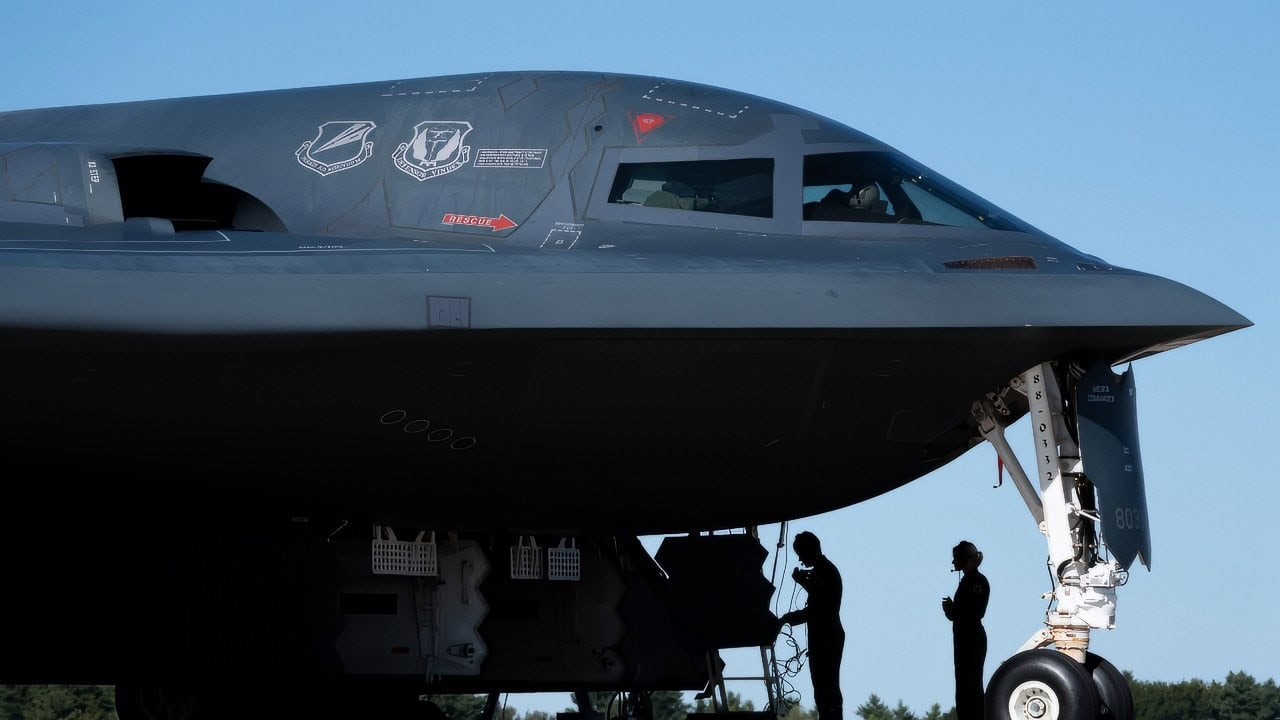
Key Points and Summary – Recent images of a “mysterious” diamond-shaped aircraft with a “cranked kite” design have sparked debate over whether it is China’s long-awaited H-20 stealth bomber.
-The aircraft features a “central fuselage” distinct from a pure flying wing, leading some to suspect it may be a different platform or a sub-scale testbed.
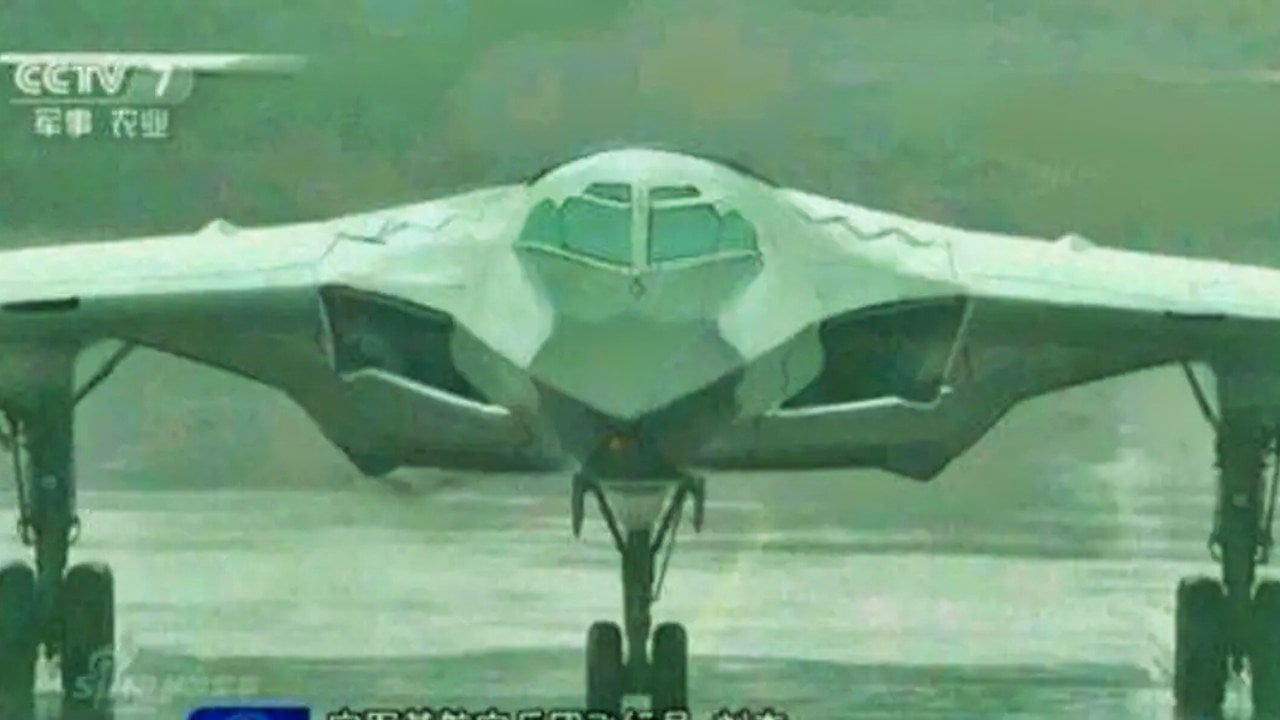
Image Credit of H-20 Bomber: Creative Commons.
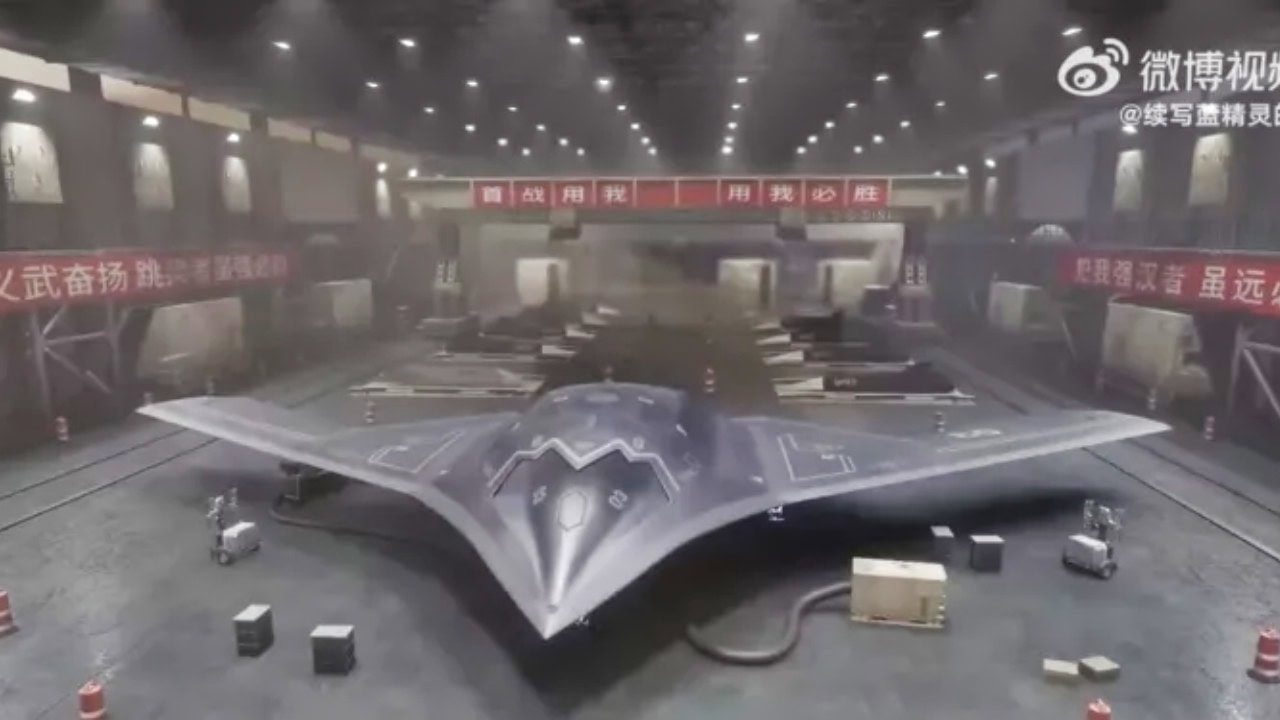
H-20 Bomber. Image Credit: X Screenshot.
-This sighting comes just as the DoD reports warn the H-20—expected to possess a 10,000 km range—is “unlikely to debut” for several years, though its development remains a key priority for the PLAAF.
China’s H-20 Stealth Bomber Flying or Not? Here’s What We Know
Newish images have appeared on Chinese social media that appear to depict a new large combat aircraft during what looks to be a test flight.
The aircraft in question is widely believed to be Beijing’s top-secret H-20 stealth bomber, and while the location and exact date of the imagery have not been confirmed, it follows a string of other sightings that have given Western analysts insight into China’s rapid development of its new-generation military aircraft.
The imagery also comes after the United States Department of Defense acknowledged in its annual report on Chinese military power that the bomber would likely not debut for several years.
The new footage appears to show a large, stealthy aircraft. It has a diamond shape and planform edges that suggest it was deliberately designed to reduce its radar cross section.
Despite its stealthy traits, the aircraft features a central fuselage and is not a “flying wing” design.
This isn’t the first time the aircraft has appeared online, either.
The imagery depicts a design that is very similar to a model of a notional bomber that was circulated on social media in 2022.
The design in those images was compared to designs by the United States’ Northrop – specifically, its A-12 attack plane.
The most recent imagery, however, is different.
The images suggest the aircraft has a cranked kite shape and tighter wing sweep angles.
Other images have some interesting data points. Analysts point out that the aircraft can be seen emitting a single contrail in some images despite almost certainly featuring multiple engines.
Is This the H-20?
It’s hard to say with certainty whether the image shared in recent days is the H-20, but it could well be.
The H-20 is a projected strategic stealth bomber, understood to be under development for the People’s Liberation Army Air Force (PLAAF) by Xi’an Aircraft Industrial Corporation, and, if it enters service, it would be China’s first purpose-built strategic stealth bomber.
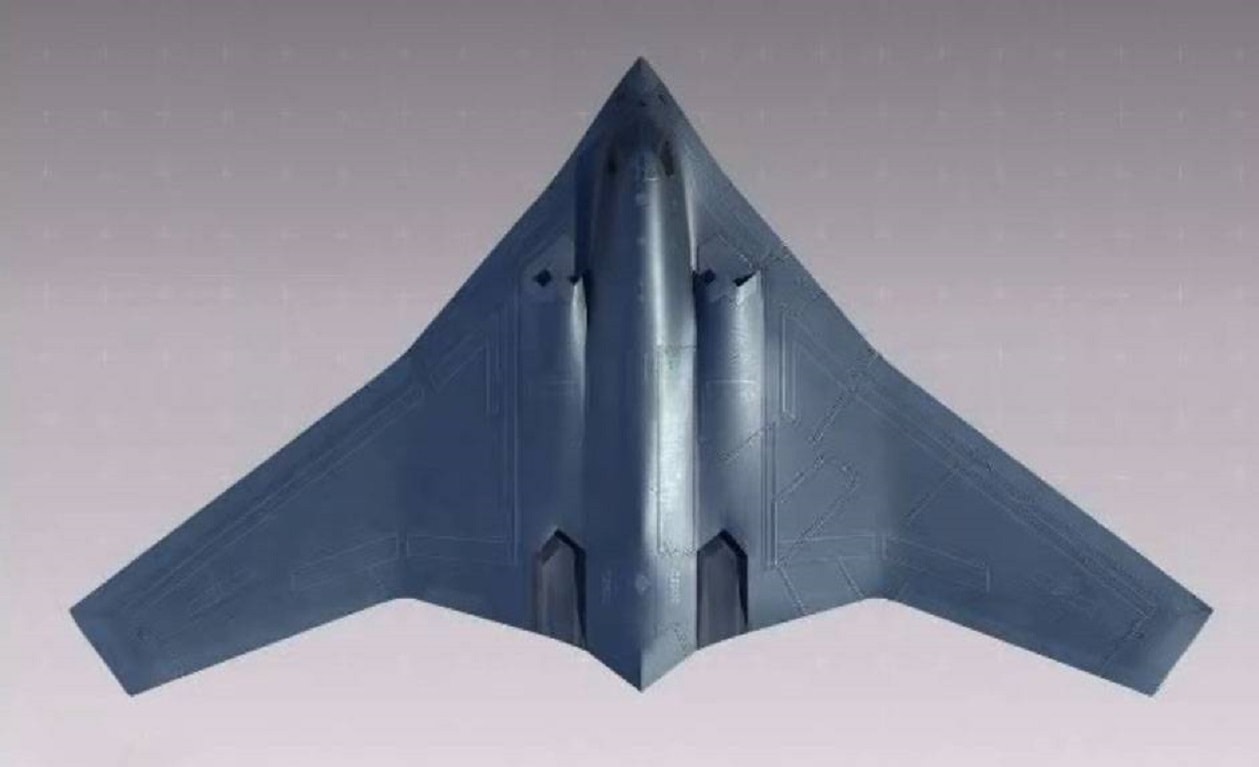
Computer-Generated Image of China’s Xian H-20 Stealth Bomber. Image Credit: Creative Commons.
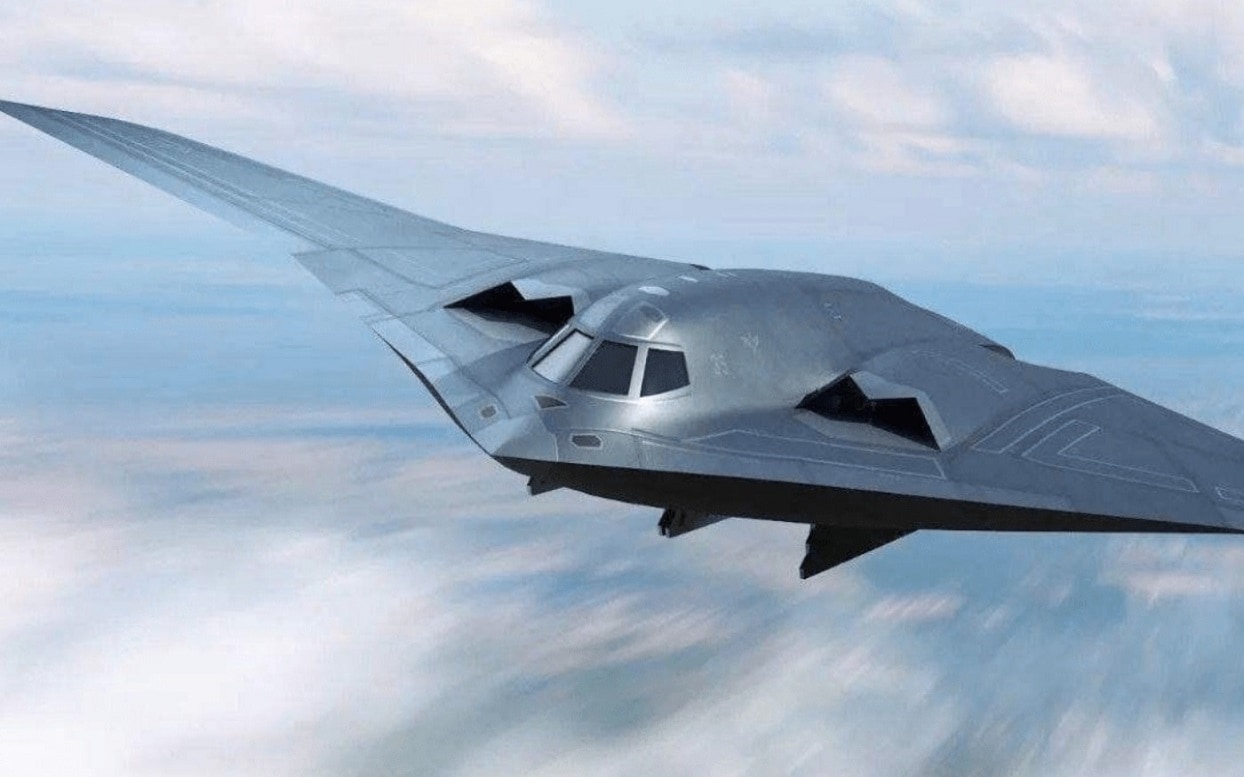
H-20. Image Credit: Chinese Internet.
The projected aircraft has been widely described by analysts, based on open-source information and leaks, as a subsonic stealth design that can carry both nuclear and conventional weapons over long distances.
If it enters operational service, it would mark a significant expansion of China’s power-projection capabilities beyond its existing bomber platforms like the H-6.
Officially, the project was first publicly acknowledged in 2016, when PLAAF leadership confirmed the development of a new long-range bomber. Prior to that confirmation, it was widely believed that work on a next-generation bomber had been underway for years as China prepared to rapidly develop its own capabilities and field next-generation technologies to compete with the West and end its reliance on foreign platforms or designs.
What is known about the H-20’s design, however, remains limited, and most interpretations and estimates are based on occasional descriptions released by state media, leaked concept art and models, as mentioned earlier, and Western defense analysis.
The aircraft is widely believed to incorporate a flying-wing or blended-wing-body form optimized for low observability, with internal weapons bays and features intended to reduce its radar cross-section.
The H-20 is generally expected to have an unfueled range that could exceed 8,500 km and possibly approach or surpass 10,000 km, giving it the theoretical ability to reach targets well beyond China’s immediate periphery and across the Pacific when combined with in-flight refueling.
Those estimations are nothing more than speculation based on Western understanding of what China needs from a new generation bomber, however.
China’s leadership has occasionally signaled that the program is progressing in its development, too. In March 2024, a senior PLAAF commander stated publicly that the H-20 would be revealed “very soon,” and Chinese state media have circulated optimistic descriptions of the program’s progress.
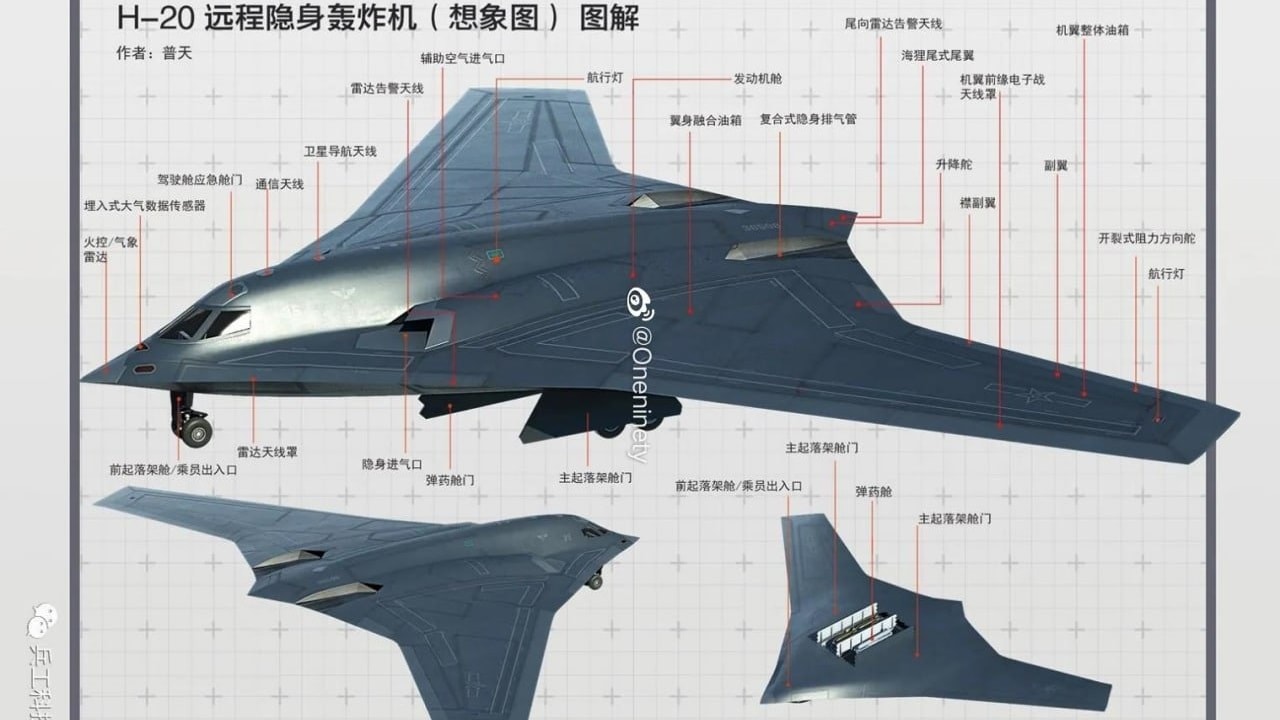
Artist Rendering of China’s H-20 Stealth Bomber. Image Credit: Chinese Internet.
Still, Beijing has not released any definitive images of a flying prototype or announced a formal test flight.
It is hard to say, therefore, whether the recently released imagery of a large combat aircraft in flight is the H-20, a variation of a possible H-20 design, or a different aircraft altogether.
In the recent imagery, the aircraft appeared to be chased by a J-166 fighter, but as noted by Air and Space Forces, the two aircraft were not flying in close formation, therefore making it difficult to estimate size.
Whether or not the aircraft is the H-20, its appearance suggests China is already flight-testing large, low-observable bomber-class designs, years before U.S. intelligence expects an operational debut.
About the Author: Jack Buckby
Jack Buckby is a British researcher and analyst specialising in defence and national security, based in New York. His work focuses on military capability, procurement, and strategic competition, producing and editing analysis for policy and defence audiences. He brings extensive editorial experience, with a career output spanning several thousand published pieces at National Security Journal and 19FortyFive, and has previously authored books and papers on extremism and deradicalisation.